



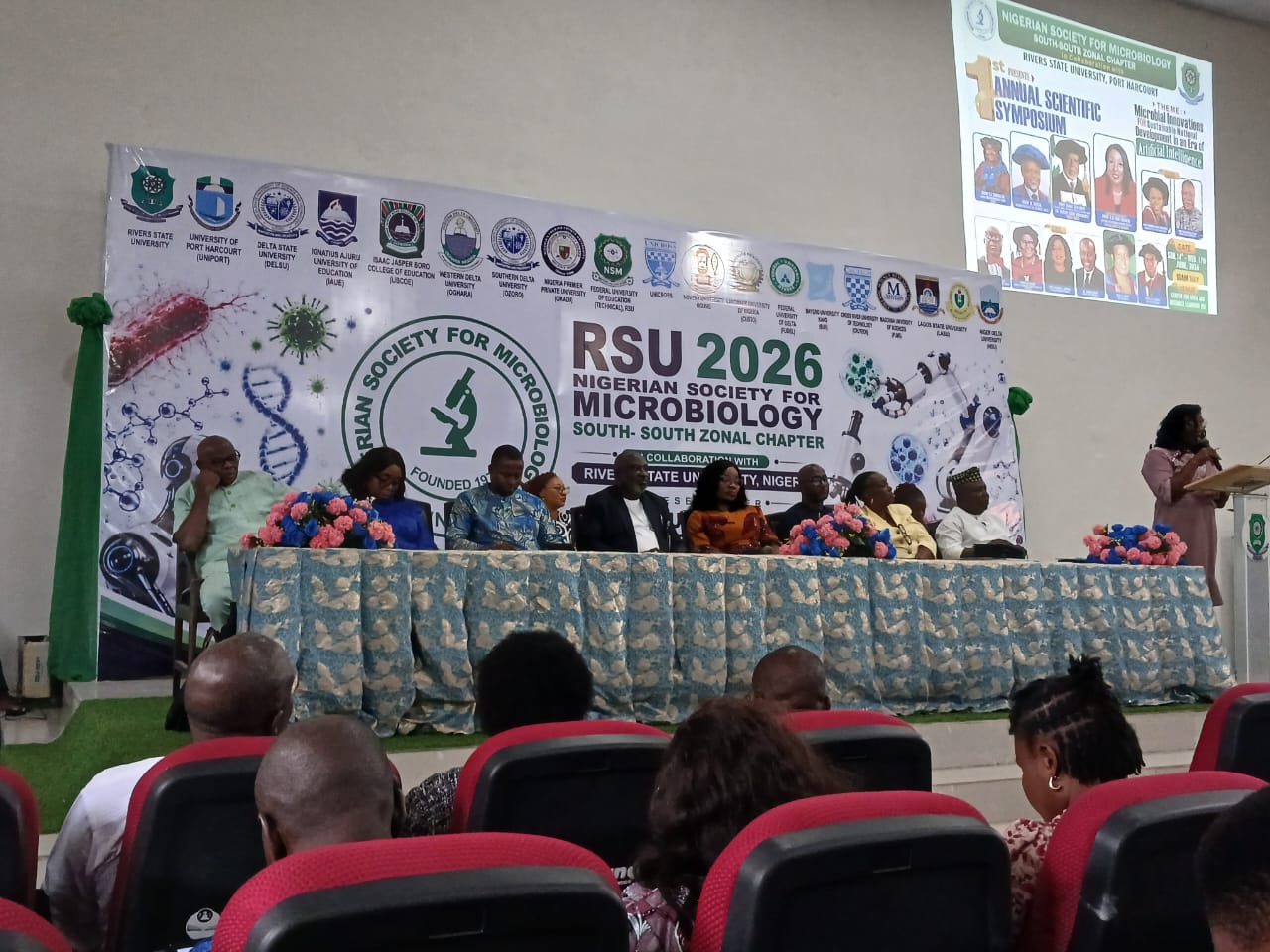
Antimicrobial Resistance (AMR) has been described as a growing public health threat and a silent killer in Nigeria, with expert warning that the indiscriminate use of antibiotics is accelerating the emergence of drug-resistant infections across the country.
The warning was issued by the keynote speaker, Professor Nnenna Frank-Peterside, during the First Annual Scientific Symposium of the South-South Zonal Chapter of the Nigerian Society for Microbiology (NSM), held at Rivers State University, Port Harcourt.

Professor Frank-Peterside, a medical microbiologist at the University of Port Harcourt, lamented the widespread practice of purchasing antibiotics over the counter without medical prescriptions, noting that such abuse has rendered many commonly used drugs ineffective against infections.
According to her, the unchecked access to antibiotics is one of the leading drivers of antimicrobial resistance in Nigeria.
“In Nigeria, virtually anyone can buy antibiotics without a prescription. This has resulted in common drugs no longer curing infections effectively, thereby weakening the body’s ability to fight diseases.
The situation is worsened by weak community surveillance systems,” she said.
She stressed that antimicrobial resistance poses a serious threat to public health and called for stronger regulations, improved surveillance, and greater public awareness to curb the menace.
Declaring the symposium open, Rivers State Deputy Governor, Professor Ngozi Odu, represented by the Head of Service, Mrs. Inyingi Brown, described the event as timely and thought-provoking, particularly as the world navigates a rapidly evolving scientific landscape driven by Artificial Intelligence (AI).
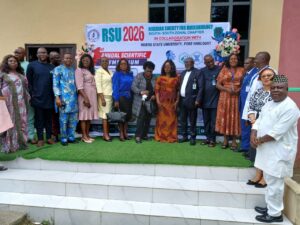
She expressed delight that Rivers State University was hosting the NSM South-South Zonal Symposium, noting that the gathering would promote scientific inquiry and contribute to national development.
Professor. Odu urged young scientists and students to pursue excellence and make meaningful contributions to science, innovation, and societal development.
Also speaking, the Vice-Chancellor of Rivers State University, Professor Isaac Zeb-Obipi, represented by the Deputy Vice-Chancellor (Academics), Professor Richard Amadi, said the symposium reflected the university’s commitment to advancing microbiological research and addressing regional challenges.
He noted that the Niger Delta’s unique environmental realities make microbiological research particularly relevant, adding that Artificial Intelligence has become an indispensable tool for solving environmental and public health problems.
“AI is at the centre of scientific advancement today. We must learn how to adopt and utilise it to achieve sustainable environmental solutions,” he said.
The National President of the Nigerian Society for Microbiology, Professor Sunday Ado, represented by the Vice President, Professor Ekperechi Amadi, described the symposium as a landmark achievement for the South-South zone.
He commended the zonal leadership for organising the event and expressed optimism that it would become an annual platform for collaboration, knowledge sharing, and professional development among microbiologists.
Professor Ado encouraged participants to maximise opportunities for networking and engagement with experts from within and outside the region.
The Rivers State Commissioner for Education, Dr. Peter Nwagor who was represented by Mrs. Magdalene Wilson,Director, Higher Education said the inauguration of the annual symposium marked a significant milestone in advancing scientific research and innovation in Rivers State and Nigeria.
He observed that microbiology remains central to addressing critical issues such as global health, food security, environmental sustainability, and industrial development.
“Bringing together leading researchers and practitioners to discuss contemporary challenges is not only timely but essential for our collective progress,” he stated.
In her welcome address, the South-South Zonal Coordinator of the Nigerian Society for Microbiology, Professor Nedie Akani expressed gratitude to the National Executive Council of the society for entrusting her with the responsibility of coordinating the zone.
She said the symposium was conceived as a response to the region’s pressing challenges, including antimicrobial resistance, oil pollution, food safety concerns, and waterborne diseases.
According to her, microbiologists in the region possess the expertise and innovative solutions needed to tackle these challenges.
She assured participants that the symposium’s keynote sessions, plenaries, technical discussions, and student presentations would translate research findings into practical impact for society.
Earlier, the Chairman of the Local Organising Committee, Professor Omokaro Obire, said the maiden symposium would strengthen the dissemination of microbiological research and enhance its relevance to policymakers and development practitioners.
She expressed hope that deliberations at the event would foster new partnerships capable of driving national development.
In a goodwill message, the Dean of the Faculty of Science, Rivers State University, Professor Ndokiari Boisa,represented by the Associate Dean, Professor Emeka Emos highlighted the significance of integrating Artificial Intelligence into microbiological research.
He noted that the university and the South-South region boast a strong community of researchers and expressed confidence that the symposium would generate fresh insights and innovative solutions to contemporary challenges.