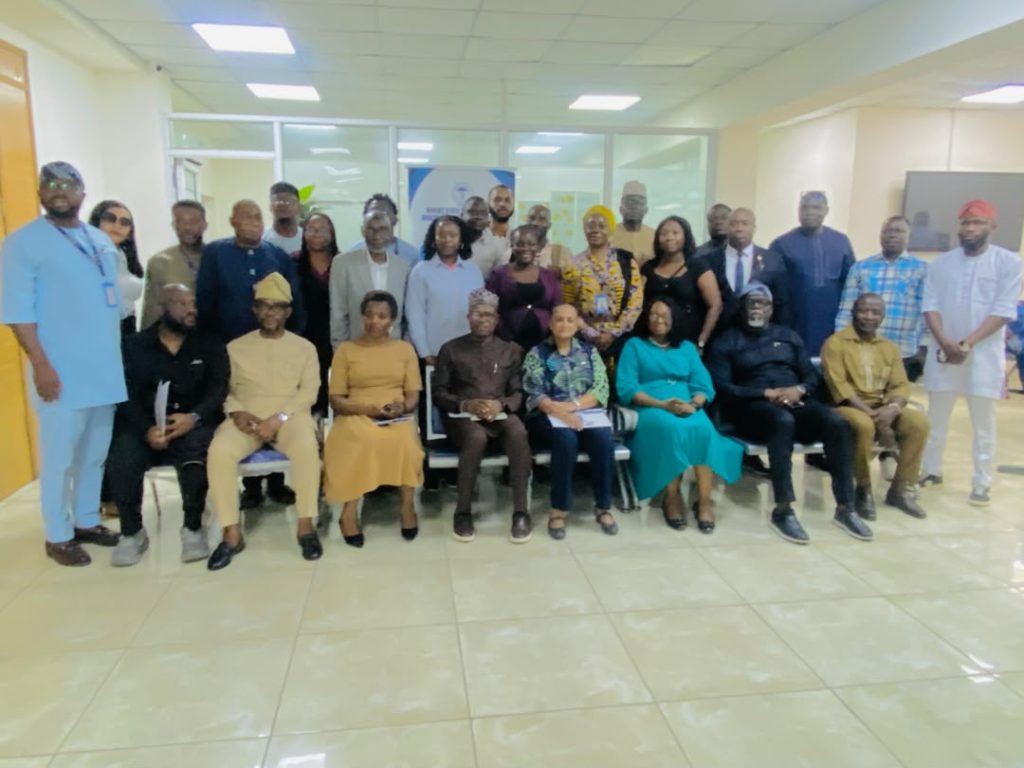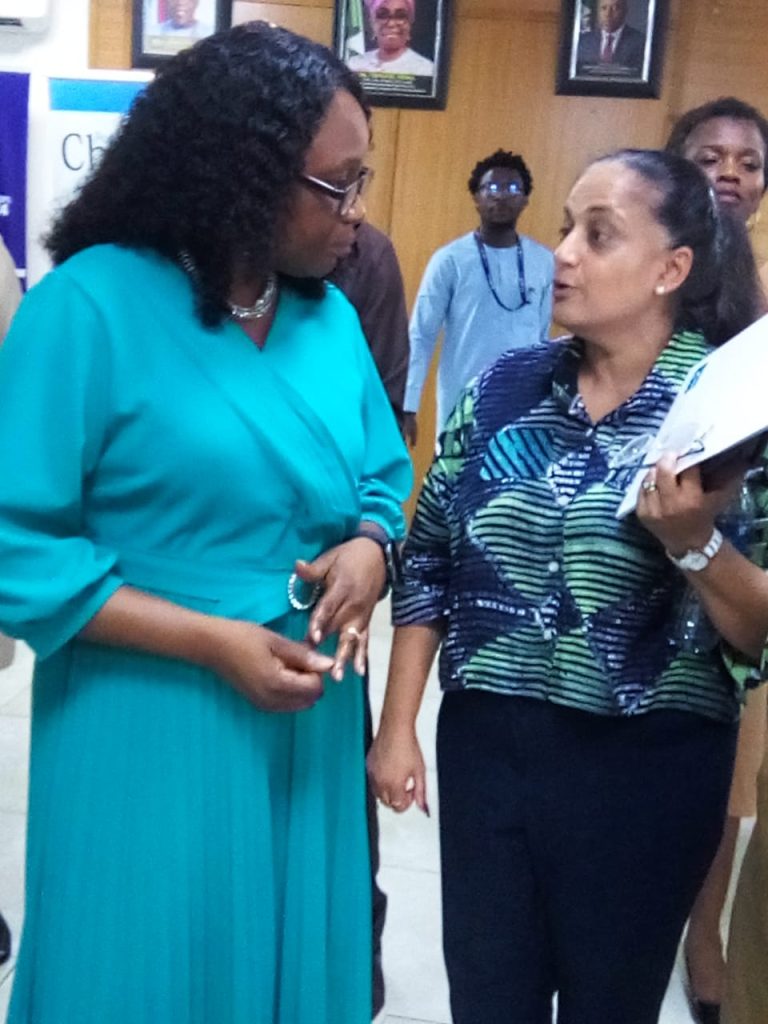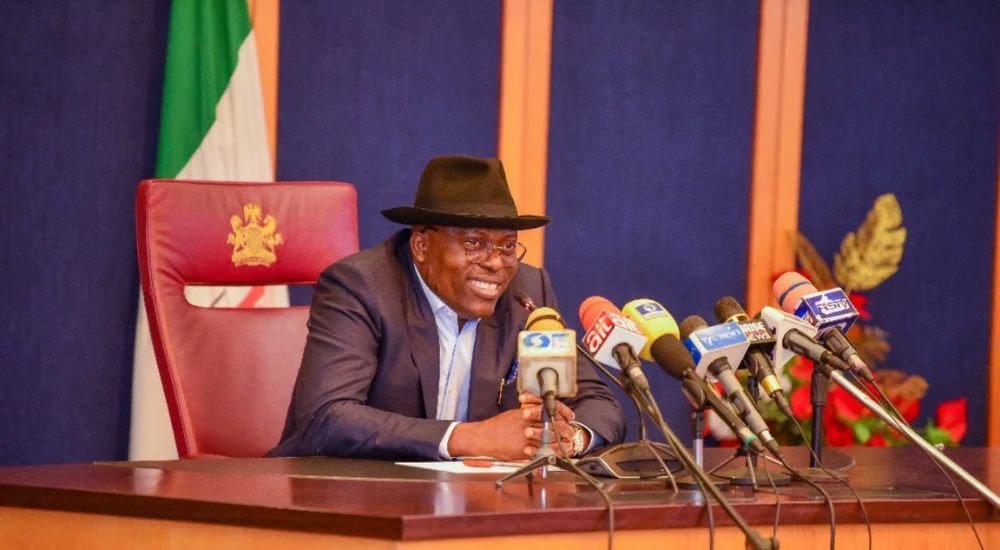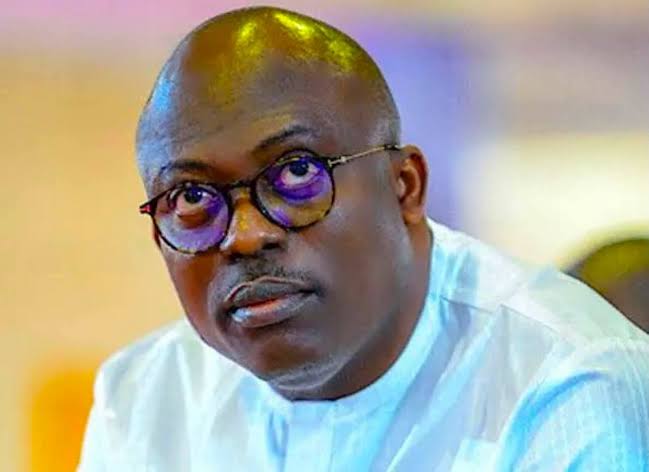


The Managing Director of the Niger Delta Development Commission, NDDC, Dr Samuel Ogbuku, has been conferred with the Fellowship of the Nigerian Institute of Management (FNIM), the Institute’s highest professional membership grade, in recognition of his leadership, professional excellence and contributions to national development.
The conferment took place during the investiture ceremony of the Nigerian Institute of Management (Chartered), at the 2026 Fellows’ Award and Spouses’ Day, held in Lagos as part of activities marking the institute’s 65th anniversary.
In his remarks after receiving the Fellowship, Ogbuku described the recognition as a call to greater responsibility. He expressed his appreciation to the Governing Council, Management and members of the Nigerian Institute of Management for the “prestigious fellowship” and for recognizing his contributions to the profession and society.
He stated: “I receive this distinguished recognition with deep gratitude and humility. Beyond the honour itself, I see it as a call to greater responsibility, higher professional standards and deeper service to humanity.”
The NDDC boss noted that the milestone further strengthens his resolve to deploy his knowledge, skills, experience and resources to support institutions, people and initiatives that promote sustainable development.
Ogbuku said further: “As I embrace this new professional responsibility, I remain committed to giving my time, expertise, human and material resources towards serving the people of the Niger Delta and contributing meaningfully to humanity.”
Some NDDC Directors were also honoured with awards at the ceremony, further highlighting the recognition of excellence in the Commission’s service delivery.
Also present at the event was the Chief of the Naval Staff, Vice Admiral Idi Abbas, who was among the distinguished personalities honoured during the ceremony.
The Fellowship of the Nigerian Institute of Management, FNIM, is awarded to distinguished professionals who have made significant contributions to the field of management and to national development.
The Nigeria Police and the Institute of Chartered Accountants of Nigeria (ICAN) have begun moves to strengthen collaboration in forensic accounting, financial crime investigation and fraud prevention, particularly among small and medium-sized enterprises (SMEs).
The Inspector-General of Police, IGP Olatunji Rilwan Disu, psc(+), NPM, disclosed this on Friday, August 21, 2026, when he received the President and Chairman of Council of ICAN, Hajia Queensley Sofuratu Seghosime, mni, FCA, and her delegation at the Force Headquarters, Abuja.
The meeting, according to a statement signed by the Force Public Relations Officer, CSP Ani Iniedu, and posted on X, focused on deepening professional collaboration between the Police and ICAN to enhance the investigation and prosecution of increasingly sophisticated financial and economic crimes. Seghosime congratulated Disu on his appointment as Inspector-General of Police and commended his administration’s emphasis on accountability, modernisation and institutional reforms.
She said the growing sophistication of financial crimes required enhanced technical capacity among investigators, particularly in forensic accounting and financial investigation.
ICAN proposed structured training and certification programmes for Police investigators, specialised courses for detectives and opportunities for cadets of the Police Academy to obtain the Accounting Technician Scheme for West Africa (ATSWA) certification.
The two institutions also considered establishing a dedicated Police-ICAN response mechanism for high-profile financial fraud cases, with professional accountants providing technical support in investigation, evidence development and prosecution.
Disu welcomed the proposed partnership, stressing that modern policing increasingly required specialised expertise and strategic collaboration with professional institutions.
He also proposed a joint awareness campaign by the Police and ICAN to educate businesses, especially SMEs, on fraud prevention, early detection and sound financial management practices.
The IGP noted that preventing financial crimes before they occur was as important as investigating and prosecuting offenders, adding that greater awareness among business owners could help reduce vulnerabilities to fraud and other financial crimes.
The Nigeria Police Force, he said, would continue to strengthen its capacity to tackle financial and economic crimes through specialised training, professional partnerships and the deployment of modern investigative techniques.
The ICAN delegation included its Registrar/Chief Executive, Dr Lanre Olasunkanmi; Chairman, ICAN Abuja District, Mr Emeka Okoroeze; and Mr Adamu Yusuf, FCA.
The Federal Government has declared Tuesday, August 25, 2026, a public holiday to mark this year’s Eid ul Mawlid, commemorating the birth of Prophet Muhammad.
The Minister of Interior, Olubunmi Tunji-Ojo, announced the declaration on Friday in a statement issued by the ministry’s Permanent Secretary, Dr Magdalene Ajani.
Tunji-Ojo congratulated Muslims in Nigeria and across the diaspora on the occasion, urging them to use the celebration to reflect on the teachings and enduring values associated with the life of the Prophet.
The minister particularly urged Nigerians to draw lessons from the Prophet’s emphasis on compassion, humility and service to humanity, saying such virtues remained crucial to the country’s quest for peace and unity.
“Every Eid ul Mawlid gives us reason to pause and draw lessons from a life defined by compassion, humility and service to others,” he said.
“These are qualities our nation needs now more than ever, and I encourage every Nigerian, not just our Muslim brothers and sisters, to reflect on them.”
He called on Nigerians to use the occasion to pray for peace, unity and national cohesion, stressing that building and sustaining a peaceful nation was a collective responsibility.
Tunji-Ojo also urged Muslims and other Nigerians to celebrate with restraint, mutual respect and consideration for one another, while wishing the Muslim faithful a peaceful and joyous Eid ul Mawlid.
The minister reaffirmed the commitment of the President Bola Tinubu administration to protecting lives and property and promoting peace and stability across the country. He further appealed to citizens to support efforts aimed at strengthening national unity and fostering peaceful coexist.
The Rivers State Governor, His Excellency, Sir Siminalayi Fubara, has congratulated Team Rivers for emerging champions at the grand finale of the President Bola Ahmed Tinubu Inter-Senior Secondary Schools Debate Championship.
The Governor described the students’ victory as “a great feat” and a clear demonstration of the intellectual capacity, brilliance, confidence, and preparedness of Rivers children to compete and excel at the national level.
In a statement issued by Onwuka Nzeshi, Chief Press Secretary to the Governor, Fubara commended the students for their eloquence, critical thinking, and teamwork, while also appreciating their teachers, coaches, and the Rivers State Ministry of Education for the guidance and support that led to the outstanding performance.
“This victory is a source of immense pride to all Rivers people. It shows that our investment in education and human capital development is yielding results. Our children have once again proven that they are among the best in the country.
We are proud of you and we will continue to support programmes that build the minds of our young people,” the Governor stated.
He gave assurance that his administration will continue to create an enabling environment and provide necessary support for academic and extracurricular activities in schools across Rivers State to help the youths to excel in future competitions.
The Governor further urged other students across the state to draw inspiration from Team Rivers and strive for excellence in all their endeavors.
The finals of the President Bola Ahmed Tinubu Inter-Senior Secondary Schools Debate Championship held on Thursday at the Obi Wali International Conference Centre, Port Harcourt, Rivers State.
Former Vice President and presidential candidate of the African Democratic Congress (ADC), Atiku Abubakar, has pledged to restore petrol subsidy if elected president in 2027, accusing the Bola Tinubu administration of failing to account for the trillions of naira saved from the policy’s removal.
Atiku made the declaration during an interview on Wednesday, insisting that Nigerians had yet to see commensurate benefits from the subsidy reform introduced by President Bola Tinubu in May 2023.
Speaking in Hausa, the former vice president questioned the whereabouts of the funds generated following the removal of the subsidy.
“I did not oppose the removal of the oil subsidy, but where is the money? Where did it go? It was intended to reduce poverty and help children attend school. Where is the money now? It seems they are just stealing it,” he said.
Atiku added: “If elected, I will bring back the oil subsidy, and whoever stole the money must refund it.”
His position came on the same day the Federal Government disclosed that the subsidy removal had generated an estimated N15.8 trillion in additional resources for the federation between June 2023 and December 2025.
The Minister of Finance and Coordinating Minister of the Economy, Taiwo Oyedele, said the figure reflected increased revenue mobilisation, including gains associated with the naira value of dollar-denominated transactions following the government’s exchange-rate reforms.
But Atiku has rejected the government’s account of the gains from the reforms, with his camp demanding a transparent reconciliation of approximately N30 trillion in federation revenues, deductions, savings and transfers.
The ADC presidential candidate argued that the resources freed by the subsidy removal should have translated into tangible improvements in the lives of Nigerians, particularly in security, education, infrastructure and employment.
According to him, the government had successfully removed the subsidy but failed to demonstrate how the resulting savings had been deployed to address the country’s pressing challenges.
“The government successfully removed the subsidy, but we do not know where the money went. If they had used the money for development, to solve security problems, for education, and to create opportunities for the youth, it would be different,” he said.
“If elected, I can remove the subsidy and use the money to do all these properly.”
The subsidy removal has remained one of the most controversial economic reforms of the Tinubu administration, triggering a sharp increase in petrol prices and contributing to higher transportation costs, food prices and the overall cost of living.
The policy, however, has also resulted in increased monthly allocations to the three tiers of government through the Federation Account, with several state governors acknowledging higher Federation Account Allocation Committee (FAAC) receipts.
Atiku’s pledge to restore the subsidy marks a major departure from his position during the 2023 presidential election.
In December 2022, while contesting the presidency on the platform of the Peoples Democratic Party (PDP), Atiku had promised to remove the fuel subsidy within his first 100 days in office.
His latest position is therefore expected to intensify the debate over the future of the country’s fuel subsidy regime as political parties and candidates begin to shape their economic agendas ahead of the 2027 elections.
Atiku is not alone in advocating a return to subsidy. African Action Congress (AAC) presidential candidate, Omoyele Sowore, has also pledged to restore petrol subsidy if elected, arguing that the government continues to subsidise petrol and the naira despite its declaration that the subsidy regime had ended.
With the 2027 contest gradually taking shape, the competing claims over subsidy savings, government revenues and the impact of economic reforms are expected to become major campaign issues, particularly as Nigerians continue to grapple with the high cost of living.
The Association of Niger Delta Online Publishers (ANDOP) has secured the support of the Nigeria Union of Journalists (NUJ), South-South Zone, for its planned political debates involving candidates contesting the 2027 elections across the region.
The commitment was made when the Board of Trustees of ANDOP paid a courtesy visit to the Vice President, South-South Zone of the NUJ, Opaka Dokubo, at his office in Port Harcourt, Rivers State.
The visit was aimed at formally introducing the association to the NUJ zonal leadership and briefing Dokubo on the proposed collaboration between both organisations to organise debates for candidates of various political parties ahead of the 2027 general elections.
Dokubo welcomed the initiative and pledged the full collaboration of the NUJ to ensure its successful execution across the Niger Delta.
He commended the Board of Trustees and members of ANDOP for the professionalism they had brought to online journalism, describing the association as an important force in promoting credible information and countering the spread of fake news in the digital space.
The NUJ zonal vice president also expressed delight over the calibre of journalists driving online publishing in the Niger Delta, describing their emergence as a positive development for journalism and the region.
Dokubo also urged ANDOP to find ways of grooming and mentoring young journalism graduates who will eventually take over from the present generation and ensure that quacks do not have a place in online journalism practice in the region.
He assured the delegation that the NUJ would work assiduously with ANDOP to ensure the success of the proposed debates across the region.
Earlier, the Founding President of ANDOP, Ofonime Umanah, who led the delegation, said the association was established not only to present a correct perspective of issues affecting the Niger Delta through online platforms, but also to mentor younger journalists in the region.
Umanah said ANDOP was prepared to work with the NUJ to organise credible and issue-based debates involving governorship, senatorial and House of Representatives candidates.
He said the debates would provide citizens and voters with an opportunity to hear directly from candidates, assess their programmes and competence, and make informed choices at the polls.
According to him, the initiative is part of ANDOP’s broader commitment to strengthening journalism, democratic participation and responsible political communication in the Niger Delta.
Among members of the delegation were the Secretary of ANDOP, Celestine Ogolo, and the Treasurer, Sir Lawson Hayford.
The Niger Delta Development Commission (NDDC) has thrown its weight behind a three-year strategic initiative to transform Bonny Kingdom in Rivers State into a globally competitive tourism destination.
The NDDC Managing Director, Dr Samuel Ogbuku, who spoke at the Bonny Island Tourism and Investment Summit, said the “Discover Bonny and Orange Economy” initiative represented a bold step towards diversifying the kingdom’s economy through tourism, enterprise development and investment promotion.
Ogbuku, represented by the Commission’s Director of Commercial and Industrial Development, Mrs Lyna Okara, said tourism had far-reaching economic implications beyond hospitality, stressing that it could drive growth in security, communications, finance, education, healthcare and other sectors.
The summit, organised by the Bonny Chamber of Commerce, Industry, Mines and Agriculture (BCCIMA), was held under the theme, “Bonny Island: Transforming into a Premier Global Destination.”
The NDDC boss commended BCCIMA for developing an initiative aimed at mobilising capital, promoting innovation and creating sustainable opportunities for entrepreneurs and emerging businesses in Bonny and across the Niger Delta.
He said Bonny, historically associated with its oil and gas wealth, was now exploring tourism as a new economic frontier.
“For decades, when the world thought of Bonny, it thought of one thing, namely, what was under the water; not what was on top of it. Oil and gas built roads, schools, jetties that still put food on tables. Today, Bonny is doing what the river has always done. It is finding a new path through tourism,” he said.
Ogbuku noted that the NDDC’s mandate included sustainable development, economic empowerment, infrastructure, human capital development and inclusive prosperity across the Niger Delta.
He said the Commission had consistently supported youths, women, entrepreneurs and small and medium-scale enterprises through skills acquisition, enterprise development, innovation hubs, sponsorships and strategic partnerships.
He also recalled that the NDDC established the Niger Delta Chambers of Commerce, Industry, Trade, Mines and Agriculture (NDCCITMA) in 2023 to promote trade, investment, industrial development, private-sector participation and regional economic integration.
The NDDC chief executive assured stakeholders that the Commission would continue to collaborate with private investors and other economic development institutions to create opportunities for youths, strengthen start-ups and unlock new areas of economic growth.
Also speaking, the Director-General of the Nigerian Tourism Development Authority, Dr Olayiwola Awakan, said Bonny Island possessed significant tourism attractions that remained largely untapped.
Awakan stressed the need for private-sector participation, arguing that a commercially driven tourism industry would reduce dependence on government funding and political administrations.
The President of BCCIMA, Dr Constance Nwokejiobi, said the Orange Economy initiative was designed to complement Bonny’s traditional oil and gas economy with a sustainable tourism industry based on its cultural heritage, historical sites, natural attractions and hospitality potential.
She disclosed that the initiative would establish a Tourism Concierge Platform, a structured framework for investors and a privately driven Tourism Centre to coordinate tourism activities and attract investment.
“Tourism is Nigeria’s Orange Economy, a creative and service-driven growth engine capable of diversifying and expanding our national GDP beyond oil and gas,” she said.
The traditional ruler of Grand Bonny Kingdom, King Edward Asimini William Dappa Pepple III, said Bonny had a proud history and remained an important contributor to Nigeria’s economy through its oil and gas investments.
The monarch, however, expressed support for tourism as a second and more sustainable economic pillar for the kingdom, noting that Bonny’s history, culture and natural attractions provided a strong foundation for the development of a globally recognised tourism industry.
NDDC Executive Director, Finance and Administration, Alabo Boma Iyaye (4th right), flanked by the Director of Administration and Human Resources, Sir Kelechi Nwelue (5th right), and the Director, Finance and Accounts, Dr Kunemofa Asu (3rd right), during the inauguration of the Committee for Negotiation and Review of the Staff Terms and Conditions of Service at the Commission’s headquarters in Port Harcourt.
The Niger Delta Development Commission (NDDC) has inaugurated a committee to review the terms and conditions of service of its employees, in a move aimed at improving staff welfare, strengthening industrial harmony and enhancing service delivery across the Niger Delta region.
The committee, comprising representatives of management and the NDDC Staff Union, was inaugurated yesterday at the commission’s headquarters in Port Harcourt.
Speaking at the event, the Executive Director, Finance and Administration, Alabo Boma Iyaye, said the review was necessary to establish a structured and harmonious working environment in which the rights and obligations of both employees and management are clearly defined.
Iyaye described the terms and conditions of service as the framework governing the relationship between an organisation and its workforce, noting that clearly defined provisions were essential for protecting staff benefits and ensuring accountability.
“Without a contract, organisations cannot function effectively. If there are no conditions of service, people will not be guided properly; management could decide to remove staff benefits, and nobody would question it,” he said.
He urged members of the committee to undertake a comprehensive, clause-by-clause review of the existing conditions of service, correcting omissions and addressing areas that no longer reflect the realities of the commission and its workforce.
According to him, the exercise should not be driven by individual interests but by the broader objective of strengthening the NDDC as an institution.
“This exercise is fundamentally about negotiation and finding a balance that will benefit both the workforce and the organisation,” Iyaye said.
He cautioned the committee against rushing the process, urging members to study relevant provisions thoroughly and benchmark the NDDC’s conditions of service against those of comparable government agencies and other organisations.
Iyaye also stressed the need for the review to comply with prevailing government regulations, noting that the NDDC operates within a broader public-sector framework.
He, however, reminded the committee that improved staff welfare must be balanced with the commission’s statutory responsibility to promote sustainable development in the Niger Delta.
“Our mandate first is to the people of the Niger Delta and how to sustain the development of the region. While negotiating the benefits of staff, also know that we have a mandate to achieve, which is to ensure the sustainable development of the Niger Delta region,” he said.
Earlier, the Director of Administration and Human Resources, Sir Kelechi Nwelue, commended the Managing Director of the NDDC, Dr Samuel Ogbuku, for approving the establishment of the review committee.
Nwelue described the inauguration as a significant step towards ensuring that the commission’s staff policies and conditions of service remain fair, relevant and responsive to the changing needs of its workforce.
He said periodic reviews were essential to reflect current realities, organisational requirements and applicable regulations, adding that a motivated workforce was critical to the effective implementation of the NDDC’s mandate.
Nwelue urged members of the committee to approach the assignment with integrity, patience, commitment and a spirit of cooperation.
Members of the committee include the Director of Administration and Human Resources, who serves as chairman; the Director of Finance and Accounts; Director of Internal Audit; Director of Planning, Research and Statistics; Director of Legal Services; NDDC Staff Union Chairman and Secretary; and other representatives from various departments of the commission.
The review is expected to provide an updated framework for staff welfare and employment conditions while ensuring that the commission remains focused on its development mandate across the Niger Delta.
L-R: Secretary to the Rivers State Government, Dr Dagogo Wokoma; Deputy Governor, Prof Ngozi Odu, Governor of Rivers State, Sir Siminalayi Fubara, Chairman, Obio/Akpor LGA, Dr Gift Worlu and former Deputy Governor, Engr Tele Ikuru, during the commissioning of projects at Elechi Amadi Polytechnic, Rumuola, on Wednesday.
Governor Siminalayi Fubara of Rivers State has called for a fundamental shift in Nigeria’s educational system towards vocational and technical education, arguing that the overemphasis on academic certificates at the expense of practical skills is fuelling unemployment and undermining economic development.
Fubara made the call on Wednesday while commissioning three major infrastructure projects at the Captain Elechi Amadi Polytechnic, Rumuola, in Obio/Akpor Local Government Area of the state.
The governor said Nigeria could not adequately prepare its young population for the demands of the 21st-century economy without deliberately realigning its educational curriculum towards practical skills, entrepreneurship and self-reliance.
The School of Engineering Technology Building, Elechi Amadi Polytechnic, Rumuola, Port Harcourt, commissioned by the Governor of Rivers State, His Excellency, Sir Siminalayi Fubara on Wednesday.
He recalled that the 6-3-3-4 education system adopted by Nigeria in the 1980s was designed to expose young people to vocational and technical training at the secondary school level, enabling them to acquire skills, trades and crafts before proceeding to polytechnics or universities.
According to him, the original concept was for students to acquire practical skills within the first three years of secondary education, allowing those with the requisite aptitude to become self-employed while others could pursue further academic training.
Fubara, however, regretted that the country had gradually deviated from the vision, resulting in a society where young people place greater value on degrees and certificates than on competencies required by the labour market.
“The Polytechnic system was designed in such a way that if you’re gifted with your hands; if you’re a technical person, you can go there and learn more, build your skills so that you can add value to our society,” he said.
The Governing Council Building, Elechi Amadi Polytechnic, Rumuola, Port Harcourt, commissioned by the Governor of Rivers State, His Excellency, Sir Siminalayi Fubara on Wednesday.
The governor lamented that society had failed to attach sufficient importance to technical education, forcing many young people into university education even when their strengths and interests were better suited to vocational training.
He said the Entrepreneurship Centre at the polytechnic was conceived to provide young people with relevant skills that would enable them to become employers of labour rather than job seekers after graduation.
“For us as a government, what is important to us is not just about embarking on projects but executing projects that will touch the lives of the people; projects that will solve problems and projects that will bring advancement to our lives,” Fubara said.
He added: “Today, technology has taken over everything. So if we have to prepare our youths; if we have to prepare our dear state, for the challenge ahead, our educational programmes have to be very strategic.”
The governor urged the management, students and members of the host community to protect the newly completed facilities and equipment from theft and vandalism.
He advised them to regard the projects as their own and not merely as government property.
Governor of Rivers State,His Excellency, Sir Siminalayi Fubara, unveiling the plaque on the Entrepreneurship Centre, Elechi Amadi Polytechnic, Rumuola, Port Harcourt, on Wednesday.
Fubara also urged residents of Obio/Akpor to embrace the prevailing peace in the state, stressing that political stability was essential for sustainable development.
The Rivers State Commissioner for Education, Dr Peter Nwagor, said two of the commissioned projects comprised one-storey buildings constructed and fully furnished for the School of Engineering and the Entrepreneurship Centre.
He said each building occupies about 1,940 square metres and contains eight halls, 14 staff offices and 22 toilet facilities, in addition to workshops, administrative spaces, staff quarters and fully air-conditioned areas designed for practical training.
The third project, the Governing Council Building, was initiated under the administration of former governor Nyesom Wike but completed and fully furnished by the Fubara administration.
The Rector of Captain Elechi Amadi Polytechnic, Dr Moses Neebee, described the projects as historic landmarks for the institution, saying the Entrepreneurship Centre and other facilities represented some of the most significant developments on the campus in nearly two decades.
The governor’s intervention, he said, would strengthen the institution’s capacity to provide practical, industry-relevant training and contribute to the development of skilled manpower for Rivers State and Nigeria.
The Vice-Chancellor of Rivers State University (RSU), Prof. Isaac Zeb-Obipi, has challenged postgraduate researchers and scholars to move beyond academic publications and transform their research findings into marketable products capable of driving economic growth and improving lives.
Zeb-Obipi, who spoke at the university’s 2nd Annual International Conference of the College of Postgraduate Studies on Tuesday, said research that remained on library shelves could not adequately address the complex challenges confronting society.
The conference, themed “Global Challenges, Local Solutions: Driving Inclusive Growth and Transformation Through Postgraduate Research,” brought together academics, researchers, policymakers, industry leaders and development partners.
Represented by the Deputy Vice-Chancellor, Administration, Prof. Blessing Jaja, the vice-chancellor said universities must increasingly position research as a catalyst for innovation, entrepreneurship and industrial development.
He identified technological disruption, youth unemployment, energy transition, insecurity, climate change, public health concerns, food insecurity and widening socio-economic inequalities as challenges requiring innovative, multidisciplinary and evidence-based research.
According to him, researchers must strive to produce practical solutions, develop marketable products, influence public policy and create enterprises from their discoveries.
“Through rigorous scholarship and innovative research, we can transform ideas into products, research into enterprise, and knowledge into sustainable development outcomes,” he said.
Zeb-Obipi called for stronger partnerships between universities and industry, increased research funding, patent development and improved protection of intellectual property to accelerate the commercialisation of research discoveries.
He said RSU was committed to repositioning postgraduate education as a driver of technological advancement and economic transformation, urging conference participants to use the platform to establish strategic collaborations and research networks capable of addressing both local and global challenges.
The Provost of the College of Postgraduate Studies, Prof. T.K.S. Abam, said the university was deliberately shifting from a research culture driven primarily by publications to one focused on measurable societal impact.
Abam urged postgraduate researchers to develop locally relevant solutions to global challenges rather than relying excessively on imported models.
He said the university was transitioning into an entrepreneurial institution where laboratories and libraries would serve as innovation incubators, while postgraduate research would translate into patents, spin-offs, social enterprises and policy frameworks capable of creating jobs and promoting inclusive growth.
The chairman of the occasion and former RSU Vice-Chancellor, Prof. Barineme Fakae, also challenged postgraduate scholars to ensure that their research produced tangible solutions to societal problems and contributed to national development.
Fakae described postgraduate research as the engine of innovation and a bridge between knowledge, practice and societal transformation.
He urged researchers to confront emerging challenges with courage and develop solutions that were locally relevant, stressing that research should not end in academic journals but should make a measurable difference in society.
The conference also featured distinguished academics, including former vice-chancellors, Professors Idowu Olayinka and Joseph Ajienka, alongside Fakae. Zeb-Obipi commended the College of Postgraduate Studies for sustaining the annual conference, expressing optimism that its deliberations would generate practical recommendations, innovative solutions and enduring partnerships for sustainable development.