


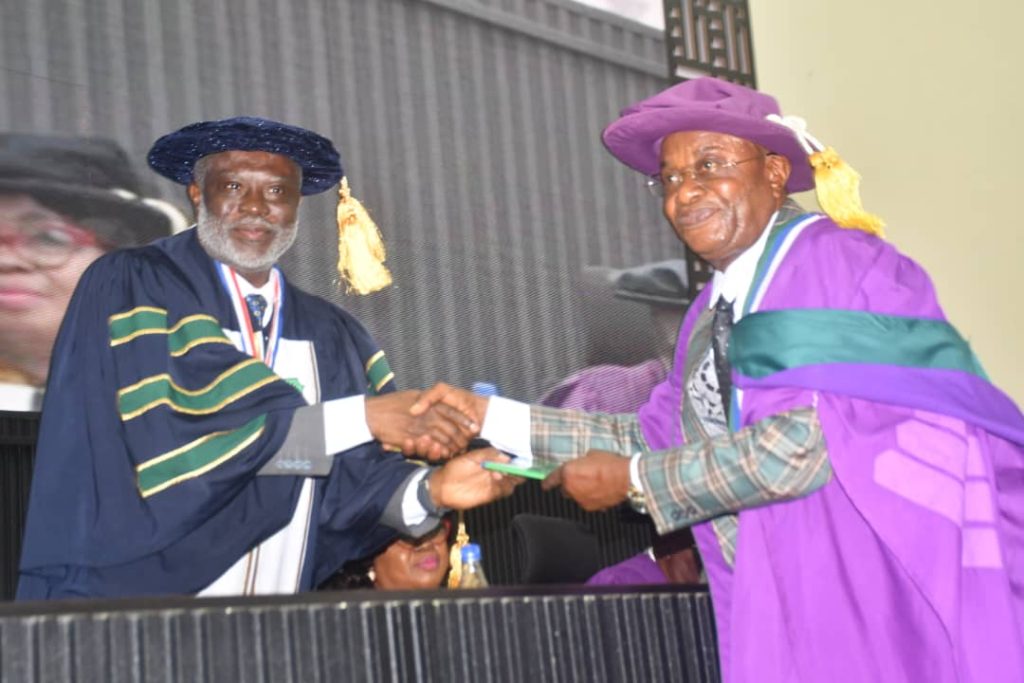
Vice-Chancellor, Rivers State University, Professor Isaac Zeb-Obipi (left) congratulating Professor David Ogbonna after the latter’s Inaugural Lecture on Wednesday.
A Professor of Environmental Microbiology and Waste Management at Rivers State University (RSU), David Ogbonna, has called on the Rivers State Government to partner universities, technical institutions and international organisations to invest massively in the waste management sector to unlock its economic and environmental benefits.
Professor Ogbonna said strategic investment in waste conversion could generate biofuels such as bioethanol and biogas, as well as bioplastics, electricity and other valuable bioresources, while providing alternative sources of revenue and helping to mitigate climate change.
The university don made the call during the 140th Inaugural Lecture of RSU, held at the university campus last Wednesday. The lecture was titled “From Waste to Wealth: Harnessing Invisible Bioresources for Environmental Protection and Sustainable Development in Nigeria.”
He explained that waste materials could be converted into useful products, including compost, wastewater treatment products and biohydrogen, to meet everyday needs, reduce environmental pollution and promote sustainable development.
The inaugural lecturer challenged the conventional perception of waste as a burden, describing it instead as a valuable resource that could be transformed into new products and services.
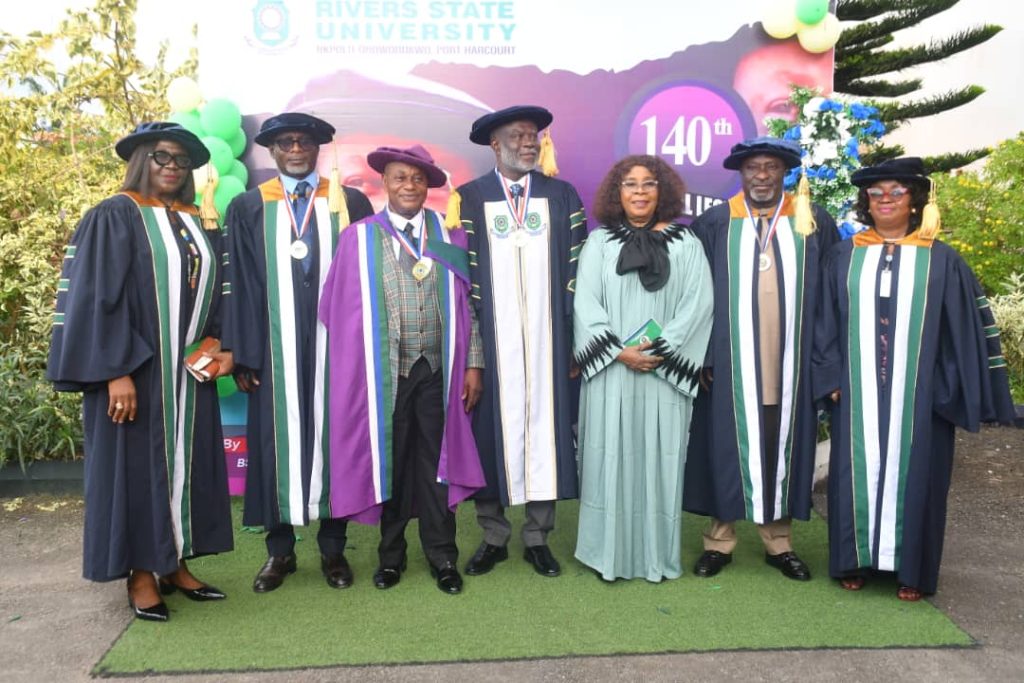
Professor David Ogbonna (3rd left) with Principal Officers of Rivers State University.
According to him, adopting waste-to-wealth strategies would improve public health, encourage sustainable consumption and support the achievement of the United Nations Sustainable Development Goals (SDGs).
He said: “The strategic harnessing of waste as a resource can empower cities and countries to generate new economic opportunities, stimulate technological innovation and promote environmentally conscious consumption patterns that benefit humanity and the environment.”
Professor Ogbonna, who lectures in the Department of Microbiology, Faculty of Science, RSU, highlighted the importance of microorganisms in environmental management, explaining that these invisible living organisms exist in air, water, soil and other living organisms.
He classified microorganisms into three broad categories: the good, the bad and the ugly.
While beneficial microorganisms contribute to food production and preservation, harmful microbes cause diseases in humans and animals. Others are responsible for food spoilage, economic losses and food waste, he explained.
The professor also emphasised the need to adopt bioremediation and phytoremediation as innovative approaches to managing agro-industrial waste. He said the processes could help reduce environmental pollution while recovering valuable materials and producing commercially viable products, thereby advancing the principles of a circular bioeconomy.
Professor Ogbonna further highlighted the transformative role of microorganisms in recycling and sustainable waste management, noting that their effective application could stimulate economic growth, protect human health and preserve the environment.
He said the lecture offered a roadmap for policymakers, businesses and industries to build an inclusive and sustainable circular economy that benefits both people and the planet.
In his remarks, the Vice-Chancellor of RSU, Prof. Isaac Zeb-Obipi, commended the inaugural lecturer, describing the university as a centre for research and innovation dedicated to societal development and sustainable progress.
He reaffirmed the institution’s commitment to advancing knowledge and promoting research that addresses societal challenges.