


Home Blog Page 37

NDC Registration Faces Legal Challenge As Ardo Alleges Irregularities, Heads To Court

A leading promoter of the All Democratic Alliance (ADA), Umar Ardo, has raised fresh concerns over the registration of the Nigerian Democratic Congress (NDC), vowing to challenge the process in court over alleged procedural breaches.

ADA is among the 171 political associations that applied to the Independent National Electoral Commission (INEC) for registration as political parties. However, the commission announced in February 2026 that only two associations were successfully registered.

Speaking at INEC’s quarterly consultative meeting with political party leaders in Abuja, the commission’s chairman, Joash Amupitan, disclosed that the Democratic Leadership Alliance (DLA) emerged as the only association registered independently by the commission, while the NDC was registered in compliance with a court order.

According to INEC, the applications were assessed in line with relevant provisions of the 1999 Constitution (as amended), the Electoral Act 2022, and the commission’s guidelines for political parties.

However, in an interview on Trust TV, Ardo accused INEC of deviating from its established procedures by registering a party that, he claimed, did not undergo the standard screening process.

He alleged that the NDC neither filed a formal application nor submitted key documents, including its constitution, manifesto and executive list, as required under the law, yet secured registration through a court ruling.

“The NDC obtained registration without properly applying. It did not meet the requirements set by the Constitution or INEC guidelines. This is clearly irregular, and we will challenge it,” Ardo said.

He maintained that ADA fulfilled all stipulated requirements, including payment of fees and submission of necessary documents, and was even cleared by INEC to proceed to the final verification stage before being denied registration alongside other groups.

Ardo further questioned the speed and outcome of the judicial process that led to the NDC’s registration, noting that while his group’s case has lingered in court for months, the NDC secured judgment within weeks.

He also criticised INEC for failing to appeal the court ruling and proceeding to issue the NDC a certificate of registration.

“We followed due process and were denied, while another group that did not comply was registered.

This inconsistency undermines confidence in the system and threatens democratic stability,” he added, disclosing that he had invested about ₦200 million in the registration process.

The ADA promoter said he would pursue legal redress against both INEC and the NDC, insisting that the integrity of Nigeria’s electoral system must be upheld.

Meanwhile, the NDC has dismissed Ardo’s claims. In a statement, its National Secretary, Ikenna Enekweizu, described the allegations as “mischievous and misleading,” maintaining that the party’s registration followed due legal process.

The controversy comes amid shifting political alignments ahead of the 2027 general elections, following the recent defection of former Labour Party presidential candidate, Peter Obi, and ex-Kano State governor, Rabiu Musa Kwankwaso, to the NDC.

Ardo, however, dismissed suggestions that his legal challenge is politically motivated, insisting that his actions are consistent with his history of seeking judicial interpretation on governance issues.

He added that any political party that emerges through what he described as a flawed process must be subjected to legal scrutiny, warning that such developments could have far-reaching implications for Nigeria’s democracy.

Obi Dumps ADC For NDC, Cites Political Crises, Renewed Push for ‘New Nigeria’

Former presidential candidate, Peter Obi, has explained his decision to resign from the African Democratic Congress (ADC) and join the Nigerian Democratic Congress (NDC) alongside former Kano State governor, Rabiu Musa Kwankwaso, describing the move as a continuation of his quest to build a “new Nigeria.”

In a statement shared via his X (formerly Twitter) account on Monday, Obi said his defection was not driven by anger, personal ambition or convenience, but by deep reflection on Nigeria’s current challenges and the urgent need for national rescue.

He noted that his political journey has always been anchored on service to the people, particularly Nigerians grappling with rising poverty, economic hardship and dwindling hope.

Obi disclosed that his exit from the ADC mirrors his earlier departure from the Labour Party, attributing both decisions to “severe, orchestrated litigation and internal crises” allegedly aimed at excluding him and other stakeholders from active participation in the electoral process.

While expressing gratitude to the ADC leadership, particularly its chairman, David Mark, Obi also acknowledged the support of former Vice President, Atiku Abubakar, and other party leaders.

He, however, cautioned against the weaponisation of political disputes, urging the Federal Government to refrain from encouraging unresolved litigations and internal party conflicts that could undermine democratic stability.

According to him, a functional democracy depends on strong institutions, credible opposition and the freedom of citizens to make political choices without fear or manipulation.

Obi described Nigeria as being at a critical juncture, citing worsening poverty, widespread hunger, insecurity and declining business activity as indicators of systemic failure. He stressed that leadership must prioritise competence, accountability, and compassion over propaganda and division.

He maintained that joining the NDC does not represent a shift in values, but rather a continuation of his long-standing mission to promote responsible governance, institutional independence and inclusive national development.

Obi further called on Nigerians, especially youths and women, to remain resilient and committed to the nation’s progress, urging them not to lose faith despite prevailing challenges.

“The task before us is bigger than any individual or political party,” he stated, adding that national transformation requires sustained belief, sacrifice and collective action.

Certificate Of Occupancy Not Proof Of Absolute Ownership, RSU Don Warn Nigerians On Land Rights

A law professor at Rivers State University, Port Harcourt, Professor Grace Akolokwu, has cautioned Nigerians against treating a Certificate of Occupancy (C of O) as conclusive evidence of land ownership, warning that such titles remain subject to government control and revocation.

Delivering the institution’s 130th inaugural lecture titled “Land As Man’s Epicentre: Interrogating the Roses and Thorns Under Nigerian Law,” Akolokwu said widespread assumptions about land ownership in Nigeria are “false and misleading.”

According to her, many Nigerians erroneously believe that once a C of O is issued, ownership is fully secured, that rural lands fall outside government control, and that compensation is automatic whenever land is revoked.

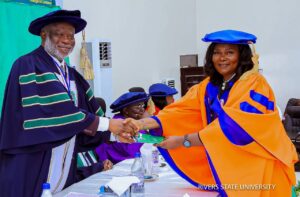
Vice Chancellor, Rivers State University, Professor Isaac Zeb-Obipi congratulating Professor Grace Akolokwu shortly after her presentation of the 130th Inaugural Lecture of the institution.

“These positions are false,” she said, stressing that a Certificate of Occupancy “is not inviolable but can be revoked.”

Akolokwu, who is a Professor of Property and Human Rights Law at the University, explained that a C of O does not confer absolute ownership but merely grants a right of occupancy, typically for 99 years, subject to conditions imposed by the state. She noted that the same authority that issues the certificate retains the power to withdraw it.

She further observed that while the Constitution of the Federal Republic of Nigeria 1999 guarantees property rights, its incorporation of the Land Use Act 1978 effectively subordinates those rights to government control.

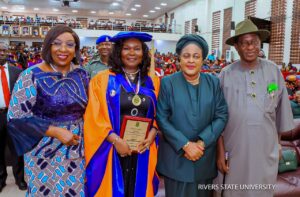
The Inaugural lecturer, Professor Grace Akolokwu (2nd left) flanked by Rivers State Deputy Governor, Prof Ngozi Nma Odu (left), Justice Mary Odili and Chief Shedrack Akolokwu, after the lecture.

“What appears as a guarantee with one hand is quietly withdrawn with the other,” she said.

The professor added that the Land Use Act and other related laws have continued to complicate land ownership in the country, creating uncertainties that discourage investment.

Despite these constraints, Akolokwu described land as central to human existence and development, likening it to a “rose” that provides economic value and opportunities, including leasing, agriculture, mortgages, and inheritance.

However, she maintained that the “thorns” embedded in Nigeria’s land laws must be addressed through urgent reforms.

Among her recommendations is the amendment of the Constitution and the Land Use Act to remove restrictive provisions and reduce the sweeping powers of state governors over land administration.

Professor Grace Akolokwu, delivering the inaugural lecture.

She also called for a review of key sections of the Land Use Act that require gubernatorial consent for land transactions and allow revocation of occupancy rights, arguing that such provisions hinder economic activities and access to credit.

Akolokwu advocated the adoption of a dual land tenure system that distinguishes between government-controlled urban land and community-owned rural land, allowing greater autonomy for individuals and communities in managing their property.

She further urged government to prioritise fair compensation through compulsory purchase rather than acquisition, promote resettlement policies, and protect the interests of mortgagees in land transactions.

On land administration, the professor recommended strict timelines for approval of building plans, sanctions for delays, and the establishment of digital land registries to enhance transparency and efficiency.

She also called for reforms to eliminate discriminatory customary practices that limit women’s rights to land ownership, as well as policies to address housing deficits through affordable financing.

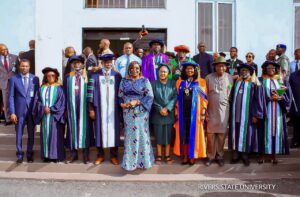
Group photograph after the lecture.

To tackle land-related conflicts and insecurity, Akolokwu proposed legislation to regulate livestock ranching and curb clashes between herders and farmers, alongside stricter enforcement against illegal arms.

She equally recommended criminalising land grabbing and unauthorised levies, while advocating constitutional amendments to grant host states and communities a greater share of proceeds from mineral resources found on their land.

The professor stressed that meaningful progress in Nigeria’s real estate sector depends on comprehensive legal reforms, particularly the amendment of the Land Use Act, despite the challenges posed by its constitutional status.

She also highlighted the need for electronic land registration systems, drawing lessons from global best practices, and called for the establishment of independent bodies to oversee land acquisition and compensation processes.

Akolokwu urged citizens to take proactive steps in securing their land rights by registering titles and developing their properties, noting that compensation in cases of revocation is based on improvements made on the land.

She concluded that without decisive reforms to streamline land rights and government roles, Nigeria’s development aspirations may remain constrained.

The inuagural lecture was attended by eminent personalities including Rivers State Deputy Governor, Professor Ngozi Nma Odu, former Supreme Court Justice, Mary Odili, Vice Chancellor of RSU, very distinguished academics and political elites, and the husband of the inaugural lecturer, Chief Shedrack Akolokwu.

World Press Freedom Day: De Gratia Centre Demands Protection For Journalists, Media Independence

0

The De Gratia Centre for Media Rights and Education based in Rivers State has called for renewed commitment to press freedom, describing it as a fundamental pillar for democracy, human rights, and sustainable development.

In a statement signed by the Executive Director of the Centre, Pastor Paulinus Nsirim to mark the 2026 World Press Freedom Day, the organisation joined the global community in celebrating the principles of a free press while urging stakeholders to safeguard the independence of the media.

The Centre noted that this year’s theme, “Shaping a Future at Peace: Promoting Press Freedom for Human Rights, Development and Peace,” highlights the critical role of a responsible and independent media in fostering peaceful societies and strengthening democratic institutions.

It stressed that press freedom remains essential to accountability and informed citizenship, warning that any attempt to silence journalists poses a direct threat to truth, justice, and societal stability.

“Where the media operates without fear or intimidation, truth prevails, accountability is strengthened, and citizens are empowered.

Conversely, suppressing journalists undermines justice and endangers peace,” the statement said.
Reaffirming its position, the organisation declared that press freedom is not a privilege but a right, vital for the protection of all other freedoms. It also described journalists as indispensable partners in nation-building, not adversaries of the state.

The Centre, however, expressed concern over ongoing challenges confronting media practitioners, including harassment, censorship, economic constraints, misinformation, and increasing digital surveillance. According to the statement, these threats not only endanger journalists but also weaken the integrity of information systems.

It called on governments to uphold constitutional guarantees that protect press freedom and ensure the safety of journalists.

Media organisations were urged to strengthen professionalism and adhere strictly to ethical standards, while citizens and civil society groups were encouraged to actively defend media independence.

The organisation further emphasised the responsibility of the media in an era of rapid technological change, urging practitioners to promote dialogue, counter misinformation, and contribute to peacebuilding efforts.

The De Gratia Centre reaffirmed its commitment to advancing media rights through training, advocacy, and research aimed at nurturing a new generation of ethical and courageous media professionals.

“As we mark this important day, all stakeholders must work collaboratively to build a future where press freedom is fully realised, human rights are protected, and peace becomes a shared and sustainable reality,” the statement added.

ADC Unveils Tight 2026 Primary Timetable, Pegs Presidential Form At ₦100m

The African Democratic Congress (ADC) has released a detailed timetable for its 2026 primary elections, setting out a compressed schedule that begins with the sale of nomination forms from May 5 to May 10.

In a statement issued on Sunday by its National Publicity Secretary, Bolaji Abdullahi, the party said the timetable underscores its commitment to internal democracy, transparency, and compliance with electoral guidelines.

According to the schedule, submission of completed nomination forms will take place between May 11 and May 13, while screening of aspirants is slated for May 14 and May 15. The results of the screening exercise will be published on May 17.

The party further disclosed that appeals arising from the screening will be entertained from May 18 to May 19, with the final list of cleared aspirants to be released on May 20.

Primary elections are scheduled to commence on May 21, with contests for State Houses of Assembly, the House of Representatives, and the Senate to be conducted simultaneously at the ward level. Governorship primaries will follow on May 22, while the presidential primary is fixed for May 25.

The process will culminate in a meeting of the National Executive Committee on May 26 and a Special National Convention on May 27 for final ratifications.

ADC also announced a structured fee regime for nomination forms across elective offices. The presidential form is priced at ₦100 million, governorship at ₦50 million, Senate at ₦20 million, House of Representatives at ₦10 million, and State House of Assembly at ₦3 million.

To promote inclusivity, the party introduced concessions, offering a 50 per cent discount for youths and a 25 per cent reduction for women and persons with disabilities.

The party urged members, stakeholders, and aspirants to adhere strictly to the timetable and guidelines to ensure a smooth and credible primary process.

Fubara’s Alleged List Of Assembly Aspirants Sparks Political Buzz In Rivers

Fresh political undercurrents have emerged in Rivers State following the circulation of a list of 32 individuals reportedly endorsed to contest the State House of Assembly elections on the platform of loyalists of Governor Siminalayi Fubara.

Though there has been no official confirmation from Government House, the development has stirred excitement across political circles, with supporters interpreting the move as a strategic step by the governor to consolidate his political base ahead of the 2027 general elections.

The list, which has gained traction among party stakeholders and grassroots mobilisers, cuts across various state constituencies, including Ahoada West, Bonny, Opobo/Nkoro, Akuku-Toru I and II, Ahoada East I and II, Abua/Odual, Ogba/Egbema/Ndoni I and II, Ikwerre, Emohua, Gokana, and Port Harcourt I, II and III, among others.

Analysts say the spread reflects a deliberate attempt to ensure wide political coverage and inclusivity, while positioning loyalists in key legislative districts.

Among those named are Sokari Goodboy Sokari (Ahoada West), Victor Oko Jumbo (Bonny), Orubienimigha Adolphus Timothy (Opobo/Nkoro), Tonye Briggs Oniyide (Akuku-Toru I), Samuel Reginald Sokari (Akuku-Toru II), and Chime Egwuma Ezebalike (Ahoada East II). Others include Emejim Wisdom Chiemele (Ahoada East I), Vincent Reuben Obu (Abua/Odual), Amua Isioma Henry (Ogba/Egbema/Ndoni I), and Nnwoziri Chukwuemeka (Ikwerre).

Also on the list are Fugbara Goodluck Ohaka (Emohua), Kpeden Kenneth (Gokana), Bobby Frank Abayomi (Port Harcourt I), Weche Ndubuisi Raymond (Port Harcourt III), Onyema Loveday Hechiaru (Omuma), Berebupakabo Isaac Sekibo (Ogu/Bolo), Luke Mobene Eneriene (Andoni), Bellor Kingsley Waite (Eleme), and Oba Fred Ajubolaka (Okrika).

The list further includes Claudius Princewill (Asari-Toru I), Cline Tamunodiepriye Abdurrazaq (Port Harcourt II), Chijioke Kemziunm Ihunwo (Obio/Akpor I), Chigozie Emem (Etche II), Morris Prince Lelesi (Khana I), Jolly Benjamin Ngbor (Tai), Prince Achor (Obio/Akpor II), Tyger Enemeniya Dumo (Degema), Ideye Granville (Asari-Toru II), Gift Okere (Oyigbo), Nwankwoala Paul (Etche I), Prince Lezina Ngbor (Khana II), and Chris Okey Ochije (Ogba/Egbema/Ndoni II).

Political watchers believe the emergence of the list—whether formalised or not—signals an early effort to shape the composition of the next legislature in a manner that aligns with the governor’s policy direction.

“This is more than just a list; it is a possible blueprint for legislative stability,” a Port Harcourt-based political analyst said. “Governors often seek a cooperative House to drive their agenda, and this appears to be part of that calculation.”

Supporters of the governor have welcomed the development, describing it as a sign of strategic foresight. Many argue that a supportive legislature would enhance policy execution, reduce political friction, and fast-track development projects across the state.

There is also a growing perception among loyalists that the move strengthens speculation about Fubara’s intention to seek a second term in office. By building a network of aligned lawmakers, they contend, the governor could secure both political continuity and institutional backing for his programmes.

However, critics caution that such early endorsements—if confirmed—could deepen intra-party tensions, particularly in a state where political alignments remain fluid and often contentious.

As of press time, officials of the Rivers State Government and the ruling party have yet to issue a formal statement on the authenticity of the list.

Nonetheless, its circulation has already injected fresh momentum into the state’s political landscape, setting the stage for what promises to be an intense pre-election season.

NDDC Pushes Procurement Reforms, Digitisation To Boost Transparency In Abia

0

The Niger Delta Development Commission (NDDC) has intensified efforts to reform its procurement processes, extending a stakeholder sensitisation programme on policy reforms and digitisation to Abia State.

At a stakeholders’ sensitisation and training summit held in Aba, the Commission said the initiative was designed to entrench transparency, efficiency and accountability in its operations, while strengthening institutional capacity across the Niger Delta.

Director of Procurement at the NDDC, Dr. Chuks Osuji—represented by Assistant Director, Engr. Freeman Okwurakpo—said the reform drive was part of broader institutional changes aimed at improving governance and service delivery.

According to him, the programme seeks to equip stakeholders, contractors and service providers with the knowledge required to align with the Commission’s evolving procurement framework.

“The sensitisation reflects our commitment to building capacity, deepening institutional knowledge and adopting innovative solutions that meet global best practices,” he said.

“Empowering stakeholders with the right tools will accelerate development and create lasting value for communities.”

Osuji added that the transition to digital procurement would mark a shift from transactional processes to transformational service delivery, describing the move as a catalyst for economic and social renewal in the region.

Also speaking, the NDDC Director in Abia, Mr. Anderson Ukeh, commended the Managing Director, Dr. Samuel Ogbuku, for expanding the programme to the state.

He noted that the Commission had made significant progress in automating its systems, describing the reform as “a new chapter” for the agency.

In his presentation, Associate Professor of Procurement Management at the Federal University of Technology Owerri, Dr. Rex Ugulu, said the initiative was targeted at government officials, private sector players and civil society groups.

He explained that the reform centres on replacing manual, paper-based systems with a fully digital platform to improve access, reduce delays and curb corruption.

“Digitisation is not just a technological upgrade; it is a critical governance reform,” Ugulu said. “It enhances transparency, strengthens service delivery and ensures more responsible management of public resources.”

Drugs Are “Destiny Destroyers,” Corps Members Told At NDLEA Anti-Abuse Rally

0

Illicit drug use has been described as a direct path to ruined potential, as corps members were urged to steer clear of substance abuse during an awareness rally organised by the National Drug Law Enforcement Agency (NDLEA) at the NYSC orientation camp in Nonwa-Gbam, Tai, Rivers State.

The State Coordinator of the National Youth Service Corps (NYSC) in Rivers State, Mr. Moses Oleghe, delivered the warning through the Camp Director, Mr. Barnax Uloneme, stressing that illicit drugs are “destiny destroyers” that must be avoided at all costs.

He charged corps members to become ambassadors of a drug-free society, urging them to extend the lessons from the three-day NDLEA sensitisation programme to communities across the state. According to him, corps members should take the campaign against drug abuse to “the nooks and crannies” of Rivers, discouraging harmful practices wherever they serve.

Oleghe also lamented cases where young people, including corps members, have become a burden to their families and society due to substance abuse, noting that such choices often derail promising futures.

Earlier, the NDLEA camp head, Assistant Superintendent of Narcotics, Odot Etukudo, expressed concern over the increasing rate of drug abuse among youths. She cautioned corps members against yielding to peer pressure, warning that experimenting with drugs is “a licence to the destruction of life and dreams.”

The rally forms part of ongoing efforts by the NDLEA to curb substance abuse among Nigerian youths through sustained sensitisation and community engagement.

UNIPORT Law Faculty Launches Postgraduate Programmes, Sets Sights On Global Relevance

0

The Faculty of Law at the University of Port Harcourt, Choba, Rivers State, has formally welcomed its first cohort of postgraduate students, marking a significant expansion of its academic offerings and ambitions within Nigeria’s legal education landscape.

At a maiden orientation programme held on Thursday at the Faculty Auditorium, the Dean, Professor Edward T. Bristol-Alagbariya, described the moment as both historic and strategic, as the Faculty deepens its commitment to advanced legal scholarship through the introduction of Master of Laws (LL.M) and Doctor of Philosophy (PhD) programmes.

Addressing the new students, the Dean underscored the Faculty’s rapid evolution since its establishment. He recalled that following a successful verification visit by the Council of Legal Education in March 2017, the Faculty admitted its pioneer Bachelor of Laws (LL.B) students later that year.

He noted that the Faculty reached a defining milestone in 2023 when its pioneer graduates recorded three First Class Honours in their degree examinations and replicated the same feat at the Nigerian Law School’s Bar Part II examinations for the 2023/2024 session.

“Currently, the third set of our LL.B students have graduated and are undergoing their Bar Part II programme,” he said, adding that the postgraduate programmes were approved by the University Senate as part of efforts to broaden the scope of legal education.

Staff of the Faculty with the Dean, Professor Edward T. Bristol-Alagbariya (4th from left) during the orientation programme.

According to him, the newly introduced LL.M and PhD programmes are designed to equip students with the tools to interrogate complex legal issues using modern, interdisciplinary approaches suited to the demands of 21st-century legal practice.

He explained that the programmes will focus on specialised areas of both national and global importance, including Environmental Law, Energy Law, Sustainable Development Law, Commercial and Corporate Law, as well as Human Rights and Humanitarian Law.

Bristol-Alagbariya who is also a Professor of Sustainable Development Law and Mutidisciplinary Sustainable Development-Oriented Practices, also highlighted the strength of the Faculty’s academic and professional personnel, noting that it is staffed by experienced scholars, supported by eminent legal practitioners, jurists and guest lecturers who bring practical insight to teaching and research.

He assured students of robust administrative support, describing the Faculty as well-positioned to deliver high-quality postgraduate training.

The Dean further drew attention to the unique environment of Port Harcourt, often referred to as both the Oil City and the Garden City, describing it as a vibrant, multicultural setting that would enrich the students’ academic experience.

He extended a warm welcome to the students and host communities of Choba and Aluu, expressing confidence that their time at the institution would be both intellectually rewarding and memorable.
“We promise you very exciting and memorable moments here,” he said. “Enjoy your studies and your time at the University of Port Harcourt Faculty of Law.”

The maiden orientation programme for postgraduate students of the Faculty of Law, University of Port Harcourt also featured a series of presentations aimed at equipping students with essential academic and research guidance.

Chairman of the Faculty Postgraduate Committee, Professor Kaniye S. A Ebeku, set the tone with remarks outlining the structure and expectations of the postgraduate programmes, urging students to embrace discipline and scholarly excellence.

A representative of the School of Graduate Studies provided an overview of the university’s postgraduate framework, highlighting key regulations, academic standards and support systems available to students.

In a thought-provoking session, Professor C.C. Wigwe spoke on plagiarism and innovative legal research, stressing the importance of originality, academic integrity and the adoption of contemporary research methods in legal scholarship.

Further clarity on academic expectations was provided by Dr. Paul Tamuno, who detailed the requirements for the LL.M programme, while Professor E.P. Amechi addressed the structure and rigours of the PhD programme, encouraging students to remain focused and research-driven.

Students were also introduced to the resources of the Faculty’s law library by Bright Bebenimibo, Esq., who emphasized the importance of leveraging available materials for effective study and research.

On administrative procedures, the Faculty Officer, Mammy S. Otonnah, guided students through faculty and departmental registration processes to ensure a seamless academic experience.

An interactive question-and-answer session, moderated by Dr. Tamuno, gave students the opportunity to seek clarification on various aspects of their programmes.

The event concluded with a vote of thanks delivered by Dr. Mercy Oke-Chinda, who appreciated the speakers and welcomed the students into the Faculty’s growing postgraduate community.

Fubara Lauds Labour Unions For Sustaining Industrial Peace In Rivers

0

Governor of Rivers State, Sir Siminalayi Fubara, has commended the Nigeria Labour Congress (NLC), the Trade Union Congress (TUC), and their affiliate unions for embracing dialogue over confrontation in resolving industrial disputes, noting that the approach has entrenched workplace harmony across the state.

In a goodwill message to mark the 2026 May Day celebration, the governor attributed the prevailing peace in public institutions to the maturity and responsibility of organised labour, urging union leaders to sustain engagement through constructive dialogue to deepen progressive industrial relations.

In a press statement signed by Onwuka Nzeshi, Chief Press Secretary to the Governor, Fubara expressed appreciation to workers in the Rivers State Civil Service for their contributions to the state’s development, assuring them that his administration would continue to prioritise their welfare and well-being.

He disclosed that the ongoing rehabilitation of the State Secretariat Complex would, upon completion, enhance the work environment and boost efficiency and productivity.

Reflecting on the past 35 months, the governor noted that civil servants had maintained stability and dedication despite political challenges, assuring them that their sacrifices would not go unrewarded.

“Despite political tensions, you remained steadfast. Schools stayed open, hospitals continued to function. This is because you chose service over strife. Rivers State owes you a profound debt of gratitude,” he said.

Fubara paid tribute to workers across sectors, including teachers, healthcare professionals, engineers, sanitation workers, farmers, and artisans, describing them as the driving force behind the state’s growth and resilience.

“Today, Rivers State stands still to honour the people who keep it moving. You are the teachers in Khana and Ahoada who show up even when the rain is heavy. You are the nurses at Rivers State University Teaching Hospital ( RSUTH) who hold the night shift with grace. You are the civil servants in the State Secretariat who turn policy into service, the engineers on the Port Harcourt Ring Road braving the sun, the sanitation workers who give us clean streets before the city wakes, and the farmers and artisans whose labour feeds our economy.

“My charge to you this May Day: Keep being the difference. Be diligent and give your best to Rivers State. The road from Degema to Port Harcourt is shorter today because an engineer woke up to work. A child in Etche can read because a teacher refused to give up. That is the Rivers story. You are the authors,” Fubara said.

He added that salaries had been paid consistently, while efforts were ongoing to clear pension backlogs, with a pledge that no retired worker would be neglected.

He, however, acknowledged the economic pressures facing workers, particularly rising living costs and transportation expenses, but commended their resilience and commitment.

Reaffirming his administration’s commitment, the governor assured workers that their trust would not be betrayed and called on them to remain diligent and dedicated to service.
“Keep making the difference. Your commitment continues to define the progress and story of Rivers State,” he added.