Home Blog Page 38

Rivers Elders Procure APC Nomination Forms For Fubara Ahead Of 2027 Poll

0

A coalition of elders and political stakeholders in Rivers State has formally signalled support for Governor Siminalayi Fubara’s re-election bid, procuring his Expression of Interest and Nomination forms under the All Progressives Congress (APC) for the 2027 governorship election.

The delegation, led by Hon. Awaji-Inombek Abiante, member representing Andoni/Opobo-Nkoro Federal Constituency, disclosed that the move was independently initiated and not at the behest of the governor.

Addressing journalists after the exercise, Abiante described the gesture as a “popular mandate,” driven by widespread demand from citizens across the state. He emphasised that the purchase of the forms was funded through grassroots contributions, portraying it as a collective endorsement of Fubara’s leadership.

“He did not send us. It is even possible he is yet to be aware that we have taken this step. This is a decision compelled by the people. He cannot turn his back on them,” Abiante said.

He further argued that the development reflects a growing democratic culture where leadership choices are shaped by public will rather than financial influence. Drawing a parallel, he noted that similar political precedents exist, including when influential groups in Lagos backed President Bola Ahmed Tinubu through comparable gestures.

The group anchored its endorsement on what it described as the governor’s strides in infrastructure and economic development. Key projects cited include the Trans-Kalabari Road, Andoni access routes, and initiatives within the blue economy sector.

Responding to concerns over the governor’s political alignment and the broader dynamics within Rivers politics, Abiante maintained that Fubara commands significant grassroots support, dismissing contrary views as detached from local realities.

According to him, the governor’s governance style and perceived connection with the people have set him apart, reinforcing calls for continuity beyond his current tenure.

6,200 Jostle For NDDC Foreign Post-graduate Scholarship As Computer-based Test Holds

No fewer than 6,200 shortlisted applicants from the nine Niger Delta states have taken part in a Computer-Based Test (CBT) conducted by the Niger Delta Development Commission (NDDC) as part of its Foreign Postgraduate Scholarship Programme.

The examination, held at the Rivers State University in Port Harcourt, marks the second phase of the 2026 scholarship exercise aimed at deepening human capital development across the region.

Speaking during the exercise, the Commission’s Director of Education, Health and Social Services, Dr Patience Ezugu, said the programme underscores the NDDC’s commitment to building a globally competitive workforce in the Niger Delta.

According to her, the initiative is designed to empower beneficiaries with the skills and knowledge required to contribute meaningfully to society, noting that the success of even one scholar could have a multiplier effect on families and communities.

Ezugu explained that the scheme, which began in 2010, has consistently sponsored scholars to reputable institutions abroad, many of whom return to support development efforts in the region. She added that the process remains transparent, with candidates able to view their scores immediately after completing the test.

Also speaking, Director of Education, Dr Awele Chukwudifu, said the scholarship programme was structured to deliver measurable impact by equipping young people with quality education and global exposure.

She commended the NDDC board and management for sustaining the initiative, describing it as a critical investment in the future of the Niger Delta.

Chukwudifu highlighted the transparency of the process, noting that instant result display enhances credibility and reinforces confidence among participants.

Some of the candidates also lauded the conduct of the examination. Victor Diekedie described the process as free, fair, and transparent, while Miss Ndukwe Esther expressed optimism that her performance would secure her a place among the eventual beneficiaries.

Providing further insight, the consultant overseeing the exercise, Mr Godson Ideozu, disclosed that more than 16,000 candidates initially applied for the scholarship, with 6,200 progressing to the CBT stage.

He explained that the examinations were conducted over four days, with multiple sessions held daily to accommodate participants from across the region.

Ideozu added that results are uploaded instantly upon completion of the test, after which successful candidates proceed to the oral interview stage, noting that the technology-driven process reflects the Commission’s commitment to fairness, accountability, and excellence.

Fubara Revives Official Quarters For Commissioners, SAs To Cut Rent Costs, Boost Security

Rivers State Governor, Siminalayi Fubara, has said the ongoing construction of a 25-unit residential estate for commissioners and special advisers is aimed at reducing government expenditure, enhancing efficiency, and strengthening security coordination.

Speaking after inspecting the project on Thursday in Port Harcourt, the governor explained that the initiative was informed by the absence of official accommodation for top government functionaries.

Fubara noted that previous administrations had maintained official quarters for senior officials, but these were eventually sold off, leaving the state with no structured housing for its executive members. He described the development as a setback that has compelled government to rely heavily on rented apartments.

According to him, the continued payment for private accommodation for commissioners and special advisers had become both costly and unsustainable, necessitating a long-term solution through the provision of a purpose-built estate.

The governor added that housing members of the State Executive Council in a single location would promote closer collaboration, improve response time to official duties, and boost overall productivity.

He also highlighted the security benefits, stressing that centralising the residences of key officials would streamline protection arrangements and reduce the burden of deploying multiple security details.

“When they are all living together, it makes it easier for us to have one unit of security, and this multiple carrying of police will stop,” he said.

Fubara expressed satisfaction with the pace of work and commended the contractor for the progress achieved so far, noting that the project remains on course for completion.

He disclosed that the estate is expected to be delivered and inaugurated by November, adding that it is designed as a durable infrastructure that will stand as a lasting legacy of his administration.

Fresh Trouble For ADC As AGF Pushes To Scrap ‘Non-Performing’ Parties

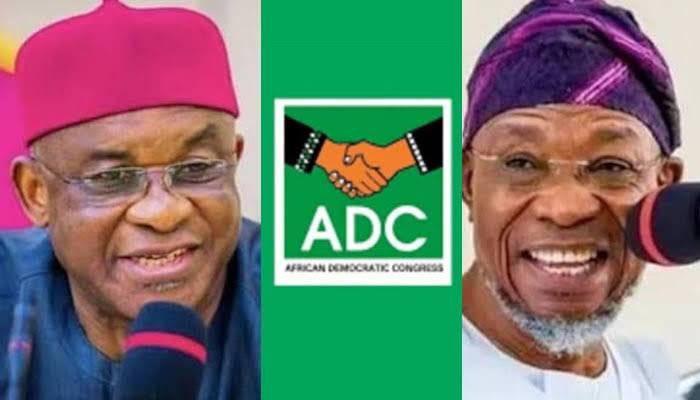
Barely hours after a Supreme Court ruling restored the leadership of former Senate President, David Mark, as National Chairman of the African Democratic Congress (ADC), the party is facing renewed uncertainty following a push by the Attorney General of the Federation (AGF) to deregister political parties without electoral representation.

The AGF and Minister of Justice, Lateef Fagbemi (SAN), told a Federal High Court in Abuja that it is unconstitutional to retain political parties that have failed to secure any elective seats.

Fagbemi made the submission in response to a suit instituted by the National Forum of Former Legislators (NFFL), which is seeking the deregistration of several parties, including the ADC, Action Alliance (AA), Accord Party, Zenith Labour Party, and Action Peoples Party (APP).

Anchoring his argument on Section 225A of the Constitution, the AGF maintained that the Independent National Electoral Commission (INEC) lacks the discretion to sustain the registration of political parties that fail to meet prescribed performance thresholds.

He argued that the continued existence of such parties not only bloats ballot papers but also strains public resources, complicates electoral administration, and undermines constitutional intent.

According to him, the provision was introduced through the Fourth Alteration to address ballot congestion and improve electoral efficiency.

Fagbemi further underscored his role as the chief law officer of the federation, with a duty to ensure strict compliance with constitutional provisions, including initiating or supporting legal actions where necessary.

Earlier, counsel to the NFFL, Yakubu Ruba (SAN), told the court that the suit is purely for constitutional interpretation, seeking clarity on the legality of retaining parties that allegedly fall short of statutory requirements.

In an affidavit deposed to by the forum’s Board of Trustees Chairman and National Coordinator, Nnanna Igbokwe, the plaintiffs contended that the affected parties have failed to win any elective offices at all levels of government — from presidential to councillorship positions.

They also alleged that the parties did not meet the constitutional benchmark of securing at least 25 per cent of votes in any state during presidential elections, nor demonstrated sufficient national spread across wards, local government areas, and states.

The forum warned that, unless the court intervenes, INEC may allow the parties to participate in the 2027 general elections, a move it said could further congest ballot papers and mislead voters.

The development signals fresh legal and political headwinds for the ADC, despite its recent reprieve at the Supreme Court, which affirmed the legitimacy of the Mark-led National Executive.

Supreme Court Nullifies Appeal Court Order, Restores David Mark As ADC National Chairman

The Supreme Court on Thursday voided the order of the Court of Appeal that led to the derecognition of former Senate President, David Mark, as National Chairman of the African Democratic Congress (ADC).

In a unanimous judgment, the apex court held that the preservative order issued by the appellate court was made in bad faith and was both unnecessary and improper.

Delivering the lead judgment, Justice Mohammed Lawal Garba ruled that the Court of Appeal acted outside its bounds by granting an order that was neither sought nor canvassed by any of the parties in the suit.

The disputed order of status quo ante bellum, earlier issued by the Court of Appeal, had formed the basis upon which the Independent National Electoral Commission (INEC) declined to recognise the Mark-led National Executive Committee of the party.

By vacating the order, the Supreme Court effectively restored Mark and other members of the ADC National Executive as the legitimate leadership of the party, directing INEC to accord them due recognition.

The ruling is expected to have far-reaching implications for the ongoing leadership tussle within the ADC, bringing clarity to the party’s national structure.

APC Backs Fubara For 2027 As Presidency Allegedly Gives Nod

Indications have emerged that the national leadership of the All Progressives Congress (APC) has given its tacit approval for Siminalayi Fubara to emerge as the party’s candidate in the 2027 governorship election in Rivers State, in what could reshape the state’s political landscape ahead of the polls.

Multiple high-level party sources disclosed late Wednesday that the decision, reached after weeks of internal consultations and political maneuvering, is said to carry the blessing of the presidency. Though no official statement has been issued, insiders described the development as a “strategic alignment” aimed at consolidating the party’s hold on Rivers and stabilising its internal structure.

The emerging consensus, according to party chieftains familiar with the discussions, effectively clears the path for Fubara’s return bid, putting to rest lingering uncertainty over his political future amid ongoing realignments within the state.

Feelers indicate that the endorsement followed a series of closed-door engagements involving key stakeholders within the APC at both national and state levels. The meetings, it was gathered, focused on electoral viability, party cohesion, and the broader implications of Rivers State in the 2027 general election matrix.

Sources within the party noted that Fubara’s performance in office, alongside his growing political influence, weighed heavily in the decision to back his candidacy. “There was a need to avoid fragmentation and present a united front going into 2027. The governor’s name came up repeatedly as the most viable option,” a senior party figure said.

The reported backing by the presidency is also seen as a significant signal of federal interest in the political direction of Rivers State, a traditionally volatile arena with high strategic value in national politics.

While the development may calm nerves among Fubara’s supporters, it is expected to trigger fresh reactions within opposition ranks and among dissenting voices within the APC who may feel sidelined by the decision.

Efforts to obtain official confirmation from party spokespersons were unsuccessful as of press time. However, analysts say the move, if formalised, could alter existing alliances and set the tone for what promises to be an intense pre-election period in the oil-rich state.

For now, the silence from official quarters has done little to dampen the growing belief among party faithful that the road to 2027 may already be taking shape behind closed doors.

S’Court To Rule On ADC, PDP Leadership Crises Thursday As 2027 Jockeying Intensifies

0

The Supreme Court of Nigeria is set to deliver judgment in two politically sensitive appeals arising from leadership disputes within the African Democratic Congress (ADC) and the Peoples Democratic Party (PDP), in developments that could reshape party structures ahead of the 2027 general elections.

Checks on the apex court’s official cause list indicate that the matters, categorised under political appeals, have been scheduled for hearing on Thursday, April 30, 2026. Judgment in the ADC case, marked SC/CV/180/2026, is expected by 2:00 p.m., although the time for the PDP ruling could not be immediately ascertained.

The impending decisions come against the backdrop of heightened political tension and intensifying legal battles over control of party machinery, as key actors position themselves for the next electoral cycle.

At the centre of the ADC dispute is a protracted leadership crisis involving former Senate President, David Mark, and a rival faction led by Nafiu Bala Gombe. The contest has deepened divisions within the party, with both sides laying claim to its national leadership.

Mark is challenging the March 12 ruling of the Court of Appeal of Nigeria, which directed parties to maintain the status quo pending the determination of the substantive suit. He argues that the appellate court exceeded its jurisdiction, insisting that the matter constitutes an internal party affair not subject to judicial interference.

The appeal was argued on April 22 before a five-member panel of the apex court led by Mohammed Garba, which subsequently reserved judgment.

Although details of the PDP appeal remain sketchy, sources within the party suggest it also relates to internal leadership disputes that have fuelled factional alignments in recent months.

Political observers say the rulings could have far-reaching implications for both parties, particularly in defining the limits of judicial intervention in intra-party conflicts and determining the legitimacy of competing leadership claims.

With the 2027 elections on the horizon, the decisions are expected to either stabilise the affected parties or further inflame tensions, depending on how the apex court resolves the contentious issues.

2027: Wike Backs Chinda For Governor, Names Obuah, Nwogu, Onyesoh For Senate In Rivers Power Play

Fresh cracks have widened within the political establishment in Rivers State as the Minister of the Federal Capital Territory (FCT), Nyesom Wike, is said to have endorsed a slate of candidates ahead of the 2027 general elections, in what observers interpret as a decisive move to reassert control over the state’s political structure.

Multiple party sources disclosed that Wike has thrown his weight behind the member representing Obio/Akpor Federal Constituency, Kingsley Chinda, as the preferred governorship candidate on the platform of the Peoples Democratic Party (PDP). Chinda, a ranking lawmaker and prominent voice within the PDP caucus in the House of Representatives, is reportedly set to obtain his nomination form imminently.

The endorsement is particularly significant given Chinda’s stance during the recent wave of defections that hit the PDP, as he remained within the party while several colleagues aligned elsewhere. His positioning, insiders say, reflects both loyalty to the party and alignment with Wike’s political bloc.

In the same vein, the former Rivers governor is also said to have endorsed former PDP state chairman, Felix Obuah, alongside former National Assembly members Olaka Nwogu and Allwell Onyesoh for senatorial contests across the state. Two of the candidates will run under the APC

Sources within the circle also disclosed that a young candidate has been endorsed to replace Hon. Chinda in the House of Representatives.

It is not yet clear if the members of the state House of Assembly who defected to the APC will defect back to the PDP to enhance their chances of returning as lawmakers in 2027.

The development underscores an intensifying rift between Wike and his successor, Governor Siminalayi Fubara, whose administration has in recent months faced mounting political pressure from factions loyal to the FCT minister.

Though both men emerged from the same political structure, their relationship has deteriorated amid disagreements over control of party machinery, governance style, and the broader political direction of Rivers State. The latest endorsements are widely viewed as Wike’s clearest signal yet that he is charting an independent course ahead of 2027.

Sources within the PDP suggest that the move effectively formalises a parallel power structure, with Wike consolidating influence through loyalists positioned for key elective offices. “This is beyond consultation; it is a declaration,” a senior party figure said, noting that the endorsements could trigger a fresh round of alignments and counter-alignments within the state.

Analysts say the choice of Chinda is strategic. As a federal lawmaker with deep roots in Obio/Akpor, Wike’s political stronghold, his candidacy could help retain grassroots support while appealing to the legislative bloc within the PDP. Similarly, the senatorial endorsements reflect a blend of experience and longstanding loyalty to Wike’s camp.

However, the development raises questions about the cohesion of the PDP in Rivers, a state long regarded as one of its strongest bastions. With competing centres of authority emerging, the likelihood of internal contests, parallel congresses, or even defections cannot be ruled out.

While official declarations are yet to be made, the endorsements have already altered the political calculations ahead of the next election cycle. For Governor Fubara, the challenge will be to consolidate his own base and assert control over party structures. For Wike, the move appears aimed at sustaining relevance and influence in Rivers politics despite his current role at the federal level.

As the 2027 race gradually takes shape, Rivers State once again appears set for a high-stakes political contest, with the PDP’s internal dynamics likely to play a decisive role in determining its outcome.

Court Ruling Deepens Crisis In ADC, Bars INEC from Recognising Mark-Led Congresses

Fresh turmoil has engulfed the African Democratic Congress (ADC) following a Federal High Court judgment restraining the Independent National Electoral Commission (INEC) from recognising or participating in state congresses organised by committees set up by the party’s caretaker leadership.

Delivering judgment in Abuja on Wednesday, Justice Joyce Abdulmalik ruled that the authority to conduct state congresses resides exclusively with the party’s state executive committees, not the national leadership.

The court further affirmed that the four-year tenure of the ADC’s State Working Committees and State Executive Committees remains valid and subsisting, pending the conduct of duly constituted congresses and the convening of a national convention.
In a decision that underscores deepening divisions within the party, the court held that neither the Constitution of Nigeria nor the ADC constitution empowers the caretaker/interim National Working Committee, led by David Mark, to appoint committees to conduct state congresses.

The suit (FHC/ABJ/CS/581/2026) was instituted by Don Norman Obinna, Johnny Tovie Derek, Obah C. Ehigiator, Hon. Olona Yinka, Dr. Charles Idowu Omideji, Samuel Pam Gyang, and Obianyo Patrick, on behalf of ADC state chairmen and executive committees nationwide.

Joined as defendants are the ADC, Mark, Patricia Akwashiki, Bolaji Abdullahi, Rauf Aregbesola, Prof. Oserheimen Osunbor, and INEC.

The judge framed the central issue as whether the second to sixth defendants, including Mark, had the constitutional or statutory authority to assume the powers of elected state organs of the ADC, whose tenure is guaranteed under the party’s constitution.

She relied on section 223 of the 1999 Constitution, which mandates political parties to conduct periodic elections based on democratic principles, as well as Article 23 of the ADC Constitution, which provides that national and state officers shall hold office for a maximum of two terms spanning eight years.

According to her, “the question is whether there is any infraction committed by Mr Mark and co-defendants when they convened meetings and appointed a body known as a congress committee to organise state congresses.”

On the defence raised by the defendants that the matter was an internal affair of a political party and therefore outside the jurisdiction of the court, the judge acknowledged the settled legal position but clarified its limits.

She held that while courts are generally reluctant to interfere in internal party matters, they will intervene where there is a clear allegation of violation of constitutional or statutory provisions.

“The law is settled that courts will not interfere. However, where there is an allegation of breach of constitutional or statutory provisions, the court has a duty to intervene,” she ruled.

“Where a party alleges that its constitution has been violated, the court is bound to adjudicate. Any argument that this court lacks jurisdiction on that basis fails,” she added.

Justice Abdulmalik stressed that political parties must operate strictly within the confines of their constitutions, noting that any deviation from prescribed procedures, particularly in leadership matters, cannot be justified under the guise of internal autonomy.

She found that the procedure adopted by the defendants, including the appointment of a “congress committee,” was not recognised by the ADC constitution and therefore invalid.

Consequently, the court held that the tenure of the state executive committees remains valid and must be allowed to run its full course without interference.
The judge further ruled that only those elected structures have the authority to organise state congresses, effectively nullifying any process initiated by the caretaker leadership.

The plaintiffs had challenged the legality of the caretaker committee’s decision to constitute a congress committee for the April 2026 state congresses, arguing that such moves violate the party’s constitution.

Justice Abdulmalik’s ruling effectively halts the planned congresses under the Mark-led leadership, further compounding internal wrangling within the ADC and casting uncertainty over the party’s organisational cohesion ahead of future political activities.


NIWA Backs Move By RSU To Launch African Fleet Management Forum For Safer, Greener Water Transport

The National Inland Waterways Authority (NIWA) has signalled support to partner with Rivers State University (RSU) on the establishment of an African Fleet Management Forum aimed at advancing fleet management, green mobility and safety across Nigeria’s inland waterways.

The initiative, which underscores a growing push for sustainable transport within the blue economy, was disclosed during the 3rd International Conference organised by the Institute of Geosciences and Environmental Management, RSU, in collaboration with UNITAR-CIFAL and the World Food Programme (WFP), held in Port Harcourt.

Speaking on the sidelines of the conference, Mrs Anasthasia Tebirawa, Assistant Manager, Human Resources and Administration at NIWA’s Port Harcourt Area Office, described the event as impactful and insightful, noting that it provided practical value to participants and their organisations.

A Scholar presenting a paper on App Design to check transport safety in Nigeria during a Technical Session aimed to generate innovative ideas and practical frameworks at the conference.

Tebirawa, who represented the Area Office Manager, Surveyor Bernard Ekawu, explained that the proposed collaboration aligns with NIWA’s 2025 strategic focus on leveraging private sector partnerships to enhance service delivery, safety standards and environmental sustainability across the waterways.

She said the African Fleet Management Forum would provide a platform for capacity building and certified training programmes for NIWA personnel as well as boat operators, thereby promoting professionalism, reducing operational errors and improving safety outcomes.

According to her, the partnership would also support cleaner transport initiatives in line with the blue economy agenda, including measures to monitor and reduce pollution from water vessels.

“By working with industry experts, NIWA can optimise river port usage and strengthen intermodal transport systems, ensuring efficiency across the logistics value chain,” she added.

Tebirawa further highlighted NIWA’s ongoing regulatory role, noting that the agency conducts hydrographic surveys and installs navigational aids such as buoys to enhance safety on inland waterways.

As a federal agency under the Ministry of Marine and Blue Economy, NIWA is mandated to manage and regulate activities across Nigeria’s inland waterways, including creeks, rivers, lagoons and coastal routes.

She reiterated key safety codes governing water transport, including mandatory safety briefings, compulsory use of life jackets, prohibition of unlicensed operators, bans on overloading and drunk driving, and restriction of movement on waterways to between 6:00 a.m. and 6:00 p.m.

The proposed forum, stakeholders say, could mark a significant step toward modernising inland water transport while addressing safety and environmental concerns in Nigeria and across Africa.