


Home Blog Page 36

Court Adjourns ADC Leadership Suit Indefinitely Amid Judge Transfer Request

The Federal High Court in Abuja on Friday adjourned indefinitely the suit challenging the leadership of the African Democratic Congress (ADC) under former Senate President David Mark.

Justice Emeka Nwite adjourned the matter sine die after counsel to the plaintiff, Nafiu Bala Gombe, informed the court that an application had been filed before the Chief Judge of the Federal High Court seeking the transfer of the case to another judge.

The suit, marked FHC/ABJ/CS/1819/2025, has deepened the leadership crisis within the ADC following the emergence of Mark and former Osun State governor Rauf Aregbesola in the party’s leadership structure.

At the resumed hearing, plaintiff’s counsel, Luka Musa Haruna, told the court that the Supreme Court had, on April 30, dismissed an interlocutory appeal earlier filed by Mark against the proceedings.
According to him, the apex court also set aside the Court of Appeal’s order staying proceedings in the substantive suit.

“The interlocutory appeal of the second defendant has travelled to the Supreme Court. My Lord, we are glad to inform this honourable court that on the 30th day of April 2026, the Supreme Court delivered its judgment dismissing the appeal for lacking merit,” Haruna said.

He, however, disclosed that the plaintiff had, through a letter dated May 4, 2026, requested the Chief Judge to reassign the matter to another judge.

Haruna urged Justice Nwite to await the administrative decision of the Chief Judge on the request.

“At this juncture, we humbly pray to your Lordship to await the administrative decision of the Chief Judge of the Federal High Court,” he said.

The request was strongly opposed by counsel to the defendants, who accused the plaintiff of attempting to stall the accelerated hearing earlier ordered by the Court of Appeal and upheld by the Supreme Court.

Counsel to the first defendant, Realwan Okpanachi, described the move as an ambush, noting that the defence had not been served with the application.

“We have not received any communication regarding that application. As it is, we do not know the form or content of the application. We consider the approach of the plaintiff as an ambush,” he argued.

He added that the move appeared to be an attempt to frustrate the accelerated hearing ordered by the appellate courts.

Also opposing the request, counsel to the second defendant, Sulaiman Usman, described the move as “forum shopping and judge shopping.”

“For the plaintiffs to return to this court and inform parties that they have written a private correspondence to the Honourable Chief Judge, and on that basis ask this court to await the outcome, is not only unfortunate but a dangerous trend that must not be allowed,” he said.

Counsel to the fifth defendant, P.I. Oyewole, also faulted the request, describing it as “strange” and accusing the plaintiff of inviting the Chief Judge “to indulge in judicial rascality.”

In his ruling, Justice Nwite held that the court could not act on the letter without first hearing all parties involved.

“Taking a decision or any action on such a letter without hearing from the defendants will amount to a breach of their fundamental rights in this suit,” the judge held.

He added that since the letter was addressed to the Chief Judge, the trial court could not make any pronouncement on it.

Justice Nwite subsequently adjourned the matter indefinitely to allow parties file a Certified True Copy of the Supreme Court judgment, serve the defendants with the letter written to the Chief Judge, and await further directives from the Chief Judge of the Federal High Court.

Gombe is seeking an order restraining Mark, Aregbesola and others from parading themselves as leaders of the ADC, arguing that their emergence contravened the party’s constitution and provisions of the Electoral Act.


NYSC Empowers Corps Members With Cash Rewards At Rivers Camp Variety Night

0

The National Youth Service Corps (NYSC) has rewarded outstanding corps members in Rivers State with cash prizes and gift items following the keenly contested Miss NYSC and Mr. Macho competition held during the 2026 Batch A Stream II orientation exercise.

Corps members in 2 Platoon emerged overall winners at the Gala Chinchin-sponsored Variety Night competition held at the NYSC Orientation Camp in Nonwa-Gbam Tai, defeating other platoons to clinch the coveted Miss NYSC and Mr. Macho titles.

Speaking at the event, the Rivers State Coordinator of NYSC, Moses Oleghe, commended corps members for embracing healthy competition and actively participating in camp activities.

He noted that the competition reflected the discipline, resilience and team spirit fostered by the orientation programme.

Oleghe praised the winners for their outstanding performances, determination and consistency throughout the contest, stressing that the initiative was part of efforts by the scheme to encourage self-confidence, leadership and social engagement among corps members.

The winners of the Miss NYSC and Mr. Macho titles received cash prizes of N100,000 alongside other gift items in recognition of their achievements.

The event formed part of activities lined up to promote unity, talent discovery and youth empowerment among corps members deployed to Rivers State for the orientation course.

Court Orders Interim Forfeiture Of Ex-Minister Sylva’s Abuja Properties

A Federal High Court in Abuja has ordered the interim forfeiture of nine properties linked to former Minister of State for Petroleum Resources, Timipre Sylva, to the Federal Government over alleged proceeds of unlawful activities.

Justice Obiora Egwuatu granted the order following an ex parte application filed by the Economic and Financial Crimes Commission (EFCC) through its counsel, Oluwaleke Atolagbe.

Although the ruling was delivered on April 24, the enrolled order was sighted on Wednesday.

The properties, located in some of Abuja’s upscale districts, include four blocks of terrace buildings in Dakibiyu; a duplex with a penthouse and office complex on Niger Street, MStreet; a standalone duplex in Palm Springs Estate, Mpape; and a 10-unit apartment block on Sefadu Street, Wuse Zone 4.

Others are a six-unit apartment block on Mubi Close, Garki; two blocks comprising 12 flats on Thaba Tseka Crescent, Wuse II; a duplex located at Nile Lake in Maitama; and a two-block building on Aguta Street, Garki, currently occupied by the National Information Technology Development Agency.

In the ruling, Justice Egwuatu held that the assets were suspected to be proceeds of unlawful activities and should remain under interim forfeiture pending the determination of a motion for final forfeiture.

“It is hereby ordered as follows: An interim order of this honourable court is made forfeiting the properties listed in the schedule attached herein, being properties suspected to be proceeds of some unlawful activities pending the publication and hearing of the motion on notice for final forfeiture order of the said properties,” the judge ruled.

The court also directed the EFCC to publish the order in at least two national newspapers within seven days to allow interested parties to appear before the court and show cause within 14 days why the properties should not be permanently forfeited to the Federal Government.

The matter was adjourned until May 25 for a report of compliance.

The anti-graft agency filed the suit marked FHC/ABJ/CS/607/2026 under provisions of the Advance Fee Fraud and Other Related Offences Act, 2006.

Sylva, a former governor of Bayelsa State, has also been linked in recent reports to an alleged failed coup plot against President Bola Tinubu, although no formal charge has been filed against him in relation to the allegation.

NDDC Speeds Up Construction Of I.2Km Kaa-Ataba Bridge in Rivers

0

The construction work on the 1.2-kilometre Kaa-Ataba Bridge in Rivers State, being undertaken by the Niger Delta Development Commission, NDDC, has reached an advanced stage and is expected to be delivered soon.

Speaking at the Project site, the Managing Director of the construction firm, Engineer Christian Emeozor, described the multi-billion-naira project as ambitious and impactful, linking the Khana Local Government Area to the Andoni Local Government Area of Rivers State.

In a statement signed and issued by Seledi Thompson-Wakama,
Director, Corporate Affairs, NDDC, Emeozor assured that his company was making every effort to complete the job expeditiously. He noted that irregular tidal waves had hampered the delivery of construction materials to the site and affected the schedule for crossing the remaining beams on the bridge.

According to Emeozor, the construction firm had made efforts to address adverse weather conditions, which had contributed to delays in completing the project. He promised that more men and materials would be committed to the project to ensure that it was delivered on schedule.

He said that, despite the challenges, the bridge project would be tackled with sufficient manpower and equipment to compensate for the reduced working hours due to the unfavourable weather conditions.

Emeozor expressed satisfaction with the conduct of the host communities, applauding them for their support and cooperation in executing the project. He noted that the project would open up the communities in the area, reduce accidents associated with crossing the river, and boost socio-economic activities.

He observed: “The bridge project will improve the quality of life of the people of Kaa and Ataba, as well as help transport farm produce, goods and properties from the rich agricultural area.”

He assured his company would do everything necessary to ensure the project’s early completion, declaring, “We are committed to delivering on speed and quality.”

Recall that the NDDC Managing Director, Dr Samuel Ogbuku, recently briefed President Bola Tinubu on the progress made on the Kaa-Ataba Bridge and other legacy projects of the Commission.

NGE, SERAP Win As Court Halts NBC Sanctions on Broadcasters, Upholds Free Expression

0

The Federal High Court in Lagos has restrained the National Broadcasting Commission (NBC) from sanctioning broadcast stations and presenters over alleged breaches related to expression of opinions, neutrality, and conduct during programmes.

In a landmark interim ruling delivered on May 4, 2026, Justice Daniel Osiagor granted an order of injunction barring the NBC, its officers, agents, or affiliates from enforcing provisions of the Nigeria Broadcasting Code used to threaten or penalise broadcasters, pending the determination of a substantive suit.

The order followed an ex parte motion filed by the Socio-Economic Rights and Accountability Project (SERAP) and the Nigerian Guild of Editors (NGE), and argued by their counsel, Adeyinka Olumide-Fusika (SAN).

A press statement jointly issued by Onuoha Ukeh, Secretary General of the Nigerian Guild of Editors (NGE) and Kolawole Oluwadare, a deputy director of the Socio-Economic Rights And Accountability Project (SERAP), indicate that the court specifically restrained the commission from using its recent “Formal Notice” to impose fines, sanctions, or other penalties on media organisations for allegedly expressing personal opinions as facts, intimidating guests, or failing to maintain neutrality.

SERAP and NGE had approached the court to challenge what they described as an “arbitrary and unlawful attempt” by the NBC to regulate broadcast content through vague and overly broad provisions of the 6th Edition of the Nigeria Broadcasting Code.

The suit seeks a determination of whether the provisions relied upon by the NBC are inconsistent with Section 39 of the 1999 Constitution (as amended), which guarantees freedom of expression, including the right to receive and impart information and ideas without interference.
In a joint statement, the organisations welcomed the ruling, describing it as a significant victory for media freedom, freedom of expression, and the rule of law.

“This is a significant victory for freedom of expression, media freedom, and the rule of law in Nigeria. The court’s decision affirms the principle that regulatory powers must be exercised within constitutional limits,” they said.
They argued that journalism necessarily involves opinions, commentary, and analysis, stressing that attempts to prohibit presenters from expressing personal views amount to censorship and are incompatible with democratic standards.

SERAP and NGE further contended that the contested provisions of the broadcasting code are vague, grant excessive discretionary powers to regulators, and risk enabling arbitrary enforcement.

They warned that continued enforcement of such provisions could have far-reaching implications, particularly ahead of the 2027 general elections, by stifling critical voices and limiting public debate.

According to the groups, Nigeria’s obligations under international human rights instruments, including the African Charter on Human and Peoples’ Rights and the International Covenant on Civil and Political Rights, reinforce constitutional protections for freedom of expression.

They maintained that regulatory standards must be clear, precise, necessary, and proportionate, noting that subjective terms such as “professionalism,” “bullying,” and “neutrality” could be weaponised to suppress dissent.

“The court’s intervention at this stage is crucial in preventing irreparable harm. Without this injunction, broadcasters would face immediate threats of sanctions simply for performing their constitutional role,” the statement added.
The case, marked FHC/L/CS/854/2026, has been adjourned to June 1, 2026, for hearing of the motion on notice.

SERAP and NGE urged the NBC to comply with the court’s order and review its regulatory framework to align with constitutional guarantees and international human rights standards.

They also called on authorities to ensure an enabling environment for journalists and media organisations to operate without fear of intimidation, censorship, or reprisals, insisting that a free and independent media remains essential to democratic governance.

FG Outlaws Use Of ‘Dr’ Title By Honorary Degree Holders

0

The Federal Government has prohibited recipients of honorary degrees from using the title “Dr” in official, academic or professional settings, citing widespread abuse and politicisation of the honour.

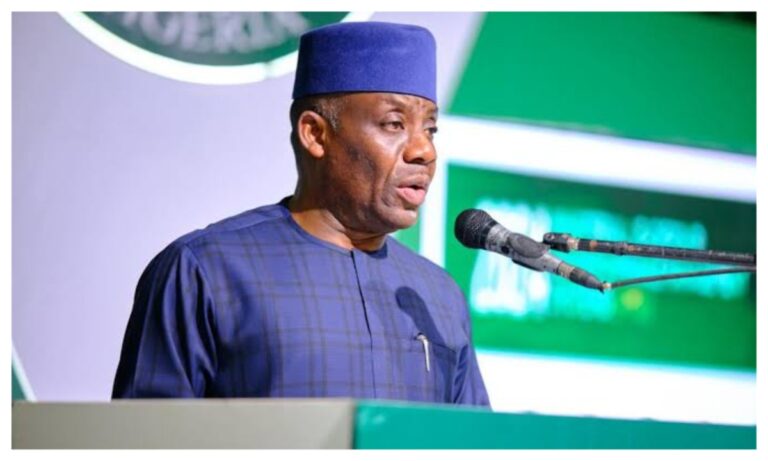
Minister of Education, Tunji Alausa, announced the directive on Wednesday at the Presidential Villa, Abuja, while briefing State House correspondents after the Federal Executive Council (FEC) meeting.

Alausa said the decision followed growing concerns over the misuse of honorary degrees, which he noted have increasingly been deployed for political patronage and financial inducement.

“The recent trend we’ve seen with the award of honorary degrees has revealed a growing abuse and politicisation of this academic privilege,” he said.

“We’ve seen awards being used for political patronage, for financial gain, as well as the conferral of awards on serving public officials, which, as part of the ethics of honorary degree awards, should not happen.”

Under the new directive, holders of honorary doctorates are barred from prefixing their names with “Dr.” Instead, they are required to indicate the full honorary qualification after their names in line with established academic conventions.

The government said the measure is aimed at preserving the integrity of academic titles and restoring public confidence in the nation’s higher education system.

Group Urges Caution Over Unverified Amnesty Claim On Detention Deaths

0

The Unity Advocacy Group (UAG) has called on Nigerians to exercise restraint following reports attributed to Amnesty International alleging that about 150 members of the Fulani community, including children, died in a military-controlled detention facility in Kwara State.

The group said the claim, which has gained traction on social media, remains unverified and should not be treated as established fact pending proper investigation and confirmation by relevant authorities.

UAG Convener, Ifeanyi Aigbedion, noted that the Nigerian Armed Forces have a longstanding record of professionalism and adherence to human rights standards, both in domestic operations and international peacekeeping missions under the United Nations, African Union and ECOWAS.

He warned that the circulation of sensitive and unconfirmed reports could inflame ethnic tensions and undermine national cohesion at a critical time.

“While allegations of this nature are serious and deserve attention, they must be subjected to thorough, transparent and independent investigation through appropriate legal and institutional channels,” Aigbedion said.

The group cautioned against narratives that could unfairly generalise or mischaracterise security institutions based on unverified claims, stressing the importance of balance and factual accuracy.

UAG also urged relevant authorities to conduct a comprehensive and transparent probe into the allegations and make credible findings public to address speculation and restore confidence.

Reaffirming its commitment to national unity and peaceful coexistence, the group called on the media, stakeholders and citizens to prioritise accuracy, restraint and responsible communication when handling sensitive security-related issues.

Amnesty International Condemns N100m Court judgment Against SERAP …Says It’s a Dangerous Blow To Free Expression And Civic Space

0

Amnesty International expresses grave concern over today’s judgment of the Federal Capital Territory High Court, Abuja, in the case involving the Socio-Economic Rights and Accountability Project (SERAP) and officials of the Department of State Services (DSS).

The case arises from events on 9 September 2024, when DSS officials visited SERAP’s Abuja office without prior written notice, questioned staff, and were reportedly accompanied by operatives stationed outside the premises. SERAP publicly raised concerns about intimidation and harassment.

Two DSS officials subsequently filed a defamation suit against the organization—an action widely characterized as a Strategic Lawsuit Against Public Participation (SLAPP), aimed at deterring legitimate human rights advocacy.

Today’s judgment, which imposes significant financial penalties and orders public apologies, raises serious concerns regarding Nigeria’s obligations under its Constitution and binding international human rights law.

“The judgment risks undermining the rights to freedom of expression, association, and civic participation, and may have a chilling effect on civil society organizations, journalists, and human rights defenders working to promote transparency and accountability.”

“This judgment sends a deeply troubling signal about the state of civic space in Nigeria,” said Isa Sanusi, director of Amnesty International Nigeria.

“The judgment appears to depart from these principles and may embolden further use of SLAPPs against civil society actors in Nigeria. Such developments risk weakening public oversight, discouraging whistleblowing, and undermining efforts to combat corruption and illicit financial flows.”

“Nigerian authorities must quash the judgment and end judicial harassment against SERAP and other civil society organizations in the country. Authorities must stop using judicial harassment as a tool to silence critics, activists and other Nigerians solely for the peaceful exercise of their human rights.

“Efforts to promote transparency and accountability—including challenging allegations of corruption in public institutions—are squarely within the legitimate mandate of civil society organizations. Undermining these efforts ultimately harms the public interest and erodes trust in democratic institutions.”

“Civil society organizations must be able to carry out their legitimate work without fear of harassment, intimidation, or punitive legal action. The use of defamation laws in this context appears inconsistent with international standards and risks silencing critical voices.”

“Amnesty International recalls that Section 39 of the Nigerian Constitution 1999 (as amended) guarantees the right to freedom of expression, including the freedom to hold opinions and to receive and impart ideas and information without interference. Section 40 further protects the right to peaceful assembly and association.”

“These rights are essential pillars of democratic governance and accountability.”

“Nigeria is also a State Party to several international and regional human rights instruments that impose binding obligations to respect, protect, and fulfil these rights.”

“The United Nations Human Rights Council Special Rapporteurs on the promotion and protection of the right to freedom of opinion and expression, and on the situation of human rights defenders, have consistently warned against the misuse of defamation laws and civil litigation to stifle dissent.

“They have emphasized that public authorities and officials should tolerate a higher level of scrutiny and criticism, particularly on matters of public interest such as corruption, governance, and the management of public resources.”

The organization urges Nigerian authorities to refrain from using defamation laws and civil litigation to suppress legitimate criticism and public interest advocacy;
to ensure that security agencies, including the DSS, operate strictly within the bounds of the law and respect human rights; protect human rights defenders, journalists, and civil society organizations from harassment, intimidation, and reprisals; align domestic laws and judicial practice with Nigeria’s international human rights obligations.

Amnesty International will continue to closely monitor developments in this case and stands in solidarity with SERAP and all individuals and organizations working peacefully to advance human rights, accountability, and justice in Nigeria.

NDDC Drives Transparency Agenda with Digital Procurement Initiative

The Niger Delta Development Commission (NDDC) has reaffirmed its commitment to institutional reforms through the full adoption of the Federal Government’s digital transformation policy, with a strong focus on modernising procurement processes to enhance transparency, efficiency and accountability.

Speaking at a stakeholders’ sensitisation and training workshop in Warri, Delta State, the Commission’s Director of Procurement, Dr Chuks Osuji, said the initiative was designed to equip key actors—including government officials, procurement officers, consultants, contractors, private-sector vendors and civil society organisations—with the knowledge required to navigate a fully digitised procurement system.

Represented by the Deputy Director of Procurement, Mr Tumi Grant, Osuji noted that the Commission was aligning its processes with global best practices to improve service delivery. He stressed that digital procurement would eliminate bottlenecks associated with manual systems and foster greater accountability.

“This effort reflects our commitment to modern procurement practices that reduce inefficiencies and ensure value for money.

Digitisation simplifies bidding processes, allowing stakeholders to participate from any location, while curbing nepotism, bureaucracy and irregularities,” he said.

Also speaking, the NDDC Director for Delta State, Engr. Onoriode Omo-Udoyo, underscored the Federal Government’s directive mandating all Ministries, Departments and Agencies (MDAs) to digitise their operations.

He noted that procurement, as a critical interface between the Commission and service providers, requires a tailored digital framework.
Omo-Udoyo explained that the workshop was convened to deepen stakeholders’ understanding of the Commission’s digital procurement architecture and ensure seamless integration into the new system. He added that the transition would improve efficiency, strengthen transparency and accountability, and significantly reduce delays linked to manual processes.

In a presentation on policy reform and procurement transparency, Dr Rex Ugulu, Research Coordinator in Procurement Management at the Federal University of Technology, Owerri, highlighted the central role of public procurement in economic development, service delivery and governance.

He emphasised that automation of procurement systems enhances transparency, curbs corruption and drives operational efficiency, urging stakeholders to embrace the transition to digital platforms.

NYSC Fixes May 21 For Passing-Out Of 2025 Batch ‘A’ Stream II Corps Members

0

The National Youth Service Corps (NYSC) has announced Thursday, May 21, 2026, as the official passing-out date for corps members of the 2025 Batch ‘A’ Stream II.

The disclosure was contained in a statement issued on Monday by the scheme’s Director of Information and Public Relations, Caroline Embu.

According to the statement, activities preceding the passing-out parade will commence on Tuesday, May 5, 2026, with programmes designed to prepare corps members for life after national service.

These include Job Advisory and Counselling (JAC) sessions organised by the NYSC in collaboration with relevant agencies, as well as the signing of final clearance by Zonal Inspectors.

The scheme noted that this year’s passing-out ceremony would be conducted on a low-key basis nationwide, with certificates to be distributed at the local government level.

“The event will feature the distribution of Certificates of National Service to deserving corps members in all the Local Government Areas of the country,” the statement said.

Meanwhile, the Director-General of the NYSC, Olakunle Nafiu, congratulated the outgoing corps members and urged them to remain committed to the ideals of the scheme.

He encouraged them to uphold the values of discipline, patriotism and service as they transition into the next phase of their lives, stressing the importance of being worthy ambassadors of the NYSC.