

Home Blog Page 2

Osun Poll: SERAP Demands Probe Into Vote-Buying, Violence, Seeks AU, UN Scrutiny

0

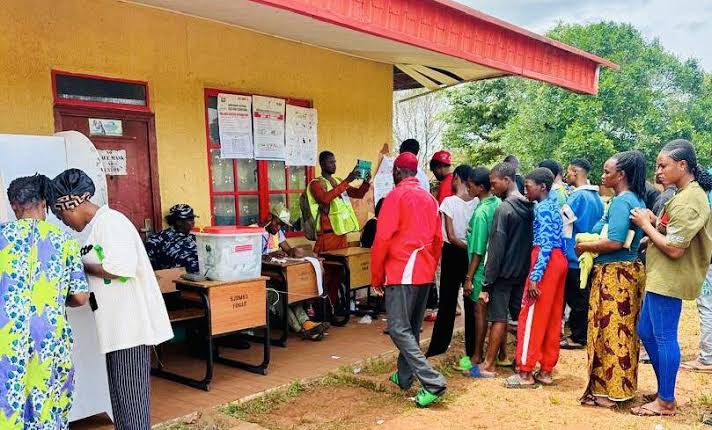
The Socio-Economic Rights and Accountability Project (SERAP) has called on the Independent National Electoral Commission (INEC), Economic and Financial Crimes Commission (EFCC) and Independent Corrupt Practices and Other Related Offences Commission (ICPC) to jointly investigate alleged vote-buying, violence, intimidation, illegal campaign financing and other electoral offences during the 2026 Osun State governorship election.

SERAP also urged the agencies to facilitate independent regional and international scrutiny of the election by relevant bodies, including the African Union (AU), ECOWAS, African Commission on Human and Peoples’ Rights and United Nations human rights mechanisms.

In a petition dated August 15, 2026, and signed by its Deputy Director, Kolawole Oluwadare, the organisation said the credibility of the election outcome depended on whether voters were able to freely exercise their political rights without inducement, intimidation or coercion.

It urged INEC, EFCC and ICPC to trace the sources and movement of funds allegedly used for vote-buying and other unlawful electoral activities, and identify individuals or organisations that provided, authorised, distributed or facilitated such funds.

SERAP also called for the preservation and examination of banking and mobile-money records, telecommunications data, CCTV footage, polling-unit records and other documentary or digital evidence that could assist investigations.

The organisation further urged the agencies to investigate and prosecute, where appropriate, persons suspected of electoral, corruption or other criminal offences, including those who financed or facilitated the alleged violations.

“A joint investigation by the agencies would ensure coordinated examination of the electoral, financial and criminal dimensions of the reported electoral offences and violations,” SERAP said.

It added that inviting regional and international mechanisms would provide “complementary independent scrutiny”, strengthen transparency and accountability, and help assess the implications of alleged violations for Nigeria’s democratic and human rights obligations.

SERAP said preliminary reports by the EU Support to Democratic Governance in Nigeria Election Observation Hub (EU-SDGN EOH) indicated that civil society observers recorded 323 electoral offences and irregularities across 726 polling units monitored as of midday on election day.

According to the organisation, the reported infractions included 103 cases of vote trading, 28 cases involving inducement of polling and security officials, 31 cases of voter obstruction, 38 cases of campaigning at polling units, 14 cases of voter impersonation and 12 cases of multiple voting.

The observers also reportedly recorded seven cases of election-official misconduct and 85 incidents involving exposure of ballot papers.

SERAP said 38 security incidents were also recorded, including alleged thuggery, attacks on electoral officials and voter intimidation.

It further cited the Nigeria Civil Society Situation Room as reporting cases of vote-buying and other inducements, including the alleged distribution of Jollof rice and drinks at a polling unit in Isokan Local Government Area, which reportedly resulted in disorder.

The Situation Room also reportedly recorded the harassment of an election observer and alleged disruption by suspected thugs.

SERAP said the reported incidents raised questions about compliance with the Electoral Act 2026, the 1999 Constitution and Nigeria’s obligations under international human rights treaties.

It noted that Sections 125, 131 and 132 of the Electoral Act criminalise bribery, undue influence and the use or threat of violence to influence voting, while Sections 91 to 94 provide safeguards relating to political financing, including contribution and expenditure limits and post-election disclosure requirements.

The organisation also cited Section 138(1) of the Electoral Act, which allows an election to be challenged where it was invalidated by corrupt practices or non-compliance with the law, as well as Section 139, which addresses non-compliance that may substantially affect an election result.

SERAP argued that allegations of electoral corruption and violence also raised concerns under relevant provisions of the Nigerian Constitution, particularly those underpinning democratic participation and free and fair elections.

It further invoked Article 25 of the International Covenant on Civil and Political Rights, which protects citizens’ right to participate in public affairs and vote, as well as Article 13 of the African Charter on Human and Peoples’ Rights on citizens’ right to participate freely in government.

The organisation urged the three agencies to immediately commence a joint investigation, trace alleged illicit financial flows, preserve relevant evidence and examine compliance with the Electoral Act’s political-finance provisions.

It also called for the publication of investigation findings and appropriate legal action where credible evidence establishes that corruption, inducement, coercion or violence materially affected voters or the election outcome.

SERAP said the measures were necessary not only to ensure accountability over the Osun election but also to deter electoral corruption and violence, strengthen public confidence in democratic institutions and safeguard the integrity of the 2027 general elections.

The organisation urged the agencies to make relevant evidence available to competent electoral tribunals and judicial bodies where lawful and appropriate, particularly where such evidence could establish that corrupt practices or substantial non-compliance affected the election.

“We would be grateful for information on the steps being taken in response to this petition,” SERAP said.
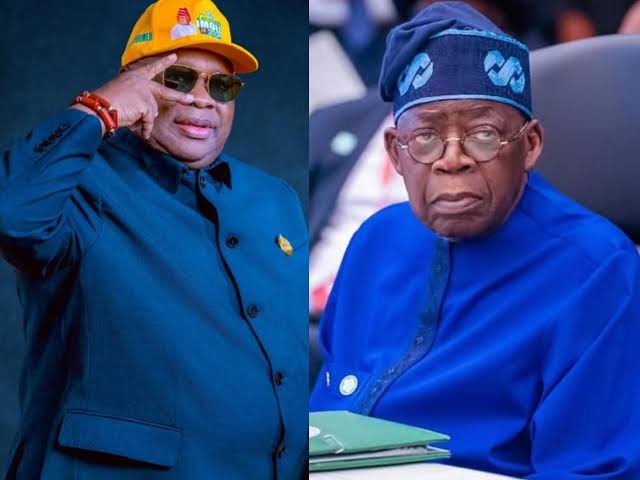

Tinubu Hails Adeleke’s Osun Victory, Says Democracy Flourishing In Nigeria

President Bola Ahmed Tinubu has congratulated Osun State Governor, Ademola Adeleke, on his re-election, describing the victory as a confirmation of the confidence reposed in him by the people of the state.

Tinubu, in a statement following the outcome of the election, said Adeleke’s victory was a fitting assurance that democracy would continue to flourish in Nigeria under the All Progressives Congress (APC)-led administration.

The President said he had earlier called Adeleke to congratulate him on his electoral victory, while wishing him success as he prepares to lead Osun State for another four years.

He urged the governor to use his renewed mandate to unite the people of the state and mobilise them towards growth, stability and socio-economic development, irrespective of their political affiliations.

“Now that he has won, Governor Adeleke must unite the people of Osun State and rally them for growth, stability, and social and economic progress, regardless of the political choices they made at the election,” Tinubu said.

The President also commended other contestants in the election for the courage and discipline they displayed throughout the electoral process, saying their participation strengthened Nigeria’s democratic culture.

According to him, the outcome of the election reflected the will of the people of Osun State and demonstrated the resilience of democracy in the country.

Tinubu further commended the Independent National Electoral Commission (INEC) and security agencies for conducting what he described as a peaceful and transparent election that produced a clear winner.

He prayed for the continued growth and strengthening of democracy in Nigeria and wished Adeleke a successful second term in office.

“May our democracy continue to thrive and be strengthened,” the President said.

He also prayed for the continued progress of the Federal Republic of Nigeria.

How Adeleke ‘Bulldozed’ APC, Others to Secure Second Term in Osun

Governor Ademola Adeleke has secured a second term in office after defeating the All Progressives Congress (APC) candidate, Bola Oyebamiji, in the 2026 Osun State governorship election.

The victory was built on Adeleke’s strong performance in his traditional strongholds, sweeping victories across key local government areas (LGAs) and, most significantly, the huge vote margins he accumulated in areas where his support was strongest.

Results collated by the Independent National Electoral Commission (INEC) showed Adeleke, who contested on the platform of the Accord Party, winning 19 of the 30 LGAs, while the APC secured 11.

The African Democratic Congress (ADC), whose candidate was Najeem Salaam, finished a distant third.

At the end of the collation, Accord polled 511,067 votes against APC’s 444,815, giving Adeleke a winning margin of 66,252 votes. ADC garnered 17,180 votes.

But beyond the final figures, Adeleke’s victory reflected a campaign built around confidence and an apparent determination to withstand the political machinery deployed by the APC.

Days before the election, the governor had described himself as a “bulldozer”, insisting that he was not intimidated by federal influence or the governors who supported his opponent.

‘I am a bulldozer’
Speaking at the Arise Townhall Meeting ahead of the election, Adeleke declared his readiness to confront the political forces backing the APC candidate.

“I am a bulldozer. I am talk and do. I am not afraid of federal might and governors backing the APC candidate. If they like, they should bring all the governors,” he said.

The statement became one of the defining moments of Adeleke’s campaign, as the governor sought to portray the election as a contest that would ultimately be decided by Osun voters rather than political influence from outside the state.

The results suggest that he succeeded in converting that confidence into votes.
Ede delivers massive advantage
Perhaps the most decisive factor in Adeleke’s victory was the scale of his victories in some key LGAs.

The Ede axis was particularly crucial.
In Ede-North, Accord secured 35,427 votes against APC’s 10,283, giving Adeleke a massive 25,144-vote advantage.

The governor performed even better in Ede-South, where Accord polled 26,188 votes against APC’s 6,219, representing a margin of 19,969 votes.
Together, the two LGAs produced 61,615 votes for Accord against APC’s 16,502.

That translated to a net advantage of 45,113 votes for Adeleke from just two LGAs — a margin that would prove difficult for APC to recover elsewhere.

Osogbo strengthens Adeleke’s lead
The state capital also contributed significantly to the governor’s performance.
In Osogbo LGA, Accord polled 36,480 votes against APC’s 30,474, giving Adeleke a 6,006-vote advantage.

The result was significant given Osogbo’s political importance and the strength of APC’s support in the area.
The ADC scored 1,503 votes in Osogbo, its strongest performance among the 30 LGAs in the supplied results.

The governor also established a strong advantage across much of the Ife axis.

Accord won Ife-East with 27,201 votes against APC’s 18,600, a margin of 8,601 votes.

In Ife-Central, Adeleke polled 21,171 votes against APC’s 15,913, while Ife-North produced 13,879 votes for Accord against APC’s 9,613.
APC, however, won Ife-South with 14,678 votes against Accord’s 13,507.

Taken together, the four Ife LGAs gave Accord 75,758 votes against APC’s 58,804, producing a combined advantage of 16,954 votes.

Other victories widen gap
Adeleke’s winning coalition extended beyond Ede, Osogbo and Ife.

Accord won Egbedore with 19,278 votes against APC’s 11,194, producing an 8,084-vote margin.

In Iwo, Adeleke scored 27,085 votes against Oyebamiji’s 19,660, giving him a 7,425-vote advantage.

The governor also won Oriade with 21,343 votes against APC’s 14,863, a margin of 6,480 votes.

These victories, combined with his overwhelming performance in Ede and strong showing in other parts of the state, helped build the statewide cushion APC could not erase.

APC remains formidable
Despite losing the election, the results showed that APC remained a major political force in Osun.
Oyebamiji won 11 LGAs and recorded some substantial victories.

His strongest performance in the supplied results came in Irewole, where APC polled 29,972 votes against Accord’s 10,934, giving the party a 19,038-vote advantage.
APC also won Boripe by 19,963 votes to Accord’s 12,448, a margin of 7,515 votes.

The party further carried Olorunda, Ilesa-East, Ife-South, Ola-Oluwa, Isokan, Obokun, Atakumosa-West and Atakumosa-East.
But while APC won several LGAs convincingly, the margins were insufficient to neutralise Adeleke’s larger victories.

The arithmetic was simple: Adeleke won fewer votes in some councils but more than compensated with overwhelming margins in his strongest areas.

The election demonstrated that the number of LGAs won was not, by itself, decisive.

Adeleke won 19 LGAs and accumulated 511,067 votes, while APC’s 11 winning LGAs contributed to its statewide total of 444,815 votes.
The resulting difference was 66,252 votes.

Adeleke’s 45,113-vote advantage from Ede-North and Ede-South alone represented a substantial portion of that statewide lead.
Similarly, his combined advantage across the four Ife LGAs stood at 16,954 votes.

These figures explain why APC’s victories in areas such as Irewole and Boripe could not close the gap.

For instance, APC’s 19,038-vote advantage in Irewole was significant, but Adeleke’s combined margin in the two Ede LGAs was more than twice as large.

ADC fails to challenge frontrunners
The ADC, despite fielding a candidate in the election, failed to mount a serious challenge to the two leading parties.
The party polled 17,180 votes across the 30 LGAs.

Its strongest performance in the supplied results came in Ejigbo, where it scored 5,053 votes. It also recorded 1,503 votes in Osogbo, 935 in Ife-East and 747 in Ife-Central.

The figures showed that the contest had effectively become a two-horse race between Accord and APC, despite the participation of 13 candidates.
The two leading parties collectively secured 955,882 votes, dwarfing the ADC’s statewide total.

Another feature of Adeleke’s victory was the geographical spread of his support.
His 19 victories cut across different parts of the state, rather than being concentrated in a single political bloc.

He carried Ede-North, Ede-South, Osogbo, Ife-Central, Ife-East, Ila, Boluwaduro, Irepodun, Ayedire, Ejigbo, Ayedaade, Ifelodun, Ife-North, Ilesa-West, Egbedore, Orolu, Oriade, Ifedayo, Odo-Otin and Iwo, based on the results supplied.

That spread gave the governor a broad electoral base and ensured that APC could not rely on its strongholds to overturn his overall advantage.

From ‘bulldozer’ boast to ballot-box victory
Before the election, Adeleke’s declaration that he was a “bulldozer” was presented as a direct challenge to the political machinery supporting his opponent.
The ballot-box figures have now given the statement a numerical context.

The governor did not merely win more LGAs than APC; he recorded exceptionally large margins in some of his strongest areas while remaining competitive in several others.

APC, despite its institutional strength and 11 LGA victories, could not convert those wins into enough votes to close the statewide deficit.

The final figures tell the story:
Accord — 511,067 votes
APC — 444,815 votes
ADC — 17,180 votes
Adeleke’s winning margin — 66,252 votes
Ultimately, Adeleke’s second-term victory was built on where he won, how decisively he won and the size of the margins he created.

Ede-North and Ede-South provided the biggest cushion, while Osogbo and the Ife axis further strengthened his position. Victories in Egbedore, Iwo, Oriade and other LGAs widened the gap.

The governor had promised to confront the political heavyweights backing his opponent.
The results showed that, at least in the ballot-box arithmetic of the 2026 Osun governorship election, his “bulldozer” strategy had delivered.

IHSD Set To Unveil Origa’s Book On Materialism, Humanitarian Values In Abuja

0

The Institute for Humanitarian Studies and Social Development (IHSD) will on August 22, 2026, present a new book titled Materialism and Humanitarianism, authored by the institute’s Registrar and Chief Executive Officer, Amb. Prince Francis Origa.

The book presentation, scheduled for 10am at Haris Hotel, Plot 313, Cadastral Zone B03, Wuye, Abuja, is expected to bring together scholars, humanitarian practitioners, policymakers, diplomats and other stakeholders interested in the relationship between material wealth and humanitarian values.

The event is being held under the distinguished patronage of His Excellency, Amb. Adamu Babangida Ibrahim, former Nigerian Ambassador to the Republic of Guinea and Syria, who is also the President and Chairman of the Governing Council of IHSD.

Origa, a United Nations scholar and Professor of Humanitarianism, uses the publication to examine the complex intersection between materialism and humanitarianism, with emphasis on the values, responsibilities and ethical considerations that should guide human society.

According to the organisers, the publication is a timely contribution to ongoing conversations on the place of material wealth in a world confronted by humanitarian crises, inequality and social challenges.

The institute described the presentation as an opportunity for participants to engage with the ideas contained in the book and reflect on how humanitarian principles can be strengthened in contemporary society.

Members of the public, academics, humanitarian organisations, diplomats, government officials and other interested persons have been invited to attend the event.

Further information and registration are available through the institute’s registration platform.

For enquiries and reservations, participants may contact 08023686143, 08032828786 or 08108399571.

IHSD, UNITAR, CIFAL NigeriaTo Spotlight Ethical Leadership, Humanitarian Values At 16th Public Lecture

0

The Institute for Humanitarian Studies and Social Development (IHSD), in partnership with the United Nations Institute for Training and Research (UNITAR) and CIFAL Nigeria, will on August 22 host its 16th Annual Humanitarian Public Lecture, graduation and induction ceremony in Abuja.

The event, which is expected to bring together humanitarian practitioners, scholars, policymakers, diplomats, development experts and graduating students, will focus on the need to strengthen ethical leadership, inclusivity and humanitarian values in Nigeria.

Themed, “Resilience in Action: Strengthening Ethical Leadership, Inclusivity and Humanitarian Values in Nigeria,” the programme is scheduled for 10am at Haris Hotel, Plot 313, Cadastral Zone B03, Wuye, Abuja.

The ceremony will be held under the distinguished chairmanship of former Kaduna State Governor, Dr Mukhtar Ramalan Yero, FIHSD, Dallatun Zazzau.

According to the organisers, the annual lecture is designed to provide a platform for critical discussions on humanitarian challenges and the leadership values required to build a more inclusive and resilient society.

The organisers said the programme would also celebrate the commitment and dedication of graduates preparing to contribute to the humanitarian and development sector.

The graduation and induction ceremony is expected to formally usher the graduating students into the humanitarian field, while exposing participants to discussions on ethical leadership and the promotion of humanitarian principles.

The partnership between IHSD, UNITAR and CIFAL Nigeria, according to the organisers, underscores the importance of strengthening capacity development and professional training in humanitarian studies and social development.

The public, stakeholders, humanitarian organisations, academics, government officials, development practitioners and other interested persons have been invited to participate in the event.

For registration and further information, prospective participants may visit the registration platform or contact the organisers on 08023686143, 08032828786 or 08108399571.

‘Samples Don’t Lie’: RSU Professor Raises Alarm Over Niger Delta Pollution, Urges Tougher Controls

0

Rivers State University (RSU), Port Harcourt, has called for stronger environmental regulation, sustained monitoring and urgent action to protect the Niger Delta aquatic ecosystem from the growing threats posed by oil pollution, industrial effluents, illegal refining, overfishing and other human activities.

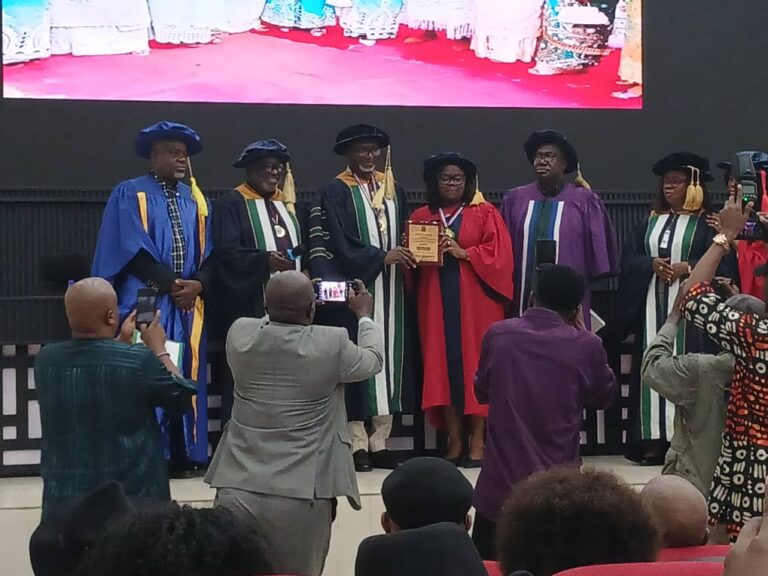
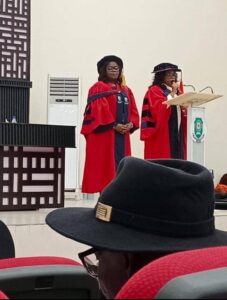
The call was made by Professor Adaobi Patricia Ugbomeh of the Department of Animal and Environmental Biology, Faculty of Science, RSU, while delivering the university’s 137th Inaugural Lecture titled, “Samples Tell a Story: Challenges and Impact of Pollution on the Niger Delta Aquatic Environment.”


The lecture, held at the university premises last Wednesday, drew attention to the alarming ecological evidence contained in water, soil, sediment and biological samples collected from different parts of the Niger Delta over more than three decades of research.

Ugbomeh, a Professor of Aquatic Ecology, said environmental samples provide an accurate account of the condition of an ecosystem, stressing that “samples do not lie.”

According to her, a bottle of water could serve as a “well of information”, revealing the health of the environment from which it was collected.

She explained that pollution from dumped waste, oil spills, industrial effluents, urban run-off, plastics and emerging contaminants such as pharmaceuticals often finds its way into aquatic ecosystems, with consequences for biodiversity, fisheries and public health.

“Samples could be in the form of water, soil, sediment or biota. The importance of sampling is to detect the absence or presence of something which tells the story about that environment,” she said.

Drawing from her research across the Niger Delta, Ugbomeh warned that the region’s aquatic environment was under increasing pressure and required urgent, science-driven intervention.

She particularly raised concern over overfishing in parts of the region, including Igolo and Ngbe, saying the ecosystem needed time to recover.
“There is need to allow nature to rest so that it can come back,” she said.

The professor cited findings from the Opobo River in Rivers State, which she said could appear normal to the naked eye despite significant ecological stress revealed through scientific sampling.

According to her, samples collected from the river in 2020 consistently showed an ecosystem under pressure, characterised by sustained biomass but declining zooplankton diversity.
She explained that the river’s dependence on copepod-dominated zooplankton productivity made it ecologically vulnerable because any disruption to the dominant group could directly affect the availability of food for fish.

Ugbomeh also highlighted the ecological importance of insects inhabiting Niger Delta mangrove forests, describing mangrove canopy insect diversity as a “mirror of integrity” of the ecosystem.

She said mangroves across the region had been subjected to oil spills, canal construction, deforestation and urban encroachment.

Findings from samples collected at the Bundu Ama mangroves along the Bonny River in Port Harcourt, she disclosed, pointed to a functionally rich but stressed ecological community.

According to her, the insects play important roles as pollinators, decomposers, predators and bioindicators, while their survival depends heavily on the continued integrity of the mangrove trees.

Of particular concern, she said, were findings from a 2022 study in Elechi Creek, a tributary of the upper reaches of the Bonny River flowing through Port Harcourt City.

The study, according to the lecturer, provided the first documentation of bone abnormalities in wild adult teleost fish from brackish water in Nigeria.

She disclosed that fish specimens obtained from artisanal fishermen using cast and gill nets were examined, with between 40 and 50 per cent of three species showing distinct skeletal abnormalities.

Ugbomeh linked the findings to the environmental conditions around Port Harcourt, Nigeria’s major petroleum export hub, saying oil pollution, combined with high water temperatures and low dissolved oxygen associated with illegal refining activities, was the most probable cause of the skeletal deformities.

She warned that such evidence demonstrated that pollution was not merely an environmental issue but one capable of affecting aquatic organisms, fisheries and, ultimately, human wellbeing.

Based on the body of ecotoxicological, ecological, parasitological and toxicological evidence generated across the Niger Delta, Ugbomeh called for the establishment of integrated, long-term environmental monitoring programmes across major rivers in the region.

She said monitoring should cover water, sediment, soil and aquatic organisms and combine chemical analysis with biological indicators such as fish condition, parasite burden, zooplankton diversity and macro-invertebrate communities.
She also urged government to strengthen environmental regulation and enforcement by requiring independent verification of oil spill remediation and enforcing industrial effluent standards.

The lecturer called for restrictions on the use of hazardous chemicals, including oil dispersants and paraquat, around aquatic ecosystems.

She further advocated routine seafood safety assessments, stronger aquaculture biosecurity and integrated environmental and public health surveillance to identify ecological and health risks before they escalate.

On fisheries, Ugbomeh recommended sustainable management practices, including the use of biological health indicators such as fish condition factors and haematological biomarkers in routine stock assessments.

She also called for seasonal fishing closures and other sustainable fishing measures where scientific evidence indicates that they are necessary.

The professor urged increased funding for universities and research institutions to establish continuous aquatic monitoring programmes and generate long-term environmental datasets required for effective policy, remediation and ecosystem restoration.

She also stressed the need for stronger collaboration between government agencies, research institutions and local communities, arguing that scientific evidence must inform environmental policies while communities should have a meaningful role in decision-making.

“Protecting the Niger Delta requires sustained monitoring, stronger regulatory enforcement, science-driven management, and active community participation,” she said.

“These measures are essential for restoring ecosystem integrity, safeguarding fisheries, and protecting public health across the region.”

She added: “The Niger Delta’s waters have sustained its communities for millennia. They deserve governance, science, and stewardship equal to the weight of that responsibility. The evidence is in every sample. The obligation to act is in every decision.”
‘Government must listen and act’.

In his remarks, the Vice-Chancellor of RSU, Prof. Isaac Zeb-Obipi, represented by the Deputy Vice-Chancellor, Administration, Prof. Blessing Jaja, described the lecture as insightful, thought-provoking and timely.

Jaja said the lecturer had spent more than 35 years collecting samples and documenting the stories they revealed about the Niger Delta aquatic environment.

“Our Inaugural Lecturer collected samples and collated the stories behind the samples which spoke different languages,” he said.

He noted that the evidence presented during the lecture showed clearly that the Niger Delta environment was contaminated and that the contamination was affecting biodiversity.

Jaja said the presentation further demonstrated that increasing pollutant loads translated into increasing environmental problems.

He stressed that the research reflected RSU’s commitment to its vision of contributing to the protection of the Niger Delta environment through scholarship and scientific inquiry.

The Deputy Vice-Chancellor congratulated Ugbomeh on delivering the university’s 137th Inaugural Lecture and urged government and other relevant authorities to take the scientific evidence seriously.
“Government must listen to these stories and act accordingly,” he said.

The lecture ultimately placed a stark responsibility before policymakers: that the deteriorating condition of the Niger Delta cannot be adequately addressed through sporadic interventions alone, but requires sustained scientific monitoring, credible enforcement, responsible resource management and the active participation of communities whose livelihoods depend directly on the region’s waters.

Osimhen To Arsenal? Nigerian Star Refuses To Shut Door On Premier League Move

0

Nigeria international Victor Osimhen has refused to rule out a move to Arsenal amid growing speculation linking the Galatasaray striker with a switch to the Premier League champions.

Osimhen’s comments have further fuelled uncertainty over his future at the Turkish club, even as he reaffirmed his commitment to Galatasaray should he remain with the club beyond the current transfer window.

The Nigerian striker was on target twice on Friday night, but his goals were not enough to secure victory for Galatasaray, who were held to a 2-2 draw at home by newly promoted Çorum FK in their opening Turkish Super Lig fixture of the season.

Following the disappointing result, Osimhen went towards the Galatasaray supporters behind the goal and apologised for the outcome.

But attention quickly shifted to his future when he was asked about reports linking him with Arsenal.

“There are always rumours during the transfer windows. I will focus on my responsibilities. My focus is on my work. We will see and consider what lies ahead then,” Osimhen said.

The carefully worded response has done little to quell speculation that the 27-year-old could still leave Galatasaray before the transfer window closes.

Osimhen, however, stressed that he remains ready to give his best for Galatasaray if he stays at the club.

“It is going to be a challenging season. The team is conscious of that. I am prepared to give my all for this club. This was a significant wake-up call. It served as a wake-up call for the players as well,” he said.

The Arsenal speculation has also attracted strong comments from Turkish football pundit Serdar Ali Çelikler, who believes the transfer will happen if the Premier League club is genuinely prepared to make the move.

Speaking on the Neo Spor YouTube channel, Çelikler said there would be little reason for Osimhen to reject Arsenal if the club demonstrates serious intent.

“There’s no way any Nigerian footballer could say ‘no’ to England, especially to Arsenal,” he said.

“If Arsenal are serious, Osimhen will go.”

The comments have added another dimension to the transfer saga, with Osimhen’s future now likely to remain one of the major talking points as the summer transfer window enters its decisive stage.

For now, the Nigerian forward remains a Galatasaray player and has already made his intentions clear on the pitch, scoring both of his side’s goals against Çorum FK.

Whether those goals mark the beginning of another productive campaign in Istanbul or a final chapter before a move to Arsenal remains the question hanging over Osimhen’s future.

NLNG, NCDMB Unveil $6.2m Engineering Research Centre At Rivers State University

0

Nigeria LNG Limited (NLNG), in partnership with the Nigerian Content Development and Monitoring Board (NCDMB) and Rivers State University (RSU), has commenced the construction of a $6.2 million Research and Innovation Centre for Computer and Electrical Engineering (RICCEE) at the university.

The groundbreaking ceremony, held on Thursday, August 13, 2026, at the RSU main campus, Nkpolu-Oroworukwo, Port Harcourt, marked a major step towards strengthening advanced engineering research, innovation and industry-oriented training in the country.

The project is being implemented under NLNG’s Human Capacity Development Plan and forms part of the NCDMB’s Human Capital Development Institutional Strengthening Programme.

The centre, which is expected to provide specialised facilities for research, training and technological development, is designed to improve the capacity of RSU to develop practical solutions to challenges confronting Nigeria’s energy and industrial sectors.

It will be built on approximately 9,336 square metres of land and will feature a three-storey facility housing 18 specialised laboratories. Among them are laboratories for electronics and signal processing, robotics and embedded systems, software engineering, digital forensics and cybersecurity.

The facility will also contain offices, storage facilities and technical administration spaces, while sustainability features including solar energy provisions and energy-efficient lighting are expected to reduce operational costs.

As part of the initiative, a $1.2 million Professorial Chair will be established to support advanced research, academic leadership and stronger collaboration between the university and industry.

Speaking at the ceremony, NLNG Managing Director and Chief Executive Officer, Mr Adeleye Falade, represented by the company’s General Manager, External Relations and Sustainable Development, Dr Sophia Horsfall, described the centre as more than a physical structure.

According to her, the facility would provide students, lecturers and researchers with the tools required for practical learning, applied research and innovation in computer, electrical and electronics engineering.

Horsfall said the project would deepen the relationship between academia and industry by ensuring that research conducted at RSU responds to operational and societal challenges in Nigeria.

She noted that the initiative was also aimed at strengthening institutional capacity through modern infrastructure, research facilities, technical equipment and industry-aligned training.

“People remain our greatest investment,” Horsfall said, stressing that education delivers one of the highest returns by building confidence, competence and capacity for national development.

She further disclosed that NLNG’s Research and Development Implementation Consultancy would be domiciled at the centre when completed.

The consultancy, she explained, would help establish a robust research and development framework in line with the Nigerian Oil and Gas Industry Content Development Act, 2010, while facilitating commercially viable and industry-relevant research in collaboration with selected tertiary institutions.

Representing the Executive Secretary of NCDMB, Engr. Felix Omatsola Ogbe, the Director of Capacity Building, Engr. Abayomi Bamidele, described the groundbreaking as an important milestone in the Board’s human capital development agenda.

Bamidele said NCDMB was fully aligned with NLNG in implementing the project and would work with other stakeholders to ensure its successful completion.

He said the project was part of the Board’s Institutional Strengthening Programme, designed to establish sustainable partnerships with higher institutions through investments in infrastructure that improve teaching, research, innovation and practical skills.

He challenged the proposed centre to become a hub of discovery, creativity and technological advancement where students would be encouraged to innovate, researchers would develop solutions to real-world problems and industries would find dependable partners for research and development.

The Vice-Chancellor of RSU, Prof. Isaac Zeb-Obipi, described the project as a historic milestone for the university, saying it aligned with the institution’s 2026–2030 Strategic Development Plan.

According to him, the plan places emphasis on strengthening academic programmes, research collaboration, innovation and entrepreneurship.

Zeb-Obipi disclosed that the project originated from an appeal for corporate support made by Engr. Dr Hachimenum Nyebuchi Amadi, former Acting Head of the Department of Electrical and Electronics Engineering, with the support of the DE ’95 graduates.
He said he subsequently appointed Amadi as the pioneer Acting Director of RICCEE.

The Vice-Chancellor expressed appreciation to NLNG and NCDMB for the $6.2 million investment, the $1.2 million Professorial Chair and overseas training opportunities already provided for key personnel who would manage the centre.

He said the project represented more than the construction of a new building, describing it as the foundation for research excellence, technological solutions and the development of a new generation of engineers and innovators.

Also speaking, the Vice-Chairman of Bonny Local Government Area, Hon. Ibinyefagha R. Alabere, commended NLNG, NCDMB and RSU for investing in education and technology.
She said the project would create opportunities for young people, stimulate innovation and contribute to sustainable development and economic growth in Bonny Kingdom, Rivers State and Nigeria.

Goodwill messages were delivered by the Acting Director of Planning, Research and Statistics Directorate of NCDMB, Mr Silas Omomehin Ajimijaye; Director General and Chief Executive Officer of the Rivers State Tourism and Development Agency, Mr Yibo Koko; former Director of Capacity Building at NCDMB, Dr Ama Ikuru; and Dr Collins Iyoloma, who represented the alumni.
The speakers described the NLNG-NCDMB-RSU partnership as a model of collaboration among government, industry and academia.

The ceremony culminated in the handover of the project drawings and equipment to the Vice-Chancellor and contractors, followed by the symbolic laying of the foundation by Prof. Zeb-Obipi; Alabere; Engr. Bamidele and Dr Horsfall.
When completed, the RICCEE is expected to position Rivers State University as a major centre for engineering research, innovation and industry collaboration, while contributing to Nigeria’s drive for indigenous technological capacity and human capital development.

Fubara To inaugurate 10 Major Projects Across Rivers

0

Rivers State Governor, Siminalayi Fubara, will from Monday commence the inauguration of 10 major projects across the state as part of efforts to deepen development and extend the impact of government programmes to communities at the grassroots.

The 11-day exercise, which will run through August 31, will feature the commissioning of roads, bridges, healthcare facilities, educational infrastructure and other public projects across several local government areas.

The Secretary to the Rivers State Government, Dr Dagogo Wokoma, disclosed this on Friday during a media briefing in Port Harcourt, describing the projects as tangible evidence of the administration’s commitment to addressing the developmental needs of residents.

Wokoma said the inauguration would begin with the Buguma-Degema-Abonnema Road, a major road linking communities in Asari-Toru, Degema and Akuku-Toru local government areas.

Other projects scheduled for inauguration include the Egwi-Afara-Mba Road in Etche Local Government Area; Omademe Internal Roads in Ikwerre; and the new Air Force Base Runway in Port Harcourt.

Also on the list is the Elele-Egbeda-Omoku Dual Carriageway, which traverses Ikwerre, Emohua and Ogba/Egbema/Ndoni local government areas.

The SSG listed the Capt. Elechi Amadi Polytechnic Entrepreneurship Centre and Engineering Faculty Building at Rumuola, Obio/Akpor; the Agba-Ndele Road and Bridge in Ndele, Emohua; and the New Zonal Hospital, Omoku, in Ogba/Egbema/Ndoni among the projects to be commissioned.

Two major health facilities — the Neuro-Psychiatric Hospital and the New General Hospital, Rumuigbo, both in Obio/Akpor — are also scheduled for inauguration.

The programme will culminate on August 31 with the commissioning of the Bonny National Grammar School in Bonny Local Government Area.

Wokoma said the projects demonstrated the administration’s determination to ensure that government policies and investments translated into visible improvements in the lives of Rivers residents.

“These projects scheduled for commissioning are tangible evidence of His Excellency’s unwavering dedication to transform our communities and address the developmental needs of our people,” he said.

He added that the projects reflected the administration’s resolve to ensure that governance delivered “meaningful and measurable benefits for every citizen across the 23 Local Government Areas of the State.”

The SSG commended government officials, contractors, host communities and other stakeholders for their contributions to the completion of the projects.

He urged Rivers residents to participate in the commissioning activities and continue to support the administration’s pursuit of peace and development.

Wokoma said: “Together, we will continue to build a Rivers State where development reaches every community and every citizen has the opportunity to thrive.”

NDDC Urges Staff to Secure Retirement Future Through Pension Planning

The Niger Delta Development Commission (NDDC) has urged its staff to take retirement planning seriously by maximising pension schemes and other financial instruments that can guarantee financial security after their years of active service.

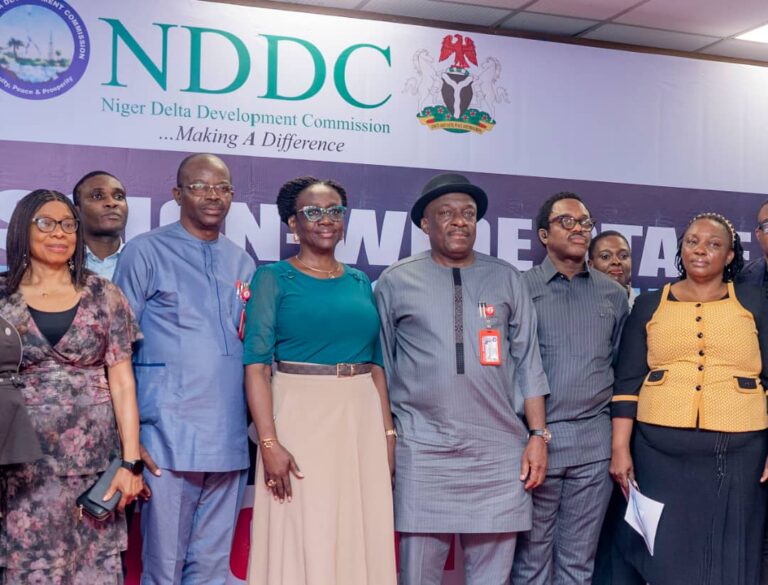
The Director of Administration and Human Resources, Sir Kelechi Nwelue, gave the advice during a commission-wide staff interactive session with Pension Fund Administrators (PFAs) and insurance companies at the NDDC headquarters in Port Harcourt, Rivers State.

In a statement signed and issued by Seledi Thompson-Wakama
Director, Corporate Affairs, Nwelue said the programme, approved by the Managing Director of the commission, Dr Samuel Ogbuku, was organised to sensitise staff on pension schemes and provide them with the knowledge required to make informed decisions about their retirement savings.

He particularly urged newly recruited employees to acquaint themselves with the operations and responsibilities of various PFAs before choosing an administrator to manage their pension contributions.

According to him, pension contributions deducted from employees’ salaries, alongside employers’ contributions, constitute long-term savings designed to provide financial support after retirement.

He urged staff to carefully assess the information provided by the participating pension administrators and choose the option best suited to their long-term financial interests.

Nwelue stressed that employees were at liberty to select their preferred pension administrator, noting that the interactive session provided an opportunity for the various companies to explain their products, services and benefits.

Also speaking, a Director in the Directorate of Administration and Human Resources, Mr James Fole, said the programme was aimed at deepening employees’ understanding of pension, insurance and other financial instruments that could improve their financial wellbeing during and after active service.
Fole warned that inadequate preparation for retirement could expose employees to financial hardship in their post-service years.

He said: “That is not what the Managing Director, Executive Management and the entire management want for our staff. We want to see a situation where retirees enjoy a reasonable level of comfort, knowing that the Commission has contributed to their future.”

He added that equipping employees with appropriate financial knowledge while they were still in active service remained critical to achieving a financially secure retirement.
Several pension and insurance companies participated in the interactive session.

TUC Demands Seamless Health Insurance Plan for Rivers Workers

0

The Trade Union Congress (TUC), Rivers State Council, has called on the Rivers State Government to introduce a seamless health insurance arrangement that will ensure all civil servants and their dependants are enrolled in the Rivers State Contributory Health Protection Programme (RIVCHPP).

The TUC made the demand when its leadership visited the Executive Secretary/Chief Executive Officer of RIVCHPP, Dr Vetty Agala, in Port Harcourt, amid renewed calls for wider coverage of residents under the state’s social health insurance scheme.

Speaking during the visit, TUC Chairman, Comrade Samuel Ogan, commended the management of RIVCHPP for its efforts to expand access to healthcare, stressing that health insurance remained the most sustainable way of protecting workers and their families from the financial burden of illness.

Ogan, however, said workers would be more willing to embrace the scheme if government could develop a system that eliminates visible deductions from their salaries.

He urged the state government to work out a seamless arrangement through which all workers and their dependants could be automatically captured in RIVCHPP plans.

According to him, enrolling the entire civil service into the programme would not only protect workers but also encourage other organisations and individuals to embrace health insurance.

The TUC chairman pledged that the union would engage relevant stakeholders to facilitate the enrolment of workers into RIVCHPP’s health insurance packages.
Earlier, Agala described RIVCHPP as a strategic initiative of Governor Siminalayi Fubara aimed at ensuring financial risk protection for everyone living and working in Rivers State.

She said the programme was designed to make universal health coverage a reality by enabling residents to access quality healthcare without suffering financial hardship or relying on out-of-pocket payments at the point of care.

Agala, who commended the state government for investing in healthcare infrastructure and manpower, lamented the low patronage of health facilities, noting that the challenge was not necessarily a lack of illness but, in many cases, the inability of residents to afford medical care.

She said RIVCHPP was established to bridge that gap and ensure that people, regardless of their social or economic status, could obtain medical attention whenever they needed it.

The RIVCHPP boss disclosed that the agency had developed packages for residents in the formal and informal sectors, vulnerable groups and people living with chronic illnesses.

She also highlighted the agency’s educational sector plans, under which pupils in primary and secondary schools would pay N9,000 annually, while tertiary institution students would pay N12,000 per academic year. She explained that registered students would remain covered during their holidays.

Agala called on labour unions, international oil companies, religious organisations, community and political leaders, as well as well-meaning individuals, to partner RIVCHPP by sponsoring health insurance for members of their communities.

She stressed that government funding alone could not sustain a viable health insurance system, adding that the number of vulnerable residents currently benefiting from the programme remained only a fraction of the population in need.
RIVCHPP Woos UNIPORT Students

In a related development, Agala assured the University of Port Harcourt Medical Students Association (PUMSA) of the agency’s readiness to collaborate with the university’s entire student community to expand access to healthcare.
She gave the assurance when the PUMSA leadership, led by its President, Nelson Fadeh Leteh, visited the agency.

Agala said students constituted a critical segment of the population that RIVCHPP was seeking to bring under its health insurance coverage, stressing that the agency’s objective was to ensure that no resident of Rivers State was excluded from access to quality healthcare.

She said RIVCHPP had begun engagements with relevant authorities to address existing institutional dynamics that could facilitate the enrolment of students, while advising the association to follow due process in presenting its demands.

Earlier, Leteh outlined some of the challenges and hazards confronting medical students, particularly during clinical training, and expressed the association’s desire to enrol its members in RIVCHPP’s programmes.

He said the welfare of medical students remained a priority for the association, noting that the existing health insurance arrangement available to the students was characterised by protocols and bottlenecks that often hindered seamless access to healthcare.

The visits ended with the presentation of RIVCHPP promotional materials to the visiting delegations.