Rivers State University (RSU), Port Harcourt, has called for stronger environmental regulation, sustained monitoring and urgent action to protect the Niger Delta aquatic ecosystem from the growing threats posed by oil pollution, industrial effluents, illegal refining, overfishing and other human activities.
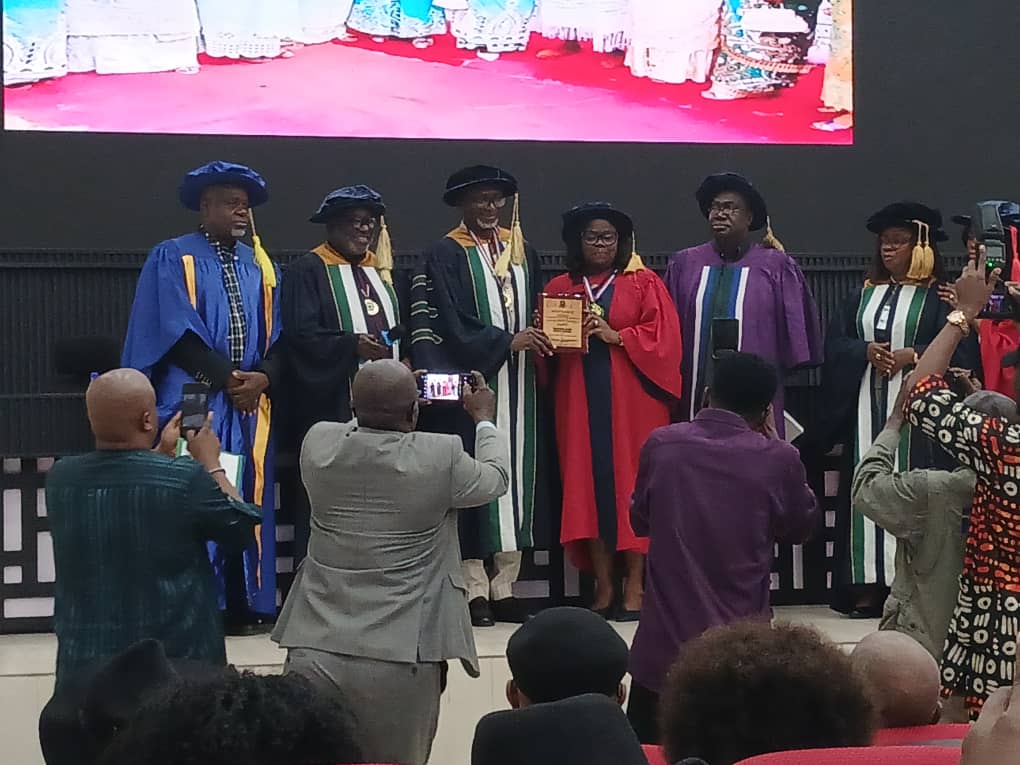
The call was made by Professor Adaobi Patricia Ugbomeh of the Department of Animal and Environmental Biology, Faculty of Science, RSU, while delivering the university’s 137th Inaugural Lecture titled, “Samples Tell a Story: Challenges and Impact of Pollution on the Niger Delta Aquatic Environment.”
The lecture, held at the university premises last Wednesday, drew attention to the alarming ecological evidence contained in water, soil, sediment and biological samples collected from different parts of the Niger Delta over more than three decades of research.

Ugbomeh, a Professor of Aquatic Ecology, said environmental samples provide an accurate account of the condition of an ecosystem, stressing that “samples do not lie.”
According to her, a bottle of water could serve as a “well of information”, revealing the health of the environment from which it was collected.
She explained that pollution from dumped waste, oil spills, industrial effluents, urban run-off, plastics and emerging contaminants such as pharmaceuticals often finds its way into aquatic ecosystems, with consequences for biodiversity, fisheries and public health.
“Samples could be in the form of water, soil, sediment or biota. The importance of sampling is to detect the absence or presence of something which tells the story about that environment,” she said.
Drawing from her research across the Niger Delta, Ugbomeh warned that the region’s aquatic environment was under increasing pressure and required urgent, science-driven intervention.
She particularly raised concern over overfishing in parts of the region, including Igolo and Ngbe, saying the ecosystem needed time to recover.
“There is need to allow nature to rest so that it can come back,” she said.
The professor cited findings from the Opobo River in Rivers State, which she said could appear normal to the naked eye despite significant ecological stress revealed through scientific sampling.
According to her, samples collected from the river in 2020 consistently showed an ecosystem under pressure, characterised by sustained biomass but declining zooplankton diversity.
She explained that the river’s dependence on copepod-dominated zooplankton productivity made it ecologically vulnerable because any disruption to the dominant group could directly affect the availability of food for fish.

Ugbomeh also highlighted the ecological importance of insects inhabiting Niger Delta mangrove forests, describing mangrove canopy insect diversity as a “mirror of integrity” of the ecosystem.
She said mangroves across the region had been subjected to oil spills, canal construction, deforestation and urban encroachment.
Findings from samples collected at the Bundu Ama mangroves along the Bonny River in Port Harcourt, she disclosed, pointed to a functionally rich but stressed ecological community.
According to her, the insects play important roles as pollinators, decomposers, predators and bioindicators, while their survival depends heavily on the continued integrity of the mangrove trees.
Of particular concern, she said, were findings from a 2022 study in Elechi Creek, a tributary of the upper reaches of the Bonny River flowing through Port Harcourt City.
The study, according to the lecturer, provided the first documentation of bone abnormalities in wild adult teleost fish from brackish water in Nigeria.
She disclosed that fish specimens obtained from artisanal fishermen using cast and gill nets were examined, with between 40 and 50 per cent of three species showing distinct skeletal abnormalities.
Ugbomeh linked the findings to the environmental conditions around Port Harcourt, Nigeria’s major petroleum export hub, saying oil pollution, combined with high water temperatures and low dissolved oxygen associated with illegal refining activities, was the most probable cause of the skeletal deformities.
She warned that such evidence demonstrated that pollution was not merely an environmental issue but one capable of affecting aquatic organisms, fisheries and, ultimately, human wellbeing.
Based on the body of ecotoxicological, ecological, parasitological and toxicological evidence generated across the Niger Delta, Ugbomeh called for the establishment of integrated, long-term environmental monitoring programmes across major rivers in the region.
She said monitoring should cover water, sediment, soil and aquatic organisms and combine chemical analysis with biological indicators such as fish condition, parasite burden, zooplankton diversity and macro-invertebrate communities.
She also urged government to strengthen environmental regulation and enforcement by requiring independent verification of oil spill remediation and enforcing industrial effluent standards.
The lecturer called for restrictions on the use of hazardous chemicals, including oil dispersants and paraquat, around aquatic ecosystems.
She further advocated routine seafood safety assessments, stronger aquaculture biosecurity and integrated environmental and public health surveillance to identify ecological and health risks before they escalate.
On fisheries, Ugbomeh recommended sustainable management practices, including the use of biological health indicators such as fish condition factors and haematological biomarkers in routine stock assessments.
She also called for seasonal fishing closures and other sustainable fishing measures where scientific evidence indicates that they are necessary.
The professor urged increased funding for universities and research institutions to establish continuous aquatic monitoring programmes and generate long-term environmental datasets required for effective policy, remediation and ecosystem restoration.
She also stressed the need for stronger collaboration between government agencies, research institutions and local communities, arguing that scientific evidence must inform environmental policies while communities should have a meaningful role in decision-making.
“Protecting the Niger Delta requires sustained monitoring, stronger regulatory enforcement, science-driven management, and active community participation,” she said.
“These measures are essential for restoring ecosystem integrity, safeguarding fisheries, and protecting public health across the region.”
She added: “The Niger Delta’s waters have sustained its communities for millennia. They deserve governance, science, and stewardship equal to the weight of that responsibility. The evidence is in every sample. The obligation to act is in every decision.”
‘Government must listen and act’.
In his remarks, the Vice-Chancellor of RSU, Prof. Isaac Zeb-Obipi, represented by the Deputy Vice-Chancellor, Administration, Prof. Blessing Jaja, described the lecture as insightful, thought-provoking and timely.
Jaja said the lecturer had spent more than 35 years collecting samples and documenting the stories they revealed about the Niger Delta aquatic environment.
“Our Inaugural Lecturer collected samples and collated the stories behind the samples which spoke different languages,” he said.
He noted that the evidence presented during the lecture showed clearly that the Niger Delta environment was contaminated and that the contamination was affecting biodiversity.
Jaja said the presentation further demonstrated that increasing pollutant loads translated into increasing environmental problems.
He stressed that the research reflected RSU’s commitment to its vision of contributing to the protection of the Niger Delta environment through scholarship and scientific inquiry.
The Deputy Vice-Chancellor congratulated Ugbomeh on delivering the university’s 137th Inaugural Lecture and urged government and other relevant authorities to take the scientific evidence seriously.
“Government must listen to these stories and act accordingly,” he said.
The lecture ultimately placed a stark responsibility before policymakers: that the deteriorating condition of the Niger Delta cannot be adequately addressed through sporadic interventions alone, but requires sustained scientific monitoring, credible enforcement, responsible resource management and the active participation of communities whose livelihoods depend directly on the region’s waters.