



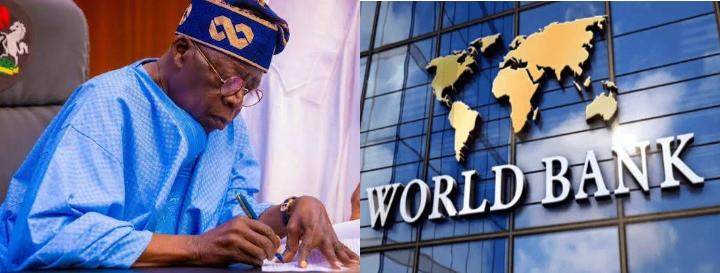
The Federal Government has firmly pushed back against interpretations of a recent World Bank Nigeria Development Update suggesting that large portions of the country’s revenue are unaccounted for, describing such claims as misleading and rooted in a flawed reading of the fiscal framework.
In a statement issued on Sunday, Minister of State for Finance, Taiwo Oyedele, dismissed insinuations of “hidden spending” or diversion of public funds, stressing that the reports mischaracterised legitimate financial processes.
According to the ministry, deductions from the Federation Account Allocation Committee (FAAC) have been wrongly interpreted as leakages, whereas they represent lawful fiscal transactions.
“It is important to emphasise that refunds and transfers to states and other tiers of government are not leakages,” Oyedele stated. “They are legitimate fiscal flows, including repayment of obligations and allocations backed by law.”
The government explained that these deductions cover a range of approved expenditures, including statutory transfers, security outlays, savings and investments, cost-of-collection charges, and refunds to Ministries, Departments and Agencies (MDAs), as well as interventions for subnational governments.
Reaffirming its position, the ministry stressed that allocations and refunds to states are constitutionally grounded and should not be misconstrued as missing funds.
It also criticised what it described as the selective reliance on outdated data in some analyses of the World Bank report, noting that the document itself acknowledged ongoing reforms in Nigeria’s public financial management.
Among recent measures, the government highlighted a 2026 Executive Order designed to strengthen the remittance of petroleum revenues, a move expected to enhance transparency and boost distributable income by approximately 0.4 per cent of GDP annually.
Beyond the controversy, the ministry pointed to more optimistic signals in the report, including increasingly broad-based economic growth, easing inflationary pressures, improving external reserves, and a sustained current account surplus. It added that key debt indicators have also improved, with a declining debt-to-GDP ratio.
The Federal Government maintained that, contrary to alarmist interpretations, the World Bank report does not depict a failing fiscal system but rather underscores progress driven by ongoing reforms, efforts it says must be sustained.