Home Blog Page 99

Multiple Accident On Enugu-Port Harcourt Expressway Claims Two Lives, Nine Injured

0

The Federal Road Safety Corps (FRSC) has confirmed that two persons lost their lives in a multiple accident involving 11 vehicles along the Enugu-Port Harcourt Expressway on Wednesday.

The Sector Commander of FRSC, Enugu State Command, Mr Franklin Agbakoba, confirmed the incident to newsmen in Enugu shortly after rescue operations by operatives of the corps.

Agbakoba said that no fewer than nine males got injured as a result of the multiple accident, which involved 30 people comprising 26 males and four females.

He said that the multiple accident happened at about 11:45a.m within the Port Harcourt bound axis of the expressway and precisely within the New Garki axis of the road in Enugu State.

The sector commander said that the multiple accident involved four trucks, two trailers, one sienna, one tipper, one Hiace bus, one Mini-Bus and one Jeep.

According to him, within 10 minutes of the unfortunate incident, officers and men of the FRSC Ozalla Unit Command stationed along the road and started the rescue operations.

“The injured victims were taken to the National Orthopaedic Hospital, Enugu and the University of Nigeria Teaching Hospital (UNTH), Ozalla by the FRSC Zebra 32 Ambulance team stationed along the expressway.

“Also, the obstructions were cleared by the FRSC and the Enugu State Traffic Management Authority (ESTMA) towed the trucks.

“The FRSC Unit Commander, Ozalla; the Divisional Police Officer (DPO), Ozalla and military men coordinated the rescue operation,” he said.

The sector commander said that causative factors that led to the multiple accident included speed and route violations and loss of control.

Five RSU Students Freed as Police Launch Hunt for Kidnappers

0

Port Harcourt — Five students of the Rivers State University (RSU) abducted from the institution’s Satellite Campus in Emohua have been rescued unharmed, the Rivers State Police Command said on Thursday.

The students — Prince London, Azubuike Kelechukwu, Elizabeth Aniete, Onyebuchi Precious and London Sampson — were seized on Tuesday, a development that triggered panic within the university community and led Vice Chancellor, Prof. Isaac Zeb-Obipi, to temporarily shut down academic activities at the campus.

In a statement, the Police Public Relations Officer, Superintendent Grace Iringe-Koko, confirmed that the victims were freed during a coordinated operation by the Command’s Tactical Units, supported by other security agencies and local vigilante groups, at Rumuodogo 2 in Emohua.

“The rescued victims have been taken to the hospital for medical examination,” Iringe-Koko said, adding that a manhunt had been launched for the fleeing suspects, believed to be members of a cult group.

The Police assured students, parents and residents that it is intensifying efforts to track down the kidnappers and reinforce security around tertiary institutions in the state.

Senate Moves to Introduce Mandatory Two-Year Pupillage For New Lawyers

0

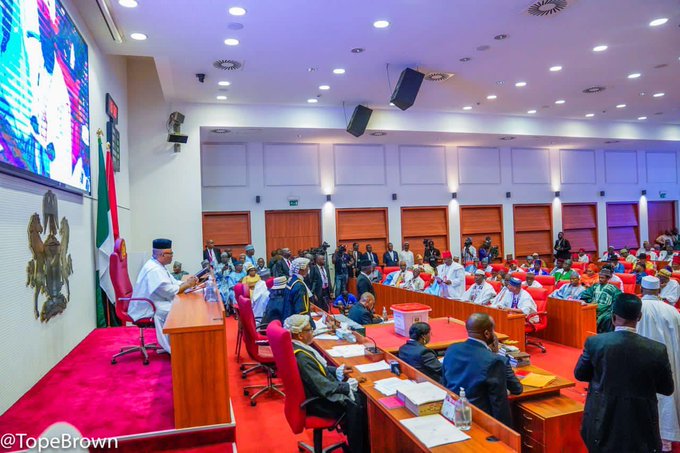
The Senate on Wednesday advanced deliberations on a landmark bill seeking to overhaul the Legal Practitioners Act, 2004, with a central proposal mandating a two-year pupillage for lawyers newly called to the Nigerian Bar.

The bill, sponsored by the Senate Leader, Senator Opeyemi Bamidele, scaled second reading after robust debate during plenary. It forms part of a sweeping effort to modernise legal practice in Nigeria and bring it in line with global standards in jurisdictions such as the United Kingdom, Canada, South Africa and Kenya.

Presiding over the session, Deputy Senate President Barau Jibrin put the proposal to a voice vote, securing unanimous approval. The Committee on Judiciary, Human Rights and Legal Matters is expected to convene a public hearing and submit its report within two weeks.

Leading the debate, Bamidele underscored the inadequacy of the current legal framework, describing the nearly 60-year-old Act as outdated in both content and structure. He noted that technological advancement, digital court systems, cross-border transactions and evolving ethical expectations have transformed legal practice beyond what the existing law accommodates.

“The nature of legal practice today has drastically evolved,” he said. “Accordingly, our regulatory framework must evolve to meet these new realities.”

A major thrust of the proposed amendments is the restructuring of the Body of Benchers, which is to be strengthened as the apex regulatory institution for the legal profession. Under the bill, the body would gain corporate legal personality, financial autonomy, an enhanced secretariat and expanded powers for rule-making and oversight.

The bill also addresses longstanding concerns over the inefficiency of the disciplinary process for lawyers. It proposes a decentralised Legal Practitioners Disciplinary Committee (LPDC) with multiple panels nationwide, clearer sanctioning powers ranging from suspension to striking off, and mandatory publication of all decisions. Practitioners will maintain a right of appeal to the Supreme Court.

Another key feature is the establishment of an Ethics, Adherence and Enforcement Committee—an investigative body empowered to inspect law offices, demand records, probe complaints and prosecute cases before the LPDC.

At the heart of the reform is the introduction of a compulsory two-year pupillage scheme for new lawyers, except in special circumstances. Bamidele said the measure would provide young lawyers with essential hands-on training, professional grounding and mentorship before they practise independently.

The bill further proposes compulsory continuing professional development as a condition for renewing practising licences—an attempt to ensure lawyers remain current throughout their careers.

To curb the rise of impostors posing as legal practitioners, the legislation criminalises unauthorised legal practice and clearly defines its scope, with penalties attached.

The reform package also covers the regulation of foreign lawyers, a review of the criteria for conferring the rank of Senior Advocate of Nigeria (SAN) and stronger safeguards for clients’ interests and funds.

Supporting the bill, Chief Whip of the Senate, Senator Mohammed Tahir Monguno, drew from his more than three decades at the bar to affirm the urgency of the reforms.

“This bill is apt and germane,” he said. “We are in a digital age, and our legal profession must reflect these realities.”

The Senate’s decision marks a significant step in what could become the most comprehensive transformation of Nigeria’s legal regulatory framework in decades.

Nigeria’s First Lady Splashes N50m On Persons With Disabilities In Rivers …RSG Unveils Free Medical Services For Vulnerable Persons

0

Nigeria’s First Lady, Senator Oluremi Tinubu, has extended a major financial lifeline to Persons with Disabilities (PWDs) and disabled veterans in Rivers State. The support comes under the Renewed Hope Initiative (RHI) Social Investment Programme, a nationwide economic empowerment effort.

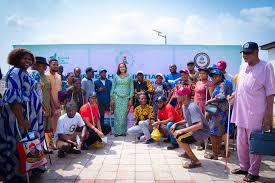
Representative of Nigeria’s First Lady and wife of Rivers State Governor, Lady Valerie Siminalayi Fubara (middle); retired Supreme Court Justice, Mary Odili (7th left); Founder, Rivers Women Unite for SIM, Amaopuorubo Sotonye Toby Fulton (left); and others join hands to cut the 2025 World Disability Day cake while some the beneficiaries of the Renewed Hope Initiative small business support grants watch in admiration during an empowerment programme for persons with disabilities and disabled veterans in Government House, Port Harcourt on Wednesday.

The event, held on Wednesday at the Banquet Hall of the Government House, Port Harcourt, coincided with the 2025 International Day of Persons with Disabilities, with the theme: “Fostering disability inclusive societies for advancing social progress”.

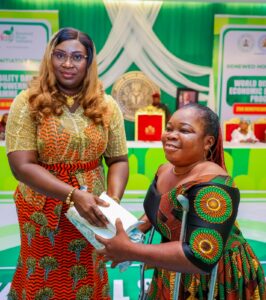
Wife of the Rivers State Governor, Lady Valerie Siminalayi Fubara, who represented the First Lady of Nigeria, presented the small business grants to the beneficiaries.

The RHI empowerment effort covers all 36 states, the Federal Capital Territory (FCT), and the Defence and Police Officers’ Wives Associations (DEPOWA). Each jurisdiction will have 250 PWDs receive a N200,000 Business Recapitalisation Grant per beneficiary, amounting to N50million. In total, N1.9 billion is being disbursed to 9,500 PWDs across Nigeria.

Senator Tinubu noted that the launch was intentionally scheduled for the International Day of Persons with Disabilities. She expressed delight at unveiling the programme under the RHI Social Investment Framework.

Lady Valerie Fubara, wife of Rivers State Governor presenting grants to one of the beneficiaries.

She emphasised the administration’s commitment to inclusive growth, stating that the nation becomes stronger when all citizens are empowered to contribute. She also quoted Helen Keller: “Alone we can do so little; together we can do so much.”

According to the First Lady, “Our commitment to improving lives has also been demonstrated through various interventions in
Agriculture, Economic Empowerment, Education, Health, and Social Welfare, aimed at improving the well-being of families across our country. To all our beneficiaries, I encourage you to make good use of this opportunity.”

The nation’s First Lady said that the programme aligns with the Renewed Hope Agenda of President Bola Ahmed Tinubu, which seeks to promote inclusive growth and shared prosperity by ensuring that no Nigerian is left behind, especially those whose needs are often overlooked.

Lady Fubara, wife of Rivers State Governor acknowledging cheers at the RHI empowerment programme held in Government House Port Harcourt.

She announced that the RHI Governing Board has approved making the Economic Empowerment Programme for PWDs an annual event every December 3.

She thanked the Governor of Rivers State, Sir Siminalayi Fubara; and his wife, Lady Valerie Fubara, for their support, and encouraged the beneficiaries to make good use of the opportunity.

In her speech, Wife of Rivers State Governor, Lady Valerie Siminalayi Fubara, assured that the Renewed Hope Initiative in the state will collaborate with the National Commission on Persons with Disabilities to promote an inclusive society where the rights and privileges of persons with disabilities are guaranteed.

She said that the celebration of the 2025 World Disability Day, reaffirms the government’s commitment to create a more just, inclusive, equitable and sustainable State, where no one is left behind.

Lady Valerie Siminalayi Fubara, also delivered a strong message of empowerment to the beneficiaries: “You are not defined by limitations. You are defined by your strength, your creativity, your persistence, your brilliance, and your unique contribution to this state.”

She urged society to champion inclusion, noting that disability is not a tragedy but that discrimination, silence, and exclusion are.

Lady Fubara, wife of Rivers State Governor and former first lady of the State, Hon. Justice Mary Odili, during the RHI empowerment programme for PLWDs in Government House, Port Harcourt on Wednesday.

Lady Valerie Fubara confirmed that 250 beneficiaries in Rivers State received the N200,000 grant. She encouraged all the beneficiaries to utilise the funds wisely: “Let it be a seed that grows into something greater; a business that sustains you and your family.”

Also speaking, Executive Secretary, Rivers State Contributory Health Protection Programme, Dr Vetty Agala, announced the enrollment of the 250 persons with disabilities into the state’s contributory health protection programme, adding that the beneficiaries will now enjoy free medical care and services at primary, secondary and tertiary levels in the State.

“You’re going to not only access primary care, but anytime you require secondary or tertiary services, you will be referred to those levels of care at no extra cost,” in line with the government’s “Health For All Rivers Initiative,” she said.

Permanent Secretary of the Rivers State Ministry of Social Welfare and Rehabilitation, Mrs. Lorenta Davis-Dimkpa, stated that efforts are underway to establish a South-South office for the Disability Commission. She also confirmed ongoing work to domesticate the 2018 Disability Act.

In her goodwill message, Justice Mary Odili (rtd), commended both the Federal and Rivers State governments for taking bold steps to ensure persons with disabilities are included in governance.

Earlier in her speech, the State Coordinator of the Renewed Hope Initiative, Hon Tonye Briggs Oniyide, had said that the programme was carefully designed to address the needs of actual persons with disabilities and disabled veterans, helping them upscale their businesses across the State.

Speaking on behalf of the beneficiaries, Kie Obamanu, called for full implementation of disability laws to eliminate discrimination. He expressed gratitude to Nigeria’s First Lady and the wife of the Rivers State Governor for their support.

The Rivers State Ministry of Health presented a Universal Health Coverage Ambassador Award to Lady Valerie Fubara in recognition of her contributions to improving access to healthcare services.

President Tinubu To Present Award Of Excellence To Ogbuku, NDDC Boss

0

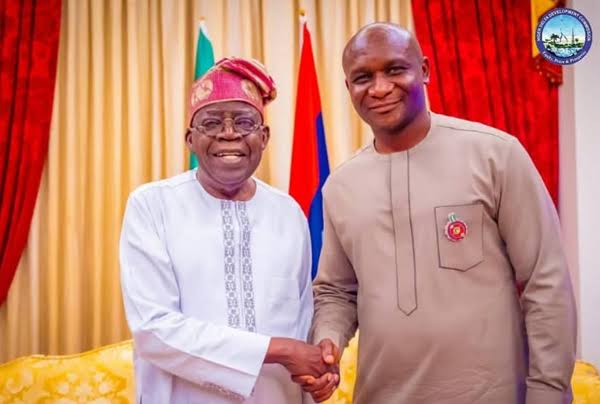
President Bola Ahmed Tinubu will confer the Distinguished Award for Excellence in Infrastructure Delivery and Sustainable Regional Growth on the Managing Director of the Niger Delta Development Commission, NDDC, Dr Samuel Ogbuku, on December 7, 2025.

A letter signed by the Permanent Secretary (General Services Office) for the Secretary to the Government of the Federation, Mohammed Sanusi Danjuma, stated that Ogbuku would be honoured at the forthcoming Nigeria Excellence Awards in Public Service (NEAPS) organized by The Best Strategic (TBS) Media in collaboration with the Office of the Secretary to the Government of the Federation (OSGF).

According to the Permanent Secretary, the prestigious award ceremony, scheduled to take place at the State House Conference Centre in Abuja, would be graced by President Tinubu.

Danjuma states: “With reference to the letter from the Chairman, Advisory Council of Nigeria Excellence Awards in Public Service, I write to respectfully inform you that you have been nominated to receive a Distinguished Award for Excellence in Infrastructure Delivery and Sustainable Regional Growth.”

Recall that the President had, on July 12, 2024, during the Niger Delta Stakeholders Summit in Port Harcourt, commended the NDDC Board and Management for working in harmony to fast-track the development of Nigeria’s oil-rich region.

This recognition highlights Ogbuku’s remarkable contributions to advancing infrastructure development and promoting sustainable growth in the Niger Delta region. Significant achievements, including the construction and rehabilitation of roads, bridges, and social amenities, have marked his stewardship at NDDC.

CBN Removes Cash Deposit Limits, Raises Withdrawal Threshold

0

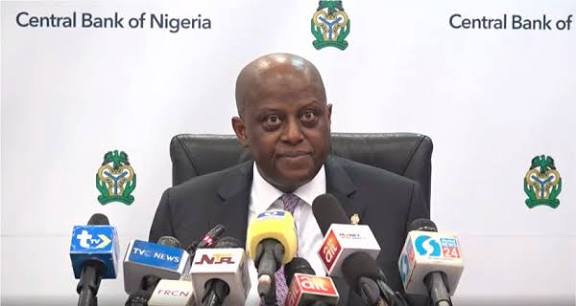
The Central Bank of Nigeria (CBN) has removed cash deposit limits and also increased the weekly cash withdrawal limit from N100,000 to N500,000.

The CBN made this known in a circular to all banks and other financial institutions, signed by Dr Rita Sike, Director, Financial Policy and Regulation Department.

Sike said that the revisions formed part of ongoing efforts to moderate the rising cost of cash management and address security concerns.

According to her, it will also curb money laundering risks associated with heavy reliance on cash.

She said that the cash-related policies previously issued in response to evolving circumstances were aimed at reducing cash usage, and promoting the adoption of electronic payment channels.

“However, with time, the need to streamline and update these provisions to reflect present-day realities became necessary,” she said.

She said that with effect from Jan. 1, 2026, the cumulative deposit limit would be removed and the fee previously charged on excess deposits will no longer apply.

The director said that the cumulative weekly withdrawal limit across all channels has been reviewed to N500,000 for individuals and five million Naira for corporates.

“Withdrawals above these thresholds will attract excess withdrawal charges as specified.

“The special monthly authorisation that allowed individuals to withdraw five million Naira and corporates N10 million once a month has been abolished,” she said.

She said that for Automated Teller Machines (ATMs), daily withdrawal remains capped at N100, 000 per customer, with a maximum of N500, 000 weekly.

She said that this formed part of the overall weekly withdrawal limit applicable to all channels, including point-of-sale (POS) transactions.

Sike said that excess withdrawals above the stipulated limits would attract three per cent for individuals and five per cent for corporate customers.

According to her, this will be shared in the ratio of 40 per cent to the CBN and 60 per cent to the operating bank or financial institution.

She directed banks to load all currency denominations in ATMs, while the existing limit on over-the-counter encashment of third-party cheques remains pegged at N100,000.

Sike said that such withdrawals would be counted as part of the cumulative weekly limit.

The director said that banks were also required to render monthly returns to the relevant supervisory departments.

She listed the departments to include the Banking Supervision Department, Other Financial Institutions Supervision Department, and the Payments System Supervision Department.

Sike said that revenue-generating accounts of federal, state, and local governments were exempted from the new withdrawal rules.

She said that accounts of microfinance banks and primary mortgage banks held with commercial and non-interest banks are also exempted from the new rules.

She, however, said that the long-standing exemption previously enjoyed by embassies, diplomatic missions, and aid-donor agencies had been removed.

9,500 Persons With Disabilities Get First Lady’s N1.9bn Grants

0

Nigeria’s First Lady, Senator Oluremi Tinubu, has empowered 9,500 persons living with disabilities across the country with a business recapitalisation grant of N200,000 each, totalling N1.9 billion.

The intervention, implemented through the Renewed Hope Initiative (RHI), was unveiled yesterday in Abuja as part of activities marking the 2025 International Day of Persons with Disabilities. A separate support package was also extended to 250 military and police veterans living with disabilities to bolster their small-scale enterprises.

Mrs Tinubu, who noted that national development was strengthened when every citizen was enabled to contribute meaningfully, said the programme aligned with President Bola Tinubu’s Renewed Hope Agenda.

Quoting Helen Keller, she said: “Alone we can do so little; together we can do so much,” adding that inclusivity and collective responsibility remained central to the RHI’s mandate.

According to her, 250 persons with disabilities in each state and the FCT are benefitting from the N200,000 grants, while all states, the FCT, and the Defence and Police Officers Wives Association (DEPOWA) received N50 million each for onward distribution.

“In total, 9,500 beneficiaries are receiving N1.9 billion,” she said, adding that the RHI had, in two years, supported more than 100,000 women and small business owners nationwide.

In her remarks, Mrs Mernan Oluyede, wife of the Chief of Defence Staff and President of DEPOWA, commended the First Lady’s “unwavering compassion,” noting that persons with disabilities—who constitute 16 per cent of the global population—still faced barriers in healthcare, education, employment, and social inclusion.

She said Mrs Tinubu’s leadership in health, education, agriculture, and social investment continued to uplift disadvantaged households across the country.

Beneficiaries, including retired Master Warrant Officer Patrick Ocheje and Inspector Adamu Yahaya, expressed gratitude, describing the support as a lifeline and a reminder that “there is ability in disability.”

The 2025 International Day of Persons with Disabilities is themed “Fostering Disability-Inclusive Societies for Advancing Social Progress.”

ICMPD, NAPTIP Strengthen School-Based Prevention As Child Trafficking Hits Alarming Levels

0

With children accounting for more than 75 per cent of trafficking victims in West Africa, the International Centre for Migration Policy Development (ICMPD) has intensified preventive efforts by training teachers in Enugu State on a new anti-trafficking curriculum approved for schools nationwide.

The two-day capacity-building workshop, funded by the Kingdom of the Netherlands and implemented in partnership with the National Agency for the Prohibition of Trafficking in Persons (NAPTIP), brought together teachers from selected schools to strengthen early detection and prevention of trafficking among school-aged children.

Head of ICMPD Nigeria Office, Ms. Isabelle Wolfsgruber, described human trafficking as one of the most disturbing threats facing Nigerian children. She noted that the alarming statistic — that over 75 per cent of trafficked persons are children — underscores the urgent need to equip teachers with tools to identify risks and protect pupils.

According to her, the School Anti-Trafficking Education and Advocacy Project (STEAP) was designed to deepen teachers’ understanding of TIP, improve practical classroom application, and create a network of Anti-Trafficking Champions in schools.

Wolfsgruber commended the Enugu State Ministry of Education, NAPTIP, and the Kingdom of the Netherlands for their collaboration in safeguarding children across communities.

Declaring the workshop open, NAPTIP Director-General, Dr. Binta Bello, represented by Mrs Ebele Ulasi, said human trafficking remained one of Nigeria’s gravest human rights abuses, with 55 per cent of victims being children within the country. She emphasised that such children, who deserve safe classrooms, often fall prey to exploitation.

Bello noted that integrating anti-trafficking content into school curricula had been years in the making, adding that teaching TIP themes in primary and secondary schools would empower children early enough to protect themselves.

The workshop, held across the five STEAP states — Delta, Edo, Enugu, Benue and Ogun — equipped teachers with modern methodologies, pedagogical tools, and age-appropriate techniques for delivering TIP lessons.

Mr Caroline Avah, Director of Review, Enugu State Ministry of Justice, said the state government continued its partnership with ICMPD to arrest and prosecute suspected traffickers.

Similarly, Mr Patrick Ochie of the Ministry of Education reaffirmed the state’s commitment to safeguarding learners, noting that prevention through education remained one of the strongest defences against traffickers.

Contemporary School Management And Ethical School Leadership

0

As Schools in Rivers State prepare to vacate for 2025/2026 Academic Session, Dr. Emmanuel Kaldick-Jamabo, an Education Leadership expert and a Public Affairs Analyst, writes on the need for School Heads to understand the concept of ethical School Leadership in contemporary school management practice.


The concept of School Leadership has been a subject of great debate among Scholars.

The question is what constitutes School leadership? What is identifiable leadership content and roles expected and are inherent in the concept, “School Leadership?

According to a British renowned Educationist and Writer Eleanor Wasserbery, the primary role of any leader particularly in a school context is the unification of people around key values”.

The core values she identified include: Schools are centered on learning- where all members of the school community are learners; where every member of the school community is valued as an individual. Besides, that school exists to secure its pupils and the local community, where Learning is about the development of the whole person and happens in and out of classrooms; where people prosper with trust, encouragement, and praise.

Thus, according to her school leadership is an aggregate leadership model aimed at unifying the common interest of producing and promoting lifelong learners that contribute to the development of the larger society.

In other words, School leadership is leadership for instruction and custodian of a brighter future, particularly for the learners. This is why Greenfield and Ribbins added that school leadership begins with the “character” of the leader expressed in terms of personal values, self-awareness, and emotional & moral capability.

School leadership is not only organizational leadership but also a moral and an embodiment of ethical leadership. School leadership is collective. It is a community of teachers and students led by a principal. It is a supportive and collaborative leadership designed to create a high expectation for teachers and students. It is a protective moral guide for the conscience, ethos, and cherished values and ethics of the larger society.

Indeed, the concept of school leadership is seen as a distinction between leadership, school management, and school administration, while also recognizing that the responsibilities of school leadership encompass all three.
According to scholars, irrespective of how these terms are defined, school leadership experience encompasses higher-order tasks designed to improve staff, students, and school performance beyond the routine maintenance of present operations-management and lower order duties of administration.
Thus, the three elements are so closely connected that it is unlikely for one of them to succeed without the others.

Nevertheless, one point is clear that the concept of the school principal ship is rooted in the industrial revolution model of schooling, where one individual bears the prime responsibility for the entire school organization.
On the contrary, School leadership in the contemporary school management context is rather a broader concept where the authority to lead does not primarily rest on one person, but can and is distributed among different people within and beyond the school.

Thus, school leadership encompasses people occupying various roles and functions such as principals, vice-principals, or HOD, (leadership teams and school-level staff involved in leadership tasks. It is indeed, a collective concept with particular reference to the supervisor, principal, the vice-principal, and possibly the Heads of Departments (HODs) in each secondary school.

Invariably, School leaderships simply refer to those in a leadership position who set the direction for the teachers and the students in a secondary school.

Other scholars often interchangeably used the term educational leadership for school leadership. But the concept of school leadership is used here as against education policymakers, whose duty it is to make policies for school leaders to implement or enforce to achieve general school academic improvement.

Furthermore, as it is used in this work, the concept simply refers to leading ethically. It is influencing teachers and students by the character disposition of the school leadership.
Ethical school leadership is supervisors, principals, vice–principals, and of course H.O.Ds. leading by following an approved set of values and rules and going beyond mere following rules, by actually acting out the approved set of rules at all times.

Ethical School Leadership is conducting the affairs of a school with the consciousness of morally right conduct. It is demanding, making a decision and setting the directions on what should be stirred up, how it should be stunned for, and how one should evaluate the pursuit of set objectives and goals of the school organization.
It is the school Supervisors, Principals, Vice Principals, and HODs providing ethical leadership by safeguarding and promoting approved moral values for schools.
Besides, as used in this work, Ethical School Leadership rests on certain fundamental pillars or components.

These are: The personal integrity of the leader that is the moral persona; The extent to which the leader can culturally integrate among his/her staff (teachers) and students consistently; The definite quality of the approved moral values for the educational system drawn from the aspirations of the society; The quality of the leader/follower relationship.
Expatiating further on this concept, William Hitt (1990), In his book Ethics and Leadership, established three basic points of connections or requirements between ethics and leadership.

These are:
I. Achieve an understanding of ethics.
II. Decisions made should be based on the leadership’s moral and ethical compass.
III. Developing and implementing a plan of action (rules, values) for promoting and demanding ethical conduct amongst teachers and students.

Again, it is important to spell out that the school system is the factory for the production of ethical leadership empowered with the knowledge of acceptable ways of behaviour, and conducting oneself. This is drawn from the platform of Godly and philosophical principles as entrenched in societal ethos and aspirations encapsulated in the National Policy on Education.

Therefore, school leaders are expected to be ethical leaders by the society and the government among other roles expectations as Oko (1998) said that the end product of education is the production of the “educated man”, who has the intellectual and moral strength to make the world a better place to live in. Ethical school leadership is therefore the art and practice of the production of the “educated man”. Indeed, School leadership matters.

In today’s world, the concept of School Leadership has now become a priority in education policy agenda internationally. It plays a key role in improving school outcomes by influencing the motivations and capacities of teachers, as well as the school climate and environment.

School Heads should therefore know that effective school leadership is essential in improving the efficiency and equity of schooling. As countries are seeking to adapt education systems to the needs of contemporary society, expectations for schools and school leaders are also changing. Many countries have moved towards decentralisation. They have moved to make schools more autonomous in their decision-making and hold them more accountable for results. At the same time, the requirement to improve overall student performance while serving more diverse student populations is putting schools under pressure to use more evidence-based teaching practices.

As a result of these trends, the function of school leadership across Nigeria is expected to now increasingly be defined by a demanding set of roles which include financial and human resource management, accountability and leadership for learning, and of course ethical leadership.

The truth is there are growing concerns across countries that the role of principals as conceived by the needs of the past is no longer appropriate.

Principals in Nigeria now have new workloads; while many are retiring and it is getting harder to replace them with effective hands. Potential candidates needed to know that roles are now more demanding and this is a source of concern, in addition to insufficient preparation and training.

These developments have made school leadership a priority in education systems across the world now.

As policymakers make efforts to enhance the quality of school leadership and make it sustainable, Scholars and System Actors have also identified four main policy initiatives that if implemented can improve school leadership practice:

Research has shown that school leaders can make a difference in schools and students’ performance if they are made to be up to speed and bridge the knowledge gap by clearly defining school leadership responsibilities

However, autonomy alone does not automatically lead to improvements unless it is well supported. In addition, it is important that as the core responsibilities of school leaders is clearly defined and delimited, School leadership responsibilities is being defined through an understanding of the practices most likely to improve teaching and learning.

Thus, as school prepare for the 1st term holidays, principals must resume with a fresh understanding of what is expected from them. And to say the least, what is expected from them is by no means less than this.


By Dr. Emmanuel Kaldick-Jamabo
An Education Leadership Expert
08097682297

Akwa Ibom Ranked Cleanest State In Nigeria For 2025 – Report

0

Akwa Ibom has been ranked the cleanest state in Nigeria for 2025, with a accumulative score of 79 per cent according to the State of the Nigerian Environment Report STONE 2025.

Mr Ene Owoh, National Coordinator Clean-Up Nigeria said this in an interview in Abuja on Wednesday.

“Akwa Ibom won the Stone 2025 Unbroken Green Crystal award Trophy and medal of service award for the 8th consecutive times, from 2018 to 2025.
Owoh who is also the Secretary of the National Technical Study Group (NTSG), said that the results were arrived at, during the State of the Nigerian Environment Report STONE 2025 unbroken and the Cleanliness Performance Index Ratings of all states in Nigeria, held in Abuja.
“Ebonyi and Enugu State followed closely, ranking 2nd and 3rd place with 65 per cent and 56 per cent respectively.

Owoh stated that the six geopolitical zones produced cleanliness champions namely: Akwa Ibom State South-South, 79 per cent, Enugu State South-East, 65 per cent.
“Lagos State South-West, 48 per cent Bauchi State North-East, 50 per cent, Plateau, North-Central, 52 per cent, and Kaduna State North-West, 35 per cent,” he said.

He revealed that the nine clean states are; Akwa Ibom, Enugu, Ebonyi, Bauchi, Plateau, Cross River, Anambra, Lagos, and FCT.
“The 15-member NTSG, led by Prof. Solomon Balogun, conducted the yearly study from November 2024 to November 2025.

“The study combined physical verification of all states and towns in Nigeria with a score point of 20 per cent and satellite imagery system that collects spectral data scoring 80 per cent monthly.

“The study used five variables namely :street/road cleanliness, vegetation and drainage control, waste management services, public opinion poll (POP), and knowledge, attitude, and practice (KAP) of hygiene and sanitation measures by the people.
“The report stated that in 2025, there was an 8 per cent performance in the procurement of waste management equipment by governments at all levels.
Owoh said that however, the health of sanitation workers dropped from 31 per cent in 2024 to 28 per cent in 2025.

“The incidence of sanitation-related diseases increased to 43 per cent in 2025, against 29 per cent recorded in 2024.

“The hygiene and sanitation practice of the people dropped to 32 per cent in 2025, against 36 per cent recorded in 2024.
“Open defecation has reduced from 24 per cent in 2024 to 19 per cent in 2025, but Nigeria remains the second country with the highest open defecation rating globally.
“Notably, in 2025, out of Nigeria’s estimated 240 million population, 187.2 million people are living in unclean environments, based on satellite imagery data.

According to him, The STONE report, states that the life expectancy of ordinary Nigerians has dropped from 50 years in 2024 to 47 years in 2025.
He therefore called on governments at all levels to increase funding for waste management services and urged citizens to prioritise hygiene and sanitation practices.

Owoh advocated for increased construction of public toilets to reduce open defecation and supported the establishment of health and environment clubs in schools nationwide to promote environmental awareness.

He expressed Clean- Up Nigeria’s willingness to partner with government and private sectors to improve cleanliness ratings nationwide.

He commended Sen. Oluremi Tinubu, the Wife of the President for her green initiative project and urged the Tinubu administration to adopt a green environmental agenda, focusing on city and nature living, energy research, green economy, and resources management.