Home Blog Page 100

INEC Ends First Phase Voter Registration, Dec. 10

0

The Independent National Electoral Commission (INEC) says physical (in-person) continuous voter registration exercise in the 17 local government areas of Yobe will end on December 10.

Alhaji Ibrahim Abdullahi, state INEC Resident Electoral Commissioner (REC), made this known in a statement in Damaturu on Wednesday.

He said the display of the preliminary register of voters for claims and objection would last for seven days, beginning from December 15 to December 21.

Abdullahi said the claims and objections would enable the registrants to correct errors on their bio data, including names, wards, National Identification Numbers (NIN).

Abdullahi said the Commission set aside December 21 for handling complaints arising from the claims and objections.

The REC, however, said the second phase of the continuous in-person voter registration would begin on January 5, 2026.

He recalled that the continuous voter registration began on August 18 with online registration, one week before the commencement of the in-person registration on August 25.

Abdullahi noted that registration of voters and production of an accurate register were fundamental and critical requirements of the electoral system.

“They are also primary functions of the Independent National Electoral Commission.

“Section 10 of the Electoral Act 2022 (as amended) mandates the Commission to conduct the registration of voters on a continuous basis,” the REC said.

Fubara Moves To Boost Youth Employment, Inaugurates 15-Member Monitoring Committee

0

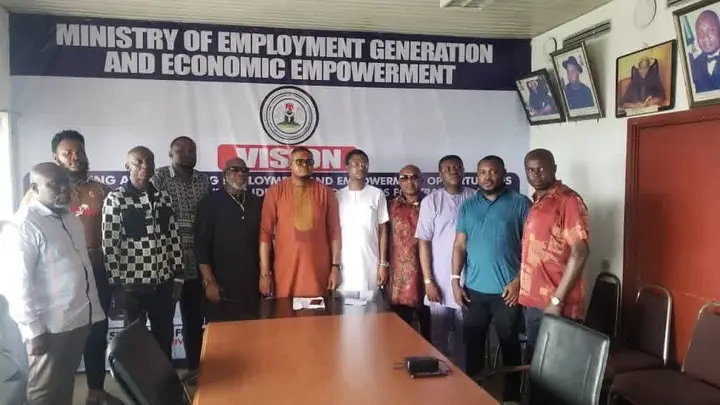
In a renewed drive to secure sustainable jobs and empowerment opportunities for young people across Rivers State, the Ministry of Employment Generation and Economic Empowerment on Tuesday, December 2, 2025, inaugurated a 15-member Employment Monitoring and Compliance Committee.

Speaking during the brief ceremony in Port Harcourt, Commissioner for Employment Generation and Economic Empowerment, Dr. Chisom Gbali, said the members were carefully selected for their competence, professionalism, and proven commitment to delivering on Governor Siminalayi Fubara’s mandate of aggressive job creation.

“The Governor has directed the ministry to vigorously pursue employment openings in telecommunications, oil and gas, and other critical sectors to place qualified Rivers youths in meaningful employment,” Dr. Gbali stated.

He emphasized that the assignment requires a professional and people-centered approach, especially when engaging corporate organizations on sensitive employment matters.

The committee’s key responsibilities include identifying companies with available vacancies, facilitating direct engagement between the ministry and such firms, and linking suitably qualified Rivers indigenes to job opportunities. It is also tasked with monitoring companies’ compliance with local content employment obligations across the state.

In his acceptance remarks, Committee Chairman Prince John Okorosa expressed gratitude to Governor Fubara and Dr. Gbali for the confidence reposed in the team. He assured that the committee would work diligently to deliver measurable results within the given timeline, in line with the administration’s broader youth empowerment vision.

Insecurity: Details of Tinubu’s Meeting With Service Chiefs Emerge

0

President Bola Ahmed Tinubu on Tuesday met with the nation’s Service Chiefs in a closed-door session as part of intensified efforts to address the growing insecurity across the country.

The president called for greater efficiency in strategies and results in the ongoing fight against insecurity in parts of Nigeria.

Tinubu gave the charge when he met with heads of intelligence agencies and service chiefs at the State House on Tuesday in Abuja.

Speaking after the meeting, the Chief of Defence Staff, General Olufemi Oluyede, said the president issued fresh directives and demanded improved results in the fight against insecurity.

The Service Chiefs arrived at the Presidential Villa around 5 p.m., and the meeting lasted for nearly two hours.

The session came a day after President Tinubu nominated former Chief of Defence Staff, Gen. Christopher Musa (rtd), as Minister of Defence, following the resignation of his predecessor, Abubakar Badaru.

Also, in attendance were the Chief of Defence Intelligence, Lt. General Akomaye Undiandeye; the Director-General of the Department of State Services, Oluwatosin Ajayi; and the Inspector-General of Police, Kayode Egbetokun.

Recall that last week, President Tinubu declared a nationwide security emergency after a surge in kidnappings and killings across several states.

Measures announced by the President included the recruitment of 20,000 additional police officers and the deployment of forest guards, among other security reforms.

Others present at Tuesday’s meeting were the Chief of Army Staff, Lt. General W. Shaibu; the Chief of Air Staff, Air Vice Marshal Sunday Aneke; and the Chief of Naval Staff, Vice Admiral I. Abbas.

General Oluyede described the meeting as “engaging,” noting that the President’s new directives are expected to yield stronger results in the nationwide security operations.

He assured Nigerians that security agencies are enhancing coordination to ensure peaceful Christmas and New Year celebrations.

Fubara Orders Revalidation of 1,000 Teachers as Rivers Moves to Strengthen Basic Education

0

In a decisive step toward closing the manpower gaps in public schools across Rivers State, Governor Siminalayi Fubara has approved revalidation of 1,000 teachers earlier recruited in 2023.

The move underscores the Governor’s commitment to repositioning the education sector and ensuring that public schools are adequately staffed to meet the growing demands of basic education in the state.

According to an official statement issued by the Chairman of the Rivers State Universal Basic Education Board (RSUBEB), Hon. Sam Ogeh, all teachers recruited in 2023 are required to undergo a mandatory revalidation exercise.

The exercise has been scheduled for Wednesday, December 3, 2025, at the RSUBEB State Office, Elechi Beach, beginning at 10:00 a.m. Affected teachers are expected to present themselves with their original appointment and posting letters.

Hon. Ogeh explained that the revalidation is part of a broader effort initiated by the Governor to reposition the basic education system, eliminate administrative discrepancies, and ensure that only duly qualified and verified teachers take up positions in public schools. He noted that the process will also help the Board properly align staff deployment with the needs of various schools across the state.

“The Governor has remained consistent in his commitment to strengthening the educational foundation of Rivers children,” Ogeh said. “This revalidation exercise is essential to ensure transparency and proper documentation as we deploy more teachers to classrooms where they are most needed.”

Stakeholders have praised the initiative, saying it comes at a time when many schools, particularly in rural communities are grappling with shortages of teachers. The revalidation drive is expected to significantly boost teaching capacity and enhance learning outcomes across the state.

With this renewed push, the Fubara administration is charting a more robust path toward improving public education, reassuring parents, students, and teachers that better days lie ahead for the state’s school system.

It would be recalled that Governor Fubara last Monday restated that amidst glaring challenges, his administration remained committed and focused on prioritizing education infrastructure in the State 2026 budget.

Governor Fubara disclosed this while addressing the 123rd and 124th combined quarterly general meeting of the Rivers State Council of Traditional Rulers at the Council Secretariat.

He explained that the 2026 budget will make provision for job creation and the refurbishment of schools in the state, which are in deplorable conditions, having given due consideration to roads and the health sector.

Edo State to Host Niger Delta Sports Festival, Lauds NDDC

0

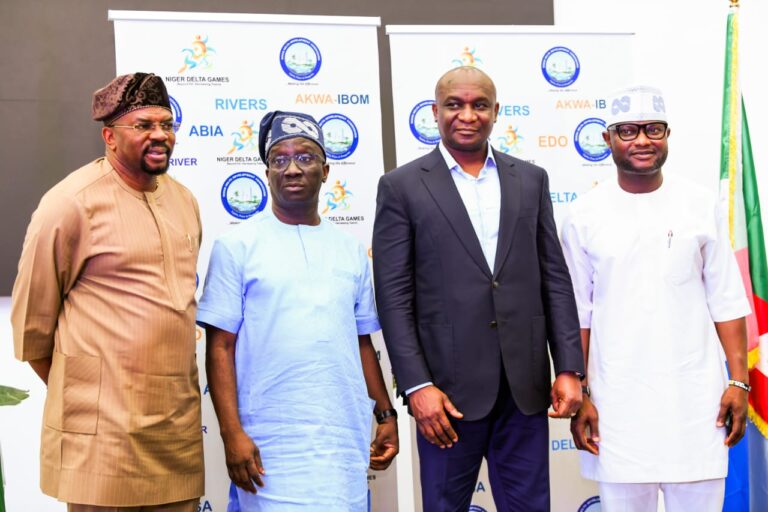
The Governor of Edo State, Senator Monday Okpebholo, has commended the Niger Delta Development Commission, NDDC, for offering the state the hosting rights of the 2026 Niger Delta Sports Festival.

A statement signed by Seledi Thompson-Wakama, Director, Corporate Affairs of the NDDC said that Senator Okpebholo gave the commendation when the NDDC Managing Director, Dr Samuel Ogbuku, led a team of the Commission’s officials, including the NDDC Executive Director of Finance and Administration, Alabo Boma Iyaye, the Edo State Representative on the Board of the Commission, Hon. Patrick Aisoweiorem, and other Directors, on a courtesy visit to the Government House, Benin City.

Governor Okpegholo acknowledged the achievements recorded by the NDDC in recent times, noting a positive turnaround in the execution of projects in Edo State.

The Governor said the Niger Delta Sports Festival would harness the youth’s potential, promote unity and community development in the Niger Delta region.

He commended the NDDC for initiating the sports festival, which he said had provided a platform to bring young sports talents from the region together. According to him, “this praiseworthy initiative would foster youth development, promote peace, and contribute to economic growth.”

In his remarks, the NDDC Managing Director, Dr Samuel Ogbuku, affirmed that the Commission was engaging all stakeholders to ensure harmony and cooperation in the development of the Niger Delta region.
Ogbuku urged state governors in the Niger Delta region to increase their collaboration with the NDDC to promote economic and sustainable development in the oil-rich region.

The NDDC boss restated the importance of stakeholder engagements, which he noted was a key pillar of President Bola Ahmed Tinubu’s Renewed Hope Agenda. He observed that events like sports festivals were not just about competition but also about unity, development, and the discovery of homegrown talents.

Ogbuku stated: “We are all united by a common problem, such as environmental challenges. We should leverage on sports as a uniting factor.”

The Managing Director noted that previous partnerships had been very beneficial to the Niger Delta region. He recalled that the NDDC successfully executed the 27.5-kilometre Ogbia-Nembe Road, constructed in collaboration with Shell Petroleum Development Company, SPDC.

He noted that the Commission recently completed the emergency reconstruction of the Irrua-Ewu-Agbede Road in Uhunwonde/Esan West Local Government Area of Edo State.

Ogbuku explained that the Irrua-Aviele project would link up with the Benin-Irrua road project being executed by the Federal Ministry of Works.

He acknowledged the contributions of the Minister of Regional Development, Engr. Abubakar Momoh, describing him as an excellent motivator for many achievements recorded by the NDDC.

Also speaking, the Executive Chairman of the Edo State Sports Commission, Mr Desmond Enabulele, said that the state was peaceful and rich in culture. He thanked the state governor for his massive support for sports development in the state.

How Bank Of Industry Disbursed N1.27trn to 14 Sectors In 2024 – Official

0

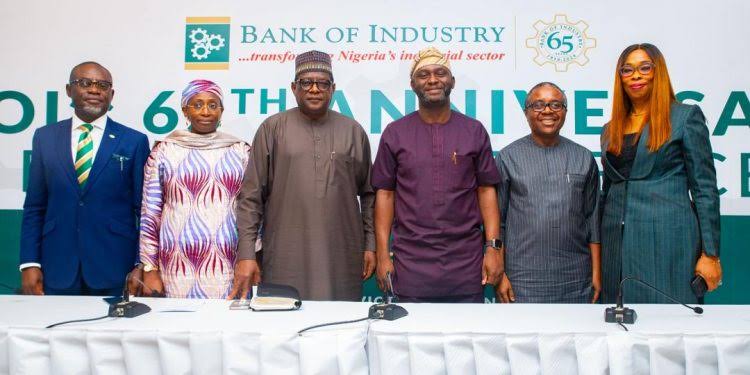
The Bank of Industry (BoI) has disbursed more than ₦1.27 trillion to enterprises across 14 sectors directly and indirectly in 2024.

The Chief Executive Officer of BoI, Dr Olasupo Olusi, disclosed this during the 10th Nigeria Energy Forum (NEF) Day 2 edition held virtually on Tuesday in Lagos.

Olusi was represented by the Executive Director, Public Sector and Intervention Programme, BoI, Ms Mabel Ndagi.

He said the bank during the period supported more than 900,000 jobs.

He noted that BoI had been at the forefront of Nigeria’s industrial transformation, supporting enterprises of all sizes to expand production, enhance value addition, and drive employment creation.

“The ₦200bn Federal Government MSME Intervention Fund, managed by BoI, provides affordable financing to small businesses nationwide through three dedicated windows.

“₦50bn for the Presidential Conditional Grant Scheme, ₦75 billion for the MSME Intervention Fund, and ₦75 billion for the Manufacturing Sector Fund.

“The bank is also expanding investments in green finance and circular economy solutions, supporting industries that integrate renewable energy, energy efficiency, and low-carbon processes,” he said.

He said the bank would continue to dominate leadership role in financing renewable energy infrastructure, clean manufacturing, and climate-smart industrial practices.

Also speaking, Ms Jadesola Rawa, Senior Associate, Grants Management, All On, an impact investment firm, said the Tertiary Institutions Energy Innovation Challenge (TIEC 3.0) was co-created by All On as Principal TIEC3.0 sponsor and implemented by the NEF.

Rawa said that the challenge was introduced to accelerate student-led energy innovation solutions for under-served and un-served communities in Nigeria.

Mrs Bamise Olanrewaju, NEF Director of Innovation, said the challenge featured winning teams represented by their Chief Executive Officers, Febechi Uzomadike (Green Preserve, Cross Rivers State University), Justice Esiri (AI Hybrid Agro Dryer, University of Lagos) and Fubara David (Keytric, University of Port Harcourt).

“The All On TIEC3.0 winners reported progress on product enhancements, community engagement and business structuring, using insights received from expert assessors and mentors,” she said.

Inga Stefoniwicz, Head of Green Growth and Digital Economy, European Union (EU) Delegation in Nigeria, said the union would invest in smart, clean and secure infrastructure in energy and other key sectors across the world to tackle inequalities.

Stefoniwicz added that the investment would put the Sustainable Development Goals back on track.

According to her, Africa-EU Green Energy Initiative will increase the number of African people, businesses and industries having access to affordable, modern and sustainable energy services.

“It will also support investments in renewable energy generation and promote energy efficiency so that by 2030, it will provide at least 100 million people with access to electricity.

“The EU has been the biggest donor partner in terms of grants to Nigeria’s power sector (with about €300 million since 2008 and including the current NIP,” she said.

Mr John Sloan, the Economic Affairs Officer, Economic Commission for Africa (ECA), said there is great potential for the green energy transition to yield significant opportunities for industrialisation and job creation in mineral-producing communities across Africa.

“Special economic zones are engines of job creation, fostering inclusive industrialization by providing sustainable employment opportunities for the local workforce,” Sloan said.

The NEF Co-Chair, Mr Adekunle Makinde, said sustainable production, value addition and industrialisation of lithium in Nigeria would foster economic growth, create quality jobs and enhance environmental protection.

Makinde added that adoption and localisation of both the United Nations Resource Management Systems and African Green Minerals strategies in minerals processing projects in Nigeria would strengthen capacity building and contribute to achieving global sustainable development goals.

Ms Xandra Weinbeck, the Senior Business Development Manager, Materials Circular Economy, Invest NL, said supporting industry in critical raw material economy enhances economic resilience and sustainability.

In his remarks, Dr Daniel Adeuyi, the NEF Group Chairman said the 10th Africa Youth Energy Innovation Challenge (AEIC) organised by the NEF and co-supported by GEF-SGP UNDP, BoI and PCNG-I, attracted over 400 entries from 38 out of 54 countries in Africa.

Adeuyi disclosed that more than 30 per cent of the participating teams were led by young women.

“The 2025 AEIC finalists were held during NEF2025 Day 2, comprising six independent expert assessors from the global energy community.

“The first prize winner Ecofuel Bioenergy DRC Grid Guard, Nigeria, received both the second prize and Public Vote Winner Prize.

“The third prize was awarded to AgroCold Solar Hub, Nigeria,” he said.

The most successful AEIC projects will be invited to showcase progress and exhibit products at the upcoming 11th Nigeria Energy Forum 2026 in July with the theme: “Upscaling Value Addition for Sustainable Industrialisation,” to be held in Lagos.


Reps Demand Remittance Of N30bn NSIPA Recovered Funds To TSA

0

The House of Representatives has called for the remittance of over N30 billion recovered from the presidential inquiry into the financial infractions on National Social Investment Programme Agency (NSIPA) fund to the Treasury Single Account (TSA).

The resolution was arrived at, following a motion of urgent national importance moved by Rep. Saidu Abdullahi (APC-Bida/Gbako/Katcha) in Abuja on Tuesday.

Abdullahi said that the ongoing delay in the disbursement of the recovered funds had deepened poverty by disrupting President Bola Tinubu’s Renewed Hope Agenda regarding poverty alleviation.

He expressed worries that credible sources had indicated that the recovered funds, estimated at over ₦30 billion, had not been remitted to NSIPA-designated TSA.

This, the lawmaker said, had left millions of prospective beneficiaries without the social and economic support envisioned by the Federal Government.

According to him, it has weakened small-scale enterprises, exacerbated hardship in rural and urban communities, delayed local economic stimulation and eroded public trust in government’s social protection commitments.

Abdullahi said that the continued uncertainty over the exact location and administrative handling of the recovered funds had posed fiscal risks and created institutional bottlenecks across national social intervention initiatives.

NSIPA is the statutory institution responsible for implementing federal government’s flagship social protection programmes, including Government Enterprise and Empowerment Programme (GEEP).

The president had, on Jan. 8, 2024, in a decisive move to uphold accountability and transparency, suspended NSIPA’s operations for six weeks to allow a comprehensive investigation into alleged financial infractions.

The Deputy Speaker, Rep. Benjamin Kalu, who presided over the plenary, referred the motion to relevant committees for further legislative action.

Bayelsa Hosts Over 1000 Young Entrepreneurs, As 5th Niger Delta MSME Summit Kicks Off, Dec 9

0

Mr Moses Siasia, the Founder of the Niger Delta Young Professionals (NDYP) says Micro Small and Medium Enterprises (MSMEs) remain critical to job creation and sustainable economic growth in Nigeria.

Siasia stated this in a statement on Tuesday, on the forthcoming 5th Niger Delta MSME Summit scheduled to hold in Yenagoa on December 9.

He said the summit, expected to host more than 1,000 young entrepreneurs and business owners, would focus on equipping MSMEs with the skills, mentorship and support needed to expand and create employment opportunities across the region.

“The event aims to strengthen MSMEs as a major engine of job creation and economic diversification in the Niger Delta and the wider Nigerian economy.

“The summit will feature exhibitions, keynote presentations, panel sessions, mentorship engagements and networking opportunities for entrepreneurs aged between 20 and 45.”

According to him, this year’s theme, “Enhancing the Role of MSMEs as Drivers of Sustainable Growth and Innovation”, highlights the increasing importance of small businesses in addressing unemployment and reducing economic exclusion.

Siasia noted that previous editions of the summit had assisted participants in accessing grants, funding and business support systems, including the NIRSAL Intervention Loan, which benefited more than 400 entrepreneurs in 2021.

He said the Niger Delta and the country at large must embrace a future driven by innovation, technology, agriculture, renewable energy and the knowledge economy, adding that MSMEs would remain the backbone of such transformation.

Gov. Douye Diri of Bayelsa will serve as Chief Host of the 2025 edition, while the Managing Director of the Niger Delta Development Commission (NDDC), Dr Samuel Ogbuku, is expected as Guest of Honour.

Other invited guests include Mr Usoro Akpabio, Managing Director, South South Development Commission (SSDC); Dr Olasupo Olusi, Managing Director, Bank of Industry; Mr Ayodeji Sotinrin, Managing Director, Bank of Agriculture and business executive, Mr George Omoraro.

Navy Dismantles Five Illegal Refining Sites In Delta

0

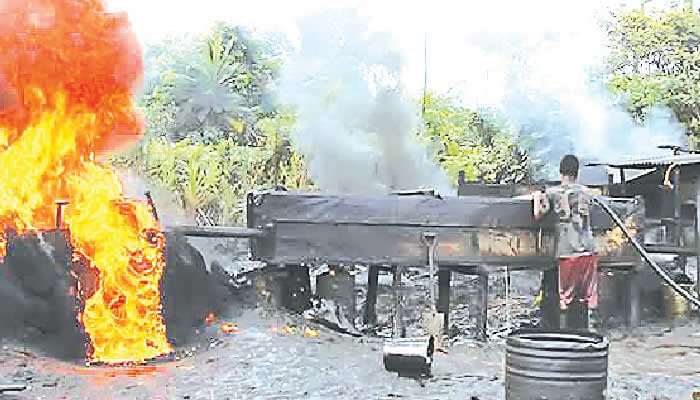
The Forward Operating Base (FOB) Escravos of the Nigerian Navy says it has deactivated five illegal refining sites at Obodo Omadino Community in Warri South Local Government Area of Delta.
FOB Escravos Commanding Officer, Navy Capt. Ikenna Okoloagu, disclosed this in a statement made available to newsmen on Tuesday in Warri.

Okoloagu said that, cumulatively, about 13,050 litres of stolen crude oil concealed in 30 dugout pits and three polythene sacks were seized during the operations.

He said the illegal refining sites were deactivated between Nov. 5 and Nov. 19 following a series of coordinated operations guided by credible intelligence.

Okoloagu said the exercise was carried out under the ongoing Operation DELTA SANITY II.

The naval chief also said the operations were in line with the strategic directives of the Chief of Naval Staff (CNS), Vice Adm. Idi Abbas, which focused on maintaining sustained pressure on economic saboteurs.

“Specifically, on Nov. 5, 2025, operatives, acting on actionable intelligence, dismantled two illegal refining sites at Obodo Omadino Community with about 4,000 litres of stolen crude oil.
“Subsequently, on Nov. 14, an additional site was dismantled at the same community with about 3,850 litres of stolen crude oil recovered.
“Additionally, on Nov. 19, two illegal sites were deactivated at the same riverine community and about 5,200 litres of stolen crude oil seized,” he said.
The naval boss warned criminals to desist from sabotaging the nation’s economic assets or face the full wrath of the law.
Okoloagu expressed the Base’s unwavering commitment to stemming illegal activities in the maritime domain and safeguarding the nation’s critical assets from saboteurs.

WHO Classifies Obesity Chronic Disease …Backs Wider Use Of Weight-loss Medicines

0

The United Nations Health Organisation (WHO) has issued its first guideline on the use of a new class of weight-loss medicines, marking a significant shift in global health policy as obesity rates continue to rise.

The guidance focuses on GLP-1 therapies – medicines such as liraglutide, semaglutide and tirzepatide – and offers conditional recommendations on how they can be used safely as part of long-term treatment.

WHO, in a statement on Monday stated that more than one billion people worldwide livewith obesity, which was linked to 3.7 millideaths in 2024.

Without stronger action, WHO warns the number of people affected could double by 2030, placing immense pressure on health systems and pushing global economic losses to an estimated $3 trillion a year.

As the world’s foremost public health authority, WHO’s statement is expected to influence national policies, insurance coverage and clinical practice, particularly as demand for effective weight-loss treatments continues to surge.

“Obesity is a major global health challenge,” Tedros Ghebreyesus, WHO Director-General said.

He added, “Our new guidance recognises that obesity is a chronic disease that can be treated with comprehensive and lifelong care.

“While medication alone won’t solve this global health crisis, GLP-1 therapies can help milions overcome obesity and reduce its associated harms.”

WHO stressed that obesity is not simply the result of lifestyle choices, but a complex, chronic condition involving genetics, environment, biology and social circumstances.

It is a major driver of heart disease, type 2 diabetes and some cancers, and can worsen outcomes for infectious diseases as well.

For many people, losing weight and keeping it off is extremely challenging without medical support.

GLP-1 therapies work by mimicking a natural hormone that helps regulate appetite, blood sugar and digestion.

For people with obesity, these medicines can lead to significant weight loss and health improvements.

WHO added them to its Essential Medicines List in 2025 for managing type 2 diabetes in high-risk groups, and its new guidelines now recommend their long-term use for adults living with obesity, except during pregrancy.

The recommendation is conditional due to limited long-term safety data, uncertainty about maintaining weight loss once treatment stops, high costs, and significant concerns about unequal access across countries.

WHO emphasised that weight-loss medicines must ne used alongside other support.

The most effective treatment combines medication with healthier diets, increased physical activity, and long-term guidance from health professionals.

The organisation highlighted that obesity cannot be resolved by individuals alone and requires broad action from governments and industry to create healthier food environments and ensure early intervention for those at risk.

Demand for GLP-1 medicines already far exceeds supply. Even with increased production, WHO estimates fewer than 10 per cent of eligible people will have access by 2030.

It warned that without deliberate policies these treatments may widen existing health inequalities.

The organisation urged governments to consider tools such as pooled procurement, fair pricing and voluntary licensing to expand access.