Home Blog Page 64

Coalition: Global Security Threats Demand Nigeria–U.S. Strategic Defence Alliance -Group

0

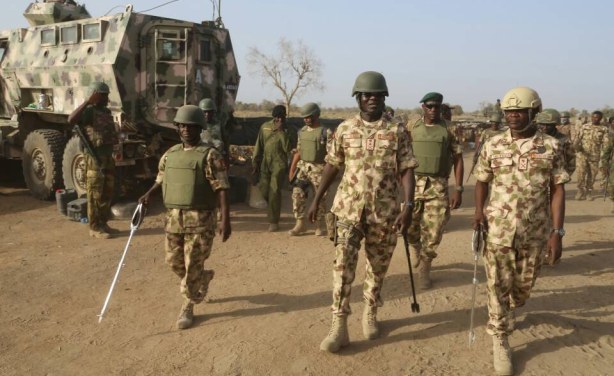
A pro-security advocacy coalition, the Citizens for Strategic Defence Cooperation (CSDC), has thrown its weight behind the Federal Government’s decision to deepen military collaboration with the United States Armed Forces, insisting that Nigeria’s sovereignty remains fully intact.

In a statement issued on Sunday in Abuja, the group described the arrangement as a “measured and strategic partnership” designed to strengthen Nigeria’s fight against terrorism, insurgency and transnational crime.

According to the coalition, public debate surrounding the presence of U.S. military personnel in Nigeria should be guided by facts rather than emotion.

“Our sovereignty is not for sale, and it has not been compromised,” the statement signed by CSDC Secretary, Abdulmajid Danladi read.

“The Armed Forces of Nigeria remain in full operational control of all security activities within our territory. Any cooperation with foreign partners is structured, limited and governed by Nigerian law.”

The group stressed that Nigeria has long maintained defence partnerships with friendly nations, particularly in areas of training, intelligence sharing and capacity building. It argued that the evolving security landscape—marked by terrorism, banditry, piracy and cyber threats—requires collaborative responses.

CSDC said enhanced cooperation with the United States Department of Defense would provide access to advanced training, intelligence technology and operational best practices.

“Modern warfare is technology-driven. Intelligence gathering, surveillance and counter-terror strategies are globalised. Refusing to cooperate with international allies would isolate Nigeria at a time when collaboration is essential,” the group noted.

The coalition commended the leadership of the Nigerian Armed Forces led by the Chief of Defence Staff General Olufemi Oluyede for what it described as a “forward-looking decision,” adding that the partnership aligns with Nigeria’s long-standing diplomatic and security relations with the United States.

It further emphasised that the presence of foreign military personnel—where applicable—does not equate to foreign control.

“There is a clear difference between cooperation and occupation,” the statement added. “Nigeria is not hosting foreign bases that override its authority. What exists is structured engagement designed to improve the capabilities of our own troops.”

CSDC urged Nigerians to view the development through the lens of national interest rather than partisan politics.

“Our troops deserve every legitimate advantage in confronting violent threats. If collaboration with experienced global partners enhances their safety and effectiveness, then it is a responsible step,” the group said.

The coalition also called on the government to maintain transparency and ensure that all defence partnerships remain consistent with constitutional provisions and Nigeria’s foreign policy principles.

NNPCL Right-of-Way: Ayambo Community Demands Fresh Assessment, Fair Compensation

0

The Chairman of Ayambo Community in Bonny Local Government Area of Rivers State, Warisenibo Godswill Jumbo, has called for an immediate re-evaluation of structures affected by the ongoing right-of-way demolition linked to the Nigerian National Petroleum Company Limited, insisting that justice and equity must prevail.

Speaking with reporters on Thursday, February 12, 2026, at his residence in Ayambo, Jumbo expressed concern over what he described as discrepancies between the information initially provided by company officials and the realities on ground.

According to him, representatives of the company had earlier briefed him on specific demolition dimensions along the pipeline corridor, but subsequent findings by a community surveillance team revealed a significantly expanded scope.

“What they told me when they visited is different from what my surveillance team reports they are now doing. You cannot agree on five metres, 10 metres or even three metres, and later return to say it is 25 metres or any other figure,” he said.

Jumbo maintained that he would not condone injustice against members of his community, particularly where livelihoods and homes are concerned.

“Everyone who knows me understands that I do not pander to injustice, especially when it affects my people. I am calling on them to go back, conduct a new assessment and pay the people what they are legitimately entitled to,” he added.

While acknowledging the existence of pipelines and their legally designated right-of-way in the area, the community leader urged affected residents to vacate the corridor in the interest of safety — but only after a transparent reassessment and proper compensation.

“We are aware of the dangers of living along the right of way and I advise those affected to vacate for their own safety. But the right thing must be done,” he said.

He further blamed what he termed “greedy and selfish land speculators” for selling parcels of land within the restricted corridor to unsuspecting buyers, despite longstanding community warnings.

“That place is called pipeline for a reason. It has pipelines, and nobody is supposed to build or live on top of them. We have consistently warned our people to avoid that area,” Jumbo stated, while appealing to those who have erected structures there to relocate.

Tension escalated in the community on Tuesday, February 10, 2026, as residents protested the sudden demolition of properties by Kristal Polis Limited, a contractor to WAGL Energy Limited, which in turn is engaged by NNPC Exploration and Production Limited — a subsidiary of the Nigerian National Petroleum Company Limited.

Several residents alleged that they were misled into signing documents in Port Harcourt under the pretext that payments made to them were to facilitate minor fence adjustments away from the pipeline corridor. They claimed the same payments are now being presented as full compensation for their properties.

The unfolding dispute has heightened concerns over transparency, community engagement and adherence to due process in the execution of pipeline right-of-way enforcement projects in the oil-rich region.

SERAP Sues CBN Over Alleged N3trn ‘Missing’ Funds

0

The Socio-Economic Rights and Accountability Project (SERAP) has dragged the Central Bank of Nigeria (CBN) before the Federal High Court in Abuja over its alleged failure to account for N3 trillion in public funds, including over N629 billion reportedly paid to “unknown beneficiaries” under the Anchor Borrowers’ Programme.

In a statement issued on Sunday by its Deputy Director, Kolawole Oluwadare, SERAP disclosed that the suit, marked FHC/ABJ/CS/250/2026, was filed last week.

The organisation said the legal action was prompted by what it described as “grave allegations” contained in the latest annual report of the Auditor-General of the Federation, published on September 9, 2025. The report allegedly raised concerns about the management and disbursement of trillions of naira in public funds under the apex bank’s supervision.

SERAP is seeking an order of mandamus compelling the CBN to account for and explain the whereabouts of the alleged missing or diverted N3 trillion, as well as provide detailed reports on how the funds were spent.

Specifically, the group is demanding clarity on the disbursement of over N629 billion under the Anchor Borrowers’ Programme, which it claims was paid to unidentified beneficiaries.
In a post on its official X handle, SERAP stated:

“We’ve sued @cenbank over failure to account for and explain the whereabouts of the missing or diverted N3 trillion of public funds, including the over N629 billion paid to ‘unknown beneficiaries’ as part of the Anchor Borrowers’ Programme.”

The organisation argued that the allegations, if established, amount to a breach of public trust and contravene provisions of the 1999 Constitution (as amended), the CBN Act and established anti-corruption standards.

According to SERAP, the alleged infractions reflect a broader failure of accountability at the apex bank and underscore what it described as persistent non-compliance with statutory obligations relating to transparency and prudent financial management.

“Nigerians have the right to know the whereabouts of the missing or diverted public funds,” the group said, adding that granting the reliefs sought would advance citizens’ rights to restitution, compensation and guarantees of non-repetition.
The CBN has yet to publicly respond to the suit.

FG Raises Red Flag Over Illegal Recruitment Of Nigerians Into Russia-Ukraine War

0

The Federal Government has sounded a stern warning over the growing cases of Nigerians being illegally recruited into foreign armed conflicts, particularly amid the ongoing war between Russia and Ukraine.

Minister of Foreign Affairs, Amb. Yusuf Tuggar, raised the alarm in a statement issued on Sunday by the ministry’s spokesperson, Kimiebi Ebienfa, expressing grave concern over what he described as an “alarming trend” of deceptive recruitment practices targeting Nigerian citizens.

According to Tuggar, recent media investigations and security reports reveal that several Nigerians were lured abroad under false pretences, including promises of lucrative jobs, security-related employment, educational opportunities and migration incentives. Many of the victims, he said, were subsequently deployed to combat zones after being misled and coerced into signing military service contracts.

He disclosed that some recruitment schemes involved enticing offers such as high monthly salaries, sign-on bonuses and fast-tracked citizenship in foreign countries. In several reported cases, victims allegedly signed contracts written in foreign languages without proper legal guidance, while their travel documents were confiscated upon arrival.

The minister further noted that intermediaries and agents were believed to be facilitating the travel of recruits under tourist or other non-military visa categories, thereby masking the true nature of their engagement.

“The Federal Government unequivocally warns all citizens against engaging in or accepting any offer that involves participation in foreign armed conflicts,” Tuggar said, stressing that such actions not only endanger lives but could also contravene Nigerian and international laws regulating mercenary activities and foreign enlistment.

He emphasised that Nigerians who choose to participate in foreign conflicts outside approved governmental frameworks do so at their own risk.

To curb the trend, Tuggar disclosed that the government is collaborating with relevant domestic and international partners to investigate the development and intensify public awareness on the dangers of illegal recruitment. Nigerian missions abroad, he added, have been directed to heighten consular vigilance and provide timely advisory services to citizens.

He urged parents, guardians, community leaders and educational institutions to sensitise young Nigerians about the grave risks associated with fraudulent overseas recruitment schemes.

Citizens, he advised, should verify all foreign employment and study opportunities through official government channels and promptly report suspicious activities to the appropriate authorities.

Reaffirming Nigeria’s commitment to protecting its citizens, Tuggar declared that Nigerians “must not be exploited or trafficked into foreign conflicts under any circumstances.”

NDDC Vows Swift Delivery Of 21-Kilometre Imo–Abia–Rivers Link Road

The Managing Director of the Niger Delta Development Commission (NDDC), Dr Samuel Ogbuku, has assured that the 21-kilometre Ehime-Nguru–Aba Branch–Mpam–Umuokirika–Ekwereazu Road linking Imo, Abia and Rivers states will be completed in record time.

A press statement signed and issued by
Seledi Thompson-Wakama,
Director, Corporate Affairs, NDDC stated there
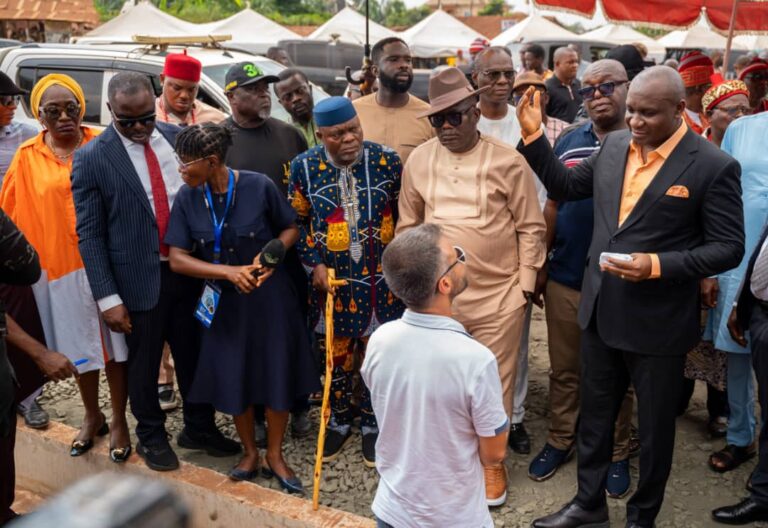
Ogbuku gave the assurance during an inspection of a section of the project in Ahiazu Mbaise Local Government Area of Imo State, where he expressed satisfaction with the pace of work and disclosed that the second phase would soon be awarded.

Describing the road as strategic, the NDDC boss said the project would strengthen connectivity among three mandate states — Imo, Abia and Rivers — while traversing four local government areas in Imo State: Ahiazu Mbaise, Aboh Mbaise, Ezinihitte Mbaise and Ngor Okpala.

He added that the Ahiara–Ngor Okpala axis of the road would also be awarded, noting that its completion would stimulate economic activities and ease movement across the benefiting communities.

Ogbuku, who was accompanied on the inspection by the Commission’s Executive Director, Projects, Dr Victor Antai, thanked residents of Ahiazu Mbaise for their warm reception and reiterated the Commission’s commitment to delivering critical infrastructure in line with the Federal Government’s Renewed Hope Agenda.

Speaking on behalf of the Igwe-in-Council and the people of Ahiazu Mbaise and Ehime Mbano, the traditional ruler of Ihitteaforukwu Kingdom, Eze Dr O. Nwandu, commended the NDDC for what he described as renewed momentum in regional development under the current board and management.

He noted that the road had remained impassable for over 15 years, symbolising neglect and hardship for communities dependent on it for agriculture, trade and access to essential services.

“This corridor is a vital economic and social lifeline, facilitating agricultural activities, trade, inter-community movement and access to essential services. This intervention will deliver high-impact benefits across multiple communities, local government areas and states,” he said.

“For many years, this road symbolised neglect and hardship. Today, through visionary leadership and timely intervention, hope has been restored.”

‘Weakness Is Strength At Right Time,’ Fubara Declares …Dedicates Award To God, Rivers People, Wike

1

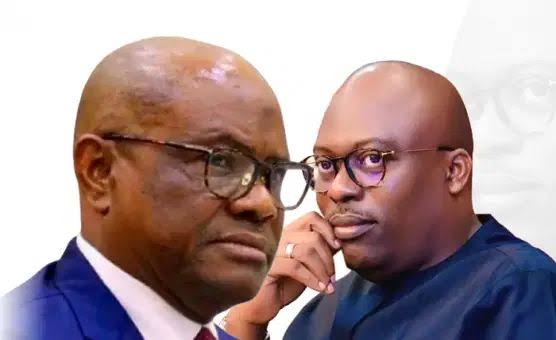
Rivers State Governor, Siminalayi Fubara, on Friday declared that what critics brand as “weakness” in his leadership style is, in fact, a deliberate strategy of restraint adopted to safeguard peace and stability in the oil-rich state.

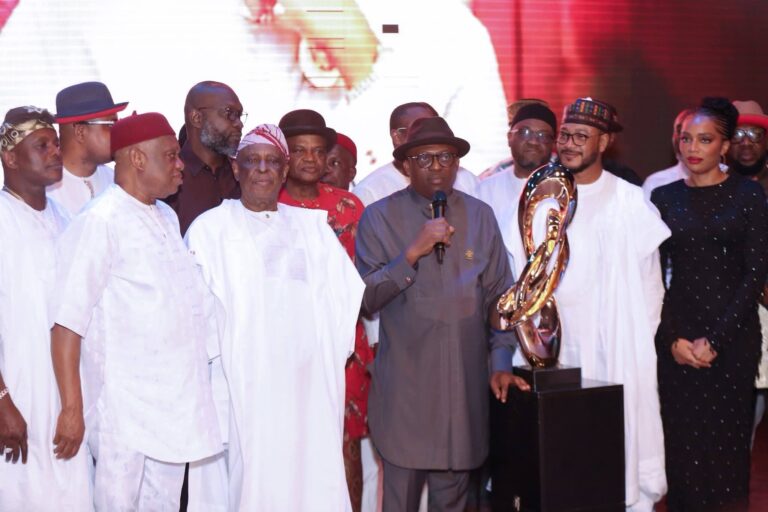
Speaking in Lagos while receiving the New Telegraph Man of the Year Award, Fubara said his decision to appear weak amid prolonged political tensions was a conscious sacrifice made in the larger interest of Rivers State and the nation.

Describing “weakness” as a virtue that yields dividends in due season, the governor maintained that preserving calm and preventing further escalation of conflict guided his approach.

“Some call it weakness; others call it strength,” he said. “But for many reasons, I chose to be weak — weak because I want peace, weak because we need to survive, and weak because I want to protect what is dear not just to me, but to our state and nation. Weakness is a virtue; it pays at the right time.”

In a move likely to stir political interpretations, Fubara dedicated the award to God, the people of Rivers State and the Minister of the Federal Capital Territory (FCT), Nyesom Wike, whom he acknowledged as his political benefactor.

“I must dedicate this award to my Oga, the Honourable Minister of the FCT, Chief Nyesom Wike, who discovered me, not minding the situation. It was that discovery that gave me this loudness,” he said.

Fubara also paid tribute to the people of Rivers State for their patience and composure in the face of political uncertainty, noting that their maturity had helped sustain stability.

He expressed gratitude to the organisers for the recognition, observing that in a nation of over 200 million people, the decision to single him out was both humbling and motivating.

Chairman and Publisher of New Telegraph, Orji Uzor Kalu, said the awards were based strictly on merit and designed to honour individuals whose contributions have impacted national development.

Former Ogun State governor, Olusegun Osoba, who also spoke at the event, commended Fubara and other recipients for their service and urged them to remain steadfast in advancing the country’s progress.

Fubara was accompanied to the ceremony by a delegation of Rivers elders, political leaders and stakeholders, in what observers described as a symbolic show of solidarity amid ongoing tensions in the state’s political landscape.

Diri’s Peace Drive Spurs Bayelsa’s Devt, Says Amgbare

0

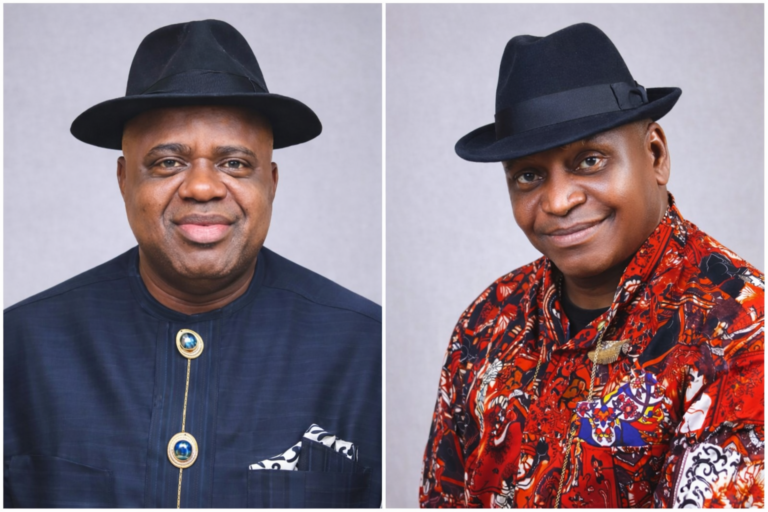
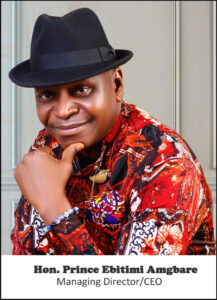
The Managing Director/Chief Executive Officer of the Niger Delta Basin Development Authority, Prince Ebitimi Amgbare, has attributed the rapid socio-economic and infrastructural development in Bayelsa State to the peacebuilding initiatives of Governor Douye Diri.

Amgbare stated this on Friday while speaking with journalists in Abuja, where he commended the governor’s leadership style, describing him as empathetic, passionate about peace and committed to fostering unity across political divides.

Congratulating Diri on his sixth anniversary in office, the NDBDA boss said the administration’s emphasis on peaceful coexistence had created a stable and secure environment necessary for investment, economic growth and sustainable development.

He noted that the state had recorded significant milestones in infrastructure, including the ongoing construction of a 30,000-capacity stadium, a nine-storey secretariat complex and the procurement of a 60-megawatt gas turbine to address power challenges.

According to him, the projects underscore the governor’s resolve to advance the socio-economic fortunes of the oil-rich state.
Amgbare also lauded the reintroduction of technical colleges and free boarding schools across local government areas, adding that 12 model schools equipped with modern facilities were positioning young people for entrepreneurship, innovation and skills development.

He said the administration had made appreciable progress across key sectors such as sports, power, agriculture, education, road infrastructure, healthcare, human capital development, culture and tourism, transportation, blue economy and social services.

“Without peaceful coexistence, there can be no meaningful development,” he said, adding that improved road networks had enhanced connectivity and stimulated economic activities across the state.

He stressed that peace remained a catalyst for attracting local and foreign investors, creating jobs and strengthening social cohesion.

Amgbare further noted that peacebuilding efforts reduce the costs associated with conflicts, such as destruction of infrastructure and loss of lives, thereby freeing resources for development projects.

He added that sustained peace fosters partnerships among government, civil society and the private sector, promotes dialogue and reconciliation, and enhances inclusive governance and access to essential services.

Rivers In Turbulence: A Governor, A Godfather And The Missing Masses

0

Once more the Governor of Rivers State Siminalayi Fubara, last Thursday dissolved the state’s Executive Council. This development was not due to any other publicly known reason other than to placate his traducers comprising some restive members of the Rivers State House of Assembly (RSHA), who are loyal to Nyesom Wike, his predecessor in office and now minister of the Federal Capital Territory (FCT).

It is easily recalled that some days ago, this situation was cited as one of the conditions demanded by the Wike camp during a peace meeting brokered by President Bola Tinubu between him and Fubara.

This development is coming as yet another concession to Wike by Fubara, but which has implications beyond whatever personal interests they may have.

Even in its most basic context, dissolution of state executive council constitutes a tacit decapitation of a governance dispensation, Hence it is not an exercise that is undertaken casually.

Among the Kalabari and other Ijaw ethnic nationalities, leadership in the traditional context is a serious dispensation involving rituals each of which on its own, conveys clearcut messages to the incumbent on expectations of him by the community.

One of such rituals that marks the emergence of a chief or king, is his moment of choice whereby he has to choose between a cannon ball which signifies his disposition towards war to defend his community if necessary, and a tuber of yam which also signifies his willingness to provide for his people.

It is understandable that in the statutory context all such obligations are rolled into the constitutional oath which is administered to the incumbent in the course of coming into office.

As the first democratically elected governor of Ijaw extraction in Rivers State since the days of Melford Okilo in 1979 and Rufus Ada George in 1990, Siminalayi Fubara remains seen by not a few Ijaw people from the prism of the obligations of an Ijaw chieftain, who by virtue of the oath of cannon ball and tuber of yam, is sworn to defend, protect and provide for his constituents.

It is also in the same context that not a few observers are watching the ongoing battle of wits, between him and Nyesom Wike, his immediate predecessor as governor of the state and an implacable traducer-in-chief, with the latest instance of dissolving his cabinet at the instance of his traducers, as one concession too many.

In their three-year-long running and daily convoluting contest for control of the political power structure as well as vast resources of the state, both Fubara and Wike have left the public guessing at every turn of the melee, on the next move by any of them in order to outsmart the other.
So far, Wike had been the implacable aggressor, fighting from ‘outside’ to dislodge the incumbent Fubara, including dangling the unsettling agenda of denying the latter the opportunity to contest for a second term in office come 2027.

Meanwhile, Fubara who has so far played the underdog, has survived through a cocktail of deft maneuvers, calm demeanor and capitalising on the slips by his traducer.

And by latest count, President Bola Tinubu had intervened for the third time ostensibly to foster peace between them and allow the state which had borne the burden of instability in governance, a deserved respite from the crisis.

Yet as far as the crisis is concerned, Fubara is the incumbent governor, and hence remains the man to watch as the political fortunes of the entire state rests on his shoulders.

With the crisis still more or less an affair that springs new surprises with each passing day, to the discomfort and despair of the innocent ordinary citizens in the state, the onus lies with Fubara to do the needful in order to resolve the crisis. This is where the options open to him and how he has deployed same, come into question.

Seen in retrospect however, it needs to be pointed out that his approach so far has been a closet affair, with the occasional resort to the intervention of President Bola Tinubu to rein in Wike. Just as well is the reality of the resort to Tinubu yielding less than optimal results, making it imperative for Fubara to deploy the full mobilisation of the wider cross sections of the people of the state, into more than salutary participation in the process of governance of the state.

Seen in context the various narratives on the Rivers State conundrum have so far featured erroneously as a two-way fight between Wike and Fubara. This false paradigm actually diminishes the realty that the conundrum is actually a three-way battle in which the citizens of the state have had their interests and voices swallowed up as inconsequential.

Considering that the issues under contest border on the common patrimony of the entire state, the tussle needs to involve a wider involvement by the people.

This is where and why Fubara needs to change strategy and bring in the ‘calvary’ which is so to say the massive deployment of ‘people power’. People power here refers to the collective action, influence, and willpower of ordinary citizens—rather than of potentates or institutions—to drive social, political, or economic change.

Historically, it represents non-violent, grassroots movements, where the ordinary folk are allowed to vent their inner feelings and convictions over matters that bother them. And for lasting so long with its twists and turns, the Rivers State conundrum qualifies for the involvement of the masses. Fubara needs to embark on statewide sensitization and meet the people tours to sell his persona beyond what the media offers them about him.

And the reasons for such a dispensation are not only numerous but also crystal clear.

Firstly, is that the people remain the core stakeholders in the political fortunes of the state. Hence their isolation so far remains a grave injustice, even as any twist or turn in the political leadership of the state affects them in one way or the other.

Secondly, the course of the conundrum has run with so much slant towards the proclivities of specific individuals who assume airs of superiority over the rest of the citizenry.

Thirdly, the situation has degenerated to a point where Wike has even been boasting of exclusively producing the next governor of Rivers State come 2027.

With the political tango between Wike and Tinubu along with the uncertainty surrounding the second term of Fubara, the situation offers the portends of manifest isolation and emasculation of the teeming voters in the Rivers State from the process of deciding who governs them. Do they deserve such humiliating experience is a valid question in the circumstances.

Fourthly, is the question of whether Fubara’s trust of President Bola Tinubu is justified.

Incidentally, not a few surviving aficionados of rock and roll music of the 1970s will easily forget the popular band Rare Earth and one of their runaway hit numbers ‘Big Brother’. Somewhere along the lyrics is the homily “Hey Big Brother as soon as you arrive, get all the people you meet, get them on your side, get them satisfied…”

In the final analysis, Fubara needs to listen to and reflect on that musical piece, in his own interest. For in times like these, people power – when properly deployed, easily trumps godfather proclivities.

Monima Daminabo, former Director, Press Affairs, NASS contributed this piece from Port Harcourt

Once more the Governor of Rivers State Siminalayi Fubara, last Thursday dissolved the state’s Executive Council. This development was not due to any other publicly known reason other than to placate his traducers comprising some restive members of the Rivers State House of Assembly (RSHA), who are loyal to Nyesom Wike, his predecessor in office and now minister of the Federal Capital Territory (FCT).

It is easily recalled that some days ago, this situation was cited as one of the conditions demanded by the Wike camp during a peace meeting brokered by President Bola Tinubu between him and Fubara.

This development is coming as yet another concession to Wike by Fubara, but which has implications beyond whatever personal interests they may have.

Even in its most basic context, dissolution of state executive council constitutes a tacit decapitation of a governance dispensation, Hence it is not an exercise that is undertaken casually.

Among the Kalabari and other Ijaw ethnic nationalities, leadership in the traditional context is a serious dispensation involving rituals each of which on its own, conveys clearcut messages to the incumbent on expectations of him by the community.

One of such rituals that marks the emergence of a chief or king, is his moment of choice whereby he has to choose between a cannon ball which signifies his disposition towards war to defend his community if necessary, and a tuber of yam which also signifies his willingness to provide for his people.

It is understandable that in the statutory context all such obligations are rolled into the constitutional oath which is administered to the incumbent in the course of coming into office.

As the first democratically elected governor of Ijaw extraction in Rivers State since the days of Melford Okilo in 1979 and Rufus Ada George in 1990, Siminalayi Fubara remains seen by not a few Ijaw people from the prism of the obligations of an Ijaw chieftain, who by virtue of the oath of cannon ball and tuber of yam, is sworn to defend, protect and provide for his constituents.

It is also in the same context that not a few observers are watching the ongoing battle of wits, between him and Nyesom Wike, his immediate predecessor as governor of the state and an implacable traducer-in-chief, with the latest instance of dissolving his cabinet at the instance of his traducers, as one concession too many.

In their three-year-long running and daily convoluting contest for control of the political power structure as well as vast resources of the state, both Fubara and Wike have left the public guessing at every turn of the melee, on the next move by any of them in order to outsmart the other.
So far, Wike had been the implacable aggressor, fighting from ‘outside’ to dislodge the incumbent Fubara, including dangling the unsettling agenda of denying the latter the opportunity to contest for a second term in office come 2027.

Meanwhile, Fubara who has so far played the underdog, has survived through a cocktail of deft maneuvers, calm demeanor and capitalising on the slips by his traducer.

And by latest count, President Bola Tinubu had intervened for the third time ostensibly to foster peace between them and allow the state which had borne the burden of instability in governance, a deserved respite from the crisis.

Yet as far as the crisis is concerned, Fubara is the incumbent governor, and hence remains the man to watch as the political fortunes of the entire state rests on his shoulders.

With the crisis still more or less an affair that springs new surprises with each passing day, to the discomfort and despair of the innocent ordinary citizens in the state, the onus lies with Fubara to do the needful in order to resolve the crisis. This is where the options open to him and how he has deployed same, come into question.

Seen in retrospect however, it needs to be pointed out that his approach so far has been a closet affair, with the occasional resort to the intervention of President Bola Tinubu to rein in Wike. Just as well is the reality of the resort to Tinubu yielding less than optimal results, making it imperative for Fubara to deploy the full mobilisation of the wider cross sections of the people of the state, into more than salutary participation in the process of governance of the state.

Seen in context the various narratives on the Rivers State conundrum have so far featured erroneously as a two-way fight between Wike and Fubara. This false paradigm actually diminishes the realty that the conundrum is actually a three-way battle in which the citizens of the state have had their interests and voices swallowed up as inconsequential.

Considering that the issues under contest border on the common patrimony of the entire state, the tussle needs to involve a wider involvement by the people.

This is where and why Fubara needs to change strategy and bring in the ‘calvary’ which is so to say the massive deployment of ‘people power’. People power here refers to the collective action, influence, and willpower of ordinary citizens—rather than of potentates or institutions—to drive social, political, or economic change.

Historically, it represents non-violent, grassroots movements, where the ordinary folk are allowed to vent their inner feelings and convictions over matters that bother them. And for lasting so long with its twists and turns, the Rivers State conundrum qualifies for the involvement of the masses. Fubara needs to embark on statewide sensitization and meet the people tours to sell his persona beyond what the media offers them about him.

And the reasons for such a dispensation are not only numerous but also crystal clear.

Firstly, is that the people remain the core stakeholders in the political fortunes of the state. Hence their isolation so far remains a grave injustice, even as any twist or turn in the political leadership of the state affects them in one way or the other.

Secondly, the course of the conundrum has run with so much slant towards the proclivities of specific individuals who assume airs of superiority over the rest of the citizenry.

Thirdly, the situation has degenerated to a point where Wike has even been boasting of exclusively producing the next governor of Rivers State come 2027.

With the political tango between Wike and Tinubu along with the uncertainty surrounding the second term of Fubara, the situation offers the portends of manifest isolation and emasculation of the teeming voters in the Rivers State from the process of deciding who governs them. Do they deserve such humiliating experience is a valid question in the circumstances.

Fourthly, is the question of whether Fubara’s trust of President Bola Tinubu is justified.

Incidentally, not a few surviving aficionados of rock and roll music of the 1970s will easily forget the popular band Rare Earth and one of their runaway hit numbers ‘Big Brother’. Somewhere along the lyrics is the homily “Hey Big Brother as soon as you arrive, get all the people you meet, get them on your side, get them satisfied…”

In the final analysis, Fubara needs to listen to and reflect on that musical piece, in his own interest. For in times like these, people power – when properly deployed, easily trumps godfather proclivities.


By Monima Daminabo
Monima Daminabo, former Director, Press Affairs, NASS contributed this piece from Port Harcourt


INEC fixes Feb 20, 2027 For Presidential Poll, Unveils Full Timetable For General Elections

0

The Independent National Electoral Commission (INEC) has fixed February 20, 2027 for the conduct of the presidential and National Assembly elections, setting in motion preparations for the 2027 general elections.
Governorship and State Houses of Assembly elections will follow on March 6, 2027.

INEC Chairman, Prof. Joash Amupitan, announced the dates on Friday at a news conference in Abuja, citing constitutional and statutory provisions that mandate the commission to issue a notice of election not later than 360 days before the appointed date.

“This action is taken pursuant to the provisions of the Constitution of the Federal Republic of Nigeria, 1999 (as amended) and Section 28(1) of the Electoral Act, 2022,” he said.

According to him, the elections will cover the offices of President and Vice President; Governors and Deputy Governors — except in Anambra, Bayelsa, Edo, Ekiti, Imo, Kogi, Ondo and Osun states — as well as members of the Senate, House of Representatives and State Houses of Assembly.

Amupitan said the commission had uploaded a detailed timetable and schedule of activities to its official website and circulated same to political parties and critical stakeholders.

“In exercise of the powers conferred on the commission by the Constitution of the Federal Republic of Nigeria, 1999 (as amended) and the Electoral Act, 2022, and of all other powers enabling it in that behalf, the Commission hereby sets in motion the electoral process for the 2027 General Elections,” he added.

He noted that the early announcement underscores INEC’s resolve to deliver a transparent and credible process in strict compliance with the law.

On the pending Electoral Amendment Bill before the National Assembly, the INEC chairman said the commission would proceed in line with the extant law while remaining open to reforms that could strengthen the electoral system.

“While we are eager to adopt any amendments that may strengthen our electoral processes, we must act in accordance with the existing provisions of the Electoral Act,” he said, stressing the commission’s commitment to the rule of law.

He acknowledged concerns over possible delays in the passage of the amended Electoral Act, warning that any protracted process could pose logistical challenges.

“We recognise the critical need for timely action to ensure the integrity and effectiveness of our electoral processes. It is imperative that the Commission acts swiftly to address any challenges arising from any delay that may result in logistical failure,” Amupitan said.

By constitutional provision, he explained, the tenure of the President, Vice President, Governors and Deputy Governors — except those in the exempted states — will expire on May 28, 2027, while the National and State Assemblies will stand dissolved on June 8, 2027.

He cited Sections 76(2), 116(2), 132(2) and 178(2) of the Constitution, which stipulate that elections must hold not earlier than 150 days and not later than 30 days before the expiration of the tenure of the last office holder.

INEC, he added, has scheduled party primaries within the statutory timeframe, while submission of nomination forms by political parties will open and close within the period prescribed by law. Campaigns will commence as stipulated and end 24 hours before Election Day.

Amupitan urged political parties to adhere strictly to timelines for primaries, nomination submissions and campaigns, warning that the commission would enforce compliance.

Describing the 2027 polls as a collective responsibility, he called on government institutions, security agencies, the media, civil society organisations, candidates and the electorate to ensure peaceful and credible elections.

“As we commence this important national exercise, I assure Nigerians that the commission is fully prepared and determined to deliver elections that reflect the sovereign will of the people,” he said.

The announcement comes amid mounting concern over the delayed passage of the amended Electoral Act currently before the National Assembly. INEC had earlier indicated that it had completed work on the election timetable and submitted it to lawmakers, while cautioning that aspects of the schedule could be affected depending on when the amendment is eventually passed.

World Radio Day: MRA Seeks Urgent Reforms To Rescue Nigeria’s Radio Sector

0

Media Rights Agenda (MRA) has called on the Federal Government and key stakeholders to urgently reposition Nigeria’s radio sector, warning that regulatory bottlenecks and policy neglect are undermining one of the country’s most accessible and trusted media platforms.

In a statement to commemorate the 2026 World Radio Day, the organisation described radio as a critical vehicle for information dissemination, civic engagement and social inclusion, particularly for rural and underserved communities.

MRA noted that although technological advancements have transformed the media landscape, radio remains a lifeline for millions of Nigerians due to its affordability, accessibility and cultural relevance.

“Since its introduction into Nigeria in 1933, radio has continued to serve as a dependable source of news, emergency information, cultural expression and civic participation,” the group said.

The statement, signed by MRA’s Programme Officer, Ms. Adesewa Akintokun, observed that despite the growth of digital media across Nigeria and other African countries, radio remains the primary source of information for a significant segment of the population, bridging literacy gaps and connecting citizens with governance processes.

However, the organisation lamented that the sector has suffered neglect in the face of rapid digital transformation, while what it described as insensitive and, at times, exploitative regulatory practices have further weakened its sustainability.

Akintokun argued that Nigeria could significantly expand the reach and impact of radio through policy reforms, technological innovation, content development and sustainable financing.

She urged the Federal Government to collaborate with stakeholders to institute a transparent, fair and non-punitive regulatory framework. According to her, simplifying licensing procedures and reducing excessive fees, particularly for community and campus radio stations — would enhance growth and inclusivity within the sector.

Stressing the importance of regulatory certainty, she maintained that investment and innovation can only thrive in an environment where editorial independence is guaranteed and arbitrary sanctions are eliminated.

Akintokun also advised radio owners and managers to adapt to evolving audience habits by embracing digital broadcasting and streaming platforms. With Nigeria’s high mobile phone penetration, she said, online radio and podcasts offer significant opportunities to reach younger, urban audiences who may no longer rely on traditional FM/AM sets.

On content development, she encouraged operators to prioritise relevance and quality by investing in investigative journalism and public-interest programming, while expanding youth-focused content and programmes on health, entrepreneurship, agriculture and digital literacy.

She emphasised that the long-term viability of radio depends on freedom of expression, warning that independent broadcasting cannot flourish in an atmosphere of harassment, arbitrary sanctions or politically motivated licensing decisions.

Calling on governments at all levels to respect constitutional guarantees of media freedom, Akintokun urged authorities to refrain from punitive actions against broadcasters and to foster an enabling environment for diverse and community-based stations.

The organisation reaffirmed its commitment to defending the rights of broadcasters and journalists, promoting access to information and advancing media freedom as a cornerstone of democratic governance.