


The Independent National Electoral Commission (INEC) has challenged political parties to stop paying lip service to women’s political inclusion and provide concrete support to enable more women to contest and win elective offices in the 2027 General Elections.
The Commission said women’s impressive strength in the electorate had yet to translate into meaningful representation in Nigeria’s political institutions, urging parties to dismantle the financial, structural and social barriers that continue to frustrate female aspirants.
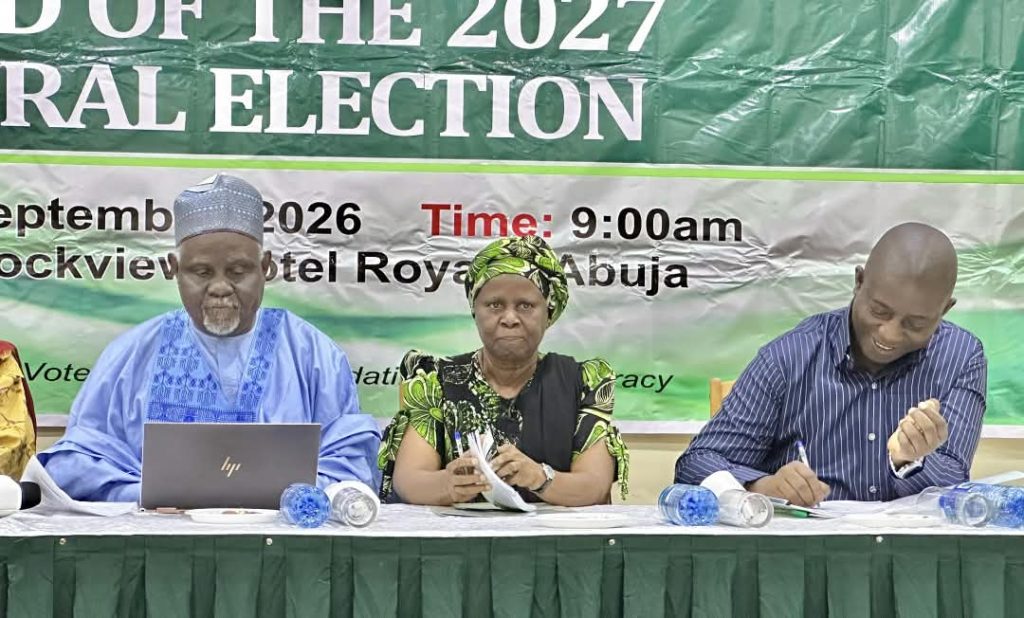
INEC made the call at a high-level engagement with political parties on strengthening women’s political participation ahead of the 2027 elections in Abuja.
The forum brought together political party leaders, development partners, women’s organisations, civil society groups and other electoral stakeholders to develop practical strategies for improving women’s representation.
The scale of the challenge was highlighted by the 2023 election figures. Of the 15,331 candidates who contested the election, only 1,556, representing 10.2 per cent, were women. Just three women were elected to the Senate, while 16 won seats in the House of Representatives.
Delivering a welcome address on behalf of the Secretary to the Commission, Dr Rose Anthony-Orianran, the Director, Gender and Inclusivity Department, Mrs Lakunuya Dorothy Bello, said the figures demonstrated the urgent need for coordinated action.
She urged political parties and other stakeholders to use the engagement to identify practical solutions to the barriers preventing women from progressing from voters to candidates and ultimately elected representatives.
Declaring the engagement open on behalf of INEC Chairman, Prof Joash Amupitan, SAN, National Commissioner, Prof (Mrs) Rhoda Habor Gumus, said women accounted for 47.5 per cent of registered voters in the 2023 General Election.
She added that women also constituted the majority of registrants during the final phase of the recently concluded Continuous Voter Registration exercise.
Gumus said the figures demonstrated women’s willingness to participate in the democratic process, but regretted that their numerical strength had not been reflected in elective offices.
She challenged political parties to provide female aspirants with equal access to party structures, campaign funding, media visibility, logistics, mentoring, security, fundraising networks and grassroots mobilisation.
“Women must not only be encouraged to contest; they must be given the tools to compete,” she said in substance, stressing the need for gender-responsive party policies and transparent nomination processes.
She identified discriminatory norms, inadequate political financing, structural barriers, violence and harassment as major factors discouraging women from seeking elective office.
Representing the Westminster Foundation for Democracy (WFD), Mr Adebowale Olorunloshola said Nigeria’s poor global standing in women’s political representation was unacceptable given that women constitute almost half of the electorate.

He called for sustained engagement with party decision-makers, noting that the people with the final authority over nominations must be persuaded to embrace gender-inclusive politics.
According to him, improving women’s representation would strengthen Nigeria’s democratic credentials.
The Chairman of the Inter-Party Advisory Council (IPAC), Dr Yusuf Mamman Dantalle, however, rejected suggestions that women’s involvement in the 2027 elections had declined.
He urged stakeholders to examine available data before reaching such conclusions, noting that some women had received support from political parties, while others had relied on personal resources and initiatives to participate.
Earlier, Deputy Director, Gender, Mrs Hembadoon Akaayar, said the engagement was designed to secure firm commitments from political parties to support female candidates and guarantee equitable access to campaign resources.
She said the objectives also included increasing women’s political visibility, strengthening protection against violence and harassment, creating a supportive political environment and sustaining support for women beyond the 2027 elections.
In a keynote presentation, former Director of Voter Education and Publicity and electoral legal expert, Barrister Oluwole Osaze Uzzi, examined global trends in women’s political participation as well as Nigeria’s constitutional and international obligations on gender equality.
Uzzi drew lessons from countries that have successfully improved women’s representation, urging Nigerian political parties to embrace bold reforms capable of creating opportunities for women to emerge as candidates, leaders and decision-makers.
The engagement featured a panel discussion and interactive dialogue focusing on the financial, structural and socio-cultural barriers confronting women in politics.
A draft communique containing proposed commitments and recommendations from the discussions was presented by Samuel Bassey and adopted by the National Chairman of the All Progressives Grand Alliance (APGA), Barrister Sylvester Sly Ezeokenwa, on behalf of IPAC.
The adoption was seen as a significant outcome of the engagement, with participants stressing that putting women on the ballot was only the first step.
In his closing remarks, Chairman of the Outreach and Partnership Committee (OPC), Prof Abdullahi Abdu Zuru, said the emergence of women as candidates must be followed by deliberate efforts to ensure they remain competitive through the general election.
He particularly identified the period between party primaries and the general election as critical, urging parties to provide female candidates with campaign platforms, resources, visibility, political networks and institutional support.
For the stakeholders, the message ahead of 2027 is clear: women’s participation must no longer be measured simply by how many names appear on the ballot, but by how many are given a genuine opportunity to win.