


Home Blog Page 58

Tinubu To Inaugurate NDDC’s 1.2km Kaa–Ataba Bridge In Rivers

0

President Bola Ahmed Tinubu is expected to inaugurate the 1.2-kilometre Kaa–Ataba Bridge linking Khana and Andoni local government areas of Rivers State as part of activities marking his third anniversary in office.

The Niger Delta Development Commission (NDDC) disclosed this during an inspection of the project by members of its Governing Board led by the Chairman, Chiedu Ebie.

The team included the Commission’s Managing Director, Samuel Ogbuku; Executive Director, Projects, Victor Antai; Executive Director, Corporate Services, Ifedayo Abegunde; and other senior officials.

Speaking during the inspection, Ogbuku reaffirmed the Commission’s commitment to the presidential directive to complete all legacy projects across the Niger Delta region.

He noted that the Kaa–Ataba Bridge, which connects Khana Local Government Area and Andoni Local Government Area, is one of the Commission’s most ambitious projects and stands as the longest bridge in the Niger Delta and among the longest in Nigeria.

The NDDC managing director expressed satisfaction with the progress of work, stating that the project forms part of the Federal Government’s development drive under the Renewed Hope Agenda.

“The President gave us a marching order to make a positive impact in the Niger Delta. The board and management are working diligently to meet Mr President’s expectations,” Ogbuku said.

Also speaking, Ebie said the bridge project demonstrates the Federal Government’s commitment to infrastructure development in the region.

He added that the contractor handling the project had assured the Commission that the bridge would be delivered on schedule and ready for inauguration this year.

“We have been briefed by the on-site engineers, and they are as determined as we are to deliver the project on schedule,” Ebie said.

A representative of the contracting firm, Engineer Christian Emeozor, attributed earlier delays to adverse weather conditions but assured the Commission that additional manpower and materials would be deployed to ensure timely completion.

He pledged that the company would maintain both speed and quality in delivering the project.

Meanwhile, traditional rulers from the benefiting communities commended the Commission for undertaking the bridge project, noting that it would significantly boost socio-economic activities in the area.

The Paramount Ruler of Ataba Kingdom in Andoni LGA, Benson Egwenre, praised the NDDC for executing the project, while the traditional ruler of Kaa in Khana LGA, Benjamin Ledor, assured the Commission of the community’s cooperation to ensure the project’s timely completion.

The inspection team also visited the ongoing Niger Delta Regional Hospital project in Port Harcourt, which is expected to house cardiovascular and orthopaedic units.
Ebie emphasised the importance of healthcare infrastructure, noting that the regional hospital would help reduce medical tourism.

“We are happy that the contractors are working closely with suppliers on hospital equipment. Based on the progress of the project, the contractor has promised that the hospital will be ready before the end of the year,” he said.
Ogbuku added that the project reflects the Commission’s broader development focus beyond roads and bridges.

“Our intervention is not only on road construction or solar lights. Health is wealth, and the people of the Niger Delta must have access to quality healthcare,” he said.

According to him, the facility will be equipped with state-of-the-art medical equipment and may be operated through partnerships with organisations experienced in hospital management once completed.

The project coordinator, Douglas Okafor, said the contractors were working to ensure the hospital project meets global best practices in quality and delivery.
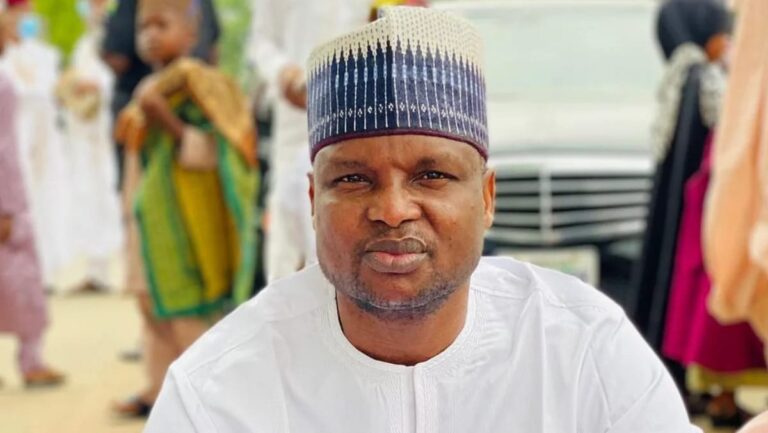

Court Acquits Abba Kyari, Brothers In NDLEA Assets Declaration Case

0

The Federal High Court in Abuja on Thursday dismissed a suit filed by the National Drug Law Enforcement Agency (NDLEA) against suspended Deputy Commissioner of Police, Abba Kyari, over alleged non-declaration of assets.
Justice James Omotosho discharged and acquitted Kyari and his younger brothers, Mohammed Kyari and Ali Kyari, after ruling that the prosecution failed to prove its case beyond reasonable doubt.

Delivering judgment, the court held that the burden of proof in criminal matters rests with the prosecution, adding that the anti-narcotics agency did not sufficiently establish the allegations against the defendants.
Justice Omotosho further described the case as “persecution” and consequently dismissed the charges against the trio.

The NDLEA had filed a 23-count charge against Kyari, a former head of the Intelligence Response Team (IRT) of the Nigeria Police Force, and his brothers, accusing them of failing to fully declare their assets.

The agency alleged that investigations uncovered about 14 properties linked to Kyari, including shopping malls, a residential estate, a polo playground, parcels of land and farmland.

According to the prosecution, the properties were located in parts of the Federal Capital Territory and Maiduguri in Borno State.

The NDLEA also alleged that more than N207 million and €17,598 were found in accounts linked to Kyari in Guaranty Trust Bank, United Bank for Africa and Sterling Bank.
In the charge marked FHC/ABJ/CR/408/2022, the agency further accused the defendants of disguising ownership of properties and converting funds.

The offences were said to be punishable under Section 35(3)(a) of the National Drug Law Enforcement Agency Act and Section 15(3)(a) of the Money Laundering (Prohibition) Act.
However, Kyari and his brothers pleaded not guilty to all the counts.

Before the judgment, counsel to the NDLEA, Sunday Joseph, alongside Kyari’s lawyer, Onyechi Ikpeazu (SAN), and counsel to the other defendants, Monjok Agom, had adopted their final written addresses and argued for and against the charges.

MRA Faults Police Summons Over FOI Request, Alleges Intimidation Of Activist

0

Media Rights Agenda (MRA) has condemned the summons issued by the Nigeria Police Force in Delta State to a civil society activist over a request for information under the Freedom of Information Act, describing the action as a misuse of power and an attempt to intimidate citizens exercising their lawful rights.

In a statement issued in Lagos on Wednesday, the organisation criticised the Delta State Police Command for inviting Comrade Victor Ojie, leader of the Young Nigerian Rights Organization (YNRO), to report to the State Intelligence Department (SID) in Asaba following a Freedom of Information request submitted to the Delta State Ministry of Lands and Survey.

The request sought access to petitions and records relating to land disputes in Aniocha South Local Government Area of the state.

MRA described the police invitation as a blatant attempt to harass a citizen for exercising his legal right to request information from a public institution under the FOI Act.

According to the organisation, rather than complying with the law by providing the requested information within the statutory seven-day period or formally declining the request where justified, the ministry allegedly involved the police, resulting in the summons issued to Ojie.

In a letter titled “Letter of Invitation” dated March 3, 2026, Deputy Superintendent of Police, Ojokoh Julius, second-in-command of the State Intelligence Department in Asaba, reportedly directed Ojie to meet with the Assistant Commissioner of Police, SID, on Monday, March 9, 2026, regarding the information request.

The letter referenced Ojie’s correspondence titled “Freedom of Information Request Pursuant to the Freedom of Information Act, 2011, Request for Access to Petitions and Records Relating to Land Disputes in Aniocha South LGA.”

Reacting to the development, MRA’s Deputy Executive Director, Ayode Longe, said the action by the police raises serious concerns about respect for citizens’ rights under the FOI Act.

“It is an alarming trend that the Nigeria Police Force, which is tasked with enforcing the law, has become the instrument for violating the rights of citizens under the law,” Longe said.

He noted that the FOI Act grants every person a legal right to access information held by public institutions and does not require applicants to demonstrate any specific interest in the information requested.
According to him, treating a civil information request as a criminal matter and summoning the requester for questioning represents a troubling disregard for the law.

Longe also pointed out that the FOI Act clearly outlines the circumstances under which public institutions may deny access to requested information and provides procedures for doing so, stressing that police summons is not one of the lawful channels provided by the Act.

Describing the incident as part of a wider pattern of abuse of authority, he said the summons could create a chilling effect by discouraging citizens from seeking accountability from public institutions.
“This incident reflects a culture of impunity within the police and sends a dangerous message that asking questions about public matters could be treated as a crime,” he said.

MRA therefore called on the Delta State Commissioner of Police and the Inspector-General of Police to immediately withdraw the summons and ensure that Ojie and other officials of the Young Nigerian Rights Organization are not subjected to further harassment.

The organisation also urged the Attorney-General of the Federation to intervene in the matter in his capacity as the chief law officer responsible for overseeing the implementation of the FOI Act and ensuring compliance by public institutions.

MRA stressed that the police, as a law enforcement agency, has both a legal and moral responsibility to uphold the provisions of the FOI Act, particularly as wrongful denial of access to information constitutes an offence under the law.

Re-engineering Key To Unlocking Nigeria’s Economic Growth — Peterside

0

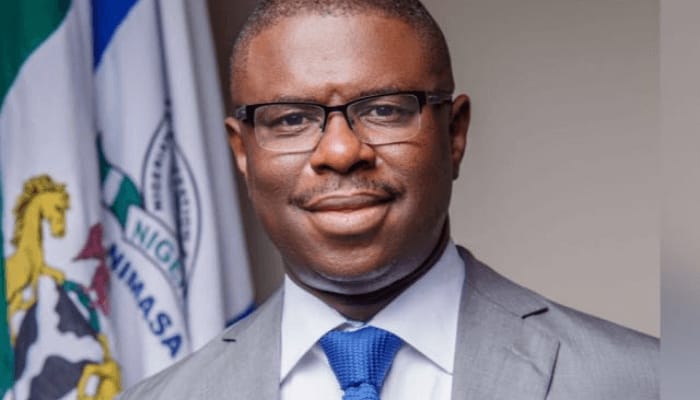
Renowned turnaround expert and former Director-General of the Nigerian Maritime Administration and Safety Agency (NIMASA), Dakuku Peterside, has said Nigeria’s economic transformation will depend largely on its ability to redesign and strengthen institutional systems rather than rely solely on its natural resources.

Peterside made the assertion while delivering the keynote address at the First International Conference of the Department of Business Administration at the Ignatius Ajuru University of Education in Port Harcourt.

Speaking on the theme, “Business Re-engineering as a Catalyst for Economic Development,” Peterside said institutions should not be defined by their physical structures or global rankings, but by the quality of questions they ask and the values they instil in their graduates.

He challenged participants to move beyond the search for easy answers and instead develop the courage to ask the right questions about the systems that drive organisations and economies.

According to him, economic progress is determined not merely by what a country possesses but by how effectively it organises production, makes decisions, delivers value, and scales ideas into jobs.

He argued that Nigeria’s persistent economic underperformance is less about a lack of resources and more about weak systems and inefficient processes.

Peterside described business re-engineering as more than incremental reform, explaining that it involves the radical redesign of organisational processes that are technology-enabled, outcome-driven and continuously evolving.

By interrogating why systems are slow, expensive, unpredictable or susceptible to manipulation, organisations, he said, can rebuild processes that are suited to current realities rather than outdated constraints.

The author of three bestselling books also noted that productivity growth is not achieved through motivation alone but through well-designed systems.

“When processes are simplified, responsibilities clarified, delays reduced and standards enforced, productivity improves naturally,” he said.

Tracing the evolution of business process re-engineering, Peterside noted that from early industrial workflows and quality control movements to the modern era of digital transformation, technology has increasingly become a powerful enabler through automation, data platforms and artificial intelligence.

However, he cautioned that technology alone cannot repair dysfunctional systems.

“Technology cannot fix a broken process unless the process itself is first redesigned,” he said.

Linking re-engineering to national development, Peterside identified low productivity as Nigeria’s core structural constraint.

Improved processes, he noted, would raise productivity, boost competitiveness, lower costs, enhance quality and enable firms to scale.
Such improvements, he added, would ultimately expand employment opportunities, increase wages and strengthen export capacity.

Turning specifically to Nigeria’s business environment, Peterside said the high cost of doing business, inefficient logistics, slow regulatory approvals and limited export diversification were the result of design failures rather than unavoidable circumstances.

He therefore urged policymakers to adopt business re-engineering as a national productivity strategy supported by deliberate policies, institutional restructuring and strong collaboration between the public and private sectors.

Peterside also called on academia, government and industry leaders to embrace re-engineering as a continuous mindset rather than a one-off reform initiative.

According to him, Nigeria can build resilient systems that outlast individuals and deliver sustainable economic growth if institutions commit to measurement, discipline and performance.

“By committing to measurement, discipline and institutional performance, Nigeria can build systems that outlast personalities and deliver sustainable growth, better jobs, stronger firms and a more inclusive economic future,” he said.

Flood Relief In Sight As RSG Clears Ikwerre Road Drainage After 12 Years

0

The Rivers State Government has intensified efforts to tackle persistent flooding along Ikwerre Road in Port Harcourt, with the Ministry of Works inspecting ongoing drainage desilting works in the Mile 1 axis of the busy corridor.

Permanent Secretary, Rivers State Ministry of Works, Dr Austin Ezekiel-Hart, on Tuesday led a team of ministry officials on an assessment visit to the project site, where he expressed satisfaction with the pace and quality of work executed by the contractor.

Ezekiel-Hart, who was conducted round key desilting points, urged the firm to accelerate completion to meet the stipulated timeline, stressing the importance of restoring free water flow to prevent further flooding.

Chief Engineer of the contracting firm, Engr. Friday Ugaba, attributed the recurring flooding along Ikwerre Road to years of accumulated waste dumped into the drainage system by traders and residents.

He revealed that the drains had not been desilted for over 12 years, describing the situation as a major contributor to the perennial overflow experienced in the area.

Ugaba noted that underground drainage systems of that scale should ideally be cleared at least once every three months to ensure efficiency.

He disclosed that, beyond clearing the main drainage channels, the company plans to construct subsidiary drains to channel runoff from adjoining streets into a major outlet that empties into the Ntawoba River.

According to him, the combined intervention — desilting the primary drains and constructing auxiliary channels — is expected to eliminate flooding in the Mile 1 axis within three to four weeks.

“We are also working on other sections of Ikwerre Road, from Echue Junction to Ikoku. Within three weeks to one month, significant progress would have been achieved,” he said.

Leaders of market unions who joined the inspection commended Governor Siminalayi Fubara for initiating the project, describing it as a relief to traders and commuters who have endured years of disruption during heavy rainfall.

President General of Market Unions in Rivers State, Amb. Eddy Bright Chinedu, alongside the Vice Chairman of Mile 1 Market, Jude Chinedu Onuoha, and the Yoruba Women Leader, Alhaja Amirat Gambari, lauded the intervention but raised concerns over indiscriminate waste disposal in the area.

They appealed to the state government to reopen the newly constructed Mile 1 Market complex to accommodate street traders, arguing that relocating them would reduce the practice of dumping refuse into the drains.

The drainage intervention forms part of broader infrastructure efforts by the state government to address urban flooding and improve traffic flow in Port Harcourt’s commercial hubs.

FG Imposes Six-Year Freeze on New Private Universities, Unveils Sweeping Education Reforms

0

The Federal Executive Council (FEC) has approved a six-year moratorium on the establishment of new private universities, polytechnics and colleges of education, in a sweeping reform package aimed at strengthening Nigeria’s tertiary education system.

Minister of Education, Dr Tunji Alausa, disclosed the decision on Wednesday after the Council meeting, saying the pause is designed to consolidate and improve the quality and sustainability of existing institutions, particularly in the private sector.

According to him, while demand for university education remains high, many institutions are grappling with financial and structural challenges that threaten standards.

Nigeria recorded over 2.3 million applications for university admission last year, based on data from the Joint Admissions and Matriculation Board (JAMB), yet public universities were able to offer fewer than 228,000 admission slots. Despite the shortfall, the minister maintained that expansion without consolidation would further strain the system.

He said the moratorium would enable government to focus on raising academic standards, enhancing infrastructure and ensuring long-term viability across tertiary institutions.

The Council also approved the restoration of the National Commission for Mass Literacy, Adult and Non-Formal Education as an independent commission, a move the minister described as critical to addressing the country’s alarming literacy gap.

Alausa said about 56 million Nigerians remain illiterate, underscoring the urgency of intervention. He noted that the Tinubu administration plans to equip over 50 million young adults with basic and digital literacy skills within the next two to three years.

In another major policy shift, FEC approved amendments to the National Postgraduate Medical College Act to recognise medical fellowship qualifications as equivalent to doctoral degrees.

The proposed amendment, which will be transmitted to the National Assembly as an Executive Bill, seeks to remove career limitations faced by medical specialists who undergo prolonged years of training, residency and fellowship but are required to obtain PhDs to qualify for professorial appointments.

“These professionals spend more years in specialised training than the average PhD holder. There is a need to harmonise the system,” the minister said.

Additionally, Council approved comprehensive insurance coverage for 180 Federal Unity Schools across the country.

The reforms, the minister said, align with the administration’s commitment to raising educational standards and expanding access to quality learning nationwide.

2027 Polls: Disu Vows Police Neutrality, Threatens Prosecution for Partisan Officers

0

The Inspector-General of Police, Tunji Disu, has pledged that the Nigeria Police Force (NPF) will maintain firm neutrality during the 2027 general elections, warning that any officer found compromising the integrity of the process will face disciplinary measures, including possible prosecution.

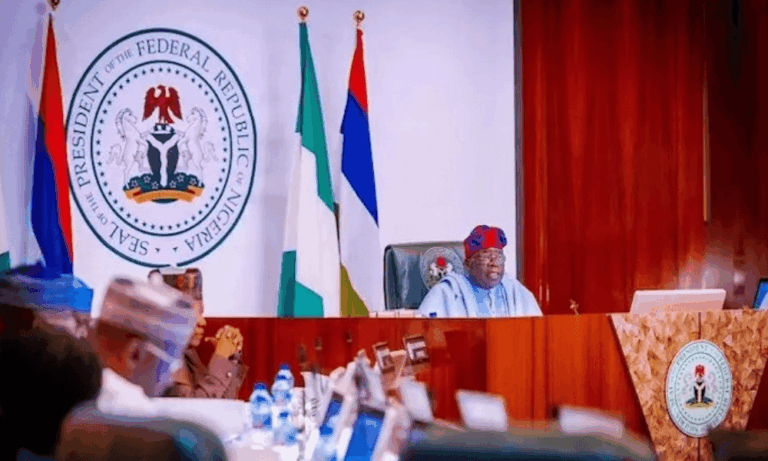
Disu, who was sworn in as the 23rd IGP by President Bola Tinubu at the Council Chambers of the State House, Abuja, ahead of the Federal Executive Council meeting on Wednesday, made the declaration during his inaugural conference with strategic police managers.

He succeeds Kayode Egbetokun, who resigned in February, citing pressing family considerations.

Addressing senior officers, the new IGP stressed that the credibility of the 2027 polls and the stability of Nigeria’s democracy would largely depend on the conduct of the police as the lead agency in election security.

“As we approach the 2027 general elections, our responsibility to the nation becomes both heightened and non-negotiable,” Disu said. “The police must be firm in enforcing the law, impartial in its decisions, professional in its conduct, and strictly neutral in all electoral engagements.”

He declared zero tolerance for partisanship, misconduct, and abuse of authority within the Force, insisting that there would be “no exceptions and no excuses.”

“Any officer found to have compromised neutrality, violated electoral laws, or acted outside approved rules of engagement will face swift and decisive disciplinary action, including prosecution where applicable,” he warned.

Disu assured Nigerians that the police would secure the electoral process before, during, and after the elections, while safeguarding democratic institutions, electoral officials, voters, and critical infrastructure to ensure citizens exercise their civic rights without fear or intimidation.

He added that crowd control and public order duties would be conducted with restraint and respect for human rights, stressing that any use of force must be lawful, proportionate, and accountable.

While pledging collaboration with the armed forces and other security and intelligence agencies, the IGP affirmed that the police would retain clear leadership in election security operations.
Beyond the 2027 polls, Disu reiterated his commitment to internal reforms aimed at restoring public trust in the Force.

He vowed that misconduct, corruption, extortion, unlawful arrests, and abuse of power would not be tolerated under his leadership.

He further disclosed that the Force Provost, the Complaints Response Unit, and the X-Squad would be strengthened to operate decisively and independently in investigating cases of misconduct and corruption.
“No officer is above the law,” he said.

Threat To Privacy: SERAP Petitions FCCPC to Probe Google, Meta, Others

The Socio-Economic Rights and Accountability Project (SERAP) has called on the Federal Competition and Consumer Protection Commission (FCCPC) to urgently investigate leading global technology firms over alleged violations of consumer rights, media freedom and fair competition in Nigeria.

In a petition dated February 28, 2026, and signed by its Deputy Director, Kolawole Oluwadare, SERAP urged the FCCPC to probe Google, Meta, Apple, Microsoft (Bing), X, TikTok, Amazon and YouTube over what it described as “opaque algorithms, offshore revenue extraction and hidden data practices” allegedly undermining Nigerian media organisations, businesses and citizens’ rights.

The organisation asked the Commission to take immediate steps to halt what it termed unfair market practices, algorithmic manipulation, consumer harm and violations of privacy, freedom of expression and access to information.
SERAP further demanded that the FCCPC convene a public hearing to investigate allegations of algorithmic discrimination, abuse of market dominance and data exploitation by the companies, whose platforms it said wield enormous influence over Nigeria’s digital economy and information ecosystem.

According to the group, dominant digital platforms now function as private gatekeepers, shaping public discourse and market competition without adequate transparency or regulatory oversight.

“Millions of Nigerians rely on these platforms for news, information and business opportunities.

Their opaque algorithms and market dominance are not just economic concerns — they raise serious human rights implications for media plurality, consumer protection, privacy and the integrity of Nigeria’s democracy,” the petition stated.

SERAP warned that failure by the FCCPC to act promptly could compel it to pursue legal action to enforce regulatory intervention in the public interest.

The organisation referenced findings by the South African Competition Commission against Google, which reportedly uncovered systemic bias against local media content and led to remedial measures, including enhanced algorithmic transparency and monetary redress. It urged the FCCPC to adopt similar measures to safeguard Nigerian media and businesses.

The group alleged that large-scale collection and monetisation of Nigerians’ personal and behavioural data under complex consent frameworks interfere with the constitutional right to privacy.

It expressed concern that Nigerian media companies and content creators face algorithmic suppression, reduced visibility and revenue diversion to foreign platforms, weakening local journalism and shrinking advertising income.

SERAP argued that such practices, if established, would amount to violations of Sections 17 and 18 of the Federal Competition and Consumer Protection Act (FCCPA), as well as provisions of the 1999 Constitution (as amended) and international human rights instruments, including the International Covenant on Civil and Political Rights and the African Charter on Human and Peoples’ Rights.

The petition also cited concerns raised by the Nigerian Press Organisation over what it described as structural imbalances created by global tech platforms, including the monetisation of Nigerian news content without proportional reinvestment in local journalism and the extraction of revenues offshore.

According to SERAP, the cumulative impact of data concentration, opaque content moderation systems, discriminatory ranking mechanisms and control of digital advertising markets substantially distorts competition, harms consumers and threatens democratic accountability — particularly ahead of Nigeria’s forthcoming elections.

Among other recommendations, SERAP urged the FCCPC to launch a full-scale investigation, mandate transparency in ranking and recommendation systems, establish a compensation mechanism for affected media organisations, summon relevant persons and documents, and impose sanctions where violations are established.

The group maintained that convening a public hearing would strengthen regulatory transparency, promote public trust and enable journalists, media organisations, small businesses, civil society groups and consumers to provide evidence to support the inquiry.

“Prompt regulatory intervention is essential to ensure a fair and competitive digital ecosystem, protect consumers’ rights and uphold media freedom as guaranteed under Sections 22 and 39 of the Constitution,” the petition added.

County Grammar School Ikwerre/Etche Old Boys Association Gears Up For National Congress

0

All is now set for the first quarterly national Congress of the County Grammar School, Ikwerre/Etche Old Boys Association in 2026.

The Congress which is scheduled to take place on Sunday March 8, 2026 at Ema Dominion International School, No 169 Iwofe Road, Rumuolumeni, Port Harcourt is expected to attract dignitaries from far and wide.

According to a press statement signed by the National President of the Old Boys Association, Venerable Bekwele F. Wabara, Hon. Gabriel Ndah, Chairman of the 1979 set of the institution and Senibo Celestine Ogolo, Chairman of the Media and Publicity sub committee of the National Congress, the meeting which commences at 3pm will address pertinent issues of importance to the Association.

The statement further stated that top of the agenda of the quarterly Congress is the dissolution of the present executive and election of new officers to run the affairs of the association.

The statement further stated that the National Congress, the first in 2026, is bankrolled by the 1979 set of the institution, which has made tremendous preparations for the hosting of hundreds of old boys of the institution, describing it as a reunion not to be missed.

The statement also enjoined all sets of the institution to mobilise their members to attend the quarterly national Congress, which will see to the election of new officers.

Odu Champions Women’s Inclusion, Peacebuilding At Niger Delta summit

0

The Deputy Governor of Rivers State, Ngozi Nma Odu, has underscored the pivotal role of women in driving sustainable development, peacebuilding, economic growth and environmental stewardship across the Niger Delta.

Odu spoke on Tuesday at the Niger Delta Women Conference held in Yenagoa, Bayelsa State.

The conference, themed “Empowering Niger Delta Women for Enhanced Political Inclusion, Peace, and Development,” was organised by the Pan Niger Delta Forum (PANDEF) with support from the British High Commission.

Describing the gathering as timely and strategic, Odu said it provided a platform for dialogue, empowerment and capacity building for women across the region.

She maintained that no meaningful progress could be achieved in the Niger Delta without placing women at the centre of governance and community development efforts.

Rivers State Deputy Governor, Prof. (Mrs.) Ngozi Nma Odu (Right), exchanging pleasantries with the Former First Lady of Nigeria, Dame (Dr.) Ibifaka Patience Jonathan (Left), during the Niger Delta Women Conference 2026, organized by Pan Niger Delta Forum (PANDEF), at the Bayelsa State Government House, Yenagoa on the 3rd March, 2026.

According to her, women’s nurturing and protective instincts position them as natural agents of peace and stability.

Drawing an analogy, she likened women to a mother hen shielding her chicks from danger. “When the hawk comes, the mother hen spreads her feathers to protect them. When she finds food, she gives it first to her children,” she said, stressing that such selflessness and resilience are vital for community advancement.

The deputy governor commended PANDEF and its partners for convening the conference and urged participants to leverage their collective strength and creativity to foster unity and sustainable progress in the oil-rich region.

In her remarks, former First Lady, Patience Jonathan, who was Special Guest of Honour, called on women to rise above political divides and intensify advocacy for greater inclusion in leadership and decision-making.

“Let us love and support one another. What a man can do, we can do better. We are prosperous. We are honest. We are the best,” she said.

PANDEF National Woman Leader, Grace Ekong, noted that the organisation remained committed to dialogue, equality, peace and environmental sustainability in the Niger Delta. She said the conference was designed to sensitise and equip women with the knowledge and tools required for active participation in governance and regional development.

Ekong added that PANDEF continues to engage the Federal Government on issues affecting the Niger Delta, serving as a voice for the region’s aspirations.

Delivering the keynote address, Prof. Maureen Etebu stressed that empowering women was integral to strengthening governance, peace and sustainable development in the Niger Delta.

She argued that genuine transformation in the region would remain elusive without deliberate efforts to enhance women’s inclusion and leadership at all levels.