Home Blog Page 57

Rivers Assembly Confirms Five Commissioner Nominees, Rejects Four

The Rivers State House of Assembly has confirmed five out of nine commissioner nominees submitted for screening, while four were disqualified over controversies surrounding their documentation.

The confirmations come amid the continuing political uncertainty in Rivers State, where the composition of the state executive council has remained a sensitive issue within the unfolding power dynamics in the state.

Following deliberations and screening exercises, the lawmakers confirmed the appointments of Mr. Tonye Bellgam, Professor Temple Nwofer, Dr. Peters Nwagor, Mr. Lekue Kenneth and Sir Amairigha Edward Hart as commissioners.

However, the Assembly declined to confirm four nominees — Professor Datonye Alasia, Mrs. Charity Deemua, Tamuno Williams and Otonye TKD Amachree — citing unresolved issues relating to discrepancies and controversies in their submitted documents.

The development underscores the heightened scrutiny surrounding political appointments in the state, as the legislature continues to assert its oversight role amid the evolving political climate.

Observers note that the confirmation process reflects the broader tensions shaping governance and political alignments in Rivers State, where recent developments have placed legislative actions under intense public and political attention.

Further details on the portfolios to be assigned to the confirmed commissioners are expected to emerge in the coming days.

Emirates Suspends All Dubai Flights Indefinitely Amid Middle East Airspace Closures

0

Emirates Airline has suspended all flights to and from Dubai’s two major airports indefinitely, citing ongoing airspace closures across parts of the Middle East linked to rising regional tensions.
In a statement posted on its official X account, the Dubai-based carrier said all operations to and from Dubai International Airport and Al Maktoum International Airport had been halted with immediate effect as a safety precaution.

“All flights to and from Dubai have been suspended until further notice. Please do not go to the airport. Emirates will share updates when available,” the airline said.

Emirates urged affected passengers to remain patient while the situation is being closely monitored.
“We would like to thank our customers for their understanding and patience as we closely monitor the situation,” the airline added.

Earlier travel advisories had indicated that commercial operations would remain suspended until 23:59 UAE time on 7 March. However, the latest update extends the disruption indefinitely as authorities continue to assess the evolving security situation in the region.

Several airlines operating across the Middle East have been forced to adjust routes or temporarily halt services due to airspace restrictions linked to escalating military strikes and broader security concerns.

Passengers scheduled to travel through Dubai have been advised to monitor updates from Emirates and check their flight status before making arrangements to travel to the airport.

Rivers Pro-Tinubu Women Seek Partnership With Youth Affairs Ministry On Youth Empowerment

0

A pro-government group, Rivers Women Unite for Tinubu, has sought collaboration with the Federal Ministry of Youth Affairs to advance youth empowerment and development initiatives in Rivers State and across Nigeria.

The group’s leader, Ashley Igbara, led a delegation on a familiarisation visit to the ministry in Abuja, where they were received by the Minister of Youth Affairs, Ayodele Olawande.

The visit was aimed at strengthening collaboration with the ministry and building a working relationship that would support youth-focused initiatives, including empowerment programmes, capacity building and sustainable development projects.
During the meeting, both parties discussed strategies to deepen youth engagement, particularly in Rivers State, where the group noted an increasing need for programmes that equip young people with practical skills and opportunities.

Igbara said the organisation remained committed to supporting initiatives that empower youths through training, mentorship and grassroots mobilisation.

She emphasised that youth development must remain central to national growth, noting that women groups and community-based organisations have a key role in mobilising support for government programmes.

The Rivers women leader also highlighted the importance of unity and strategic collaboration among stakeholders to ensure that young people across the country benefit from meaningful empowerment initiatives.
She stressed the need to promote skills acquisition programmes under the “One Youth, Two Skills” concept, which she said would equip youths with multiple competencies required to thrive in an evolving economy.

According to her, such initiatives would help reduce unemployment while encouraging entrepreneurship and self-reliance among Nigerian youths.

Responding, Olawande commended the group for its commitment to youth development and grassroots mobilisation.

He assured the delegation that the ministry remained open to partnerships with organisations willing to contribute to youth-focused programmes nationwide.

Both parties expressed optimism that stronger collaboration between the ministry and Rivers Women Unite for Tinubu would help drive impactful initiatives for young people in Rivers State and across the country.

Diri Backs Agitation For New Ijaw States, Declares Neutrality In INC Presidential Race

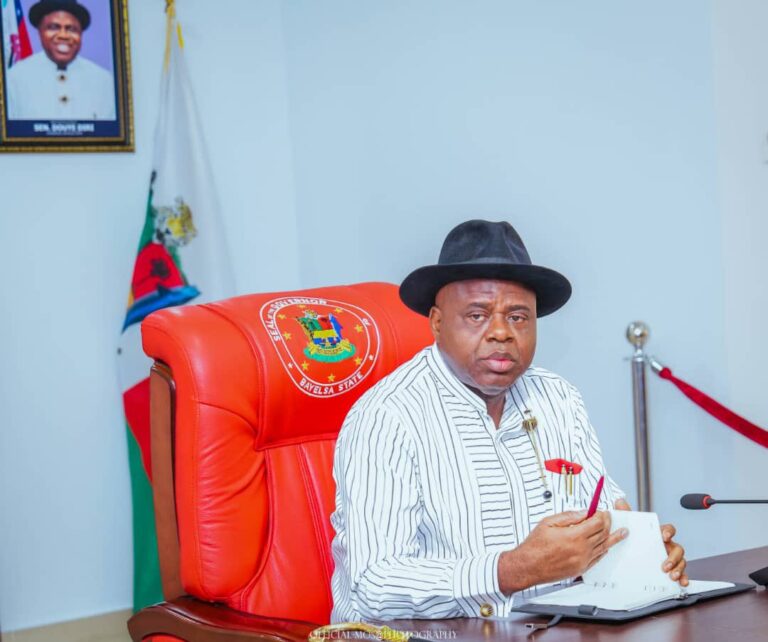
Governor of Bayelsa State, Douye Diri, has urged the Ijaw ethnic nationality and the Ijaw National Congress (INC) to sustain the agitation for the creation of additional states in the Niger Delta, stressing that the struggle should not end with the establishment of Bayelsa.

Diri made the call on Friday at the 2026 national convention of the INC held at the Ijaw House in Yenagoa, where he also declared that he had no preferred candidate among the five contestants vying for the organisation’s presidency.

The governor, according to a statement issued by his Chief Press Secretary, Daniel Alabrah, urged the Ijaw people not to relent in their long-standing demand for the creation of two additional states out of the three originally proposed by the ethnic nationality.

He recalled that the INC, under the leadership of Joshua Fumudoh, had agitated for the creation of Oil Rivers, Bayelsa and Toru-Ibe states, noting that the campaign for the remaining two states must continue.

“We have tried. Today we have one state — Bayelsa.

The INC under Chief Joshua Fumudoh asked for three states: Oil Rivers, Bayelsa and Toru-Ibe. This means there are still two additional states that the Ijaw nation and the INC must continue to pursue. So, it is not yet uhuru,” he said.

Diri also reiterated his call for the practice of true and fiscal federalism in Nigeria, describing the current structure of governance as “unitary federalism.”

According to him, states would experience faster development if they controlled their resources and remitted taxes to the Federal Government.

“Our land and waters have nourished this nation and fuelled its economic activities, yet for too long we have borne the burden of environmental damage and social disadvantage,” he said.

The governor identified economic inequality, environmental degradation and infrastructural neglect as key challenges confronting the Niger Delta and urged the Ijaw people to remain united in addressing them.

He also advised contestants in the INC election to prioritise the collective interest of the ethnic nationality over personal ambition.

Diri commended the outgoing INC President, Benjamin Okaba, and members of his executive council for their leadership and collaboration with government, particularly their role in securing the admission of the Ijaw nation into the Unrepresented Nations and Peoples Organization (UNPO).

He charged the incoming leadership to continue efforts aimed at reviving Ijaw cultural values and language while advancing the vision of the organisation’s founding fathers.

In his address, Okaba called for stronger global engagement in the Ijaw struggle, noting that the ethnic nationality remains a major contributor to Nigeria’s oil-driven economy despite years of neglect.

He advocated a shift from protest-driven advocacy to strategic global partnerships and described the convention as an opportunity for leadership renewal and reassessment of the organisation’s direction.
Okaba also announced new initiatives, including a Territorial Mapping Project designed to digitally document Ijaw ancestral lands to support environmental monitoring and resource negotiations.

According to him, the INC has also registered 15 affiliate groups to strengthen unity and amplify the voice of the Ijaw people on national and international platforms.

Dignitaries at the event included former Deputy Governor of Bayelsa State, Peremobowei Ebebi; Speaker of the Bayelsa State House of Assembly, Abraham Ingobere; Head of Service, Ebiye Sawyer; Chairman of the Bayelsa State Traditional Rulers Council, Bubaraye Dakolo; as well as commissioners, lawmakers, traditional rulers and other stakeholders from Bayelsa State, Delta State and Rivers State.

NDDC’s Support Boosting Security Operations In Niger Delta – Air Chief

0

The Chief of Air Staff, Sunday Kelvin Aneke, has commended the management and board of the Niger Delta Development Commission (NDDC) for supporting the Nigerian Air Force and other security agencies with critical infrastructure across the Niger Delta.

Aneke gave the commendation during a courtesy visit to the NDDC headquarters in Port Harcourt, where he highlighted several development projects executed by the commission to enhance security operations in the region.

He said the NDDC’s interventions, including the installation of solar streetlights and the provision of 713 solar inverters, had significantly improved safety and operational efficiency.

The Air Chief also praised the commission for donating a multi-purpose facility to the Nigerian Air Force in Kolo‑Otuoke, Bayelsa State. The facility now hosts the Nigerian Air Force’s Administrative and Management School, as well as a physical education and skills acquisition centre.

According to him, the training centre—relocated from Kaduna—serves as a mark of appreciation for the commission’s contributions to the force and will provide learning opportunities for Nigerians, foreigners and NDDC personnel.

Aneke noted that the NDDC’s mandate of promoting socio-economic development in the Niger Delta aligns with the Nigerian Air Force’s responsibility of providing a secure environment for national growth and development.

He appealed to the commission to consider rehabilitating and equipping Internally Displaced Persons (IDP) centres with modern facilities that could serve as training hubs.

The Air Chief also sought NDDC’s intervention in providing accommodation for Air Force personnel deployed to Yenagoa, Port Harcourt, Benin City, Asaba and Warri.

Responding, the Managing Director of the commission, Samuel Ogbuku, said the NDDC remained committed to partnerships with both public and private institutions to drive development and strengthen security in the region.

Ogbuku described terrorism as a threat that could spread if not properly addressed, while commending the Nigerian Air Force for its efforts in tackling insecurity.

“There can be no development without peace. What we do in the Niger Delta is to support security agencies because peace is critical to development,” he said.

He added that the commission’s “Operation Light Up the Niger Delta” initiative had illuminated communities across the region, helping to curb militancy and criminal activities while boosting commerce.

Ogbuku also commended the Air Force for maintaining facilities donated by the commission and appreciated the service for allowing NDDC staff to participate in training programmes at the newly relocated School of Administration and Management.

He expressed confidence that the partnership between the commission and the Nigerian Air Force would continue to strengthen peace and development in the Niger Delta.

Zeb-Obipi’s Leadership Repositioning RSU for Global Relevance, Says DVC

0

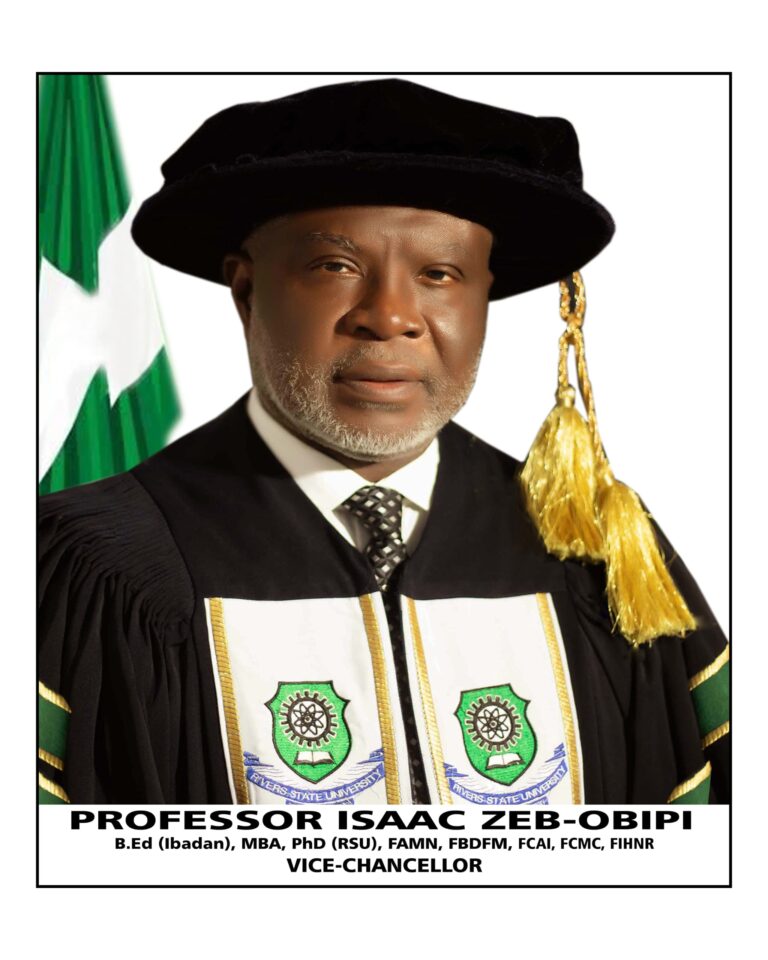
The Deputy Vice-Chancellor (Administration) of Rivers State University, Blessing N. R. Jaja, has congratulated the Vice-Chancellor, Isaac Zeb-Obipi, on the first anniversary of his assumption of office as the institution’s 12th Vice-Chancellor, describing his leadership as visionary and transformational.

Jaja, who spoke on behalf of the Principal Officers of the university, commended Zeb-Obipi for what she described as remarkable progress recorded within his first year in office, particularly in the areas of innovation, digital transformation, academic excellence and strategic institutional development.

According to him, the Vice-Chancellor’s clear vision and purposeful leadership have continued to reposition the university for greater relevance and global competitiveness.

“In just one year, the administration of Professor Zeb-Obipi has demonstrated visionary and transformational leadership, driving significant progress through innovation, digital transformation, academic excellence and strategic institutional development,” he said.

He noted that the Vice-Chancellor’s tenure has been marked by proactive governance, strategic foresight and a strong commitment to excellence, adding that his technology-driven approach to leadership has helped advance modernisation, operational efficiency and global engagement within the university.

Jaja further described Zeb-Obipi as a forward-looking academic leader whose emphasis on digital innovation and result-oriented management has strengthened institutional growth.

He also commended the Vice-Chancellor’s accessibility, emotional intelligence and collaborative leadership style, which she said have fostered inclusiveness and strengthened teamwork across the university community.

“We commend your accessibility, emotional intelligence, collaborative spirit and commitment to inclusiveness, which have inspired confidence and strengthened a culture of teamwork and excellence across the university community,” she added.

Jaja prayed for continued wisdom, strength and good health for the Vice-Chancellor as he begins the second year of his tenure, expressing optimism that his leadership would sustain the momentum of progress already recorded in the institution.

He reiterated the commitment of the university’s management team to support initiatives aimed at further advancing the growth and global standing of the institution.

Nigeria Ends 15-Year OPL 245 Battle, Eyes Fresh Deepwater Investment

0

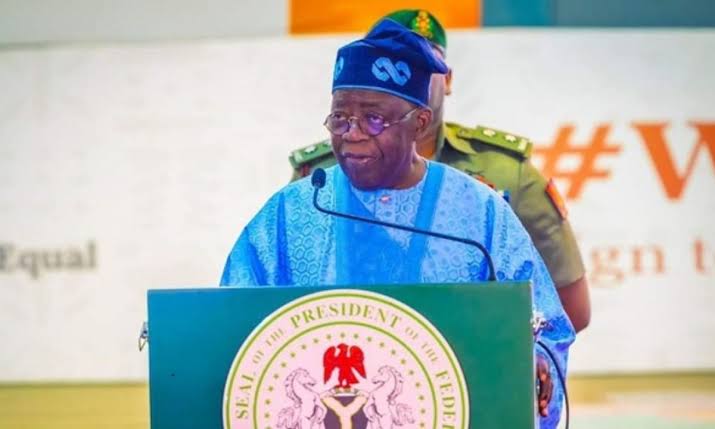
President Bola Ahmed Tinubu has brokered a settlement in the long-running dispute over Oil Prospecting Licence (OPL) 245, paving the way for major deepwater investment that could significantly raise Nigeria’s crude oil production.

The agreement, reached between the Federal Government, Eni and Nigerian Agip Exploration Limited (NAEL), was concluded during a meeting presided over by the President at the Presidential Villa in Abuja.

At the meeting were the Chief Executive Officer of Eni, Claudio Descalzi; the company’s Chief Operating Officer, Guido Brusco; Head of Sub-Saharan Region, Mario Bello; Managing Director of NAEL, Fabrizio Bolondi; and the President’s Special Adviser on Energy, Olu Arowolo-Verheijen.

In a statement issued by the Special Adviser to the President on Information and Strategy, Bayo Onanuga, the agreement brings to an end a 15-year dispute over the ownership and development rights to the oil block.

The resolution restores clarity to the prized offshore asset, widely regarded as one of Nigeria’s most commercially promising deepwater blocks.

With the dispute resolved, the parties are expected to move towards a Final Investment Decision on the Zabazaba-Etan development project, a major offshore field projected to add about 150,000 barrels per day (bpd) to Nigeria’s production capacity when operational.

Nigeria currently produces between 1.68 million and 1.71 million bpd. The additional output from the project is expected to support the Federal Government’s target of raising production to at least two million bpd.

Tinubu described the agreement as a milestone in his administration’s economic reform agenda, noting that it underscores government’s commitment to resolving legacy disputes and strengthening investor confidence in the country’s energy sector.

“This resolution sends a clear signal to global investors that Nigeria is prepared to address legacy issues transparently, uphold the rule of law, and create a stable environment for long-term capital,” the President said.

According to him, the settlement also reinforces the government’s determination to ensure that Nigeria’s natural resources generate sustainable value for the country and its citizens.

Providing further insight, Arowolo-Verheijen said the new arrangement significantly improves on the 2011 resolution framework, aligning it with reforms introduced under the Petroleum Industry Act, which has reshaped governance and fiscal structures in the oil and gas sector.

She explained that the revised agreement balances investor clarity required for large-scale deepwater investments with stronger value accrual and safeguards for the Nigerian Federation.

The resolution, she added, removes one of the most prominent legacy risks that has long weighed on Nigeria’s upstream oil sector.

“By resolving the OPL 245 dispute, the Federal Government has eliminated one of the most prominent legacy risks in Nigeria’s upstream sector and reinforced its commitment to predictable regulation, transparent governance and commercially viable investment frameworks,” she said.

The settlement also forms part of broader reforms initiated by the Tinubu administration since 2023 to reposition Nigeria as a competitive destination for global energy investment.
Industry analysts have long identified the OPL 245 dispute as a major obstacle to unlocking the full potential of the oil block, believed to contain vast deepwater reserves.

The Zabazaba-Etan project is expected to increase crude output, create jobs, stimulate local industry participation and boost government revenues when it comes on stream.

Tinubu commended institutions that played roles in resolving the dispute, including the Office of the Attorney General of the Federation, the Ministry of Petroleum Resources, the Nigerian Upstream Petroleum Regulatory Commission (NUPRC), and NNPC Limited.

He emphasised that responsible investment and transparent governance would remain central pillars of the administration’s strategy for managing Nigeria’s natural resources.

According to him, the agreement represents not only the resolution of a complex legal dispute but also a decisive step towards strengthening Nigeria’s long-term energy outlook and economic growth prospects.

FG Cracks Down On Fake Certificates, Digitises Academic Records Nationwide

0

The Federal Government has reiterated its commitment to strengthening the integrity of academic records and improving institutional compliance across the education sector as part of reforms aimed at safeguarding the credibility of Nigeria’s educational system.

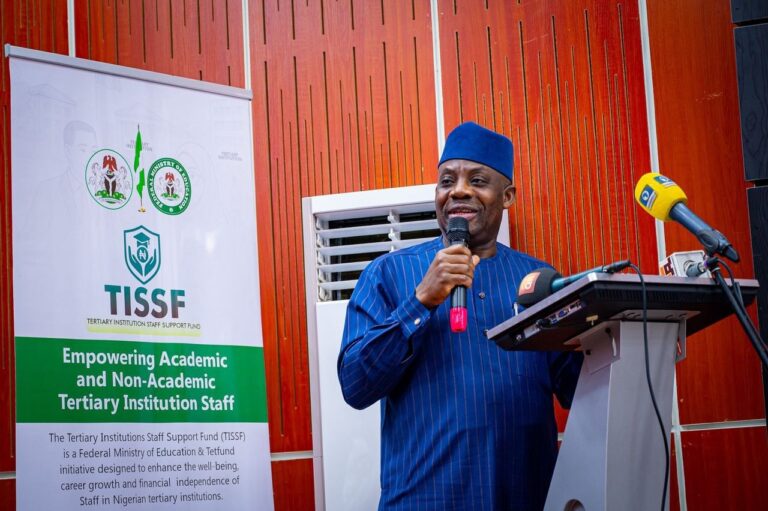
Minister of Education, Maruf Tunji Alausa, disclosed this on Thursday during a national capacity-building programme organised to support the implementation of the Nigeria Education Repository and Data Bank (NERD).

The programme, themed “Strengthening Institutional Compliance and Academic Records Integrity,” was organised to reinforce compliance frameworks and ensure the accuracy, security and authenticity of academic records across institutions nationwide.

Alausa said the Federal Government had taken decisive steps to curb certificate fraud following reports that some Nigerians obtained questionable degrees from unaccredited institutions abroad.

According to him, the government launched investigations after whistleblower reports revealed that some individuals were acquiring academic qualifications from dubious institutions, particularly in parts of West Africa.

He said the government acted swiftly on the directive of President Bola Ahmed Tinubu to halt the trend and restore credibility to Nigeria’s education system.

“Education is a covenant between the state and its citizens. When a certificate is issued, it is not merely paper; it is a national guarantee that due process was followed and standards were upheld,” the minister said.

He disclosed that individuals who obtained fraudulent certificates had been removed from the public service following investigations by the government.

Highlighting the importance of reliable data for governance, Alausa described data as the foundation for effective policymaking and monitoring of government reforms.

“Data is the lifeblood of effective governance. It enables us to understand the challenges we face, design effective solutions and monitor our progress. Without data, we are flying blind,” he said.

The minister explained that NERD is a strategic national digital infrastructure designed to digitise, standardise and authenticate academic records across tertiary institutions in Nigeria.

He said the platform would administer national credential numbers, a National Credential Revocation Service, a National Student Clearinghouse, and a federated repository of academic theses and abstracts, alongside a national academic publication and indexing database.

According to him, within four months of enforcement, the platform has preserved nearly 100,000 digital student submissions and onboarded more than 250 universities, polytechnics, monotechnics and colleges of education for real-time credential verification.

Alausa added that over 133,000 students and more than 6,800 lecturers had been enrolled on the platform, supported by over 655 focal persons across the country.

He further disclosed that the initiative had led to the establishment of more than 1,000 digital service centres in partnership with Nigeria Digital Entrepreneurs, creating over 3,000 jobs within four months.

To promote academic excellence, the minister also announced the establishment of the NERD Annual National Laureate Prize and Awards Programme to recognise outstanding academic research.

He said the awards would reward exceptional undergraduate, master’s and doctoral theses with prizes ranging from N5 million to N20 million, with the maiden edition scheduled for November.

Alausa directed ICT directors and institutions nationwide to fully cooperate with the initiative, stressing that compliance with the NERD platform was now compulsory.

He explained that adherence to the system had become a prerequisite for participation in or exemption from the National Youth Service Corps (NYSC), as well as for accessing services from agencies such as the Tertiary Education Trust Fund, National Universities Commission, National Board for Technical Education, National Commission for Colleges of Education and the Industrial Training Fund.

He noted that the platform would maintain a national digital footprint of every academic award obtained in accredited Nigerian institutions and help eliminate disputes over academic credentials.

The minister also encouraged institutions to prioritise locally developed technology platforms in line with the government’s local content policy.

“I challenge myself that the only platform we deploy from the Federal Ministry of Education will be a platform built by Nigerians in this country,” he said.

Alausa commended the Chief Executive Officer of NERD, Tunji Ariyomo, for championing the preservation of educational data in Nigeria.

In his remarks, Ariyomo described the initiative as a crucial step toward preserving Nigeria’s academic knowledge and research history.

He noted that weak documentation systems had historically resulted in the loss of valuable academic records and research outputs in the country.

According to him, nations that preserve and validate knowledge over long periods are better positioned to drive development and lead the global knowledge economy.

Nigeria has faced persistent challenges with certificate fraud and weak academic record systems, raising concerns over the credibility of some qualifications obtained locally and abroad.

In recent years, investigations exposed the proliferation of illegal degree mills in neighbouring countries where some Nigerians were reported to have obtained academic certificates within unusually short periods, prompting renewed government efforts to strengthen oversight and verification mechanisms in the education sector.


Fubara Donates Helicopter To Air Force, Pledges Stronger Security Partnership In Rivers

Governor of Rivers State, Siminalayi Fubara, has reaffirmed the state government’s commitment to strengthening its security partnership with the Nigerian Air Force, highlighting the donation of a helicopter to the service as part of efforts to enhance protection of critical economic infrastructure.

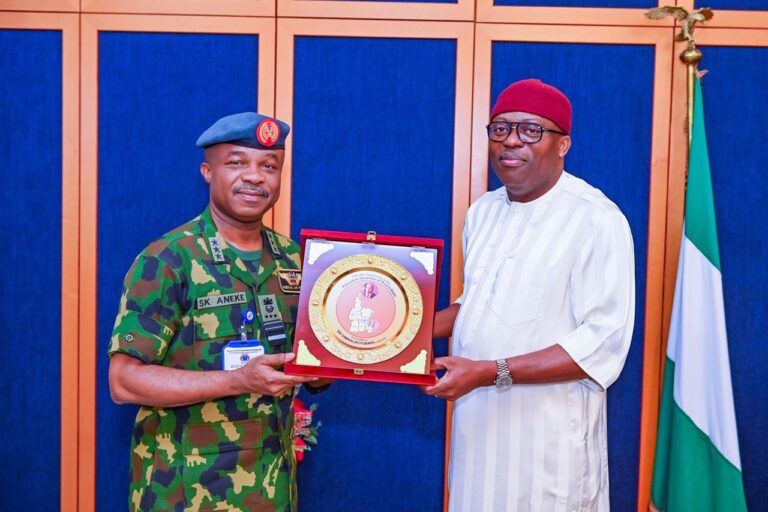
Fubara made the pledge on Thursday when he received the Chief of Air Staff, Sunday Kelvin Aneke, at Government House in Port Harcourt during a courtesy visit.

Aneke, who recently assumed office as the 23rd Chief of Air Staff, was in the state to appreciate the Rivers State Government for donating one of its aircraft, an Agusta 139 helicopter, to the Air Force last year.

Congratulating the Air Force chief on his elevation, Fubara said Rivers State had maintained a long-standing and cordial relationship with the Nigerian Air Force, noting that successive administrations had supported the military in areas of logistics, transportation and security operations.

The governor explained that the decision to hand over the helicopter was taken by the State Executive Council after it was established that the aircraft was no longer being utilised by the state government.

According to him, transferring the aircraft to the Air Force would ensure that it is deployed for active security operations, particularly in tackling pipeline vandalism and other criminal activities threatening the state’s economy.

“We believe that putting that aircraft into active service will help address some of the societal challenges around us. As a responsible government, we must do everything within our power to safeguard lives, property and critical economic facilities,” Fubara said.

He recalled that the partnership between Rivers State and the Nigerian Air Force predates his administration, citing instances where the Air Force provided support to the state.

Fubara noted that when the Port Harcourt International Airport was temporarily closed for rehabilitation, the Air Force Base in Port Harcourt provided alternative air transportation services for the state until the airport was reopened.

Responding, Aneke described the visit as his first official engagement with the Rivers State Government since assuming office and commended the administration for its sustained support to the Air Force.

He said the donation of the Agusta 139 helicopter would significantly enhance the service’s operational capacity in the region once restored to full operational condition.

While noting that the aircraft had not been in use for some time and would require funding for maintenance and reactivation, the Air Force chief expressed confidence that it would ultimately strengthen aerial surveillance and security operations in the state.
Aneke also praised the state government for rehabilitating and resurfacing the runway and apron at the Air Force Base in Port Harcourt, as well as installing runway lighting and perimeter fencing.

According to him, the upgrades have positioned the airfield as a strategic aviation facility located at the heart of the city.

The Air Force chief further thanked the state government for constructing two blocks of 12 two-bedroom apartments for Air Force personnel, noting that the gesture had improved the welfare of airmen and airwomen and boosted operational readiness.

He also appreciated the governor’s promise to support a school for children with special needs managed by the Nigerian Air Force Officers’ Wives Association (NAFOWA), describing it as an important contribution to the welfare of families of service personnel.

Aneke, however, appealed to the state government to facilitate the transfer of the state primary school located within the Air Force Base to the Nigerian Air Force for improved management. He also requested that the Mother and Child Hospital at the base be handed over to the Air Force, noting that military hospitals in many countries serve both service personnel and residents of host communities.

According to him, about 80 per cent of patients treated at the Air Force Hospital within the base are civilians from surrounding communities, a development he said contributes positively to healthcare delivery in the state.

IPAC Threatens 2027 Polls boycott Over ‘Controversial ’ Electoral Act Provisions

0

The Inter-Party Advisory Council (IPAC) has threatened to boycott the 2027 general elections if the National Assembly of Nigeria fails to amend what it described as contentious provisions in the Electoral Act 2026.

The council warned that if the concerns raised by political parties are not addressed, the outcome of the elections would be rejected as illegitimate and would not be recognised by parties under its umbrella.

IPAC issued the warning in a communiqué at the end of its Expanded General Assembly meeting held in Abuja.

The communiqué was signed by the council’s Chairman, Yusuf Dantalle, and National Secretary, Maxwell Mgbudem.

According to the council, several provisions in the newly enacted electoral law could undermine the growth of political parties and weaken Nigeria’s multiparty democratic system if not urgently reviewed.

IPAC listed six key demands that it said must be addressed through amendments by the National Assembly.

Among them is the restoration of indirect primaries, which the council said would allow political parties to determine their preferred method of nominating candidates for elections.

The organisation also called for the removal of the requirement compelling political party members to possess and upload their National Identification Number (NIN), arguing that the provision could disenfranchise many Nigerians who do not have access to the national identification system.
In addition, IPAC demanded the expungement of Sections 77(4), (5), (6) and (7) of the Act, which it claimed infringe on citizens’ constitutional right to freedom of association.

The council further urged lawmakers to restore mandatory electronic transmission of election results after they are announced at polling units.

According to IPAC, the absence of a clear legal requirement for electronic transmission was one of the major controversies surrounding the 2023 presidential election, warning that such issues must not recur in future polls.

The council also called for stronger penalties against vote buying, which it described as one of the most damaging electoral malpractices affecting the credibility of elections in the country.

It also demanded the restoration of forged certificates as valid grounds for election petitions, warning that the removal of the provision could allow individuals with questionable credentials to contest and occupy public offices.

IPAC stressed that credible leadership remains fundamental to democracy and cautioned that weakening safeguards in the electoral law could harm Nigeria’s democratic institutions and international reputation.

The council disclosed that it would also draw the attention of the international community to the matter, including the United Nations, European Union, Economic Community of West African States (ECOWAS), the governments of the United Kingdom and the United States, as well as Nigerians in the diaspora.

It added that it reserves the right to seek judicial intervention to challenge what it described as objectionable provisions in the Electoral Act.

IPAC therefore urged the National Assembly to urgently align the law with constitutional provisions to avoid litigation and ensure that the 2027 elections are credible, free and fair.