Home Blog Page 56

Fubara swears In Five Commissioners, Demands Top Performance

0

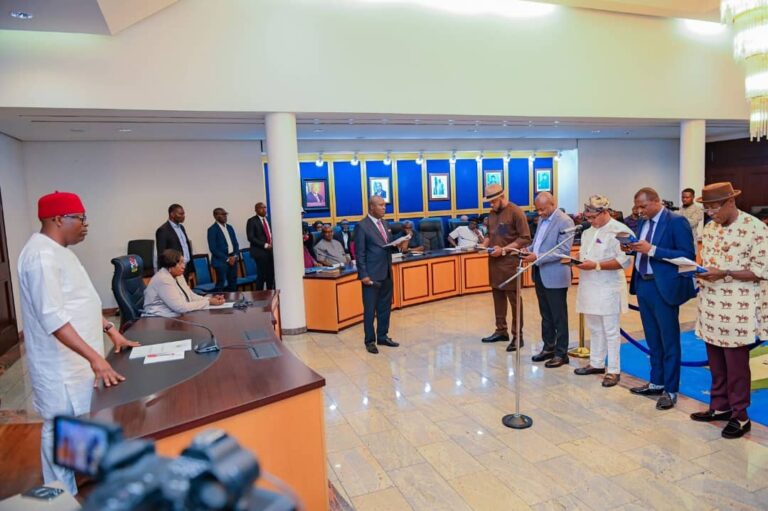
Governor of Rivers State, Siminalayi Fubara, on Wednesday swore in five newly appointed commissioners and urged them to give their best in service to the state.

Speaking during the ceremony at the Rivers State Government House, Fubara said the rigorous screening conducted by the Rivers State House of Assembly had already prepared the commissioners for the task ahead.

The governor said the lawmakers had thoroughly outlined the duties and responsibilities of the appointees during the screening process, stressing that he expected nothing short of excellent performance from them.

“I believe that going through one of the most rigorous screening exercises is enough to say that those of you who succeeded are fit and ready to deliver for our dear state,” Fubara said.
“So there is no further charge. The screening was the charge. I wish you the best, as I expect nothing less than the best from you.”

The five commissioners sworn in are Tonye Bellgam, Prof. Temple Nwofor, Dr Peters Nwagor, Lekue Kenneth and Amairigha Edward Hart.

They had earlier been screened and confirmed by the Rivers State House of Assembly on Monday.

The oath of allegiance and oath of office were administered by the Chief Registrar of the High Court of Rivers State, David D. Ihua‑Maduenyi.

The ceremony was held at the Executive Council Chamber of Government House in Port Harcourt.

Dangote Refinery Slashes Petrol, Diesel Prices After Recent Hikes

0

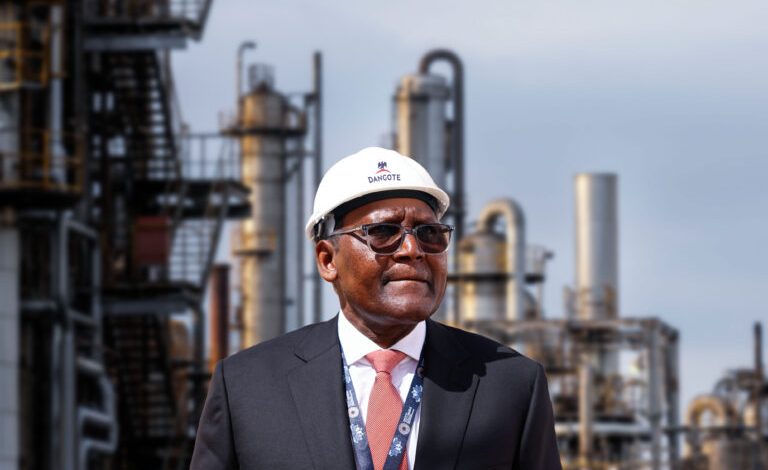
The Dangote Petroleum Refinery has reduced the ex-depot prices of petrol and diesel, offering marginal relief to marketers and bulk buyers after a series of sharp increases in recent days.
In a new pricing template issued on March 10, the refinery cut the gantry price of Premium Motor Spirit (PMS), also known as petrol, by ₦100 to ₦1,075 per litre, down from ₦1,175 per litre.

The refinery also announced that PMS supplied through coastal distribution channels will now sell at ₦1,050 per litre, reflecting a slight adjustment linked to maritime distribution costs.

Similarly, the price of Automotive Gas Oil (AGO), commonly known as diesel, was reduced to ₦1,430 per litre at the gantry, representing a ₦190 drop from the previous ₦1,620 per litre.

The refinery noted that the quoted gantry prices exclude statutory charges imposed by the Nigerian Midstream and Downstream Petroleum Regulatory Authority (NMDPRA).

The latest price cut comes barely a day after the refinery raised the ex-depot price of petrol to ₦1,175 per litre amid volatility in global crude oil prices and rising production costs.

Within the past week, the refinery had adjusted prices several times, pushing PMS from about ₦995 per litre to ₦1,175 per litre, while diesel rose to ₦1,620 per litre, reflecting shifts in international crude markets and replacement costs.

Industry analysts say the latest downward adjustment could ease cost pressures on petroleum marketers and depot operators who have struggled with fluctuating loading prices.

Market watchers, however, note that the extent to which the reduction will translate into lower retail pump prices across the country will depend on depot margins, transportation costs and distribution dynamics within Nigeria’s downstream petroleum sector.

The refinery, owned by the Dangote Group and operated by billionaire industrialist Aliko Dangote, began operations in 2024 with a capacity of about 650,000 barrels per day and is expected to significantly reduce Nigeria’s reliance on imported refined petroleum products.

Tinubu Seeks Senate’s Confirmation Of Oyedele As Minister, Abe For NUPRC Chairmanship

0

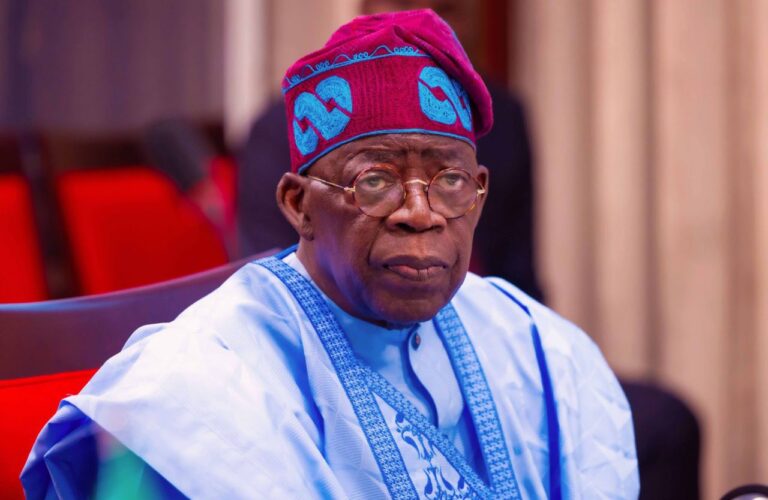
President Bola Tinubu has asked the Senate to screen and confirm tax expert Taiwo Oyedele as Minister of State for Finance, replacing Doris Uzoka-Anite.

The President also requested the confirmation of former Rivers South-East senator, Magnus Abe, as chairman of the Nigerian Upstream Petroleum Regulatory Commission (NUPRC).

The requests were contained in separate letters read on the floor of the Senate during plenary by Senate President Godswill Akpabio.

Tinubu, in his letter, urged lawmakers to consider and approve Oyedele’s nomination as part of ongoing adjustments within the Federal Executive Council.

Oyedele, a native of Ikaram in Akoko area of Ondo State, previously served as chairman of the Presidential Committee on Fiscal Policy and Tax Reforms, where he led efforts aimed at restructuring Nigeria’s tax system.

The 50-year-old is an economist, accountant and public policy expert with extensive experience in fiscal policy design and tax administration.

In a separate communication to the Senate, the President also sought the screening and confirmation of Abe as chairman of the NUPRC, following the resignation of Gbenga Komolafe.

Tinubu further nominated Paul Yaro Jezhi, a former chairman of the Trade Union Congress in Kaduna State, and Sunday Adebayo Babalola, a former deputy director at the defunct Department of Petroleum Resources, as non-executive commissioners of the commission.

The Senate is expected to commence the screening of the nominees in the coming days.

Banigo Dumps PDP for APC, Cites Party Crisis, Support For Tinubu, Fubara

0

The senator representing Rivers West Senatorial District, Ipalibo Banigo, has defected from the Peoples Democratic Party (PDP) to the ruling All Progressives Congress (APC), citing deepening internal divisions within her former party and the need to align politically with federal and state leadership.

Banigo’s defection letter was read on the floor of the Senate on Tuesday by Senate President Godswill Akpabio.

In the letter, Banigo said her decision followed extensive consultations with constituents, political associates, and key stakeholders across Rivers West, noting that prolonged leadership disputes, internal divisions, and ongoing litigations within the PDP had undermined cohesion in the party.

She said the move would enable her to align with the political direction of Rivers State Governor, Siminalayi Fubara, and the Minister of the Federal Capital Territory, Nyesom Wike, whom she described as her political mentor.

According to Banigo, the decision was also aimed at supporting the administration of President Bola Tinubu and efforts towards his potential re-election.

“This decision is predicated on my resolve to join my political mentor, the Minister of the Federal Capital Territory, Nyesom Wike, and the Governor of Rivers State, Siminalayi Fubara, in supporting President Bola Tinubu to actualise his re-election bids and enable him continue his economic reforms,” she said.

Banigo added that the President’s policies had improved the nation’s economic outlook through currency stabilisation and infrastructural development.

She also pledged continued support for the First Lady, Oluremi Tinubu, in advancing initiatives aimed at improving the welfare of Nigerians.

Responding after the letter was read, Akpabio welcomed Banigo to the APC, saying “a seat is already prepared” for her and others expected to join the ruling party.

The development is the latest in a series of political realignments ahead of the 2027 general elections as politicians seek to strengthen alliances with the federal government.

Meanwhile, the governor of Zamfara State, Dauda Lawal, and his deputy, Mani Mummuni, also recently defected to the APC, citing the lingering crisis and legal disputes within the PDP.

Rising Oil Prices, Rising Hardship: Will Nigeria Ever Truly Benefit?

0

As global crude oil prices surge amid escalating tensions in the Middle East, many oil-producing countries are bracing for what could become a new wave of windfall revenues.

For Nigeria, however, the question is no longer whether prices will rise, but
whether the country — and its citizens — will actually benefit.

The ongoing crisis involving the United States, Iran and Israel has unsettled global energy markets, pushing crude oil prices above $100 per barrel. Analysts say the disruption has been worsened by the closure of the Strait of Hormuz, a strategic waterway through which roughly one-fifth of the world’s oil and natural gas supplies pass.

Ordinarily, such a development would be good news for a major oil exporter like Nigeria.

Higher oil prices mean more revenue for government and stronger foreign exchange inflows.

But for millions of Nigerians struggling with rising living costs, the reality appears far more complicated.

In many resource-rich nations, a spike in crude prices translates into economic relief. In Nigeria, however, history suggests that the opposite can happen. As oil prices climb, the cost of petrol, transportation and food often rises, intensifying the hardship already faced by households.

Despite being Africa’s largest oil producer, Nigeria still imports a significant portion of its refined fuel. This structural weakness means that higher global oil prices can quickly translate into higher domestic fuel prices.

In recent months, petrol prices have surged beyond N1,000 per litre in parts of the country, squeezing household budgets and raising operational costs for businesses. Transportation fares have climbed sharply, and food inflation continues to worsen.

Energy experts say the paradox lies in Nigeria’s long-standing dependence on crude exports and refined fuel imports.

This is not the first time Nigeria has stood on the brink of an oil windfall.
During the Gulf War, triggered by the invasion of Kuwait by Saddam Hussein, global oil prices surged dramatically. At the time, Nigeria was producing about 1.8 million barrels of crude per day and earned billions of dollars in unexpected revenue.

However, the Pius Okigbo Panel, which later investigated the windfall during the military administration of Ibrahim Babangida, reported that roughly $12–13 billion accrued during the crisis.

Much of the money, the panel found, was kept outside normal government accounting systems, and a significant portion could not be properly accounted for.

The episode remains one of the most cited examples of how sudden resource wealth can disappear without transparent management.
Structural problems persist
Today, decades later, many of the same challenges still exist.

Nigeria’s crude production has been repeatedly constrained by oil theft, pipeline vandalism and underinvestment in the sector. Even when global prices surge, these constraints limit the country’s ability to increase output and maximise earnings.

Another complication is the structure of Nigeria’s oil financing arrangements. Large volumes of crude production are tied to forward-sale agreements and pre-export financing deals, which means that a portion of future oil revenue has already been committed.

Meanwhile, the country continues to grapple with a widening budget deficit and mounting public debt.

Although the massive Dangote Refinery in Lagos was expected to transform Nigeria’s refining capacity, industry observers say the facility still faces supply challenges and has had to import crude oil to sustain operations.

For ordinary Nigerians, the consequences of rising oil prices are already visible.

Higher fuel costs increase transportation fares, push up food prices and raise electricity generation costs for businesses relying on diesel generators. Small enterprises, which form the backbone of Nigeria’s informal economy, are particularly vulnerable.

What should theoretically be a national advantage — being a major oil producer — increasingly feels like a burden to citizens.
Economists warn that unless Nigeria’s economic structure changes, oil price spikes may continue to deepen inequality rather than reduce hardship.

A familiar dilemma
Experts say the real issue is not the possibility of another oil windfall, but how Nigeria manages it.

If global prices remain above the benchmark used in the federal budget, the country could generate billions of dollars in excess revenue within a short period. Yet without strong fiscal discipline, transparency and strategic investment, such gains may once again fail to translate into lasting development.

Analysts recommend that any additional revenue be channelled into savings mechanisms such as the Nigeria Sovereign Investment Authority and the Excess Crude Account, which were created to stabilise the economy during oil price volatility.

They also argue that Nigeria must invest aggressively in domestic refining, gas development, infrastructure and industrialisation to reduce dependence on crude exports.

Beyond the oil illusion
Ultimately, Nigeria’s relationship with oil remains a story of enormous potential repeatedly undermined by structural weaknesses and governance challenges.

The latest Middle East crisis may push global crude prices even higher. Government revenues could increase and foreign exchange inflows may improve.

But unless deeper reforms are implemented, the benefits may remain largely invisible to the citizens whose lives are most affected by rising costs.

For many Nigerians facing escalating hardship, the question therefore remains painfully simple: if oil prices are rising again, why does life keep getting harder?


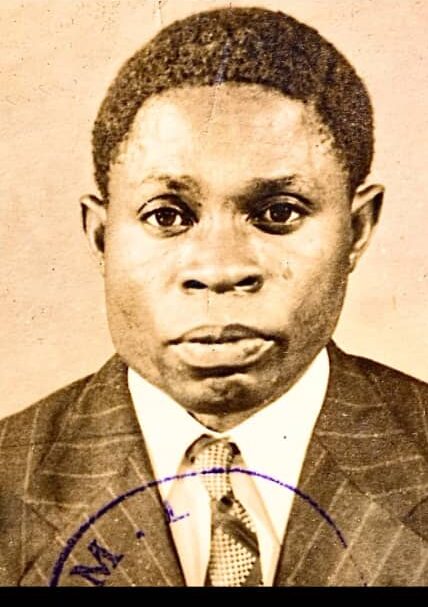
90 Years After Birth, Family To Unveil Leadership Centre In Honour Of Late Ogoni Leader Albert Badey

0

Thirty-two years after the Giokoo incident that claimed the lives of several Ogoni leaders, the family of the late Albert Badey has announced plans to establish a leadership development centre in his honour.

A statement signed by Blessing Wikina,
Chairman, Media Sub-Committee of the Organising Committee and made available to The Atlantic Bell stated that the facility, to be known as the Albert Badey Centre for Development (ABCD), will be formally unveiled as part of activities marking the posthumous 90th birthday of the late Ogoni statesman.

Speaking in Port Harcourt at the weekend while briefing the Central Planning Committee for the celebration, his son, Suage Badey, said the family decided to immortalise their father by promoting leadership and development.

According to him, “If my father were alive today, he would have been 90 years old this month. We will not grieve forever; we will not mourn forever. Therefore, we want to build something in society in his memory and honour.”

Suage described the late A.T. Badey, as he was popularly called, as a committed pro-development leader who served Ogoniland and Rivers State with dedication and selflessness.

Badey was among the Ogoni leaders killed during the Giokoo Incident at the height of the Ogoni crisis in 1994.

During his career in the state civil service, he held several key positions, including Permanent Secretary, Head of Service, Secretary to the State Government and Commissioner under different administrations. He also served in various ministries, departments and agencies.

He was widely credited with facilitating development projects in Ogoniland, including influencing the establishment of the first Rivers State Polytechnic at the former Regina Caeli Teachers Training College campus, now known as Ken Saro-Wiwa Polytechnic.

The Central Planning Committee for the anniversary events is chaired by retired Permanent Secretary John Nally, and comprises prominent public officials from across the state who served alongside the late Badey. The committee has already held its inaugural meeting in Port Harcourt.

The unveiling of the leadership centre is expected to form a key highlight of the commemorative activities planned by the family.

UNITAR Celebrates RSU Vice-Chancellor Zeb-Obipi On First Anniversary, Applauds Leadership, Commitment To Sustainable Dev

0

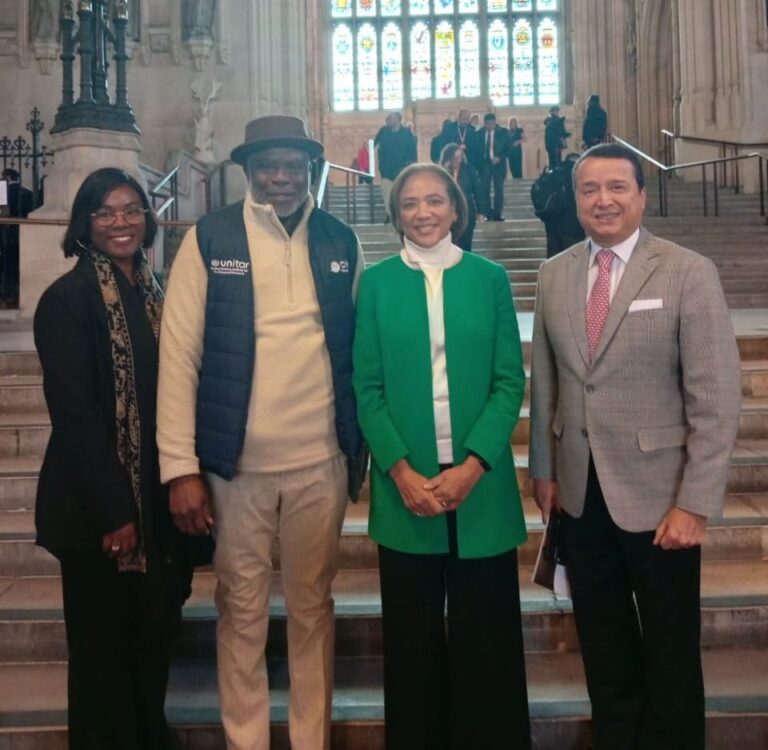
The United Nations Institute for Training and Research (UNITAR) has congratulated the Vice-Chancellor of Rivers State University (RSU) and Chairman of CIFAL Nigeria, Professor Isaac Zeb-Obipi, on the occasion of his first anniversary in office.

In a message issued on behalf of the UN Assistant Secretary-General and Executive Director of UNITAR, Michelle Gyles-McDonnough, the Director and Head of the CIFAL Global Network, Alex Mejía, as well as the chairmen and directors of the 34 CIFAL Centres worldwide, the organisation commended Zeb-Obipi’s visionary leadership and dedication to advancing sustainable development.

UNITAR noted that his tenure has been marked by innovation, strategic direction and strong institutional support for the CIFAL Global Network’s Agenda 2030 mandate.

The institute expressed appreciation for the Vice-Chancellor’s continued commitment to strengthening collaboration between United Nations Institute for Training and Research and CIFAL Nigeria, describing his leadership as both inspiring and impactful.

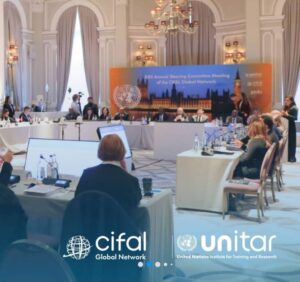
The CIFAL Global Network’s XX11 Annual Steering General Committe Meeting, December, 2025 in London,United kingdom bringing together more than 70 delegates from over 30 countries including Directors and Chairpersons representing 32 CIFAL Centres worldwide.

UNITAR further stated that it looks forward to many more years of productive partnership with Professor Zeb-Obipi in his dual capacity as Vice-Chancellor of Rivers State University and Chairman of CIFAL Nigeria.

The congratulatory message was conveyed by the Director of CIFAL Nigeria and Coordinator of the Nigeria Project Office, Mrs. Ihuoma Njemanze, who extended the institute’s warm wishes for continued success and transformative leadership in the years ahead.

At the CIFAL Global Network XXII Annual Steering Committee Meeting in December,2025 in London, United Kingdom,Prof. Isaac Zep-Obipi was inugurated as the Chairman, CIFAL Nigeria.

The meeting brought together more than 70 delegates from over 30 coutries including Directors and Chairpersons representing 32 CIFAL Centres worldwide.

CIFALs are training centres whose mission is to provide professional capacity- building programmes for government officials and civil society representatives with the aim of strengthing leadership and institutional capacities at the local, national and regional levels.

Police Arrest Four Suspected Kidnappers Linked To Multiple Abductions In Rivers

0

Operatives of the Nigeria Police Force in Rivers State have arrested four suspected kidnappers allegedly responsible for a series of abductions across several communities in the state.

The suspects were apprehended by officers attached to the Anti-Cultism Unit, Emuoha Annex, in connection with the kidnapping of Favour Chika from Igwuruta community in Ikwerre Local Government Area.

Spokesperson for the state police command, Grace Iringe-Koko, confirmed the development in a statement issued on Monday, noting that the arrest followed sustained intelligence-led operations by the police.

According to her, the victim was abducted on February 25, 2026, at about 9:00 a.m. while on her way to her farm and was later released on March 2 after her family allegedly paid a ransom of N3 million.

Iringe-Koko identified the suspects as Usman Dan-Mama, 20, from Mubi in Adamawa State; Abdullahi Kabir, 27, from Damaturu in Yobe State; Idris Ismaila, 20, from Taraba State; and Mohammed Dalandi, 22, from Yobe State.

She said the suspects were arrested in the early hours of the day at about 5:20 a.m. along Ipo/Ozaha Farm Road, where they were allegedly planning another kidnapping operation.

“A search conducted on the suspects led to the recovery of one locally made pistol, one cut-to-size single-barrel gun and 20 live cartridges,” Iringe-Koko said.

During interrogation, the suspects reportedly confessed to carrying out several kidnapping operations within the Igwuruta-Ali, Omagwa, Ozaha, Ipo and Etche Local Government Area axis of the state.

The police spokesperson further disclosed that the suspects admitted to the abduction of Okoro Osita, an engineer, and his friend on February 12, 2026, along Airport Road, Port Harcourt. The victims were later released after their families paid a ransom of N3 million.

Iringe-Koko added that the suspects also confessed to the kidnapping of Sympathy Agu of Umuka-Mba and Chioma Njoku of Obiri, both in Etche Local Government Area. The victims were abducted on January 31, 2026, along Afara/Egwi Road and were released after their families reportedly paid N3 million ransom.

She said efforts were ongoing to apprehend other members of the criminal syndicate who are still at large.

The Rivers State Police Command reiterated its commitment to protecting lives and property, urging residents to provide timely and credible information that would aid ongoing efforts to combat crime across the state.

‘I Cannot Be Bribed’ — Rivers Woman Rejects N2.5m Allegedly Sent by Ahoada LG Chairman After Assault Claim

0

A Rivers State woman, Winnie Miller, has rejected N2.5 million allegedly paid into her bank account by the Chairman of Ahoada East Local Government Area, Cheta Epelle, describing the payment as an attempt to bribe her following her claim that she was assaulted by thugs linked to the council chairman.

Miller, who had earlier accused the council boss of leading a group of thugs to attack her, made the latest disclosure in a post shared on her Facebook page.

The controversy began after Miller posted a video highlighting the deteriorating condition of Community Secondary School Odioku, a public school in her community located in Odioku, Rivers State.

According to her, the video drew the anger of the local government chairman, whom she alleged later mobilised thugs who assaulted her over the post.

Providing an update on the incident, Miller claimed that the sum of N2.5 million was subsequently transferred into her account by Epelle as “bribe and compensation” following the alleged attack.

She, however, insisted that she neither requested nor agreed to receive any financial compensation, stressing that the payment would not silence her.

“I cannot be bribed. I never agreed to any compensation,” she wrote.
Miller further disclosed that she has been making efforts to return the money to the sender but has been unable to complete the transaction due to network issues with her bank.

“I have been trying to return the money through the same account it came from, but I have not been able to because the bank network has been failing,” she stated.

The incident has generated reactions on social media, with many users calling for a thorough investigation into the allegations surrounding the reported assault and the circumstances of the payment.

As of the time of filing this report, the chairman of Ahoada East Local Government Area, Cheta Epelle, had not publicly responded to the latest claim regarding the alleged N2.5 million transfer.

The alleged assault and subsequent payment have further drawn attention to the condition of Community Secondary School Odioku, which Miller said prompted her initial video exposing the state of infrastructure in the school.

NDDC Rolls Out New Performance Management System to Boost Efficiency

0

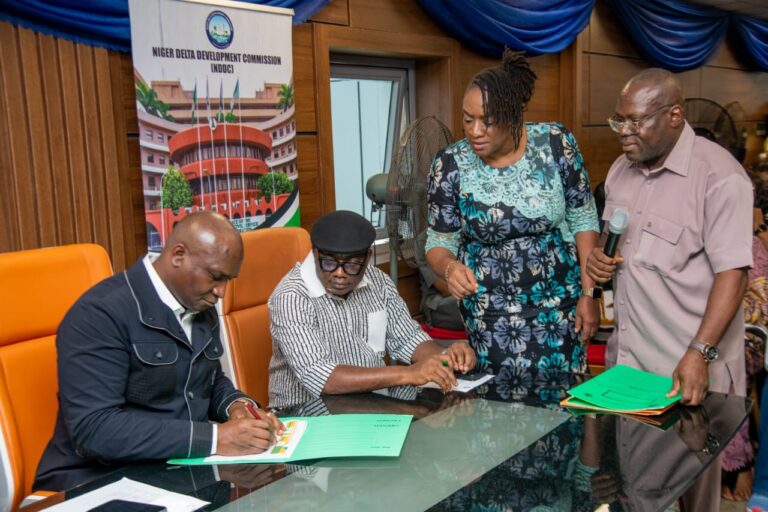
The Niger Delta Development Commission (NDDC) has commenced the implementation of a new Performance Management System (PMS) aimed at improving staff productivity and strengthening service delivery across the commission.

The Managing Director of the commission, Samuel Ogbuku, announced the initiative during a two-day retreat organised for the deployment and institutionalisation of the system at the NDDC headquarters in Port Harcourt.

Ogbuku said the new PMS would replace the Annual Performance Evaluation Report (APER) currently used in the public service, noting that the system is built on the Balanced Scorecard model and designed to measure both organisational and individual performance.

According to him, the adoption of the new framework reflects the commission’s commitment to efficient service delivery in line with the Renewed Hope Agenda of President Bola Ahmed Tinubu.

He commended the Federal Government for introducing reforms aimed at repositioning Nigeria’s public service to align with global best practices, while urging NDDC staff to prioritise performance, teamwork and continuous improvement in their daily duties.

Ogbuku also disclosed that the commission would move towards full automation to enhance efficiency and accountability in its operations.

He explained that the new employee management system would drive productivity, adding that promotions would henceforth be determined strictly by measurable performance.

“Every staff member must cultivate the habit of learning to be familiar with computer systems. This is mandatory under the new policy, particularly as all directorates in the commission will be fully automated by the end of March,” he said.

The Managing Director added that staff would undergo training across various operational areas to facilitate a smooth transition to the new system.

The Director of Planning and Statistics at the commission, Patterson Ogon, said the PMS would enable the organisation to track progress, identify operational gaps and support evidence-based decision-making.

He noted that the initiative represents a significant step toward strengthening accountability, efficiency and service delivery within the commission.

Similarly, the Director of Administration and Human Resources, Kelechi Nwelue, said staff performance would now be evaluated on both quarterly and annual bases to identify areas requiring improvement.
According to him, support systems would also be put in place across all directorates to help staff adapt effectively to the new framework.

A consultant on the project, Offiong Achibong, explained that the PMS is designed to promote excellence in the workplace through measurable performance indicators across units and directorates.

She added that key features of the system include regular performance evaluations, clear goal-setting and promotion based on performance outcomes.

Achibong emphasised that the ultimate objective of the reform is to institutionalise a culture of excellence within the commission, where dedication and hard work are duly recognised and rewarded.