Home Blog Page 58

Fubara Delays Bridge Inauguration Pending Completion of 14Km Ndele–Omofor Road

0

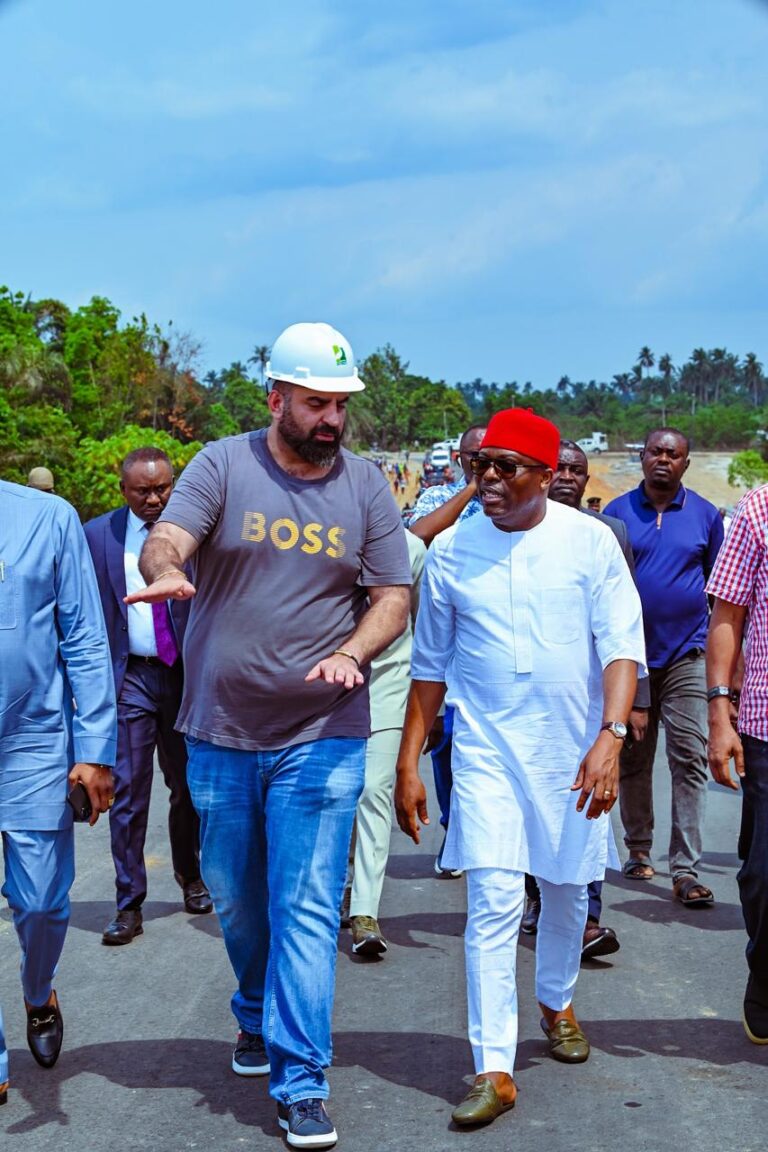
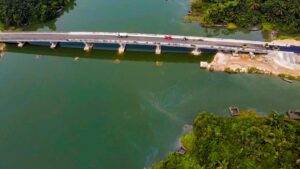
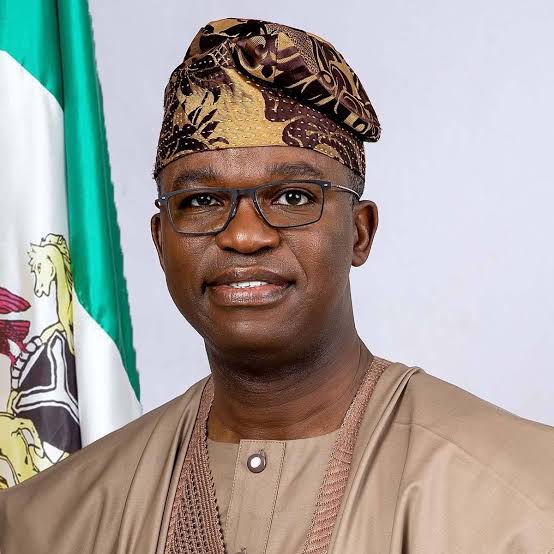
Rivers State Governor, Siminalayi Fubara, on Friday inspected the completed Agba–Ndele Bridge linking communities in Abua and Emohua Local Government Areas, expressing satisfaction with the progress made on the project.

Speaking during the inspection, the governor recalled monitoring the construction of the bridge last year and noted that its completion marks a significant milestone for residents of the affected communities.

“I am really happy that today you can see for yourself that the bridge is fully completed,” Fubara said.

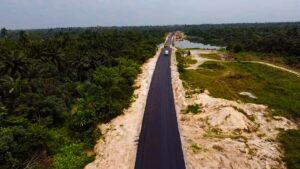
He, however, stressed that the full impact of the project would only be realised after the completion of the remaining 14 kilometres of the Ndele–Omofor–Agba–Ndele road.

“The beauty of this job will be appreciated more when the other 14 kilometres are done. But so far, I want to commend the contractor, Setraco, for a good job,” he added.

Fubara, who was accompanied on the inspection by the Commissioner for Works, Prof. Temple Nwofor, praised the contractor, Setraco Nigeria Limited, for its commitment and professionalism in delivering quality work within schedule.

The contractor assured the state government that the remaining section of the road would be completed before the end of May.
Consequently, the governor said the official inauguration of the bridge would be delayed until the road project is fully completed to ensure maximum benefit to the communities.

“So far, I feel happy that we are doing our best to improve on what we met in government,” Fubara said, reiterating his administration’s commitment to sustained infrastructure development across the state.

Delta, NDDC, Chevron Move To Kick-Start 70km Omadino–Escravos Coastal Road Project

0

The Delta State Government has reaffirmed its commitment to partnering with the Niger Delta Development Commission (NDDC) and Chevron Nigeria Limited to commence work on the proposed 70.75-kilometre Omadino–Okerenkoko–Escravos Road and bridges in the riverine axis of the state.

Governor Sheriff Oborevwori gave the assurance when the Managing Director of the NDDC, Samuel Ogbuku, led the commission’s executive management on a courtesy visit to Government House in Asaba ahead of a tripartite meeting involving the state government, NDDC and Chevron.

The governor expressed satisfaction with ongoing discussions among the partners on the strategic infrastructure project expected to link Warri with key oil-producing coastal communities, saying the road would enhance economic activities, improve security and boost infrastructure development across the region.

Oborevwori described the proposed road and bridges as a major transformational project for the state’s riverine communities and reiterated the state government’s readiness to collaborate with both organisations to ensure its delivery.

“I want to say that Delta State is ready to partner with the NDDC and Chevron to deliver this project,” the governor said, adding that his administration would continue to pursue partnerships that translate into tangible development for residents.

He explained that the tripartite arrangement would accelerate the project’s implementation while strengthening collaboration for sustainable development in the Niger Delta.
Oborevwori also emphasised the need for accountability, transparency and cost-effective service delivery in executing major infrastructure projects. He therefore urged both the NDDC and Chevron to determine the overall financial value of the project and outline their respective contributions.

According to him, the Omadino–Okerenkoko–Escravos Road and bridges represent a strategic corridor that would enhance economic connectivity and promote peace among communities in the riverine areas.

The governor further stressed the importance of engaging a reputable construction firm for the project and disclosed that a technical team would be constituted to work with the NDDC and Chevron on the project’s design, cost evaluation and stakeholder commitments.

Earlier, Ogbuku said the proposed road and bridges would span about 70.76 kilometres, beginning from Omadino near the Opumami Canal and terminating at Escravos.
He explained that the project would consist of a 66.54-kilometre main alignment, a 4.22-kilometre spur to Kokodiagbene and 29 bridges linking several oil-producing and coastal communities across Warri South and Warri South-West local government areas.

Ogbuku reaffirmed the commission’s commitment to partnerships aimed at improving the quality of life of people in the Niger Delta, noting that similar collaborations had delivered key projects in the region.

He cited the partnership between the NDDC and Shell Petroleum Development Company of Nigeria Limited on the 25.7-kilometre Ogbia–Nembe Road as a model that could be replicated for other major infrastructure initiatives.

The NDDC chief described Escravos as an area of strategic economic importance and said the commission was mobilising stakeholders to support the timely execution of the road project to improve accessibility to the area.
Also speaking, the Director of Operations and Chief Operating Officer of Chevron Nigeria Limited, Segun Kuteyi, reaffirmed the company’s commitment to the project.

Kuteyi said the road would connect Warri directly to Escravos, the hub of oil and gas activities in Delta State, adding that its completion would boost oil production and economic activities in the area.

He noted that the project would also provide direct access to major oil and gas facilities, including Chevron’s Escravos Export Terminal, while enhancing security response, socio-economic activities and relations among communities in the Niger Delta.

Iran Sets Conditions For Ending War With US, Israel As Conflict Enters 13th Day

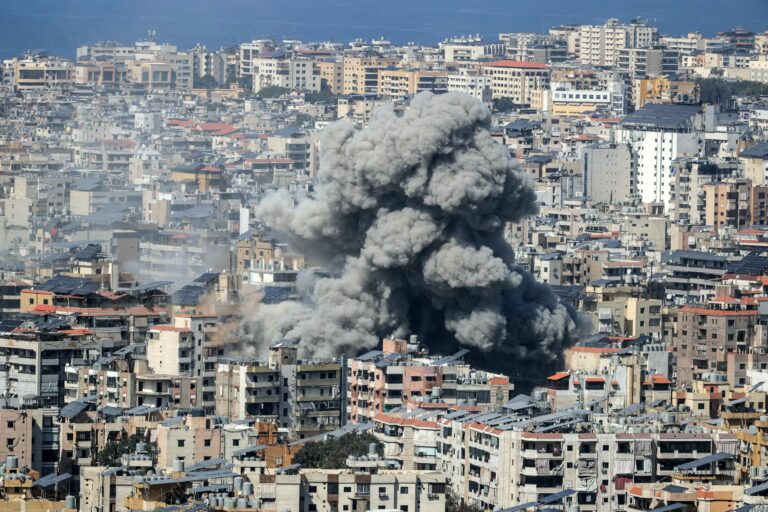
Iran has outlined three conditions for ending its war with the United States and Israel, as the conflict entered its 13th day on Thursday.

Posting on X, Iran’s president, Masoud Pezeshkian, said Tehran remained committed to peace but insisted that the war – which he said had been “ignited by the Zionist regime and the US” – could only end if Iran’s rights were recognised, reparations were paid and international guarantees were provided to prevent future aggression.

“Talking to leaders of Russia and Pakistan, I reaffirmed Iran’s commitment to peace in the region,” Pezeshkian wrote. “The only way to end this war – ignited by the Zionist regime and US – is recognising Iran’s legitimate rights, payment of reparations, and firm international guarantees against future aggression.”

The war began on February 28, when the United States and Israel launched coordinated airstrikes on Iranian military and strategic targets across several cities, including the capital Tehran.

According to Iranian authorities, the attacks resulted in heavy casualties, including the death of Iran’s former Supreme Leader Ali Khamenei, along with senior military commanders and civilians.

In response, Iran launched missile and drone attacks on Israeli territory and on locations across the Middle East believed to host U.S. military assets. These retaliatory strikes have significantly widened the conflict and raised fears of a broader regional war.

Rising Tensions and Threats
Iran’s military leadership has warned that any further attacks—especially on Iranian ports or infrastructure—could trigger large-scale retaliation. Iranian officials stated that no port, economic center, or strategic location in the Persian Gulf would be beyond their reach if the conflict escalates further.

Meanwhile, diplomatic contacts are ongoing. Pezeshkian said he has discussed the situation with leaders from Russia and Pakistan, reiterating Iran’s claim that it is open to peace if its conditions are met.

The war is already affecting the wider region and global markets. Oil supply disruptions and attacks on shipping routes have caused concern over energy security and rising fuel prices worldwide. The conflict has also drawn in regional actors and increased fears of a prolonged Middle East war.

County Grammar School Ikwerre/Etche Old Boys Elect New Executive Council

0

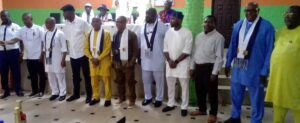
Members of the Old Boys Association of County Grammar School Ikwerre/Etche, Rivers State, have elected a new national executive committee to steer the affairs of the body for the next three years, pledging to sustain and expand the development initiatives recorded in recent years.

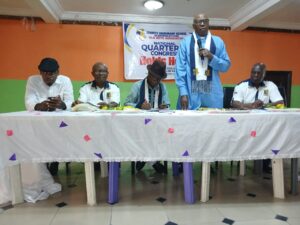
Newly elected President, Chief Hon Vincent Erinwo making his remarks.

The new leadership emerged during the association’s first Quarterly National Congress in 2026, held last Sunday at the premises of El Domino School along Rumuolumeni Road in Port Harcourt, Rivers State.

At the congress, members elected a 11-member executive committee and tasked them with consolidating on the achievements of the outgoing leadership while advancing the welfare of members and the growth of their alma mater.

Elected officers include Chief Hon. Vincent Erinwo as National President; Dr. Edwin Ojirika as Vice President; Dr. Godwin Iheanacho as National Secretary; and Mr. Ezebunwo Amadi as Assistant Secretary.

Others are Mr. Nwachukwu Chukwuka, Treasurer; Mr. Echeazu Jonathan, Financial Secretary; Senibo Celestine Ogolo, Public Relations Officer; Mr. Nlem Philip Chinedu, Assistant Public Relations Officer; and Mr. Joseph E. Nwoha, Provost.

Immediate past President, Venerable Bekwelem Wabara addressing the congress

The immediate past National President, Venerable Bekwelem Wabara (Rtd.), and Prince Hon. Charles Bekee, a former commissioner in Rivers State, were named ex-officio members.

Speaking after taking the oath of office, Chief Erinwo, who was returned unopposed, commended the outgoing executive for what he described as a “superlative performance.”

He assured members that the new leadership would build on the solid foundation laid by previous administrations while introducing fresh initiatives aimed at strengthening the association and improving the welfare of members.

Erinwo also pledged that his administration would prioritise programmes that would contribute to the advancement of the school and promote stronger engagement among members across different sets.

Earlier, the former national president, Wabara, thanked members for their cooperation and support throughout his tenure.

He highlighted some of the achievements of his administration to include the hosting of the first national convention of the association, the production of a constitution, and the expansion of membership across different sets.

Wabara urged members to increase their participation in the activities of the association in order to support academic excellence and the continued development of their alma mater.

He also renewed his call on the Rivers State Government to urgently give the renowned institution a face-lift through massive renovation befitting a school of such magnitude.

The quarterly national congress, hosted by the 1979 set, attracted hundreds of old boys from various graduating sets, including members of the 1958 set, regarded within the association as the “Ancients.”

Edun Warns Of Inflation Risk From Middle East War, Unveils Measures To Protect Nigerians

0

The Federal Government has said it is putting measures in place to shield Nigerians from the potential economic shocks arising from the ongoing Middle East conflict, particularly rising inflation and transportation costs.

Minister of Finance and Coordinating Minister of the Economy, Wale Edun, disclosed this during an appearance on Politics Today on Channels Television, warning that disruptions in global oil markets could affect petroleum prices, fertilisers and other key commodities in Nigeria.

Edun explained that while the crisis could trigger inflationary pressure and higher transport costs, the Federal Government was already implementing policies aimed at reducing energy expenses and protecting citizens from the worst effects.

“There will be a direct impact on the price of petroleum products, on the price of fertilisers and a few other things that will be impacted. Inflation will be impacted, transport costs will be impacted,” he said.

According to him, rising transport costs often have a ripple effect on the economy, increasing the cost of goods and services, which makes it necessary for the government to take proactive steps to mitigate the impact.

He revealed that President Bola Ahmed Tinubu had approved an expansion of the compressed natural gas conversion programme to reduce Nigerians’ dependence on petrol.

The minister said the government would provide 100,000 additional compressed natural gas conversion kits to enable more vehicles switch from petrol to the cheaper alternative.

“One of the ways in which the President immediately announced was 100,000 extra CNG conversion kits to enable vehicles convert to CNG fuel, which is maybe 25 to 30 per cent the cost of PMS,” Edun said.

“That is the way you decisively move to bring down an important cost, because transport costs permeate so many other areas.”

Edun, however, noted that the government would avoid direct interference in the pricing of petroleum products except under extreme circumstances.

“We will be looking for measures that we can immediately implement other than interfering with an orderly market price. Given the policies and the philosophy of this government, intervention in pricing will always have to be a last resort,” he said.

He added that Nigeria’s growing domestic refining capacity places the country in a relatively strong position to manage potential disruptions in global supply chains.

“Our demand is about 50 million litres per day and the refiners have said they can meet that demand. So we are in a relatively strong position if we can make that a reality on a consistent basis. We must say thank God for our refining capacity,” he said.

The minister also expressed concern over uncertainties surrounding global energy supply routes, particularly the Strait of Hormuz, a key international shipping channel for crude oil.
“We are not sure what will happen in places like the Strait of Hormuz or how much disruption there will be or how long supply chains will be affected,” Edun said.

He noted that although higher global oil prices could increase Nigeria’s revenue, the gains might be partly offset by higher freight and transportation costs.

“One we benefit from selling at a higher price, but then the costs are also higher. Freight costs and transportation costs also rise, so you have to see whether the gains are more than the losses,” he said.

Edun further warned that global inflationary pressures triggered by the conflict could force countries to raise interest rates.

“If inflation raises its head, the world will rise to fight it because it hurts the common man and the most vulnerable in society more than anybody else,” he added.

The minister, however, assured Nigerians that the government would continue to prioritise policies that protect recent gains in food prices and inflation while supporting domestic food production.

“Our intention is to keep food affordable, working with the farmers and ensuring a steady and adequate supply of food. We have achieved some progress to date and we will continue to take proactive steps to sustain it,” he said.


Tinubu Appoints Yuguda CBN Deputy Governor, Taps Deep Financial, Regulatory Experience

0

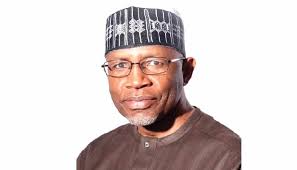
President Bola Ahmed Tinubu has approved the appointment of Lamido Abubakar Yuguda as Deputy Governor of the Central Bank of Nigeria (CBN), bringing decades of experience in monetary policy, financial regulation and global economic institutions to the apex bank.

The appointment, announced on Wednesday by the President’s Special Adviser on Information and Strategy, Bayo Onanuga, is subject to confirmation by the Nigerian Senate.

According to Onanuga, the nomination is in line with Section 8(1) of the Central Bank of Nigeria Act, 2007.
Yuguda’s appointment follows the recent redeployment of the former Deputy Governor, Bala Bello, who was named Special Adviser to the President on Political Economy.

President Tinubu charged the new appointee to bring renewed dedication, professionalism and commitment to the role, particularly at a time when Nigeria’s monetary authorities are working to strengthen economic stability and restore investor confidence.

Yuguda is widely regarded as a seasoned financial technocrat with extensive experience spanning central banking, international finance and capital market regulation.

His most recent public office was as Director-General of the Securities and Exchange Commission (Nigeria), where he served from 2020 to 2024, overseeing regulatory reforms and strengthening oversight of Nigeria’s capital market.

An alumnus of Ahmadu Bello University, Zaria, Yuguda graduated in 1983 with a Bachelor of Science degree in Accountancy. He later obtained a Master’s degree in Money, Banking and Finance from the University of Birmingham in the United Kingdom in 1991.

He is a Fellow of the Institute of Chartered Accountants of Nigeria (ICAN) and also holds the globally recognised Chartered Financial Analyst (CFA) designation.

Yuguda began his professional career in 1984 at the Central Bank of Nigeria as a Senior Supervisor in the Foreign Operations Department, marking the start of a long career within the country’s monetary authority.

He later gained international exposure as an economist in the Africa Department of the International Monetary Fund (IMF), where he worked from 1997 to 2001 before returning to the CBN.

During his time at the apex bank, he held several strategic roles and eventually served as Director of the Reserve Management Department, a position he occupied for six years before retiring from the CBN in 2016.

With experience spanning reserve management, international finance, monetary operations and capital market regulation, analysts say Yuguda’s return to the apex bank could strengthen policy coordination between Nigeria’s financial markets and its monetary authorities.

Senator Faults FCT’s N2.2trn 2026 Budget Over Missing Revenue Sources

0

The senator representing Lagos East, Tokunbo Abiru, has raised concerns over the proposed N2.2 trillion 2026 budget of the Federal Capital Territory (FCT), saying the document lacks a clear breakdown of revenue sources to fund the spending plan.

The appropriation bill was transmitted to the Nigerian Senate on Tuesday as an executive proposal for consideration and passage.

The budget estimate allocates N165.7 billion for personnel costs, N378.2 billion for overheads and N1.6 trillion for capital expenditure.

However, Abiru argued that the proposal failed to indicate how the funds would be generated, warning that the omission could create distortions during implementation.
According to him, the budget ought to clearly identify the revenue streams that will finance the spending plan.

Despite the observation, the Senate leadership merely noted his concerns as lawmakers moved swiftly to advance the bill.

The proposal, which was read at plenary on Tuesday, passed both first and second readings in the same sitting and was subsequently referred to the Senate Committee on the FCT for further legislative work.

The committee is expected to submit its report next week for consideration and possible passage.

Among those pushing for the speedy passage of the budget are the President of the Senate, Godswill Akpabio; Deputy Senate President, Barau Jibrin; Senate Leader, Opeyemi Bamidele; and Senate Whip, Mohammed Monguno.

Iran To Boycott 2026 World Cup Over Tensions With U.S., Israel

0

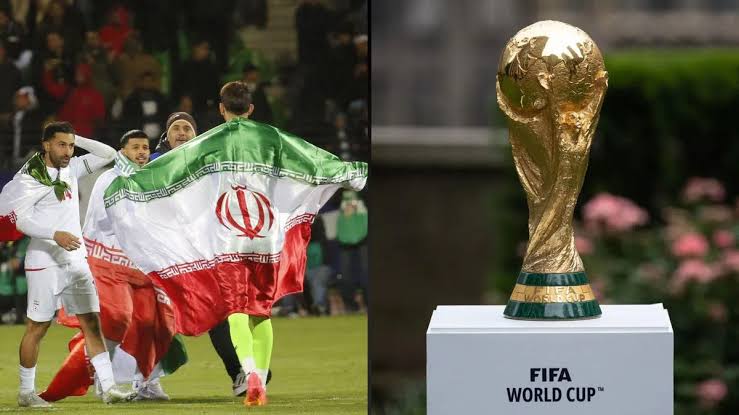
Iran may boycott the 2026 FIFA World Cup following escalating tensions with the United States and Israel, according to the country’s Sports Minister, Ahmad Donyamali.

Donyamali disclosed in an interview with state television that the country was considering withdrawing from the global football tournament scheduled to be jointly hosted by the United States, Mexico and Canada in 2026.

The development follows heightened geopolitical tensions after the reported assassination of Iran’s Supreme Leader, Ali Khamenei, in what Iranian authorities described as a joint military operation by the United States and Israel.

Iran later retaliated with strikes on U.S. military bases in the Middle East, further deepening the crisis between the countries.

Speaking on the possibility of Iran’s participation in the tournament, Donyamali said the country had no plans to take part under the prevailing circumstances.
“Since this corrupt government assassinated our leader, we have no conditions under which we can participate in the World Cup,” he said.

“In view of the malicious measures taken against Iran, two wars were forced upon us within eight or nine months and several thousand of our people were killed. Therefore, we definitely have no possibility of participating in this way.”

Iran had secured qualification for the 2026 tournament in March last year after finishing among the top two teams in Group A of the Asian qualifiers.

Despite earlier assurances from FIFA that preparations for the tournament were on course, Iran was absent at a planning summit for participating nations held recently in Atlanta.

If the country follows through with the threat, it would join a small group of nations that have previously boycotted the World Cup despite qualifying, including Uruguay, Turkey, India and France.

Fubara swears In Five Commissioners, Demands Top Performance

0

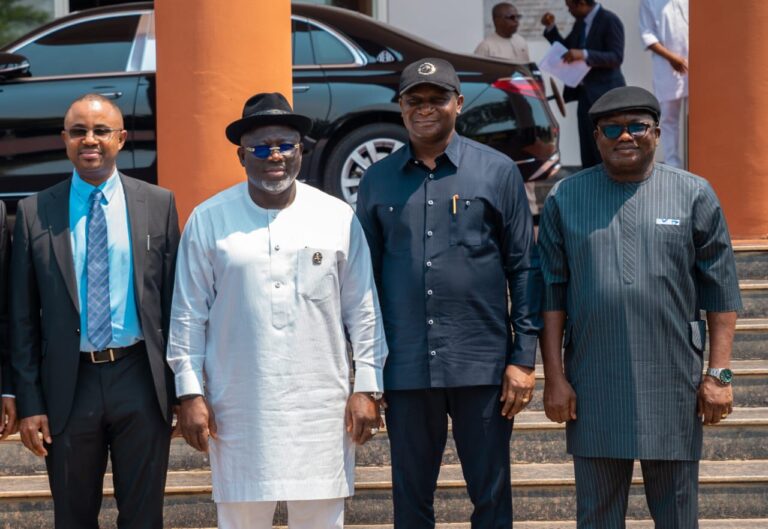
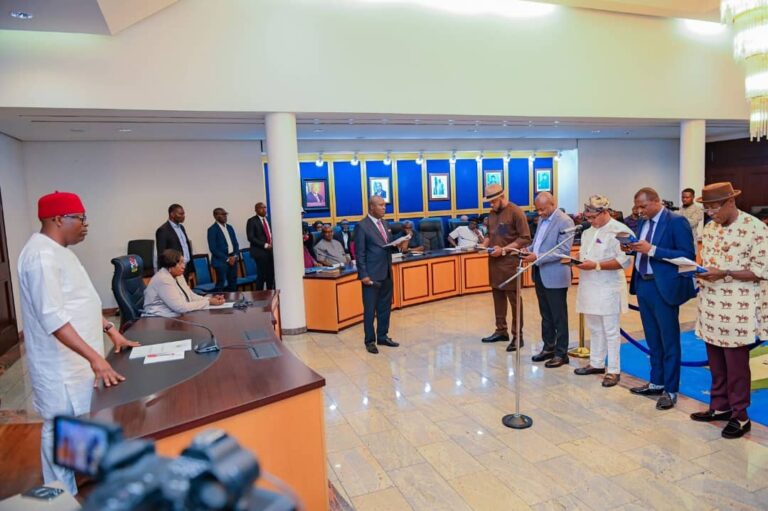
Governor of Rivers State, Siminalayi Fubara, on Wednesday swore in five newly appointed commissioners and urged them to give their best in service to the state.

Speaking during the ceremony at the Rivers State Government House, Fubara said the rigorous screening conducted by the Rivers State House of Assembly had already prepared the commissioners for the task ahead.

The governor said the lawmakers had thoroughly outlined the duties and responsibilities of the appointees during the screening process, stressing that he expected nothing short of excellent performance from them.

“I believe that going through one of the most rigorous screening exercises is enough to say that those of you who succeeded are fit and ready to deliver for our dear state,” Fubara said.
“So there is no further charge. The screening was the charge. I wish you the best, as I expect nothing less than the best from you.”

The five commissioners sworn in are Tonye Bellgam, Prof. Temple Nwofor, Dr Peters Nwagor, Lekue Kenneth and Amairigha Edward Hart.

They had earlier been screened and confirmed by the Rivers State House of Assembly on Monday.

The oath of allegiance and oath of office were administered by the Chief Registrar of the High Court of Rivers State, David D. Ihua‑Maduenyi.

The ceremony was held at the Executive Council Chamber of Government House in Port Harcourt.

Dangote Refinery Slashes Petrol, Diesel Prices After Recent Hikes

0

The Dangote Petroleum Refinery has reduced the ex-depot prices of petrol and diesel, offering marginal relief to marketers and bulk buyers after a series of sharp increases in recent days.
In a new pricing template issued on March 10, the refinery cut the gantry price of Premium Motor Spirit (PMS), also known as petrol, by ₦100 to ₦1,075 per litre, down from ₦1,175 per litre.

The refinery also announced that PMS supplied through coastal distribution channels will now sell at ₦1,050 per litre, reflecting a slight adjustment linked to maritime distribution costs.

Similarly, the price of Automotive Gas Oil (AGO), commonly known as diesel, was reduced to ₦1,430 per litre at the gantry, representing a ₦190 drop from the previous ₦1,620 per litre.

The refinery noted that the quoted gantry prices exclude statutory charges imposed by the Nigerian Midstream and Downstream Petroleum Regulatory Authority (NMDPRA).

The latest price cut comes barely a day after the refinery raised the ex-depot price of petrol to ₦1,175 per litre amid volatility in global crude oil prices and rising production costs.

Within the past week, the refinery had adjusted prices several times, pushing PMS from about ₦995 per litre to ₦1,175 per litre, while diesel rose to ₦1,620 per litre, reflecting shifts in international crude markets and replacement costs.

Industry analysts say the latest downward adjustment could ease cost pressures on petroleum marketers and depot operators who have struggled with fluctuating loading prices.

Market watchers, however, note that the extent to which the reduction will translate into lower retail pump prices across the country will depend on depot margins, transportation costs and distribution dynamics within Nigeria’s downstream petroleum sector.

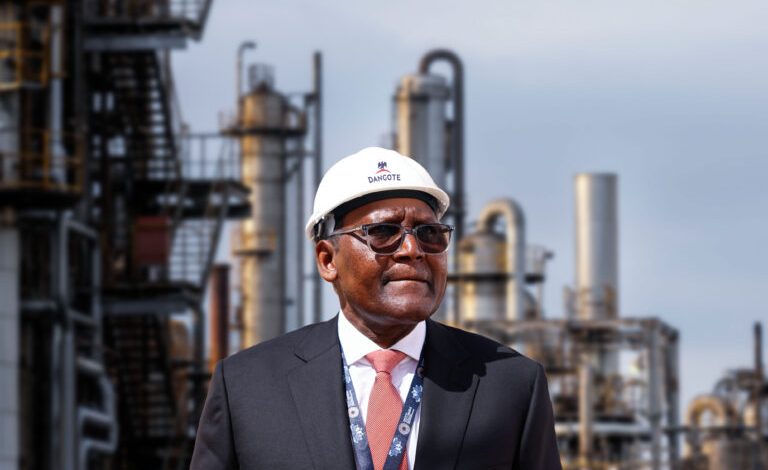
The refinery, owned by the Dangote Group and operated by billionaire industrialist Aliko Dangote, began operations in 2024 with a capacity of about 650,000 barrels per day and is expected to significantly reduce Nigeria’s reliance on imported refined petroleum products.