Home Blog Page 57

NDDC, Burna Boy Forge Alliance To Accelerate Niger Delta Development

0

The Niger Delta Development Commission (NDDC) has signalled readiness to partner with Grammy-winning artiste Burna Boy to drive infrastructure and socio-economic development across the Niger Delta, with a focus on his hometown in Rivers State.

The Commission’s Managing Director, Samuel Ogbuku, gave the assurance on Wednesday during a courtesy visit by the Afrofusion star to the NDDC headquarters in Port Harcourt.

Ogbuku reaffirmed the agency’s commitment to its mandate, disclosing plans to construct an access road to the artiste’s community in Ahoada West Local Government Area, alongside other intervention projects aimed at improving living standards across the region.

He urged the global music icon to channel his international influence into regional development by investing in the Niger Delta and staging events locally, noting that such initiatives would stimulate economic growth.

“We need a symbiotic relationship that benefits the region. Bring your global appeal home so the Niger Delta can share in your success,” Ogbuku said, describing the singer as one of the region’s most valuable cultural exports.
In his remarks, Burna Boy—born Damini Ogulu—reiterated his commitment to uplifting his community, expressing optimism that collaboration with the NDDC would deliver tangible transformation.

He highlighted critical infrastructure gaps in the area, including poor road access, inadequate healthcare facilities and lack of potable water, and called for urgent intervention.

Also speaking, his father, Samuel Ogulu, commended the Commission’s leadership for ongoing efforts to reposition the Niger Delta and lauded its proactive development agenda.
Senior officials present at the meeting included the Executive Director, Finance and Administration, Alabo Boma Iyaye, and the Executive Director, Corporate Services, Ifedayo Abegunde, among others.

Insecurity: Calls Grow Louder For FG To Scrap NYSC Scheme

0

Pressure is mounting on the administration of to discontinue the (NYSC) amid rising insecurity across the country, with parents, civil society groups and concerned citizens warning that the programme has become increasingly dangerous for young graduates.

The growing outcry follows a series of reported kidnappings, killings and violent attacks involving corps members deployed to various parts of Nigeria.

Haruna Danjuma, National President of the Parent-Teacher Association of Nigeria, voiced deep concern over the safety of participants, insisting that the Federal Government must either guarantee adequate protection or suspend the scheme.

“It is painful to lose a child,” Danjuma said, noting that parents invest years in raising and educating their children only to face the risk of losing them during the mandatory service year.

He stressed that the government bears full responsibility for the welfare of corps members, adding that state governments and security agencies should be required to formally guarantee their safety before any deployment.

“If the government cannot protect these children, then the NYSC should be scrapped because its value is already defeated,” he said.

Echoing similar concerns, Isa Sanusi, Executive Director of , described the fears of parents as justified, criticising the handling of security incidents involving corps members.

“There is no justification for a situation where families are left to negotiate ransom payments after their children are deployed by the state,” Sanusi said, adding that NYSC authorities must take full responsibility for participants’ safety throughout the service year.

The renewed debate was triggered by the abduction of a corps member, Musa Abba, a graduate of the Federal University Gusau, who was kidnapped while travelling to Sokoto to commence his service.

Reports indicate that he was assaulted by his captors after his family failed to meet a N10 million ransom demand.
In a related development, a Nigerian professional, Dr. Opadonu Moses Olufemi, has petitioned the National Assembly, urging urgent legislative intervention to address the worsening security risks facing corps members.

The petition, addressed to both chambers of the legislature, calls for a comprehensive review of the NYSC framework in light of prevailing security challenges.

Among the proposals are a temporary suspension of interstate deployment, decentralisation of orientation camps, and the posting of corps members within their home states or nearby regions to reduce exposure to dangerous travel routes.

The petition also recommends the introduction of comprehensive insurance coverage, including life, health and kidnapping protection, as well as the review of any policy that shifts security or ransom responsibilities to parents.
Dr. Opadonu warned that compulsory national service without adequate safeguards places families under severe emotional and financial strain, while eroding public trust in national institutions.

He further urged lawmakers to initiate a full legislative inquiry into the operations of the NYSC, stressing that the safety and dignity of Nigerian youths must take precedence.

“The nation’s future leaders must not be exposed to avoidable danger in the name of unity,” the petition stated, calling for swift and decisive reforms to align the scheme with Nigeria’s current security realities.

IAUE Postpones 44th Convocation Over ICT Glitch

0

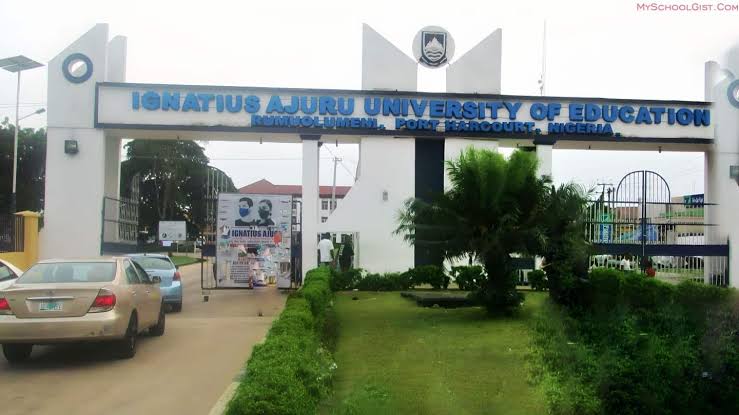
Ignatius Ajuru University of Education (IAUE) has postponed its 44th convocation ceremony earlier fixed for March 27 and 28, 2026, amid indications that technical challenges within its Information and Communication Technology (ICT) unit disrupted the processing and upload of undergraduate results.

In a terse public notice, the university confirmed that the ceremony, scheduled for Friday, March 27, and Saturday, March 28, will no longer hold, urging the general public to disregard the earlier dates. The institution also expressed regret over any inconvenience caused by the development.

Findings suggest that the postponement is linked to the non-functionality of the university’s ICT unit, which has reportedly hindered the timely upload and processing of results for graduating students—an essential requirement for the convocation.

Efforts to get official clarification on the situation were unsuccessful, as the institution’s Public Relations Officer, Ngozi Okiridu, could not be reached. Calls to her line were not answered as of the time of filing this report.

The development has left affected students and stakeholders in uncertainty, with the university stating only that a new date for the convocation will be announced in due course.

NYSC Bars Prospective Corps Members with Graduation Date Discrepancies from Camp Registration

0

The National Youth Service Corps (NYSC) has directed prospective corps members (PCMs) to resolve any inconsistencies in their graduation dates during the online registration process, warning that failure to do so will prevent registration at orientation camps.

In a notice shared via its official communication channels, the scheme emphasised that discrepancies between the date of graduation uploaded on the NYSC portal and that stated on a candidate’s Statement of Results must be corrected before reporting to camp or obtaining a state code number.

The NYSC advised affected candidates to promptly liaise with their respective Student Affairs Officers (SAOs) to rectify such issues, stressing that no concessions would be granted at orientation camps.

“Prospective corps members with discrepancies in their dates of graduation will not be registered at the orientation camp,” the scheme stated, urging strict compliance to ensure a seamless mobilisation process.

The directive underscores the agency’s commitment to maintaining accurate records and streamlining the registration process, while cautioning candidates against proceeding to camp without first resolving any identified anomalies.

Panic On Abuja–Kaduna Rail As Train Derails, Passengers Injured

0

Several passengers sustained injuries on Monday morning after a train operating along the Abuja–Kaduna rail corridor derailed, forcing the service to halt midway through the journey.

The passenger train, travelling from Kaduna to Abuja, failed to reach its destination as scheduled following the disruption on the busy rail line linking the Federal Capital Territory with Kaduna State.

A source within the Nigerian Railway Corporation (NRC), who spoke on condition of anonymity because he was not authorised to comment on the matter, confirmed the incident.
Passengers onboard said the incident occurred suddenly, triggering panic inside the coaches as the train came to an abrupt stop.

Some travellers reported hearing a loud bang before the train jolted violently, throwing several occupants off their seats and causing confusion inside the compartments.

Eyewitness accounts suggested that the Abuja-bound train may have collided with another train along the corridor, forcing rail operations to pause temporarily while the situation was assessed.

It was gathered that a number of passengers sustained injuries, with some suffering cuts and bruises after being flung against seats and metal fittings inside the train.

A social media user, Sada Malumfashi, who claimed to be among the passengers, described the frightening moment shortly after disembarking.
Posting on his X account, he said the sudden jolt caught many passengers unprepared and caused panic inside the train.

“Just dropped from the Kaduna–Abuja train. We heard a loud bang and the train jolted to a stop, flinging people across.

Passengers got hit and most are bleeding and severely injured. The train was delayed for about 30 minutes and resumed slowly to Kubwa. No communication from @info_NRC on anything,” he wrote.

According to him, the train remained stationary for about 30 minutes before the journey resumed slowly towards Kubwa, a suburb on the outskirts of Abuja.

When contacted, NRC spokesperson, Callistus Unyimadu, confirmed the development and said an official statement would be issued.

UNICEF Opens Fully Funded Global Internship Programme For Students, Graduates

1

In a move aimed at nurturing the next generation of development professionals, the (UNICEF) has opened applications for its fully funded global internship programme, offering students and recent graduates the opportunity to gain hands-on experience while contributing to humanitarian work that impacts children worldwide.

The internship programme, run by UNICEF, provides structured professional development opportunities across multiple countries and offices. Successful applicants will work alongside experienced professionals on projects that support UNICEF’s mission of promoting and protecting the rights and well-being of children.

According to UNICEF, the programme is designed to help emerging professionals develop practical skills in areas such as research, programme support, data analysis, communications, and advocacy. Interns are placed in different offices depending on available vacancies and their academic or professional backgrounds.

Who Can Apply

The opportunity is open to candidates aged 18 and above who are currently enrolled in an undergraduate, graduate, or PhD programme, or who have graduated within the past two years. Applicants must demonstrate strong academic performance and proficiency in at least one of UNICEF’s working languages—English, French, or Spanish.

Candidates are also expected to have familiarity with the working language of the country office where they are applying. Individuals with immediate relatives employed by UNICEF, particularly within the same reporting line, are not eligible for the programme.

Duration and Work Structure

The internship duration ranges from six to 26 weeks. Depending on the role and office, the internship may be full-time or part-time, and may take place either remotely, in person, or through a hybrid arrangement.

UNICEF notes that interns are integrated into active projects and teams, allowing them to contribute meaningfully to ongoing programmes and initiatives.

Financial Support
Unlike many internship opportunities, the UNICEF internship programme includes financial support designed to help participants manage costs associated with the experience.

Selected interns receive a monthly stipend to cover living expenses. In cases where relocation is required, UNICEF may also provide a lump-sum payment to assist with travel and visa costs. Additional grant funding may be available for certain internship-related projects.

Interns also benefit from mentorship by experienced UNICEF staff and the opportunity to collaborate with multicultural teams across the organization’s global network.

Application Process
Interested candidates are required to apply through the UNICEF careers portal, where available internship positions are posted regularly. Applicants must create an online profile, submit a curriculum vitae, and provide a tailored cover letter aligned with the specific role.

UNICEF advises applicants to monitor the vacancies page frequently, as deadlines vary depending on the position.

Building a Career in Global Development

While the internship does not guarantee permanent employment, participation in the programme is widely regarded as a valuable stepping stone for careers within the United Nations system and the broader humanitarian sector.

Past interns say the experience offers both professional growth and meaningful engagement with global challenges.
“UNICEF offered me the opportunity to grow both professionally and personally, and work on global issues that matter,” said Rudolf Larnyoh, a former human resources intern in New York.

Another intern, Eve Woogen, who worked remotely with UNICEF Pacific in Fiji, said she felt “fully integrated and supported” by her team despite the virtual setting.

For many young professionals seeking to enter international development, the UNICEF internship programme represents a rare opportunity to combine learning with real-world impact.

Tinubu Mourns Ex-Super Eagles Star Henry Nwosu, Hails 1980 AFCON Hero

0

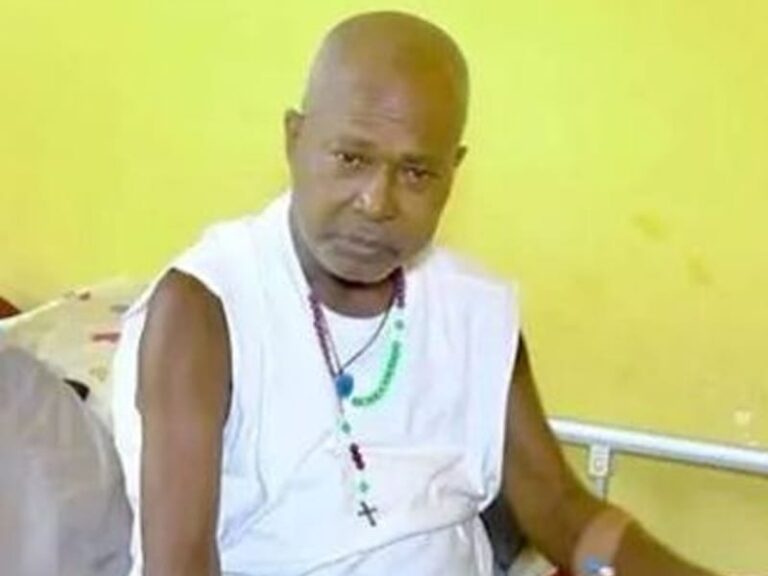
President Bola Ahmed Tinubu has expressed condolences to the family of former Nigerian international Henry Onyemanze Nwosu, who died on Saturday at the age of 62.

In a statement issued by his Adviser on Information and Strategy, Bayo Onanuga, the President joined Nigeria’s football community in mourning the passing of the former Super Eagles midfielder.
Tinubu described Nwosu as an exceptionally gifted footballer whose creativity and artistry on the pitch left a lasting imprint on Nigerian football.

He recalled the late midfielder’s remarkable performance as a 17-year-old member of the then Green Eagles squad that won the 1980 Africa Cup of Nations — Nigeria’s first continental triumph.

The President also noted Nwosu’s decade-long service to the national team, during which he featured prominently in subsequent editions of the continental tournament, including the 1982 Africa Cup of Nations, 1984 Africa Cup of Nations and 1988 Africa Cup of Nations.

According to Tinubu, the late playmaker brought pride and joy to Nigerians through his performances and inspired many young people across the country to pursue excellence in sports.

He further acknowledged Nwosu’s contributions to the development of football in Nigeria after his playing career, noting that his dedication to the game helped nurture the next generation of talents.
The President said Nwosu would be remembered not only for his brilliance on the field but also for the enduring impact he made on Nigerian football.

Tinubu prayed for the repose of the departed football legend and asked God to grant comfort to his family, friends and the wider sporting community during this period of mourning.

Don’t Film Nigerians Without Consent, NDPC Warns Content Creators

0

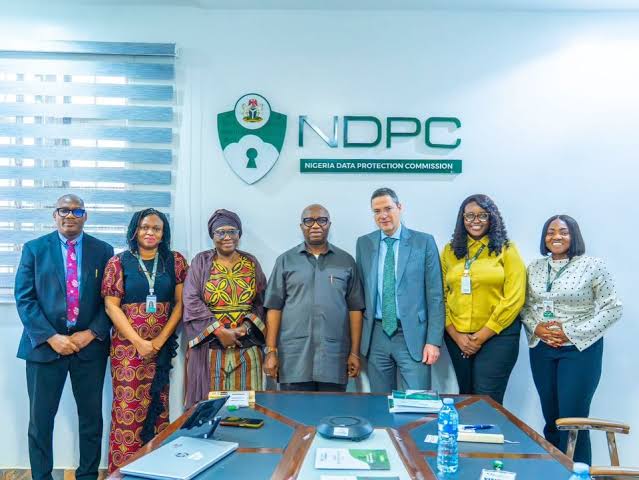
The Nigeria Data Protection Commission (NDPC) has cautioned content creators against filming or photographing unsuspecting members of the public and posting such materials on social media without their consent, warning that the practice could violate citizens’ privacy rights under Nigerian law.

In a statement issued on March 13, the commission expressed concern over a growing trend in which individuals record members of the public for online content, particularly in Lagos State, and share the footage across social media platforms.

The regulator said the practice raises significant privacy concerns and may amount to unlawful processing of personal data.

According to the commission, the actions contravene the right to informational self-determination guaranteed under Section 37 of the 1999 Constitution of the Federal Republic of Nigeria and provisions of the Nigeria Data Protection Act 2023.

“The attention of the Nigeria Data Protection Commission has been drawn to the activities of individuals who take pictures and video footage of unsuspecting members of the general public and share same on social media platforms. These acts violate the rights of citizens to informational self-determination,” the statement said.

The commission referenced a specific case involving a content creator who allegedly records people along roadsides in Lagos to produce what is described as “reality show” style content.

NDPC noted that such activities could constitute an abuse of citizens’ privacy rights under the guise of entertainment, stressing that the processing of individuals’ images in such circumstances requires their consent unless there is another lawful basis for doing so.

“Preliminary investigation by the Commission reveals that this wilful invasion of citizens’ privacy serves neither a public nor a legitimate interest,” the statement added, noting that individuals captured in such videos do not reasonably expect their images to be broadcast to a global audience by unknown persons.

The National Commissioner and Chief Executive Officer of the commission, Vincent Olatunji, also urged major social media platforms to strengthen enforcement of their community guidelines to curb the misuse of personal data online.

He specifically directed digital platform operators including TikTok, X and Meta Platforms to step up monitoring and enforcement measures to prevent harm caused by unlawful data processing.

The commission warned that failure by platform owners to act promptly in addressing harmful content could attract regulatory sanctions under the data protection law.

“For the avoidance of doubt, where a platform owner fails or neglects to act timeously in addressing harms, the Commission will not hesitate to impose appropriate sanctions under the Nigeria Data Protection Act,” the statement said.

It further stressed that individual content creators remain responsible for their actions and could face criminal prosecution for violating the privacy rights of Nigerians.

The NDPC was established following the enactment of the Nigeria Data Protection Act in 2023 to regulate compliance with data protection laws and safeguard the privacy rights of individuals within Nigeria’s expanding digital economy.

Court Upholds Police Tinted Glass Policy, Dismisses NBA Suit … SAN Vows To Continue Legal Battle

0

The Federal High Court in Abuja has dismissed a suit filed by the Nigerian Bar Association (NBA) challenging the enforcement of the tinted glass permit policy by the Nigeria Police Force.
Delivering judgment on Thursday, Justice Suleman Liman of Court 11, Federal High Court, Maitama, Abuja, dismissed in its entirety Suit No. FHC/ABJ/CS/182/2025 instituted by the Incorporated Trustees of the NBA on behalf of legal practitioners and the motoring public against the Inspector-General of Police and the Nigeria Police Force.

The court resolved all issues in favour of the defendants, holding that the NBA failed to establish the alleged illegality of the tinted glass permit policy.
Justice Liman ruled that the use of tinted glass on vehicles is not a constitutionally guaranteed right and that the police have the authority to regulate it in the interest of public safety.

According to the court, the association failed to discharge the burden of proof required to substantiate its claims and did not demonstrate that the policy violated the provisions of Chapter IV of the 1999 Constitution or the Fundamental Rights Enforcement Procedure Rules.

The judge further held that the claims presented by the NBA did not disclose any reasonable cause of action recognisable in law.

Justice Liman observed that the concerns raised by the association appeared to be based largely on institutional convenience rather than any legally enforceable right.

“The claims of the plaintiff amount to mere assertions lacking sufficient legal foundation,” the court held, adding that the police cannot be restrained from implementing measures aimed at protecting citizens and maintaining public safety.

The suit arose following the reintroduction of the tinted glass permit policy by the Inspector-General of Police under the Motor Vehicles (Prohibition of Tinted Glass) Act, which requires vehicle owners to obtain permits before using tinted glass.

The NBA had argued that the policy was unconstitutional and susceptible to abuse, warning that it could encourage harassment and extortion by police officers.

Reacting to the judgment, Senior Advocate of Nigeria, Kunle Edun, who prosecuted the case on behalf of the NBA, described the decision as unsurprising.

Edun said he would reserve comments on what he described as unpleasant developments that occurred in court during the proceedings.

He disclosed that Justice Liman had earlier declined to hear the NBA’s ex parte motion seeking an interim injunction when he presided as the vacation judge, citing limited time left in his tenure as vacation court judge.
Despite the setback, Edun said the legal battle against the tinted glass permit policy was far from over.

According to him, he and another lawyer, John Aikpokpo-Martins, are prosecuting similar suits in other courts and would continue to challenge the policy until it is halted.

“We will fight it till the end to stop the police that were already set to earn billions of naira every month from the tinted glass permit enforcement,” Edun said.

He alleged that the police resorted to enforcing the tinted glass permit policy as a major revenue source after President Bola Tinubu stopped the practice of hiring out police officers as escorts and guards for private individuals.

Edun clarified that the dismissal of the NBA’s suit was not responsible for the current suspension of the policy’s enforcement.
He explained that the suspension followed subsisting court orders issued by other courts.

According to him, the Federal High Court, Warri Division, in the case of John Aikpokpo-Martins v. IGP and another, directed parties to maintain the status quo pending determination of the matter.

Similarly, the High Court of Justice of Delta State sitting at the Orerokpe Judicial Division, in Suit No. HOR/FHR/M/31/2025 between Israel Joe and the Inspector-General of Police, granted an interim injunction restraining the police from implementing or enforcing the tinted glass permit policy pending the hearing and determination of the substantive suit.

The Delta State High Court, presided over by Justice Joe Egwu, also restrained the police from stopping, harassing, arresting, detaining or extorting citizens under the guise of enforcing the policy.

The court further barred the respondents from conducting government business through the Parkway Projects Account, described as a private contractor’s account, pending the determination of the suit.

Edun noted that pursuant to the orders of the Warri Federal High Court and the Delta State High Court, the Inspector-General of Police, through the then Force Public Relations Officer, ACP Benjamin Hundeyin, issued press statements announcing the suspension of enforcement of the tinted glass permit policy.

He commended Aikpokpo-Martins for what he described as his commitment to pursuing cases aimed at promoting justice and a fair society.

Edun also acknowledged Olajide Abiodun, Vice Chairman of the NBA Ikorodu Branch, for instituting a similar action in Lagos State.

While the Federal High Court in Abuja has dismissed the NBA’s challenge, the tinted glass permit policy remains suspended due to subsisting court orders from other jurisdictions, with several related suits still pending before the courts.


FAAC Shares N1.894tr Revenue To FG, states, LGs For February

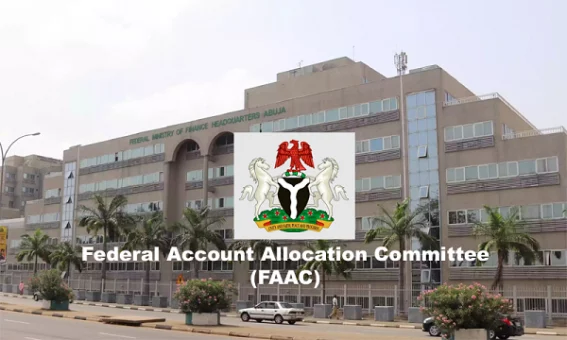
The Federation Account Allocation Committee (FAAC) has distributed a total of N1.894 trillion as Federation Account revenue for February 2026 to the Federal Government, state governments and local government councils.

The revenue was shared at the March 2026 FAAC meeting held in Abuja, according to a statement issued by the Director of Press and Public Relations in the Office of the Accountant-General of the Federation (OAGF), Bawa Mokwa.

The statement said the N1.894 trillion distributable revenue comprised N1.274 trillion from statutory revenue and N619.119 billion from Value Added Tax (VAT).

A communiqué issued at the meeting indicated that total gross revenue of N2.230 trillion was available in February. From this amount, N77.302 billion was deducted as cost of collection, while N259.078 billion was allocated for transfers, refunds and savings.

According to the communiqué, gross statutory revenue stood at N1.561 trillion in February, representing a decline of N395.138 billion compared with the N1.957 trillion recorded in January.

Similarly, gross VAT revenue for February was N668.450 billion, which was N414.710 billion lower than the N1.083 trillion generated in January.

From the N1.894 trillion distributable revenue, the Federal Government received N675.088 billion, while state governments got N651.525 billion.

Local government councils received N456.467 billion, while N110.949 billion, representing 13 per cent derivation from mineral revenue, was allocated to oil-producing states.

The communiqué further showed that from the N1.274 trillion distributable statutory revenue, the Federal Government received N613.174 billion, states received N311.010 billion, while local government councils got N239.776 billion.

The N110.949 billion derivation revenue was also drawn from the statutory revenue component and shared among benefiting states.

From the N619.119 billion distributable VAT revenue, the Federal Government received N61.912 billion, states received N340.515 billion, while local government councils got N216.692 billion.

The communiqué also noted that Oil and Gas Royalty as well as Excise Duty recorded significant increases during the month, while Petroleum Profit Tax (PPT), Hydrocarbon Tax (HT), Companies Income Tax (CIT), Capital Gains Tax (CGT), Stamp Duties (SDT) and Value Added Tax (VAT) declined substantially.

It added that Import Duty and the Common External Tariff (CET) recorded marginal increases during the period.