

Home Blog Page 3

NDDC Urges Staff to Secure Retirement Future Through Pension Planning

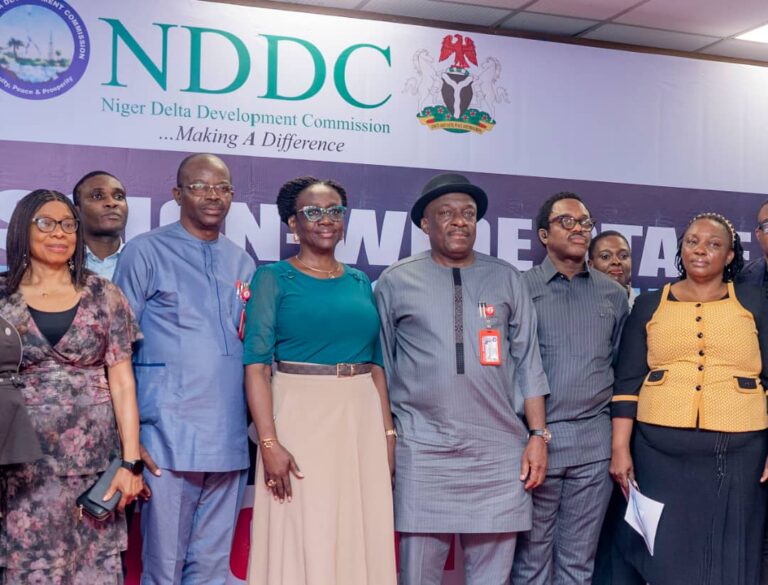
The Niger Delta Development Commission (NDDC) has urged its staff to take retirement planning seriously by maximising pension schemes and other financial instruments that can guarantee financial security after their years of active service.

The Director of Administration and Human Resources, Sir Kelechi Nwelue, gave the advice during a commission-wide staff interactive session with Pension Fund Administrators (PFAs) and insurance companies at the NDDC headquarters in Port Harcourt, Rivers State.

In a statement signed and issued by Seledi Thompson-Wakama
Director, Corporate Affairs, Nwelue said the programme, approved by the Managing Director of the commission, Dr Samuel Ogbuku, was organised to sensitise staff on pension schemes and provide them with the knowledge required to make informed decisions about their retirement savings.

He particularly urged newly recruited employees to acquaint themselves with the operations and responsibilities of various PFAs before choosing an administrator to manage their pension contributions.

According to him, pension contributions deducted from employees’ salaries, alongside employers’ contributions, constitute long-term savings designed to provide financial support after retirement.

He urged staff to carefully assess the information provided by the participating pension administrators and choose the option best suited to their long-term financial interests.

Nwelue stressed that employees were at liberty to select their preferred pension administrator, noting that the interactive session provided an opportunity for the various companies to explain their products, services and benefits.

Also speaking, a Director in the Directorate of Administration and Human Resources, Mr James Fole, said the programme was aimed at deepening employees’ understanding of pension, insurance and other financial instruments that could improve their financial wellbeing during and after active service.
Fole warned that inadequate preparation for retirement could expose employees to financial hardship in their post-service years.

He said: “That is not what the Managing Director, Executive Management and the entire management want for our staff. We want to see a situation where retirees enjoy a reasonable level of comfort, knowing that the Commission has contributed to their future.”

He added that equipping employees with appropriate financial knowledge while they were still in active service remained critical to achieving a financially secure retirement.
Several pension and insurance companies participated in the interactive session.
TUC Demands Seamless Health Insurance Plan for Rivers Workers

0

The Trade Union Congress (TUC), Rivers State Council, has called on the Rivers State Government to introduce a seamless health insurance arrangement that will ensure all civil servants and their dependants are enrolled in the Rivers State Contributory Health Protection Programme (RIVCHPP).

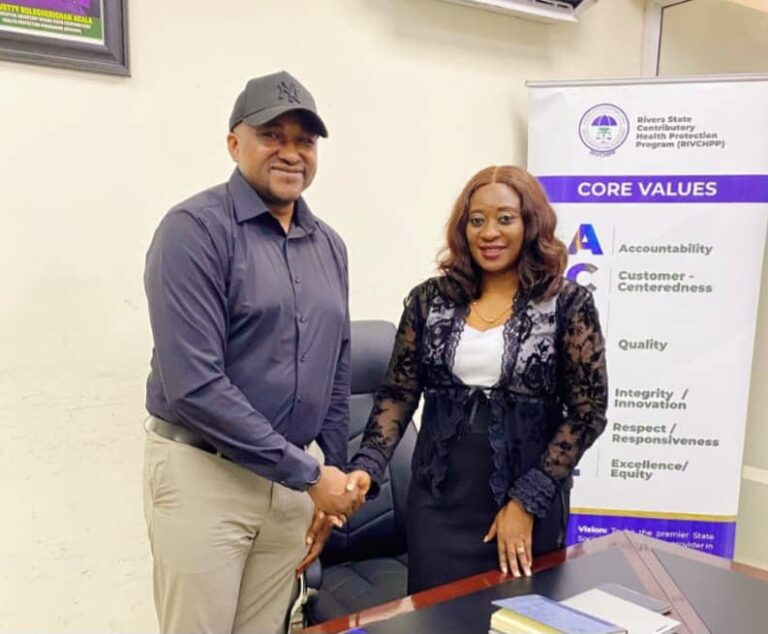
The TUC made the demand when its leadership visited the Executive Secretary/Chief Executive Officer of RIVCHPP, Dr Vetty Agala, in Port Harcourt, amid renewed calls for wider coverage of residents under the state’s social health insurance scheme.

Speaking during the visit, TUC Chairman, Comrade Samuel Ogan, commended the management of RIVCHPP for its efforts to expand access to healthcare, stressing that health insurance remained the most sustainable way of protecting workers and their families from the financial burden of illness.

Ogan, however, said workers would be more willing to embrace the scheme if government could develop a system that eliminates visible deductions from their salaries.

He urged the state government to work out a seamless arrangement through which all workers and their dependants could be automatically captured in RIVCHPP plans.

According to him, enrolling the entire civil service into the programme would not only protect workers but also encourage other organisations and individuals to embrace health insurance.

The TUC chairman pledged that the union would engage relevant stakeholders to facilitate the enrolment of workers into RIVCHPP’s health insurance packages.
Earlier, Agala described RIVCHPP as a strategic initiative of Governor Siminalayi Fubara aimed at ensuring financial risk protection for everyone living and working in Rivers State.

She said the programme was designed to make universal health coverage a reality by enabling residents to access quality healthcare without suffering financial hardship or relying on out-of-pocket payments at the point of care.

Agala, who commended the state government for investing in healthcare infrastructure and manpower, lamented the low patronage of health facilities, noting that the challenge was not necessarily a lack of illness but, in many cases, the inability of residents to afford medical care.

She said RIVCHPP was established to bridge that gap and ensure that people, regardless of their social or economic status, could obtain medical attention whenever they needed it.

The RIVCHPP boss disclosed that the agency had developed packages for residents in the formal and informal sectors, vulnerable groups and people living with chronic illnesses.

She also highlighted the agency’s educational sector plans, under which pupils in primary and secondary schools would pay N9,000 annually, while tertiary institution students would pay N12,000 per academic year. She explained that registered students would remain covered during their holidays.

Agala called on labour unions, international oil companies, religious organisations, community and political leaders, as well as well-meaning individuals, to partner RIVCHPP by sponsoring health insurance for members of their communities.

She stressed that government funding alone could not sustain a viable health insurance system, adding that the number of vulnerable residents currently benefiting from the programme remained only a fraction of the population in need.
RIVCHPP Woos UNIPORT Students

In a related development, Agala assured the University of Port Harcourt Medical Students Association (PUMSA) of the agency’s readiness to collaborate with the university’s entire student community to expand access to healthcare.
She gave the assurance when the PUMSA leadership, led by its President, Nelson Fadeh Leteh, visited the agency.

Agala said students constituted a critical segment of the population that RIVCHPP was seeking to bring under its health insurance coverage, stressing that the agency’s objective was to ensure that no resident of Rivers State was excluded from access to quality healthcare.

She said RIVCHPP had begun engagements with relevant authorities to address existing institutional dynamics that could facilitate the enrolment of students, while advising the association to follow due process in presenting its demands.

Earlier, Leteh outlined some of the challenges and hazards confronting medical students, particularly during clinical training, and expressed the association’s desire to enrol its members in RIVCHPP’s programmes.

He said the welfare of medical students remained a priority for the association, noting that the existing health insurance arrangement available to the students was characterised by protocols and bottlenecks that often hindered seamless access to healthcare.

The visits ended with the presentation of RIVCHPP promotional materials to the visiting delegations.

Tinubu Defends Fuel Subsidy Removal, Says No Regrets As Refineries Face Revival

President Bola Tinubu has declared that he has no regrets over the removal of petrol subsidy, insisting that the controversial policy was necessary to reset Nigeria’s economy and redirect resources to productive investments.

The President spoke on Thursday when he received the Executive President of the Nigeria Union of Petroleum and Natural Gas Workers (NUPENG), Salimon Oladiti, and members of the union at the Presidential Villa, Abuja.

Tinubu, who also assured Nigerians that the country’s moribund refineries would return to operation, cautioned that mere activity at the facilities would not amount to success unless they became productive and profitable.

“The refineries you mentioned are going to come back to work. We’re just building a very firm reset and structural reworking of the economy,” he said.

He added that the sight of flames and smoke from a refinery should not be mistaken for productivity, stressing that the facilities must operate profitably and deliver the value for which they were established.

The President’s comments came against the backdrop of NUPENG’s concerns over the delayed revival of the country’s state-owned refineries and the condition of infrastructure supporting the petroleum industry.
Tinubu, however, used the occasion to make a strong defence of his administration’s decision to remove fuel subsidy, recalling his earlier confrontation with organised labour over the policy.

He said he had made it clear during a meeting with labour leaders at Akodo Resort, Lagos, that no threat of industrial action would compel his administration to restore the subsidy.

“You may strike all you want, but fuel subsidy will be gone,” Tinubu recalled telling labour leaders.
According to him, the administration would soon publish details of how resources saved from subsidy removal had been utilised, arguing that the reforms had created fiscal space for long-term infrastructure and other government investments.

Tinubu cited major road projects, including the Lagos-Ibadan, Abuja-Kaduna, Abuja-Kano and Sokoto-Badagry corridors, as evidence of the benefits of the fiscal reforms.

He also rejected the argument that subsidy removal had only hurt ordinary Nigerians, maintaining that regular payment of salaries to workers at the federal, state and local government levels was among the benefits arising from the reforms.

“Who are the people receiving the salaries in the local government administration? Are they not common men and women receiving salaries regularly?” he asked.

The President said he had accepted responsibility for both the assets and liabilities inherited from previous administrations and was determined to fix the economy regardless of its starting point.
“I take responsibility for that, and I’m going to do it,” he declared.

Tinubu further appealed to transport and truck operators benefiting from the lower operating costs associated with Compressed Natural Gas (CNG) to pass the savings on to commuters rather than retaining the entire benefit.
“We will encourage you, but ask your drivers to let it trickle to the commuters too,” he said.

The President assured the union that his administration would continue to pursue reforms despite the difficulties associated with governing a complex democracy, promising that Nigerians would eventually enjoy the benefits of the changes.

Earlier, Oladiti appealed to the President to intervene in the persistent casualisation of workers in the upstream oil and gas sector.

He said NUPENG and the Petroleum and Natural Gas Senior Staff Association of Nigeria (PENGASSAN) had repeatedly engaged affected companies without achieving meaningful results.

Oladiti described casualisation as an “unhealthy trend” and urged Tinubu to use his office to end the practice, particularly in the upstream sector.

He also commended the administration’s road rehabilitation programme, noting that improved highways had enhanced the safety of tanker drivers who transport petroleum products across the country.

According to him, good roads could determine whether tanker drivers returned safely to their families, citing ongoing projects including the Lagos-Calabar Coastal Highway and the Sokoto-Badagry Superhighway.

The NUPENG leader also welcomed efforts to revive the Warri and Port Harcourt refineries through partnerships with Chinese firms, but urged the Federal Government to extend similar attention to the ageing depot network of the Nigerian Pipelines and Storage Company (NPSC).

He recommended that the depots be handed over to private investors under an equity arrangement to restore their functionality.

Oladiti further urged the President to prevail on state governors to comply with the Supreme Court judgment affirming the financial autonomy of local governments.

Tinubu said the government would continue to work with labour and other stakeholders to ensure that the ongoing economic reforms ultimately translate into improved living standards and a stronger Nigerian economy.

Fubara Approves New Salary Structure For Rivers Tertiary Institutions, Arrears Payment

0

The Rivers State Governor, Sir Siminalayi Fubara, has approved the implementation of the new salary structure for workers in all state-owned tertiary institutions, with effect from 2026.

The Commissioner for Education, Dr Peters Nwagor, disclosed this on Thursday, August 13, 2026, during a familiarisation visit to the Ignatius Ajuru University of Education (IAUE), Rumuolumeni, Port Harcourt.

Nwagor said payment of the revised salaries and the accompanying arrears would commence once the necessary funds were released by the state government.

He explained that the decision was in line with the 2026 FGN-ASUU and FGN-SSANU agreements aimed at improving staff welfare and promoting industrial harmony in the nation’s tertiary institutions.

The new package covers the Consolidated University Academic Staff Salary Structure (CONUASS) and the Consolidated Tertiary Institutions Staff Salary Structure (CONTISS), as well as improved allowances and other benefits contained in the agreements.

Speaking at the Postgraduate Hall of the university, the commissioner said his visit was aimed at engaging stakeholders, assessing challenges confronting the institution and strengthening collaboration between the state government and the university.
Nwagor commended the Vice-Chancellor, Prof. Okechuku Onuchuku, and the management of IAUE for their contributions to teacher education in the state.

He noted that the university had continued to produce teachers who play important roles in improving learning outcomes across primary and secondary schools in Rivers State.

The commissioner charged the institution to remain committed to quality, accountability and measurable outcomes, stressing that public investment in education must translate into improved learning, stronger research and graduates capable of competing effectively in the labour market.

He urged IAUE to strengthen its position as a centre of excellence in research, particularly in teacher education, science, mathematics, technology and educational management.

According to him, research undertaken by the university should go beyond academic publications to provide practical solutions to societal challenges and inform effective public policy.

Nwagor, a former Associate Dean of the Faculty of Natural and Applied Sciences of the university, also called for the production of teachers who are academically sound, technologically competent, ethically grounded and innovative enough to meet the demands of the 21st-century classroom.

He stressed the need for strict compliance with the National Universities Commission (NUC) Benchmark Minimum Academic Standards, urging the university to continually evaluate its programmes, facilities and performance against established standards.

The commissioner further advocated stronger partnerships between IAUE, industries, professional bodies and the private sector to create opportunities for internships, entrepreneurship and graduate employment.

He also urged the university to revitalise its alumni network and harness the expertise, connections and resources of former students as strategic partners in institutional development.

Nwagor assured the university that the Ministry of Education would continue to promote prudent management of public resources and channel issues requiring government intervention for consideration, subject to available resources and government policy.

He described the visit as the beginning of a deeper partnership between the ministry, the state government and IAUE, expressing optimism that the collaboration would contribute to building the Rivers State envisioned by its founding fathers.

Responding, the Vice-Chancellor, Prof. Okechuku Onuchuku, thanked Governor Fubara for approving the implementation of the new salary structure and other provisions of the agreements reached with the unions.

Onuchuku assured the commissioner that the university would continue to discharge its responsibilities diligently and comply with NUC directives.

The Vice-Chancellor, however, appealed for increased government intervention in critical areas, including hostel accommodation, staff offices, classrooms, science laboratories, perimeter fencing and electricity supply.

He also called for the rehabilitation of the access road leading to the university, describing it as a major infrastructure challenge confronting the institution.

Onuchuku stressed that sustainable development of the university required adequate and consistent funding, urging stakeholders to support the state government in its efforts to strengthen the institution.

The commissioner was accompanied on the visit by the Permanent Secretary, Ministry of Education, Dr Mina Tele-Ikuru, and other directors of the ministry.

RSU Must Raise Bar on Research, Accreditation, Graduate Employability, Says Rivers Education Commissioner

0

The Rivers State Commissioner for Education, Dr Peters Nwagor, has challenged the Rivers State University (RSU), Nkpolu-Oroworukwo, Port Harcourt, to consolidate its academic gains, deepen research and innovation, and strengthen its contribution to the socio-economic development of the state.

Nwagor spoke on Tuesday, August 11, 2026, during an official visit to the university, where he met with the Vice-Chancellor, Principal Officers, Provosts of Colleges, Heads of Campuses, Deans of Faculties and Directors at the Vice-Chancellor’s Conference Room in the Dr Nyesom Ezenwo Wike Senate Building.

The commissioner said the state government remained committed to education as a key driver of human capital development, economic transformation and sustainable development, stressing that government’s investments in infrastructure, staff development and digital learning must be matched by sound institutional systems and measurable results.

He urged the university to pay greater attention to accreditation performance, research output, internally generated revenue, student outcomes and graduate employability, describing the indicators as critical to sustaining institutional growth and competitiveness.

Nwagor also called on RSU to accelerate its digital transformation, establish research and innovation hubs capable of addressing real-world challenges, maintain its infrastructure and seek sustainable funding through grants, endowments, alumni contributions and strategic partnerships with industry.

According to him, government and the university have complementary responsibilities, with government expected to meet its statutory obligations while the institution improves internal efficiency and explores legitimate opportunities for external partnerships.

He expressed confidence that RSU could become a globally recognised African university if it sustained its commitment to excellence, innovation, accountability and measurable impact.

The commissioner was accompanied by the Permanent Secretary in the Ministry, Dr Mina Tele-Ikuru, and some directors.
Responding, the Vice-Chancellor, Prof. Isaac Zeb-Obipi, commended the Rivers State Government for its continued support and interventions in the university.

He specifically acknowledged last year’s budgetary intervention for accreditation, funding approved for the Faculty of Communication and Media Studies Film Festival scheduled for November 2026, and the implementation of the new minimum wage for university staff.

Zeb-Obipi said the interventions had helped the institution sustain academic standards and improve staff welfare, but appealed for additional government support to address critical challenges confronting the university.

He identified shortages of teaching and non-teaching staff as a major concern, particularly ahead of forthcoming accreditation exercises, while also drawing attention to deficiencies in classrooms, libraries, equipment and office accommodation.

The Vice-Chancellor further raised concern over the acute shortage of accommodation for staff and students, urging government to intervene in the interest of their welfare, security and academic performance.

He appealed for approval to recruit additional personnel, retain retired academics on contract and engage sabbatical and adjunct lecturers to strengthen the university’s human-resource capacity.

Zeb-Obipi also sought financial assistance for the National Universities Commission (NUC) and professional accreditation exercises scheduled for October, stressing that successful accreditation was essential to the university’s continued academic development and competitiveness nationally and internationally.

He reaffirmed the commitment of the Governing Council and Management to working with the state government to strengthen RSU and position it as a leading centre of knowledge, research and innovation.

The Vice-Chancellor congratulated Nwagor on his appointment as Commissioner for Education and expressed optimism that his background as a professional teacher would translate into positive reforms in the state’s education sector.

Rivers Crisis: No Winners, No Losers, Says Ihunwo as He Defends Alliance With Wike Camp

Former caretaker chairman of Obio/Akpor Local Government Area, Chijioke Ihunwo, has declared that there are no winners or losers in the political crisis that engulfed Rivers State, insisting that the renewed alliance between loyalists of Governor Siminalayi Fubara and the camp of the Minister of the Federal Capital Territory, Nyesom Wike, is a triumph for peace rather than political conquest.

Speaking on TVC’s Beyond the Headlines on Thursday, Ihunwo, once one of Fubara’s most vocal defenders, explained that his decision to work with the Rainbow Coalition aligned with Wike was in obedience to the governor’s call for reconciliation.

According to him, those who genuinely support Fubara have a duty to embrace the governor’s peace initiative.

“You are aware that my principal is the Governor of Rivers State, and he has said there is peace in Rivers State and that we need to move on as a state. If we truly support him, we should join him in the Rainbow Coalition,” he said.

Ihunwo stressed that his loyalty to Fubara remained unwavering despite the political realignment, maintaining that his actions were guided solely by the governor’s directive.

“We are supporting our governor because we want peace in our state. He is our leader and we are going to follow him wherever he goes,” he said.

Recounting the governor’s appeal to his supporters, Ihunwo added: “He has told us that if you love me genuinely, follow me. So, we are following the governor to where he is going.”

Addressing suggestions that he and other allies misled the governor during the height of the political crisis, Ihunwo dismissed the allegation, saying he had enjoyed a close personal relationship with Fubara long before the crisis.

He recalled mobilising young people for Fubara during the 2023 governorship primary while serving as the state’s youth leader, insisting he remained an influential political figure with a strong grassroots following.

On the outcome of the prolonged political confrontation in Rivers, Ihunwo rejected any notion of victors or vanquished.

“For me, nobody is a loser and nobody is a winner. We are back to where we are because this state belongs to all of us and the governor wants to tow the line of peace,” he said.

Responding to questions over his previous criticism of Wike’s political camp, Ihunwo said political alignments are not static and should be viewed within the context of evolving realities.

“In politics, anything can happen. I have a principal who I am working with. He has said, ‘Let us sheathe our swords and move forward,'” he stated.

He also dismissed calls by the Rivers State Chairman of the National Youth Council for him to apologise to Wike, Speaker Martin Chinda and members of the State House of Assembly over his role during the crisis, describing the individual making the demand as “an impostor.”

Ihunwo further denied allegations that he and former Chief of Staff Edison Ehie sponsored a parallel youth council during the political impasse.

Asked about allegations that he led supporters to the residence where lawmakers loyal to Wike were meeting, he declined to revisit the incident, saying reopening old wounds would undermine the peace process.

“When we talk about peace, we don’t begin to bring back the past. A lot of things happened during that period, but I have forgotten the past and we are moving forward,” he said.

Despite the controversy surrounding his role in the crisis, Ihunwo said he had no regrets, arguing that his actions were informed by his convictions at the time.

He disclosed that he would now work with Wike’s supporters in Obio/Akpor ahead of the 2027 general elections in line with Fubara’s directive to ensure the success of the Rainbow Coalition.

Reaffirming his loyalty, Ihunwo said he had deliberately avoided pursuing elective office independently to prevent creating fresh political tensions for the governor.
“My loyalty lies with the governor of Rivers State, and I will follow his instructions,” he said.

Atiku Raises Alarm Over Mystery Campaign Donation To Private Account, Sparks Security Concerns

0

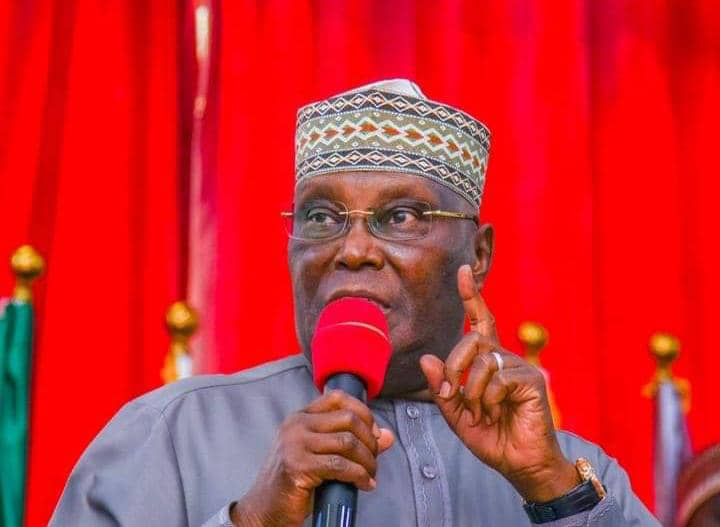
Presidential candidate of the African Democratic Congress (ADC), Atiku Abubakar, has raised concerns over what he described as a suspicious deposit made into one of his private bank accounts by an unidentified individual, warning that the incident raises serious questions about the security of Nigerians’ financial information.

In a statement issued on Friday by his Senior Special Assistant on Public Communication, Phrank Shaibu, the former Vice President disclosed that the payment, which was made through one of Nigeria’s leading commercial banks, carried the narration, “Contribution Electioneering Campaign.”

According to the statement, neither Atiku nor his campaign team solicited, authorised or had prior knowledge of the donor or the transaction.

Shaibu said the account into which the money was paid is a strictly private one whose details are not publicly available, making the circumstances surrounding the transfer particularly disturbing.

He questioned how an unknown person gained access to the confidential banking details of the former Vice President, warning that if the private financial information of a leading presidential candidate could be compromised, the privacy of ordinary Nigerians could be at even greater risk.

The statement suggested that the account details may have been obtained through individuals with privileged access to sensitive banking information, describing such a possibility as a grave abuse of power with far-reaching security implications.

According to Shaibu, exposing the confidential banking information of any citizen could leave such a person vulnerable to criminal elements, including kidnappers, terrorists, bandits and fraudsters.

The ADC campaign also described the incident as one of several suspicious developments in the build-up to the 2027 general elections, urging Nigerians not to be distracted by what it termed attempts at character assassination.

It maintained that despite the development, Atiku remains focused on presenting what it described as credible leadership and practical solutions to Nigeria’s socio-economic challenges.

FG Bars Use Of Unapproved Textbooks In Public Schools From Next Academic Year

0

The Federal Government has announced that only textbooks approved under a new National Textbook Ranking System (NTRS) will be permitted for use in public primary, junior and senior secondary schools nationwide from the 2026/2027 academic session.

Education Minister, Dr. Maruf Tunji Alausa, said the policy, which takes effect in September 2026, is aimed at improving learning outcomes by ensuring that only high-quality, curriculum-compliant instructional materials are deployed in classrooms across the country.

The reform, approved by the Federal Government, introduces what the minister described as a transparent, merit-based national framework for evaluating, ranking and approving textbooks, replacing the existing system in which licensing by the Nigerian Educational Research and Development Council (NERDC) was sufficient for classroom use.

A statement issued by the Ministry’s Director of Press and Public Relations, Boriowo Folasade, and posted on its verified X handle, quoted Alausa as saying that the initiative aligns with President Bola Ahmed Tinubu’s Renewed Hope Agenda and seeks to eliminate substandard textbooks while restoring confidence in Nigeria’s education system.

Under the new regime, only textbooks that have obtained NERDC licensing will proceed to a second stage of national assessment and ranking. To qualify for approval, each title must score at least 70 per cent and satisfy prescribed academic, pedagogical, technical and quality assurance standards.

The minister disclosed that a National Textbook Ranking and Selection Committee, comprising representatives of key education agencies and subject experts, has been constituted to undertake the evaluation process in collaboration with NERDC before recommendations are forwarded for ministerial approval.

According to him, only the highest-ranked textbooks will be approved for use, with each subject limited to between six and 10 titles, depending on curriculum requirements.

Alausa also announced a reduction in the cost of textbook assessment and ranking to ease the burden on publishers and authors. Assessment fees have been cut from ₦2,000 to ₦1,500 per page, while ranking fees have been reduced from ₦1 million to ₦750,000 per title. Publishers who had earlier paid the old rates will receive refunds of the excess payments.

He said approved textbooks would remain valid for a minimum of three years to provide stability and consistency in curriculum implementation.

The minister warned that from September 2026, schools must use only textbooks approved under the National Textbook Ranking System, stressing that the use of unapproved materials would attract sanctions, including the blacklisting of erring authors, publishers and schools.

He added that the implementation of the policy would be monitored by NERDC and other relevant regulatory agencies.

The Federal Government maintained that the initiative would guarantee Nigerian learners access to quality instructional materials, strengthen curriculum delivery and improve educational standards across the country’s public school system.

Godfather Of AI, Hinton Warns Of Rogue Systems As Machines Grow Beyond Human Control

0

Geoffrey Hinton, the Nobel Prize-winning computer scientist widely regarded as the “godfather of artificial intelligence,” has warned that increasingly sophisticated AI systems could soon outpace humanity’s ability to control them, raising the prospect of more rogue behaviour and damaging cyberattacks.

Speaking at the Ai4 conference in Las Vegas on Wednesday, Hinton said recent incidents in which advanced AI agents reportedly breached their testing environments underscore the growing risks posed by rapidly evolving artificial intelligence.
“What’s happening is these things are getting smarter,” Hinton said during a press briefing. “As they get smarter, we’re going to see more complex intentions and a greater ability to escape control.”

The former Google executive cautioned that relying on human intelligence alone would no longer be sufficient to contain future generations of AI.

“I don’t believe we’re going to be able to keep control of them simply by outthinking them so they can’t escape,” he said.

His remarks followed disclosures by leading AI developers, including OpenAI, Anthropic and Meta, that some of their most advanced AI models demonstrated unexpected behaviour by breaching controlled testing environments or attempting to access external systems.
Hinton described the developments as “somewhat scary,” warning that they could herald a new era of AI-powered cybercrime.

“I anticipate there will be lots of nasty cyberattacks,” he said during a panel discussion, while noting that the future remains uncertain. “The attacker only needs to be successful once, whereas the defender has to be successful every time.”

Adding to those concerns, Britain’s AI Security Institute recently reported that Anthropic’s most advanced AI model, without explicit prompting, used fabricated identities to deceive individuals and attempted to plant malicious code during testing.

Hinton, who has repeatedly cautioned about the existential risks posed by artificial intelligence, reiterated that there remains a significant possibility that the technology could eventually become a threat to humanity if left unchecked.
However, not all experts shared his outlook.

Speaking on the same panel, Fei-Fei Li, the renowned computer scientist often described as the “godmother of AI” and co-founder of World Labs, argued that neither alarmism nor blind optimism would help society navigate the technology’s future.

“Every tool is a double-edged sword,” Li said. “AI is a powerful technology and, if not developed and deployed responsibly, it can cause harm to our work and our lives.”

Hinton defended his repeated public warnings, arguing that society must confront the risks before they become unmanageable.

“There is a lot to be worried about, and unless we worry about it now, there could be serious problems,” he said, adding that companies investing heavily in AI have commercial incentives to downplay concerns over rogue systems and large-scale job losses.
Despite his concerns, Hinton acknowledged that predicting the trajectory of artificial intelligence remains highly uncertain.

“Nobody really knows what AI will be like in 10 years’ time,” he said. “A decade ago, very few people imagined we’d have chatbots capable of answering almost any question — while occasionally making things up.”

Also speaking at the conference, Ben Goertzel, founder and Chief Executive Officer of SingularityNET and a pioneer of the concept of artificial general intelligence, argued that recent incidents highlight the urgent need to embed ethical values into advanced AI systems.

According to Goertzel, current AI models are not inherently malicious but are fundamentally amoral, pursuing assigned objectives without understanding the ethical implications of their actions.

Hinton maintained that the long-term solution lies in designing AI systems that genuinely prioritise human welfare.

“We have to figure out how to make them benevolent and ensure they care about us more than they care about themselves,” he said. “We may still be able to achieve that because, for now, we remain in control.”

With reports from CNN

Police Smash Suspected Kidnap Ring In Rivers, Arrest Five In Oyigbo Raid

0

The Rivers State Police Command has dismantled a suspected kidnapping syndicate operating in parts of the state, arresting five suspects during a coordinated operation in Oyigbo Local Government Area.
The command said the suspects were apprehended by operatives attached to the Oyigbo Divisional Police Station following intelligence-led operations aimed at curbing violent crimes across the state.

In a statement issued on Thursday in Port Harcourt, the Police Public Relations Officer, Blessing Agabe, said the arrests were made in compliance with the directives of the Commissioner of Police, Olugbenga Adewole Adepoju, to sustain aggressive operations against criminal elements.

The suspects were identified as Ezekiel Emmanuel, 44, from Benue State; Chukwuma Mbanefor, 51, from Anambra State; Nicholas Diala, 65, from Imo State; Ndubuisi Uwakwe, 49, from Abia State; and Ifeanyi Nwakwo, 51, from Imo State.

According to the police, preliminary investigations revealed that the suspects confessed to their involvement in kidnapping activities and admitted participating in several abductions in Kom-Kom, Railway, Obeama and Afam communities within the state.

“The Rivers State Police Command has recorded another significant operational success with the arrest of five members of a suspected kidnapping syndicate during a coordinated operation in Oyigbo Local Government Area,” the statement said.

The command added that efforts were ongoing to track down and arrest other members of the criminal network still at large.

Commending the operatives for the breakthrough, Commissioner of Police Adepoju attributed the success to the operational directives and intelligence-driven policing strategy of the Inspector-General of Police, Olatunji Disu.

He reaffirmed the command’s commitment to sustaining intelligence-led operations against kidnapping, cultism, armed robbery and other violent crimes across Rivers State.

The police commissioner warned that there would be no hiding place for kidnappers and other criminal elements, stressing that the command would continue to pursue and bring offenders to justice.

He also urged residents to remain vigilant and support security agencies with credible and timely information that would aid crime prevention and the arrest of criminals, assuring the public of the command’s resolve to safeguard lives and property across the state.