

Home Blog Page 179

Rivers LGA Election: Security Agencies Enforce Movement Restriction

The Joint Security Services in Rivers State comprising the Police, Army, Airforce, Navy, State Security Service, Immigration, Customs, Nigeria Security and Civil Defence Corps have assured the combat readiness towards the conduct of the the Saturday’s local government council elections across the state.

To this effect, a movement restriction has been declared by the joint security services in the state starting from Friday 12 midnight to Saturday 6pm during the period of the scheduled Saturdays local government council elections across the state.

The restriction order affects all entries and exit borders across the state and only those on essential duties are permitted to move during the election period.

The order is geared towards achieving a free and fair election across the 23 local government areas of the state as well as to protection of live and property during the period of the election.

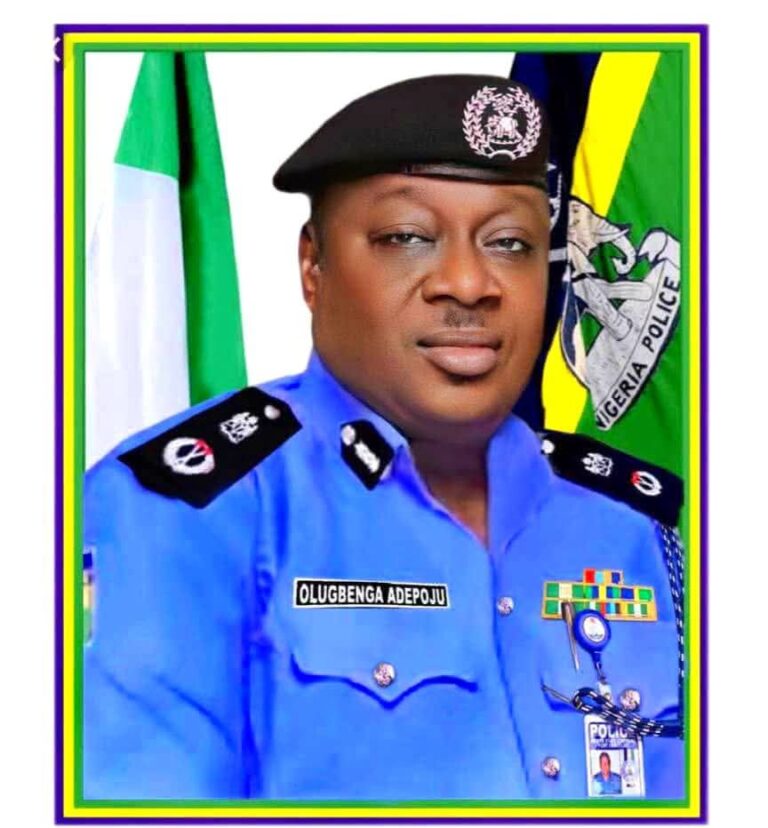
The State Commissioner of Police, CP Olugbenga Adepoju announced this restriction during a joint press briefing between the security Services in the state and the State Independent Electoral Commission (RSIEC) yesterday, to reiterate their preparedness for the conduct of the local government area elections holding on Saturday 30th August, 2025 across the 319 wards in the state.

Adepoju who is the chairman of the group accompanied by other sister service commanders in the state disclosed that the security agencies in the state are fully prepared for the exercise especially in the areas of manpower and security deployment.

“We have done due diligence, we are all synergizing for the election and we will participate fully and want it to be a successful.

Adepoju urged members of security agencies providing security during election to be careful and civil while dealing with members of the public and adhere strictly to the rules and regulations governing the elections.

“We don’t want to hear complaints against security agencies. No arms and weapons carrying at polling boot. VIPs are not allowed to come with their armed security aides to the the polling boots. All hands should be on deck.

“The security operatives and LGA administrators have alot to do to ensure the election is a success” he stated.

He averred that prior to the election, the security services in the state carried a joint operations across some criminal hideouts where many criminals were arrested and cultists chased out of the state.

According to him, all arrangements are have been put in place for a peaceful election and will be achieved.

Adepoju used the opportunity to announce that a joint control room has been designated at the state police command headquarters where each of the security agencies will be represented to receive compliant from members of the public on election related issues.

He further disclosed that the security agents will conduct show of strength across major streets in Port Harcourt and it’s environs to announce their full readiness and strength as well as boast public confidence.

He called on trouble makers to run away from the state because adequate security officers have been mobilised on ground to respond to any distress calls and deal decisively on trouble makers during the election.

Adepoju further enjoined eligible voters to come out and vote for candidates of their choice as their safety and security is assured.

On his part, Chairman of RSIEC, Michael Odey described security as an integral part of the election and assured that the commission will deliver a credible election in the state.

He explained that the commission took assessment of terrian of LGAs in course of preparation for the election taking into consideration riverine and upland terrain.

The RSIEC Boss disclosed that movement of non sensitive materials have started leaving commission to LGAs, while sensitive materials will be dispatched to LGAs accompanied by security agencies today.

He further disclosed that ADHOC staffs for the election have been adequately trained for a smooth exercise.
Seven Months, Real Change: RIVCHPP Transforms Healthcare In Rivers State

0

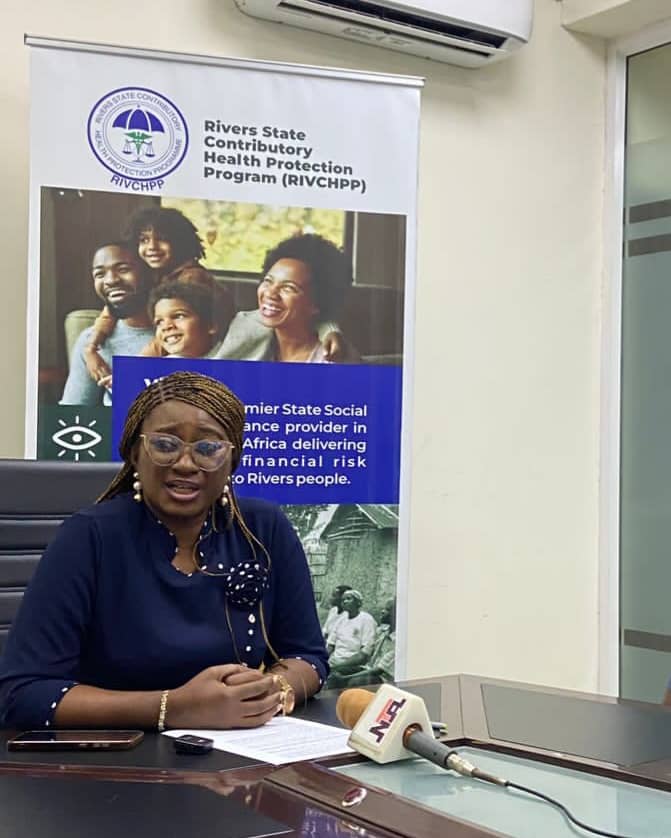
The Rivers State Contributory Health Protection Programme (RIVCHPP) held a press briefing to update the public on the progress achieved over the last seven months under the administration of the Sole Administrator, Vice Admiral (Rtd.) Ibok-Ette Ekwe Ibas. The briefing highlighted improvements in healthcare services, coverage expansion, and community engagement across the state.

Rivers State Sole Administrator, Vice Admiral (Rtd.) Ibok-Ette Ekwe Ibas

Established by law in 2020, the scheme was signed into existence in June 2021 and implemented in February 2024 under the administration of Governor Siminalayi Fubara.

Dr. Vetty Agala, Executive Secretary of RIVCHPP, at the event, presented an overview of the programme’s achievements over the past seven months. Among these were the enrollment of 20,000 pensioners and vulnerable groups—including children under five, pregnant women, the elderly, persons with disabilities, widows, orphans, and those living with HIV or other chronic conditions—as well as 2,500 inmates of the Port Harcourt Correctional Centre. She emphasized that, “those who served the state will not be forgotten,” noting that pensioners now retire with dignity and peace of mind, knowing they are protected health-wise by the government.

Dr. Vetty Agala

The RIVCHPP Governing Board, led by Chief Princewill Chike, was inaugurated during this period and has pledged operational support, including the provision of vehicles and expanded facilities.

Additionally, the scheme announced that all civil servants and their households have now been onboarded into the programme, granting them access to healthcare while protecting them from out-of-pocket medical expenses.

RIVCHPP, entrusted with full responsibility for implementing its health plans, has intensified community outreach programmes and taken steps to improve healthcare financing across Rivers State. To ensure effective service delivery, the programme is currently conducting its Quarter 2 (Q2) data validation across all local governments, aimed at producing accurate health data for informed decision-making.

RIVCHPP, in collaboration with the National Health Insurance Authority (NHIA), has commenced re-accreditation visits to 204 primary healthcare facilities across the 23 local government areas of Rivers State.

Dr. Agala further disclosed plans to train secondary care providers ahead of onboarding general hospitals into the scheme by September 2025, when pensioners and other formal sector players will begin to receive care.

In line with client needs, RIVCHPP is investing in an efficient system with a 24/7 call centre and an electronic claims management platform for healthcare providers, the Executive Secretary noted. She stated that sensitization campaigns and town hall meetings would continue to be the way forward for the programme.

Under the leadership of Vice Admiral (Rtd.) Ibok-Ette Ekwe Ibas, the scheme currently has 110,000 enrollees, with 64,599 hospital visits and 102,192 services utilized. These include 38,846 malaria/typhoid cases, 9,908 hypertension treatments, 7,616 antenatal care visits, and numerous immunization services. The scheme also recorded 513 referrals and 234 surgeries, among other interventions.

Dr. Agala identified a major challenge: many existing enrollees lack their National Identification Number (NIN), which is an essential requirement for enrollment. She stressed that by September, RIVCHPP will begin revalidating its database and deregistering enrollees without NINs. She urged all residents, particularly the vulnerable, to register and obtain their NIN to remain eligible for coverage.

To participate in the programme, residents in the formal sector are required to pay a minimum of N15,000 annually to be enrolled in the RIVCare plan.

Backed by the full support and commitment of the current administration, the programme aims to protect families from poverty caused by illness, reduce inequality, and lay a firm foundation for sustainable growth.

By: Amaechi Miracle Chidinma

NCDMB Pledges Continuous Support To Buoy Up Business In Nigeria

0

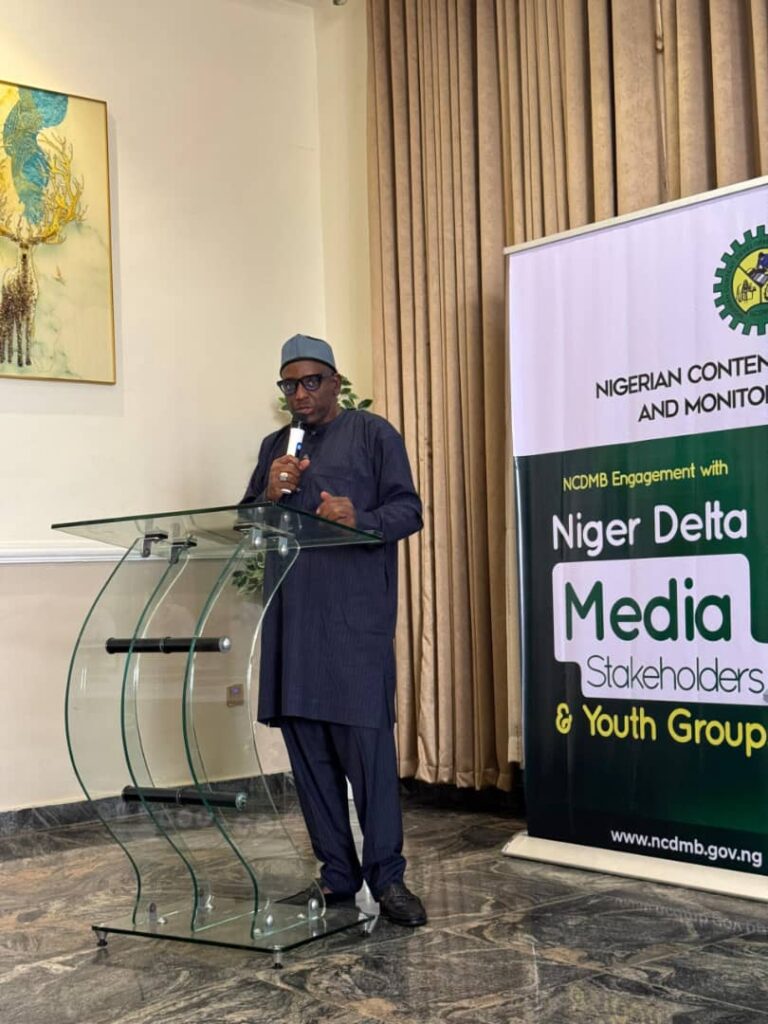
The Nigerian Content Development and Management Board (NCDMB) has Pledged continuous support to Nigerian businesses to excel by remaining committed to the implementation of the Nigerian Oil and Gas Industry Content Development Act, enacted in 2010.

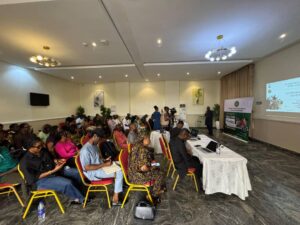
The commitment was made on Thursday in Port Harcourt at an engagement with Niger Delta Media Stakeholders and Youths on Port Harcourt.

Dr. Halilu

Between 2010 when the Nigerian Oil and Gas Industry Content Development Act was enacted, paving way for the birth of the Nigerian Content Development and Management Board, NCDMB, ease of doing business in Nigeria, especially in the nation’s oil and gas sector has been redefined.

NCDMB has assisted, funded and guided businesses to thrive in the oil and gas sector to thrive, while also ensuring the monitoring of the activities of firms with foreign interests, making them to comply with the local content policy in the area of staffing, engineering, procurement and construction.

Participants

These were disclosed on Thursday by NCDMB’s Director of Corporate Services, Dr Abdulmalik Halilu during an interactive session with Niger Delta media stakeholders and youth bodies in Port Harcourt.

Halilu said the NCDMB, in giving expression to the NODICD Act, had achieved a partial integration of major Floating, Production, Storage and Storage and Offloading platforms in the country and added that fabrication and manpower services have significantly increased.

He said the board has so far lived up to expectations in its core mandate of developing local capacities and capabilities without compromising standards as provided for in the Act.

He further disclosed that over 100 indigenous companies with EPC(exploration, production and construction) capabilities have made giant strides in the country, while about 15,000 Nigerians have been trained in skills such as welding, marine operations, PMT design engineering under the Oil and Gas Trainers Association of Nigeria (OGTAN).

The NEXIM bank, he noted, has also deployed the Nigerian content intervention fund in excess of $350 million to local companies to buoy up their operations, while youths from different parts of the country have also been trained and empowered to enable them function in the oil and gas sector.

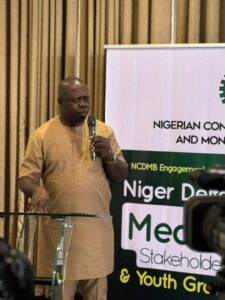
Dr Obinna Ezeobi, the board’s General Manager, Corporate Communications, had urged the media to live to its core responsibility of gate-keeping and agenda setting in the discharge of its professional duties.

Dr. Ezeobi

He said it was unfortunate that some practitioners allowed their platforms to be used to propagate falsehood against the board, including the publication of outright lies, urging media stakeholders to uphold the tenets of the profession at all times.

Apparently addressing youth leaders, Ezeobi said it was important for them to realise that the NCDMB had a mandate clearly outlined in the Act establishing it and did not intend to derail from the focus, but urged them not to expect the board to embark on projects which were clearly not part of its mandate.

According to him, there were intervention agencies created by the federal government for such purposes, but that the NCDMB did not have such a mandate and should not be expected to play such roles.

The NOGICD Act of 2010 establishes NCDMB as the sole agency of the Federal Government that is responsible for driving Nigerian Content in the oil and gas industry.

Breaking: Nigeria’s Yinka Babalola Emerges As Rotary International President-elect

0

Rotary International has announced Nigerian Rotarian Yinka Babalola as its President-elect for the 2026/2027 Rotary year.

Babalola’s emergence marks a historic milestone, making him only the second African – and the second Nigerian – to lead the global humanitarian organisation. The first was Jonathan Babatunde Majiyagbe, who served from 2003 to 2004.

A press statement signed by Ibim Semenitari, Rotary Public Image Coordinator, Africa Zone 22, Region 27 stated that Olayinka Hakeem Babalola, a member of the Rotary Club of Trans Amadi, Nigeria, was selected by the Rotary International Board of Directors following the resignation of SangKoo Yun, who stepped down to focus on recovery after cancer treatment. Babalola will formally assume office on 1 July 2026.

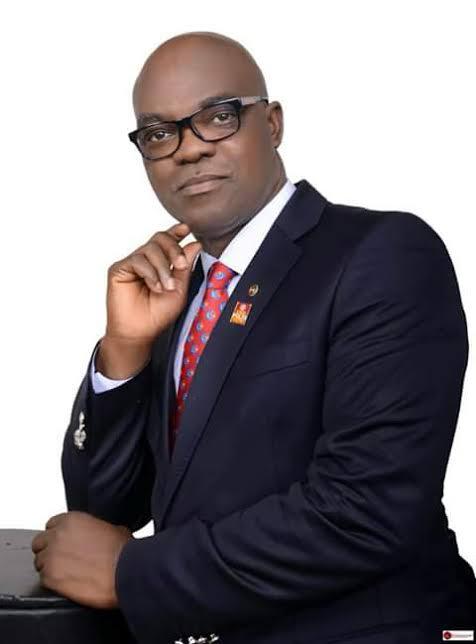
Babalola, Rotary International President-elect

Babalola joined Rotary in 1994, six years after starting out as a Rotaractor in 1988. His leadership journey has seen him serve as District Governor (2011/12), Vice President of Rotary International (2019/20), and a member of the RI Board (2018/20). He has also played active roles on high-profile committees, including the End Polio Now Countdown to History Campaign Committee and the Nigeria National PolioPlus Committee, where he continues to serve as adviser.

Beyond Rotary, Babalola is an accomplished professional. An engineer by training and an attorney, he has more than 25 years of experience in the oil and gas sector, having held senior positions with Shell PLC across four continents. He is founder of Riviera Services Ltd., an oil and gas infrastructure company, and Lead and Change Consulting, an executive coaching and advisory firm.

His professional affiliations span the Nigerian Society of Engineers, the Institute of Safety Professionals, and the Association of Change Management Practitioners. He also belongs to the Jericho Business Club in his home city of Port Harcourt, where he and his wife, Preba, reside.

A passionate Rotarian and philanthropist, Babalola supports The Rotary Foundation through a named endowment and as a member of the Arch Klumph Society. His humanitarian footprint extends to service as a trustee of ShelterBox UK and as director of the Safe Blood Africa project. His service has earned him several honours, including the Africa Centennial Heroes Award, the RI Service Above Self Award, and The Rotary Foundation Citation for Meritorious Service.

The Rotary International president serves a one-year term, providing inspirational leadership, presiding over the Board of Directors, and representing the organisation globally.

Babalola’s election is being celebrated across Nigeria and Africa as another proud moment of continental leadership on the global stage.

Governors Pledge Support For FG’s Creative Industry Development Initiatives

0

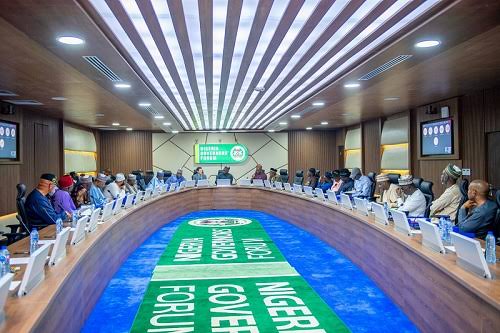
Governors of the 36 states have pledged to support and collaborate with the federal government in its efforts to reform and develop the nation’s creative industry.

The governors took the decision at a meeting of the Nigeria Governors’ Forum (NGF) held in Abuja on Wednesday night after a presentation by the Minister of Arts, Culture, Tourism and the Creative Economy, Hannatu Musa Musawa.

According to a communique issued by the NGF’s secretariat, signed by the forum’s Chairman and Governor of Kwara State, AbdulRahman AbdulRazaq, the governors commended the Fed Govt in its efforts to grow the creative industry.

Part of the communiqué reads, “The forum received a presentation from the Honourable Minister of Arts, Culture, Tourism and the Creative Economy, Hannatu Musa Musawa, represented by Mr. Obi Asika Director-General, National Council for Arts and Culture, on the Strategic Roadmap to grow the sector’s GDP contribution to $100 billion by 2030 and create over 3 million jobs.

“Key initiatives include the $200 million Creative Economy Development Fund, the $1 billion Creative & Tourism Infrastructure Corporation, and projects such as the Lagos Arena, Abuja Creative City, and Renewed Hope Cultural Villages.

“Governors commended the reforms to strengthen intellectual property, expand tourism, and elevate Nigeria’s global presence, and resolved to collaborate through State Creative Economy Desks, co-created festivals, and the adoption of the Naija Season platform.

“The forum observed a minute of silence in honour of the late Pa. Ahmed Momohsani Ododo, father of the Governor of Kogi State, H.E. Usman Ododo. Governors extended heartfelt condolences to Governor Ododo and his family, praying for the peaceful repose of his father’s soul.

FG Raises Passport Fees, Effective September 1

0

Nigerians who wish to procure or renew their international passport would need to cough out more money as the the Nigeria Immigration Service (NIS) has announced an upward review of fees for the Nigerian standard passport. The new rates will take effect from September 1, 2025.

Under the new billing, the fee for a 32-page passport with five-year validity will rise to ₦100,000, while a 64-page passport with ten-year validity will cost ₦200,000.

Previously, the cost for the 32-page passport with a 5-year validity cost N50,000 after it was increased from N35,000. Also, the 64-page passport with a 10-year was N100,000 after being initially increased from N70, 000.

In a statement on Thursday, the Service Public Relations Officer, ACI Akinsola Akinlabi, said the revised charges will apply only to passport applications processed within Nigeria.

However, passport application fees for Nigerians in the diaspora remain unchanged. Applicants abroad will continue to pay $150 for a 32-page, five-year passport and $230 for a 64-page, ten-year passport.

The NIS explained that the adjustment is aimed at sustaining the quality and integrity of the Nigerian passport while ensuring efficient service delivery.

“The Service remains committed to balancing quality service delivery with the need to ensure passport services are accessible to all Nigerians,” the statement read.

The statement reads: “In a bid to uphold the quality and integrity of the Nigerian Passport, the Nigeria Immigration Service hereby announces an upward review of Nigerian Standard Passport fees, set to take effect on 1st September, 2025.

“The review, which only affects Passport Application fees made in Nigeria, now sets a new fee threshold for 32 pages with 5-year validity at N100,000 and 64-page with 10-year validity at N200,000

“Meanwhile, Nigerian Passport Application fees made by Nigerians in diaspora remain unchanged at $150 for 32-page with 5-year validity and $230 for 64-page with 10-year validity.

NEC Endorses Economic Plan To Fast-track $1tr Economy

0

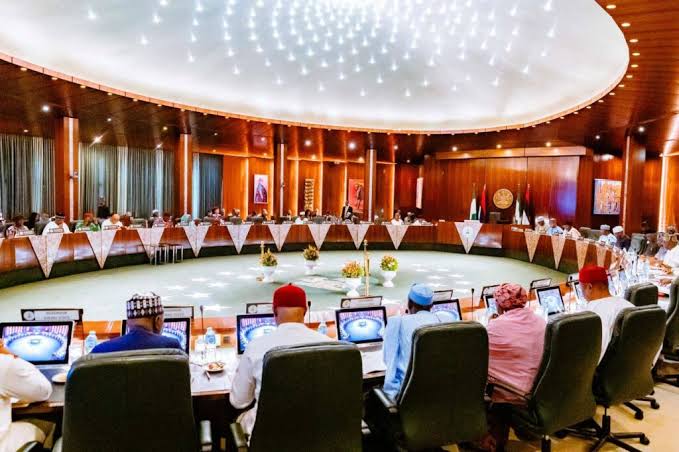
The National Economic Council (NEC) on Thursday approved the Renewed Hope Development Plan (2026-2030), which hopes to achieve a $1 trillion economy by 2030.

The plan is aimed at consolidating Nigeria’s reform agenda and actualising the one trillion dollar economy target of President Bola Tinubu’s administration.

This was part of the resolutions reached at the 151st meeting of the Council, presided over by the Vice-President Kashim Shettima, held at the Presidential Villa, Abuja.

The council commended the Ministry of Budget and Economic Planning for kickstarting the process and also urged the effective participation of all states and stakeholders to ensure inclusivity and accelerated growth.

The Chairman of the Council, Vice-President Shettima, said the new national development plan will build on existing policies, deepen continuity, and align Nigeria’s growth trajectory with the long-term goals of Nigeria Agenda 2050.

He described the transition as critical to sustaining the country’s economic trajectory and consolidating the administration’s ongoing reforms.

“Another major consideration today is the expiration of the National Development Plan 2021–2025 and the preparation of its successor, the Renewed Hope Plan 2026–2030.

” This, to us, is no ordinary transition. It is the bridge between lessons learnt and ambitions pursued.

” The Renewed Hope Plan will consolidate ongoing reforms, deepen policy continuity, and align our medium-term strategies with the long-term horizon of Nigeria Agenda 2050. It’s a practical roadmap towards a one trillion economy by 2030,” he said.

The vice-president emphasised that the plan will be participatory rather than top-down, engaging multiple tiers of government, civil society, and private actors.

“What is even more crucial is that this plan will not be drawn from the ivory towers of Abuja alone. It will be participatory.

”We are going to keep on engaging state governments, local governments, the organised private sector, civil society, labour, youth, and traditional institutions, and the conversation begins here today,” he noted.

Shettima also announced that the National Agency for Science and Engineering Infrastructure (NASENI) has scaled up local production of solar-powered irrigation pumps to reduce energy costs for farmers and expand dry-season cultivation.

” This is the story of the nation’s refusal to be hostage to petrol-powered systems. This is an intervention to lower farmers’ energy costs, expand dry-season farming, and reinforce food security,” he said.

Shettima urged members to maintain the Council’s focus on translating policies into real outcomes for citizens.

“Distinguished colleagues, you have made sure that this Council is not a stage for applause.

” You are the reason it is a workshop for solutions. Let this 151st meeting echo as a continuation of our covenant.

“Let it be remembered not only for the issues tabled but for the resolve shown. Let it move from chamber to community, from rhetoric to result,” he said.

The plan 2026–2030 will serve as a bridge between current reform momentum and the long-term aspirations of Nigeria Agenda 2050.

It is envisaged that the preparation of the new plan will effectively commence in the month of September, 2025, so that it can be completed on time for Mr President to launch it before the end of the year.

It will enable the Federal, State, and Local Government Ministries, Departments and Agencies (MDAs) to ensure that their programmes and projects captured in the Plan are used for the preparation of the 2026 annual budget.

Nigeria Loses $1.5bn To War Risk Premiums… As Minister Requests For Abrogation

0

Nigeria still bears the burden of war risk premiums, which had cost the country about $1.5 billion in recent years.

The Federal Government has therefore called for the immediate removal of war risk insurance premiums on ships coming to Nigeria.

Minister of Marine and Blue Economy, Adegboyega Oyetola, made the appeal on Wednesday in Lagos at the 3rd Annual Maritime Lecture of the Maritime Reporters Association of Nigeria (MARAN).

Oyetola who was represented by his Special Adviser on Media and Communications, Dr Bolaji Akinola, said that the charges, imposed when the country’s waters were unsafe, were no longer justified and were hurting trade.

The minster said that Nigeria had earned the right to be delisted from global maritime high-risk classifications sighting the
significant reforms and security strides made in that direction, particularly with the implementation of the Deep Blue Project, which had recorded zero piracy incidents in Nigerian waters in the last four years.

“These premiums are based on outdated perceptions. Nigeria has achieved enhanced maritime security, backed by data-driven evidence.

“Yet, ship owners continue to pay a price that undermines trade and investment,” Oyetola said.

The minister explained that the Deep Blue Project, implemented by the Nigerian Maritime Administration and Safety Agency (NIMASA) in partnership with the Navy, had delivered real-time surveillance and interdiction through integrated air, land, and sea assets.

This, he noted, earned Nigeria global commendations, including removal from the International Bargaining Forum’s high-risk list.

Oyetola said since the ministry was established in 2023, there had been some key achievements which include resolution of the decade-long Apapa gridlock.

Others are the launch of Africa’s first National Policy on Marine and Blue Economy, approval of port modernisation projects in Lagos, Tin Can Island, and Eastern Ports, as well a revenue generation by agencies under the ministry doubling from N700.79 billion in 2023 to N1.39 trillion in 2024, the highest in Nigeria’s history.

It also includes unlocking of the Cabotage Vessel Financing Fund to support indigenous ship owners, establishment of a technical committee for a private-sector-led national shipping line and reforms to boost aquaculture and inland waterway safety.

He disclosed that the ministry was engaging international bodies such as BIMCO, the International Chamber of Shipping, and Lloyd’s of London to present verifiable data and push for policy changes.

According to him, plans are also underway to strengthen local marine insurance, deepen regional cooperation, and sustain robust security reporting.

Oyetola expressed optimism about the future of Nigeria’s blue economy, pledging continued efforts to modernise ports, empower local operators, and make the sector a key driver of jobs, growth, and sustainability.

Earlier in his welcome address, MARAN President, Mr Godfrey Bivbere, commended the minister’s reforms but stressed that the continued imposition of war risk premiums was a major setback to Nigeria’s maritime trade.

“The persistent charges affect not just ship owners and terminal operators, but the entire value chain, from importers and exporters to the average Nigerian consumer.

“It undermines competitiveness, cost-efficiency, and investor confidence,” he said.

Bivbere explained that the annual lecture was convened to provide a platform for policymakers, industry leaders, and global stakeholders to exchange ideas and chart solutions.

“MARAN, as the voice of maritime journalism and advocacy, is proud to host this forum. The goal is clear; to galvanise collective effort toward lifting the war risk designation that has long shadowed Nigerian waters,” he said.

The lecture brought together security experts, government officials, and ship owners.

It also had in attendance other stakeholders committed to strengthening maritime reforms and ensuring that Nigeria fully reclaims its place as a maritime hub in West Africa.

Investors Lose N324bn As Stock Market Falls Under Pressure

0

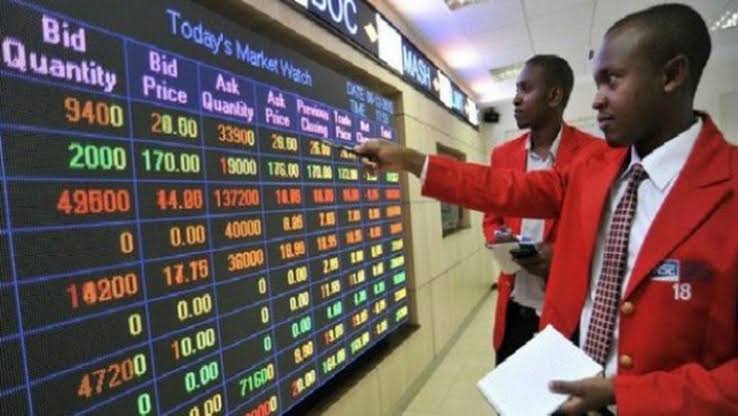
Investors lost N324 billion on Wednesday as persistent sell pressure dragged the equities market into negative territory.

The downturn was primarily driven by losses in Cornerstone Insurance, RT Briscoe, ABC Transport, NGX Group, Mutual Benefits and 36 other stocks.

Specifically, the market capitalisation, which opened at N89.696 trillion, dropped by N324 billion or 0.36 per cent to close at N89.372 trillion.

Similarly, the All-Share Index fell by 0.36 per cent or 512.60 points to close at 141,248.76, compared to 141,761.36 recorded on Tuesday.

Meanwhile, the market breadth also closed negative with 40 losers against 17 gainers.

Cornerstone Insurance and RT Briscoe led the losers’ table by 10 per cent each, closing at N6.39 and N3.06 per share respectively.

ABC Transport followed by 9.80 per cent, settling at N4.51 and NGX Group fell by 9.70 per cent, finishing at N53.55 per share.

Also, Mutual Benefits shed by 9.58 per cent, ending the session at N4.06 per share.

Deap Capital Management led the gainers’ table by 4.82 per cent, closing at N1.74 while Legend Internet rose by 4.63 per cent, finishing at N5.65 per share.

Honeywell Flour Mill dipped by 4.17 per cent, settling at N22.50 and Tantalizer dropped by 3.60 per cent, ending the session at N2.59 per share.

Similarly, Africa Prudential gained by 3.13 per cent, closing at N16.50 per share.

Analysis of the market activity revealed increase in market volume and value with a decline in market transactions as 682.9 million shares worth N22.2 billion were traded across 28,695 transactions.

This is compared to 605.02 million shares valued at N12.89 billion that was exchanged across 28,845 transactions earlier on Tuesday.

Meanwhile, FCMB Group led the activity chart in volume of 108.5 million shares valued at N1.19 billion.

This marked the third consecutive trading session in the week FCMB Group would be leading the market activity in volume.

Sterling Bank followed with 86.04 million shares worth N688.1 million while Cutix sold 45.8 million shares valued at N155.69 million.

Access Corporation transacted 39.34 million shares worth N1.1 billion and FirstHoldCo traded 35.8 million shares valued at N1.16 billion

Niger Delta Youths Protest, Demand Resignation Of NNPCL MD, Ojulari

0

The Niger Delta Ethnic Nationalities Youth Leaders Forum (NDENYLF) on Wednesday staged a protest at the Nigerian National Petroleum Company Limited (NNPC Limited) Towers, Abuja calling on its Group CEO, Mr Bashir Ojulari to quit.

The group demanded that the GCEO should be replaced over alleged corruption and mismanagement.

The youths also demanded the appointment of an indigene of the Niger Delta region as the GCEO of the oil giant.

They arrived at the towers in their numbers and blocked the entrance and exit gates of the company, holding banners, with different inscriptions, while chanting solidarity songs.

On one of the inscriptions on the banners, the coalition called for the replacement of the GCEO over alleged corruption.

They also called for the reopening of the Port Harcourt Refinery and restoration of all indigenes of the Niger Deltans sacked by Ojulari.

The protest disrupted vehicular traffic on the roads, while security agents were seen appealing to the protesters, trying to maintain orderliness and ensuring a free flow of traffic.

Motorists and NNPC Ltd. workers were forced to park their cars far away from the gates of the towers due to the protest.

Management of NNPC Ltd. later went into a close door meeting with some officials of the coalition of Niger Delta Youth leaders, while normalcy returned.

Comrade Edet Eyo, President, Oro Youth Movement (OYOM), said that after meeting with the management who promised to look into their demands, they decided to go into consultation with their members to suspend the protest.