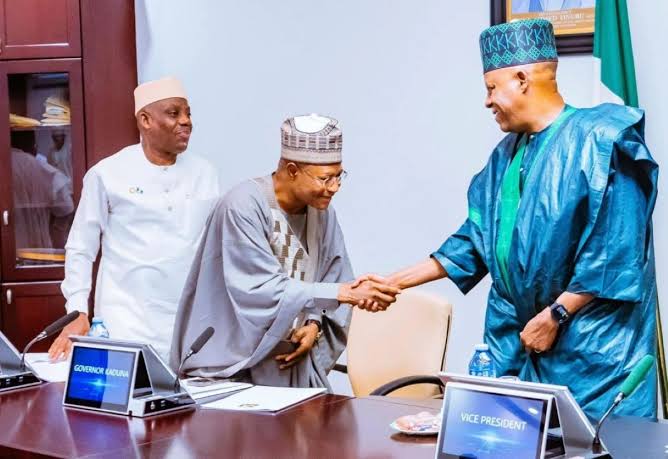
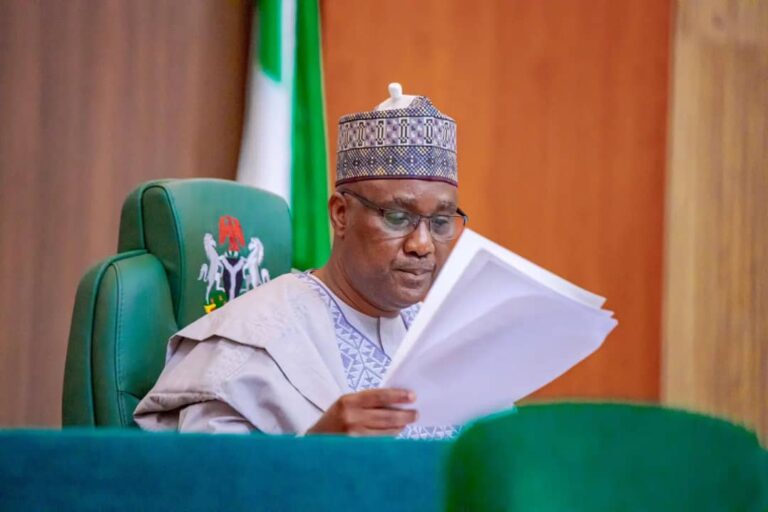
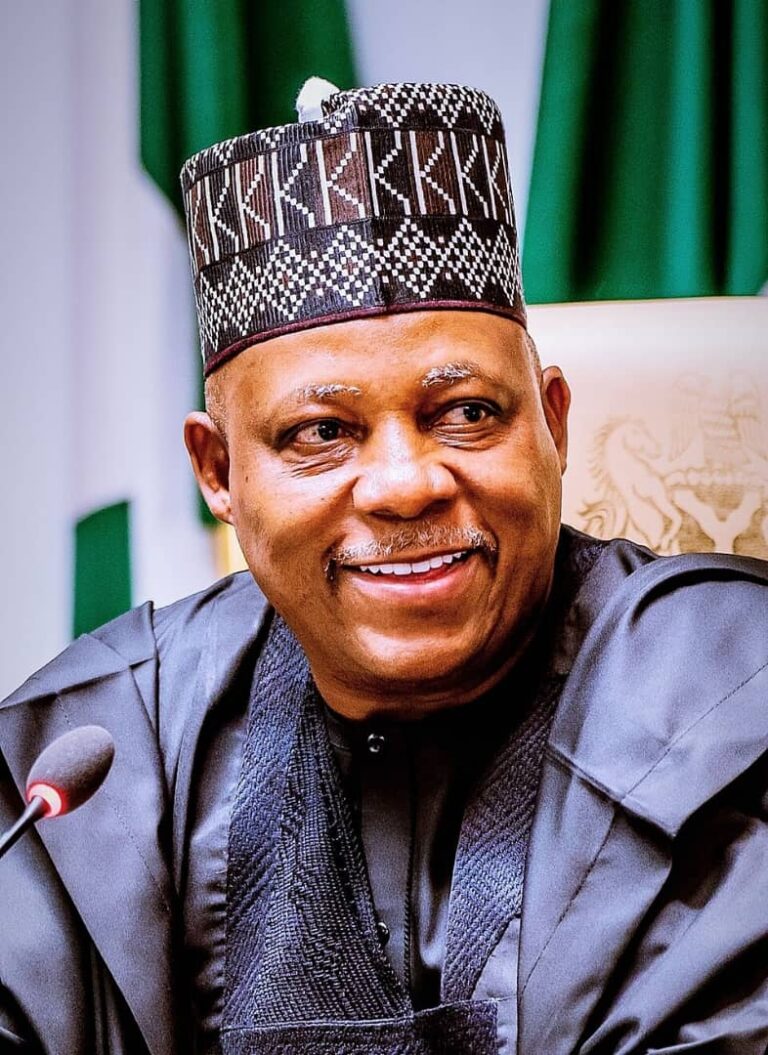
Nigeria’s Vice-President, Kashim Shettima, has hailed Gov. Uba Sani of Kaduna State for establishing and chairing the state’s first Council on Skills.Shettima made the commendation during the 7th meeting of the National Council on Skills (NCS) at the Presidential Villa, Abuja, describing Sani’s leadership as exemplary and urging other states to replicate the initiative.
He emphasised the need for collective action to drive the administration’s skills acquisition agenda under President Bola Tinubu’s Renewed Hope Agenda.
“The era of operating in silos is over.
“We must collaborate across agencies, ministries, and sectors to empower Nigerians with the skills they need to thrive,” Shettima said.”
The vice-president highlighted the importance of inter-agency harmony and stressed that no funding or progress could be achieved without a unified approach.
“This goes beyond our own convenience.
“It’s about empowering the ambitious artisan in Kaura Namoda, supporting the mid-career professional in Ebute-Metta, and equipping technical colleges across Nigeria to become true centres of excellence,” he added.
Sani, in his remarks, noted that the Kaduna Vocational and Skills Development Institute had recently enrolled more than 30,000 students.
He thanked the vice-president for his support in advancing the council’s job creation goals.
Minister of Education, Dr Olatunji Alausa, also commended Sani for his role in the commissioning of the Institute of Vocational Training and Skills Development.
He announced that technical colleges had been directed to focus solely on relevant skills-based courses for the new academic year.
African health leaders have stressed the urgent need to strengthen national epidemic surveillance and research systems as the foundation for regional and global preparedness.
They made the call at a high-level panel on epidemic surveillance at the 2nd Lassa Fever International Conference in Abidjan, Côte d’Ivoire, on Wednesday.
The event convened by the West African Health Organisation (WAHO), has the theme: “Beyond Borders: Strengthening Regional Cooperation to Combat Lassa Fever and Emerging Infectious Diseases.”
The gathering seeks to reaffirm regional commitment, mobilise political will, and drive collective action against Lassa fever and other emerging infectious diseases.
West Africa, experts said there is urgent need to strengthen response to VHFs, including Lassa fever.
Experts from Liberia, Guinea, Sierra Leone, Nigeria, Côte d’Ivoire and the World Health Organisation (WHO) shared their experiences and lessons from past viral haemorrhagic fever outbreaks, including Ebola and Mpox at the event.
Dr Minnie Sankawulo-Ricks, Medical Director of Phebe Hospital and School of Nursing, Liberia, said that early detection of outbreaks in her facility begun with a community-based surveillance system integrated into the national health structure.
She noted that community health workers and volunteers act as the first line of defence, reporting unusual symptoms, deaths, or disease clusters from even the most remote villages.
“My facility uses WhatsApp groups for real-time reporting between the community, facility and county levels.
“This has greatly improved the timeliness and accuracy of data shared with health authorities,” she said.
Sankawulo-Ricks added that her centre now has a PCR laboratory, reducing test results from more than a week to less than six hours.
However, she highlighted ongoing barriers such as logistical delays, poor infrastructure, limited internet access and inadequate incentives for community health workers.
From Guinea, Prof. Alpha Keita, Rector of the University of Conakry, underscored the progress in genomic surveillance since the 2013 to 2016 Ebola outbreak.
“In 2013, it took three months to confirm the first Ebola cases. By 2021, confirmation was possible in 24 hours and sequencing within nine days,” he said.
But Keita warned that political commitment and sustainable financing are still lacking, with genomic surveillance often dismissed as a “research luxury”.
In Sierra Leone, Dr Donald Grant, Head of clinical, public health and research activities related to Lassa fever recalled how the 117 hotlines introduced during Ebola transformed reporting.
“Today, community health workers and epidemiology trainees feed into an integrated system that covers both human and animal health.
“Yet challenges remain, including internet connectivity, dependence on donor funding and limited laboratory access outside major cities”.
Nigeria’s Dr Muntari Hassan, Deputy Director and head of the Surveillance Division at the Nigeria Centre for Disease Control and Prevention, called for regional harmonisation of data platforms, noting past efforts by WAHO and ECOWAS to develop a unified reporting system.
Dr Ibrahima Fall, Global Public Health leader, said Africa must not only adopt new digital tools, but also invest in national analytical capacity.
“Eighty per cent of African countries still lack adequate institutional capacity for data analysis.
“Without strong national systems, regional or global platforms cannot function effectively,” Fall, who is now the CEO of Institut Pasteur de Dakar, warned.
Prof. Mamadou Samba, Director-General of Health, Côte d’Ivoire, closed the session by stressing that Africa must finance its own research and health priorities, rather than rely on external partners.
“These are our diseases, our families and our populations. Unless we take responsibility and invest in our own systems, progress will remain limited,” he said.
The experts agreed that building trust with communities, investing in digital tools, and ensuring sustainable domestic financing are critical for Africa’s preparedness against future epidemics.
The Nigerian stock market on Wednesday sustained its bullish run, with investors’ wealth increasing by N254 billion on the back of renewed bargain hunting.
The upward trend was driven by demand in equities such as Regency Alliance Insurance, Mecure, Etranzact, Daar Communications, Deap Capital and 31 other stocks.
The Nigerian Exchange Ltd. (NGX) market capitalisation, which opened at N88.199 trillion, rose by N254 billion or 0.29 per cent to close at N88.453 trillion.
Similarly, the All-Share Index appreciated by 0.29 per cent or 401.36 points, finishing at 139,796.11 compared with 139,394.75 recorded on Monday.
The market breadth also closed positive, with 36 gainers outnumbering 19 losers.
Regency Alliance Insurance led the gainers’ table with a 10 per cent rise, closing at N1.43. Mecure followed, advancing 9.92 per cent to N21.60 per share.
Etranzact gained 9.73 per cent to settle at N12.40, while Daar Communications appreciated 9.57 per cent, ending the session at N1.03 per share.
Likewise, Deap Capital Management rose by 9.52 per cent, closing at N1.84 per share.
On the losers’ chart, Unilever Nigeria recorded the highest decline of 9.79 per cent, settling at N63.15 per share.
FTN Cocoa Processors fell 9.40 per cent to N5.40, while Ellah Lakes declined 8.76 per cent to close at N13.02 per share.
Linkage Assurance dropped 6.85 per cent to N2.04, while Berger Paints shed 6.33 per cent, closing at N35.50 per share.
An analysis of trading showed a decline in market activity, as investors exchanged 659.2 million shares worth N12.5 billion in 25,334 deals.
This was lower than Monday’s 947.9 million shares valued at N17.9 billion, traded in 36,036 transactions.
FCMB Group emerged the most active stock, recording 202.5 million shares valued at N2.1 billion.
Universal Insurance followed with 63.1 million shares worth N79.4 million, while FirstHoldCo transacted 44.2 million shares valued at N1.34 billion.
Regency Alliance Insurance accounted for 30.9 million shares worth N43.8 million, while Access Corporation traded 26.12 million shares valued at N676.42 million.
It is no longer news that Rivers State conducted a local government election in August 30, 2025 which ushered in new set of council chairmen and councillors across the 23 local government areas and 319 wards in the state.
While public discourse continues to rage on the manner of the emergence of these leaders at the grassroots level, what is important at the moment is to galvanise public opinion that would change the perception of the elected leaders in governance, leadership, accountability and transparency, with the aim of witnessing robust development in the LGAs.
Local government administration in Nigeria and indeed in Rivers State is designed to be the closest tier of governance to the people, bringing developments that would change the socio political cum economic lives of the people at the grassroots.
Over the years, unfortunately, local government administrations failed in their core mandate of grassroots development. They remained derelict, failing to bridge governance and grassroots development, having severely underperformed in delivering vital services.
The expectation and promises of bringing government nearer to the people has become a mirage, a fleeting illusion pursued, but never attained. Rather, local administrations became a system riddled with corruption, political interference, and sheer neglect.
Reports since 2015 point to corruption, poor planning, incompetence, and lack of transparency as the critical obstacles to sustainable local development. Council chairmen, who are often handpicked by state level political godfathers, treat councils as their personal estates. Transparency is non-existent. Accountability is sacrificed on the alter of partisan loyalty. The result is a complete disconnect between the council’s and the communities they are supposed to serve. These failures, which are structural, stifled rural economies, and deepened the urban- rural divide.
This new set of chairmen and councillors sworn in recently in Rivers State have a duty to change the narrative by breaking the chain of mediocrity and perennial underdevelopment which has become a bane of economic growth in the state.
Before assuming offices, the chairmen, especially, were admonished to be selfless and to focus on grassroots development. The Sole Administrator of Rivers State, Vice Admiral Ibok-Ete Ibas (Rtd) advised them to embrace, “a new era of transparent, accountable and reform-driven leadership for the people”, cautioning that, “public office is a sacred trust not an avenue for personal gain.” He stated further: “The victory is not a prize to be enjoyed. It is a burden to be carried.
It is not an entitlement but a duty. It is not a call to self- interest, but to selfless services.
Similarly, the Chairman of the Rivers State Independent Electoral Commission (RSIEC), Micheal Odey, while presenting certificates of return to the elected local administrators emphasized that, “your certificates are not symbols of victory, but mandates of service to people.” He urged them to embrace humility, transparency, and accountability in leadership and uphold the rule of law as a foundation for effective governance.
It is instructive to note that between March and June 2025, the combined state and local governments in Rivers State received N246.7 billion with local government councils getting between 16 to 19 billion Naira per month, yet there is no corresponding impact on the lives of ordinary citizens.
What is true is that if the wealth of the local governments continue to bypass the grassroots, the local government tier of administration will remain a hollow promise instead of the bedrock of democratic governance it was meant to be.
A situation where funds allocated to local government councils mysteriously vanish into private pockets or are divided for political patronage will continue the mediocrity and underdevelopment rather than breaking the chain to ensure common good.
It is a known fact that governments exist primarily to provide services that will make life worth living. Local governments in Rivers State must now justify the reasons for their creation through the delivery of cutting-edge services to the people.
With enormous resources at their disposal, especially with an increase in allocation from federation accounts, these council chairmen have the opportunity to transform the rural communities, create jobs, and reduce poverty.
They must endeavour to end the decades of decay, which had been entrenched in Rivers State’s grassroots governance with tangible results by leading with impact. They must rise above mediocrity and make service delivery their defining mission.
The new chairman of local councils in Rivers State must know that the people of the state are tired of excuses and glaring incompetences. They must shatter the age-old tag of failure and rather deliver results that people can see, feel, and trust.
It is time to bring to the fore, bold, and visionary leadership, transparency, and service delivery that is distinguishable if the transformation that the people crave for can be achieved.
It is fundamentally important for the chairmen to realize that no nation state or local government can boast of excellent performance at the grassroots if a large percentage of her rural inhabitants are facing uncontrollable abject poverty, lack of basic social amenities. These are the things that have caused citizens to lose both faith and trust in local government administration.
In spite of the manner of their emergence as chairmen, since they are products of a political compromise, must maintain a sense of decorum in dealing with the executive arm of government. In any case, both tiers of government need each other in delivering goods and services for the benefit of the people.
While we know that the chairmen will want to show loyalty to their political godfathers, there should be a balance of such loyalty with performance in office and accountability.
The Nigerian Union of Petroleum and Natural Gas Workers has suspended its two-day strike following a meeting with the Dangote Group on Tuesday. The meeting was summoned by the Department of State Services (DSS).
The suspension followed an agreement reached with the management of Dangote Refinery and Petrochemicals on the contentious issue of workers’ unionisation.
At a conciliation meeting convened by the minister, Muhammad Maigari Dingyadi, both parties held lengthy discussions that produced a Memorandum of Understanding (MoU) signed in Abuja.
The signed MoU read thus: “That since workers’ unionisation is a right in line with the provisions of the extant laws, the management of Dangote Refinery and Petrochemicals agreed to the unionisation of employees of Dangote Refinery and unionization of employees of Petrochemicals, who are willing to unionise.
That the process of unionization shall commence immediately and be completed within two weeks (9th–22nd September, 2025), and it was agreed that the employer will not set up any other union.
“Arising from the strike notice, no worker or employee of Dangote Refinery and Petrochemicals will be victimized.”
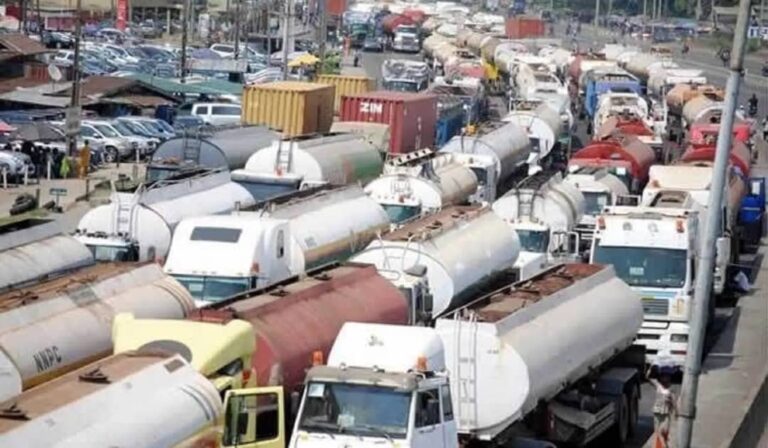
The Trade Union Congress (TUC) has issued a 14-day ultimatum to the federal government to withdraw the planned 5% tax on petroleum products.
The TUC which described the proposal as “reckless act of economic wickedness,” threatened that if the Federal Government fails to withdraw the plan, it will shut down critical sectors in the country.
In a statement signed by Festus Osifo and Nuhu Toro, President and General Secretary of TUC respectively, they said that Nigerians were already overburdened with different taxes.
The labour leaders, who described the new tax as unacceptable, argued that Nigerians cannot be used as sacrificial lambs again, declaring that all the affiliates of the Congress had been placed on standby.
They said, “This reckless proposal is nothing but an act of economic wickedness against already overburdened Nigerians.
“Let it be clear: workers and citizens are still reeling from the pains of subsidy removal, skyrocketing fuel prices, food inflation, and a collapsing naira.
“To now introduce another levy on petroleum products is to deliberately compound suffering, cripple businesses, and push millions of citizens deeper into poverty.
“Government cannot continue to use Nigerians as sacrificial lambs for its economic experiments. Instead of offering relief, jobs, and solutions, it has chosen to further squeeze citizens dry. This is unacceptable.
“The TUC, hereby, urge the Federal Government to immediately stop this anti-people’s plan in its entirety. Failure to do so will leave us with no option but to mobilize Nigerian workers and the masses for a total nationwide resistance.”
Vowing to resist the implementation of the tax, the Congress added, “Strike action is firmly on the table if government dares to ignore this warning and go ahead to implement this policy
“Failure to do so will leave us with no option but to mobilise Nigerian workers and the masses for a total nationwide resistance. Strike action is firmly on the table if the government dares to ignore this warning and go ahead to implement this policy,” the statement read.
The labour body directed all its state councils, affiliates, and structures nationwide to remain on alert and prepare for possible industrial action.
It also urged civil society organisations, professional associations, student unions, faith leaders, and market groups to stand in solidarity with the Nigerian people.
“We also call on our allies, civil society organisations, professional bodies, student unions, market associations, faith leaders, and all patriotic Nigerians to stand in solidarity with us in this struggle.
“Together, we must resist policies that seek to further impoverish citizens and mortgage our future. Enough is enough. Nigerians deserve economic justice, not endless punishment,” the TUC declared.
However, the federal government, while defending the surcharge the said the tax is intended to provide steady funding for road projects and close the country’s infrastructure gaps.
According to Taiwo Oyedele, Chairman of the Presidential Committee on Fiscal Policy and Tax Reforms, the measure is being implemented at a higher rate in over 150 countries.
The Speaker of the House of Representatives, Hon. Tajudeen Abbas has described Nigeria’s N149.39 trillion ($97 million) debt as not only alarming but one that has exceeded the country’s legal threshold, which now poses a major threat to fiscal sustainability.
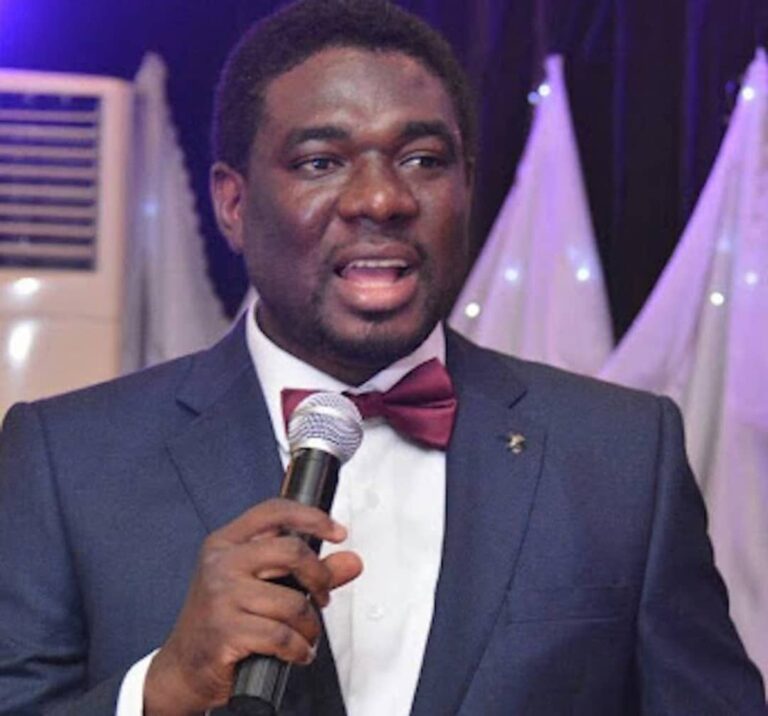
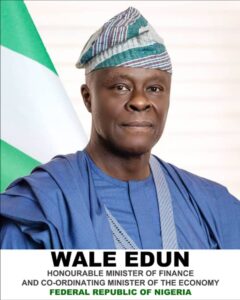
Wale Edun
Abbas who spoke on Monday at the opening of the 11th Annual Conference and General Assembly of the West Africa Association of Public Accounts Committees (WAAPAC), organised by the House of Representatives Public Accounts Committee in Abuja, with the theme: “Strengthening Parliamentary Oversight of Public Debt.”
He said Nigeria’s total public debt rose to N149.39 trillion (about US$97 billion) in the first quarter of 2025, up from N121.7 trillion the previous year.
“As of the first quarter of 2025, Nigeria’s total public debt stood at N149.39 trillion, equivalent to about US$97 billion. This represents a sharp rise from N121.7 trillion the previous year, underscoring how quickly the burden has grown. Even more concerning is the debt-to-GDP ratio, which now stands at roughly 52 per cent, well above the statutory ceiling of 40 per cent set by our own laws”, Abbas said.
Abbas, who was represented by the House Leader, Prof Julius Ihonvbhere, said this has breached the nation’s debt limit and signals the strain on fiscal sustainability.
According to the speaker, the development highlights the urgent need for stronger oversight, transparent borrowing practices, and a collective resolve to ensure that tangible economic and social returns match every naira borrowed.
The speaker warned that across Africa, debt has become a structural crisis, with several countries spending more on servicing loans than on healthcare and other essential services.
He cautioned that many African countries are already spending more on debt servicing than on healthcare and other essential services, adding that Nigeria must avoid a similar situation.
To address fiscal risks, the Speaker announced plans to establish a West African Parliamentary Debt Oversight Framework under WAAPAC.
The initiative will harmonise debt reporting across the sub-region, set transparency standards, and equip parliaments with data to scrutinise borrowing.
The speaker cautioned that borrowing should be targeted at infrastructure, health, education, and job-creating industries, warning that reckless debt that fuels consumption or corruption must be exposed and rejected.
“Our oversight must also be people-driven. Major borrowing proposals should be subject to public hearings, and simplified debt reports must be made available to the public. Citizens have the right to know, and we have the duty to inform,” he stated.
In his contribution, Senate President Godswill Akpabio urged West African countries to strengthen the constitutional backing for public accounts and finance committees, ensuring transparency, accountability, and sustainability in public debt management.
Akpabio stated that unchecked debt can jeopardise the future of citizens and undermine democracy across the sub-region.
Akpabio who was represented by Senator Osita Izunaso, described parliamentary oversight as indispensable to fiscal stability, noting that when debt is well managed, it serves as a strategic instrument for financing infrastructure, growth, and sustainable development.
However, Nigeria’s Minister of Finance, Wale Edun, projected optimism and insisted that Nigeria’s debt profile was manageable.
Edun painted a more reassuring picture, declaring that Nigeria was turning the corner under President Bola Tinubu’s reforms.
“Nigeria is turning the corner. The reforms are delivering measurable impact in terms of investor confidence, reduced spending on fuel imports, greater energy self-sufficiency, and value addition in our economy,” Edun said.
He said the country’s debt service-to-revenue ratio dropped to about 60 per cent in 2024, while the debt-to-GDP ratio stood at 38.8 per cent, a level he described as comfortable compared to global benchmarks.
Revenues, he added, rose by 34.7 per cent in the first half of 2025.
The minister acknowledged that Nigeria, like many countries in West Africa, faces significant fiscal challenges, including elevated debt service costs, constrained revenues, and rising demands for public spending.
He said Nigeria achieved the gains through tough but necessary policy choices such as the removal of fuel subsidies, liberalisation of the exchange rate, and the roll-out of a comprehensive tax reform programme aimed at boosting efficiency, simplifying compliance, and raising Nigeria’s tax-to-GDP ratio over time.
The alarm raised by the National Assembly comes barely weeks after it approved President Bola Tinubu’s external borrowing plan of over $21 billion for the 2025–2026 fiscal cycle, including $21.19 billion in foreign loans, €4 billion, ¥15 billion, a $65 million grant and domestic borrowing of about N757 billion.
The approval, recommended by both the House and Senate Committee on Local and Foreign Debt, also included provisions to raise $2 billion through a foreign-currency-denominated instrument in the domestic market.
He highlighted the structure of Africa’s debt, noting that 35 per cent is owed to Western private lenders, 39 per cent to multilateral institutions such as the IMF and the World Bank, 13 per cent to bilateral creditors, and 12 per cent to China
According to him, these reforms are essential for creating a predictable macroeconomic environment that encourages private investment, which accounts for about 90 per cent of economic activity.
“Government’s role is to act as a catalyst, not to crowd out the private sector. With the right fiscal discipline, we can unlock opportunities and ensure inclusive growth that lifts millions out of poverty,” he said.
On Nigeria’s fiscal direction, the minister outlined priorities, including debt transparency, growth-enhancing borrowing, domestic revenue mobilisation, and prudent budgeting within the limits set by the Fiscal Responsibility Act.
He said the government is committed to project-linked borrowing that yields direct returns and avoids reliance on money-printing or unsustainable financing.
Edun also drew attention to global headwinds, such as shrinking development aid, reduced world trade, and rising international interest rates, that have made fiscal management more difficult for developing economies.
He said these challenges underscore the need for African countries to be more self-reliant by embracing reforms, technology, and digitisation to strengthen revenue generation.
The minister emphasised that parliamentary oversight is central to maintaining fiscal discipline.
He urged lawmakers to hold governments accountable for borrowing and spending decisions, insisting that transparency and accountability must underpin every fiscal framework.
“A sound fiscal framework is not just the responsibility of the executive; it demands partnership, leadership, and rigorous oversight from parliamentarians such as you, especially public accounts and finance committees,” Edun said.
The Minister described Nigeria’s fiscal trajectory as a turning point, with reforms providing the foundation for stability, competitiveness, and inclusive growth.
Chairman of the House of Representatives Committee on Public Accounts, Rep. Bamidele Salam disclosed that the committee recovered over N200 billion in lost revenues for the federal government within the last year.
Salam said the recoveries were part of a series of reforms aimed at strengthening fiscal accountability in Nigeria.
He described the gathering, which Nigeria is hosting for the first time since WAAPAC’s creation in 2009, as timely, given the rising debt burden across Africa.
The Vice President of Nigeria, Kashim Shettima, expresses his deep condolences to the people of Dara Jamal community, Borno.
In respect to the brutal attack in Dara Jamal community by Boko Haram, which took place on Friday, 5th September 2025, Shettima expressed his deep concern via a statement by his spokesman, Stanley Nkwocha, on Monday. He described the incident as a national tragedy, sharing in the grief of the bereaved families and assuring that those responsible would be brought to justice.
“I extend my heartfelt condolences to Governor Babagana Umara Zulum, the people of Borno State and the Nigerian military over the tragic loss of our compatriots,” Shettima said.
Over 63 people were confirmed dead, including 58 civilians and 5 soldiers. Reports indicate that the terrorists raided the community around 10:00 PM on motorcycles, opening fire on residents and setting houses, shops, and vehicles ablaze. The operation lasted for several hours before the military intervened.
Shettima stated that President Bola Tinubu has given an immediate order to the Armed Forces to review security operations across the nation, including the deployment of surveillance equipment and advanced military hardware.
He further explained that the government is considering the establishment of state police, emphasizing the president’s position on security challenges in Nigerian states. These well-trained units would understand local terrains and cultures, enabling them to operate effectively at the grassroots level.
Having assured the people of continuous federal support, he offered prayers for those affected and promised that justice will be served.
The Minister of State for Education, Dr. Maruf Tunji Alausa, on Monday, September 8, 2025, in Abuja, urged the Academic Staff Union of Universities (ASUU) and the Academic Staff Union of Polytechnics (ASUP) to shelve plans of industrial action. He said there was no need for a strike since the Federal Government is already addressing their concerns through ongoing negotiations.
Alausa insisted that government is committed to meeting the unions’ needs through constructive dialogue rather than disruption of academic activities. He described his engagements with the unions as “holistic” and “constructive.”
“We are engaging with the unions holistically and constructively. Dialogue is the way forward, not strikes. Our students must remain in school while we continue to resolve all issues on the table,” the minister said.
He explained that government would not rush into any new agreement without proper negotiation but assured the unions that their outstanding demands would be met.
Before now, ASUU, ASUP, and the Senior Staff Association of Nigerian Polytechnics (SSANIP) had threatened to go on strike over unmet expectations. On August 26, 2025, the unions staged a one-day nationwide strike to express displeasure and to draw government’s attention.
At its National Executive Committee meeting on August 14, ASUP President, Shammah Kpanja, warned that the association would embark on a strike after 21 days if demands were not addressed. He later confirmed that five meetings had been scheduled with government officials, which would determine if the strike would proceed.
ASUU President, Prof. Christopher Piwuna, also disclosed that the outcome of recent talks would be communicated to members through branch chairmen before being made public, which will determine their next line of action.
On the matter of agreements, Alausa clarified that the 2009 ASUU–FG agreement remains valid and enforceable, while the 2021 draft led by Prof. Nimi Briggs, which was never signed, will only serve as a reference point in current negotiations.
He noted that past negotiations with unions were fragmented, even though their demands were similar — NEEDS assessment, improved conditions of service, and the 2025 wage review. He assured that government is now coordinating talks to address these issues collectively.
Alausa further explained that while the government is aware of the unions’ financial needs and is willing to provide support, it must also balance competing national priorities.
“Everybody knows President Bola Tinubu — when he makes promises, he fulfills them. We are not a government that, just for the sake of averting strike, signs bogus agreements with unions. Mr. President has given me a clear mandate, and I will carry it out truthfully until we resolve these issues once and for all,” he said.
The appeal comes amid fresh agitation in the academic sector. ASUU’s last major strike in 2022 lasted eight months, disrupting university education nationwide. Parents and education stakeholders have since urged both government and unions to avoid another shutdown.
Alausa assured that the Tinubu administration is determined to maintain stability in the higher education sector and keep students in school.
Over 7 billion people across Africa, Australia, Asia, and Eastern Europe will be able to witness the lunar eclipse (Blood moon) between September 7-8, 2025. It could be one of the most stunning lunar events seen in years.
Scientists state that the eclipse will be observable across most of Africa, with some regions able to view the entire event.
Some of the countries to experience the eclipse including Nigeria, Ghana, Cameroon, Gabon, Equatorial Guinea, Benin, Togo, Niger, Chad. In Nigeria, it would last for about 83 minutes, starting at about 8.00pm.
A total lunar eclipse occurs when Earth passes between the moon and sun, temporarily bathing the entire lunar disk in its shadow. This in turn causes our natural satellite to glow a deep red, as the scattered light from every sunrise and sunset on Earth is bent onto the lunar disk.
Several distinct phases will be on display during the September 7-8 total lunar eclipse, which will be visible in its entirety across swathes of Asia, western Australia and eastern Europe, while other countries like Spain and Norway will witness only a partial eclipse.
What makes this eclipse special isn’t any myths or mysteries, but just its natural beauty. With a long total phase and great visibility across the world.
A striking red Moon – The ‘Blood Moon’ effect
During the eclipse, the Earth will pass directly between the Sun and the Moon, casting its darkest shadow (the umbra) over the Moon. Rather than disappearing into darkness, the Moon will take on a deep red hue, earning it the nickname “Blood Moon.” This glowing red effect isn’t mystical—it’s pure atmospheric science. As sunlight filters through Earth’s atmosphere.
The science behind the red glow – Rayleigh Scattering
So why exactly does the Moon turn red? According to a report by the Times of India, the phenomenon is caused by Rayleigh scattering. As sunlight travels through Earth’s atmosphere, shorter wavelengths like blue and violet scatter in all directions. However, longer wavelengths, such as red and orange, pass through more directly. This filtered light is what illuminates the Moon during the total eclipse, making it appear red, orange, or even copper-coloured.
An exceptionally long total phase
One major feature that sets this eclipse apart is its duration. According to India Today, the total eclipse will last around 82 minutes, making it one of the longest total lunar eclipses in recent years. That’s over an hour of the Moon glowing in rich red shades—plenty of time to take in the full beauty of the event.
A sky show visible to billions
Another factor making this eclipse extraordinary is how many people can witness it. As reported by NASA, the event will be visible across Asia, Australia, Africa, and Europe, offering a rare opportunity for a large portion of the world’s population to catch at least part of the eclipse. This widespread visibility makes it a truly global visual event.
No mysticism- Just beautiful physics
Despite the dramatic look of the Blood Moon, there’s nothing mystical or supernatural about it. The effect is purely due to Earth’s atmosphere filtering sunlight, the same way it creates red and orange hues at sunset. As Time and Date points out, what makes this event special is not hidden meanings, but the sheer natural beauty of the eclipse and its rare visibility conditions.
This Blood Moon eclipse on September 7–8 will be a beautiful sight for people around the world. With its red color and long total phase, it’s a great chance to enjoy a special moment in the night sky. Just check the time for your area, step outside, and take a look!
Whether you’re an astronomy enthusiast or just someone who enjoys looking up at the night sky, this eclipse is worth setting aside time for. Events like these remind us of the beauty of nature’s cycles—no myths, no mysteries, just science creating a spectacle. On September 7–8, all you need to do is step outside, look up, and witness one of the most breathtaking sky shows of the year.