Home Blog Page 161

World News Day: NGE Reaffirms Commitment To Press Freedom

0

Nigerian Guild of Editors (NGE) has reaffirmed its commitment to promoting high standards of editorial leadership and protecting press freedom.

This is contained in a statement jointly signed by the President and General Secretary of the Guide, Eze Anaba and Onuohe Ukeh respectively.

The Guild stated this while commemorating the 2025 World News Day, which is annually held on Sept. 28.

The Guild called for a renewed call to uphold fact-based journalism and defend press freedom.

It saluted Nigerian and international journalists who, in spite of daunting challenges, continue to work tirelessly to provide truthful and accurate information to the public.

“As we celebrate World News Day, we note the challenges journalism as a profession faces in Nigeria, most especially the growing attempt to suppress press freedom and freedom of expression.

“We will always stand firm to defend the rights of journalists, promote high ethical standard in our noble profession and resist any move, in whatever means, to harass and intimidate journalists as well as impede journalism.”

The NGE urged journalists to shun fake news, misinformation, disinformation, and propaganda, while upholding the core principles of accuracy, fairness, objectivity, and truth.

It also called on government at all levels to desist from using repressive laws, including the Cybercrime (Prohibition and Prevention, etc.) Act, to harass media professionals.

“We urge the government to always respect the Freedom of Information Act by freely providing journalists any requested information and, therefore, aligning itself with the United Nations Universal Day for Access to Information.

“We urge Nigerians to choose truth, facts, and journalism, bearing in mind that fact-based journalism is the foundation of a healthy democracy.

“Fact-based journalism provides citizens with accurate and reliable information, enabling them to make informed decisions,” it said.

World Tourism Day: Goge Africa Urges FG To Prioritise Sector

0

Goge Africa, a pan-African cultural platform, on Saturday called on the Federal Government to give tourism the attention it deserves.

The Co-founder and Managing Director of the platform, Nneka Isaac-Moses, spoke with newsmen on the occasion of World Tourism Day (WTD).

WTD is celebrated annually on Sept. 27, to foster awareness among the international community on the importance of tourism.

It is also celebrated to create awareness of the social, cultural, political, and economic value of tourism.

According to the United Nations, this year’s theme,’Tourism and Sustainable Transformation’, highlights tourism’s transformative potential as an agent of positive change.

Speaking on the growth of tourism in Nigeria, Isaac-Moses said operators in the sector had been left to shoulder the burden without support.

According to her, the private sector players are the life of the party when it concerns tourism in Nigeria.

She also commended them for sustaining the industry.

She decried the lack of government support and collaboration with the private sector in boosting the industry globally.

“For the past 25, 26 years that myself and my husband have dedicated our lives to projecting the best of Nigeria and Africa in terms of culture, tourism, arts and creative economy, we have not got financial support from our governments,” she said.

She emphasised that while countries such as Morocco, Kenya, South Africa, and Uganda pay promoters like Goge Africa to market their destinations, Nigeria had failed to tap into the wealth of experience gained abroad.

She urged governments to attend tourism stakeholders events, including the Akwaaba African Travel Market, that gathered practitioners across Africa so they could gain more insight into the industry.

“What would be the game-changer for me is if the regulators, the government, even if they don’t come in fully at such events, would at least have a listening ear to what the stakeholders are talking about, what our pain points are,” she said.

According to her, though tourism remains one of the largest employers of labour globally, political appointees often lack the knowledge and passion of the sector, weakening efforts to promote destinations.

Dismissing claims that insecurity is the main obstacle to inbound tourism, she insisted that Nigeria is safer than often portrayed.

“Nigeria is not unsafe. Nigeria is very safe.

“The problem is that we have left our own country unpackaged; we don’t do destination promotion,” she said.

Isaac-Moses further urged government agencies, including the National Orientation Agency, to help reposition the image of the country while working with professionals and tour operators to package festivals and attractions into viable tourism products.

She added that with adequate government support, the creative and tourism sectors could generate jobs, boost revenue and reposition Nigeria as a leading destination in Africa.

Nigeria To Mobilise $25 Billion In Climate Financing By 2030- Tinubu

0

President Bola Tinubu has called on the World Bank, International Monetary Fund (IMF) and African Development Bank (AfDB) to scale up financing
for climate action.

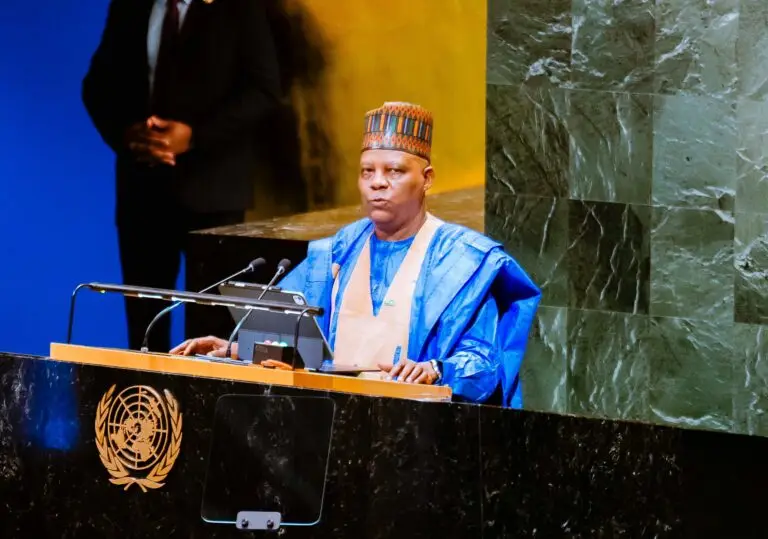
Tinubu, represented by the Vice-President, Sen. Kashim Shettima, made the call at a Climate Submit during the 80th Session of the United Nations General Assembly (UNGA), in New York, United States of America.

The president stated that the climate emergency demands not just words, but courageous and
sustained leadership.
Tinubu said Nigeria was mobilising $20 to $25 billion in climate finance by 2030, including green bonds, blended
finance, and public-private risk-sharing mechanisms.

Tinubu, therefore, called on global partners to scale up concessional
finance, knowledge sharing, and technology transfer, to accelerate not
just Nigeria’s transition, but Africa’s contribution to a safer, more
sustainable world.

He said,” We aim to unlock at least seven – 10 billion dollars in grants and concessional finance from global partners, while promoting technology transfer, regional energy integration, and green entrepreneurship to drive inclusive
growth.

” For Nigeria, a country acutely vulnerable to climate impacts, climate action is not a choice; it is an existential
necessity. “To mobilise resources, we have undertaken significant domestic
reforms.

” We have simplified and modernised our tax laws to ease compliance, removed unproductive fossil fuel subsidies, reduced
burdens on households and businesses, and enhanced revenue
efficiency.

” At the same time, we are strengthening our business environment through legislation and policies that improve the ease of doing business.

“This is to attract private capital and expand opportunities for
investment in clean energy and sustainable infrastructure.”
Tinubu said said in March 2025, Nigeria launched the Nigeria Carbon Market
Activation Policy, which establishes a robust framework for high integrity emissions reductions.

He added, ” While positioning Nigeria as a credible hub for Article 6, Voluntary and Compliance carbon markets.
“Through this mechanism, our target is to mobilise up to 2.5 billion dollars by 2030 in high-quality credits and related investments.

” We are under no illusion: no country can tackle the climate crisis
alone. “Like other developing nations, Nigeria requires significant
support to implement effective mitigation and adaptation strategies.
” We therefore call on International Financial Institutions notably the
World Bank, IMF, and African Development Bank to scale up financing
for climate action.

” Likewise, developed countries must honour their climate finance commitments, including the 100 billion dollars annually
pledged under the Paris Agreement.”
He said that as a demonstration of its unwavering commitment, Nigeria had
updated its Nationally Determined Contributions (NDC 3.0), in line
with UNFCCC guidance.

Tinubu continued ,”This enhanced NDC reflects greater ambition, integrating mitigation and adaptation measures to safeguard our people, protect ecosystems, and accelerate inclusive growth.
” It was formally submitted to the UNFCCC Secretariat on September 21.

“This NDC3.0 departs from the business-as-usual approach to an
absolute economy-wide emission reduction, our highest ambition
level to date.”
The president said that the targets were better defined and will be supported by
an investment plan to accelerate its implementation.
Tinubu added, ” Nigeria’s NDC 3.0 commits to:
I. Significantly increasing mitigation and adaptation ambitions with
clearer target when compared to NDC2.0.
Within the LULUCF sector, Nigeria aims to lower the
deforestation rate by 60 percent, which offers a substantial mitigation
potential of 304.8 MtCO2eq.
” while also pursuing a mitigation
potential of 34.4 MtCO2eq by increasing forest area through
reforestation and afforestation.”
Tinubu said that Nigeria was increasing the adoption and use of cleaner energy systems,
especially in manufacturing and industries.
He added, ” We are increasing
captive generation capacity using cleaner fuels by installing seven
GW, 50 per cent renewable.
” And 50 per cent natural gas, for a practical “Energy Mix Plan”, on our journey to net-zero by 2060; electrifying key sectors such as public transport, industry.
“We are also while implementing national energy efficiency standards
to deliver absolute reductions in energy intensity by 2030.”

The president said that for the first time, “Health” and “Action for Climate
Empowerment” have been included as priority sectors in Nigeria’s
NDC3.0, demonstrating its commitment to an economy-wide climate governance.
He also said that Nigeria was scaling climate-smart agriculture to reach five million smallholder farms by 2030, with a view to increasing yields by 20 – 30 per cent and expanding drought-resistant crops.

” We are building resilient infrastructure, integrating early warning systems,
climate-informed urban planning and resilient housing to reduce climate-related damages by 50 per cent.
” We plan to restore mangroves,
forests, and wetlands to enhance carbon sinks by 200 metric tonnes of
Carbon Dioxide Equivalent (MTCO2e), cumulatively by 2030, while protecting biodiversity and livelihoods.
” Nigeria aims to lower the deforestation rate by 60 per cent , which offers a
substantial mitigation potential of 304.8 MtCO2eq, while also pursuing
a mitigation potential of 34.4 MtCO2eq by increasing forest area through reforestation and afforestation,”Tinubu added.
He said institutionally, Nigeria had established the National Council on
Climate Change (NCCC), supported by a cross-ministerial
Secretariat, to ensure coherence, accountability, and measurable
results.
He reaffirmed that for Nigeria, climate action was not a trade-off between growth and sustainability, it was the pathway to
sustainable growth, innovation, security, and shared prosperity.

Tinubu assured that Nigeria was ready to work with all partners, to lead where necessary, and to deliver because the time for climate action is now.

NEPZA Seeks Partnership With American Investors To Boost Job Creation, Expand Exports

0

The Nigeria Export Processing Zones Authority (NEPZA) has called for partnerships with American investors to enhance Nigeria’s free trade zones and boost job creation and to expand exports.

Dr Olufemi Ogunyemi, the Managing Director of NEPZA, in a statement, yesterday made the call while delivering a lecture at the sidelines of the United Nations General Assembly (UNGA) in New York.

The lecture titled “Free Zones and Industrial Competitiveness: Catalysing Investment Through Regulatory Innovation” was part of a side event themed “Ease of Doing Business in Nigeria: A New Era of Economic Opportunities.”

Ogunyemi said the forum provided a vital space to match policy action with private capital.

“Nigeria’s free zones are designed as practical business enclaves for industrial upgrading and credible, regionally scalable investments.

“We are therefore asking U.S. investors and institutions to undertake site visits to Lagos Free Zone, Lekki Free Zone, Abuja Industrial Park Free Zone and other zones to see existing infrastructure and anchor tenants,” he said.

According to him, NEPZA is seeking partnerships for anchor projects that would transform into small and medium enterprises’ factory shells, create jobs and promote local procurement content.

He said opportunities also existed for co-financing shared infrastructure that would enable hundreds of tenant investments and support scaling up of production for exports.

Ogunyemi reaffirmed NEPZA’s readiness to support due diligence, provide regulatory clarity, and facilitate the needed structure for investors willing to move from dialogue to signed commitments.

The NEPZA boss said the authority had applied world-class mechanisms to raise the industrial competitiveness of the free zones through infrastructure development, regulatory predictability, cluster effects and market access.

He said the Federal Government, through NEPZA, would continue to prioritise private capital in building infrastructure in both private and public-private partnership free zones, describing them as principal engines of rapid transformation.

Ogunyemi urged investors to consider the vast size of the Nigerian market as a springboard for regional expansion and international exports.

He also thanked the Presidency for including NEPZA in Nigeria’s UNGA delegation, and the Presidential Enabling Business Environment Council (PEBEC) for providing a platform to attract U.S. investors into the free zones.

Iconic Rivers Photographic Legend, Don Barber, Honoured With Lifetime Achievement Award

0

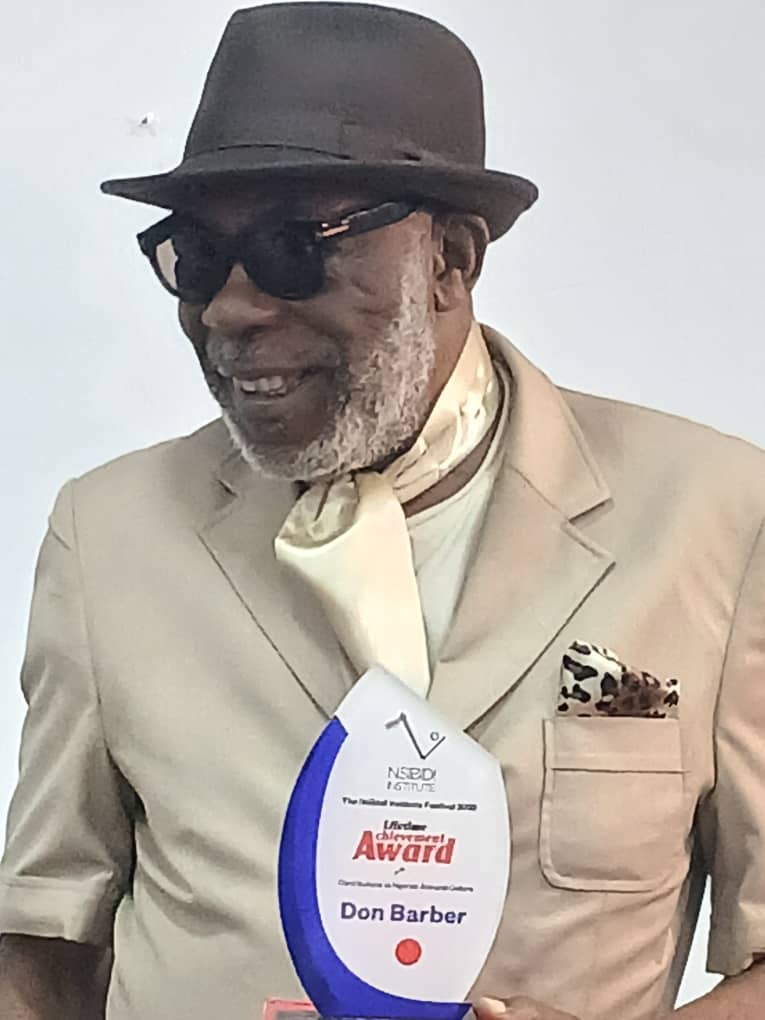
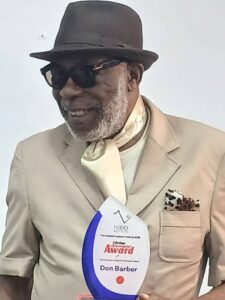
The grand finale of the Nsibidi Institute Festival 2025 was electrified with emotion last night as the lens of Nigerian photography history focused squarely on one of its most revered figures. In a moving ceremony at the prestigious Quintessential Event Centre in Ikoyi, iconic photographer Don Barber was presented with the esteemed Lifetime Achievement Award, cementing his legacy as a national artistic treasure.

The award, presented by the Institute’s Director, Dr. Adaora Nwosu, was not merely for a career spanning decades, but for the indelible mark Barber has left on the very fabric of visual storytelling in Africa. It served as a powerful recognition of his dual role as both a master craftsman and a foundational mentor.

“We are not just honouring a photographer; we are honouring an institution,” Dr. Nwosu declared to a captivated audience of dignitaries, artists, and former protégés. “Don Barber’s camera has chronicled the soul of our nation—from its tumultuous moments to its triumphs. More importantly, his generosity of spirit has trained the eye of a generation. Many of the top photographers working in Nigeria and across the globe today can trace their artistic lineage back to his studio.”

The event, described by attendees as both poignant and celebratory, saw a who’s-who of the African art scene in attendance. A curated slideshow of Barber’s most powerful works—striking black-and-white portraits of cultural icons, vibrant scenes of everyday life, and historic documentary images—was projected, drawing gasps and nostalgic applause.

Upon accepting the award, an visibly moved Don Barber, known for his humility, shifted the praise back to his community. “This camera,” he said, holding up his classic film camera, which he had brought on stage, “is only a tool. The real magic has always been in the people, the stories, and the light of this beautiful country. My greatest pride is not in the pictures I took, but in the brilliant photographers I have had the privilege to teach. They are the future, and they ensure that our stories will continue to be told with truth and beauty.”

The evening culminated in a standing ovation that lasted several minutes, a heartfelt tribute to a man who has, through his lens and his lessons, forever shaped how Nigeria sees itself.

Finchglow Travels Gathers Stakeholders In PH To Explore Strategies For Sustaining Growth In Nigeria’s Travel Industry

0

Over the years, Nigeria’s travel industry has experienced spontaneous growth and unity as a result of Partner Plus Connect (PPC), a platform created by Finchglow Travels, saddled with the responsibility of ensuring growth and knowledge among airlines and other traveling agencies.

In order to equip partners and agents with skills, tools, and knowledge that aid their businesses and ensure they grow from agents to distributors, Finchglow Travels hosted an event at the Golden Tulip Hotel on Friday, 26th September 2025, in Port Harcourt. The event had partners such as Amadeus, Afrijet, and Lufthansa present, as well as other travel agencies.

Themed “Boosting Travel Demands: Airlines and Consolidator Insights,” the conference provided a platform for stakeholders to share insights, showcase innovations, and explore strategies for sustaining growth in Nigeria’s travel industry.

Mr Ezekiel Ikotun, Managing Director of Finchglow Travels

Finchglow Travels, founded in 2006, is not just a travel agency but also a leading consolidator in Nigeria’s aviation sector. With about 19 years in business, it has grown into a trusted provider of travel management services, including flight bookings, visa support, and logistics for both corporate and individual clients. The company has earned multiple awards from global airlines such as British Airways, Air France, KLM, Delta, and Virgin Atlantic for excellence in sales and services. Today, Finchglow Travels continues to strengthen the travel industry through innovation, consolidation, and strategic partnerships.

The event comprised an interactive and engaging panel session, which provided answers on ways travel demands can receive boosts. The panel featured three of Finchglow’s senior staff.

Mr. Abiola Bakare, Sales Manager Finchglow Travels, described the current state of travel demand as an interesting one. He cited statistics from a major newspaper in 2023, showing an increase in passenger numbers from 15.6 million in 2023 to 15.8 million in 2024, leaving a difference of 400,000 passengers who travel out of Nigeria yearly. He projected that travel demand would likely return to pre-COVID levels by the end of the year.

He highlighted positive factors driving travel demand, one of which is pleasure. In today’s world, people now mix business with leisure. Other drivers include technological advancement, which has made flight booking seamless, domestic and regional tourism, which is being embraced as a cost-saving measure, and sustainability and eco-tourism.

On the negative side, he mentioned economic realities, pointing out that people tend to be limited financially. He also highlighted visa restrictions, the harsh realities of life abroad, which force some people to return home, and the shift from Africa to Asia, where people are granted access to quality education and residency. High ticket costs, both domestic and international, also limit demand, as tickets are usually priced in dollars.

Mr. Abiola also mentioned that global security issues such as wars or instability often limit travel demand.

“Finchglow Travels is not about selling tickets. It is about providing a holistic travel service from end to end,” he said.

“One should be able to think beyond tickets,” he added.

Ebiere Bekesuo, Head of Operations Finchglow Travels, spoke on the role of travel consolidators in boosting demand and supporting both airlines and agencies. With Finchglow’s 19 years in the industry as one of Nigeria’s leading consolidators, she explained the role using a mental triangle: airlines at the top, travel agencies and clients at the bottom, and consolidators positioned in the middle.

She defined a consolidator as one who buys in bulk from airlines and distributes to retailers, who are the travel agencies. She described these agencies as “Soft Agents or Power Trade Partners.””

Finchglow Travels, she explained, is geared toward being the intermediary between airlines and agencies, gathering volumes from agencies and giving them to airlines by filling up seats through discounted rates. It offers attractive fares for corporates, NGOs, and oil and gas firms.

“Finchglow Travels is not just a travelling agency but a consolidator with a unique service,” she added.

Ekemiebi Ololo, Branch Manager Port Harcourt, described Finchglow as “the agent’s agent” because the company both buys and sells in bulk at discounted rates.

She highlighted that one of the ways for agencies to leverage Finchglow is by accessing discounted fares. These include humanitarian, student, and corporate fares, all of which are competitive.

She also noted that registration on Finchglow’s website and signing up for the Partners Plus Platform provides additional benefits. This gives access to unique countries, a seamless process via OTA, training opportunities, and a 24/7 customer care line to deliver top-notch service.

Travel agencies, over the years, can also grow their businesses by creating domestic and regional packages.

Mr. Abiola stressed the importance of innovation.

“One should be able to think beyond tickets,” he said.

He encouraged agencies to provide related services beyond ticket sales, learn to create solutions, work with the right partners, diversify into different fare categories, and provide insights to airlines through strategic approaches.

“Finchglow is moving from volume to value — a travel agency that provides end-to-end solutions, not just selling tickets,” he added.

Partnering with major players and leveraging technology, he noted, brings about advanced growth for both airlines and agencies.

Mr. Bankole Bernard, CEO of Finchglow Travels, emphasized why airlines and agencies continue to trust the company.

“There are less than three agencies in this country that operate at the level we do as a consolidator,” he said. “What sets us apart is the structure we’ve built. We hold monthly virtual meetings and quarterly physical meetings nationwide, keeping constant touch with our partners. We have knowledgeable staff who understand the industry inside out, and we make sure our operations are clean — no debit memo issues, no system abuse, and no cutting corners. We work with professionalism.”

He further explained Finchglow’s approach to negotiations.

“Our focus is always on profitability, increasing revenue, and raising the load factor. At the end of the day, the airline’s responsibility is to lift passengers, while the consolidator’s responsibility is to ensure the aircraft is filled. That’s where we come in. We consistently fill the aircraft and maintain strong, professional relationships with airlines. That is why the industry trusts us.”

By Miracle Chidinma Amaechi

NDDC Holds Thanksgiving for Successful 25th Anniversary

0

The Niger Delta Development Commission, NDDC, says it has every reason to thank God for successfully celebrating its 25th anniversary across the Niger Delta region without untoward incident.

Speaking during a Thanksgiving ceremony at the NDDC Event Centre in Port Harcourt, the NDDC Managing Director, Dr. Samuel Ogbuku, emphasised the importance of expressing gratitude to God for the Commission’s achievements over the years.

A statement signed by the Director, Corporate Affairs of th Commission, Seledi Thompson- Wakama, indicated that the event was attended by the NDDC Executive Director, Finance and Administration, Alabo Boma Iyaye, the Executive Director of Corporate Services, Hon. Ifedayo Abegunde, other Directors, and staff of the Commission.

NDDC Managing Director, Dr. Samuel Ogbuku (right); the NDDC Executive Director, Finance and Administration, Alabo Boma Iyaye (middle), and the Executive Director, Corporate Services, Hon. Ifedayo Abegunde (left), during the NDDC Thanksgiving ceremony in Port Harcourt.

The NDDC Chief Executive Officer stated that Thanksgiving was a good way to seek the face of God, noting that showing gratitude even in the midst of challenges would bring about a positive turnaround.

Ogbuku observed that the achievements recorded by the Commission over the past 25 years should be attributed to the benevolence of God.

He said: “We have sought the face of God in a week-long spiritual activity, denying the body and flesh, for God to intervene in the affairs of the Commission because in every journey in life, there are bound to be challenges. We believe that though there are challenges, God can make us overcome with our prayers and supplications.”

The NDDC’s helmsman, who also admonished the Commission’s staff to shun every form of evil act to avoid God’s wrath, said the present NDDC Board would remain focused and committed to the development of the Niger Delta region.

He maintained that under his leadership, the NDDC Management would continue to work in harmony with staff, soliciting more support to enable the Board and Management to achieve their targeted goals.

Earlier in his opening remarks, the Director of Administration and Human Resources, Mr. Patrick Ekade thanked God for the successes the NDDC had recorded over the years.

Also speaking, the NDDC fellowship Pastor, Mr. Udoma Sabbath observed that God had answered the prayers of the staff by bringing a Board and a Chief Executive Officer “that are determined to make a difference in the Niger Delta region.”

Nigerian marketers Hike Fuel Price, As PENGASSAN, Dangote Clash Over Workers Sack

0

The Independent Petroleum Marketers Association of Nigeria has announced that its members would effect a petrol price hike nationwide as Dangote Refinery suspended sales of petrol in Naira.

The National President of IPMAN, Abubakar Maigandi, who disclosed this on Saturday, confirmed that the 650,000-barrel-per-day refinery, on Friday, sent an email to its customers, including marketers, informing them of the suspension of petrol sales in Naira with effect from Sunday, 28th September 2025. The company had earlier cited exhaustion of its crude-for-Naira allocation.

“Yes, we received the email from Dangote Refinery on the suspension of Premium Motor Spirit sales in Naira on Friday evening. The implication is that our members will announce a fuel price increase. It may take effect from Monday if the Federal Government does not intervene,” Maigandi said.

According to him, the implication is that fuel pump prices would go up from their current N865 and N910 per litre in Lagos and Abuja.

He said the new price template would be effective from Monday, 29th September, if the Federal Government does not address the Naira-for-crude-oil allocation with Dangote Refinery.

The Naira-for-crude agreement between Dangote Refinery and the Nigerian government came into effect on October 1, 2024.

The Federal Government, in April 2025, declared that the initiative, which is intended to bring down the cost of production for the refinery and, by extension, impact the price of petrol, would continue to be considered.

Meanwhile, the Petroleum and Natural Gas Senior Staff Association of Nigeria has threatened to picket the Dangote refinery over the alleged sacking of 800 workers who joined the association.

The association alleged that over 2,000 Indian nationals were recruited by the company to take over the jobs of those sacked by Dangote on Thursday.

However, the Dangote refinery said it dismissed a few of its workers over repeated cases of sabotage, even as unions accused the company of retaliating against staff who joined organised labour.

An internal memo dated 25 September, signed by the refinery’s Human Asset Management head, directed affected employees to return company property, obtain clearance and await computation of their benefits. The memo described the decision as part of a “total reorganisation” following reported cases of sabotage in different units.

The move came a day after many Nigerian staff formally joined the Petroleum and Natural Gas Senior Staff Association of Nigeria (PENGASSAN). The union said more than 1,000 employees had signed membership forms, which were verified by management.

PENGASSAN condemned the dismissals as an attempt to weaken labour representation. “This action is not just sabotage; it is a clear effort to undermine workers’ constitutional rights to freedom of association,” the union said. It also alleged that management had sought the arrest of its caretaker committee chairman for union involvement.

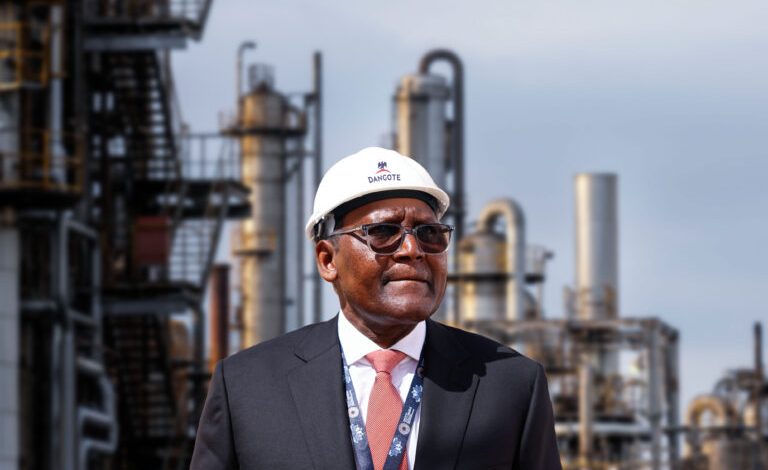
The Dangote Petroleum Refinery dismissed a number of Nigerian workers, citing sabotage within its facility, as unions accuse the company of retaliating against staff who joined organised labour.

An internal memo dated 25 September, signed by the refinery’s Human Asset Management head, directed affected employees to return company property, obtain clearance and await computation of their benefits. The memo described the decision as part of a “total reorganisation” following reported cases of sabotage in different units.

The letter, titled, ‘Reorganisation’ and addressed to all staff of the refinery on Thursday partly read, “In view of the many recent cases of reported sabotage in different units of the petroleum refinery leading to major safety concerns, the management is constrained to carry out a total reorganisation of the plant.

“As a consequence of this development, we wish to inform you that your services are no longer required, with effect from the eve of Thursday, the 25th of September, 2025

In a statement on 26 September, it said over 3,000 Nigerians remain in active employment and that only “a very small number of staff were affected.” It added that the changes were unrelated to union activities and stressed its commitment to international labour standards, including freedom of association.

The move came a day after many Nigerian staff formally joined the Petroleum and Natural Gas Senior Staff Association of Nigeria (PENGASSAN). The union said more than 1,000 employees had signed membership forms, which were verified by management.

PENGASSAN condemned the dismissals as an attempt to weaken labour representation. “This action is not just sabotage; it is a clear effort to undermine workers’ constitutional rights to freedom of association,” the union said. It also alleged that management had sought the arrest of its caretaker committee chairman for union involvement.

However, leaders of PENGASSAN believe that the workers were dismissed for joining the union.

The General Secretary of the group, Lumumba Okugbawa, alleged that 800 workers were sacked for becoming members of PENGASSAN.

“When the witch cries in the night and the baby dies in the morning, what do you expect?

“In the letter, they didn’t say it was because they joined the union. But as of Thursday, the workers actually completed the process of unionisation as directed by the Federal Government.

“So, over 800 agreed to join the union. The management went to do headcounts, and they found out that these guys voluntarily joined; the next thing we saw was the (sack) letter, firing all Nigerian staff.

Opinion – Rivers State: After The Storm, We Can Begin Again

0

When you have been a combatant or supporter in a conflict, there is no doubt that it can be difficult to be the one to call for reconciliation and restoration of relationship, especially if you were and perhaps are convinced of the rightness of your position.

I have been on the side of Governor Siminilayi Fubara in the crisis that rocked Rivers State due to his disagreement with his political father, my professional colleague and ethnic compatriot, the immediate past Governor of the State and current Minister of the Federal Capital Territory, Chief Nyesom Ezenwo Wike.

I had not received any favour nor had I ever met Governor Fubara when my dear senior friend, Dr. Obidinma and I filed an action in the High Court of Rivers State praying for Rt. Hon. Martins Amaewhule, our compatriot and representative, to vacate his seat as member of the House of Assembly upon his defection and because in seeking to impeach the Governor, which was the trigger of the crisis, he was doing what we had not sent him to do.

As a matter of fact, I had just led an epic litigation battle against Fubara’s election as Governor at the Governorship Election Tribunal and the Court of Appeal against the wave of support of Wike and his followers. Later, by what I can only ascribe to God’s mysterious way of performing His wonders, Governor Fubara appointed me into the 14th Governing Council of the Rivers State University from which the 13th Council, headed by the man I can describe as my father in legal practice, peremptorily removed me as a senior lecturer.

Less than two weeks after the disagreement between Governor Fubara and Minister Wike blew open, Wike paid me a sort of respect I do not remember ever receiving from any government official in Nigeria. In front of the St. Cyprian’s Anglican Church, Port Harcourt, in the presence of judges and lawyers, he came down from his official FCT 001 limousine shook my hand and that of another colleague, entered his car and zoomed off. It means I could easily have fought on his side. But I did not. I fought on the side of Governor Fubara with conviction. In the end, we ‘lost’. No regrets.

Many, if not most, Rivers persons would share in my view and pain that we lost. And for good cause, whether personal or altruistic. Altruistically, I believe that Wike was wrong on his rage against Fubara.

On a personal ground, Fubara not only appointed me to the 14th Council of RSU, through the instrumentality of Chijioke Ihunwo, but also approved my reinstatement as a senior lecturer. The least I could do to show appreciation was to support him politically. I did and would still do.

It is now the time to show that support. Support of a political leader I have come to learn is measured not in the view of the supporter but the leader.

The greatest and Eternal Political Leader, Jesus Christ, the Righteous, taught it when He said that one cannot be His follower if he is not ready to hate and deny, father, mother, even oneself to follow Him. What a supporter would always pray is that the leader leads him not into a path of eternal regret.

That is the challenge of Rivers people today, especially Governor Fubara’s teeming supporters. I know we are praying that he should lead us along the right path. I think we can trust him to do so. The crisis that erupted between Fubara and Wike has had one salutary effect: it enabled Rivers people to know Fubara for whom he truly is.

We did not have the opportunity to see or hear him closely in the lead-up to the 2023 election. He was a mystery figure, and all sorts of myths were spun against and of him. Like the breaking of an incubated egg by hatching, the crisis brought him out. It revealed the great qualities that his ‘mother hen’ saw but wanted it only to serve her.

We saw the qualities we thought could not be found in anything coming from ‘Nazareth’. The crisis, which turned out to have a dimension neither the mother hen, the chick nor the people imagined, only revealed one thing: all the parties and those concerned have to find the best way to manage our expectations to make Rivers State no more a State known for the wrong reasons but for ability to emerge from the ashes to a great society.

We have seen perhaps, and hopefully so, the worst we can see; we have been to the pit of shame and embarrassment. We have fallen. We can now tell our detractors, ‘rejoice not over me oh my enemy, when I fall, because I shall rise again’. It is time to rise from the dung.

The crisis did not do harm only to Fubara or Wike or members of the House of Assembly led by Rt. Hon. Martins Amaewhule. It hurt their families, communities, relationships, and, of course, the whole of Rivers State in unimagined and unimaginable ways. We can make a choice: to continue in acrimony, claiming to have won or lost, or decide to dust ourselves, embrace each other and go to the Ecumenical Centre to call on God to forgive all of us as we forgive each other.

Understandably, the former Sole Administrator went there for Thanksgiving. Rivers people should return to the Centre for repentance, reconciliation, and restoration. He that tried us as silver is tried, allowed us to pass through fire and water and ‘caused’ men to ride over our heads can in mercy bring us to the place of peace and abundance again.

My people of Oroigwe, Ward I, Obio/Akpor Local Government Area, were unwittingly thrown up to the centre of the crisis: Rt. Hon. Martins Amaewhule, Chief (Amabassador) Chijioke Ihunwo, Dr. Obidinma Obidinma and Dr. Chukwuma A.J. Chinwo each played well his part.

From the same Oroigwe is coming this call for 3Rs – Repentance, Reconciliation and Restoration. It may be hackneyed and self-deceptive to say, ‘no victor, no vanquished’, as there were victory and vanquish, but it is edifying for all to return and rebuild.

The best place to start rebuilding is where the crisis started. I am old enough to advise the governor, Wike, and all the current political gladiators in the state.

I counsel that Chief Nyesom Wike and Governor Fubara should, notwithstanding whatever they may have agreed before the election and after the crisis, if they have not done so, take a retreat in the spirit of grace (may God give them when they ask) to find out where each went wrong, where each offended the other, where each offended the others’ followers and where they offended the corporate interest of the State, blessed by God and now ravaged by men, and seek to let the right things be done.

It can be a difficult task with human beings. So the fewer, humans, if any, are involved the better. But it is easy with God. So God should be at the centre of such a meeting, and the participants should fear him.

To the House of Assembly of Rivers State, I would like to proffer this gratuitous counsel: The House of Assembly, the legislature in any society not only makes the law, it provides the platform for the people of the State to be heard in the running of the affairs of the State. We have suffered for the past 10 years in having a House of Assembly that seemed absent.

My brother always says that when a dumb man is forced to speak, his utterance may be too forceful for comfort. I, and I am sure most persons in Rivers State, want the House to be seen and heard.

But we do not want a House that acts as a trade union and not a representative of different persons and communities with varied needs. We do not want a House that appears deaf and dumb to the cries and afflictions of the people they represent. Irrespective of how the members emerged, it is crucial that each should know that he is there in the name and for the interest of his people as claimed. A representative is a proxy for his constituents and for no other, not even his sponsor.

While every member of the RSHA must stand up for and on the interest of his constituents, he should see himself or herself as a co-builder of the State. While he should appreciate the support and sponsorship of any person for getting into the House, he should realise that his obligation is first and foremost to the State and his people. While he should not be an executive stooge or rubber stamp or anybody’s tool, he should for the sake of the people cooperate with the other arms of government. Real democracy can only be seen through the legislature.

Governance is not about ego trips. Neither the Governor nor the FCT Minister should allow any group in the open or in secret to fan their egos by sycophancy, backbiting, genuflection, spying, and reporting. They have caused the state enough pain and stress and held us down. We can only be free when the truth reigns. The good thing is that every political leader, especially Chief Wike and Governor Fubara, can easily identify the real from the pretentious supporters. They know who is seeking for themselves and who is seeking for the interest of all. Everyone’s antecedent goes before him to proclaim what sort of person he or she is, especially with a leader that is not ready to be deceived.

There must be a determination to allow the people to have their say and democratically have their way. Our state has become one in which everything and anything goes because there is the perpetual thought of seeing each other as from not just different but enemy ethnic groups for absolutely little or no cause. The Rivers person seems eager to rather let an outside take everything than allow his compatriot of any other ethnic group to have a bite! That is why I join Club 401 to urge that this state is in urgent need of a state conference of ethnic nationalities. We can not continue to allow the State to be run like a territory conquered by a few opportune men and women and expect it to develop.

Dr. C.A.J. Chinwo wrote in from Port Harcourt

Public Administration As Weapon Of Mass Destruction: A Present And Grave Danger Of Nigeria’s Underdevelopment, Says University Don

0

In spite the vast and potential human and material resources that abound in Nigeria, the country continues to be weighed down by deliberate institutional mechanisms, policies, and corrupt practices that erode accountability, promote elite capture, and entrench a culture of underdevelopment.

These have been identified as “public administrative weapons of mass destruction,” which manifest in infrastructural decay, brain drain, rising inequality, youth unemployment, and a growing disillusionment with the state. The situation can only be reversed through a moral reawakening and civic responsibility, driven by value-based education, ethical leadership, and robust institutional reform aimed at restoring integrity and trust for a better country.

These were some of the postulates put forward by Professor Jacob Sunday Akikibofori while presenting the 70th Inaugural Lecture of the Ignatius Ajuru University of Education (IAUE) in Port Harcourt on Thursday, September 25, 2025 at the school’s auditorium.

Professor Akikibofori, whose lecture titled, “The Conscientious Individual And The Debased Social System: Unmasking Public Administration Weapons Of Mass Destruction In Nigeria”, noted that that public service in Nigeria has largely deviated from its core values of neutrality, efficiency, and responsiveness, to become an arena for personal aggrandizement and political patronage.

According to him, the weaponization of public administration in Nigeria is visible in the deliberate use of state institutions to stifle positive dissent, encourage examination malpractice, manipulate electoral outcomes, and protect political cronies, while regulatory bodies, anti-corruption agencies, and internal audit mechanisms are frequently captured by powerful interests and turned into instruments of vendetta or political control.

He noted that beyond leadership failure in Nigeria, “lies an ecosystem of impunity protected by law enforcement institutions, judicial compromise, and regulatory agencies that have lost their moral compass. These are hidden under the “weapons of mass destruction,” not in the traditional sense of nuclear or biological warfare, but as tools that destroy the human spirit, democratic accountability, and national aspirations.”

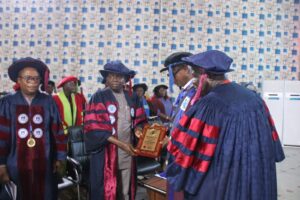
Professor Akikibofori (2nd right) receiving a commemorative plaque from the representative of the VC after his presentation

Akikibofori, who is a product of the University of Port Harcourt and a professor of Sociological Theory at IAUE further lamented that the public administrative sector which should serve as an engine of development and democratic consolidation has, “instead become a cesspool of maladministration, rent-seeking, and policy somersaults.

“From ghost workers in public payrolls to misappropriation of funds in constituency projects, from nepotism in civil service recruitment to politicised budgeting and procurement processes, the Nigerian administrative system presents a deeper rot that affects the very foundation of governance,” he stated.

Dissecting how corrupt practices, ranging from academic malpractices, symbolised by the the misuse of the “red pen”, ordinarily a neutral tool for marking scripts and assessing performance, becomes a tool for manipulation, rather than instruments of scholarly assessment, he said the consequences, “echo far beyond classrooms into the health sector, judiciary, infrastructure, and governance systems, producing leaders and administrators who perpetuate dysfunction rather than challenge it.”

To address the entrenched challenges of corruption, nepotism, and weak institutional frameworks, Professor Akikibofori recommended urgent holistic reform agenda anchored on integrity, transparency, and meritocracy that promotes the concept of the “Conscientious Individual.”

For him, the conscientious individual becomes the metaphor for ethical resistance, moral clarity, and a civic responsibility in the face of systemic decay. He becomes an individual whose actions are guided by a profound moral awareness and unwavering commitment to ethical principles, regardless of the social, political, and economic consequences.

He stated that rather than allow the conscientious Nigerian who insists on institutional integrity to be victimised by the instruments meant to uphold justice and threatened by a “debased elite,” that thrives on administrative dysfunction of survivalism, sycophants and systemic inertia, such individuals should be encouraged to become catalysts of national renewal.

“The conscientious individual, whether a student refusing to bribe, a lecturer grading fairly, a judge rejecting inducement, or a civil servant committed to transparency, represents the hope for a better Nigeria.

“Such individuals, empowered by knowledge and guided by conscience, can pierce through the fog of moral collapse and become catalysts of national renewal,” he noted.

Citing developed countries such as China, Germany, and South Korea where deliberate and strategic reforms to build resilient, transparent, and development-focused public systems worked, Prof. Akikibofori stated that those countries have proven that the ideal system is not a myth.

He described them as a product of intentional design, strong institutions, leadership commitment, and some cultural ethos that value transparency, merit, and accountability, noting that only a reformed public administration anchored on justice, equity, and conscience would be the foundation for a prosperous Nigeria.

For this to happen, Professor Akikibofori recommended that the education sector must undergo a comprehensive transformation to uproot academic malpractices and restore trust in the learning process, recruitment and promotion frameworks in public institutions should be built on standardised, verifiable and performance-based criteria, while strong legal enforcement and an independent judiciary, with robust mechanisms for prosecutingacts of impunity should be put in place.

Speaking at the end of the lecture which was well attended by academics from the institution and sister institutes in the state, community members of the lecturer, friends and associates, the Vice Chancellor of the institution, Professor Okechuku Onuchuku, commended the lecturer for the insights and recommendations and urged relevant agencies of government to note the recommendations.

Represented by the Director Academic Planning Professor Joseph Kinanee, the Vice Chancellor commended Prof Akikibofori for contributing immensely towards the growth of knowledge and being a vanguard for moral reawakening.
Represented by the Deputy Vice Chancellor (Academics), Professor Joseph Kinani, the Vice Chancellor commended Prof Akikibofori for contributing immensely towards the growth of knowledge and being a vanguard for moral reawakening.