

Home Blog Page 127

NDDC to Support Skills Training in Custodial Centres

0

The Managing Director of the Niger Delta Development Commission, NDDC, Dr Samuel Ogbuku, has assured that the Commission will assist the Nigerian Correctional Service with training and skills acquisition for inmates in custodial centres in the region.

Ogbuku stated this during a courtesy visit by the Comptroller-General of the Nigerian Correctional Service, Mr. Sylvester Nwakuche, at the NDDC headquarters in Port Harcourt.

The NDDC Chief Executive Officer observed that there had been a long-standing partnership between the Commission and the correctional service, noting that the NDDC had incorporated the Nigerian Correctional Service into the Operation Light Up the Niger Delta and the Free Medical Services. He added that the Commission would consider various ways of incorporating prison inmates into its youth training programmes.

He said: “We have had a partnership with the Correctional Service over the years in some of our interventionist programmes, even before the name was changed from Nigerian Prisons Service to Nigerian Correctional Service. But under our watch, we have included the Nigerian Correctional Service in the operation Light Up the Niger Delta to ensure the place is well illuminated, as darkness promotes criminality. We are glad that since then, we have not heard of any jailbreaks in this region.

Considering that prison inmates have fundamental human rights, the NDDC will partner with the Correctional Service to see areas it can intervene, such as the youth internship scheme, training programmes.”

He added that, towards realising the objective, the Commission would select from its database to train inmates in their areas of competence, thereby ensuring its sustainability.

In response to the Comptroller-General’s request for assistance in decongesting correctional facilities, Ogbuku said the NDDC would oblige after reviewing the position of existing laws.

He remarked: “I have also heard the Controller General soliciting for support in the area of decongesting the custodial facilities in the region by way of paying fines for those being held due to their inability to pay minimal penalties imposed by the courts. We are prepared to intervene to ensure that such inmates, who are also members of society, are supported in regaining their freedom.”

Ogbuku called on the hierarchy of the Correctional Service to weed out officers who conspire with inmates to smuggle drugs into custodial centres.

The Comptroller General of Correction, Mr. Sylvester Nwakuche, applauded the Managing Director of NDDC and his management team for the laudable feats recorded in the region since they assumed office.

According to him, “Some of us here may not understand what NDDC has done for the region. The NDDC has executed impactful projects in the community where I come from. He acknowledged that the NDDC had provided some amenities in almost all the correctional centres in the Niger Delta region.

Nwakuche appealed for further collaboration with NDDC across diverse areas, including agriculture and health.
G20 Summit: Nigeria To Benefit From Global Economy

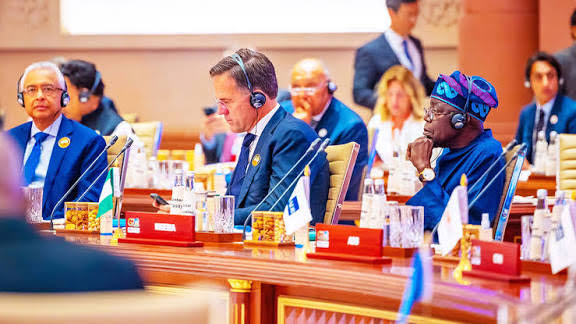
The Ministry of Foreign Affairs has reaffirmed Nigeria’s position towards benefiting from various sectors of global economy during the 2025 G20 Summit in Johannesburg, South Africa.

Amb. Bolaji Akinremi, Director of Reform and Foreign Service Innovation, Ministry of Foreign Affairs, disclosed this in an interview on Sunday in Abuja.

He spoke against backdrops of the expectations for the Summit, given that Nigeria is a member of the African Union (AU), and the event would be hosted for the first time in Africa.

According to him, the G20 agenda will impact positively on the socioeconomic, cultural, and humanitarian development of the African continent.

Bolaji said: “The Johannesburg G20 Summit will be the first of its kind to be held on the African soil, and that has great significance for us as Africans.

“Our expectation is that it is going to be very successful and that it is going to bring lots of hopes and fulfilment to Africa.

“Nigeria gained entrance and recognition at the same time with the AU into G20 in New Delhi, and since then, they have been members of the G20.

“Nigeria deserves and desires to be a member on its own, not just a guest country or on the platform of the AU, being the largest economy in Africa.

“So, we want to see how that works out in the coming years.”

He stressed that Nigeria’s preparation to host one of the pre-summit meetings in Abuja on Monday proved the country’s readiness to participate fully in the forthcoming summit.

This, according to him, means Nigerians should expect the issue of debt sustainability and reduction of debt burden across Africa would be discussed.

He said expected discussion during the summit would be climate change and climate financing, saying such would provide stronger platform for Africa Continental Free Trade Area to grow economically.

“Nigeria will be very strong on this. We must ensure we take advantage of it. Other G20 countries are also going to come up with different programmes that are going to bring us meaningful development.

“So, our expectation (at the summit is) to harness the potential and opportunities we have seen before now, and Nigeria has been preparing for this.

“There will be a pre-summit meeting here in Nigeria, and all of these are going to involve the inter-ministerial, private sector, and the public sector. So, we will hopefully come home with good results.

“We expect our involvement in G20 will become stronger and more focused, to identify areas we can champion, in terms of collaboration with other countries,” he added.

He revealed that Nigeria and South Africa already have youth dialogue and that hosting of the G20 summit on the African soil would bolster networking with other countries.

He described G20 as 20-powerful and rich countries of the world that determine the direction of global economies in terms of financing, development, and industrialisation.

“A lot of discussions at the summit will focus on sustainability of debt ratio, and this should give relief to some African countries, and to us too, because our debt profile is also increasing.”

He advised the private sector operators in Nigeria to cash in on President Bola Tinubu’s policies to grow limitless business environments under the auspices of the G20 summit.

“We are all keying behind President Tinubu and looking forward to a wonderful outcome and participation in the G20 in Johannesburg,” Bolaji said.

Factions Emerge In PDP, As Anyanwu Suspends Damagum, Others

0

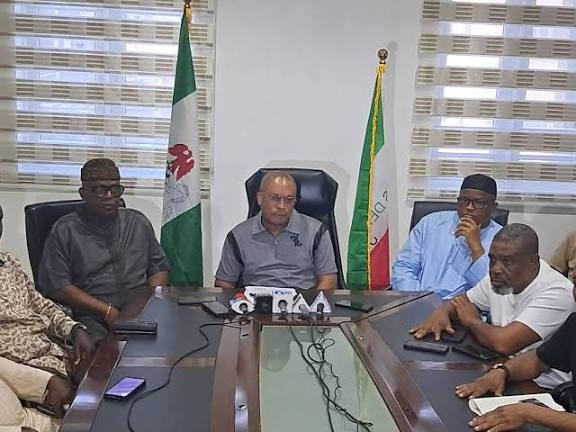
The Peoples Democratic Party has plunged deeper into crisis as fresh divisions emerged within its leadership, with a faction backed by the Minister of the Federal Capital Territory, Nyesom Wike, announcing the suspension of the Acting National Chairman, Umar Damagum, and five other members of the National Working Committee.

Briefing newsmen in Abuja on Saturday on behalf of the factional NWC, the PDP National Secretary, Senator Samuel Anyanwu, announced the party’s National Vice Chairman (North Central), Mohammed Abdulrahman, as the Acting National Chairman.

The faction also announced the suspension of the Acting National Chairman, Umar Damagum, and five other members of the National Working Committee, NWC.

Anyanwu, while briefing journalists in Abuja on Saturday on behalf of the factional NWC, announced the party’s National Vice Chairman (North-Central), Mohammed Abdulrahman, as the Acting National Chairman.

He said, “Unfortunately, some people may say that the National Secretary, National Organising Secretary who has the responsibility of monitoring everything and the National Legal Adviser, who is responsible for all legal issues, were purportedly suspended.

“On this note, we decided to suspend the National Chairman of the party, Ambassador Ilya Damagum, for incompetence, financial misconduct, and disregard for court judgment.

“He has been suspended for one month and should face the Disciplinary Committee.

“Secondly, we also suspended the National Publicity Secretary, Debo Ologunagba, for issuing statements without the party’s approval, and the Deputy National Vice Chairman (South), Taofeek Arapaja, has also been suspended.

“The National Financial Secretary, Daniel Woyenguikoro, who has been involved in alleged financial misconduct, has also been suspended.

“The National Youth Leader, Sulaiman Kadade, and the Deputy National Secretary, Setonji Koshoedo, have also been suspended for 30 days. All of them will be sent to the Disciplinary Committee to show cause why they should not be expelled.

The Atlantic Bell reports that the NWC under Damagum’s leadership had earlier announced the suspension of Samuel Anyanwu, National Legal Adviser Kamaldeen Ajibade, SAN, and two other members from the party. He announced that they will face the party’s Disciplinary Committee

15% Import Duty On Petroleum Products Will Worsen Inflation, Cost of Living Pressures – Experts

0

Some energy experts have expressed concern over the Federal Government’s approval of a 15 per cent import duty on petrol and diesel, saying it may drive up fuel prices.

They expressed their concerns in separate interviews on Saturday in Lagos.

On October 29, President Bola Tinubu approved a 15 per cent import tariff on petrol and diesel, a policy expected to raise the landing cost of imported fuel.

The experts said that the move could ranslate into higher pump prices for consumers, with some estimating an increase of up to N150 per litre or more.

Dr Ayodele Oni, Partner and Chair of the Energy and Natural Resources Practice Group, Bloomfield Law Practice, said the policy, though aimed at protecting local refining, could worsen inflation and cost-of-living pressures.


“The imposition of a 15 per cent duty will increase the landing cost of imported fuel, and this additional cost will be passed on to consumers.

“In a deregulated economy like Nigeria’s, where prices are determined by market forces, there’s a strong possibility of price volatility.” Oni explained.

Oni noted that the government’s stated objectives for the policy include strengthening national energy security, supporting domestic refining capacity, and ensuring competitive market stability.

“By making imported fuel more expensive, local refineries will become more competitive.

“This should, in theory, encourage domestic production and reduce dependence on imported fuel,” he said.

However, he warned that without adequate infrastructure and operational refineries, the policy could backfire, resulting in fuel scarcity and black-market activities.

“If local refining capacity remains weak, this duty could disrupt supply, as over 60 per cent of Nigeria’s fuel is still imported.

“The government must back this policy with infrastructural support, refinery rehabilitation, and efficient logistics to prevent scarcity,” Oni added.

Oni also emphasised that the increased duty would raise operational costs for importers and marketers, affecting competition and liquidity within the downstream sector.

“This policy could push out smaller independent marketers who may be unable to meet the new cost requirements, leaving the market dominated by larger players,” he said.

As an alternative, Oni advised the government to incentivise local refining through tax holidays, duty-free importation of refining equipment, and infrastructure investment rather than imposing heavy tariffs on imports.

Meanwhile, Petroleum Products Retail Outlets Owners Association of Nigeria (PETROAN), however, lauded th decision, describing it as a step toward achieving energy security and sustainable local refining.

Its national president, Dr Billy Harry, commended President Bola Tinubu for approving the duty, saying it would encourage investment in domestic refining and stabilise the downstream sector.

“This policy will increase local refining capacity, boost the economy, create jobs, and strengthen the Naira

“While there may be short-term challenges such as price hikes and job losses in the import sector, the long-term benefits outweigh the disadvantages” Harry said.

He urged the Nigerian Midstream and Downstream Petroleum Regulatory Authority (NMDPRA) to ensure that local refineries are properly regulated to prevent monopolistic tendencies.

“We must guard against a situation where a few refineries dominate the market. Monopoly could defeat the purpose of this policy,” he noted.

He also appealed to the Nigerian National Petroleum Company Ltd. (NNPC Ltd.) to guarantee adequate crude oil supply to local refineries to ensure consistent production and prevent scarcity.

A downstream operator who preferred anonymity raised questions about the current state of local refining and transparency in the sector.

“The government has supported local refineries through tax incentives and crude supply in naira, but the cost of locally refined products remains higher than imported fuel.

“Before imposing such tariffs, there should be full transparency about production levels, cost structures, and refinery efficiency,” the source said.

He cautioned that without clear data and accountability, the 15 per cent duty could worsen the situation by raising both local and imported fuel prices simultaneously.

“If imports become more expensive and local refineries can not meet demand, the outcome will be higher prices and scarcity,” he said.

He urged the government to critically assess the timing of the policy and ensure that refinery operations were capable of meeting national fuel demand before implementing the duty.

“Supporting local manufacturing isn’t bad, but it must be backed by transparency and realistic planning,” he added.

Accorilding to him, while the 15 per cent import duty aims to stimulate local refining and reduce dependence on imports, its success will depend on transparency, infrastructure, and effective regulation.

FDP: Ministry, NUPRC, NNPC, Disagree With Lawmakers Over Creation Of New Commission

0

The Ministry of Petroleum Resources and its two agencies have jointly opposed the bill to establish the National Commission for the Decommissioning of Oil and Gas Installations (NC-DOGI), 2024.

The agencies are the Nigerian Upstream Petroleum Regulatory Commission (NUPRC) and the Nigerian National Petroleum Company Limited (NNPC Ltd.)

A statement in Abuja by Eniola Akinkuotu, Head, Corporate Communications and Media, NUPRC said that the position was delivered at a public hearing organised by the House of Representatives Committee on Petroleum Resources (Upstream).

In his submission, the Minister of State for Petroleum Resources, Dr Heineken Lokpobiri, said contrary to assumptions by the lawmakers, creating a Commission for decommissioning and abandonment would not address any community issues as these were already being taken care of.

Lokpobiri said the issues were taken care of by the Host Community Development Trust Fund (HCDT), which had generated nearly N400 billion for community development projects.

He said that Nigeria had been recording new Final Investment Decisions (FIDs) and witnessing renewed activities in upstream, midstream, and downstream operations, developments that were stagnant for over a decade before the Renewed Hope administration of President Bola Tinubu.

He, therefore, said that the creation of the NC-DOGI risked scaring away investors.

The minister also said that creating a new agency to handle decommissioning and abandonment would duplicate the responsibility already vested in the NUPRC as provided by Sections 232 and 233 of the Petroleum Industry Act (PIA) 2021.

He advised the committee to step down the bill, citing that a predictable and stable legal framework attracts investors.

In his presentation, the Commission’s Chief Executive, NUPRC, Mr Gbenga Komolafe said creating a different Commission to handle decommissioning and abandonment did not align with global best practices, where they were domiciled with the upstream regulator.

The CCE said the issue of decommissioning was not a stand-alone affair and would lead to having a separate regulator dealing with Field Development Plan (FDP) and a different agency handling decommissioning and abandonment.

“This will make the NUPRC not to have full line of sight on the FDP as decommissioning and abonnement is an integral part of any FDP and will jeopardise the intended objective of the development plan.” he added.

He said that between 2014 and 2021, Capital expenditure for oil and gas investment declined by about 75 per cent due to lack of a stable legal and regulatory framework until the emergence of the PIA.

The CCE aligned with the position of the Minister and stated that Nigeria has now put in place the PIA, tinkering with it will send wrong signals to the international community.

“ Creating such will show that we have again started to create an unstable framework which will be a disincentive to the investments.”

The Executive Vice-President, Upstream, NNPC, Mr Udobong Ntia, agreed with the minister and the CCE that there was no need for the establishment of a new agency.

Ntia said that decommissioning and abandonment were not a regular exercise but an activity that could take place at the end of the life of a field which could take years.

“What will such a commission be doing when the NNPC, for instance, has no decommissioning and abandonment until 2045?” he asked.

Earlier, the Chairman, House Committee on Petroleum Resources, (Upstream), Mr Alhassan Doguwa, said that the bill was conceived in order to address local environmental issues and challenges within oil producing communities.

Tax Reform: Professional bodies, Our Prime Targets In 2026 – IRS

0

Mr Edwin Okon, Executive Chairman, Cross River Internal Revenue Service (CRIRS) says professional bodies will be its prime target in 2026 for tax infractions.

Okon disclosed this in Calabar during a training session organised by IRS for selected key tax paying companies across the state.


The IRS boss said the purpose of the training is to enlighten companies on the newly introduced 2025 Tax Reform Act.

No fewer than 50 firms, operating in the state, attended the training.

The theme of the training: “Understanding the New PAYE Framework: Implications and Opportunities,” was used to discuss the practical aspects of the revised Pay-As-You-Earn (PAYE) system.

According to the chairman, private firms must do the right thing at the right time by ensuring that they file their returns at the end of every year while for individuals, it’s January 31.

He called on the companies to use the online platform of the service in making their remittances.

He noted that the state’s IRS had been working towards enabling taxpayers to generate their tax clearance from the comfort of their homes.

“By 2026, even if your financial transactions is little as your letterhead, if you are sending instructions to a bank or any financial institution, you must state your Tax Identification Number (TIN).

“Some companies may need to redesign their official letterheads to include their tax identification numbers, as it would become a mandatory requirement,” he explained.

He encouraged organisations to use IRS’s online platform for remittances, sensitise their staff on the importance of compliance, and refuse to give cash to any IRS staff as tax payment.

Delivering a presentation on ‘’Overview of the Nigerian Tax Reform Act 2025,’’ Mr Esien Ukorebi, former IRS Chairman in the state, outlined the objectives, key provisions, and compliance models of the new tax law.

He explained that the reform would commence in January, 2026, adding that 97 to 98 percent of Nigerian workers would either pay PAYE or experience reduced PAYE obligations by the time.

“Tax compliance goes beyond payment; it means fulfilling all obligations as required by law, individuals earning below ₦30,000 per month are exempted from tax but must still register with the tax authorities,” he explained.

Also speaking, Mr Daniel Anko, a resource person, emphasised the importance of possessing a valid Tax Clearance Certificate (TCC), whether as an employer or employee.

According to him, while employees’ incomes are taxed monthly, business owners are assessed at the end of the year, after which they have 90 days to file their returns.

Anko added that CRIRS had made tax payment more convenient through digital channels that allowed taxpayers to complete transactions without visiting the tax offices physically.

On her part, Mrs Lilian Ugbong, Technical Adviser to the Chairman of CRIRS, spoke on innovations introduced by the Joint Revenue Board (JRB) in implementing the 2025 Act.

She explained that the Joint Tax Board (JTB) had evolved into the JRB, with expanded powers and responsibilities aimed at improving tax compliance and harmonising revenue processes across Nigeria.

“The Act has strengthened the JRB’s authority and enhanced its collaboration with the Nigeria Governors’ Forum (NGF) to drive tax reforms and increase revenue generation,” she noted.

FUT Daura Seeks Partnerships For Improved Manpower In Aviation

0

The Federal University of Transportation (FUT), Daura, Katsina, has called for partnerships with Caliphate Aviation Training Centre, Kano and Federal Airports Authority of Nigeria (FAAN) for improved manpower in aviation.

This is contained in a statement issued in Katsina on Saturday by Mr Umar Usman, the institution’s Public Relations Officer.

Usman quoted the FUT Vice Chancellor, Prof. Umar Adam-Katsayal as making the call in Kano at a centenary celebration of Malam Aminu Kano International Airport (MAKIA).

According to Adam-Katsayal, the call, extended to other stakeholders, was necessary, and also aimed to transform the Nigerian aviation sector.

Adam-Katsayal further commended the organisers of the event, which marks the 100-years anniversary of the first aircraft landing in Nigeria, at the Kano airport.

The V-C lamented the level of progress made in the sector, saying: “the development witnessed should have been more than what is currently available.”

He pointed out that: “There is the need for more attention to be given to the aviation sector of the country.

“We are talking about 100 years. We need to look back and assess the achievements recorded within this period.”

While observing that the university was established to provide the needed manpower in the nation’s transport sector, Adam-Katsayal assured the institution’s readiness to partner with all relevant stakeholders in the discharge of its expected mandates.

“The university is ready to undertake research for improved aviation services including its logistics,” the vice chancellor assured.

Nigeria, Germany Seek Stronger Ties To Boost Global Peace, Security

The Federal Government and the Government of Germany are pushing for stronger multilateral cooperation to advance peace and security globally, and to uphold respect for international law.

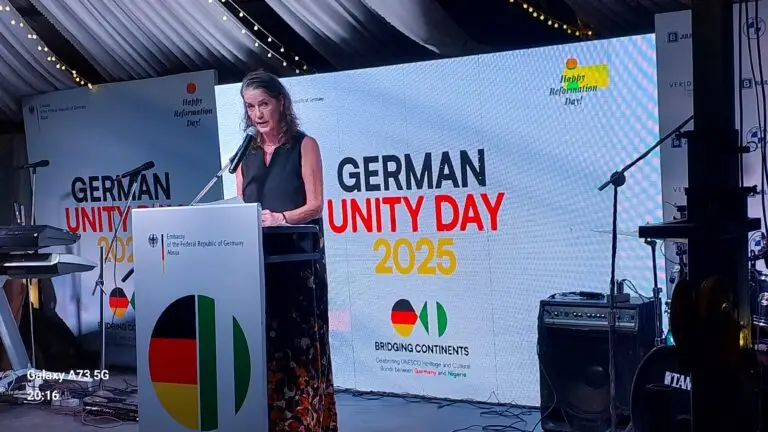
Mrs Annett Gunther, the Ambassador of the Federal Republic of Germany to Nigeria and ECOWAS said this at the German Unity Day celebration in Abuja on Friday.

The celebration was with the theme, “Bridging Continents: celebrating UNESCO Heritage and Cultural Bonds between Germany and Nigeria”.

Gunther said that it was as way to underscore cultural heritage as a bridge between continents.

According to her, the aim is to stress the importance of valuing cultural tradition and history for shaping a people’s sense of identity and unity.

She said that both countries had witnessed 65 years of diplomatic relations which has made them to grow stronger partnerships.

The envoy said that this year’s celebration highlighted the growing relations of both countries.

She said that a meeting of German-Nigerian Binational Commission, under the leadership of both countries Foreign Ministers, was scheduled to hold in Berlin in the first week of November.

“We will discuss ways to further expand this partnership, particularly in the areas of energy and climate cooperation, investment and mineral resources, cultural exchange and migration.

“Germany and Nigeria as strong economies and most populous countries in their respective continents, want to join forces and come closer together and adjust their partnership to new opportunities.

“Nigeria is a strong partner in preserving the international rules-based order, based on international law and the UN Charter, and a strategic partner for Germany in Africa,” she said.

She expressed Germany’s commitment to continue its strong cooperation programme with Nigeria.

“We will continue our engagement and deepen the cooperation in the security sector.

“We also endeavour to strengthen our economic and trade relations further, work on climate issues, energy transition, renewable and future sources of energy such as hydrogen,’’ she said.

Ambassador Yusuf Tuggar, the Minister of Foreign Affairs, commemorated the unification of Germany and its enduring friendship and strategic partnership with Nigeria.

Tuggar was represented by Ambassador Wahab Akande, the Chief of Protocol, Ministry of Foreign Affairs.

He said that Germany stood as a beacon of innovation, resilience and global cooperation which Nigeria is proud to count among its most valued partners.

He said that the bilateral relations of both countries had witnessed remarkable growth, particularly, in the area of trade.

“The trade volume between Nigeria and Germany has surged by an impressive 30 per cent, reaching an all-time high of three billion euros.

“This milestone reflects not only the resilience of our economies, but also the mutual trust and shared vision that bind our nations.

“Over 90 German companies now operate in Nigeria, contributing to job creation and technology transfer, and reinforcing Germany’s position as Nigeria’s second-largest trading partner in Sub-Saharan Africa,” Tuggar said.

He said that beyond commerce, Nigeria and Germany had deepened cooperation through strategic agreements.

“Earlier this year, they renewed a vital Memorandum of Understanding on defense cooperation amongst others,’’ he said.

Banditry: Police On The Trail Of Abductors Of Kebbi Deputy Speaker

0

The Kebbi Police Command has confirmed the abduction of the Deputy Speaker of the State House of Assembly, Alhaji Muhammad Sama’ila-Bagudo, by suspected bandits in Bagudo Local Government Area of the state.

The Police Public Relations Officer (PPRO), CSP Nafi’u Abubakar, made the disclosure in a statement issued in Birnin Kebbi on Saturday.

Abubakar said the incident occurred on Friday night at about 8:20 p.m., when a gang of armed men stormed Bagudo town and kidnapped the lawmaker shortly after observing Isha’i prayer on his way home.

He said that the command had since deployed a combined team of police tactical unit, military personnel, and vigilantes to track down the abductors and ensure safe rescue of the deputy speaker.

“The joint team is currently combing the bandits’ routes and nearby forests with a view to rescuing the lawmaker unhurt and arresting the perpetrators of the dastardly act,” Abubakar said.

He added that the Commissioner of Police in the state, Mr Bello Sani, had reiterated the command’s determination to protect the lives and property of residents across the state.

“The CP has also appealed to members of the public to remain vigilant and continue to support the police and other security agencies to ensure peace and stability in the state,” the PPRO pleaded.

Solar-powered “Bread Box ” To Create Jobs, Meet Communities’ Needs – Entrepreneur

0

For many families, a loaf of bread on the breakfast table is an everyday essential as well as a means to fight unemployment and promote community development.

This is the belief of an engineer and entrepreneur, Mr Henry Dakpokpo, who just unveiled what he called the “Bread Box” in Apo area of the Federal Capital Territory.

Speaking in an interview in Abuja, Dakpokpo said the Bread Box was an innovation by Platterz Bakery to create jobs in many neighbourhoods across the country.

He said that he is using a solar-powered, mobile bakery to create jobs and bring affordable bread closer to the people.

He said the project was designed to address two major national challenges, which are unemployment and access to basic needs.

“We discovered that rent and logistics costs make bread expensive in many communities.

“So we decided to build our own movable, containerised bakery that can operate anywhere, powered entirely by solar energy.

“It helps us save costs, employ more young people, and bring bread closer to the people, ” he said.

Dakpokpo said the idea was not just about profit but about providing meaningful employment.

“Unemployment is at the root of many social problems — robbery, drug abuse, and other vices,” he noted.

“If people are gainfully employed, they won’t have time for such activities. Each Bread Box location will employ between 12 and 15 young people directly and more indirectly as distributors.

“So far, Platters Bakery employs about 92 workers across the country and plans to expand to ten Bread Box locations by the end of next year.

“Every community we enter, we’re taking young people off the streets and giving them a source of livelihood. That’s what keeps us going,” he added.

The entrepreneur disclosed that each bread box was a fully equipped, modern bakery housed in a repurposed container and powered completely by solar panels.

According to him, it allows for on-site baking from dough mixing to packaging so customers can buy fresh bread straight from the oven.

“It is mobile, clean, and environmentally friendly. We’re not on the national grid at all. Everything runs on solar,” he said.

According to him, each bread box represents hope, a small but scalable model for national development.

“Our dream is to see Nigerian youths engaged, empowered, and contributing meaningfully to the economy.

“If we can meet people’s daily needs while creating jobs, then we are truly building the nation from the grassroots,” he said.

For many residents, the bread box has made life easier.

The initiative changed how people access basic food in his community.

Hasley believes the concept supports the Federal Government’s push for inclusive economic growth through small and medium enterprises (SMEs).

“I saw when they started building it; I didn’t know what it was, but now I come here every evening for fresh bread. It is convenient, it is affordable, and you can see that they employ people from our area.

“That is how the economy should work through local production and local consumption.

“What this government wants is for people to be productive, to create jobs and reduce dependence.

“If the government can support more of these innovations with grants or tax incentives, we’ll have more people employed and less pressure on the cities,” he said.

Hasley commended the bakery for the innovation, adding that they used high premium materials in baking the bread.

He urged the bakery to sustain the standard to be able to achieve the objective of job creation and meeting customers’ expectations.