Home Blog Page 105

Senate Confirms Ayo Omidiran, 37 Others As FCC Chairman, Commissioners

0

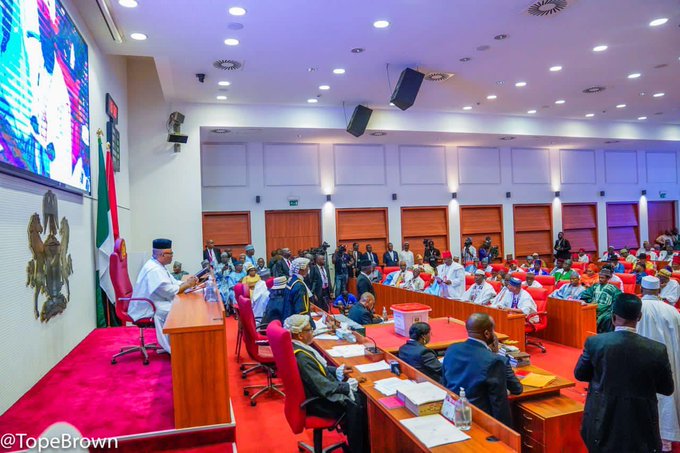
The Senate on Thursday confirmed Mrs Ayo Omidiran as the Executive Chairman of Federal Character Commission (FCC) and 37 commissioners representing the 36 states and the Federal Capital Territory (FCT).

The confirmation followed the adoption of the screening report presented by Chairman of the Senate Committee on Federal Character and Inter-Governmental Affairs, Sen. Allwell Onyesoh.

He said that all the nominees submitted the required documents and faced a thorough screening without any criminal petitions recorded against them.

Presenting the report, Onyesoh informed the lawmakers that all the nominees appeared before the committee on Nov. 13 and submitted CCB clearances, police reports, DSS vetting documents and their curriculum vitae.

Leader of the Senate, Sen. Opeyemi Bamidele, moved the motion for the senate to dissolve into the Committee of the Whole for the chamber to consider the nominees.

While supporting the motion, Deputy Minority Leader, Sen. Olalere Oyewumi, said from their résumé, the nominees had different positions both locally and internationally.

He thanked President Bola Tinubu for finding them worthy for nomination.

Following the submission, the senate dissolved into the Committee of the Whole to consider each nominee.

President of the Senate, Godswill Akpabio, subsequently put the nominations to a voice vote, while the senators unanimously confirmed Omidiran and all the 37 commissioners.

Oxfam, Partners Celebrate Five Years Of Climate Governance Programmes In Nigeria

0

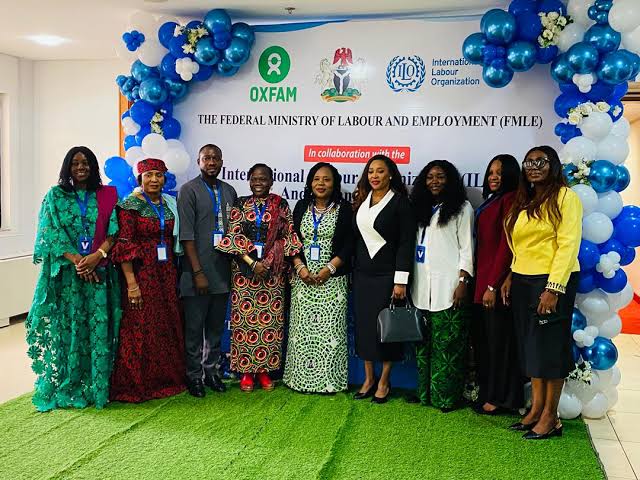
Oxfam in Nigeria, on Thursday, marked the close-out of its five-year Power of Voices, Fair for All (F4A) and African Activists for Climate Justice (AACJ) programmes in Nigeria.

Oxfam Country Director, John Makina, at the occasion on Thursday in Abuja, described the programmes as “a journey of courage, partnership and transformation.”

Makina said that the initiatives demonstrated the power of communities, when equipped, to “speak, act and lead” in governance, climate justice and economic accountability.

He said that the journey had been more than a development intervention.

“It has been a collective effort to shift power, amplify voices and place citizens where they rightfully belong—at the centre of governance, climate justice and economic accountability in Nigeria,” he said.

Makina highlighted key achievements of the programmes to include: cultivation of 15,500 seedlings through community nurseries and distribution of 3,500 clean cooking stoves in Bauchi State to reduce emissions and improve health.

He stated that 256 community volunteers, including persons with disabilities (PWDs), were also trained in briquette production and other nature-based solutions.

“Oxfam also supported the development of new climate laws, unlocked ₦15.5 billion in local climate financing and expanded climate-smart livelihoods, such as bee-keeping, briquette production and tree planting.

“Women beneficiaries reportedly earned between ₦150,000 and ₦300,000 through climate-friendly enterprises.

“The programmes reached more than 10 million Nigerians through the “Follow the Money” media platforms, while civic participation was strengthened through Freedom of Information coalitions, youth civic clubs and improved security commitments from the police,” he said.

Makina added that the initiative also trained 500 journalists in climate reporting, mobilised 664 citizens through the Africa Climate Caravan and empowered PWDs to participate independently in agriculture and community governance.

He expressed appreciation to some implementing partners, such as Civil Society Legislative Advocacy Centre (CISLAC), Connected Development (CODE) and BudgIT Foundation, among others, saying that their support and dedication contributed to the success of the initiatives.

The country director also commended the Government of The Netherlands for funding the project.

Speaking on behalf of the partners, CISLAC’s Executive Director, Auwal Rafsanjani, said the programmes delivered ‘transformative reforms, bold advocacy and unprecedented community-led impact’ across Nigeria.

Rafsanjani noted that the projects strengthened tax justice campaigns, boosted transparency in the extractive sector, improved compliance with beneficial ownership rules and expanded state-level advocacy platforms.

He said that sustained civil advocacy also helped in shaping the passage of four new tax laws and contributing to government’s approval of over one billion dollars for the upgrade of major ports.

Rafsanjani stressed that although donor funding had ended, the responsibility to sustain the gains now rests with Nigerians.

“The work must continue because inequalities, corruption and climate challenges remain,” he said.

While giving an overview of the project, the Programme Manager of Oxfam, Henry Ushie, said it built regulatory frameworks that mobilised communities to be proactive in demanding for the three per cent meant for them by companies.

“They were also empowered to access the money and demand for accountability and transparency on how the money was deployed, ensuring that it was ploughed back into the communities,” Ushie said.

The event featured the launch of a documentary and magazine capturing the project’s milestones.

Pope Leo Begins First Overseas Trip, Urges Dialogue In Turkey

0

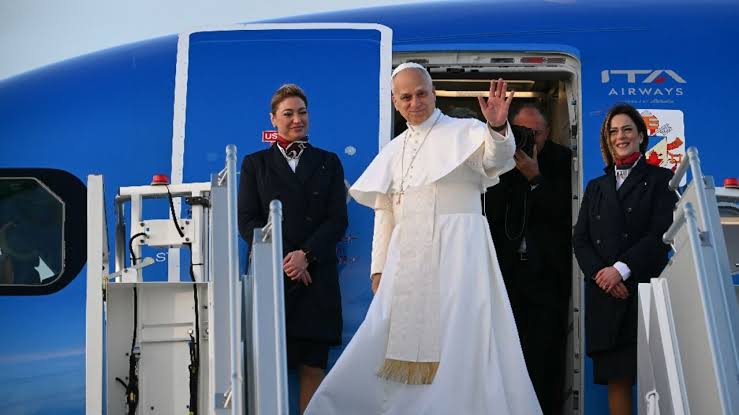
Pope Leo XIV met Turkish President Recep Tayyip Erdoğan at the presidential palace in Ankara on Thursday, launching his first foreign trip as head of the Catholic Church.

“Today, more than ever, we need people who promote dialogue and practice it with unwavering will and patient determination,” the pope said in a joint appearance with Erdoğan at the Turkish National Library.

Leo praised Turkey’s historic role as a “bridge between cultures and religions, “calling the country “a key place for Christianity.”

The pope’s first foreign trip comes more than six months after he replaced Francis as pontiff. He was welcomed with military honors at the presidential palace in Ankara.

Earlier in the day, the pontiff laid a wreath at the mausoleum of Mustafa Kemal Atatürk, the founder of modern Turkey.

In his remarks, Erdoğan called the visit “a very important step that strengthens our common ground.”

He noted that Leo’s planned visits to the religious affairs directorate and Istanbul’s Blue Mosque signalled a commitment to “building constructive ties with Muslims.”

Leo’s trip aims to show solidarity with Turkey’s small Christian communities roughly 180,000 people in a country of 85 million and to advance unity among Christian churches.

The pontiff is also expected to address issues of religious freedom, including the decades-long closure of the Halki seminary off Istanbul, a point of strain for Orthodox Christians.

After meetings in Ankara, Leo will travel to Istanbul for talks with Orthodox Ecumenical Patriarch Bartholomew I.

The pope from there is scheduled to head to İznik, a few hours’ drive south of Istanbul, to commemorate the 1,700th anniversary of the Council of Nicaea.

The visit, originally planned by the late pope Francis, will include prayers at the recently uncovered fourth-century Basilica of St Neophytos to underscore unity.

Leo continues to Lebanon on Sunday before returning to Rome on December 2.

Mother Tongue, Lost Voice: Inside the Battle Over Nigeria’s Cancelled Language Policy

0

On a warm November morning in Akure, as delegates filed out of the hall after the 69th National Council on Education meeting, a quiet shock settled over Nigeria’s education community.

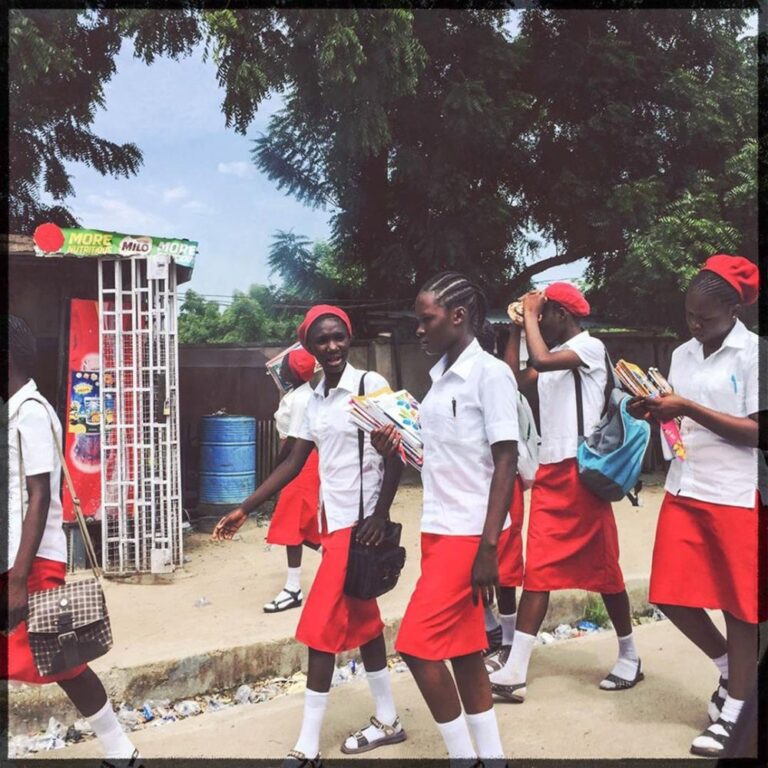
The Minister of Education, Dr Morufu Olatunji Alausa, had just announced a sweeping reversal: the Federal Government was scrapping the National Language Policy, the 2022 framework that required schools to teach children in their mother tongue from Early Childhood Education to Primary Six. English, he said, would become the sole medium of instruction at all levels.

Within hours, the reverberations were felt from academic circles to community schools. To many, it was not merely a policy shift but a cultural turning point — a move that, if allowed to stand, could reshape the country’s linguistic identity and redefine its educational future.

The Minister’s justification was unequivocal. He linked poor performance in public examinations — WAEC, NECO, JAMB — to regions that had embraced mother tongue instruction “in an over-subscribed manner”. According to him, data over 15 years allegedly showed that teaching young children in indigenous languages had “destroyed education” in parts of the country.

But to Nigeria’s education scholars, linguists, and curriculum experts, the logic did not add up.

Within days, the Nigerian Academy of Education (NAE), a body of the country’s most senior education professionals, convened an emergency nine-member task force. Their mission: to respond — firmly, and with evidence. Their conclusion: the cancellation was “a significant misstep” with consequences far beyond the classroom.
In a policy document made available to The Atlantic Bell and signed by Emeritus Professor Olugbemiro Jegede, and Prof. Chris Chukwurah, President, and Secretary General of the Nigerian Academy of Education, the body condemned the policy of the Federal Government.

A Policy Decades in the Making

The National Language Policy was not a hasty experiment. It was the product of years of collaboration between language experts, researchers, curriculum developers, and policymakers. From its earliest iterations in the 1970s, the policy drew from UNESCO’s recommendation that children begin learning in the language they understand best.

Historically, Nigeria had already tested this model. The Ife Six-Year Primary Project led by education icon Prof. Babs Fafunwa, in the 1970s, demonstrated that children taught in their mother tongue showed stronger cognitive skills and performed better academically — even in English. The Rivers Readers’ Project offered similar evidence. More recently, a six-year dataset from the Obolo Bilingual Education Centre showed superior learning outcomes when instruction occurred in indigenous languages.

These results are not outliers. Researchers from UNESCO to Nigerian scholars such as Fafunwa, Bamgbose, Ubahakwe, and Omamor have long documented the benefits: stronger comprehension, higher classroom participation, better literacy, lower dropout rates and improved national cohesion.

A Faulty Premise?

The NAE argues that the government’s rationale for the reversal collapses under scrutiny.

For one, mother tongue instruction in Nigeria ends at Primary Four. Public examinations occur years later. “Attributing WAEC or NECO failures to early childhood language of instruction is not evidence-based,” the NAE warns.

Secondly, no comprehensive data was publicly presented to support the Minister’s claims. The Academy notes that poor performance in public exams correlates more strongly with structural challenges — teacher shortages, overcrowded classrooms, lack of learning materials, and underfunding — than with the language of instruction.

And crucially, the policy has never been fully implemented nationwide. How, they ask, can something that scarcely existed be blamed for failure?

A Global Lens

Countries that have successfully lifted literacy rates — from Finland to China, Kenya to Ethiopia — begin education in the mother tongue. Japan’s famed technological rise was built on a foundation of early learning in Japanese. Even in multilingual African nations, early grade reading in local languages remains standard practice.

Nigeria’s sudden departure from this model, the NAE warns, risks isolating the country from global best practice.

Beyond the Classroom: A Cultural Reckoning

For many advocates, the decision is not just pedagogical but existential. Nigeria’s 500-plus languages are more than communication tools; they are vessels of identity, memory, and heritage.

“To discard them at the foundational stage of learning,” one senior member of the Academy says, “is to accelerate their disappearance.”

The Academy’s report frames the cancellation as akin to reopening the wounds of colonialism — a symbolic surrender of linguistic autonomy at a time when many nations are reclaiming it.

A Call for Reversal

In its advisory, the NAE urges the Minister to “reverse the cancellation as a matter of urgency, national pride and national integrity”. Their recommendations are specific:

Reinstate mother tongue instruction through Primary Four.

Invest in teacher training, orthographies, and indigenous learning materials.

Deploy technology to expand access to local language resources.

Carry out data-driven evaluations every ten years instead of abrupt reversals.

Engage parents and communities through nationwide sensitisation campaigns.

The Academy insists that Nigeria’s literacy crisis — including the millions of out-of-school children and non-literate adults — will worsen if English becomes the compulsory medium from the earliest years. Learning in an unfamiliar language, they argue, alienate children, raise anxiety, and push many out of the school system altogether.

A Future on the Line

For now, the policy remains cancelled, though the debate grows louder. Educators, civil society groups, and cultural advocates continue to press for reversal, warning that the implications stretch far beyond pedagogy.

At stake is the cognitive development of Nigeria’s youngest learners. But there is something deeper too — the future of a multilingual nation, the preservation of its cultural heritage, and the question of whether its education system will evolve on its own terms or be shaped by old hierarchies.

“If the policy is allowed to die without rigorous interrogation,” the NAE cautions, “the permanent recolonisation of Nigeria, and the burial of its future and pride, would have been completed.”

For now, Nigeria stands at a crossroads — between the language of its ancestors and the language of its colonial past; between evidence and expedience; between a future built on inclusion, and one that may leave millions behind.


Sylva Responds To EFCC, Seeks Date For Appearance

0

Chief Timipre Sylva, the immediate past Minister of State for Petroleum, has written to the Economic and Financial Crime Commission (EFCC), asking the commission to give him a date for his appearance.

The former governor of Bayelsa, in a letter addressed to the EFCC chairman, frowned on the move by the commission to declare him wanted over alleged 14.8 million dollars fraud.

Sylva in the letter dated Nov. 24, received and acknowledged by the EFCC on Nov. 26, however, informed the commission that he was currently receiving urgent medical care for a life-threatening condition.

He said he was in constant consultation with his medical team to know whether he could discontinue his treatment to enable him to present himself to the EFCC for interrogation.

“In view of the foregoing, I most humbly request that a mutually agreed date be set subject to medical clearance to enable me appear physically and formally.

“I trust that the objective of your invitation is not to unalive, but to genuinely investigate an alleged crime in which case my request will be in order. For only the living may appropriately, fully and responsibly respond to any allegation, which I firmly and respectfully deny”.

Sylva recalled the events of the past weeks and said they had his family, close friends, supporters, associates and compatriots had endured an extraordinarily and bewildering period

“What began with an unverified accusations linking me to an alleged plot to undermine a constitutional authority of the President and Commander-in-Chief, His Excellence, President Bola Ahmed Tinubu escalated into a dramatic military operation at my private residence.

”During the period, several individuals were apprehended (drivers, security and domestic staff) and remain in detention.

“While still grappling with the emotional and psychological strain of those events, I was on Monday 10 November 2025, publicly declared wanted by your esteemed agency in relation to an alleged 24.8 dollars million fraud matter.

“It is pertinent to recall that I had been formally invited by the EFCC in December 2024 regarding the same matter.

”After providing all required explanations, I was granted administrative bail on self recognition and I was informed that I would be reinvited should my further input be necessary.

”To the best of my knowledge and belief, no further invitation or correspondence was issued to me thereafter,” he said.

Sylva said he was deeply surprised and profoundly unsettled to learn through a public announcement that he had been declared wanted despite his well-known disposition towards cooperation with lawful authorities.

“I am and have always been a law-abiding citizen of the Federal Republic of Nigeria and I have never declined or evaded the invitation of any competent law enforcement institution.

“Furthermore, on 14 November 2025, it was publicly stated that I had jumped bail. For the sake of clarity, propriety and historical records, I must respectfully state that no such incident occurred nor was any such bail condition in existence or ever violated by me.

“As these developments continue to unfold, it is difficult to dismiss the impression that matters may be proceeding in a manner capable of causing public misinterpretation.

”For example these frenzied and almost desperate actions may be viewed as political witch-hunt by many. Also considering that I have appeared to be a target since the beginning of this administration.”

NAOWA Powers Women’s Entrepreneurship, Unveils Cooperative Society

0

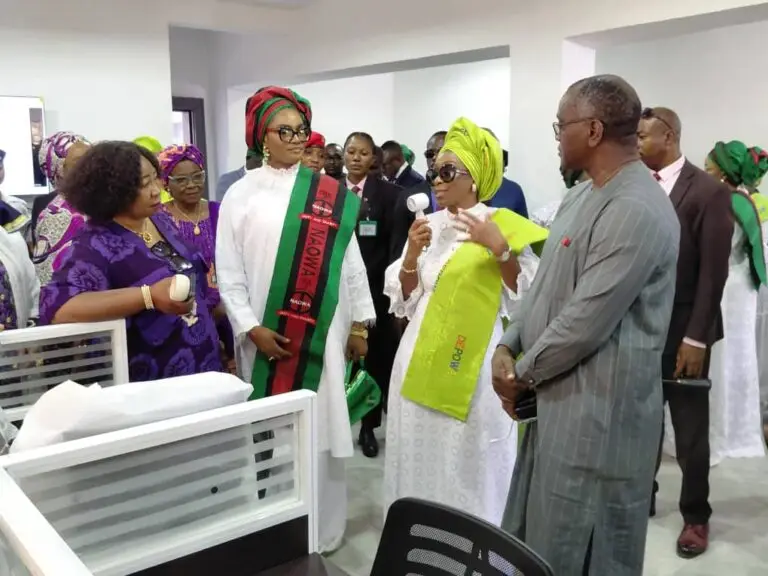
The Nigerian Army Officers’ Wives Association (NAOWA) has inaugurated the NAOWA Multipurpose Cooperative Society (NMCS) to strengthen the entrepreneurial capacity and economic wellbeing of women in military barracks nationwide.

The President of NAOWA, Mrs Safiyyah Shaibu, at the unveiling on Thursday in Abuja, said the initiative was designed to provide a dependable platform for members to save, access credit and grow sustainable businesses.

Shaibu said the cooperative was conceptualised and developed by her predecessor and current President of the Defence and Police Officers’ Wives Association (DEPOWA), Mrs Merna Oluyode.

She said the conceptualisation of the scheme was in line with NAOWA’s commitment to improving the welfare of officers’ wives, young entrepreneurs and widows of fallen heroes.

“Today is a proud moment for our association. This cooperative will serve as a financial support system to strengthen our members economically and promote self-reliance across our communities,” she said.

NAOWA President commended Oluyode for her foresight and leadership in laying the foundation for the cooperative, adding that it was fitting for her to perform the formal launch.

“As the current NAOWA president, I pledge our full support to ensure the cooperative remains transparent and becomes a dependable platform for all members,” she added.

The President of DEPOWA, Mrs Oluyede, said the cooperative was “a vision born in one administration and nurtured into reality by another.”

Oluyede, who initiated the idea during her tenure as NAOWA President, said seeing the cooperative take off under her successor was a powerful reminder that leadership is strongest when it transcends personal tenure.

She said the cooperative would help women cushion the financial shocks that frequently come with military life — frequent transfers, separation from spouses, and the strain of raising families in duty barracks.

Oluyede stressed that beyond loans, the cooperative would provide the structure, discipline and training that many women need to grow small businesses, build savings, or secure future investments.

“In NAOWA, we don’t build for ourselves alone. We build for the women coming behind us.

“This is about dignity. It is about ensuring that no woman in our community stands alone,” she said.

She added that financial literacy, youth skills development, and partnerships with reputable institutions would position NAOWA families for long-term stability.

Oluyede praised NAOWA’s leadership for sustaining the vision, saying the unity between past and present presidents showed that women’s associations could build enduring structures when they work hand in hand.

She described the cooperative as “a gift from women to women — and a symbol of what empowered military wives can achieve.”

A member of the NMCS Management Committee, Mrs Eyotoyosi Sonibare, said the newly inaugurated body had evolved from a concept seven months ago into a full-fledged institution built on resilience, shared purpose and the collective spirit of NAOWA members.

Sonibare said the cooperative was created to provide a platform for economic advancement, offering members opportunities to improve their livelihoods through agriculture, trading, manufacturing, real estate and other productive ventures.

She said the NMCS was designed to make funding more accessible for women in barracks to start or expand their businesses, invest in property and benefit from training and partnerships that strengthen capacity.

According to her, the overarching goal was to deepen financial independence, promote wealth creation and enhance social cohesion within NAOWA, in line with its tagline, “Together we thrive, together we grow.”

She added that the cooperative belongs to all members and expressed confidence that it would become a model of excellence and a symbol of unity for future generations.

COAS Tasks NDA On Battle-hardened Training For Modern Warfare

0

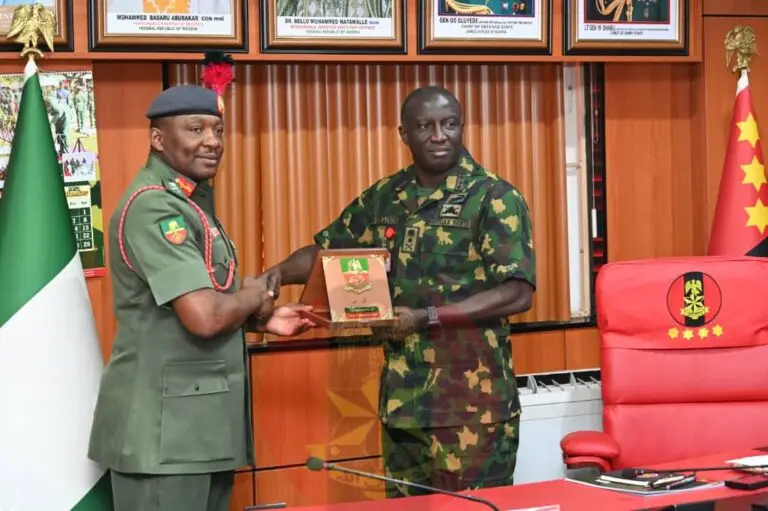
The Chief of Army Staff (COAS), Lt.-Gen. Waidi Shaibu, has charged the Nigerian Defence Academy (NDA) to intensify cadet battle -hardened training with a view to bridging gaps in military operations.

Shaibu gave the charge during a courtesy visit by the Commandant of NDA, Maj.-Gen. Oluyemi Olatoye, to Army Headquarters, Abuja.

The Acting Director, Army Public Relations, Lt.-Col. Appolonia Anele, made this known in a statement on Thursday in Abuja.

The COAS said that cadet training at the NDA must be driven by purposeful leadership, discipline, character, courage and strategic thinking.

He stressed the need to strengthen research centres, particularly the NDA Department of Military Science, as a strategic step towards boosting the National Defence Industry and enhancing indigenous capacity for military innovation and self-reliance.

He underscored that a robust research framework would provide the intellectual backbone required for a modern, responsive and technologically advanced fighting force.

The COAS further advocated for a curriculum overhaul that reflects contemporary security challenges, with emphasis on night training, physical fitness, artificial intelligence and other emerging warfare domains.

According to him, these measures would ensure that young officers are fully attuned to the realities of modern battlefields and equipped with the warrior ethos and battle-oriented leadership skills required to drive his Command Philosophy.

The philosophy according to him, is, “To Advance the Transformation of the Nigerian Army into a More Professional, Adaptable, Combat Ready and Resilient Force Capable of Decisively Discharging its Constitutional Responsibilities Within a Joint and Multi-Agency Environment.”

The army chief also pledged full support to the commandant in achieving those objectives.

He reaffirmed his commitment to ensuring that the Nigerian Defence Academy produces officers who are strategically sound, operationally competent and fully prepared to meet the evolving security demands of the nation.

In his remarks, the Commandant of NDA, Maj.-Gen. Olatoye expressed profound gratitude to the leadership of the military for the confidence reposed in him to lead the nation’s premier military training institution.

He described the NDA as the “training factory” for future officers of the Armed Forces.

The commandant assured that he would build on the legacies and structures established by his predecessors.

He solicited sustained support from the COAS to effectively realise the vision and mission of producing competent, disciplined and professional officers capable of safeguarding Nigeria’s security interests.

School Attacks Push Nigeria To Brink, Education Academy Warns

0

Nigeria is “a nation under siege”, the Nigerian Academy of Education (NAE) has warned, as escalating attacks on schools plunge the country into a deepening education and security crisis.

In a blistering statement signed by Emeritus Professor Olugbemiro Jegede, FNAE, President, and Prof. Chris Chukwurah, MNAE, Secretary General of the Academy, following the abduction of students from St Mary’s School in Niger State, the academy said 92 school invasions, 2,500 abducted learners, over 180 children killed, and 1 million too afraid to attend school paint a portrait of a nation failing its young.

“These figures represent shattered dreams and grieving families,” the NAE said. “Classrooms have become battlegrounds.”

‘Government efforts amount to lip service’

While the government has unveiled several initiatives—including the Safe Schools Declaration and a multibillion-naira safety plan, the academy said these measures have failed to halt mass abductions or restore confidence. Large parts of the North East and Middle Belt remain exposed, and schools continue to shut down.

The NAE accused authorities of neglecting their constitutional duty to protect lives, warning that abandoned policies and weak implementation have created a “false sense of security”.

With trauma, economic ruin and a fading future that accompany killings and kidnappings, children and teachers are battling severe trauma, nightmares, anxiety, and fear that cripples learning. Teachers, described as “unsung victims”, face daily threats that push many out of the profession.

The economic fallout is severe: more than 11,500 schools in the north have closed since 2020, placing 3 million children at risk of dropping out and eroding Nigeria’s human capital.

“When education collapses, national development collapses with it,” the academy warned.

NAE demands decisive action as it called for immediate and coordinated security measures, accountability for perpetrators, community-level protection, medical and psychological support for victims, and an overhaul of all existing safety frameworks.

“If Nigeria fails to protect its schools, it fails to protect its future,” the NAE said. “The time for rhetoric is over—the time for results is now.”

Security Boost: Lagos Police Recover Vehicles, Halt Ammunition Movement

The Force Criminal Investigation Department (FCID) Annex, Alagbon, Lagos on Wednesday, says it has intercepted a consignment of 300 rounds of live ammunition and other contraband following credible intelligence.

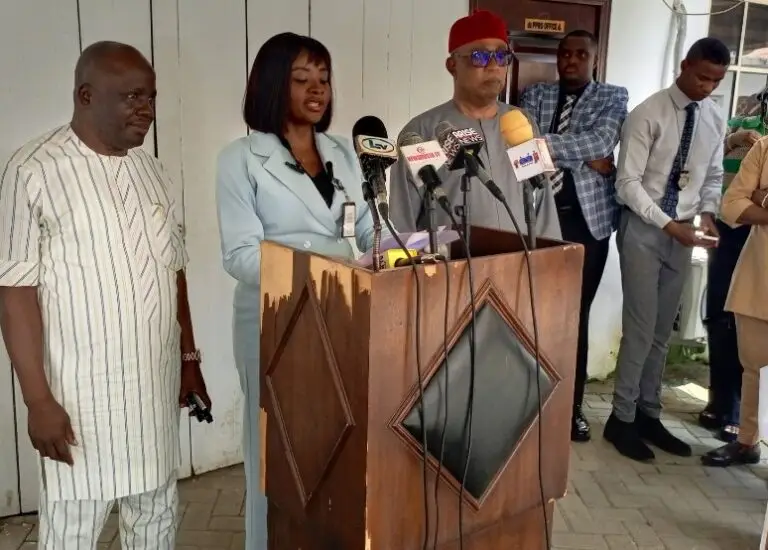
Police Public Relations Officer (PPRO), of the FCID, ASP Aminat Mayegun, confirmed this while briefing journalists in Lagos.

She said that the items were intercepted following credible intelligence received by the Assistant Inspector-General (AIG) of Police in charge of the Annex, Mrs Margaret Ochalla.

Mayegun said that the driver of the consignment was apprehended and brought in for questioning.

“A detailed search of the container conducted in the presence of the clearing agent and alleged receivers, led to the recovery of 300 rounds of 9mm ammunition, concealed inside a Nissan Frontier pickup truck.

“Other recovered items include: two Toyota Sienna vans, one Nissan Frontier pickup, one Scion XA vehicle, 24 bags of foreign rice, seven bales of used clothing (popularly called Okirika), cartons of vegetable oil, and various household goods, ” she said.

According to her, five suspects have  been apprehended in connection with the shipment.

The image maker said that preliminary investigations linked the consignment to a U.S.-based shipper, who allegedly failed to declare the ammunition and contraband, in the bill of lading.

“The illegal items were deliberately concealed among legitimate goods, with none of the contraband listed in the shipping documents, an apparent attempt to bypass port security checks.

“The FCID is now probing the origin and intended destination of the ammunition, as well as possible links to wider criminal or arms-trafficking networks.

“The department is working closely with the Nigeria Customs Service and the Department of State Services (DSS) to ensure a coordinated intelligence sharing and prosecution in line with the Firearms Act and other relevant laws, ” she said.

The PPRO said AIG Ochalla reaffirmed the department’s commitment to fighting insecurity.

He urged members of the public to continue providing credible information to security agencies, adding that the FCID remains committed to dismantling criminal networks and bringing offenders to justice.

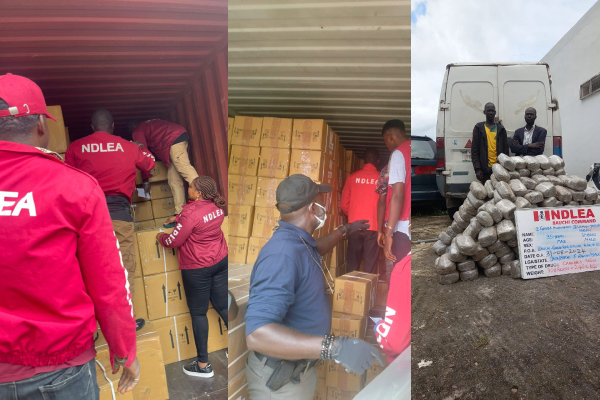
NDLEA Busts Illicit Drug Warehouse, Recovers N6.7 Billion Opioids

0

The National Drug Law Enforcement Agency (NDLEA) has dismantled an opioids cartel in an intelligence-led operation during which a baron and five members of his gang were arrested.

The NDLEA operatives recovered illicit substances worth over N6.7 billion from their secret warehouse in a residential estate in Lagos.

A statement by the agency’s Director, Media and Advocacy, Mr Femi Babafemi on Wednesday in Abuja said that the operatives had continued their offensive action against drug syndicates in a nationwide crackdown.

Babafemi said that the arrest followed credible intelligence that the drug trafficking organisation (DTO) was distributing over 7.2 million pills of tramadol 225mg and 526,200 bottles (52.6 million mls) of codeine syrup.

He said that the drugs were warehoused in a residential compound located at 23 Sunny Billa East Street, Bucknor, Isheri area of Isolo, Lagos state, ahead of the Christmas festive season.

He also said that officers of a Special Operations Unit of NDLEA led a well coordinated operation between Wednesday, Nov. 19 and Thursday, Nov. 20 to round up members of the syndicate and dismantle their criminal network.

He added that two members of the DTO were trailed and arrested at Apple Junction, Festac area of Lagos on Wednesday, Nov. 19 while conveying 300 cartons of opioids in a truck.

He also added that a follow up operation to the syndicate’s warehouse at Sunny Billa East Street, Bucknor the following day Thursday, Nov. 20 led to the arrest of other members of the syndicate.

“In all, a total of 7,272,000 pills of tramadol 225mg worth N3.9billion and 53 million mills of codeine syrup valued at over N2.8 billion bringing the combined value of the seized drugs to N6.7 billion only in street value were recovered.

“They were all moved out of the estate in eleven trucks to NDLEA’s central exhibit complex in Lagos,” he maintained.

The NDLEA Chairman, retired Brig.-Gen. Buba Marwa has commended the Commander and operatives of the Special Operations Unit as well as those of Strike Force Unit involved in the dismantling of the syndicate.

Marwa praised the officers’ professionalism and dedication, describing the breakthrough as a major blow to the cartels preying on Nigeria’s youth.

“This is not just an arrest; it is a clear and unambiguous statement.

“The seizure of this colossal volume of illicit drugs, could have fueled addiction, crime, and insecurity across our nation.

“This represents a victory for the Nigerian people and a confirmation of our unwavering commitment to the mandate given to us by President Bola Tinubu,” Marwa stated.

The NDLEA boss emphasised that the agency’s focus remains squarely on the kingpins and financiers of the illicit drug trade.

According to him, the days when drug barons thought they were untouchable are over.

“The arrest of this drug baron and his criminal cohorts, following an intensive intelligence operation, serves as a stark reminder that the long arm of the law will eventually catch up with every merchant of death.

“No matter how high or deeply concealed they think they are,” he emphasised.