Home Blog Page 104

How Tinubu’s VIP Escorts Order Will Impact Security -Expert

0

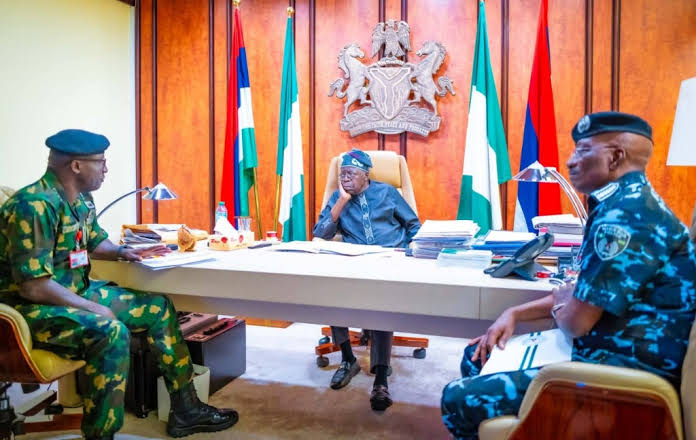
A security expert, Mr Seyi Babaeko, has praised President Bola Tinubu’s directive withdrawing police escorts from VIPs, describing it as a bold and long-overdue step toward restoring the integrity of policing in Nigeria.

Babaeko, the Managing Director/CEO of Absolute Security and Advance Protocol Ltd., made the commendation while speaking in Lagos on Friday.

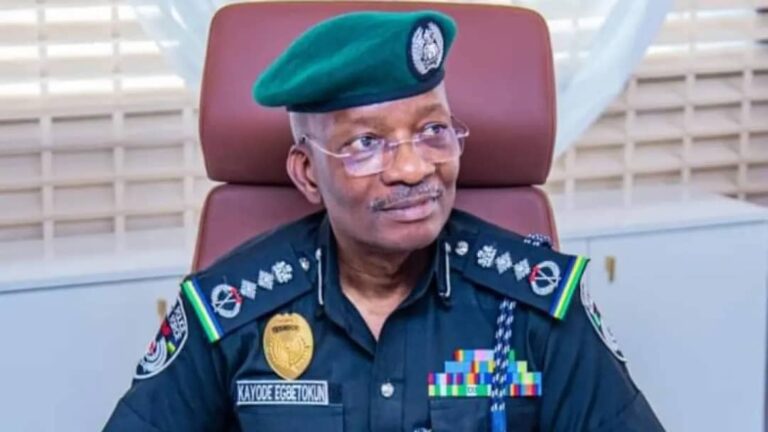
The directive, issued to the Inspector General of Police, Mr Kayode Egbetokun, orders the redeployment of officers previously assigned to politicians, business figures, and other high-profile individuals back to core policing duties.

Babaeko said that the decision reflected a welcome shift toward prioritising the safety of ordinary Nigerians.

“Policing became a service people could buy, and public safety began to feel like a privilege instead of a right.

“This directive puts citizens back at the center of Nigeria’s security strategy, ” he said.

The expert said that further structural reforms were necessary to achieve lasting impact.

Babaeko called for the urgent implementation of the Orosanye Report, particularly the recommendations to merge and reorganise overlapping para-policing and security agencies.

He said that Nigeria’s current security structure was burdened by duplicated roles, resource competition, and excessive costs.

“Streamlining these redundant units will reduce waste and strengthen the core pillars of policing.

“Savings from the reform could be used to boost recruitment, improve equipment and logistics, and enhance welfare for frontline officers,” he said.

The security analyst said that a more unified structure would bring stronger police presence in communities, quicker emergency response, and better relations between officers and citizens.

Babaeko lauded the Tinubu administration for showing readiness to confront deep-rooted issues that had weakened the nation’s security system for years.

He said that the success of the latest directive would depend on consistent implementation and discipline across security institutions.

“If these reforms hold, Nigeria will be a safer place for everyone, not just a privileged few, ” he said.

He urged the government to stay focused on reforms that return the Nigeria Police Force to its constitutional mandate.

“Let’s build a police system that protects and serves the people above private interests. Nigeria deserves nothing less,” he said.

Woman Kills Seven-year-old Girl In Rivers

Police in Rivers State have launched an investigation into the killing of a seven-year-old girl in Port Harcourt, after a woman identified as Success allegedly stabbed the child to death before turning the knife on herself.

The incident occurred on Tuesday at Okabia Street, Agip Estate, in the Rumueme area of the city. Residents of the area said the woman, said to be a relative of the child’s mother and well known in the neighbourhood, had gone to the girl’s school, collected her, and taken her to her apartment before carrying out the attack.

The victim, Alicia Olajumoke, and the suspect were both taken to hospital but were confirmed dead.

Alicia’s mother, Glory Joseph, reported the matter to the police after learning that her daughter had been picked from school and later found stabbed.

The spokesperson for the Rivers State Police Command, SP Grace Iringe-Koko, confirmed the incident in a statement on Thursday. She said the child’s body had been deposited in a morgue for autopsy, adding that detectives had opened an investigation to determine the motive behind the killing.

Opinion: Nigeria Cannot Afford To Lose Its Mother Tongue

0

The Federal Government’s decision to cancel the National Language Policy (NLP) and impose English as the sole medium of instruction at all levels of education is not merely an administrative choice. It is a profound error of judgment — one that threatens to derail early learning, deepen inequality, and accelerate the erosion of Nigeria’s cultural identity.

It must be reversed.

At the heart of this decision lies a troubling contradiction. The Minister of Education, Dr Morufu Olatunji Alausa, claims that students’ poor performance in WAEC, NECO, and JAMB is linked to the mother tongue instruction prescribed under the 2022 policy. Yet, he provides no credible evidence for this sweeping claim. Worse still, the logic collapses under basic scrutiny: mother tongue instruction in Nigeria ends at Primary Four, while the exams he cites are taken years later — after children have been taught in English for the majority of their schooling.

In effect, an unimplemented policy has been blamed for a national failure it did not cause.

Nigeria’s educational crisis is real. But to scapegoat the mother tongue is to dodge the harder questions: Why are basic education classrooms overcrowded? Why do millions of children lack textbooks? Why do teachers lack training and learning materials? Why are the poorest regions starved of funding? These are the real drivers of exam failure — and none will be solved by forcing a six-year-old to learn in a language she does not understand.

For decades, research has been unequivocal. From the Ife Six-Year Primary Project to the Rivers Readers’ Project, from UNESCO to countless Nigerian scholars, the evidence points in one direction: children learn faster, understand deeper, and perform better — even in English — when they begin their schooling in the language they speak at home.

This is not a radical position. It is a global best practice. Countries with some of the highest literacy rates — Finland, China, Japan — rely on early education in the mother tongue. Across Africa, nations as diverse as Kenya, Ethiopia, Ghana, and South Africa continue to strengthen indigenous language instruction, recognising its value for literacy, cohesion, and national pride.

To abandon this approach now is to move against the world — and against our own history.

More alarming is the cultural cost. Nigeria is one of the most linguistically diverse nations on earth. Our languages are not obstacles. They are repositories of memory, identity, and worldview. They carry the wisdom of communities and anchor our sense of belonging. To push them out of the classroom is to push them closer to extinction.

The Nigerian Academy of Education — the country’s most authoritative body of scholars and education leaders — has made a compelling case: the cancellation is hasty, unfounded, and damaging. Its task force urges the Minister to reverse the decision, recommit to mother tongue instruction through Primary Four, and finally invest in the materials, teacher training, and implementation frameworks that the previous policy lacked. It is a call grounded in evidence, patriotism, and common sense.

Nigeria’s education system is on the brink. Millions of children are out of school. Millions more are in school but not learning. The response can not be a retreat into linguistic insecurity or a misguided loyalty to English. True educational reform requires investment, planning, and continuity — not abrupt pivots driven by unverified assumptions.

The government owes Nigerians not just data but also accountability. The stakes are high: a nation that can not confidently teach its children in its own languages risks losing more than academic performance. It risks losing itself.

The Minister must reverse this cancellation. Nigeria’s children deserve an education rooted in understanding, not confusion. Our communities deserve a system that respects their voice. And the country deserves policies grounded in evidence, not fear.

We can still choose the path of progress — but only if we choose to listen to ourselves.

By Owen Raphael Daminabo

EDITORIAL: Nigeria’s Local Governments As Country’s Biggest Corruption Crime Scene

0

Nigeria’s greatest governance scandal is not in Abuja. It is not in the states. It is hidden in plain sight — inside the 774 Local Government Areas that are supposed to serve as the engine room of development.

A report recently released by the Nigerian Local Government Integrity Index (NLGII), has now confirmed what citizens have long suspected but government has refused to confront: the grassroots tier of government is collapsing under the weight of corruption, secrecy and state interference.

The verdict is brutal. 751 LGAs of the 774 — 85 per cent — are operating at “very high” or “critical” corruption risk. This is not mismanagement. This is a national emergency.

For years, local councils have functioned like political fiefdoms — budget documents hidden from the public, audit reports nonexistent, projects untraceable, and billions in FAAC allocations disappearing into a fog of opacity. The NLGII simply puts scientific language to what Nigerians see every day: local government has become the country’s largest, least-policed corruption zone.

The findings are alarming.
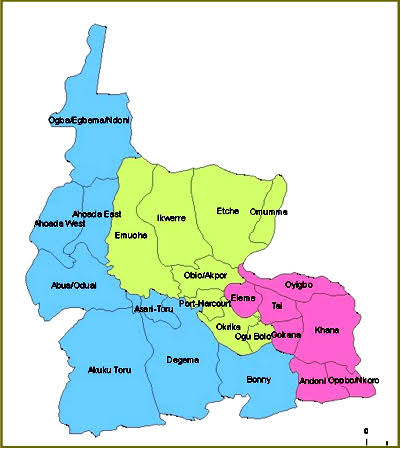
Tier 5 councils — 155 of them — include some of the country’s richest and most strategic LGAs: Obio/Akpor, Port Harcourt, Southern Ijaw, Ohaji/Egbema. These are places awash with resources but starved of accountability. The report describes them as vulnerable to criminal capture, political manipulation, and insecurity so severe that even elected officials can not operate freely.

Tier 4, containing an astonishing 503 LGAs, tells an even more damning story — entire states where every local government is considered a very high corruption risk. How can Nigeria talk of development when the structures closest to the people are structurally broken?

The recommendations are drastic but necessary:
– Direct FAAC allocations to LGAs without interference.
– Mandatory EFCC and ICPC oversight.
– Quarterly audited reports.
– Civic campaigns to enforce financial autonomy.
– Digital tools to shut down the opaque cash culture.

If any other sector performed this badly, it would be shut down or placed under federal receivership. But Nigeria continues to pour billions into councils that can not — or will not — account for a single kobo.

This is not just a governance issue; it is a human tragedy. Broken local governments mean broken primary schools, broken health centres, broken water systems, and broken security networks. It means citizens abandoned at the exact level where government is supposed to be closest to them.

The ICPC and EFCC must take the NLGII as a call to arms. State governments must end the unconstitutional habit of hijacking local finances. Nigerians must understand that the fight for transparency begins at the ward level, not only in Abuja.

The truth is simple: a country can not rise when the foundation is rotten.
Nigeria’s local governments are rotting — and unless urgent action is taken, they will keep dragging the nation down with them.

Serving local government chairmen must understand that leadership means service to the people and not an opportunity for personal aggrandisement.

The culture of sharing the common patrimony of the people at the table of any political tin God must stop.

Local legislative assemblies must rise up and perform oversight functions as required by the byelaws of their respective states. Unfortunately, owing to the undemocratic emergence, majority of them are unaware of their functions or have been castrated abinitio from carrying out the duties.

Thus, local government councils continue to bleed under the weight of inept leadership and corruption. Time for a closer look into the finances of the councils in Nigeria is now.

Insecurity: Tinubu sets up US-Nigeria Working Group

0

President Bola Tinubu has approved the constitution of the Nigerian side of the US-Nigeria Joint Working Group as part of measures to strengthen collaboration with the United States in addressing security challenges in the country.

The formation of the team followed a recent visit to Washington DC by a high-level Nigerian delegation led by the National Security Adviser, Nuhu Ribadu.

Ribadu will lead the multi-agency team, which includes senior officials drawn from key security and foreign policy institutions.

Members of the working group, as contained in a statement signed by the President’s aide, Bayo Onanuga, on Thursday, include the National Security Adviser, Nuhu Ribadu .

Ribadu is to lead the Nigerian side of the Joint Working Group, supported by a multi-stakeholder team comprising senior officials from relevant government establishments.

Members of the Joint Working Group include the Minister of Foreign Affairs, Amb. Yusuf Maitama Tuggar, Minister of Defence, Mohammed Badaru Abubakar, Minister of Interior, Hon. Olubunmi Tunji-Ojo, Minister of Humanitarian Affairs, Dr Bernard M. Doro, Chief of Defence Staff, Gen. Olufemi Oluyede, Director-General of the National Intelligence Agency, Amb. Mohammed Mohammed and the Inspector General of the Nigeria Police Force, Mr Kayode Egbetokun.

Ms Idayat Hassan of the Office of the National Security Adviser (ONSA) and Mr Paul Alabi of the Embassy of Nigeria in the US will serve as the secretariat.

Earlier this month, President Donald Trump had designated Nigeria as a Country of Particular Concern, over the lingering killings in some parts of the country.

However, the Federal Government had refused the designation, saying that government was working around the clock to tame the situation.

Following the controversy, the Nigerian President sent a delegation led by the National Security Adviser, Mallam Nuhu Ribadu, to the United States for discussions and collaboration.

Upon returning to Nigeria, the president set up the team to work with US in strengthening Nigeria’s security challenges.

Bayo Onanuga, Special Adviser to the President on Information and Strategy, said the “composition of the Joint Working Group was part of the agreement reached during the recent trip to Washington, DC, by a high-level Nigerian delegation led by the National Security Adviser, Nuhu Ribadu.”

President Tinubu has urged members of the Joint Working Group to work assiduously with their US counterparts to ensure smooth operationalisation of all agreements across sectors.

Gunmen Attack Ngige’s Convoy In Anambra, Kill One, Injure Policeman, Others

0

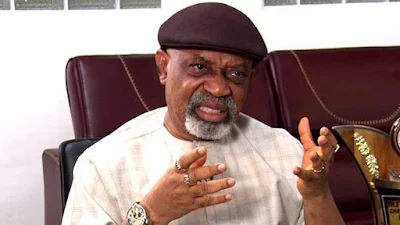
Former Governor of Anambra State, Chris Ngige’s convoy, was attacked today on the Nkpor–Nnobi Road in Idemili North Local Government Area.

According to a statement by Ngige’s former media aide, Sir Fred Chukwuelobe, the former governor was not in the convoy at the time of the attack.

However, a policeman in the pilot car was shot, and his gun and uniform were taken by the suspected assailants, who were reportedly dressed in police and army uniforms.

Tragically, a woman recording the incident on her phone was fatally shot by the gunmen.

A shop owner who ran to the scene to investigate was also shot; he lost a significant amount of blood but is expected to undergo surgery soon to remove the bullets.

He is reported to be in stable condition and is expected to make a full recovery. The pilot car was riddled with bullets.

No police officers were killed. The escort leader who was shot has already undergone surgery and is expected to recover fully. The shop owner was fortunate, as none of the bullets lodged in his spine.

Chukwuelobe said, “I spoke with His Excellency, Dr. Ngige, who confirmed the attack and assured that all necessary measures are being taken to ensure adequate medical care for the injured.

“He also extended condolences to the family of the woman who was killed while recording the attack.”

The Anambra State Police have yet to release an official statement on the incident.

Deepen Your Intelligence Frameworks, I-G Urges CPs, Others

The Inspector-General of Police (I-G), Mr Kayode Egbetokun has called on Commissioners of Police (CPs) and other Strategic Police Managers to deepen their intelligence frameworks beyond professional reporting lines.

The I-G made the call on Thursday in Abuja at a conference with the strategic police managers, consisting of officers from the rank of CP and above.

“The fight against violent crime is one first in the field of intelligence. We must build systems that see crime before it erodes.

“I hereby direct all commands, CPs to deepen your intelligence frameworks beyond professional reporting lines.

“A dependable, native intelligence network is not built only on desk officers.

“It is built inside markets, transport unions, student leadership circles, farming clusters, religious institutions, and trusted community observers.

“Look at intelligence networks when communities trust the police.

“Therefore, their participation must be lawful, ethical, professional, and protected,” he said.

The I-G urged the senior officers to train their intelligence assets on confidentiality obligations and without exposure to political or social manipulation.

According to him, as senior commanders, you must deploy intelligence response cells that analyse lookup patterns, interpret successfully attack indicators, map crime migration corridors, and push intelligence systems to place that purpose.

“Information without action is not intelligence.

“Actionable information deployed ahead of crime is intelligence and so, this network must also integrate open source intelligence awareness.

“It must also, integrate forensic enabled investigative tracking, rural informant engagement, cyber intelligence monitoring of criminal black traits, and tactical intelligence retrieval after every attack.

“Each major incident should generate an intelligence packet that depicts not just who attacked, but who may be next,” he said.

He said community policing was not ancillary to national security, but a foundational to it, especially at this time where communities were no longer just witnesses to crime, but victims of coordinated assaults.

Egbetokun urged the CPs to police frameworks that structurally bind the police to grassroots influence networks, traditional rulers, town unions, local hunters, civil defence advocates, vigilante groups and youth organisations.

“Engaging community policing means building local shared ownership of security.

“Not delegating authority to non-police advocates. You must ensure that police are not just witnesses.

“Establish joint community safety forums. Conduct community threat profiling.

“Naturalise local crime watch desks and build village-level rapid information channels that signal the police before criminals’ classified positions.

“This is how threat is identified. Not by occupying only highways, but by occupying the confidence, cooperation and communication channels inside the people’s spaces,” he said.

According to him, when this system works, communities recover first from fear, then from crime and feed information freely, respond to police direction willingly, grant operational legitimacy faster, and discourage criminals socially.

How Delta Will Partner Experts To Address Electricity Needs – Gov. Oborevwori

0

Gov. Sheriff Oborevwori of Delta says his administration was ready to partner relevant stakeholders in the power sector to build power infrastructure to generate and distribute electricity to meet the state’s need.

The governor disclosed this during his remarks at a 3-Day Seminar/Workshop organised by the Asaba Correspondents Chapel of the Nigeria Union of Journalists (NUJ) to mark its Press Week in Asaba on Thursday.

The theme of the event is “Understanding the M.O.R.E Agenda of Governor Oborevwori’s Administration: Meaningful Development in the Power Sector as Panacea for Economic Recovery and Development in Delta State and Nigeria”.

Oborevwori, represented by the State Commissioner for Works (Rural Roads) and Public Information, Mr Charles Aniagwu, extolled journalists and described the press as dependable partners in the dissemination of government policies and programmes.

He noted that the theme of the event was apt, adding that electricity remained critical to the economic development of any nation.
“Let me thank the leadership of the Chapel for deeming it fit to take a look in the cause of this your gathering, a very important issue which affects all of us -‘Electricity’.
“The power sector is very critical to most of the things we do as a government and as a society.
”So, being able to bring experts in that field to talk to us helps us to know how we can indeed engage different stakeholders in the energy ecosystem”, the governor said.
Oborevwori who commended the chapel leadership for the event pledged government continued support to the media, and urged them to remain objective in their reportage.
In her remarks, the member representing Oshimili North in the State House of Assembly, Mrs Bridget Anyafulu, lauded the Chapel for the choice of the theme which bothers on national importance.
According to her, the Delta State House of Assembly has passed the Electricity Bill which has been assented to as law in the state.

“The state government is partnering relevant stakeholders to address electricity supply challenges across the state, ” she said.
The lawmaker urged the media to report truth and ensure accuracy which are the hallmarks of journalism practice, particularly on issues of national importance.

Also, the Commissioner for Works (Rural Roads) and Public Information, Mr Charles Aniagwu, represented by Mrs Stella Macaulay, a Director in the ministry, gave an overview of the state government’s efforts at restructuring and improving the power sector infrastructure in the state.
Aniagwu said that the state government has embarked on developing sustainable power infrastructure to enable adequate electricity supply in the Asaba capital city and other parts of the state.

The Chairman of the event, Elder Chris Biose, said that Nigeria needed over 100,000 megawatts of electricity to meet industrial, economic and demographic demands.
Biose said, “A former Minister of Power and Current Chairman, Geometric Power Limited, Prof. Barth Nnaji remind us that a nation of our size and ambition requires at least 100,000 megawatts to meet industrial, economic and demographic demands.

“This painful gap demonstrates why Nigeria’s productive capacity remains stunted despite abundant human and natural resources.
”The road to economic recovery, revival begins with fixing the power sector as every other reform depends on it.
“This is why the theme of this Seminar is timely and strategic”.

A Guest Lecturer, Prof. Emmanuel Ufuophu-Biri, Rector, Delta State Polytechnic, Otefe-Oghara, said Nigeria faces a severe energy crisis with over 60 per cent of its population lacking consistent access to electricity.
Ufuophu-Biri, represented by Dr Okoro Ferdinand, Director, Students Industrial Work Experience Scheme, delivered a paper themed, “Energy Mix for Sustainable Economic Recovery and Development of Delta State and Nigeria”.

According to Ufuophu-Biri, Nigeria stands at crossroads as continuing with fossil fuel dependence risks economic stagnation and environmental collapse.

“Embracing a balanced, locally-driven renewable energy mix is essential for Delta state’s prosperity and national resilience. The time to act is now.

“With bold policies, innovation and community inclusion, Nigeria can lead Africa’s sustainable energy revolution, ensuring a brighter future for all its citizens”.

Earlier in a welcome address, the Chapel Chairman, Mr Ifeanyi Olannye said the theme was chosen to mark the second anniversary of the executive and the Chapel press Week.

He said various governments should stop playing politics with power supply to the citizenry, adding that no meaningful development would be recorded without at least 18-hour electricity supply daily in the country.
Olannye lauded President Bola Tinubu for mustering political courage through his Renewed Hope Agenda to assent to Power Sector Amendment Bill as passed by the National Assembly.
He also, commended Gov Oborevwori’s courage via his ‘MORE Agenda’ to light up Delta state by assenting to the Electricity Bill as passed by the State House of Assembly.

Highpoint of the event was the presentation of awards to Oborevwori, Dr Isaac Akpoveta, DG, Contributory Health Commission and a Veteran Journalist, Asiwaju Sola Adebayo in recognition of their contributions to humanity.


LBHF Governor’s Belt: Boxers Battle For Final Slots

0

The race for places in the 2025 Lagos Boxing Hall of Fame (LBHF) Governor’s Belt intensifies on weekend as fighters clash in the November monthly championships.

The Agege Stadium will host the bouts on Saturday, where boxers seek coveted slots in the year-end showcase.

With competition rising, every punch will matter as athletes try to prove they merit places in Nigeria’s respected grassroots boxing event.

Three women’s bouts and seven men’s contests headline the monthly LBHF card.

In the women’s 48kg class, Mistura Otenaike of Surulere meets Aina Adekiwonsa of Lagos Island in a tense contest.

Eniola Idowu faces Oyindamola Agboola in the 45kg division, while an exhibition bout features Zainab Ibrahim against Peculiar Ifemaye at 27kg.

The men’s bouts promise excitement, starting with Kareem Yusuf of Amuwo against Olamide Bello of Yaba in the 53kg class.

In the 60kg division, Kola Ogunsemore of Lagos Mainland battles Qudus Akinwande, while Ganiu Ayomide faces Daniel Nkem.

Other men’s contests include Seun Habu vs Fasosi Paisol at 70kg, Christian Obi vs Paul Melvin at 85kg, and Victor Okagbue vs Daniel Nwose at 90kg.

An exhibition bout sees Modeed Omotayo face Michael Adedapo in the 30kg boys’ category.

The event serves as a crucial qualifier for boxers aiming for the Governor’s Belt finals later this year.

LBHF Director David Mohamed said interest has surged since the programme resumed in October.

“There has been serious interest from boxers across Lagos. We cannot accommodate everyone, so we will select only the best,” he said.

He added that this weekend’s bouts will produce another group of finalists for the end-of-year championship.

The LBHF monthly series returned in October 2025 after a break. It was founded in 2010 by Finance Minister Wale Edun.

LBHF is a non-profit organisation committed to developing amateur and grassroots boxing in Nigeria.

LBHF recently partnered with Mainstay Bulletproof Ltd. to strengthen support for young athletes.

Plans are underway for a new 2026 format involving divisional, regional, and national finals across all weight classes.

FG’s Sports Dev’t Agenda, Launchpad For SMEs -NSC D-G

0

Bukola Olapade, the Director-General, National Sports Commission (NSC), has described the Federal Government’s sports development agenda as a launchpad for Small Scale Enterprises in the country.

Olapade said this at the sidelines of the ongoing 2nd National Council on Sports meeting in Calabar on Thursday.

He said that no than 5000 small scale businesses had been impacted through President Bola Tinubu’s Renewed Hope Agenda on Sports.

Speaking at the event with the theme: “The Business of Sports: Creating Jobs, Wealth and Utility under the Renewed Hope Agenda” Olapade said: “we are creating a viable sports economy”

The NSC D-G said that the commission’s mandate was to create a sports economy that would transform small scale businesses into big players.

“We are making good progress. No fewer than 300 small scale businesses participated at the National Sports Festival in Abeokuta. Hundreds of vendors also participated at the African Athletics Meet,” he said.

He said that NSC was committed to building a sports economy that would resonate with athletes, entrepreneurs and a value exchange system between sports stakeholders and sponsors.

The 2nd edition of the National Sports Council meeting, which started on Wednesday, will end on Friday.