


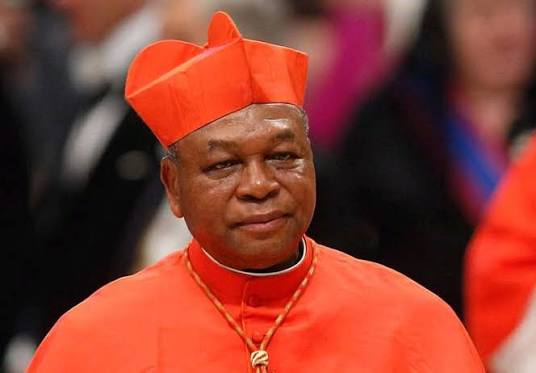
Archbishop Emeritus of Abuja, John Cardinal Onaiyekan, has warned that Nigeria’s democracy is steadily losing credibility, calling for sweeping electoral reforms ahead of future elections while urging the media to remain an independent force in safeguarding the nation’s democratic future.
Delivering the keynote address at the 2026 All Nigeria Editors Conference (ANEC) in Enugu on Thursday, the Catholic cleric said although democracy remains the best available system of government, Nigeria’s electoral process has continued to deteriorate since the country’s return to civil rule in 1999.
Speaking on the conference theme, “The Ballot, the Media and the Task of Keeping Democracy Alive,” the 82-year-old cleric drew from decades of witnessing Nigeria’s political evolution, arguing that governance must ultimately serve the common good rather than political elites.
“It seems that the quality of our elections has been reducing from one election to another, and this is not good news at all,” he said.
Seven reforms before another election cycle
Onaiyekan proposed seven major reforms to strengthen Nigeria’s electoral system, insisting that the present framework leaves too many loopholes for manipulation.
Among his recommendations were changes to the appointment process for the Chairman and commissioners of the Independent National Electoral Commission (INEC), arguing that electoral officials should not depend on presidents or governors who are themselves contestants in elections.
He also advocated the establishment of a permanent election tribunal dedicated solely to resolving electoral disputes before winners are sworn into office.
“A situation where a candidate has already been sworn in while defending victory with state resources against opponents is not serious as far as natural justice is concerned,” he said.
To strengthen presidential legitimacy, Onaiyekan proposed a mandatory 50 per cent threshold for victory, with a runoff between the top two candidates where necessary. He also urged stricter rules against lawmakers defecting to other parties without returning to their constituents for fresh mandates.
Concerns over INEC, incumbency and security
The cardinal expressed concern over what he described as the growing influence of incumbency during elections, warning against the use of public resources for partisan campaigns.
He questioned whether INEC enjoys sufficient independence despite its constitutional mandate, noting that the commission often faces pressure from governments that simultaneously serve as election contestants.
He also criticised the heavy deployment of security agencies during elections, saying the overwhelming presence of armed personnel intimidates voters rather than encouraging participation.
Turning to journalism, the former Archbishop described the media as the “Fourth Estate of the Realm,” insisting that its constitutional importance extends beyond reporting events to protecting democratic accountability.
He urged editors and journalists to operate with professional independence, resisting pressure from governments, corporate interests and political actors.
“The media should report government actions positively where deserved and critically where necessary,” he said.
While acknowledging that Nigeria still enjoys a relatively diverse media landscape through newspapers, radio, television and digital platforms, Onaiyekan cautioned that emerging technologies, including artificial intelligence, present new ethical challenges.
Referencing Pope Leo XIV’s recent encyclical, Magnifica Humanitas, he urged journalists to harness technological innovation responsibly while guarding against its misuse.
The cardinal concluded that democracy cannot succeed through legal reforms alone, insisting that Nigeria also needs leaders with integrity, honesty and commitment to the common good.
He reminded political office holders that power ultimately belongs not to politicians but to God and must be exercised with humility and accountability.
Onaiyekan also challenged religious leaders to stop seeking political patronage and instead preach the values of justice, accountability and good governance from pulpits and mosques.
“If religion prioritises preaching the values of good governance,” he said, “it can become a positive asset for building a better Nigeria under one God.”