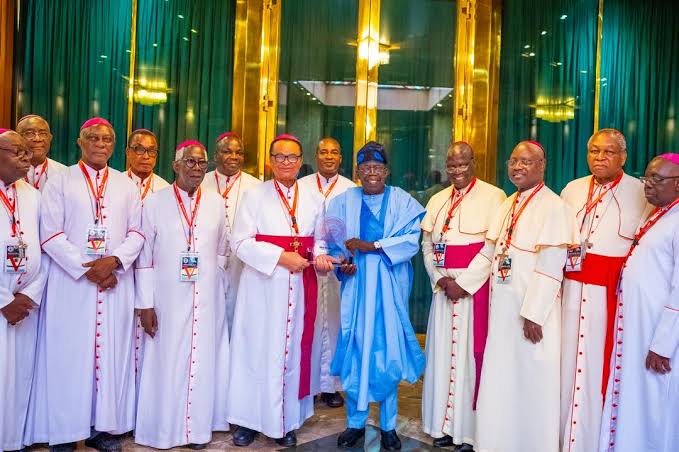
The Catholic Bishops’ Conference of Nigeria (CBCN) has charged the Federal Government to urgently stem the tide of bloodshed across the country and guarantee credible elections in 2027, warning that persistent insecurity and dwindling voter turnout pose grave threats to Nigeria’s democratic future.
The call was made at the opening of the CBCN’s 2026 First Plenary Meeting in Abuja by its president, Lucius Ugorji, who painted a grim picture of a nation under siege.
“Our country has continued to experience rising security challenges. We continue to hear sad tales of senseless massacres, mass burials, endless tears and grief. Nigeria continues to bleed endlessly,” Ugorji lamented.
He cited repeated kidnappings and mass killings in several states, particularly condemning reported attacks in Woro and Nuku communities of Kwara State. According to him, armed groups are exploiting weaknesses in the nation’s security architecture and operating with alarming boldness.
“In all, the gunmen operate boldly, freely and unchallenged… Yet, they are not arrested through their digital footprints,” he said.
While acknowledging steps taken by the administration of Bola Ahmed Tinubu, including the declaration of a national security emergency, the bishops said government efforts remain largely reactive.
“To effectively tackle insecurity, government must go beyond declaring a national emergency on security and reactive interventions to invest more in modern technological equipment for surveillance,” Ugorji stated.
He warned that delays in prosecuting arrested suspects, as well as the reintegration of repentant insurgents under the Operation Safe Corridor initiative, could erode public trust.
“Delaying the prosecution of arrested terrorists or pardoning and reintegrating perceived repentant Boko Haram members through Operation Safe Corridor gives the impression of complicity on the side of government,” he added.
Beyond security, the bishops expressed concern over declining voter turnout in recent elections, describing it as a troubling indicator of citizens’ waning confidence in the electoral process.
“This decline says a lot about citizens’ trust in the electoral process and calls into question the legitimacy of elected officials in a democratic dispensation,” Ugorji said.
He urged the National Assembly to revisit the amended Electoral Act and make real-time electronic transmission of results mandatory ahead of the 2027 general elections.
“This is the will of the people and has to be respected,” he insisted.
On the 2025 Tax Act, which came into effect on January 1, 2026, the bishops acknowledged its potential benefits but warned of unintended consequences.
“When all is said and done, there are widespread fears that the reforms could raise the living cost for consumers, aggravate hardship and push more jobless youths into criminality,” Ugorji cautioned.
The conference also identified illegal mining as a key driver of insecurity and revenue loss, noting that proceeds from minerals such as gold and lithium are being used to finance violent activities.
“Criminal groups use proceeds from the sale of minerals, such as gold and lithium, to buy weapons and fund terrorist activities across the country,” he said, calling for stricter enforcement and the deployment of drone technology and artificial intelligence to monitor remote mining sites.
In his keynote address, Dr. Mike Omeri underscored the need for leadership anchored on service and the common good.
“Leadership of purpose is courageous and does not seek power. Rather, it seeks to serve,” Omeri said, urging leaders to bridge inequality and champion justice, equity and compassion.
Delivering the homily at the opening Mass, Ignatius Kaigama warned political and religious leaders against abusing authority and distorting the Christian message for material gain.
“We fervently hope that the 2027 elections will be different and every single vote… will count, and the genuine will of the people, respected,” Kaigama said.
He cautioned against prosperity teachings that reduce faith to material acquisition, saying some “so-called powerful men of God” preach a distorted gospel focused solely on wealth.
Earlier, Ugorji announced a Special Jubilee Year of St. Francis of Assisi proclaimed by Pope Leo XIV, describing it as a call to deeper spiritual renewal and peace.
He also disclosed that he would step down as CBCN president at the close of the plenary.
“I take advantage of this opportunity to thank you for the cooperation and support I received from you all during my tenure as your chief servant,” he said.
The bishops’ intervention adds to mounting pressure on authorities to address insecurity decisively and rebuild public trust ahead of the 2027 polls.