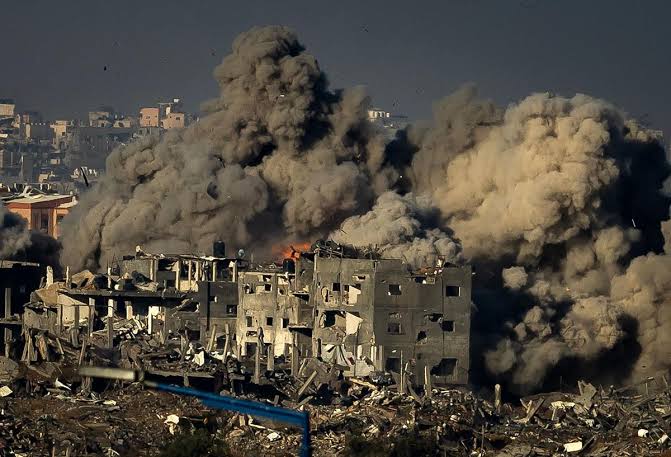
The war of words between Iran and Israel has intensified, with both countries exchanging fresh threats over Tehran’s nuclear programme, raising fears of a dangerous escalation in an already volatile Middle East.
Iran declared that its uranium enrichment facilities are deeply buried beneath layers of solid granite, insisting they are beyond the reach of Israeli airstrikes.
“Our centrifuges are buried beneath 300 feet of solid granite. Your air force is completely useless against our mountains,” an Iranian official was quoted as saying, underscoring Tehran’s confidence in the security of its underground nuclear infrastructure.
Israel swiftly responded with an equally defiant warning, saying it does not need to destroy the mountain itself to neutralise the facilities.
“We don’t need to destroy the mountain. We’ll simply seal the tunnels and turn your underground bunker into the world’s most expensive tomb,” an Israeli official reportedly said.
The exchange marks the latest chapter in the long-running confrontation between the two regional rivals, whose bitter dispute over Iran’s uranium enrichment programme has repeatedly pushed the Middle East to the brink of a wider conflict.
Israel maintains that Iran’s nuclear activities are aimed at developing atomic weapons, a development it considers an existential threat.
Tehran, however, insists its nuclear programme is solely for peaceful civilian purposes, including electricity generation and medical research.
Recent months have witnessed an escalation in military and diplomatic tensions, with both countries engaging in direct and proxy confrontations while the international community struggles to revive efforts aimed at curbing Iran’s nuclear ambitions.
Security analysts warn that the latest rhetoric reflects growing frustration on both sides and could further heighten regional instability if not accompanied by renewed diplomatic engagement.
The comments also underscore the strategic importance of Iran’s fortified underground nuclear facilities, which have long complicated military options for Israel and its allies.
With negotiations over Iran’s nuclear programme remaining stalled and both nations adopting increasingly hardline positions, observers fear that inflammatory statements such as these could further inflame tensions in a region already grappling with multiple security crises.
While neither side has announced any immediate military action, the exchange serves as another reminder that the dispute over Iran’s nuclear ambitions remains one of the world’s most dangerous geopolitical flashpoints.