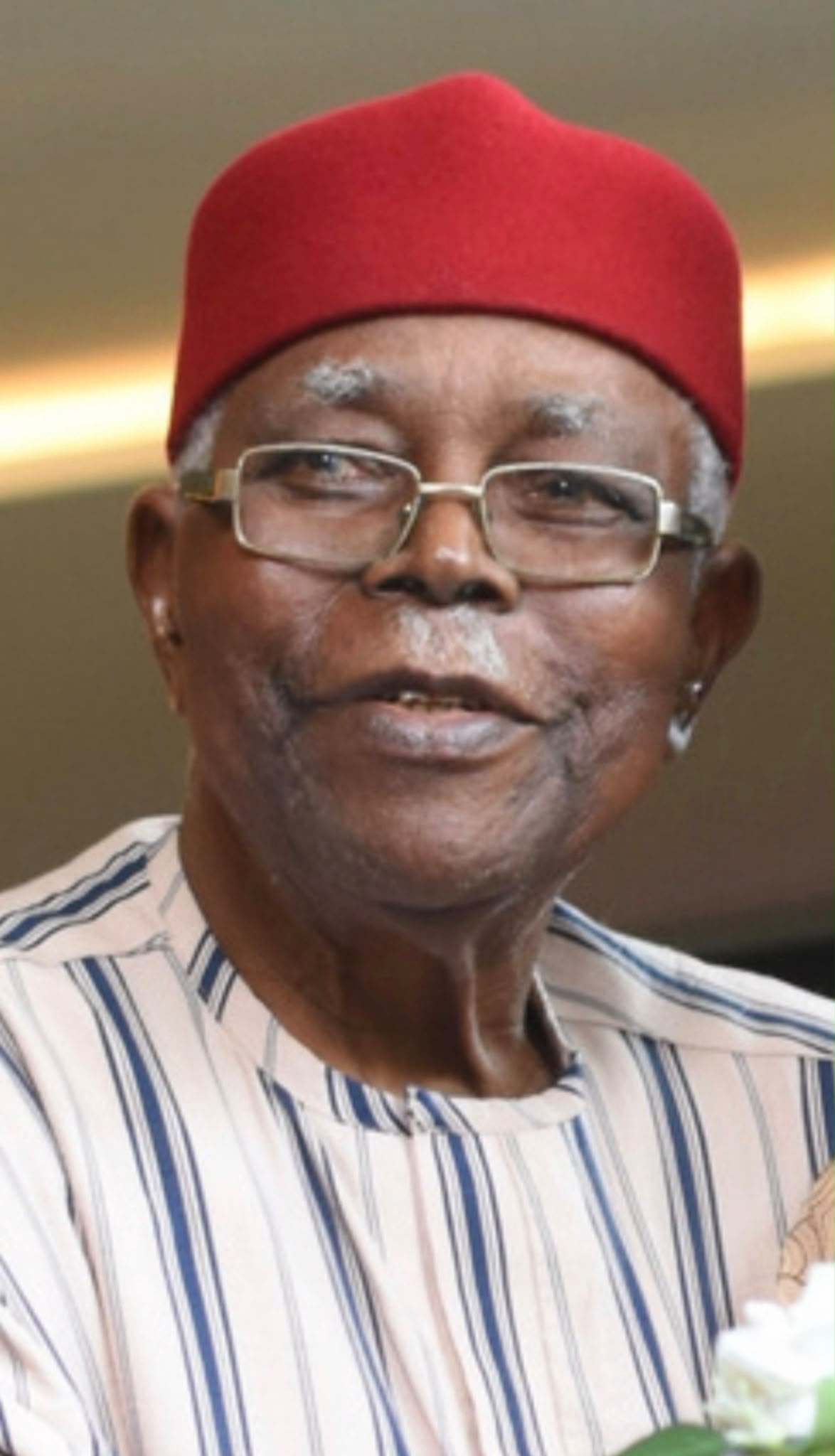
Rivers State today bid a final farewell to one of its most distinguished elder statesmen, Sir (Chief) Joseph Ogwu Abulokwe, JP, KSM, KSG, the first Ojingwu of Ndoni, whose life of integrity, selfless service, faith and exemplary leadership left an enduring imprint on the state and beyond.
He was laid to rest in a private cemetery after a funeral mass at St. Mary’s Catholic Church, Aggrey Road, Port Harcourt, Nigeria.
Ndoni, his community in Ogba/Egbema/Ndoni Local Government Area of the state has been in mourning the passing of one of its greatest sons, since 1st June, 2026.
Chief Abulokwe, who died at the age of 96, was widely regarded as the moral compass of Ndoni, a respected traditional title holder, accomplished public servant, successful businessman, devout Catholic and peacemaker whose wisdom shaped generations of leaders.
His passing marks the end of an era for a community he served with uncommon devotion and for Rivers State, where his name became synonymous with honesty, fairness and principled leadership.
For more than seven decades in public and private life, he distinguished himself as a man who placed duty above personal gain, earning widespread admiration from government circles, the traditional institution, the Church and the corporate sector.
Born on May 18, 1930, at Odugili in Ndoni District, now in Ogba/Egbema/Ndoni Local Government Area of Rivers State, Chief Abulokwe rose from humble beginnings to become one of Nigeria’s finest administrators and community leaders.
He was the eighth of nine children of Chief Onwugbonu Emefiena (Ube Ataah) and Mrs. Ona Abulokwe and belonged to the respected Enumah/Abulokwe family of Umu-Omossor, Ogbeukwu Quarters, Ndoni.
His academic brilliance manifested early. After beginning his education at the United Native Africa Mission School, Odugili, he completed his primary education at Holy Trinity Catholic School, Onitsha, before attending Africa College, later known as Our Lady’s High School, Onitsha, where he graduated with a Grade One Cambridge School Certificate.
His quest for excellence eventually took him to the London School of Economics and Political Science (LSE) on a Western Region Government scholarship, from where he graduated in 1956 with a Second-Class Honours (Upper Division) degree, an outstanding achievement at a time when very few Nigerians had access to such opportunities.
While studying in London, he met Jamaican nursing student Myrtle May McDonald. Their friendship blossomed into a marriage with children that endured for nearly 71 years, becoming an enduring testimony of love, commitment and family values.
On his return to Nigeria in 1957, he resumed public service, first in the Western Region Civil Service where he served as Inspector of Taxes and later as an Administrative Officer in different parts of Western and Mid-Western Nigeria.
His career took another significant turn in 1963 when he joined the Nigerian Tobacco Company (NTC), where he served in Ibadan, Lagos, Zaria and Port Harcourt.
Even during the difficult years of the Nigerian Civil War, Chief Abulokwe remained steadfast in carrying out his professional responsibilities while enduring the personal hardship of separation from his family before they reunited after the war.
Following his retirement from NTC in 1977, Rivers State called upon his experience and impeccable reputation by appointing him Commissioner in the Rivers State Local Government Service Commission.
His reputation as a fair-minded administrator soon became firmly established.
Those who worked with him recall a public officer who neither compromised standards nor allowed personal relationships to interfere with official responsibilities.
He was later appointed Chairman of the Rivers State Civil Service Commission in 2000, where he spent five years restoring confidence in the recruitment and promotion processes within the state’s civil service.
Many civil servants remember his tenure as one in which competence, merit and discipline took precedence over favouritism and political influence.
Outside government, Chief Abulokwe also built a flourishing business empire.
He founded Omossor Agencies in 1979, growing it into a successful transportation, import, export and haulage enterprise that created employment opportunities for numerous young Nigerians at a time unemployment was becoming a major national challenge.
His leadership qualities equally earned him appointments as Chairman of West African Glass Industry Plc (WAGI) and later Chairman of BAP Services Limited, formerly BEWAC Automotive Products Plc, positions from which he provided stable and respected corporate leadership for many years.
Yet, despite his remarkable accomplishments in government and business, history is likely to remember him most for his extraordinary contributions to the Ndoni community.
As National Secretary and later National President of the Ndoni Community, Chief Abulokwe emerged as one of the foremost defenders of the interests of his people.
His defining moment came in 1976 when he presented Ndoni’s case before the Nasir Boundary Adjustment Commission.
The outcome of those proceedings eventually secured the transfer of Ndoni from the former Mid-Western State to Rivers State, a development regarded today as one of the most significant milestones in the community’s modern history.
Many historians and community leaders believe that without his courage, intellectual depth and unwavering commitment during those proceedings, the history of Ndoni could have taken a very different direction.
His role in that historic achievement earned him enduring gratitude from generations of Ndoni people.
In recognition of his exceptional service, he was installed as the first Ojingwu of Ndoni in 1983.
The title became inseparable from his personality as he devoted the rest of his life to promoting peace, unity and development in the community.
Unlike many traditional leaders whose influence was confined to ceremonial functions, Chief Abulokwe remained actively involved in resolving disputes, mentoring younger leaders and championing initiatives that promoted communal harmony.
His calm disposition and measured approach to difficult issues made him one of the most respected voices in Ndoni and beyond.
His influence extended beyond traditional leadership into the Church.
A devout Catholic throughout his life, he served faithfully at St. Mary’s Catholic Church, Aggrey Road, Port Harcourt, and chaired the Catholic Elders’ Forum of the Port Harcourt Diocese for nearly two decades.
In recognition of his distinguished commitment to the Catholic faith, Pope Francis conferred on him the Papal Knighthood of the Order of St. Gregory the Great in 2022, one of the highest honours bestowed upon lay Catholics.
He was equally active in Lions Clubs International, where he served as Club President and District Officer, demonstrating that service to humanity transcended religious and cultural boundaries.
Those who knew Chief Abulokwe best insist that his greatest achievements were not the offices he held or the honours he received but the lives he quietly transformed.
He was known for supporting widows, assisting indigent students with educational expenses, mentoring young professionals and extending financial assistance to struggling families without seeking recognition.
His generosity was private, deliberate and consistent.
Friends describe him as a man of few words but immense wisdom.
He disliked unnecessary publicity, avoided political bitterness and believed that true leadership was demonstrated through integrity, humility and compassion.
He reportedly declined opportunities for higher political office because he would not compromise his principles for personal advancement.
As news of his passing spread across Rivers State, tributes poured in from traditional rulers, church leaders, public servants and community organisations, all describing him as one of the finest examples of ethical leadership produced by the state.
To many in Ndoni, his death represents not merely the loss of a traditional ruler but the departure of a father, counsellor and unifying figure whose life embodied justice, peace and selfless service.
His legacy, they say, will endure in the institutions he strengthened, the community he helped preserve, the Church he faithfully served and the countless lives he touched through quiet acts of kindness.
For Rivers State, Chief Joseph Ogwu Abulokwe’s passing is the loss of a statesman of uncommon character.
For Ndoni, it is the departure of the first Ojingwu, the patriarch who helped shape the community’s modern identity and whose name will remain permanently etched in its history as a symbol of honour, peace, integrity and unwavering service to humanity.