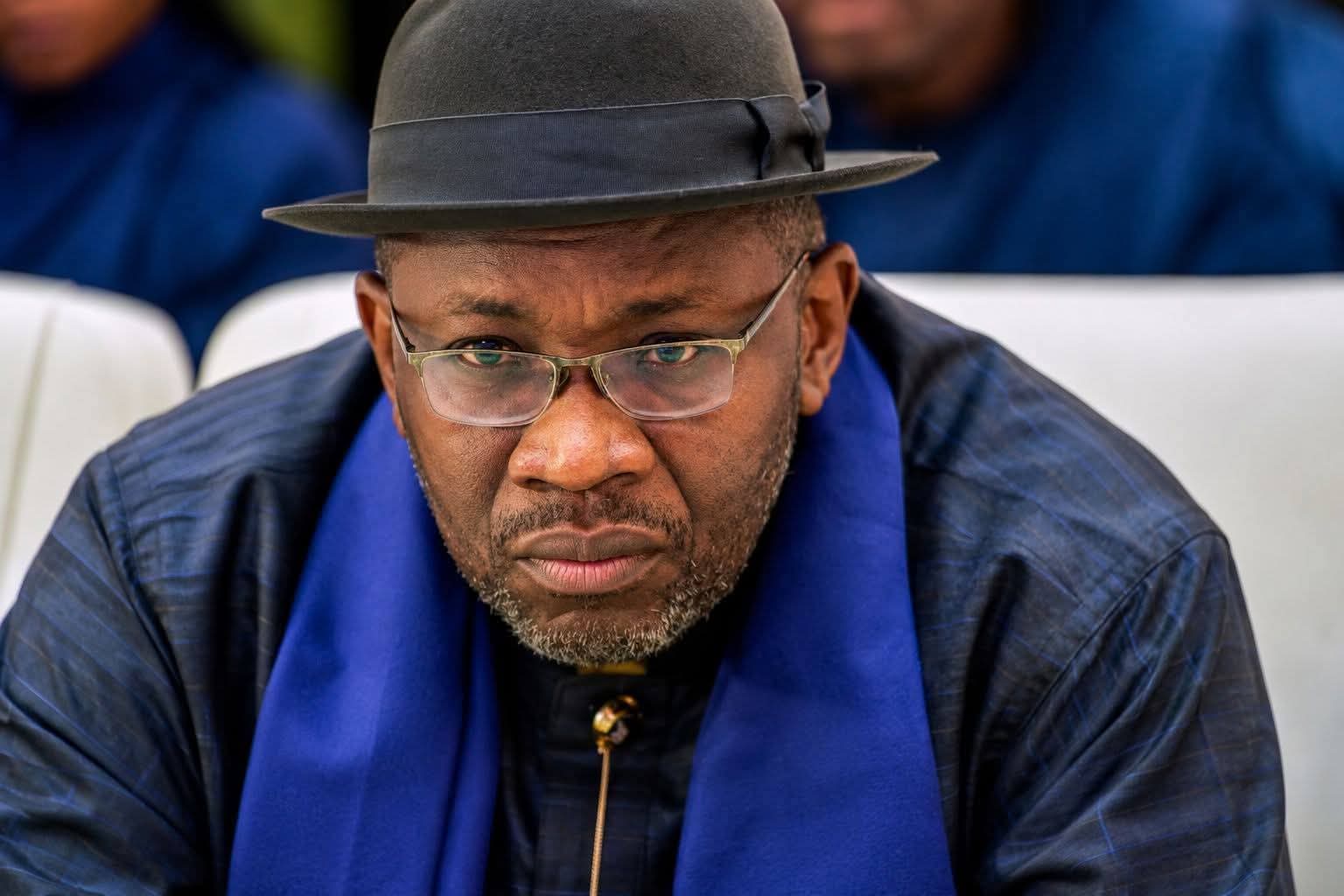
At a time when concerns over shrinking political space and the dominance of powerful ruling structures continue to shape national discourse, former Bayelsa State Governor and Senator representing Bayelsa West, Henry Seriake Dickson, has emerged as one of the country’s most consistent advocates of constitutional democracy and multiparty politics.
For more than two decades in public service, Dickson has built a political identity anchored on the defence of democratic institutions, constitutional order, and political plurality, often taking positions many of his contemporaries avoided in the face of political pressure and shifting alliances.
From his early years in the House of Representatives to his tenure as governor between 2012 and 2020, and now as senator and founder of the Nigeria Democratic Congress, Dickson’s political trajectory has remained closely tied to issues of institutional governance and democratic accountability.
As governor of Bayelsa State, he repeatedly argued that democracy could only survive where institutions, rather than personalities, drive governance. At a period when defections to ruling parties became a recurring feature of Nigerian politics, Dickson maintained his place within opposition politics, insisting that credible opposition remained essential for democratic balance and accountability.
His administration in Bayelsa was associated with investments in education, infrastructure development, civic participation, and relative political stability, while his public interventions frequently focused on constitutionalism, freedom of expression, and the need to protect democratic institutions from political intimidation.
Long before his governorship, Dickson had already established himself as an influential voice on justice sector reforms and constitutional development during his time in the House of Representatives, where he chaired the House Committee on Justice.
In that capacity, he supported and sponsored legislative initiatives relating to electoral reforms, anti-corruption measures, freedom of information, and internal democracy within political parties.
His interventions on national issues became even more pronounced following his emergence in the Senate, where he has consistently spoken on matters relating to federalism, constitutional reforms, electoral integrity, and institutional independence.
In recent years, Dickson has also become one of the prominent political figures warning against the dangers of a one-party state in Nigeria. While several politicians aligned themselves with dominant political structures, he continued to argue that Nigeria’s diversity and democratic evolution require a robust multiparty system capable of offering citizens credible alternatives.
His criticism of actions perceived as unconstitutional, including what he described as executive overreach and anti-democratic tendencies, further reinforced his reputation as one of the country’s outspoken defenders of constitutional governance.
The emergence of the Nigeria Democratic Congress marked another significant phase in his political journey. According to Dickson and his supporters, the platform was founded on the conviction that Nigeria requires a viable democratic alternative capable of strengthening national unity, democratic competition, and institutional accountability.
Explaining his alignment with the movement, Dickson warned against any political development capable of weakening democratic freedoms or eroding opposition politics in the country.
Supporters of the platform describe it as more than a conventional political party, but rather an ideological movement aimed at rebuilding public confidence in democratic participation and leadership driven by service, reform, and national inclusion.
Across different phases of his career — as Attorney-General, legislator, governor, and senator — Dickson has maintained a largely consistent political philosophy centred on institutional democracy, constitutional order, and political inclusion.
For many observers, that consistency has distinguished him in a political environment often shaped by expediency and shifting loyalties.
As Nigeria continues to grapple with questions surrounding democratic consolidation, electoral reforms, and political inclusion, Dickson’s supporters argue that his interventions and political posture have positioned him among the enduring voices advocating the protection of Nigeria’s democratic foundations.
By Gabriel Ukuta