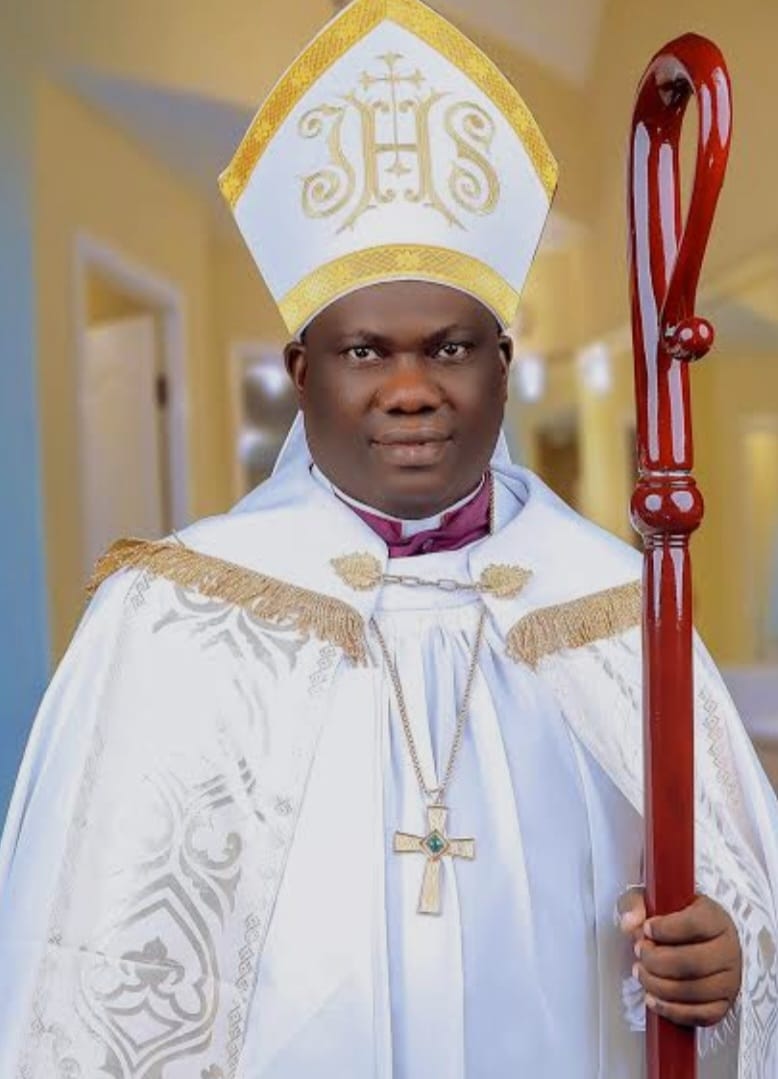
The Bishop of the Diocese of Okrika, Enoch Atuboyedia, has said the forthcoming 8th Synod of the diocese will serve as a platform for spiritual renewal, strategic planning and renewed commitment to evangelism, with expectations of a fresh outpouring of the Holy Spirit.
Addressing journalists ahead of the synod, Atuboyedia described the gathering as a critical moment in the life of the church, noting that it would focus on consultation, evaluation and charting a forward-looking course for the diocese.

“Synod is a time of consultation, evaluation and re-strategising. It is also a time when the church, under the guidance of the Holy Spirit, takes decisions to advance God’s kingdom,” he said.
The synod, themed “The Outpouring of the Holy Spirit,” is expected to climax with a thanksgiving service on May 3, with the bishop expressing hope that participants would experience a spiritual revival akin to the events of Acts of the Apostles chapter two, which marks the birth of the early church.
He called on delegates and participants, both physical and virtual, to prepare spiritually for what he described as a “Pentecost experience” that would empower the faithful for greater kingdom service.
The four-day event, scheduled to hold at Bethel Church Amadi-Ama from April 30 to May 3, will feature scriptural meditations, Bible study sessions, seminars, and the Bishop’s Charge, alongside the launch of a N2.5 billion Diocesan Secretariat Fund.
Reviewing developments since his enthronement on September 28 as the second bishop of the diocese, Atuboyedia said evangelism has remained the central focus of his episcopal ministry.
He noted that the establishment of youth-oriented and non-liturgical worship centres has helped reverse the drift of young people from the Anglican fold, with many returning and others joining from different denominations.
According to him, the non-liturgical centres retain Anglican identity but adopt flexible worship styles to meet contemporary needs, while still incorporating traditional liturgical practices, particularly during Eucharistic services.
The bishop also highlighted progress across key ministries of the church. He said the women’s ministry has gained renewed momentum, citing the maiden “Wakrike Willing Women” prayer and fasting gathering, which drew participation across denominational lines.
In the area of welfare and empowerment, he disclosed that over 100 persons have benefited from church support initiatives, including financial assistance for small businesses. He added that the diocese had sponsored 15 students in tertiary institutions and plans to increase scholarships to 20 beneficiaries this year.
On infrastructure, Atuboyedia said work on the diocesan secretariat has advanced, with the printing press and chapel wings already completed, while efforts are ongoing to develop the main complex and conference hall.
He appealed to government officials, traditional rulers, political leaders, captains of industry and the general public to support the fundraising drive during the synod to ensure timely completion of the project.
Speaking on the role of the church ahead of the 2027 general elections, the bishop maintained that the church must remain non-partisan, even as it continues to promote ethical conduct in politics.
“The church is not a political party and should not be used as a political platform,” he said, urging politicians to adhere strictly to guidelines set by the Independent National Electoral Commission and to conduct their affairs with the fear of God.
He stressed that political office should be seen as a call to service rather than an avenue for personal gain, adding that good governance remains the ultimate expectation of citizens.
While acknowledging calls for the church to endorse candidates, Atuboyedia said such actions could expose the church to undue criticism and politicisation, noting that personal interests often override truth in Nigeria’s political space.
He, however, insisted that the church would continue to speak on issues of accountability and leadership, revealing that attempts to engage local political office holders in dialogue had been met with limited participation.
Despite the challenges, the bishop expressed optimism that sustained engagement and moral guidance from the church would eventually yield positive outcomes in governance.