



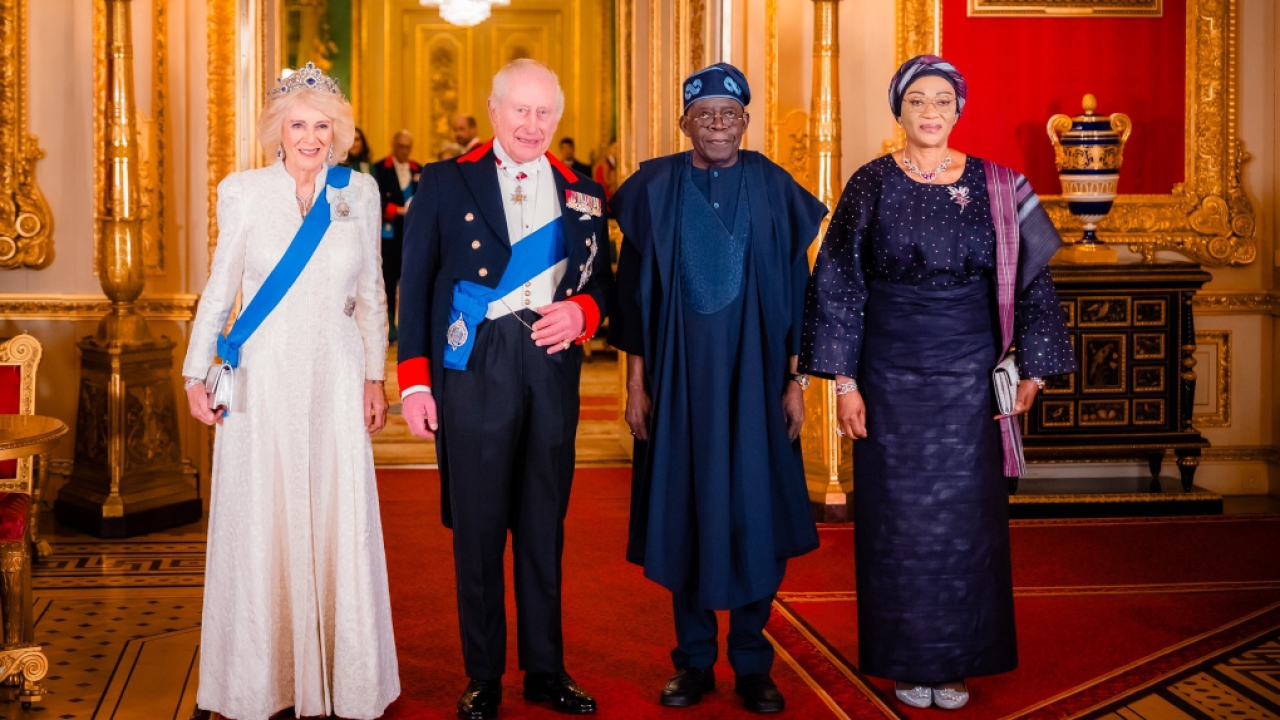
The state visit of President Bola Ahmed Tinubu to the United Kingdom is being widely interpreted as a powerful statement of Nigeria’s continued relevance on the global stage, reinforcing not only diplomatic and economic ties but also strategic cooperation in the fight against insurgency.
At a time when Nigeria is navigating complex economic and security challenges, the significance of the visit lies in the message it sends to the international community: that the country remains a valued partner, capable of reform, resilience, and renewal. Far from being isolated by its internal difficulties, Nigeria is instead attracting deeper engagement from key global actors, signaling confidence in its direction.
Central to this perception is the Tinubu administration’s bold economic reform agenda.
Measures such as fuel subsidy removal and foreign exchange unification, though difficult in the short term, have been recognized internationally as necessary steps toward long-term stability. The warm reception accorded the Nigerian leader in London is therefore seen as more than routine diplomacy—it is viewed as a tacit endorsement of these policies and the broader commitment to restructuring Africa’s largest economy.
However, beyond economic considerations, the visit carries profound security implications.
Nigeria has for over a decade battled insurgency, particularly in the North-East, alongside other emerging threats such as banditry and transnational crime. The UK has remained one of Nigeria’s key security partners, providing training, intelligence support, and technical assistance to Nigerian forces.
Tinubu’s engagements are expected to deepen this cooperation, with renewed frameworks likely to emerge around intelligence sharing, counterterrorism strategies, and capacity building. For Nigeria, such partnerships are critical, not only in strengthening its military effectiveness but also in addressing the evolving nature of asymmetric warfare.
Security analysts note that the visit reinforces the idea that Nigeria’s challenges are not being ignored by the global community. Instead, they are being met with collaborative efforts, rooted in shared interests. Stability in Nigeria, given its population size and economic weight, is of strategic importance not just to West Africa but to global security at large.
Diplomatically, the visit marks a strengthening of a long-standing relationship built on history, trade, and shared institutional frameworks. Nigeria and the UK have maintained close ties since independence, and this latest engagement reflects a mutual desire to modernize that relationship in line with current global realities. From climate cooperation to migration management, both countries are seeking to expand areas of collaboration while reinforcing mutual respect.
Importantly, the visit also highlights Nigeria’s enduring value in the eyes of the international community. Despite facing inflationary pressures, currency volatility, and security concerns, the country continues to command attention and partnership at the highest levels. This is largely due to its strategic position as Africa’s largest economy, its vast human capital, and its role as a regional leader.
For many observers, this moment represents a shift in narrative. Rather than being defined solely by its challenges, Nigeria is increasingly being viewed through the lens of its potential and its willingness to undertake reform.
Tinubu’s active diplomatic outreach signals a government that is not retreating inward but is instead engaging outward, seeking solutions and partnerships.
The implications extend beyond government-to-government relations. The visit is expected to encourage investor confidence, particularly among British firms looking to expand into emerging markets. It also sends a reassuring message to Nigeria’s diaspora community in the UK, whose contributions through remittances and expertise remain vital to national development.
Moreover, the symbolism of the visit cannot be overstated. In international diplomacy, state visits are often carefully calibrated signals of trust and importance. By hosting Tinubu at this level, the UK is effectively affirming Nigeria’s place as a key partner in Africa and a country worth engaging despite its current hurdles.
In essence, the visit encapsulates three critical messages. First, that Nigeria’s economic reforms, though challenging, are gaining recognition and support globally.
Second, that the fight against insurgency remains a shared priority, with strengthened partnerships offering hope for improved security outcomes. And third, that Nigeria, despite its difficulties, continues to be valued as a nation of strategic importance and immense potential.
As the visit unfolds, expectations will be high for concrete outcomes—agreements, investments, and renewed commitments. Yet even beyond these tangible results, the broader significance is already evident. Nigeria is not standing alone; it is being acknowledged, supported, and engaged.
For a country often weighed down by its challenges, this moment offers a different perspective—one of validation, partnership, and cautious optimism.
By Chuks Oyema
Chuks Oyema is National Coordinator, APC Grassroots Governance Group APC G3