


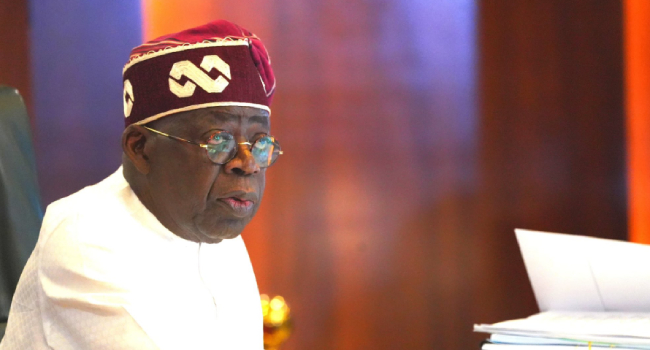
President Bola Tinubu has defended his administration’s proposed $20.5 billion fresh borrowing, arguing that the funds would address Nigeria’s infrastructure deficit and create better opportunities for future generations amid growing economic hardship among Nigerians.
Tinubu said the proposed borrowing under the Federal Government’s 2026–2027 borrowing programme would finance critical sectors of the economy, including power, transportation, healthcare, education, agriculture, water supply, employment generation and poverty reduction.
The President’s position was contained in a statement issued on Thursday by his Special Adviser on Information and Strategy, Bayo Onanuga.
He said the country’s infrastructure deficit and the enormous financial resources required to address it had made additional external borrowing necessary.
“In light of the need for significant infrastructure investment in the country and the vast financial resources needed to address this gap, it has become essential to pursue broader external borrowings to close the financing shortfall. This is for our children’s future,” Tinubu said.
The President maintained that the projects and programmes covered by the borrowing plan had been selected following technical and economic assessments to determine their potential contributions to national development.
According to him, the investments are expected to stimulate economic growth, create employment opportunities, promote skills acquisition, encourage entrepreneurship, reduce poverty and strengthen food security.
“These initiatives aim to generate employment, promote skills acquisition, foster entrepreneurship, reduce poverty and enhance food security, all of which improve the livelihood of the Nigerian child,” he said.
Tinubu also disclosed that most of the projects would be implemented across the 36 states of the federation and the Federal Capital Territory, Abuja.
He said the nationwide distribution of the projects was intended to address development challenges across different regions of the country.
The proposed borrowing comes amid concerns over Nigeria’s rising public debt and the economic pressures facing households, including the high cost of living.
While defending the plan as an investment in the country’s future, the President maintained that the funds would support infrastructure development and programmes designed to improve citizens’ living conditions.
