


Says seismic operations destroy vegetation, take 15 years to recover; urges Nigeria to invest in alternative energy
A Professor of Applied Geophysics at Rivers State University (RSU), Professor Chibuogwu Eze, has raised concerns over the environmental consequences of seismic exploration activities in the Niger Delta, warning that the destruction of vegetation during oil prospecting could take up to 15 years to recover.
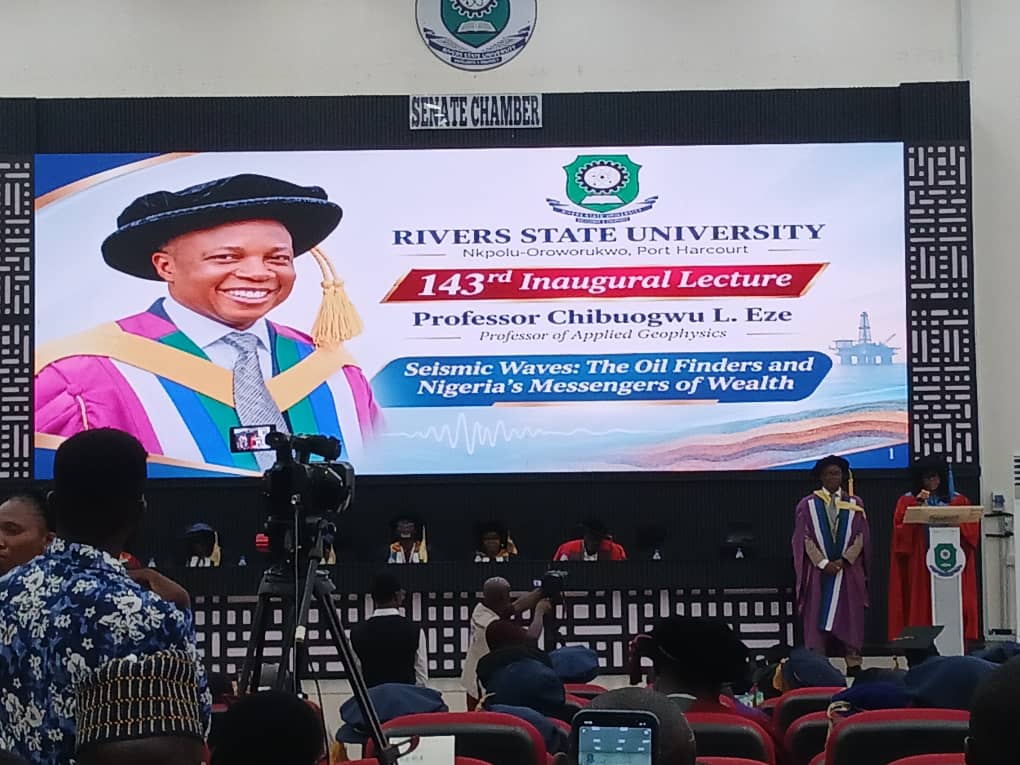
Professor Eze, who delivered the 143rd Inaugural Lecture of the Rivers State University in Port Harcourt on Wednesday, November 11, 2026, called for greater attention to the environmental cost of oil exploration, even as Nigeria continues to harness its petroleum resources.
The inaugural lecture, titled “Seismic Waves: The Oil Finders and Nigeria’s Messengers of Wealth,” examined the critical role of seismic technology in discovering the country’s oil and gas deposits, as well as the geological processes that underpin Nigeria’s petroleum wealth.
The Professor, however, drew attention to the ecological impact of seismic operations, particularly in the Niger Delta, where extensive vegetation is cleared to create access routes and operational spaces for seismic exploration.
He disclosed that vegetation destroyed during such activities takes approximately 15 years to regenerate, highlighting the long-term environmental implications of oil exploration in a region already grappling with ecological challenges.
The warning comes amid growing concerns about the environmental sustainability of petroleum exploration in the Niger Delta, where oil and gas activities have continued to place pressure on fragile ecosystems and local livelihoods.
Explaining the science behind seismic exploration, Eze said geophysics involves studying the earth through seismic waves, physics-based instruments and data analysis to understand underground formations without necessarily digging into the earth.
According to him, seismic waves serve as messengers of wealth because they travel beneath the earth’s surface, revealing the locations of oil and gas deposits and helping exploration companies identify potential reservoirs.
Professor Eze explained that seismic waves could be generated through different energy sources, including earthquakes, explosives such as dynamite and other artificial sources.
The inaugural lecturer noted that the use of dynamite as a seismic energy source, particularly in the Niger Delta, had been extensively researched and offered several advantages over other seismic sources.
Eze, who is a lecturer at the Institute of Geosciences and Environmental Management, RSU, explained that oil and gas are formed from organic-rich rocks known as source rocks.
He identified the principal source rocks in Nigeria as occurring within the Niger Delta petroleum province and the inland sedimentary basins of Anambra and Benue, contrasting these with some sedimentary formations in China’s Bohai Bay Basin, including Beijing, Shijiazhuang and Baoding sags, which he said lack effective source-rock characteristics.
The Professor further explained that Nigeria was endowed with excellent reservoir and cap rocks, which store petroleum and prevent it from migrating towards the earth’s surface.
According to him, geological structural traps within Nigeria’s petroleum province help retain the country’s oil deposits, making seismic interpretation particularly important in identifying the underground formations where petroleum accumulates.
“Nigeria’s oil do not migrate. God so love Nigeria that He put geological traps at the geological borders of the country that held our oil from migrating to another country. God sealed our borders. Unlike the situation where oil from Iraq migrated from Iran”, he said.
He described seismic waves as indispensable to oil discovery, noting that they provide images of geological structures and enable geophysicists to determine where oil is located.
The professor, however, stressed that Nigeria must begin to look beyond its dependence on crude oil by investing more rigorously in alternative energy sources in line with the United Nations Sustainable Development Goals and the global transition towards cleaner energy.
He also urged the Federal Government to exercise greater prudence in managing the country’s petroleum earnings, pointing out that oil formation and exploration involve complex geological processes and enormous financial commitments.
Professor Eze called for the strengthening of indigenous oil exploration companies to enable them to compete technically with seismic exploration firms from other countries, including China.
He also recommended that seismic companies operating in Nigeria should provide opportunities for young Nigerian geologists and geophysicists through industrial training programmes, as part of efforts to develop local technical capacity.
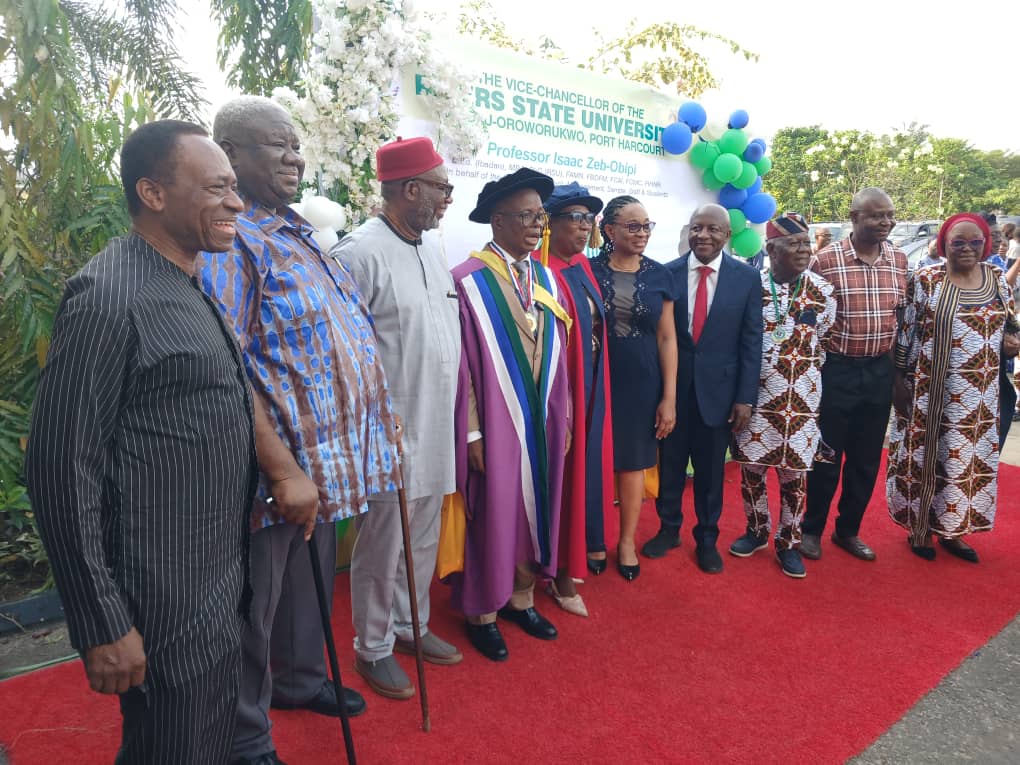
In his closing remarks, the Vice-Chancellor of RSU, Professor Isaac Zeb-Obipi, represented by the Deputy Vice-Chancellor (Administration), Professor Blessing Jaja, congratulated Prof. Eze on what he described as an elegant and thought-provoking inaugural lecture.
Jaja said the lecture served as a national call for responsible management of the proceeds from Nigeria’s black gold, which he described as the country’s sweet cake.
He observed that seismic waves had played a fundamental role in discovering the resources responsible for Nigeria’s oil wealth, but warned that the country must not take the future availability of petroleum for granted.
Describing the lecture as food for thought for national leaders, Professor Jaja urged them to deploy oil revenues judiciously and invest in alternative energy sources before the country’s petroleum resources are depleted.
