

Home Blog Page 95

Fubara Returns With Bold Development Charge, Unveils 10-Day Projects Blitz Across Rivers

0

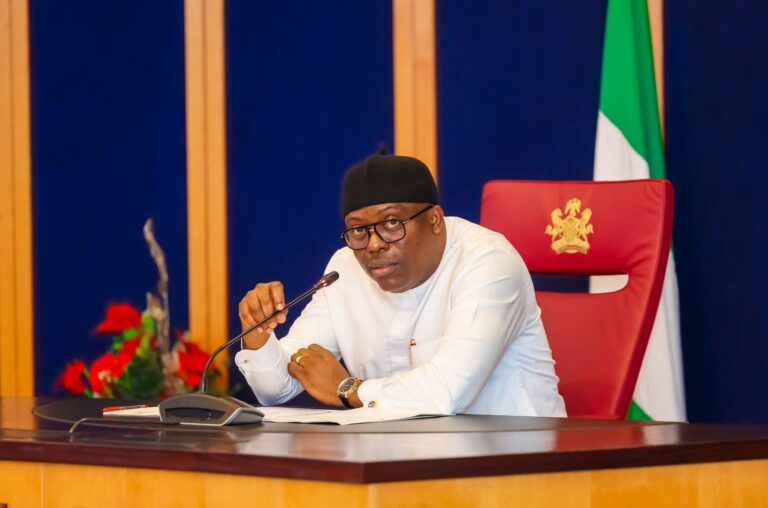
Barely three months after regaining his seat following a turbulent six-month suspension, Rivers State Governor, Sir Siminalayi Fubara is once again demonstrating the calm resolve and developmental clarity that marked his early months in office.

Far from losing momentum, the governor is rolling out an ambitious, people-focused programme that reaffirms his commitment to rebuilding trust, restoring governance stability, and repositioning Rivers State on the path of sustainable growth.

The Atlantic Bell reports that in a move that underscores his administration’s readiness to deliver, the state government has released a 10-day schedule for the commissioning and flag-off of eleven major projects across eight local government areas. The projects—spread across health, housing, judiciary, and critical road infrastructure—capture Fubara’s long-held development philosophy: equitable, inclusive, and people-centred.

The activities begin on Wednesday, December 10, 2025, with the commissioning of the Extension of the Dualization of Ahoada–Omoku Road traversing Ahoada East and Ogba/Egbema/Ndoni LGAs. On Thursday, December 11, the Egbeda–Omerelu Link Road in Emohua and Ikwerre LGAs takes the spotlight, strengthening inter-community access and easing mobility for thousands of residents.

A day later, attention shifts to strategic aviation-support infrastructure as the governor flags off the Bypass to the Port Harcourt International Airport and Toll Gate Project, followed by the commissioning of the Ikwerre Road–Igwuruta–Airport Road.

The Atlantic Bell further reports that the tempo continues to build on December 15 with the commissioning of the Greater TAF City Housing Estate in Ikwerre LGA, an ambitious urban development scheme that reflects Fubara’s commitment to affordable housing and modern urban planning. This is followed by the commissioning of the Ihuowo–Ihuama and Ring Road in Ahoada East, and later, the Obodhi–Ozochi Road and Bridge in Ahoada East and Ahoada West on December 16 and 17, respectively—projects long demanded by communities historically cut off by poor access.

The development train moves to Emohua on December 18 for the commissioning of the Ogbakiri Junction (Roundabout)–Ogbakiri Waterfront Road, a vital economic link for the area. On December 19, the Ahoada Zonal Hospital—an essential health facility for the region—will open its doors, advancing the governor’s efforts to strengthen healthcare delivery in underserved communities.

As the rollout approaches its finale, the Permanent Secretaries’ Quarters in Obio/Akpor will be commissioned on December 22, reinforcing institutional support for the civil service. The curtain will fall on December 23 with the commissioning of the new Federal High Court Complex in Port Harcourt—a milestone in judicial infrastructure and access to justice.

For a governor who had already begun to earn public confidence through decisive development action before political turbulence struck, this latest surge of activity serves as a resounding reminder: Siminalayi Fubara’s focus remains firmly on service, stability and the steady transformation of Rivers State.

How Nigerian Air, Ground Troops Flushed Out Beninoise Coupists -Presidency

0

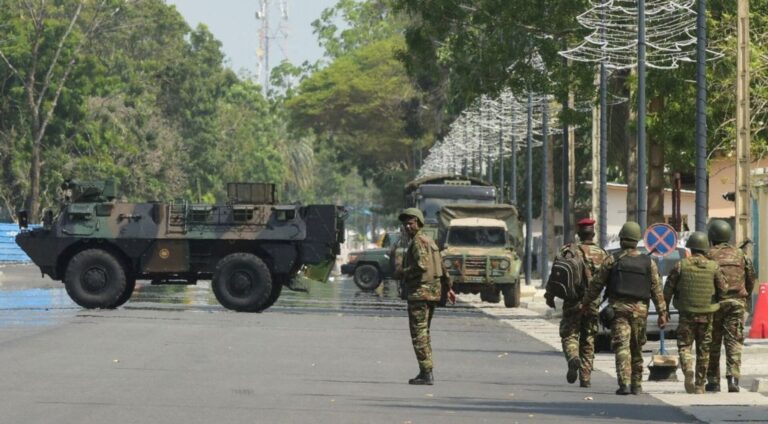
Nigeria deployed both air and ground forces to help restore constitutional order in neighbouring Benin Republic after a group of soldiers attempted to topple President Patrice Talon, the Presidency has confirmed.

The mutinous soldiers had taken over the state television station on Sunday, announcing the dissolution of the government and claiming to have removed President Talon from office. Identifying themselves as the “Military Committee for Refoundation” (CMR), they suspended the constitution, shut all borders and declared Lt. Col. Tigre Pascal as head of a military transition council.

Although the whereabouts of President Talon were initially uncertain, Benin’s Interior Minister, Alassane Seidou, later announced that loyal forces had regained control and the coup attempt had been thwarted.

Presidential spokesperson Bayo Onanuga said President Bola Tinubu ordered immediate military intervention following two urgent requests from the Beninese government.

According to him, Nigerian Air Force fighter jets were directed to secure Benin’s airspace and dislodge the coupists from the national broadcaster and a military camp where they had regrouped. Benin, through a diplomatic Note Verbal, sought Nigeria’s air support “to safeguard constitutional order, protect national institutions and ensure the security of the population.”

A second request asked for Nigerian air assets for surveillance and rapid-response operations, as well as ground forces strictly under Benin’s command for the protection of state institutions and containment of armed groups.

Nigeria’s Chief of Defence Staff, General Olufemi Oluyede, confirmed that all directives by President Tinubu had been executed, with Nigerian troops now on the ground in Benin.

“Ours is to comply with the order of the Commander-in-Chief of the Armed Forces,” he said.

Insecurity: US Congressional Fact-finding Delegation Arrives Nigeria …Holds Talks With NSA

0

National Security Adviser (NSA), Malam Nuhu Ribadu, on Sunday received a United States Congressional delegation in Abuja, reaffirming Nigeria’s commitment to strengthening its strategic security partnership with the U.S.

Ribadu, in a post on his official X-Handle of Saturday, said the visit was a continuation of earlier engagements in Washington, D.C., aimed at advancing shared priorities.

He said the high-level visit underscored the importance both nations attach to cooperation on security and stability.

“This morning, I received a U.S. Congressional delegation on a fact-finding mission to Nigeria, following our earlier engagements in Washington, D.C., on shared security priorities.

“The discussions focused on counter-terrorism cooperation, regional stability, and strengthening the Nigeria–U.S. strategic security partnership,” he said.

According to Ribadu, the delegation included Rep. Mario Díaz-Balart, Rep. Norma Torres, Rep. Scott Franklin, Rep. Juan Ciscomani and Rep. Riley Moore, alongside the U.S. Ambassador to Nigeria, Mr Richard Mills.

He expressed confidence that the meeting would translate into more robust collaboration.

“I’m optimistic this engagement will deepen trust, collaboration, and our shared commitment to peace and security,” he said.

Rivers Landlords Want Blocked Canal Cleared …Warn of Imminent Flood, Road Damage

0

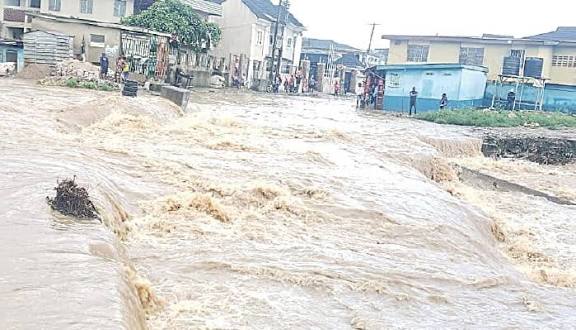
Landlords in Port Harcourt have raised an alarm over the growing threat posed by a blocked water canal, urging the Rivers State Government to take swift action to avert flooding and potential collapse of newly constructed internal roads in the area.

Speaking under the aegis of the Rumuokania II New Layout Landlords Association, Ada George, the property owners said the poor state of drainage in the community could lead to severe hardship if not urgently addressed.

Chairman of the association, Mr. Joel Gbandi, who presented the appeal during a media chat in Port Harcourt, expressed dismay that the obstructed canal was already undermining the integrity of the roads.

He warned that the situation exposes the neighbourhood to erosion and threatens the safety and livelihoods of residents.

While commending Governor Siminalayi Fubara for his investment in infrastructure and responsiveness to community needs, Gbandi stressed the need to safeguard the newly built roads from damage.

“While we commend the governor for this impactful project, we wish to draw his attention to an emerging issue that poses a threat to the durability of this critical road infrastructure,” he said.

According to him, the blocked canal, once a major waterway traversing communities such as Rumuokania, Mgbraja, Ogbogoro, Egbelu, Elioparanwo, Mini-Orlu, and Rumuevorlu—now requires urgent intervention.

He appealed to the government to fast-track the desilting of the canal to prevent the roads from being washed away by flash floods during the rains.

Editorial: The Unfinished Justice of the Petroleum Industry Act

0

Four years after the Petroleum Industry Act (PIA) promised a new era of accountability in Nigeria’s oil sector, host communities are still counting losses—financial, environmental, and human. The staggering revelation by the House Committee on South-South Development Commission (SSDC) that oil companies have failed to implement key provisions of the law is not just a regulatory lapse; it is a betrayal of the spirit of the PIA and an affront to the people whose lands continue to bleed crude and anguish.

According to Committee Chairman, Rep. Julius Pondi, the Abandonment and Decommissioning Fund alone should have accrued between N850 billion and N1.1 trillion, while the Environmental Remediation Fund should by now hold at least N420 billion to N550 billion. These are not abstract numbers. They represent poisoned rivers that should have been cleaned, devastated farmlands that should have been restored, and communities that should finally have begun to recover from decades of environmental abuse.

Instead, multinational oil firms have continued to operate as though the PIA were optional—shifting liabilities to the same people whose lands power the nation’s economy, while regulators look on with disturbing passivity. This is not just negligence; it is exploitation coated with impunity.

The consequences are visible everywhere across the Niger Delta: rusting and abandoned installations posing grave safety risks; children growing up on contaminated water; farmers watching their harvests shrink in toxic soil; fishermen pursuing ghosts in once-thriving creeks now barren from pollution. These are realities the PIA was crafted to change. Yet, four years on, the law remains largely unimplemented—its transformative promise squandered by corporate nonchalance and regulatory inertia.

The failures of both the Nigerian Upstream Petroleum Regulatory Commission (NUPRC) and the Nigerian Midstream and Downstream Petroleum Regulatory Authority (NMDPRA) are equally damning. Their lack of visibility, capacity, and urgency in enforcing compliance has emboldened operators to sidestep their statutory obligations. A law without enforcement is a mere decoration; the agencies meant to police the sector have instead become spectators, leaving host communities to bear the lifelong consequences of environmental ruin.

It is no surprise, then, that lawmakers are now contemplating a new agency to manage these funds—one that is transparent, functional, and immune to regulatory capture. If the existing institutions cannot compel compliance with the most basic provisions of the PIA, then Nigeria must reconsider who is fit to safeguard its environmental and community interests.

The oil firms must be held to account. They cannot continue extracting wealth while abandoning waste; cannot keep appropriating profit while externalising pollution. Nigeria cannot afford another chapter of environmental injustice masquerading as industrial activity. The time for indulgent excuses is long past.

The House of Representatives must move beyond lamentation. It must compel full compliance with the PIA—through sanctions, audits, and, where necessary, criminal proceedings. Host communities have waited too long for justice, and the cost of further delay is measured in lost lives, ruined livelihoods, and ecosystems that may never recover.

The PIA was meant to correct decades of imbalance. Its non-implementation is becoming yet another symbol of the exploitation it sought to end. Oil companies must obey the law. Regulators must wake up. And Nigeria must insist that environmental justice is not a request—it is a right.

Stable, Prosperous North Essential For Nigeria’s Unity, Growth – CEDDERT

0

The Executive Director, Centre for Democratic Development Research and Training (CEDDERT), Prof. Abubakar Siddique, has called for deliberate investments to counter the growing insecurity and underdevelopment in Northern Nigeria.

Siddique made the call in a paper on “Nigerian Socio-economic and Security Challenges: Implications for Northern States”, presented at the 2nd General Hassan Usman Katsina Memorial Lecture on Saturday in Kaduna.

He said that Nigeria would not move from its present level of development if it continues to leave half of the country behind.

According to him, Northern Nigeria is at the heart of Nigeria’s challenges and its potential.

“The region’s sheer scale is pivotal, it contains majority of Nigeria’s population and the majority of the country’s poor.

“With poverty rates around 70 per cent and literacy around 30 pwr cent in the North-West/North-East, Nigeria cannot achieve middle-income or developed status while leaving half the country behind,” he said.

He said that the World Bank had observed that almost all the increase in the number of Nigerians living in extreme poverty since 2010 came from the North, thereby offsetting any progress in the South.

“This means national poverty reduction targets, lile lifting 100 million out of poverty in a decade, are unattainable without a drastic turnaround in the North.

“A stable, prosperous Northern Nigeria is essential for Nigeria’s unity and growth,” he said.

Siddique said that the North’s per-capita income and human development should match those of the South.

According to him, of that happens, Nigeria’s GDP could be at least 2–3 per cent higher, and the national poverty rate would drop by more than 20 percentage points.

“Likewise, achieving the Sustainable Development Goals (SDGs) for Nigeria by 2030 heavily depends on progress in the North.

“Currently, states like Sokoto and Bauchi rank at the bottom on nearly all SDG indicators (UN SDG Index, 2022),” he said.

He said that insecurity in the North also had national spillovers on food inflation, which hit 23 per cent, a 17-year high in 2022, because of supply disruptions driven by conflicts.

“Conversely, peace in the North would boost investor confidence countrywide and allow reallocating billions from military spending to development.

“In short, Nigeria’s long-term stability, economic ambitions and international standing hinge on effectively addressing Northern Nigeria’s socio-economic and security crises.

“The data and analysis presented reinforce that without bold reforms and inclusive growth in the North, Nigeria’s overall development will remain fragile and uneven.

“The urgency for evidence-based strategies and sustained commitment to transform Northern Nigeria cann ot be overstated; it is both a regional imperative and a national necessity,” Sadique said.

He also called for thorough institutional reforms to enhance security, access to education, interfaith and inter-ethnic dialogue.

He suggested leveraging agricultural and mineral resources to drive development, and deliberate job creation strategies to address mass unemployment in the region.

The Professor said that the traditional justice and reconciliation mechanisms should be revived while efforts must be strengthened in building public trust through rule of law reforms.

He said that anti-corruption and transparency measures were needed to restore trust as Nigeria’s corruption perception presently is very poor.

On security, he backed ongoing reintegration of ex-combatants to break the cycle of violence, saying that the mix of force and reconciliation were needed to restore peace.

He called for the institutionalisation of community-led early warning systems to reinforce efforts of security forces to prevent major violence.

He also called for the interfaith and inter-ethnic dialogue platforms, which have shown success in reducing violence in some states like Plateau and Kaduna.

Siddique also advocated for the re-orientation of the security forces towards intelligence and prevention, so as to predict and prevent outbreaks of violence through data.

IPI Nigeria Raises Alarm Over Rising Media Repression …Decries Fall in Global Press Freedom Ranking

0

The International Press Institute (IPI Nigeria) has expressed grave concern over the intensifying repression of the media in the country, warning that Nigeria’s steep decline in the 2025 global Press Freedom Index reflects escalating threats faced by journalists and news organisations nationwide.

The alarm was raised in a communiqué issued at the end of its 2025 Annual Conference and General Meeting held on December 2 and 3 in Abuja, with the theme: “Addressing Media Repression in Nigeria: Safeguarding Press Freedom and Democratic Accountability.”

The opening day of the conference, chaired by Vice President Kashim Shettima—who also unveiled the IPI Nigeria Book of Infamy—featured Information Minister Mohammed Idris as Special Guest of Honour. Two keynote papers, delivered by Media Rights Agenda (MRA) Executive Director Edetaen Ojo and Media Trust Limited co-founder Isiaq Ajibola, examined the widening threats to press freedom and the sustainability challenges confronting the media industry.

Panellists drawn from across the media, civil society, and academia further dissected the issues, highlighting urgent reforms needed to prevent Nigeria’s democratic space from shrinking further.

During the AGM on day two, members reviewed the Executive Committee’s annual report, received a special briefing from IPI Global in Vienna, and deliberated extensively on the worsening safety conditions for journalists.

In its resolutions, IPI Nigeria voiced deep concern that Nigeria fell ten places—from 112 to 122—in the 2025 World Press Freedom Index, describing the drop as “the cumulative effect of consistent and aggressive repressions across states, across platforms, and across newsrooms.”

The communiqué stressed that while the ranking is unflattering, “the classification is not baseless,” noting that government officials and security agencies remain “key actors responsible for attacks on media freedom and journalism practice in Nigeria.”

Citing a November 2025 MRA report, IPI Nigeria warned that nearly 74 per cent of attacks on journalists and media organisations recorded between January 1 and October 31, 2025 were perpetrated by state officials.

The Institute also acknowledged the inclusion of three public officials—Niger State Governor Mohammed Bago, Inspector-General of Police Kayode Egbetokun, and Akwa Ibom State Governor Umo Eno—into the Book of Infamy for acts deemed hostile to free expression and unhindered media practice.

IPI Nigeria noted with gratitude Vice President Shettima’s pledge to intervene and address the concerns raised over the publication.

The communiqué urged the federal government to rein in state governments and security agencies engaged in harassment of journalists and to end the prevailing culture of impunity.

It further demanded an urgent review of the Cybercrime Act and criminal defamation laws to align them with global best practices and protect freedom of expression.

IPI Nigeria also called for greater investment in investigative journalism to enhance accountability; stronger solidarity among journalists in resisting repression; improved welfare for media workers, including living wages, allowances, and health and safety insurance, and increased engagement between IPI Global and its Nigerian chapter.

The Institute also commended the MacArthur Foundation for its support to media development and lauded the significant growth in IPI Nigeria’s membership in 2025.

The communiqué was jointly signed by IPI Nigeria President Musikilu Mojeed and General Secretary Ahmed Shekarau.

NDLEA Intercepts 7.6m Tramadol Pills, 76,273kg Colorado

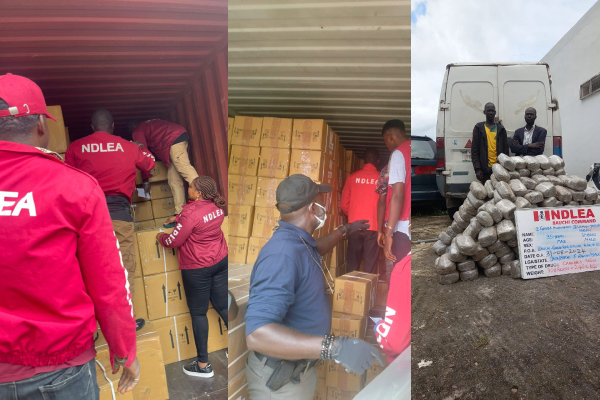
The National Drug Law Enforcement Agency (NDLEA) has recovered over 7.6 million pills of tramadol and a total of 76,273.4 kilograms of different strains of cannabis.

The agency’s Director, Media and Advocacy, Mr Femi Babafemi said this in a statement on Sunday in Abuja.

Babafemi said that the drugs including Colorado, Loud and Skunks had several members of drug trafficking organisations linked to the seizures arrested.

He said that out of the total opioids seized during the raids, not less than 3,874,000 pills of tramadol, 225mg and 100mg, and others as well as 252.2litres of codeine syrup were recovered.

He said that they were recovered from a warehoue at Oko market, Asaba, Delta on Saturday.

He also said that no fewer than 1.2 million tablets of tramadol 225mg were seized from a suspect on December 3.

This, he said was when NDLEA operatives on patrol at Orogwe, along Onitsha- Owerri road Imo, intercepted his vehicle conveying the consignment which was loaded at Aba, Abia, heading to Onitsha, Anambra.

Meanwhile, in Adamawa state, NDLEA officers on Dec. 1 intercepted a Toyota Hiace bus marked MGU 554 XB along Maraba-Mubi coming from Jos, Plateau state going to Mubi with a total of 1, 577,112 capsules of tramadol.

“Other drugs intercepted were exol-5 tablets, all concealed inside jumbo bags mixed with new rubber sandals and slippers.

“Two suspects were arrested in connection with the seizure.

“Similarly, another 27-year- old suspect, was nabbed along Zaria-Kano road, Kano state with 197,000 pills of exol-5,”he said.

Babafemi quoted the NDLEA Chairman, retired Brig. Gen. Buba Marwa as commending the officers and men of SOU, Delta, Adamawa, Imo, Ondo, Lagos, Kano, Commands of the agency for the arrests and seizures.

Marwa said that their operational successes, along with those of their compatriots across the country, especially their balanced approach to drug supply reduction and drug demand reduction, were well appreciated.

CAS Visits Alpha Jet Pilots After Emergency Ejection

0

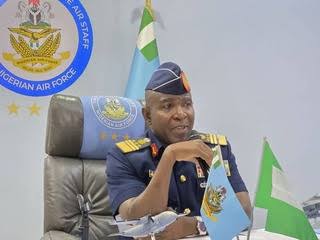
Nigeria’s Chief of the Air Staff (CAS), Air Marshal Sunday Kelvin Aneke, has visited the two Nigerian Air Force (NAF) Alpha Jet pilots who survived an in-flight emergency during a post-inspection test flight at NAF Base Kainji on December 6, 2025.

The pilots were forced to eject after the aircraft developed a critical fault shortly after take-off. The emergency occurred during a routine functional check flight, prompting swift action by the aircrew to prevent civilian casualties.

According to NAF, the pilots displayed remarkable discipline and professionalism, successfully steering the aircraft away from populated areas before ejecting. They landed safely and are currently undergoing standard medical assessments.

During the visit, Air Marshal Aneke commended the officers for their courage, sound judgement and strict adherence to safety protocols under extreme pressure. He noted that their actions averted potential loss of lives and property, describing the outcome as evidence of NAF’s robust training and safety culture.

The CAS also praised the coordinated response of NAF’s Search and Rescue teams, Fire and Crash Response units, and medical personnel who swiftly secured the crash site and ensured the welfare of the aircrew.

Aneke further announced the establishment of a Board of Inquiry to investigate the incident and determine the cause of the aircraft malfunction, stressing that such inquiries are routine measures aimed at enhancing operational safety.

He reiterated that the incident underscores the inherent risks of aviation—particularly military flying—where personnel operate in high-risk environments in service of national security.

“The bravery, sacrifice and professionalism of our men and women in uniform must never be taken for granted,” the CAS said, assuring that the Nigerian Air Force remains steadfast in upholding strict safety standards and strengthening operational readiness.

He reaffirmed NAF’s commitment to safeguarding its personnel and protecting the lives and property of Nigerians in line with its constitutional mandate.

Nigeria Deploys Fighter Jets As Benin Coup Triggers Regional Security Alarm

0

Nigeria has deployed fighter aircraft to the Benin Republic following Sunday’s military coup that attempted to topple President Patrice Talon, multiple high-level security sources have confirmed.

The jets, which took off from Lagos earlier on Sunday, were seen conducting operations inside Beninese airspace as Abuja intensifies aerial surveillance over the rapidly evolving political situation in its western neighbour.

Security officials said that the move forms part of Nigeria’s precautionary measures to assess emerging threats and protect its national security interests amid the uncertainty in Cotonou.

“The aircraft have already arrived in the Benin Republic. Nigeria is closely monitoring developments and assessing potential risks,” a senior security source said, emphasising that the mission is not offensive but a strategic response to unfolding events.

The coup, led by Lt. Pascal Tigri, resulted in the dissolution of state institutions and the seizure of power. The junta, operating under the name Military Committee for Rebuilding, announced the suspension of the November 2025 constitution, a halt to political party activities, and the closure of all borders—land, sea, and air.

The development deepens concerns over the resurgence of unconstitutional power grabs in West Africa, a region already grappling with a string of military takeovers.

Nigeria shares a long and porous border with Benin, heightening fears that instability could spill over and pose immediate security challenges for Abuja.

As of press time, the Federal Government had yet to issue an official statement. However, military insiders disclosed that aerial surveillance and intelligence operations will continue “until the situation becomes clearer.”o

Benin Republic was thrown into sudden unrest on Sunday after a group of soldiers appeared on national television claiming to have dissolved President Patrice Talon’s government. The brief announcement sent shockwaves across the country and the sub-region, fuelling fears of a full-scale military takeover.

Hours later, however, clarity began to emerge. Contrary to initial speculations, President Talon was confirmed safe and not in the custody of the mutinous soldiers. According to updated reports from Daily Post Nigeria, loyalist forces swiftly regained control of key state institutions and secured the president’s safety.

The soldiers behind the broadcast said they acted to “restore stability,” but offered no roadmap or structure for any new authority. Their vague declaration left citizens anxious and confused, especially with Benin already gearing up for the 2026 presidential elections.

President Talon, who has repeatedly vowed not to seek a third term, has earned praise for respecting constitutional limits and committing to a peaceful transition. The attempted military disruption sharply contradicts the sense of political stability many believed the country had achieved under his leadership.

While the incident created momentary uncertainty, relief spread across Benin following confirmation that the president remained unharmed. Regional bodies and international partners are expected to weigh in as more details surface.

For now, the nation is breathing easier, though questions linger over the motives behind the rogue broadcast and the steps needed to safeguard national security going forward.