

Home Blog Page 94

Kaduna State, Hostile Environment For Insurgency, Banditry –Sani

0

Gov. Uba Sani says Kaduna State is a hostile environment for insurgency and banditry, insisting that the state is taking a strong stance against insecurity and will not tolerate any threats to peace.

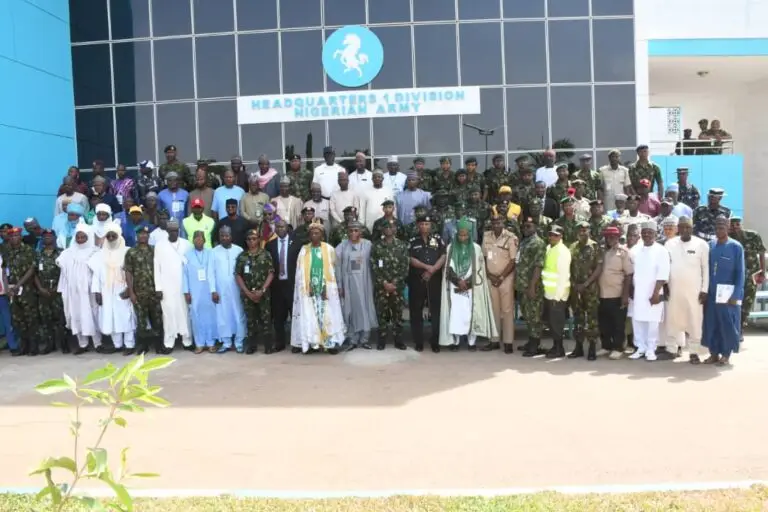
The Governor stated this at the Kaduna State Security Sectors Stakeholders’ Engagement organised by the Headquarters, 1 Division, Nigerian Army/ Joint Taskforce, Operations Fansan Yamma on Tuesday in Kaduna.

The theme of the event was ‘Community Engagement and Conflict Prevention: Building Trust and Stability”.

The governor was represented by the Commissioner for Internal Security and Home Affairs , Dr Sule Shu’aibu.
Sani said, ” Communities must not shield criminals, and there should be no sympathy for crime that puts innocent lives at risk.”
He said the state government was dedicated to protecting the lives and property of the citizens.

He said the government, the security agencies and stakeholders were working together to ensure peace and stability in the state.
Sani said security was not just the responsibility of the government and the Military, but also involves communities, traditional institutions, and the citizens.

He said the government was strengthening partnerships through logistics, intelligence sharing, and community driven structures is crucial.
” Security is the foundation for progress, and Kaduna State will continue to work with security agencies to ensure stability.

“The Kaduna peace mode, the state’s approach to security is being emulated by neighboring states, and the government is committed to maintaining this model, “Sani said.

He commended the 1 Division Nigerian Army for organising the stakeholders’ meeting and bringing together the stakeholders to discuss security and develop strategies.

Earlier, the Chief host , Maj.-Gen. Abubakar Wase, who doubles as the Commander, Sector 1, Operation Fansan Yamma, said the forum was aimed at addressing critical security challenges and collaboratively chart a course toward a safer and more secure Kaduna State.

“Our state, rich in cultural diversity and economic potential, epitomises Nigeria’s strength and resilience, yet faces significant security threats, including abductions, village attacks, and daily disruptions that necessitate prompt, decisive collective action.

“The agenda before us is comprehensive, exploring all aspects of security requirements, challenges, and socio-economic dimensions.

“We will candidly assess the current security landscape, pinpoint vulnerabilities needing urgent attention, and explore effective modes of intelligence sharing and best practices, “he said.

Wase said strengthening collaboration among all stakeholders is crucial, as security was a shared responsibility requiring synergy between government agencies, traditional leaders, community groups, civil society, and the populace.
He said the primary focus would be developing a robust response mechanism to prevent incidents and swiftly de-escalate tensions.

“We will engage in open dialogue, challenge assumptions, and co-create solutions,”Wase said.

He encouraged all the participants to contribute freely, embrace the spirit of collaboration, and utilise the expertise present to inspire trust and cooperation.

” Together, we can build a safer future where every citizen thrives and development knows no bounds, “Wase said.

The stakeholders were: Military, Police , DSS , Paramilitary institutions , traditional rulers, faith leaders, civil societies group and Local Governments Chairmen, among others.
VIP Protection: Low Manpower Not Setback – -NSCDC CG

0

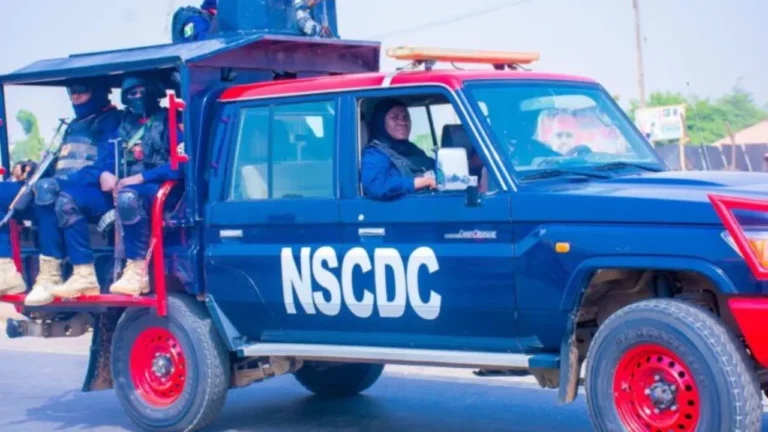
Dr Ahmed Audi, Commandant-General (CG) of the Nigeria Security and Civil Defence Corps (NSCDC), has disclosed that the corps is prepared to provide protection for Very Important Persons (VIPs) despite its low manpower.

Audi said this during the CG’s Quarterly meeting with senior officers on Tuesday at the NSCDC National Headquarters in Abuja.

According to him, despite the manpower of the corps which is about 63,000, the NSCDC remained dedicated in following the directive of President Bola Tinubu.

“The corps has keyed professionally to the Renewed Hope Agenda of Mr President to ensure the protection of Nigerians and all Critical National Asset and Infrastructure (CNAI).

“Despite our size we are not complaining as this assignment is an assignment the corps is ready to tackle and it’s a welcomed idea,” he said.

President Tinubu had, through his spokesman, Bayo Onanuga, announced that VIPs seeking official protection must now obtain “well-armed personnel” from the NSCDC.

The NSCDC boss further said the meeting was also aimed at discussing strategies and modalities to be adopted in handling VIP protection.

He said that the corps will also engage in strategic discussions with stakeholders at various levels to see how best to discharge the new duty assigned to it.

He, however, stated that personnel of the NSCDC had been actively involved in the protection of VIPs, adding that the assignment wasn’t new to the corps.

“We have been part of it alongside other agencies, and it is important to note that we get trained by the military, especially the training of our special forces,” Audi said.

The CG also said that the ongoing recruitment exercise into the corps by the Civil Defence, Correctional, Fire and Immigration Services Board (CDCFIB) will further boost the manpower of the NSCDC.

Audi charged all state Commandants and heads of formations to live up to expectations in the discharge of their duties, adding that anyone who does not take his job seriously will be sanctioned.

“We will strengthen the monitoring mechanism on performance of heads of formations nationwide with a view to checking what they do and assessing them,” he stated.

He appreciated the efforts, professionalism, resilience and determination of personnel so far in projecting the service.

Senate Approves Tinubu’s Request For Nigerian Troops Deployment To Benin Republic

0

The Senate has approved President Bola Tinubu’s request to deploy Nigerian troops to Benin Republic amid coup attempt.

The upper chamber expeditiously approved the president’s request after consideration of the request at the Committee of the Whole on Tuesday.

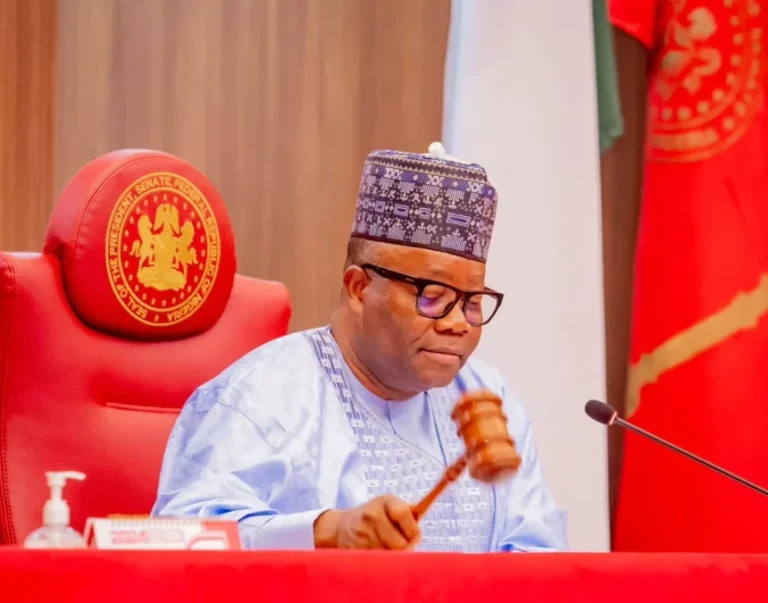
Earlier, the Senate President, Godswill Akpabio, had read Tinubu’s letter seeking senate’s approval for the deployment.

The president, in the letter, described the crisis in Benin as an ‘attempted unconstitutional seizure of power in the neighbouring West African country’.

The letter was transmitted pursuant to Section 5(5), Part 2 of the 1999 Constitution (as amended), which requires parliamentary consent for external military deployment.

According to the communication, the move follows a formal plea from the Government of Benin Republic for Nigeria’s immediate air support to quell the emerging crisis.

Tinubu informed the lawmakers that the Beninese government was currently grappling with the destabilisation of its democratic institutions, necessitating urgent external intervention.

“The Government of the Republic of Benin is currently faced with an attempted unconstitutional seizure of power and the disruption and destabilisation of democratic institutions,” the letter read in part.

The president explained that the request had become necessary after consultations with the National Defence Council, noting Nigeria’s regional responsibility and long-standing ties with Benin.

“The distinguished senate may wish to note that the Government of the Republic of Benin requires exceptional and immediate air support.

“Considering the close ties of brotherhood and friendship between Nigeria and Benin, as well as the principles of collective security upheld within ECOWAS, it is our duty to provide the support as requested,” he said.

After the approval of Tinubu’s request, Akpabio remarked that he (the president) had taken a step in the right direction.

“He is acting constitutionally. And I also want to thank my colleagues for giving the approval and the consent without much discussion.

“This is because we believe that this is a step in the right direction. So I believe the letter of consent will be sent to the president immediately.

“We thank him (Tinubu) for rising to the occasion because an injury to one is an injury to all. And moreover, the impact this would have had on Nigeria in terms of security of our borders would have been terrible.

“So we congratulate him for rising to the occasion and we wholly consent to his actions,” the senate president said.

Army, EFCC Strengthen Ties Against Financial Crime In Edo

0

The Nigerian Army and the Economic and Financial Crimes Commission (EFCC) have reaffirmed their joint commitment to combating corruption and other financial crimes in Edo State,

EFCC spokesperson, Dele Oyewale, said this in a statement on Tuesday, in Abuja.

Oyewale said that the new Commander of 4 Brigade, Nigerian Army, Brig-Gen A. O. Balogun, pledged the Army’s support for the EFCC during a courtesy visit to the Benin Zonal Directorate of the Commission, on Monday.

He quoted Balogun as saying that the EFCC required the backing of all Nigerians to effectively deliver on its mandate as the country’s foremost anti-corruption agency.

“The EFCC needs the support of every Nigerian, given its role as the foremost anti-corruption agency in Nigeria.”

According to Oyewale, Balogun noted that cooperation from key stakeholders was critical to disrupting financial crimes, particularly through monitoring illicit fund movements.

“If we can detect the flow of funds, we can nip such crimes in the bud,” the brigade commander is quoted as saying.

Oyewale said that the army chief also highlighted the long-standing relationship between the military and the anti-graft agency, covering personnel training, the fight against illegal oil bunkering and other joint operations.

“One of the reasons for our visit is to familiarise ourselves with the leadership of the Commission so that we can build on the existing relationships between the two institutions.

“It is not about competition but about collaboration. It doesn’t matter who kills the snake as much as the snake is killed,” Balogun is quoted as saying, assuring that the military was ready to provide support to the Commission whenever required.

Oyewale said that the Acting Zonal Director of the EFCC in Benin, Deputy Commander of the Commission, Sa’ad Hanafi Sa’ad, appreciated the visit, describing synergy between security agencies as essential in tackling crime.

“Synergy and collaboration are crucial as no single agency or institution can effectively eliminate crimes and criminality in the society,” he quotes Sa’ad as saying.

According to him, Sa’ad described the Nigerian Army as a critical stakeholder in the anti-corruption fight.

“We build synergy and collaborate with relevant stakeholders, and the Nigeria Army is a critical stakeholder.

“Our interest and your interest are the same, which is to have a better Nigeria, and so we are willing to collaborate with you,” Sa’ad is quoted as saying.

NAF Defends C-130 Precautionary Landing In Burkina Faso, Reveals Next Action …FG Probes Incident

The Nigerian Air Force (NAF) has clarified that its C-130 transport aircraft made a precautionary landing in Bobo-Dioulasso, Burkina Faso, on Monday after the crew detected a technical concern shortly after takeoff from Lagos.

The Director of Public Relations and Information, Air Commodore Ehimen Ejodame, made this known in a statement on Tuesday in Abuja.

Ejodame said that the aircraft was on a ferry mission to Portugal for scheduled maintenance when the crew opted to divert in line with standard safety procedures and international aviation protocols.

He said the aircrew landed safely and had since received cordial support from Burkinabe authorities, adding that plans were ongoing to resume the mission once technical checks were completed.

Ejodame reassured the public that the NAF remained committed to strict compliance with operational and safety standards while ensuring the protection of its personnel in the discharge of its constitutional duties.

Meanwhile, the Federal Government has stated that it is investigating the incident following reports from Burkina Faso that a Nigerian Air Force C-130 aircraft was forced to land in Bobo Dioulasso after allegedly violating the country’s airspace.

Speaking to journalists on Tuesday in Abuja, the spokesperson for the Ministry of Foreign Affairs, Kimiebi Ebienfa, explained that officials were still gathering details on the matter.

It was earlier reported that the Government of Burkina Faso accused a Nigerian Air Force aircraft carrying eleven soldiers of violating its airspace and being forced to land in the country on Monday.

The incident, which occurred on Monday, was first reported by the Agence d’Information du Burkina, which published a statement from the Confederation of Sahel States.

According to the statement, the aircraft, carrying two crew members and nine soldiers, made an emergency landing while operating in Burkinabe airspace.

The Sahel regional body said its investigation revealed “the absence of authorisation to fly over the territory of Burkina Faso for this military device.”

It added, “The Confederation of Sahel States informs the public that a C-130 aircraft belonging to the Air Force of the Federal Republic of Nigeria was forced to land today, December 8, 2025, in Bobo Dioulasso, Burkina Faso, following an in-flight emergency while operating in Burkinabe airspace.

“The military aircraft had two crew members and nine passengers on board, all military personnel.”

The Confederation condemned the incident as a breach of sovereignty, saying it “condemns with the utmost firmness this violation of its airspace and the sovereignty of its member States.”

It also warned that its air and anti-aircraft units have been placed on maximum alert and “are authorised to neutralise any aircraft that would violate the Confederate space.”

NDA Commandant Charges Promoted Officers To Embrace Command, Leadership, Management

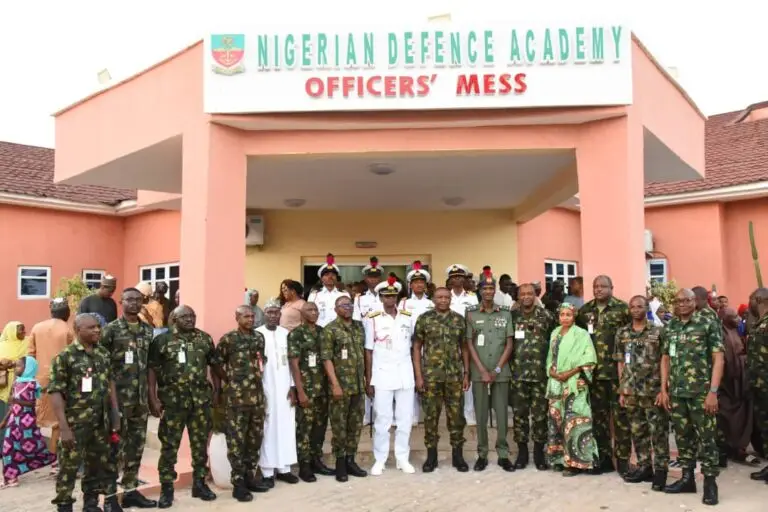
The Nigerian Defence Academy (NDA), has charged the newly promoted officers of the academy to imbibe the core principles of Command, Leadership and Management as foundational pillars for effective military service.
The commandant of the academy, Maj.-Gen. Olatoye Oluyemi, gave the charge in a statement issued by its Public Relations Officer , Maj. Reuben Kovangiya, on Tuesday in Kaduna.
Olatoye gave the charge during an investiture ceremony held in honour of the promoted officers on Monday at the NDA Officers’ Mess Afaka Kaduna.
He said Olatoye congratulated them on their well-deserved elevation, reminding the officers that promotion signified the beginning of higher responsibilities.
He stated that their advancement was a testament to their dedication, consistency, loyalty and adherence to the core values of the Armed Forces of Nigeria.
The commandant emphasised the need for a deliberate balance among the three pillars of command, leadership and management, explaining that effective military service required more than the exercise of authority.
He further stressed that excellent character, teamwork, professionalism and sound decision-making remain indispensable qualities for senior military officers.
Olatoye urged the officers to demonstrate leadership through integrity, mentorship and the development of their subordinates, stating that true leaders correct, guide and inspire growth.
He reiterated the importance of effective management in the utilisation of men and resources, encouraging the officers to adopt emotional intelligence, reflected in self-awareness, self-regulation, motivation, empathy and social skills, as essential leadership competencies.
Kovangiya said the commandant placed particular emphasis on empathy, describing it as a critical tool for strengthening unity, morale and cohesion within the military environment.
He urged the officers to remain worthy ambassadors of the Nigerian Defence Academy and continue to uphold the enduring ideals of professionalism, discipline, and excellence.
The spokesperson said delivering the vote of thanks on behalf of the newly promoted officers, Brig.-Gen. MA Maina, expressed profound gratitude to the Service Chiefs for finding them worthy to be promoted.
He appreciated the commandant for his exemplary leadership and consistent support.
Maina also acknowledged the guidance of the Deputy Commandant, AVM AK Bello, as well as the mentorship provided by senior officers of the Academy.
He said Maina extended heartfelt appreciation to their families, particularly their spouses, for their sacrifices, encouragement and unwavering support.
He equally thanked principal staff officers, officers, civilian staff, families and well-wishers who graced the ceremony.
Kovangiya disclosed that the officers decorated with their new ranks included Brig-Gen. MA Maina, Commodore MT Suleiman, Captain (NN) OO Kolawole and Lt.-Commander SA Makka.
Others were: Lieut. (NN) AS Ashava and Lieut. (NN) CN Ejike.

Global Atrocities Rising, UN Adviser On Genocide Prevention Warns

0

The United Nations’ Special Adviser on the Prevention of Genocide, Chaloka Beyani says conflicts are increasingly targeting civilians and heightening the risk of atrocity crimes globally.

Beyani gave the warning ahead of the International Day of Commemoration and Dignity of the Victims of the Crime of Genocide and of the Prevention of this Crime on December 9.

The UN official also warned that the world is witnessing an alarming erosion of respect for international law amidst the rise in global atrocity.

The Office on the Prevention of Genocide and the Responsibility to Protect functions as an early warning system within the UN.

It alerts the Secretary-General, the Security Council and the wider UN system, in that order, when the risk of atrocity crimes, including genocide, is detected.

The Office draws on the 1948 Convention on the Prevention and Punishment of the Crime of Genocide and legal opinions on genocide-related court cases.

The Office also monitors and analyses 14 factors, ranging from armed conflict involving ethnic or religious groups, to hate speech, and the collapse of the rule of law, among others.

Genocide is coined from the Greek prefix genos (meaning, people, race or tribe) and Latin suffix cide (meaning, killing).

According to international law, genocide means any of the acts committed with intent to destroy, in whole or in part, a national, ethnical, racial or religious group.

These include killing members of a group or causing serious bodily or mental harm to members of a group.

It also includes deliberately inflicting on the group conditions of life calculated to bring about its physical destruction in whole or in part.

The other is imposing measures intended to prevent births within the group or forcibly transferring children of the group to another group.

When these risks show a violent pattern, Beyani issues advisories and coordinates responses with UN officials, maintaining close links with regional organisations like the AU, the EU and other international mechanisms.

“Once our Office sounds the alarm, it signals that the threshold is about to be crossed,” he said.

“Our role is not to determine genocide but to prevent it,”

The adviser noted that indigenous communities, often targeted in disputes over land and natural resources, are among the groups most in need of protection.

“Extraction industries and deliberate actions against them put them at enormous risk,” he said.

“Their identity and way of life make them particularly vulnerable, Beyani emphasised, stressing that his Office defers to international courts to determine whether the crime has been committed.

The Special Adviser also underscored the important role of courts and justice in the protection of vulnerable people.

“The one thing that you want to do in the context of dealing with atrocities is to make aware those who are participating in conflicts that they’re being watched and monitored,” Beyani said.

“Prevention includes accountability,” the Special Adviser said.

Among emerging threats which Beyani’s Office monitors are misinformation and hate speech.

His Office works with technology companies like Meta and Google to address online incitement and with religious and community leaders to counter hate narratives at the local level.

In spite of the gravity of his mandate, the Special Adviser remains focused on diplomacy and prevention over public condemnation.

“This Office was designed to engage quietly, to advise the Secretary-General and the Security Council, and to make public statements when necessary,” he explained.

“States see it as threatening in some respects.”

The Special Adviser emphasised that prevention requires memory as much as action.

“Commemoration of past genocides reminds us of the UN’s founding promise of ‘never again,’ and the basis upon which the Genocide Convention stands” he said.

He noted the preparations for the International Day of Commemoration and Dignity of the Victims of the Crime of Genocide and of the Prevention of this Crime on December 9.

“But remembrance alone is not enough. We must strengthen our tools, build trust, and act early,” he stressed.

MWAN Launches nationwide Drive To Boost Health Workers’ Response To Gender Based Violence

0

Dr. Zainab Muhammad-Idris, National President of the Medical Women’s Association of Nigeria (MWAN), has announced the launch of a nationwide health-sector initiative aimed at strengthening the response of health workers to Gender-Based Violence (GBV) in Nigeria.

Muhammad- Idris, disclosed this in a statement issued to newsmen on Tuesday in Kaduna.

She said the initiative, supported by the French Embassy in Nigeria, was being implemented as part of the global 16 Days of Activism Against GBV, with the theme “Unite! Invest to Prevent Violence Against Women and Girls.”

Muhammad-Idris said the campaign focuses on enhancing the knowledge, capacity and responsiveness of health workers to identify, manage and support survivors of GBV across the country.

She described GBV as a major public health emergency in Nigeria, noting that women and girls are disproportionately affected.

According to her, in spite of the existence of national legal and policy frameworks such as the Violence Against Persons Prohibition Act (VAPP, 2015) and the National Guidelines for Health Sector Response to GBV (Federal Ministry of Health, 2019), many health facilities continue to face challenges

These include inadequate knowledge, weak referral systems and insufficient survivor-centred care.

To bridge these gaps, MWAN was conducting a national assessment of GBV knowledge and management practices among Doctors, Nurses, Midwives and allied health professionals in selected health facilities across the six geopolitical zones.

She explained that the findings would be used to strengthen policies, design targeted training programmes and improve referral pathways and survivor-centred services within the health sector.

The MWAN president said the project aligns with the 2025 global theme, “Unite! Invest to Prevent Violence Against Women and Girls,” and expands the association’s ongoing advocacy for safer communities, stronger institutions and improved national accountability for GBV response.

She outlined the key messages of the campaign, stressing that health workers are vital to ending GBV and that informed action saves lives.

She added that every survivor deserves dignity, confidentiality and professional care, and that investing in knowledge is investing in prevention.

Muhammad-Idris called on all health workers across Nigeria to remain vigilant, informed and compassionate in their daily practice.

“As frontline responders, our actions can break cycles of silence, prevent further harm and restore dignity to survivors. Together, we can build a safer, more just Nigeria where women and girls live free from violence,” she said.

Tinubu–Fubara Secret Meeting Sparks Defection Rumours and Fresh Power Shifts in Rivers Politics

0

Rivers State Governor Siminalayi Fubara on Monday held a closed-door meeting with President Bola Tinubu at the State House, Abuja, amid intensifying political drama in the state.

Our correspondent sighted the governor around 5:01 p.m., walking toward the President’s office in a deep-blue long-sleeve shirt, black trousers, and a black flat cap. Minutes earlier, Ebonyi State Governor Francis Nwifuru had also been ushered in for a separate engagement.

Although details of the two meetings remain undisclosed, the timing has fueled fresh speculation about the next major political shifts in Rivers State and beyond.

Fubara’s visit comes as talk grows louder that he may be preparing to dump the Peoples Democratic Party (PDP) for the All Progressives Congress (APC). The speculation intensified on Friday, December 5, after 17 lawmakers loyal to the Minister of the Federal Capital Territory, Nyesom Wike, and led by Speaker Martin Amaewhule defected from the PDP to the APC, ostensibly at the behest of the minister of the FCT, whose stranglehold on the lawmakers is widely known. Most political analysts and observers believe it is just a matter of time before the remaining 10 lawmakers join the colleagues in the APC.

With only three lawmakers still seen as loyal to Fubara and who have not resumed sitting since the lifting of the six-month emergency rule on September 18 — analysts say the governor may be weighing several political options. These include forging a new alliance with the Presidency, consolidating his base within the PDP, or making a bold move to the APC to survive deepening hostilities at home.

Sources close to both camps suggest that if Fubara senses an imminent impeachment plot, crossing over to the ruling party could offer him stronger political cover. Others, however, believe he may be seeking Tinubu’s backing to neutralize the Wike-aligned lawmakers while retaining his position within the PDP.

Friday’s mass defection has also raised questions about whether the crisis in Rivers could trigger another round of federal intervention after the March 18 emergency rule that temporarily removed Fubara from office before his reinstatement.

For now, all eyes remain on the Tinubu–Fubara meeting, whose outcome could determine the next major political moves in Rivers State’s escalating power struggle.

Tackle Insecurity Like You Foiled Benin Coup — ADC Tells FG

0

The African Democratic Congress (ADC) has praised the Federal Government for its swift and decisive intervention in quelling the attempted coup in Benin Republic, but called on President Bola Tinubu’s administration to demonstrate the same level of urgency in tackling Nigeria’s worsening insecurity.

In a statement issued by its National Publicity Secretary, Mallam Bolaji Abdullahi, the ADC said the government’s rapid response in Benin starkly contrasts with what it described as the “slow, inconsistent, and often haphazard” approach to combating banditry, terrorism, and violent crime within Nigeria.

According to Abdullahi, while the decisive intervention helped safeguard democracy in a neighbouring country, it has raised pressing questions at home.
“Many Nigerians are asking why the government could move so swiftly in Benin but has failed to respond with similar urgency to the banditry and violent crimes that continue to ravage communities across our country,” he said.

The ADC also queried Nigeria’s hesitation during the Guinea-Bissau crisis — particularly when a former Nigerian President was caught in the instability — saying it exposed inconsistencies in the nation’s foreign intervention strategy. Abdullahi added that such contradictions fuel suspicions that external influence may have shaped the rapid response in Benin.

While acknowledging the importance of defending democracy in the region, the party stressed that true leadership begins at home.
“A government that can act promptly abroad must also act decisively within its own borders,” the statement read. “The protection of Nigerian lives and the restoration of security must take precedence.”

The party further urged the Federal Government to ensure that the President’s unilateral military deployment to Benin is subjected to National Assembly ratification in accordance with constitutional provisions.

Reiterating its stance against unconstitutional power grabs, the ADC said the most effective barrier against military interventions remains good governance, one that improves citizens’ lives, tolerates dissent, and strengthens democratic institutions.