

Home Blog Page 93

I’ll Only Meet With Assembly Members When Leaders Convene Us -Fubara …Says He Has No Issues With Legislators

0

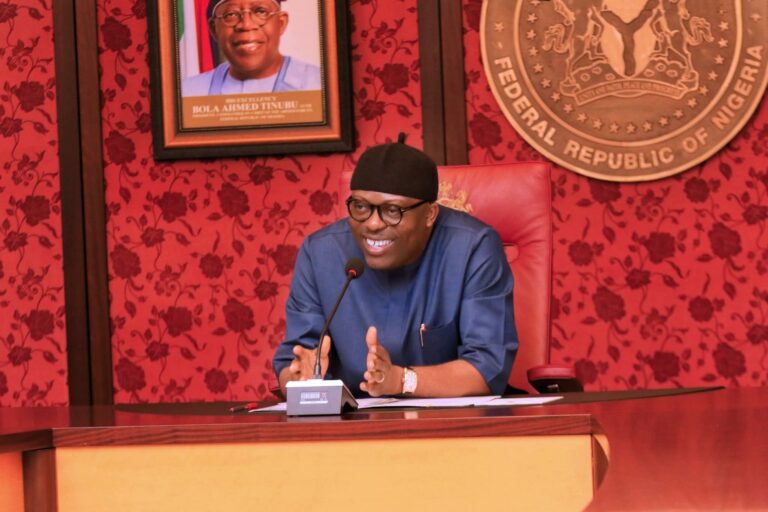
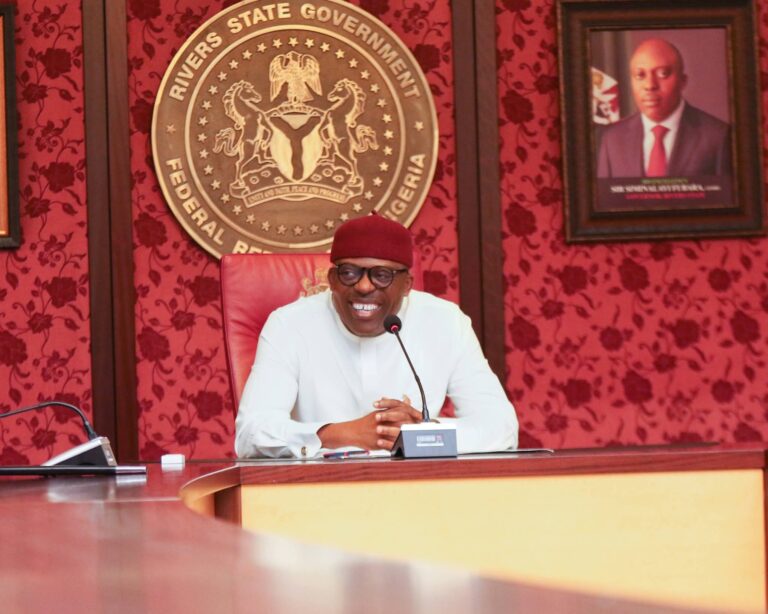
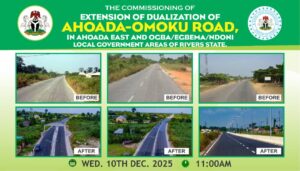
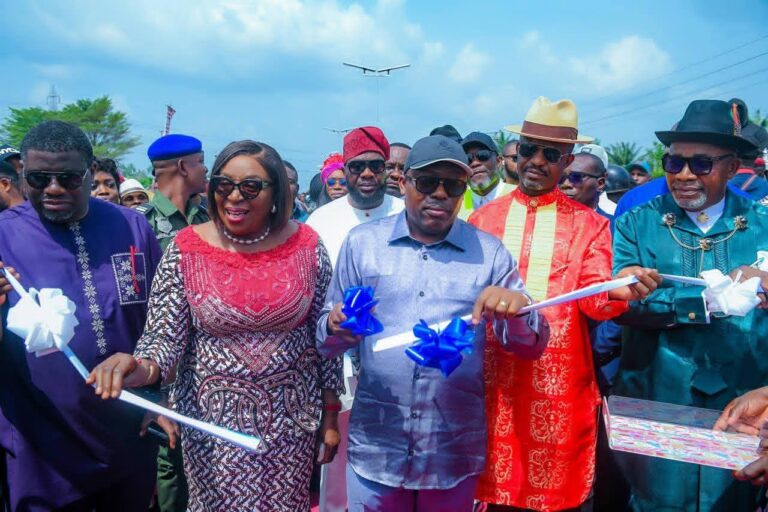
Rivers State Governor, Sir Siminalayi Fubara, has reiterated his readiness to engage with members of the State House of Assembly, stressing that he holds no grievances against them and remains committed to peace and collective development. The Governor made this known on Tuesday during the commissioning of the newly dualised 28.4km Ahoada–Omoku Road.

Addressing ongoing political speculations, Governor Fubara dismissed claims of tension between him and lawmakers, saying such insinuations were unfounded.
“I personally do not have any disagreements or anger against my Members of the National Assembly or the Rivers State House of Assembly,” he said.

Fubara explained that while he has consistently shown willingness to meet with the Assembly members, the responsibility to convene such a meeting lies with political leaders.
“I have made every effort to meet with the Assembly Members, but it is not within my leadership to initiate the meeting process,” he stated, pointing to the Minister of the FCT, Barr. Ezenwo Nyesom Wike, as the figure expected to bring all parties together.

The Governor added that he had already assured the lawmakers of his readiness to address their concerns in the interest of peace.
“Personally, I have told the Assembly Members that whatever their needs, I am ready to meet them so that peace can reign in the state,” he affirmed.

Speaking on his recent visit to President Bola Ahmed Tinubu, Fubara said the meeting informed a “bold decision” taken by his administration to promote unity and stability across the state.
“So, whoever is saying that I refused to meet you, or that there was an arrangement presented to me which I declined — it is not true,” he clarified.

The Governor urged political actors and citizens to embrace unity, noting that development cannot thrive under tension. He reaffirmed his commitment to delivering democratic dividends and maintaining harmony across all communities.

The Ahoada–Omoku dualisation project—one of Fubara’s campaign promises—is expected to boost economic activity across the Ahoada and Omoku axis, enhance mobility, and improve security along the corridor.

Permanent Secretary of the Ministry of Works, Dr. Austin Ezekiel Hart, described the project as a transformation of a previously narrow single-lane road into a 14.6-metre-wide dual carriageway equipped with solar-powered streetlights. He noted that travel time between Ahoada and Omoku has now been significantly reduced.

Chairman of Ogba/Egbema/Ndoni Local Government Area, Hon. Chuku Shedrack Ogbogu welcomed the project as a “symbol of unity, oneness and development,” thanking Governor Fubara for fulfilling his promise to the people.

Governor Fubara concluded by appreciating Rivers people for their support and urging them to continue to prioritise peace as the anchor of sustainable development.
Alarming: “One in Every 24 Migrants Die on Libya Route” …Nigeria Moves to Repatriate 10,500 Stranded Children

0

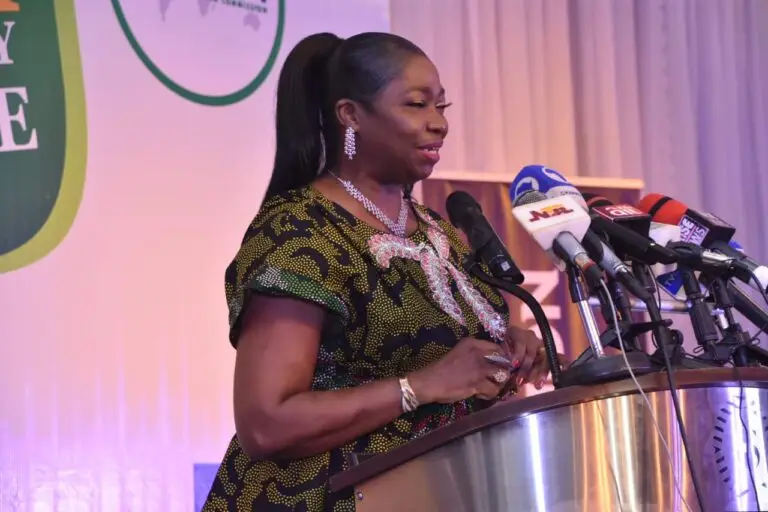
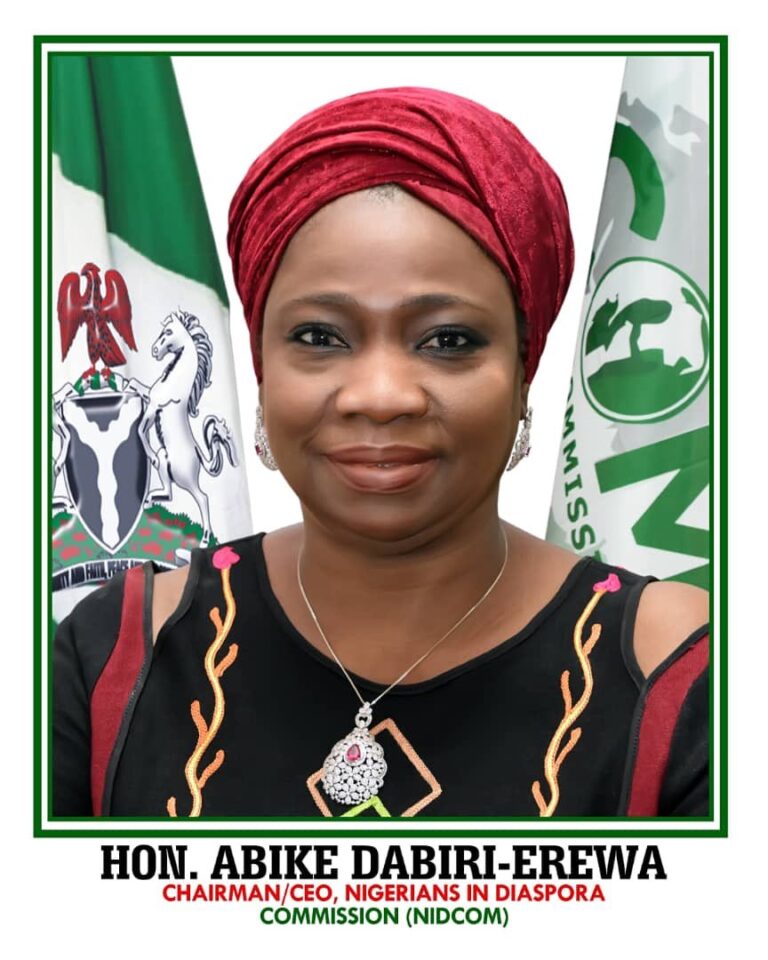
Chairman of the Nigerians in Diaspora Commission (NIDCOM), Abike Dabiri-Erewa, has issued a grave warning to Nigerians over the deadly risks of irregular migration, revealing that one out of every 24 migrants attempting the Libya route dies in the process.

Speaking at the Nigeria Bar Association (NBA) Human Rights Institute event marking the 2025 International Human Rights Day, Dabiri-Erewa said the statistics reflect the harsh reality many Nigerians ignore when embarking on illegal journeys in search of greener pastures.

She noted that thousands continue to put their lives at risk despite overwhelming evidence of danger.
“In Iraq alone, we have over 7,000 stranded Nigerians,” she said. “Many of them walked into hopelessness, underestimating the brutality of illegal migration routes.”

Dabiri-Erewa also disclosed a massive national effort underway to rescue vulnerable minors trapped abroad.
“NIDCOM and our partners are currently working to repatriate 10,500 Nigerian children stranded across various countries,” she said, calling it one of the most pressing humanitarian challenges facing the nation.

Citing a recent case of a young woman who used N2.5 million meant for medical care to fund an illegal trip to Libya—only to return with nothing—she lamented the growing trend of desperation-driven decisions.

“The grass is not greener on the other side; it is greener where you water it,” she stressed, urging citizens to seek opportunities legally and safely.

She called for a comprehensive whole-of-government and whole-of-society approach to stem the tide, warning that advocacy, awareness, and strengthening opportunities at home are crucial to saving lives.

NBA First Vice President, Sabastine Anyia, in his remarks, urged Nigerians to recommit to justice, human rights, and national security. He called on citizens and institutions alike to build a country where movement is safe, dignity is protected, and no Nigerian feels compelled to risk death for survival.

You Are Indispensable To Modern Policing, IGP Tells Medical Officers

0

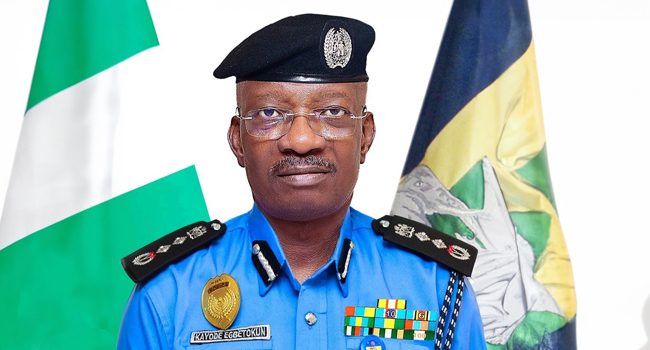
The Inspector-General of Police (I-G), Mr Kayode Egbetokun said the mandate of the Directorate of Force Medical Services was both extensive and indispensable to modern policing.

The I-G said this on Wednesday in Abuja at the opening of the inaugural conference for Heads of Police Medical Facilities in the country.

He said the conference was a commitment to bring in a system where those who protect others were also protected, supported and medically empowered to serve at their highest capacity.

“The Nigeria Police Force Medical Services reflects this commitment, and its history reminds us that progress is intentional.

“Established in August 1975 in Lagos, it began with a simple but critical mission to provide structured medical support for police personnel.

“Over the decades, it has both expanded structurally and deepened in resonance, adapting to the changing demands of police international security,” he said.

Egbetokun said the footprint of the mission was evident across the country, with 164 healthcare facilities operating nationwide.

He said the hospitals were delivering medical services to police officers, their families, persons in local custody, and in some places, members of the public.

According to him, this reinforces the fundamental truth that the Nigeria Police Force is not only an instrument of law enforcement, but also the custodian of welfare, safety, and humanity.

“Exactly 50 years after its establishment, the force medical services was upgraded to a full directorate of the Nigeria Police Force in August 2025.

“This elevation of the Force Medical Services was a key part of the project. This elevation was not symbolic, it was strategic.

“It acknowledged the essential role healthcare plays in officer morale, operational readiness, retention, and overall institutional effectiveness,” he said.

He urged the conference participants to think both as administrators and as system builders, with focus on the present gap and the future needs of policing.

The I-G enjoined the officers to think about digital credit integration, trauma support systems, mental health frameworks, emergency coordination, professional accreditation, and sustainable medical staffing pipelines.

He said these were the pillars upon which a resilient and modern policing healthcare model must stand.

According to him, your work is often quiet, unnoticed, and behind the scenes, yet, it is foundational to operational readiness and national security.

In her remark, the AIG in charge of the Directorate of Force Medical Services, Mrs Nkechi Eze, commended the I-G for making the Force medical unit a full-fledged directorate.

She said the directorate was currently operating 154 healthcare facilities across all the police commands, zones and formations, providing multiple levels of care services.

Eze said the services span through health education, mental care, immunisation, public healthcare- outreaches, nursing care, laboratory services, general medical consultation, pharmaceutical care, obstetrics and gynecology, ophthalmology and dental care.

Other services listed by her include physiotherapy, psychiatry, pediatrics, medical services, pathology, radiology, medical records, ambulance and emergency services.

Profit-taking Drags Equities Market Down, Loses N34bn

0

The stock market extended its losses on Wednesday, with investors recording a N34 billion decline amid profit-taking in key stocks.

Declines in CHAMS, Halldane McCall, UACN, Sunu Assurances and 20 other stocks pushed the market into negative territory.

Specifically, investors lost N34 billion as the market capitalisation, which opened at N93.658 trillion, recorded a slight change to close at N93.624 trillion.

The All-Share Index (ASI) also declined by 0.05 per cent or 78.28 per cent, settling at 146,862.01 when compared to 146,940.29 recorded previously.

Consequently, the Year-To-Date (YTD) return dropped to 42.69 per cent.

However, the market breadth closed positive with 28 gainers and 24 losers.

Japaul Gold led the gainers’ table by 10 per cent, finishing at N2.53, Prestige Assurance followed by 9.40 per cent, settling at N1.63 and Mecure gained by 7.72 per cent, ending the session at N34.90 per share.

The Initiates Plc rose by 7.30 per cent, closing at N12.50 while Consolidated Hallmark Holdings soared by 6.97 per cent, finishing at N4.30 per share.

Conversely, CHAMS Holding led the losers’ table by 10 per cent, settling at N3.06, Halldane McCall trailed by 8.88 per cent, ending the session at N4 and FG202034S2 dropped by 8.48 per cent, closing at N106.98 per share.

UACN shed by 8.18 per cent, finishing at N80.80 while Sunu Assurances fell by 6.98 per cent, closing at N4 per share.

The market witnessed an overall decline in the value, volume and value as 747.1 million shares worth N12.4 billion were traded across 19,161 transactions.

This is compared with 1.9 million shares valued at N30.2 billion that was exchanged across 23,038 deals earlier.

Meanwhile, CUTIX closed with the highest volume, with 122.91 million shares traded, while Guaranty Trust Holding Company closed with the highest value, amounting to N2.74 billion.

Financial Experts Hail Foreign Reserve Growth, Demand Sustainable Investment Policies

0

Financial experts have commended the Federal Government for rebuilding the external reserves, the strongest level in seven years, saying the gains provide a firmer foundation for economic stability.

They noted that the improved reserve position had already helped ease pressure on the foreign exchange market, creating room for more predictable planning by businesses and investors.

Dr Ayo Teriba, Chief Executive Officer of Economic Associates, told reporters in Lagos on Wednesday that the rapid accumulation of reserves had become one of the clearest indicators of the economy’s recovery momentum.

He said the government’s ability to lift net reserves from about four billion dollars before the Tinubu administration to 29 billion dollars was a significant achievement.

According to him, gross reserves are now standing at 46.7 billion dollars.

“This improvement has brought greater stability to the foreign exchange market, boosted GDP growth and contributed to the slowdown in inflation,” Teriba said.

He urged the government to adopt policies that attract Foreign Direct Investment into public assets, explaining that such equity-based approaches would generate sustainable revenue rather than relying on commodity markets prone to global shocks.

“Brazil, Saudi Arabia and India have successfully applied this model to diversify government income and strengthen their fiscal outlook,” he added.

Also, Mr Okechukwu Unegbu, former President, Chartered Institute of Bankers of Nigeria (CIBN), also commended the government for the upward trend in external reserves.

He credited the Central Bank of Nigeria (CBN) for reforms that encouraged diaspora remittances and improved market confidence.

“The apex bank governor and his team have done well in restoring stability.

“Their policies are helping to lift the country’s foreign reserves,” he said.

Unegbu, however, advised the government to moderate its appetite for borrowing, especially for projects that do not enhance productivity.

“Loans eventually have to be serviced, and that becomes a burden on an emerging economy like ours.

“With reserves improving, government should be more cautious,” he said.

Nigeria’s foreign reserves reached 46.7 billion dollars as of November 14, the highest since 2018, according to the CBN.

Governor Olayemi Cardoso, represented by Deputy Governor (Economic Policy), Dr Muhammad Abdullahi, disclosed the figures at the 20th Anniversary of the Monetary Policy Department in Abuja.

Cardoso said the surge in reserves reflected renewed investor confidence, stronger oil receipts and improved balance-of-payments inflows.

AfDB Boosts São Tomé’s Economic Resilience With $7.5m NTF Grant

0

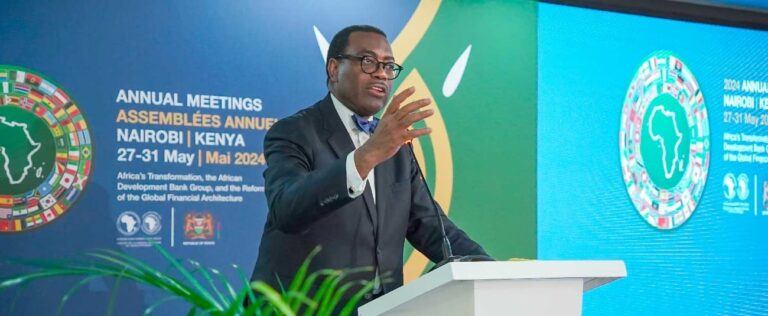
The African Development Bank (AfDB) Group has approved a $7.5 million supplemental financing grant from the Nigeria Trust Fund (NTF) to support São Tomé and Príncipe’s economic reform programme.

The AfDB, in a statement on its website, said the sum brought the total bank’s support for the initiative to about $20 million over two years.

The bank said the additional funding would close a critical financing gap in the island nation’s 2025 national budget while advancing fiscal and energy sector reforms central to its economic recovery efforts.

“Economic projections show output rising from 1.1 per cent in 2024 to 2.9 per cent in 2025 and 4.8 per cent in 2026.

” This is driven by agricultural exports, tourism rebound and infrastructure investments,” it said.

It quoted Pietro Toigo, AfDB Country Manager for São Tomé and Príncipe, as saying that the approval marked a significant step in strengthening the country’s fiscal sustainability and energy transition.

Toigo said this was important, especially following the severe economic crisis experienced in 2023.

“This approval marks an important multi-year reform path in public financial management and energy transition that helped stabilise the economy after the acute crisis in 2023.

“We are delighted at the collaboration with the Nigerian and São Tomean authorities to mobilise additional resources from the NTF to close a critical funding gap,” he said.

According to Toigo, the Fiscal Sustainability and Economic Resilience Programme is designed to address long-standing structural challenges.

He said this included chronic electricity shortages, low domestic revenue mobilisation and exposure to external shocks.

The AfDB said that São Tomé and Príncipe had implemented significant revenue measures such as the introduction of a value-added tax and the modernisation of customs processes.

Toigo said this was done through the ASYCUDA platform to increase the tax-to-Gross Domestic Product (GDP) ratio and enhance debt management.

“The programme also focuses on transforming the energy sector through improved governance of the national utility, tariff reforms to move toward cost recovery and accelerated transition to renewable energy.

“The country recently joined the Mission 300 Energy Compact initiative and approved a National Energy Compact (2025–2030) aimed at achieving universal clean-energy access.

“The supplemental financing aligns with broader support from development partners, reinforcing international confidence in the country’s reform trajectory.

“The reforms will help strengthen resilience, diversify revenue sources and create fiscal room for investment in infrastructure and human capital,” he said.

Toigo listed some of its key upcoming reform milestones to include operationalising new public procurement systems and finalising anti–money laundering frameworks.

He said others were implementing a comprehensive public financial management strategy and deploying prepaid electricity meters to enhance revenue collection.

The programme aligned with São Tomé and Príncipe’s Vision 2030 development agenda.

It also aligned with the forthcoming National Strategy for Sustainable Development 2026–2040, which aimed to reposition the economy for inclusive and sustained growth.

Rivers State University Appoints New Acting Registrar

0

The Governing Council of the Rivers State University, Nkpolu-Oroworukwo, Port Harcourt, has approved the appointment of an acting registrar for the institution.

She is Dr. Idanyingi I. Daminabo, who has served as Director, Establishment Division in the University since 2017.

A letter of appointment obtained by The Atlantic Bell dated December 8, 2025, signed by the outgoing Registrar and Secretary of Council, Dr. (Mrs) Ibimonia B.S. Harry, and addressed to the new Acting Registrar, indicated that the appointment takes effect from December 15, 2025.

The letter titled, “Appointment as Acting Registrar, Rivers State University, Nkpolu Oroworukwo, Port Harcourt read thus:

“Following the decision of the 15th Governing Council of the University at its meeting held on Monday, November 17 2025, to appoint an Acting Registrar, you have been appointed the Acting Registrar of the University.

“This follows your consideration as the most senior director in the administrative cadre of the university .

“The appointment which is with effect from December 15, 2025 is pending the appointment of a substantive Registrar in the University,” the letter stated.

The Atlantic Bell reports that Dr. Idanyingi I. Daminabo holds a PhD in Management (Human Resource Management) of the Rivers State University obtained in 2019. She had her Bachelor’s and Masters degrees in Sociology in 1987 and 1999 from the University of Port Harcourt and University of Nigeria, Nsukka, respectively.

Dr. Daminabo, who joined the services of the then Rivers State University of Science and Technology in 1994 from the Rivers State Polytechnic, Bori, where she started her career in 1988, has held several positions in the Rivers State University before her appointment as Acting Registrar.

She was Deputy Registrar and Special Assistant to the Vice Chancellor between 2007 to 2015, Deputy Registrar and College Secretary, College of Medical Sciences from 2014 to 2017, and Director, Establishment Division from 2017 until her recent appointment.

Dr. Idanyingi is married to Dagogo A. F. Daminabo, a Professor of Sociology of Education, Ignatius Ajuru University of Education, Rumuolumeni, Port Harcourt and they are blessed with children.

Fubara’s Defection to APC Reshapes Rivers Political Landscape

0

Governor Siminalayi Fubara’s defection from the Peoples Democratic Party (PDP) to the All Progressives Congress (APC) marks one of the most consequential political realignments in Rivers State since 1999. His move, announced during a stakeholders’ meeting at Government House, Port Harcourt, effectively ends the PDP’s long-standing grip on a state once considered its most reliable stronghold in the South-South.

With the recent defection of 17 members of the Rivers House of Assembly and increasing alignments within the state’s political class, Fubara’s switch consolidates the APC’s influence and gives the ruling party control of one of Nigeria’s most strategic oil-rich states. It also expands President Bola Tinubu’s political footprint in a region where the APC has historically struggled to gain traction.

The defection, long anticipated due to the governor’s frequent engagements with the President, dramatically shifts the balance of power. It leaves the PDP weakened and facing the stark reality of depleted structures ahead of the 2027 elections. Conversely, APC emerges stronger, buoyed by a fresh wave of grassroots realignments as political actors adjust to the new order.

Yet, the political benefits come with risks. Fubara’s move deepens the long-running rift with his predecessor and current FCT Minister, Nyesom Wike, potentially fueling further factional battles. The coming months will test the governor’s ability to manage competing interests within a now more complex APC family in Rivers State.

Still, with federal backing and a unified ruling-party alignment, Fubara stands positioned to drive his development agenda with fewer institutional obstacles. His defection signals not just a personal political shift but a reconfiguration of the state’s political identity, one that will shape governance and electoral dynamics for years to come.

Breaking: Fubara Defects To APC

0

Rivers State Governor, Siminalayi Fubara, has defected to the ruling All Progressives Congress from the Peoples Democratic Party.

The governor announced his defection at a stakeholders meeting held at the government house in Port Harcourt on Tuesday.

Fubara joined a host of his colleagues who have defected to the APC this year.

Governor Fubara announced the development during a stakeholders meeting at the Government House on Tuesday.

He said the decision is in the interest of Rivers people.

The governor added that he has gotten the approval of President Bola Tinubu to join the ruling party.

Fubara’s defection has been much anticipated following several meetings with the President and the recent defection of 17 Rivers State House of Assembly members.

Details later…

Agribusiness: FG To Scale Up Youth Agripreneurship In Nigeria

0

The Federal Government says it is scaling up youth agripreneurship in Nigeria for food systems transformation in the country.

Sen. Abubakar Kyari, the Minister of Agriculture and Food Security, stated this on Tuesday at a youth Agripreneurs workshop for food systems transformation in Nigeria in Abuja.

The workshop with the theme “Scaling Youth Agripreneurship for Food Systems Transformation” was organised by the Livelihood Improvement Family Enterprise- Niger Delta (LIFE- ND) Project.

The minister said the youth are taking the lead in agrifood innovation, from precision agriculture to AI powered farm tools and soilless farming among others

“Our young people, fuelled by ingenuity and determination, are taking the lead in agrifood innovation, from precision agriculture to AI powered farm tools, soilless farming, financing and payment platforms, digital marketplaces and agro-processing.

“They are leading with innovation and a shared commitment to sustainable development and are ready to transform agrifood systems, create dignified livelihoods and drive inclusive economic growth in our dear nation, Nigeria,” he said.

He said that in spite of these advances, youth participation remained inconsistent.

According to him, too many young people faced obstacles and challenges such as limited access to finance, land, and processing facilities, markets among others.

“Today, we come together with one huge focus to change the narrative. This event marks a clear commitment to scale up youth agripreneurship across our country and region.

”Our goals are concrete, to unlock land and productive resources for young farmers, while ensuring secure tenure and responsible stewardship of the land,” he said.

Kyari said President Bola Tinubu had repositioned agriculture as a primary driver of economic transformation, anchoring it as a central pillar of Nigeria’s national development agenda.

He explained that the government had piloted youth-led agripreneurship models, expanded agro-processing and agribusiness incubation and leveraged digital tools to connect farmers to markets and finance.

The minister called on stakeholders to build ecosystems where collaboration eclipses competition and where every young agripreneur has a fair chance to contribute to our national prosperity.

“Youth must be actively and meaningfully involved in planning, implementation, and governance of all programmes.

“We must ensure that women, persons with disabilities, and marginalised groups have equal access to opportunities and resources,” he said.

Earlier, Dr Marcus Ogunbiyi, the Permanent Secretary in the ministry, said the event aligned with the Federal Government’s strategic goal of repositioning agriculture as a viable, wealth-creating, and competitive sector.

He said the workshop symbolised a renewed commitment by the Federal Government to harness the energy, innovation, and entrepreneurial drive of the youth to transform agriculture from subsistence into a thriving enterprise.

“This transformation is central to strengthening food security, expanding rural livelihoods, and enabling inclusive national development,” he said.

In a goodwill message, Ms Dede Ekoue, the Country Director, International Fund for Agricultural Development (IFAD) reiterated IFAD’s commitment to scale up youth agripreneurship programmes in Nigeria.

Also, Mr Temi Adegoroye, Sahel Consulting Managing Partner, Agriculture and Nutrition Ltd, said the role of the youth is to drive innovative changes for a transformed food systems in Nigeria.

In a presentation, Dr Abiodun Sanni, National Project Coordinator, LIFE- ND, Project, said the project had trained and empowered over 29,620 youths and women as agripreneurs across priority value chains.

He said the value chains included cassava, rice, oil palm, aquaculture, poultry and horticulture.

Sanni said that the project also supported viable agribusiness ventures with access to start-up capital, production inputs, and agro-processing platforms, among others.