

Home Blog Page 91

N33.8bn Fraud: Buhari’s Ex-Minister, Saleh Mamman Loses Bid To Stop Trial

0

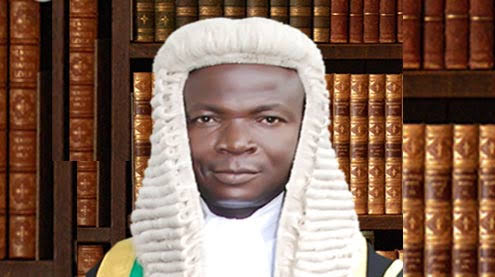
Justice James Omotosho of the Federal High Court in Abuja has dismissed a no-case submission made by Mr Saleh Mamman, former Minister of Power under the administration of ex-President Muhammadu Buhari.

Justice Omotosho, in a ruling on Thursday on the no-case submission, held that the Economic and Financial Crimes Commission, EFCC, had been able to establish a prima facie case against Mamman.

He held that the evidence tendered was such that the defendant must proffer some explanations or put in a defence to the allegation made against him, especially considering the seriousness of the offences.

The judge, however, said that Mamman was still innocent until proven guilty.

Mamman was appointed minister by the late former President Buhari in August 2019 and was sacked in September 2021.

The EFCC, in the charge marked: FHC/ABJ/CR/273/2024, had preferred a 12-count amended charge against the ex-minister as sole defendant.

The commission, in July 2024, arraigned Mamman on alleged money laundering and conspiracy with officials at the ministry and some private companies to “indirectly convert” the sum of N33.8 billion meant for the Zungeru and Mambilla Hydro Electric Power projects.

The former minister, however, pleaded not guilty to the charges.

The anti-graft agency, in proving its case, called 17 prosecution witnesses (PWs) and tendered 43 exhibits against the defendant before closing its case.

However, Mamman, through his lawyer, filed a no-case submission on November. 19.

The former minister, who formulated one issue for determination, said the prosecution failed to present credible and reliable evidence before the court to sustain a conviction against him or for him to enter his defence.

But EFCC, in its written address dated November. 25, said whether in view of the evidence of its PW-1 to PW-17 and the exhibits admitted, it could be said that the prosecution had not made out a prima facie case against the defendant.

Delivering the ruling on Thursday, Justice Omotosho ordered Mamman to open his defence in line with Section 36 of the 1999 Constitution to give explanations on some of the evidence tendered by the EFCC.

“I have carefully gone through the evidence presented to the court by the prosecution with respect to this charge.

“The evidence all points to the establishment of a prima facie case against the defendant.

“The evidence is such that the defendant must proffer some explanation or defence to the allegation made against especially considering the seriousness of the offences.

“This court will refrain from evaluating the evidence but will limit itself to stating that on the whole, a prima facie case has been made out against the defendant.

“This is not to say that the defendant is guilty as charged; put simply that he be afforded his right to fair hearing and put in his defence before this court.

“The evidence of the prosecution has founded sufficient ground for proceeding with this trial.

“A connection of the defendant with the offence, no matter how slight, constitutes prima facie evidence and as such the defendant would be required to enter his defence to the charge or a rebuttal of some sort,” the judge said.

Justice Omotosho further restated that holding that a prima facie case had been established did not necessarily imply that the court found Mamman guilty of the charge.

“It is simply to allow the defendant exhaust his options for his defence and to clear every unresolved issue which may weigh on the mind of the court in reaching a final decision.

“The defendant is still presumed innocent until proven guilty and the prosecution still has the duty to prove the charge beyond reasonable doubt,” he said, citing Section 135 (1) Evidence Act, 2011.

According to the judge, the right of a defendant to defend himself/herself is a fundamental right provided under Section 36 of the Constitution of the Federal Republic of Nigeria, 1999 (as amended).

“Such right cannot be taken from a defendant except where a defendant expressly or by conduct waives same.”

Justice Omotosho held that, in a criminal trial, a defendant can elect to rest his case on the prosecution’s case, enter his defence or make a no-case submission.

“This defendant, having not waived his right to defend himself either expressly or by conduct and the no-case submission made by him having been overruled, he is hereby called upon to put in his defence to the charge against him.

“In conclusion, the address of counsel, no matter how beautifully constructed, cannot take the place of evidence.

“Based on the fundamental right to fair hearing as contained in Section 36 of the 1999 Constitution which the defendant is entitled to, this court is inclined to give him the opportunity and afford him his fundamental right to fair hearing.

“Consequently, the no-case submission is overruled and the defendant is hereby ordered to enter his defence and make some explanations as to the charge and evidence made by the prosecution,” Justice Omotosho ruled.

The judge subsequently fixed February. 23, 2026, for the former minister to open his defence.

EFCC Set to Arraign Ex-Minister Chris Ngige After “Commando-Style” Arrest in Abuja

0

The Economic and Financial Crimes Commission (EFCC) is expected to arraign former Minister of Labour and Productivity and ex-Anambra State Governor, Dr Chris Ngige, in court, possibly today, following what family members have described as a dramatic arrest at his Abuja residence.

Ngige was reportedly picked up on Wednesday by about 20 EFCC operatives from the commission’s Wuse II Zonal office, who stormed his home on Justice Mohammed Bello Road in Asokoro. According to a family source, the operation unfolded in “commando-style,” with the former governor taken away without being allowed to change out of his pyjamas.

The former minister had been on administrative bail and was said to have been in regular communication with the commission after an earlier invitation for questioning over undisclosed issues. He had also surrendered his travel documents as part of his bail conditions.

Ngige, who had planned a medical trip to the United States, reportedly lost his passport while transiting through the United Kingdom, forcing him to abandon the journey. He later secured temporary travel papers from the Nigerian High Commission in London to return to Abuja.

Sources said Ngige had prepared a letter explaining the circumstances surrounding the loss of his passport and his delayed return to the EFCC but had not yet delivered it before the raid.

Expressing shock at the manner of his arrest, Ngige insisted he had fully complied with all conditions set by the commission.

He is expected to be charged to court, where his legal team is likely to contest the circumstances of his arrest and apply for bail.

Insecurity: Reps Speaker, SGF, Others Seek Stronger Govt–interfaith Synergy

0

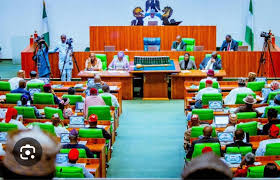
The Speaker of the House of Representatives, Rep. Abbas Tajudeen has called for deeper collaboration between the Nigeria Inter-Religious Council (NIREC) and the Federal Government.

This is to strengthen peace-building efforts and counter rising insecurity across the country.

Tajudeen made the call on Wednesday at the opening of the 2025 triennial meeting of NIREC in Abuja, with the theme, “Collaboration of Inter-Religious Council with Government to Promote Peace in Nigeria”.

He said that the gathering was significant, coming at a time when violent extremists were threatening national unity and exploiting religious sentiments to sow discord.

The speaker commended NIREC for its longstanding interventions in promoting harmony, noting that the meeting demonstrates the national resolve to live together in religious harmony.

“It signifies the need for more synergy between the council and the government, and for concerted efforts in promoting peaceful coexistence between people of diverse ethnic and religious backgrounds.

“I look forward to the actionable plans that the council will propose at this meeting, and promise legislative support for their implementation.

“We must challenge stereotypes and show that the negative narrative on inter-religious relations in our country, especially the story of genocide against members of a particular religion, is false and misleading,” he said.

The Secretary to the Government of the Federation, Sen. George Akume said that the country was facing numerous challenges, including internal security issues, heightened political rhetoric and degraded mutual trust.

He said that Nigeria also came under international pressure for the wrong reasons, orchestrated by mis-characterisation of the security situation.

The SGF assured all Nigerians that the Federal Government would not hrelent in ensuring the welfare and security of citizens as enshrined in the constitution .

He called on leaders of faith, traditional rulers, and voices of reason to come together to promote peace through collaboration.

“We have survived past crises, including a grueling civil war and emerged with a renewed commitment to unity in diversity.

“Our independence and sovereignty are non-negotiable, and we can not allow terror or division to sink the ship of state.

“It is precisely at times like this that NIREC, and indeed, all well-meaning Nigerians must come together to promote peace through collaboration,” he said.

The President, Christian Association of Nigeria (CAN), Archbishop Daniel Okoh, called for increased collaboration between faith-based organisations and the government to address the growing insecurity in the country.

Okoh said that Nigeria was facing a critical moment in its national history, with insecurity threatening collective survival and national cohesion.

He said that faith institutions remained among the most trusted and far-reaching structures in Nigeria, with immense potential for strengthening security and sustaining peace.

The CAN President called for closer collaboration between government and faith-based organisations, including NIREC, to promote dialogue, mobilise communities, and nurture social harmony.

The Sultan of Sokoto, Alh. Muhammadu Sa’ad Abubakar, said that Nigeria was more of a multi-religious country than a circular state.

Abubakar said that the government had not adopted any as state religion but supports the development of the two major religions in the country.

The sultan said that Sharia law will never be implemented for any non-Muslim as it is purely 100 per cent for Muslims.

He also said that it is wrong for any Christian to be dragged or subjected to sharia law or court or be made to dress or pray like a Muslim.

Abubakar said that Nigeria allowed the practice of all religions without undue external interference.

Earlier, the Executive Secretary of NIREC, Rev. Fr. Cornelius Omonokhua, emphasised the importance of collaboration between religious leaders and government to defeat terrorism and banditry.

According to him, every human life is precious to God, and it is imperative for all stakeholders to work together to protect and secure citizens.

Omonokhua prayed for God’s guidance and wisdom for leaders to be able to protect citizens, and for repentant hearts for criminals to be transformed into law-abiding citizens.

He also prayed for a change of attitude among Nigerians and the entire human race, from negative to positive values and mental re-engineering.

Borno Unveils Plan to Raise Teachers’ Salaries, Boost Technical and Vocational Education

0

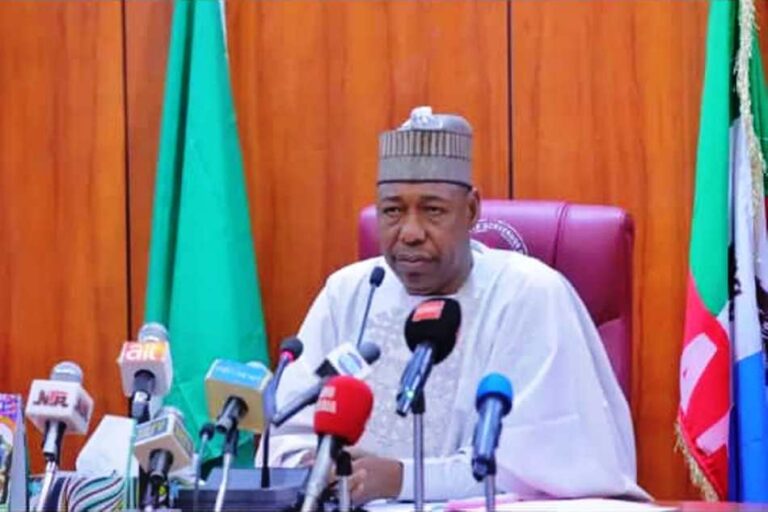
Borno State Governor, Babagana Zulum, has announced firm plans to raise the salaries of teachers as part of sweeping reforms to strengthen the state’s education sector.

Speaking while declaring open the 28th quarterly meeting of the Universal Basic Education Commission (UBEC) with Executive Chairmen of State Universal Basic Education Boards (SUBEBs) in Maiduguri, Zulum said improving teachers’ welfare is central to his administration’s long-term development agenda.

“We have to ensure that accommodation is provided for teachers, and very soon, inshaa Allah, the government of Borno State will roll out plans to motivate teachers,” he said. “Most importantly, there must be a deliberate effort to encourage technical and vocational education. Therefore, very soon, Borno State Government will implement plans to increase salaries of teachers.”

Zulum noted that the state had already fully implemented the National Minimum Wage for teachers in primary and secondary schools, adding that the forthcoming salary increase would serve as an additional incentive to boost performance, retention, and professional commitment.

The governor reaffirmed that education remains the foundation of development and prosperity in Borno, stressing that improving teacher morale through better pay and welfare packages is critical to delivering quality education to children.

His remarks came as Minister of Education, Dr. Maruf Alausa, and UBEC officials outlined broader national reforms aimed at improving inclusivity, digital monitoring, and data-driven planning across Nigeria’s basic education system.

Minister reafirms FG’s commitment to quality education for children

Earlier, the Minister of Education, Dr Maruf Alausa, reaffirmed the Federal Government’s commitment to providing inclusive access to quality basic education for all children nationwide.

Speaking at the 28th quarterly meeting of the Universal Basic Education Commission (UBEC) with Executive Chairmen of State Universal Basic Education Boards (SUBEBs) in Maiduguri.

He said investing in inclusive education would create platforms where children and adults could interact, learn, and build mutual understanding.

Alausa also said empowering teachers with quality training was central to national renewal, hence the need to impove the quality of infrastructures in government schools.

The minister also directed state executive chairmen of SUBEBs, who were unable to transform their administrative system digitally to do so before the end of the year.

He insisted that it was only through the digital transformation that the federal government could perfect its plans and address most critical issues affecting progress in primary education system as it were.

In her remarks, Aisha Garba, the Executive Secretary, UBEC, expressed hsppiness on how the minister’s reforms had touched the lives of millions of children.

She also noted that the gaps in data collection was already affecting the accurate measurement of progress as planned.

Garba urged SUBEBs chairmen who were yet to comply to facilitate the process in their respective states as agreed.

The excutive secretary reiterated the UBEC’s commitment to strengthening basic education, improve quality and standard in primary schools.

She said the theme of the meeting reflects the focus on digital monitoring systems aimed at improving accountability, transparency, and efficiency in service delivery.

She said UBEC had adopted digital data collection to generate reliable annual statistics, which guide planning and enable states to address specific educational needs.

The executive secretary, however, described education as a powerful engine for national transformation and a pathway out of poverty,

Garba urged participants to use the meeting to strengthen collaboration and improve ongoing initiatives.

Early Morning Road Crash Claims Lives Of Eight Unijos Students

0

No fewer than eight students of the University of Jos have died in a road traffic crash along Zaria Road, Jos North Local Government Area of Plateau.

Mr Peter Longsan, the Public Education Officer of the Plateau Command of the Federal Rwod Safety Corps (FRSC), confirmed the incident to newsmen on Thursday in Jos.

He said that the incident occured at about 2:30 a.m. on Thursday.

Longsan, who disclosed that the accident involved two vehicles, said seven of the students died on the spot while one died at the hospital.

He attributed the crash to speeding and wrongful overtaking.

“The crash involved a trailer and a bus with 11 persons, all students of university of Jos.

“Seven persons died on the spot as certified by the Doctor, one victim later died in the hospital, bringing the total number of deaths to eight.

“Three other victims are currently receiving treatment at the hospital; all victims were males.

“Eye witness reports testified that the bus was on a high speed and engaged in wrongful overtaking, which led to the loss of control and the eventual crash,”he said

It is being speculated that the students were returning from a “social event” when the crash occurred.

Air Chief Tasks Newly Decorated AVMs, Air Commodores On Integrity, Quality Leadership

0

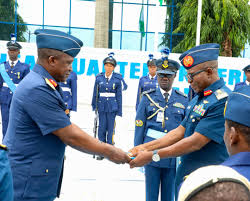
Chief of the Air Staff (CAS), Air Marshal Sunday Aneke, on Thursday charged newly decorated senior officers to uphold the highest standards of integrity, discipline and strategic leadership.

Aneke gave the charge at the decoration of the newly promoted Air Vice Marshals and Air Commodores of the Nigerian Air Force (NAF), in Abuja.

He described the promotion of the officers to the ranks of AVM and Air Commodore as a strong vote of confidence in their professionalism and capacity to shoulder higher responsibilities.

According to him, military promotions are earned through dedication, competence and character, noting that each new rank demands higher trust, deeper responsibility and the courage to take tough decisions.

“Your new rank places you at the strategic level where policy direction meets operational reality.

“You are now directly responsible for shaping strategy, guiding operations, making critical decisions and ensuring optimal performance across commands, units and personnel under your authority.

“As you take on these heightened responsibilities, always remember that victory in modern conflict does not rest solely on platforms or weapon systems, but on the quality of leadership at every level—most especially at the senior command tier,” he said.

The CAS said the officers were stepping into leadership at a time when Nigeria faces complex and evolving security threats, including terrorism, insurgency, banditry, kidnapping, oil theft and information warfare.

He emphasised that the service now relies heavily on senior commanders who can think strategically, act decisively and lead with moral authority.

The CAS tasked the officers to set the tone for discipline, prudent management of resources and operational excellence across their formations.

He encouraged them to lead with humility, fairness and consistency, and to actively mentor the next generation of commanders.

“Your actions, decisions and personal example will cascade throughout the Service.

“You must set the tone by enforcing discipline, upholding professional standards and ensuring that resources entrusted to you are managed prudently, transparently and with the highest sense of accountability.

“Leadership at this level must go beyond titles or insignia—it must be rooted in service, integrity and moral authority.

“As the saying goes, rank is not only worn on the shoulders, it is also carried in the mind and in the character,” he added.

Earlier, the Chief of Administration, NAF, AVM Anthony Martins, commended the officers for the discipline and professionalism that earned them their elevation.

Martins said the promotions reflect the rising standards and leadership development initiatives driving the Air Force under the current administration.

He urged the officers to view their new ranks as a call to higher service, while also acknowledging the families, mentors and colleagues who supported their journey.

The ceremony was attended by the Minister of Defence, Minister of State, Permanent Secretary and representatives of the services chiefs as well as other senior military officials, families and well-wishers.

Okonjo-Iweala, Challenges youths To Drive Reforms, Strengthen Civic Action

0

National leaders have challenged youths to lead Nigeria’s renewal, warning that meaningful change now depends on young citizens organising, demanding accountability and driving sustained civic action.

They made the call on Wednesday night at the 15th anniversary of Enough is Enough Nigeria (EiE), held in Lagos, with the theme “Footprints and Frontlines”.

The EiE is a civil society organisation advocating for accountable governance and citizen participation.

In a virtual keynote address, Director-General of the World Trade Organisation (WTO), Dr Ngozi Okonjo-Iweala, urged young Nigerians to lead change with courage and conviction.

She recalled her 2010 message to youths, saying it remained relevant.

“Do not wait and watch. Do not ask for permission. Get up, organise and make a difference,” she said.

Okonjo-Iweala noted that with 70 per cent of Nigeria’s population under 30, young people hold huge influence in shaping the country’s direction.

She urged them to use their numbers constructively while confronting persistent challenges such as unemployment and poor access to capital.

She praised EiE’s “Office of the Citizen” initiative for empowering communities to demand transparency and improved public services, adding that civic pressure was crucial for reform.

“Real change depends on organised, determined and courageous young citizens,” she said.

In his remarks, Emir of Kano and former Central Bank Governor, Mohammad Sanusi, said rebuilding Nigeria required honesty and collective responsibility.

“As citizens, we must remember this nation belongs to us. We have done enough damage. Enough is enough, we need to stop,”he said.

Sanusi said Nigeria had repeatedly missed development opportunities because public office was often treated as personal property.

He called for a shared national vision that transcends ethnicity, religion and political interest.

Bishop Matthew Kukah of the Catholic Diocese of Sokoto commended EiE for its resilience in advancing social justice and called on Nigerians, especially the youth, to persist in the struggle for a fair society.

“The journey to justice and fairness has no finish line.
Let us remain relentless in building a Nigeria that is just, equitable and bigger than all of us,” Kukah added.

Former Minister of Communication Technology, Mrs Omobola Johnson, emphasised collaborative effort in nation-building, saying development required hard work, sacrifice and citizens’ willingness to contribute their “time, talents and treasures.”

Executive Director of EiE, Yemi Adamolekun, said Nigeria continued to underperform because citizens were not demanding enough from leaders.

She urged Nigerians not to detach their personal progress from the fate of the country.

She said, “Whatever industry we work in, if Nigeria becomes a failed state, we will all suffer. Silence is not an option. Evil is amplified when good people stay silent.”

After highlighting EiE’s milestones over the past 15 years, Adamolekun announced 36-year-old Mrs Ufuoma Nnamdi-Udeh as the organisation’s new Executive Director.

The anniversary also featured the relaunch of Footprints: Past, Present, Future (2nd Edition), compiled by EiE and forwarded by the late diplomat Dr Christopher Kolade, in whose honour the event was partly dedicated.

Attendees also watched the premiere of One Voice, Many Echoes, a short film featuring archival footage from the 1993 election annulment protests, the 2010 Enough is Enough marches and the 2020 EndSARS demonstrations.

Ex-Head of Service Wants Review of Nigeria’s EIA Law

0

Former Head of the Civil Service of the Federation, Prof. Oladapo Afolabi, has called for the urgent review of Nigeria’s Environmental Impact Assessment (EIA) law to strengthen sustainable development across the country.

Afolabi spoke on the sidelines of the 2025 Annual National Conference of the Association for Environmental Impact Assessment of Nigeria (AEIAN) on Wednesday in Lagos.

Afolabi who described EIA as a critical tool for guiding environmentally sound development, noted that the law had remained unchanged since it was enacted in 1992.

He said the age of the legislation — now 33 years — makes it necessary to revisit both its content and its practical application to reflect current realities and emerging environmental challenges.

Afolabi, also a former Director of Pollution Control at the Federal Ministry of Environment, said the EIA was essential for any development to be sustainable.

“The tool of Environmental Impact Assessment is essential for any development to be sustainable.

“But the law was made in 1992. We need to review it, both in terms of content and in terms of practice. It is still a work in progress,” he said.

He also described the EIA as a vital decision-making instrument that helps determine whether a project could proceed based on its potential environmental and social impacts.

He added that the scope of the EIA is robust enough to be expanded beyond project-level assessment to support wider societal well-being, including governance processes.

“When we assess the impact of any activity, we weigh it and make a pronouncement — go or don’t go.

“It’s such a robust tool that we can extend it even beyond projects to the overall well-being of society,” he said.

He urged policymakers and stakeholders in the environmental sector to prioritise institutional strengthening and modernization of the EIA framework.

He added that this would improve compliance, enhance transparency, and align Nigeria with current global best practices.

NPC, NCC Partner To Tackle Online Piracy

0

The Nigerian Press Council (NPC) has reiterated its commitment to partner with the Nigerian Copyright Commission (NCC) in the fight against online piracy.

The Executive Secretary of NPC, Dr Dili Ezughah, disclosed this during a seminar organised by NCC for journalists on Wednesday in Abuja.

The theme of the seminar is “Beyond Reporting: The Media, Copyright and the Nigerian Creative Economy”.

Ezughah, who was represented by Mr Jacob Atang, Director of Marketing, said the partnership with NCC would reduce online piracy to the minimum.

He said that the council has the responsibility to regulate the activities in the print media and to ensure that ethical activities are carried out by journalists in the print media.

According to him, in Nigeria today, we face a lot of incidences of fake news, misinformation, disinformation, particularly in the online media.

He said online media has made those not trained as journalists, because they have an Android phone, decide to publish information that could cause a lot of problems in the country.

The NPC boss said they were presently working on a pre-fact checker app that would monitor people’s activities.

“The pre-fact checker will be able to identify that this thing an individual is doing is not correct. It is misinformation, disinformation, and then stops the disinformation from going public.

“We want to stem the tide of this misinformation, fake news, disinformation and other things,” he said.

He added that NPC was working on expanding its scope of operations.

“We have prepared a bill, an amendment to the existing bill, to ensure that the Press Council covers the electronic media.

“Electronic media, where we hope that the pre-fact checker app that we are presently working on will be of great use and importance to the country.

” I want to assure NCC DG that NPC will partner with the commission to fight against online piracy,” he assured.

Mr Jahman Anikulapo, Art and Culture Advocate, who spoke on the topic ‘The Journalist’s Guide to Effective Reportage of the Copyright Sector’, said that the role of the media was to give information and educate.

Anikulapo, who is also a seasoned journalist, said such information must be information that journalists should use to enlighten and empower the public.

According to him, when a journalist is empowered, such a reporter will manifest his or her potential.

He urged journalists to see themselves beyond reporting, but see themselves as advocate.

“As a cultural reporter, you must be an advocate who will engage the public and the creative sector you are covering, as you belong to the ecosystem.

“We should be observant to see copyright abusers and advocate for it.

“Copyright is somebody`s work, infringement is stealing. We have to advocate on it and partner with NCC to ensure that people’s work is not infringed,” he said

According to him, when you defend the rights of others as a journalist from the creative community, you are equally defending your rights as well.

“Build relationships with NCC to enable them to reinforce their work for the betterment of society, “he said.

He appreciated NCC DG for standing firm in ensuring that the creative sector moved forward.

Mr Mike Akpan, Principal Partner Alpha-Edge, who spoke on ‘Copyright Basics for Journalists’, said that it is an exclusive right conferred by law on an author or creator of a work, to authourise the doing of certain acts related to the work.

According to him, what journalists produce fits into different classes of protected work because articles are literary work.

Akpan said that a person not employed as a journalist, but creating a work for publication, might retain copyright in their piece.

“A photo journalist is protected as an artistic work under the copyright act, ownership of copyright in a photograph is photographer.

“There are several forms of content creation which may include blogging, photography, website, uploading, updating and maintenance, article writing, videography, among others.

“This content may be copyright-protected depending on its nature, but note that not all text materials may qualify as a literary work.

” But to qualify as a work it must be something that afforded information, instructions or pleasure in the form of literary enjoyment,” he added.

He further said that journalists must find an ethical balance between reporting issues of concern to the public and respecting the intellectual Property (IP) rights of individual organisations.

“A work of an author is protected automatically upon its creation, and registration is not a requirement of protection, although there is provision for voluntary registration with NCC,” he said.

According to him, copyright and neighbouring rights play a crucial role in protecting the IP of creators and incentivising the production of new creative work.

“There is need to understand the legal framework by understanding the scope, duration and enforcing these rights so that journalists and media can respect the legal framework and contribute to a thriving creative ecosystem,” he said.

Traditional Rulers, Gov’t Officials, Students, Rally Against GBV In Sokoto

0

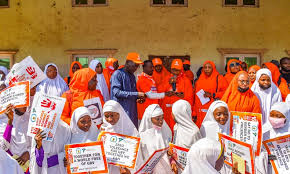
Traditional rulers and government officials have led a landmark march to commemorate 16 Days of Activism Against Gender-Based Violence (GBV) in Sokoto State.

GBV refers to any act of violence directed against an individual based on his or her gender.

It is a widespread menace that affects people of all ages and backgrounds, manifesting in various forms such as physical, sexual and psychological violence, including intimate partner abuse, trafficking and forced prostitution, considered as serious violation of human right.

The 16 Days of Activism Against GBV is a United Nations’ international campaign that runs from November 25, which is the International Day for the Elimination of Violence Against Women, through Dec. 10, which is the International Human Rights Day.

This period highlights that violence against women is one of the most pervasive violations of human rights worldwide.

The campaign was started in 1991 as a strategic effort to unite and amplify calls for the elimination of violence against women and girls.

Each year, the 16 Days of Activism galvanise organisations around the world and draws the attention of governments to the urgent and critical issues around GBV.

The theme for the 2025 16 Days of Activism is ‘Unite to End Digital Violence against All Women and Girls’.

In Bodinga LGA, the District Head, Alhaji Bello Abdurrauf, enjoined parents and teachers to promote awareness programme against all forms violence and need for youth especially girls to report incidents.


Abdurrauf described the strategic awareness initiative towards rising consciousness to eradicate GBV the society and underscored the importance of collective efforts against the menace.

He stressed the need for people to be united in the fight to protect the rights and dignity of all Nigerians, especially the most vulnerable.

“Through collective action and reforms, we can build a society where safety, justice and equality prevail,” he said.

Also speaking, the Permanent Secretary, Sokoto State Ministry of Women and Children Affairs, Alhaji Abubakar Alhaji, commended the UN Population Fund (UNFPA) and other partners on their support to tackle violence against women and girls

Alhaji said the march and the associated activities were not just symbolic gestures, they reflect our resolve and call to action against gender-based violence head-on.

He called for more action on digital violence which had become a growing threat against women and girls, noting that the programme would continue to support partners working to eliminate all forms of discrimination and abuse.

In Sokoto South LGA, District Head of Gagi, Alhaji Sani Umar-Jabbi, urged the stakeholders to take decisive action to safeguard the vulnerable population and ensure accountability for perpetrators of GBV.

Umar-Jabbi highlighted all forms of GBV and solicited for more collaborative measures on sanitizing the society from all forms of abuses, cultural beliefs and misconceptions as well as harmful practices.

UNFPA Programme Officer, Mrs Rabi Sagir, Director, Women in the Ministry of Women and Children Affairs, Hajia Hauwa’u Jabo, counselled tje students on the dangers of GBV.