Home Blog Page 89

Rivers Expands Renewed Hope Elderly Scheme, Empowers 500 Seniors With ₦200,000 Each

0

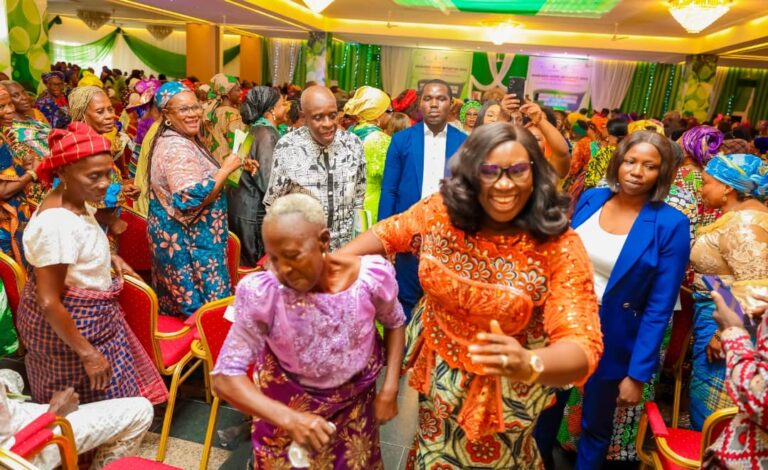
The Renewed Hope Initiative, in partnership with the Rivers State Government, on Tuesday, December 16, 2025, empowered 500 elderly citizens in Rivers State with ₦200,000 each under the Renewed Hope Initiative Elderly Support Scheme (RHIESS).

Wife of Rivers State Governor, Lady Valerie Fubara, presenting the empowerment pack to a beneficiary of the RHI Elderly Empowerment Support Programme on Tuesday in Government House, Port Harcourt.

The empowerment programme formed part of activities marking the third edition of RHIESS, a social investment policy of the First Lady of the Federal Republic of Nigeria, Senator Oluremi Tinubu. The event, held at the Banquet Hall of Government House, Port Harcourt, was themed “Finding Joy in Old Age.”

Speaking at the event, Senator Tinubu, represented by the wife of the Rivers State Governor and State Coordinator of the Renewed Hope Initiative, Lady Valerie Fubara, described the scheme—initiated in 2023—as a gesture of gratitude to senior citizens for their invaluable contributions to national development.

She explained that the programme is designed to support 250 vulnerable elderly persons aged 65 and above in each of the 36 states of the federation and the Federal Capital Territory, as well as veterans from the Defence and Police Officers’ Wives Association (DEPOWA), bringing the total number of beneficiaries nationwide to 9,500.

Wife of Rivers State Governor, Lady Valerie Fubara in a warm embrace with a senior citizen and beneficiary of RHI Elderly Empowerment Programme held on Tuesday in Government House, Port Harcourt.

The First Lady urged beneficiaries to remain active and healthy, encouraging them to engage in activities that promote physical, mental, and emotional well-being in old age.

In her remarks, Lady Fubara announced that the Rivers State Government, under the leadership of Governor Sir Siminalayi Fubara, doubled the state’s beneficiaries from 250 to 500. She reaffirmed the administration’s commitment to strengthening social welfare policies and improving the quality of life of elderly citizens in the state.

Also speaking, the Executive Secretary of the Rivers State Contributory Health Protection Programme (RIVCHPP), Dr. Vetty Agala, disclosed that the state government, through the Health4AllRivers Initiative aligned with the Renewed Hope Initiative, has introduced free medical care for senior citizens across Rivers State.

UN Sets 2030 Fast-Track Targets In Landmark Global Pact On NCDs, Mental Health

0

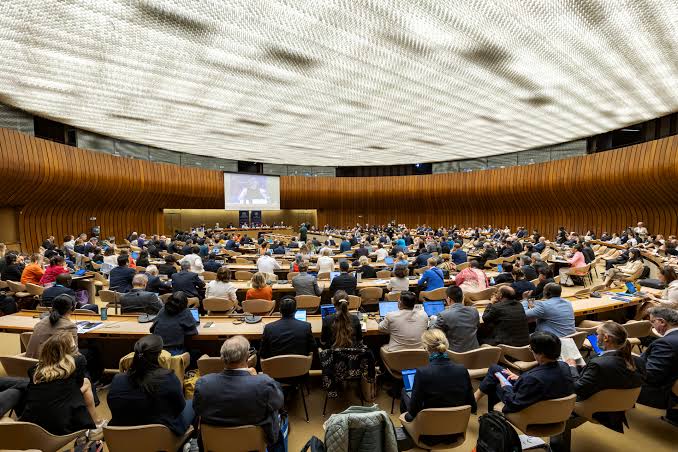
World leaders at the 80th United Nations General Assembly have adopted a landmark political declaration committing governments to tackle noncommunicable diseases (NCDs) and mental health challenges through a fully integrated, equity-driven approach.

The declaration, adopted ahead of the fourth UN high-level meeting on NCD prevention and mental health promotion held on 25 September 2025, is the first global agreement to address both issues together. Titled “Equity and integration: transforming lives and livelihoods through leadership and action on noncommunicable diseases and the promotion of mental health and well-being,” it sets out a new roadmap for accelerating progress by 2030.

NCDs—such as heart disease, cancer, diabetes and chronic respiratory illnesses—remain the world’s leading causes of death, claiming an estimated 18 million lives prematurely each year. At the same time, mental health conditions affect more than one billion people globally. Both are rising in every region, fuelled by preventable risk factors including unhealthy diets, tobacco and alcohol use, physical inactivity and air pollution—many of which also harm mental well-being.

First-ever global fast-track targets

In a major shift from previous commitments, the declaration introduces three global “fast-track” outcome targets to be achieved by 2030:

150 million fewer tobacco users worldwide;

150 million more people with hypertension under control; and

150 million more people with access to mental health care.

To support these goals, governments also agreed to measurable system-level targets, including ensuring that by 2030 at least 80% of countries have strong NCD and mental health policies in place, the majority of primary healthcare facilities can provide affordable essential medicines, and most countries operate robust surveillance and monitoring systems.

“The adoption of these bold targets is a testament to the commitment of Member States to protect the health of their people,” said WHO Director-General Dr Tedros Adhanom Ghebreyesus. “Together, we can change the trajectory of NCDs and mental health, and deliver health, well-being and opportunity for all.”

Broader scope, tougher regulation

Described as the most far-reaching declaration to date, the agreement incorporates lessons from the COVID-19 pandemic and responds to emerging global risks. For the first time, it explicitly includes oral health, lung health, childhood cancer, liver and kidney diseases, rare diseases, and environmental threats such as air pollution, lead exposure and hazardous chemicals.

It also sharpens regulatory commitments around e-cigarettes, novel tobacco products, unhealthy food marketing to children, front-of-pack labelling and the elimination of trans fats, while addressing growing concerns over digital harms, including excessive screen time, harmful online content and misinformation.

Financing, equity and accountability

Against a backdrop of tightening global health budgets, the declaration calls for stronger and more predictable financing through domestic investment, international cooperation and coordinated multilateral action. It frames NCDs and mental health not only as health issues, but as central to economic productivity, sustainable development and social justice.

Emphasising a “whole-of-government” and “whole-of-society” approach, the text highlights the role of civil society, young people, persons with disabilities and those with lived experience, as well as the needs of climate-vulnerable populations, Small Island Developing States and communities in humanitarian settings.

Progress towards the 2030 targets will be reviewed through regular accountability mechanisms, with the UN Secretary-General mandated to report ahead of the next high-level meeting. WHO and other UN agencies will support countries in translating the commitments into national action—marking what many see as a decisive moment in the global fight against NCDs and the growing mental health crisis.

Fubara: Rivers’ Rapid Development Will Deliver Tinubu Landslide Re-Election

0

Rivers State Governor, Sir Siminalayi Fubara, has declared that the pace and impact of development under his administration will make President Bola Ahmed Tinubu’s re-election “easy” in the state.

The governor spoke on Tuesday at the commissioning of the 5.94-kilometre Ihuowo–Ihuama Ring Road in Ahoada-East Local Government Area, describing the project as a major security and economic breakthrough.

According to Fubara, the once notorious corridor, previously plagued by kidnapping and violent crimes, has been transformed into a safe route for residents and motorists.

“This place used to be a death trap. Criminals operated freely here. Today, there is no hiding place for them, and our people can move safely,” he said.

He commended the people of Ahoada-East for their steadfast support, pledging that his administration would continue to prioritise the immediate needs of communities, stressing that governance must focus on public welfare rather than personal interests.

Fubara also expressed appreciation to his mentor, former Rivers State Accountant-General, Sir Ngozi Abu, noting that the successful completion of the road reflects the discipline and values he acquired throughout his professional journey.

Responding to appeals by the traditional ruler of Upata Kingdom, HRM Eze Felix Otuwarikpo, the governor assured that outstanding community needs would be addressed to improve living standards. He urged residents to align with national development efforts and back President Tinubu’s second-term bid.

The governor maintained that the road project represents more than infrastructure, describing it as a strategic investment in security, economic growth, and stronger political synergy with the Tinubu administration.

Providing technical details, the Permanent Secretary of the Ministry of Works, Dr. Austin Ezekiel-Hart, said the road, constructed by Darycet International Limited, includes reinforced concrete drains, asphalt surfacing, and a stabilised sub-base to enhance durability, safety, and connectivity.

In his remarks, Ahoada-East Local Government Chairman, Hon. Solomon Abuba Ochoma, said the project would unlock economic activities, cut travel time, and link farmers and traders to markets and essential services. He appealed for the extension of the road through Odiabidi, Okoma One and Okoma Two to form a continuous economic corridor.

News Analysis: NDDC’s Celebration Of Loyalty, Excellence With Long Service Awards

0

The Niger Delta Development Commission’s decision to honour 203 of its staff with Long Service Awards in 2025 stands as a commendable demonstration of institutional gratitude, leadership foresight, and respect for dedication.

In an era where the contributions of public servants are often overlooked, the Commission has set a laudable example by recognising employees who have devoted 10, 15, 20 and 30 years of their professional lives to the service of the organisation and the Niger Delta region.

Held at the NDDC headquarters in Port Harcourt, the award ceremony underscored the Commission’s appreciation for loyalty, perseverance, and excellence.

Through the words of the Managing Director, Dr Samuel Ogbuku, delivered by the Executive Director, Corporate Services, Hon. Ifedayo Abegunde, the message was clear: committed service matters and dedication do not go unnoticed.

By describing the awards as a tool to motivate staff and build confidence, the NDDC reaffirmed its belief that a motivated workforce is central to institutional growth and effective service delivery.

The Commission’s emphasis on the principle that “the reward for good work is more work” reflects a culture that values responsibility and continuous improvement.

By encouraging staff to draw inspiration from their honoured colleagues, the NDDC promoted healthy competition, professionalism, and a shared commitment to excellence.

The recognition of long-serving employees also highlighted their role in advancing the management’s vision of moving the Commission “from transaction to transformation,” a goal that resonates strongly with the developmental aspirations of the Niger Delta.

Notably, the voices of the award recipients further reinforced the significance of the gesture. The Director of Administration and Human Resources, Mr Patrick Ekade, expressed heartfelt gratitude, pointing out that while some organisations neglect staff recognition, the NDDC has consistently rewarded commitment and excellence.

Similarly, Dr. George Uzonwanne, Director of Education, Health and Social Services, described his 20-year award as a double celebration, acknowledging the Commission’s role in shaping his professional journey through training and growth opportunities. Their testimonies reflect an organisation that not only demands excellence but also invests in and values its people.

By honouring its staff in this manner, the Niger Delta Development Commission has strengthened morale, fostered loyalty, and reinforced a culture of appreciation within its workforce.

Such recognition goes beyond plaques and ceremonies; it sends a powerful message that dedication is valued and service to the region is a noble calling. The NDDC deserves commendation for this thoughtful initiative, which not only celebrates past achievements but also inspires continued commitment to the Commission’s mandate of sustainable development in the Niger Delta.

Tinted-Glass Permit: NBA, Police Clash Over Court Orders, January 2026 Enforcement

0

The Nigerian Bar Association (NBA) and the Nigeria Police Force on Tuesday engaged in a heated public dispute over the planned resumption of nationwide enforcement of the tinted-glass permit policy from January 2, 2026.

While the NBA accused the police high command of executive recklessness and disregard for the rule of law, the police insisted that no court had ever restrained the Force from enforcing the policy and that the earlier suspension was purely administrative.

The disagreement followed a statement issued on Monday by the Force Public Relations Officer, CSP Benjamin Hundeyin, announcing the reactivation of the suspended enforcement. The policy had been put on hold in October after the NBA, through its Section on Public Interest and Development Law (NBA-SPIDEL), filed a suit at the Federal High Court, Abuja, challenging the legality of the enforcement.

Reacting, NBA President, Afam Osigwe, SAN, said the police action amounted to a grave affront to the judiciary and the rule of law. He alleged that proceeds from the tinted-glass permit were being paid into a private bank account rather than the Treasury Single Account, raising concerns of transparency and possible corruption.

Osigwe argued that the policy would worsen Nigeria’s multiple taxation burden, undermine the country’s tax reforms scheduled to take effect in January 2026, and unlawfully nullify already issued permits without any legal basis for renewal.

He further disclosed that court processes had been duly served on the Inspector-General of Police, who briefed a Senior Advocate of Nigeria to represent the Force. He also cited an order issued on October 3, 2025, by the Federal High Court, Warri Division, directing parties to maintain the status quo in a related suit, which he said effectively restrained enforcement pending the determination of an interlocutory application.

However, the police swiftly rejected the NBA’s claims. Addressing journalists at the IRT headquarters in Abuja, CSP Hundeyin maintained that no court order barred the Force from enforcing the tinted-glass permit policy.

According to him, the court order referenced by the NBA directed parties to maintain the status quo at a time when enforcement was already ongoing, not suspended. He explained that the suspension announced by the police in October was not based on any judicial directive but on the Force’s decision to exercise restraint after consultations with the NBA.

Hundeyin added that the absence of enforcement had worsened criminal activities nationwide, stressing that the police would continue enforcement until a clear court pronouncement directed otherwise.

The renewed enforcement plan has now set the stage for a legal and institutional showdown between the NBA and the police as January 2026 approaches.

Dangote Petitions ICPC, Seeks Probe of NMDPRA Chief Over Alleged $7m Corruption

0

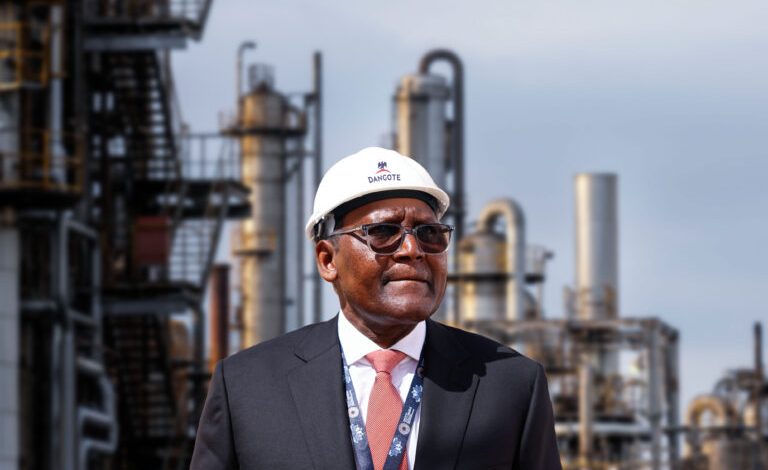
President of the Dangote Group, Aliko Dangote, has formally petitioned the Independent Corrupt Practices and Other Related Offences Commission (ICPC), demanding a full investigation into alleged corruption involving the Chief Executive Officer of the Nigerian Midstream and Downstream Petroleum Regulatory Authority (NMDPRA), Engr. Ahmed Farouk.

In the petition dated December 16 and submitted through his lawyer, Ogwu Onoja, SAN, Dangote accused the NMDPRA boss of abuse of office, corrupt enrichment and diversion of public funds, urging the ICPC to investigate, arrest and prosecute him where necessary.

The petition, acknowledged by the office of the ICPC Chairman, Musa Aliyu, SAN, alleged that Farouk has lived far beyond his legitimate earnings as a public officer, citing claims that he spent over $7 million on the education of his four children in Switzerland.

Dangote contended that the alleged payments—said to have been made upfront for several years—could not be justified by Farouk’s lawful income throughout his public service career. He reportedly supplied details of the children, the Swiss schools involved and the sums allegedly paid to enable independent verification by the anti-graft agency.

The businessman further alleged that Farouk abused his office in violation of the Code of Conduct for Public Officers, using the instrumentality of the NMDPRA to divert public funds for personal and private interests, actions he said had triggered public outrage and protests.

Citing Section 19 of the ICPC Act, Dangote maintained that the allegations fall squarely within the Commission’s mandate, noting that abuse of office and corrupt enrichment attract a possible five-year jail term upon conviction.

Dangote also linked the allegations to broader concerns over regulatory failures in the downstream petroleum sector, warning that unresolved corruption claims could undermine investor confidence.

While similar allegations were raised by protesters in Abuja in June 2025, the NMDPRA has consistently denied wrongdoing, dismissing the claims as false, politically motivated and part of a coordinated smear campaign against its leadership.

Dangote, however, expressed confidence in the ICPC’s ability to establish the facts, pledging to provide documentary and other evidence to support his claims in the interest of accountability and public trust.

Opinion: Still On The US Threat To Invade Nigeria

0

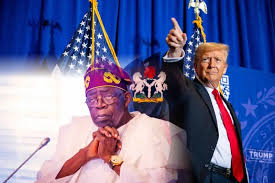
In an Executive Order titled “Restoring the United States Department of War”, President Trump authorized the US Department of Defense (DoD) to use Department of War (DoW) as a secondary title. Signed on Friday, September 5, 2025, the order also authorized the Secretary of Defense to use “Secretary of War” as a secondary title.

Though Trump did not legally rename DoD, which requires an act of the legislature, the development resonated across the world as a confirmation of Trump’s “Guns-a-blazing” body language, a development that is clearly indicative of desperation on a global scale.

A critical look at the Logo of the US House Committee on Foreign Relations (HCFR) shows an Eagle with olive branch in the right hand and seven arrows in the left hand. The symbolism and significance of olive branch is cordiality and the carrots it attracts by way of aids and other fallouts of soft power strategies (SPS).

On the left hand, the seven arrows signify the proverbial stick that is punitively put to utility when the carrot fails to achieve the imperial objectives.

A deeper look at the Logo shows a map of the world that is diminutive in comparison with the size of the Eagle, which symbolizes and proclaims: “America the Global Cop!!!” That was the reality of our unipolar world. A reality that is fast eroding in the face of the potent from the East. This explains President Trump’s switch to a war mode.

This June, I wrote thus: “From history we learn that empires reach their peak at about 250 years; thereafter, they decline willy-nilly until they collapse. The empires of Rome, Ottoman and Britain followed this pattern, which does not respect culture, geography, technology. This may be mystical but it is certainly mathematical as it defies coincidence. It may sound supernatural but it is historical; improbable but inevitable. America turns 250 years on July 4, 2026.

Alas! the sun of global power-play is following its natural course, setting in the West and rising in the East. The old order (of US unipolarism) is history”.

The cold truth is that, regarding global security, the US does not act impulsively. HCFR and Congressional Intelligence Committee (CIC) are bipartisan and highly patriotic non-political platforms. Therefore, they are not political performers; rather, they are cold-blooded custodians of America’s most sensitive geopolitical calculations.

Armed with detailed briefs of decades-long unrelenting evaluation, assessments and stress-tested scenarios from CIA, NSA, DIA, and AFRICOM, the HCFR and CIC advise the President on critical issues on global affairs with special reference to security.

In all that, the strategic self interest of the US is not only of paramount importance, it is the ultimate and sole objective.

Therefore, pronouncements by the President of the United States (POTUS) on global security are not whimsical. US troops will enter Nigeria.
In a recent Forbes Breaking News interview, Trump gloried on the growing global respect for the US. In a narcissistic self praise, Trump said thus: “They’re not laughing anymore. They respect us like they’ve never done before.” Disregard the poetic rhythm; it was accidental.

Note the bruised ego essence of the above averment by no less a person than POTUS. If nothing else, it is a clear and loudly expressed indication of the extent to which the US has tanked in global rating and the resultant desperation for validation in a global amphitheater that is fast degenerating to the Hobbesian state of nature; a global amphitheater where unipolarism is fast becoming history.

Sadly, the US lives in denial of the bipolarity of our contemporary world.

To understand contemporary world politics is to appreciate that the state of nature as enunciated by Thomas Hobbes in 1651 is a bleeding geopolitical logic rather than the antiquated philosophy, which some scholars erroneously confine it to.

In an obviously anarchic international system, morality takes the distant back seat behind strategic self interest. It is against this scenario that this piece interrogates the US threat to invade Nigeria ostensibly to stop the genocide against Nigerian Christians.

A central concept in political science, economics, business, and ethics, Strategic Self-Interest (SSI) refers to the deliberate pursuit of one’s own goals or advantages in a way that is calculated, long-term, and often involves weighing trade-offs. Unlike mere selfishness or impulsive behavior, SSI requires foresight, planning, and the ability to align one’s personal or organizational interests with broader systems or relationships.

At its core, SSI is about maximizing benefits while minimizing costs or risks. It involves a rational assessment of available options and their consequences over time. It is not necessarily unethical or self-serving in a narrow sense; rather, it often incorporates cooperation, compromise, and even diplomatic and soft power strategies by way of aid, economic cooperation, cultural influence, and propaganda.

Recently, a commentator described the US as “a greedy bully with every reason to invade and take advantage of the situation”. Shortly thereafter, another commentator wrote thus: “We can debate, shout, dismiss, or comfort ourselves with nationalist rhetoric, but none of that alters the geopolitical logic already in motion. The US will eventually deploy military assets to Nigeria—not out of charity, not out of sentimental concern, but because the decision has long been settled within America’s deep security architecture…It is not a question of if. It is a question of when the US will invade Nigeria”.

Note the chilling statement: “not out of charity, not out of sentimental concern, but because the decision has long been settled within America’s deep security architecture”. That decision is informed by US strategic self-interest; it has nothing whatsoever to do with genocide against Christians in Nigeria, which is only a convenient and highly welcome facade for the US. And what is the objective of invading Nigeria? Read my forthcoming piece titled The Objectives of US Invasion of Nigeria”.

By Prof. Jason Osai

NDDC Mourns Ewhrudjakpo, Suspends Bayelsa Project Commissioning

0

The Board, Management and Staff of the Niger Delta Development Commission (NDDC) have expressed deep sorrow over the passing of the Deputy Governor of Bayelsa State, His Excellency, Senator Lawrence Ewhrudjakpo, Ph.D., describing his death as a profound loss to Bayelsa State, the Niger Delta region and the nation at large.

In a condolence message to the Government and people of Bayelsa State, jointly signed by the Chairman of the NDDC Governing Board, Mr. Chiedu Ebie, and the Managing Director, Dr. Samuel Ogbuku, the Commission announced the suspension of the commissioning of its projects in Bayelsa State as a mark of respect for the late Deputy Governor. The commissioning exercise was earlier scheduled for December 16, 2025.

The NDDC noted that Senator Ewhrudjakpo was a man of candour, unwavering commitment and exceptional dedication to public service, qualities that earned him the reputation of a tireless and “workaholic” leader. According to the Commission, his life and career were defined by selfless service, sacrifice and an unrelenting passion for the development of his people.

Reflecting on his public service journey, the Commission recalled his impactful tenure as Commissioner for Works in Bayelsa State, during which he played a critical role in driving infrastructural development across the state. His service as Senator representing Bayelsa West in the 9th Senate of the Federal Republic of Nigeria was also described as distinguished, marked by competence, vision and a strong commitment to national progress.

The NDDC further described the late Deputy Governor as a humble, sincere and patriotic leader who embodied integrity and simplicity, setting a worthy example for current and future leaders to emulate.

The Commission stated that Senator Ewhrudjakpo’s legacy of principled leadership, devotion to humanity and commitment to the common good would continue to endure and inspire generations yet unborn.

The NDDC prayed that God Almighty grants comfort, strength and fortitude to the government and people of Bayelsa State, as well as to the family of the deceased, and that the gentle soul of Senator Lawrence Ewhrudjakpo finds eternal rest in the bosom of the Almighty.

FAAC Shares N1.9trn To FG, States, LGs

0

The Federation Account Allocation Committee (FAAC) has shared the sum of N1.928 trillion with the three tiers of government.

The Federal Ministry of Finance, in a statement last night in Abuja, indicated that accruals into the Federation Revenue for the month of November stood at N2.343 trillion.

The Federal Government received N747.159 billion, the states received N601.731 billion, and the local government councils got N445.266 billion, while the oil-producing states received N134.355 billion as derivation (13% of mineral revenue).

The sum of N84.251 billion was given for the cost of collection, while N330.625 billion was allocated for transfers, intervention and refunds.

Gross revenue available from the Value Added Tax (VAT) for the month under consideration was N563.042 billion as against N719.827 billion distributed in the preceding month, resulting in a decrease of N156.785 billion.

From the stated amount, the sum of N22.522 billion was allocated for the cost of collection, and the sum of N54.682 billion was given for transfers, intervention and refunds.

The remaining sum of N485.838 billion was distributed to the three tiers of government, with the federal receiving N72.876 billion, the states N242.919 billion, and local government councils N170.043 billion.

Accordingly, the Gross Statutory Revenue of N1.736 trillion received for the month was lower than the sum of N2.164 trillion received in the previous month by N427.969 billion.

From the stated amount, the sum of N59.993 billion was allocated for the cost of collection and a total sum of N273.925 billion for transfers, intervention and refunds.

The remaining balance of N1.403 trillion was distributed as follows: The federal government received N668.336 billion, the states received N338.989 billion, the sum of N261.346 billion was allocated to LGCs, while N134.355 billion was given to Derivation Revenue (13% mineral-producing states).

Also, the sum of N43.400 billion from the Electronic Money Transfer Levy (EMTL) was distributed to the three (3) tiers of government as follows: the Federal Government received N5.947 billion, states got N19.823 billion, and local government councils received N13.876 billion, while N1.736 billion was allocated for the cost of collection, and the sum of N2.018 billion was given to transfers, refunds and savings.

Police To Resume Nationwide Enforcement Of Tinted Glass Permit January 2

0

The Nigeria Police Force (NPF) has announced that it will resume nationwide enforcement of the tinted glass permit policy from January 2, 2026, citing rising security concerns linked to the misuse of unauthorised tinted vehicle glass.

The decision was disclosed in a statement issued on Monday by the Force Public Relations Officer, Chief Superintendent of Police, Benjamin Hundeyin.

According to the police, the move followed a review of emerging security threats and the need to strengthen public safety, pending the final determination of a related matter currently before the court.

The NPF clarified that no court order restrained it from enforcing the law regulating the use of tinted glass on vehicles. It explained that enforcement was earlier suspended in the interest of transparency and public convenience, to allow motorists adequate time to regularise their documents and complete the permit application process without pressure.

However, the police noted that recent security assessments have shown an increase in criminal activities involving vehicles fitted with unauthorised tinted glass.

Such vehicles, the statement said, have been used by criminal elements to conceal their identities while carrying out offences including armed robbery, kidnapping and other violent crimes.

“In recent times, there has been a disturbing rise in criminal activities perpetrated with the aid of vehicles fitted with unauthorised tinted glass,” the statement read.

“Some individuals and organised criminal groups have exploited this gap to conceal their identities and facilitate crimes ranging from armed robbery to kidnapping and other violent crimes.”

The police said the resumption of enforcement has therefore become necessary and urgent as a proactive measure to safeguard lives and property across the country.

“Consequently, enforcement of the Tinted Glass Permit will resume nationwide on January 2, 2026,” the statement added.