

Home Blog Page 79

APC to Tinubu: Choose the Party or Wike As Rivers Crisis Deepens

0

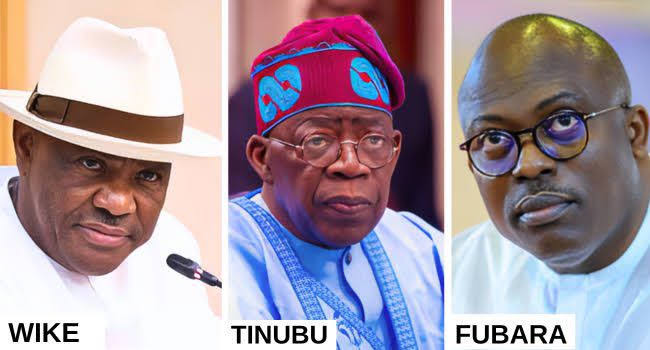
Tensions within the ruling All Progressives Congress (APC) have intensified, with senior party figures warning President Bola Tinubu that the actions of the Minister of the Federal Capital Territory (FCT), Nyesom Wike, are threatening party unity, particularly in Rivers State.

Amid renewed hostilities between Wike and his successor, Governor Siminalayi Fubara, leaders of the APC say the minister’s political manoeuvres risk undermining the party’s cohesion and electoral fortunes ahead of the 2027 general elections.

A member of the APC National Working Committee (NWC), who spoke anonymously, disclosed that the party may soon confront the President directly if Wike continues to act in ways perceived as hostile to APC interests.

“We may ask the President to choose between the party and his FCT minister if Wike continues to behave as if he alone can protect the President’s political interests in Rivers State or elsewhere. He is not even a member of this party,” the source said.

The warning follows Wike’s recent declaration that Governor Fubara would not secure a second term in office in 2027, a statement that has sparked outrage among APC loyalists, particularly in Rivers State.
Party strategists argue that the APC can not afford to allow a minister who is not formally registered with the party to destabilise its structure in the oil-rich state at a critical political moment.

Adding to the debate, former PDP National Vice Chairman (South-West), Eddy Olafeso, described Wike’s current predicament as self-inflicted, arguing that Governor Fubara had outmanoeuvred his former political benefactor.

In an interview, Olafeso said Wike may be “the most unfortunate politician of Nigeria’s Fourth Republic,” noting that Fubara moved swiftly to align with the APC, effectively leaving his former boss politically isolated.

He further revealed that APC leaders in Rivers State have made it clear that Fubara is recognised as the party’s leader APC

Tensions within the ruling All Progressives Congress (APC) have intensified, with senior party figures warning President Bola Tinubu that the actions of the Minister of the Federal Capital Territory (FCT), Nyesom Wike, are threatening party unity, particularly in Rivers State.

Amid renewed hostilities between Wike and his successor, Governor Siminalayi Fubara, leaders of the APC say the minister’s political manoeuvres risk undermining the party’s cohesion and electoral fortunes ahead of the 2027 general elections.

A member of the APC National Working Committee (NWC), who spoke anonymously, disclosed that the party may soon confront the President directly if Wike continues to act in ways perceived as hostile to APC interests.

“We may ask the President to choose between the party and his FCT minister if Wike continues to behave as if he alone can protect the President’s political interests in Rivers State or elsewhere. He is not even a member of this party,” the source said.

The warning follows Wike’s recent declaration that Governor Fubara would not secure a second term in office in 2027, a statement that has sparked outrage among APC loyalists, particularly in Rivers State.
Party strategists argue that the APC cannot afford to allow a minister who is not formally registered with the party to destabilise its structure in the oil-rich state at a critical political moment.

Adding to the debate, former PDP National Vice Chairman (South-West), Eddy Olafeso, described Wike’s current predicament as self-inflicted, arguing that Governor Fubara had outmanoeuvred his former political benefactor.

In an interview, Olafeso said Wike may be “the most unfortunate politician of Nigeria’s Fourth Republic,” noting that Fubara moved swiftly to align with the APC, effectively leaving his former boss politically isolated.

He further revealed that APC leaders in Rivers State have made it clear that Fubara is recognised as the party’s leader in the state, a development he said prompted Wike’s eventual decision to defect.

“Some of them are even calling for his removal as minister,” Olafeso disclosed, underscoring the growing pressure on President Tinubu to rein in his influential ally.ect.

“Some of them are even calling for his removal as minister,” Olafeso disclosed, underscoring the growing pressure on President Tinubu to rein in his influential ally.

Tietie Warns: Political Vacuum In Rivers Empowering Wike, Calls for Firm Counterweights

0

Political analyst Frank Tietie has warned that the undue influence of the Minister of the Federal Capital Territory, Nyesom Wike, particularly in Rivers State, reflects a dangerous vacuum of countervailing political authority that must urgently be addressed.

Speaking in a video shared by ARISE TV, Tietie argued that Wike’s dominance thrives largely because key political actors who should ordinarily serve as restraints have remained conspicuously silent.

Tietie noted that Governor Siminalayi Fubara’s calm, conciliatory, and deferential disposition, while commendable in tone, may have inadvertently ceded excessive political space to Wike.

In a polity as fiercely competitive as Rivers State, he suggested, restraint without strategic firmness risks being interpreted as weakness, allowing an overbearing figure to consolidate control unchecked.

More troubling, according to Tietie, is the withdrawal of other influential political heavyweights from the arena.

He questioned the silence of former governor Rotimi Amaechi and businessman-politician Tonye Cole, both of whom once commanded substantial political followings in the state.

While conceding that former governor Peter Odili may no longer be active due to age, Tietie stressed that Amaechi, in particular, retains the political capital and national stature required to offer a credible counterweight to Wike’s dominance.

The analyst warned that Wike now conducts himself as though he were politically unanswerable, not only in Rivers State but also within the broader national landscape.

He accused the minister of acting as the de facto arbiter of political outcomes across party lines, dictating terms in both the PDP and APC, issuing threats and drawing red lines that others appear reluctant to cross.

For Tietie, taming Wike’s outsized influence will not come from silence or moral appeals alone, but from the deliberate re-engagement of strong political institutions and personalities willing to assert themselves.

Democracy, he argued, suffers when power is concentrated in one individual without resistance.

Rivers State, he concluded, urgently requires a rebalancing of forces through firm leadership, vocal opposition, and institutional courage to restore political equilibrium and safeguard democratic norms.

AFCON 2025: Ruthless Super Eagles Maul Mozambique 4–0, Breeze Into Quarter-Finals

0

Nigeria powered into the quarter-finals of the 2025 Africa Cup of Nations with a commanding 4–0 demolition of Mozambique on Monday night, extending their perfect run at the tournament.

The Super Eagles, who won all four of their Group C matches for the first time in AFCON history, once again underlined their dominance over the Mambas in Fez.

Ademola Lookman set the tone with the opening goal before turning provider, laying on a neat assist for Victor Osimhen to double Nigeria’s advantage before the break.

The Napoli striker struck again almost immediately after the restart, once more benefitting from Lookman’s creativity to complete his brace.

Nigeria’s dominance was capped late on when Akor Adams rifled home a powerful finish from inside the box to seal an emphatic victory.

Eric Chelle’s side will now await the winner of the quarter-final clash between Burkina Faso and DR Congo as their AFCON title charge gathers momentum.

Basiru To Wike: Quit Tinubu’s Cabinet, Stop Meddling In Rivers APC

0

The National Secretary of the All Progressives Congress (APC), Senator Ajibola Basiru, has asked the Minister of the Federal Capital Territory (FCT), Nyesom Wike, to immediately resign his appointment and face his “obsession with Rivers State politics,” following a heated exchange over the leadership and affairs of the party in the state.

In a strongly worded statement on Monday, Basiru faulted what he described as an “uncouth tirade” by Wike against his person and office, insisting that his position on party supremacy and respect for sitting governors was both orthodox and constitutionally grounded within the APC.

Basiru said it was shocking that a member of the Federal Executive Council would react so aggressively to his assertion that governors remain the leaders of the party in their respective states and must be accorded due respect by party organs.

“For the avoidance of doubt, our records indicate that Minister Nyesom Wike is not a member of our party,” Basiru declared, stressing that Wike therefore lacked the locus standi to interfere in APC affairs. He added that, as National Secretary, he was duty-bound to protect the interests of the party and its structures nationwide, including Rivers State.

Dismissing allegations by Wike that he and other APC leaders were scrambling for an alleged N600 billion “largesse” in Rivers State, Basiru described the claim as “cheap blackmail” and a familiar tactic of the former Rivers governor. He challenged Wike to substantiate the allegation or be prepared to defend it in court.

The APC scribe also rejected what he termed veiled threats from the FCT minister, warning that Wike was “overplaying his political card.” Basiru said his confidence was rooted in faith and democratic struggle, recalling his role in the pro-democracy movement against military rule, at a time he claimed Wike was not politically visible.

Basiru further noted that Wike’s public support for President Bola Ahmed Tinubu did not translate into APC membership, arguing that millions of Nigerians outside the party also supported the President.

“His attempt to destabilise our party in Rivers State will not be tolerated,” Basiru said, cautioning that Wike could not import “the spirit of the PDP” into the APC.

He concluded by stating that it was improper for a serving minister in an APC-led government to foment discord within the party using the influence of public office, insisting that the “honourable thing” for Wike to do was to resign from the Federal Executive Council.

The latest exchange underscores deepening political tensions in Rivers State and highlights the fragile alignment between the ruling APC and influential non-party actors within the Tinubu administration.

RSG Approves Youth Agribusiness Training To Tackle Unemployment, Boost Food Security

0

The Rivers State Government has approved a comprehensive Youth Agribusiness Training Programme aimed at empowering young people, strengthening food security and driving sustainable economic growth across the state.

The approval, granted by Governor Siminalayi Fubara, underscores the administration’s resolve to reposition agriculture as a viable, profitable and youth-driven sector, while addressing the twin challenges of unemployment and economic diversification.

According to the state government, the programme is designed to equip youths with practical skills, modern agricultural knowledge and entrepreneurial capacity across key agricultural value chains. These include crop production, livestock farming, aquaculture, agro-processing, agribusiness management and agricultural technology.

By focusing on hands-on training and mentorship, the initiative seeks to move young people beyond subsistence farming into commercially viable, market-oriented agribusiness ventures. Participants will be exposed to modern farming techniques, value addition processes and agribusiness best practices, enabling them to become self-reliant and competitive contributors to the state’s economy.

Officials said the programme aligns with Governor Fubara’s broader vision of youth empowerment, job creation and economic resilience. With agriculture recognised as a critical driver of inclusive growth, the training is expected to open new income streams for youths, reduce dependence on white-collar jobs and encourage innovation within the agricultural sector.

Beyond individual empowerment, the initiative is projected to have wider socio-economic benefits for Rivers State. Increased youth participation in agriculture is expected to boost local food production, reduce food shortages, stabilise prices and strengthen rural economies. By promoting value addition and agribusiness development, the programme also aims to create employment opportunities along the agricultural supply chain.

The training is scheduled to hold from January 19 to 29, 2026, at the School-to-Land Authority, Centre of Excellence, Rumuodomaya, Obio-Akpor Local Government Area, with daily sessions commencing at noon.

The Rivers State Government has urged interested youths with a genuine passion for agriculture and agribusiness to take advantage of the opportunity, describing it as a strategic investment in the future of the state.

Signed by the Commissioner for Agriculture, Engr. Victor Kii, the statement reaffirmed the administration’s commitment to building a resilient agricultural sector, empowering the youth population and laying the foundation for a more prosperous Rivers State.

Manchester United Sack Amorim In Bid To Steady Season, Salvage Champions League Push

0

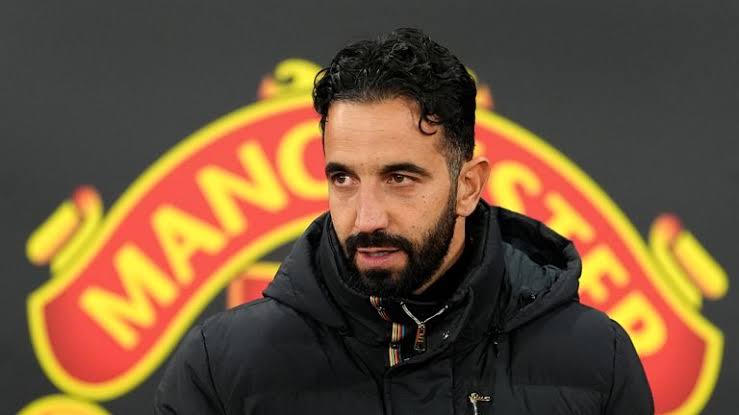
Manchester United’s decision to dismiss Ruben Amorim is being framed internally as a necessary reset rather than a reactionary move, with the club believing the change can stabilise a season that has drifted into uncertainty.

Amorim, appointed in November 2024, leaves with United sixth in the Premier League and still within reach of the Champions League places.

However, his public criticism of the club’s hierarchy after Sunday’s 1–1 draw with Leeds United was seen as a tipping point, exposing fractures that executives felt were beginning to undermine collective focus at a crucial stage of the campaign.

From United’s perspective, the timing is designed to limit further damage. With the team still competitive domestically and fixtures coming thick and fast, the hierarchy believes a swift intervention offers the best chance of restoring clarity, discipline and momentum.

Darren Fletcher’s appointment to oversee the next match against Burnley is intended to provide short-term continuity, drawing on his understanding of the club’s culture and dressing-room dynamics.

Amorim’s tenure was not without achievement. He guided United to the Europa League final in Bilbao last May and attempted to impose a distinct tactical identity.

Yet performances this season have fluctuated, and confidence appeared to wane amid growing scrutiny of his authority.

By acting now, United hope to refocus attention on results rather than rhetoric, while buying time to assess longer-term managerial options.

In a season still salvageable, the club is betting that decisive leadership, however uncomfortable, can yet turn turbulence into opportunity.

NDDC Assures On Completion Of Reclamation, Road Projects In Rivers

0

The Niger Delta Development Commission, NDDC, has stated its commitment to completing the sand-filling and reclamation project in Okochiri, Okrika Local Government Area, and the 4.5-kilometre Nonwa-Uedeme-Ogu Road linking Tai and Ogu-Bolo Local Government Areas of Rivers State.

Speaking during an inspection of the projects, the NDDC Executive Director, Finance and Administration, Alabo Boma Iyaye, reiterated the Commission’s resolve to ensure that all ongoing projects across the region were completed and inaugurated for the benefit of the people.

Iyaye expressed satisfaction with the progress of work at the Okochiri reclamation project and noted that it would help the community gain more land for economic activities.

He said: “We are here in Okochiri to monitor and appraise the performance of the contractor working for us. We felt the need to assess the project’s progress to ensure timely completion.

NDDC Executive Director Finance and Administration, Alabo Boma Iyaye (right) Inspecting the Reconstruction of Nonwna-Uedeme-Ogu Road, linking Tai and Ogu-Bolo Local Government Areas of Rivers State. With him, (in white) is the contractor for the project, Hon. Deinma Iyalla.

Iyaye said the reclamation project was significant to the Okochiri people because it had increased their land space, noting that it had helped to boost the Okochiri International Beach Festival and Carnival, which, according to him, “promotes peace amongst the people.”

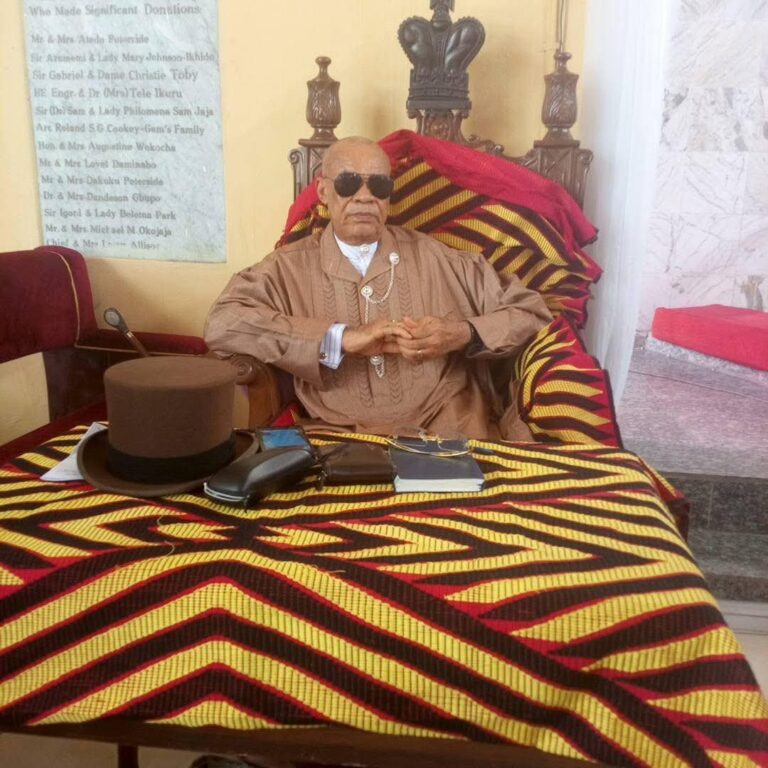
Earlier, during a courtesy visit to the Amayanabo of Okochiri, King Ateke Tom, at his palace, the NDDC Executive Director remarked that the Commission had tremendous respect for the traditional institution.

He informed the monarch that he was in Okochiri to inspect the Commission’s ongoing projects in the area and ensure they were completed on schedule.

Iyaye Said: “For us to succeed, we believe that we need the cooperation of everybody. We need the cooperation of the traditional institutions, the state governments and the youth.

Responding, King Ateke Tom commended the NDDC for executing impactful projects in his domain, especially for the sand-filling and reclamation project. He observed that the projects would enhance the economic development of the Okochiri kingdom.

Briefing the NDDC Executive Director on the project, the contractor, Dr Jude Moroh, commended the Commission for undertaking the project, noting that the area, which had previously been a mangrove swamp, had been sand-filled.

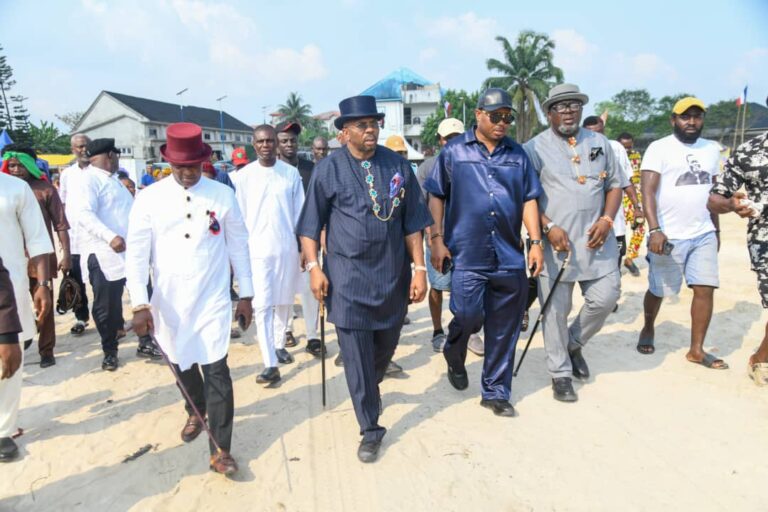
Also speaking at the reclamation site, the Secretary of Ijaw Youth Council, Eastern Zone, Mr Tamunokuro Dango, said the Okochiri people were happy with the progress of work at the beachfront.

He noted: “We are delighted because this project has enhanced our economic and social activities, improving the lives of our people.”

Inspecting the Nonwa-Uedeme-Ogu Road, Alabo Boma Iyaye assured that the NDDC, under the leadership of the Managing Director, Dr Samuel Ogbuku, was actively working to implement the Renewed Hope Agenda of President Bola Tinubu’s administration.

He stated that, as an intervention agency, the NDDC would endeavour to leave its footprints in communities within the NDDC mandate states, working in collaboration with the state governments.

The contractor for the road project, Hon. Deinma Iyalla, affirmed that the NDDC had transformed the area by linking various communities through good roads. He assured that the first phase of the project would be completed by the end of January.

The NDDC Executive Director, Finance and Administration, also inspected ongoing work on the 1,500-seater Ogu Civic Centre and the Ogu Community Pavilion in Ogu-Bolo Local Government Area of Rivers State.

Amanyanabo-Elect Outlines Development Agenda For Opobo Kingdom

0

History was made on Saturday as Opobo Kingdom marked a pivotal moment with the formal presentation of Alabo Prince Charles Douglas MacPepple Jaja as the Amanyanabo-Elect of the ancient city.

The ceremony took place within the sacred precincts of Opuwariku, King Jaja Palace Complex, under the watchful eyes of the King Jaja Group of Houses and the Opobo Kingdom Council of Alapu.

Addressing the Vice Chairman and members of the council, Prince Charles Jaja spoke with humility and resolve, acknowledging the weight of the crown yet to be placed upon him. He pledged to uphold the sacred trust of tradition, ancestry, and the collective will of the people.

The Atlantic Bell reports that the Amanyanabo-Elect outlined a vision that balances development with cultural preservation. He emphasised that growth must not come at the expense of Opobo’s identity. “Our heritage is our strength,” he said, reiterating his commitment to sustainable development, environmental protection, and the safeguarding of traditions for future generations.

Education, youth empowerment, and skills acquisition form the cornerstone of his developmental agenda. Prince Charles Jaja stressed the need to prepare young Opobo sons and daughters for success in an evolving world, while also promoting cultural continuity through documentation of traditions, establishment of cultural centres, and the active use of the Ibani language.

He further pledged institutional reforms within the Council of Alapu to enhance transparency, accountability, and collective governance, ensuring shared responsibility in leadership.

Drawing inspiration from King Jaja, the legendary founder who resisted colonial domination to defend the kingdom’s autonomy, the Amanyanabo-Elect promised that Opobo would remain proud, independent, and resilient.

In his address, he also expressed his commitment to collaborative engagement with the Opobo/Nkoro Local Government, Rivers State Government under Governor Siminalayi Fubara, the Federal Government, and multinational stakeholders.

Speaking on the traditional selection process, Senibo Enyinna Idawari Seigha Jaja, Immediate Past Chairman of the King Jaja Royal War Canoe House, affirmed that the process was conducted peacefully and in strict accordance with custom.

“There was no rancour. The process was seamless, and the kingdom is happy,” he said.

Vice Chairman of the Opobo Kingdom Council of Chiefs, Alabo Princewill Dappa, described the occasion as historic.

“This is something you may witness only once in a lifetime.

“The kingdom is united, the process peaceful, and the joy genuine. After coronation, he will be known as His Royal Majesty, King Prince Charles Douglas MacPepple Jaja, but today, we proudly receive him as our Amanyanabo-Elect,” he said.

Opinion: State Sovereignty, Power, And Illusion Of Legal Equality

0

State Sovereignty is often presented as the bedrock of the International legal order—an equal right enjoyed by all States, regardless of size or power.

In practice, however, it operates less as a universal entitlement and more as a conditional privilege, respected or ignored depending on a state’s position within global power hierarchies.

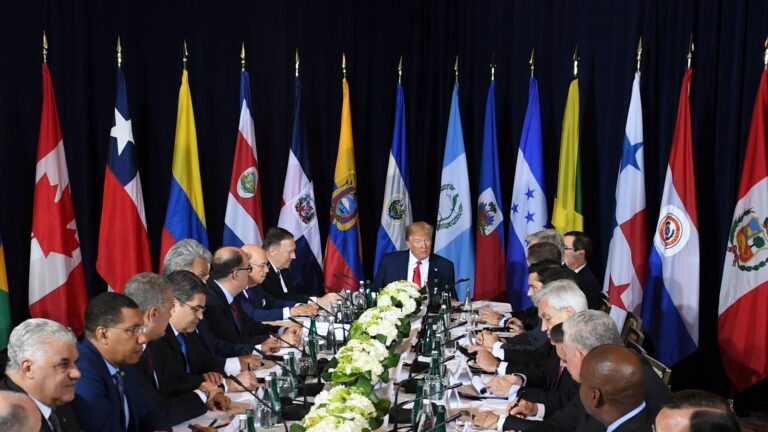
Recent developments involving Venezuela, including reported U.S. actions directed at its leadership including the arrest and extraction of its President to the U.S. for trial, underscore this long-standing contradiction between law as proclaimed and law as applied.

What such episodes expose is not a sudden collapse of International order, but a deeper truth: sovereignty has never been evenly distributed. It has always been mediated by power.

Sovereignty in Theory and in Practice:

The Westphalian conception of sovereignty—non-interference, territorial integrity, and juridical equality—was an ideal crafted to stabilise relations among European powers. Its universalisation was aspirational, not descriptive.

As history has repeatedly shown, States are treated as fully sovereign only so long as they retain the material capacity to defend that status.

Where military strength, economic leverage, diplomatic influence, or alliance networks weaken, sovereignty becomes fragile.

It remains recognised in form but erodes in substance. In this sense, sovereignty functions less as a legal shield than as a status that must be continuously sustained through power and credibility.

Law, Enforcement, and Selective Exceptionalism:

From a strictly legal perspective, unilateral coercive actions against another state sit uneasily—if not incompatibly—with the UN Charter’s prohibition on the use of force. Yet International law has no independent enforcement authority. Its effectiveness depends on political will, collective action, and institutions shaped by the same power asymmetries the law is meant to restrain.
Invocations of doctrines such as universal jurisdiction or transnational criminality often blur the line between accountability and exceptionalism. While serious international crimes demand legal responses, the selective manner in which enforcement is pursued raises a persistent concern: law is not always constraining power; it is frequently used to justify it.

The Persistence of Imperial Logic:

What we are witnessing is not an aberration but continuity. From Cold War interventions to post-Cold War regime change operations, the pattern is consistent: sovereignty is robust for allies and precarious for adversaries. The language may have shifted—from anti-communism to human rights or counter-narcotics—but the underlying logic remains strategic.
In regions historically subject to external dominance, this dynamic is particularly stark. Assertions of hemispheric influence, long thought rhetorically obsolete, continue to find expression in practice. The message conveyed is implicit but unmistakable: autonomy exists, but only within limits set by stronger actors.

Morality and Decision-Making Authority:

Moral arguments are often central to these interventions, and they should not be dismissed outright. Authoritarianism, corruption, and human rights abuses are real and consequential. The harder question, however, is institutional rather than moral: who decides, through what process, and with what safeguards against abuse?
When decisions of such magnitude are made unilaterally, moral language risks becoming a tool of convenience rather than a principled standard. Justice, in such circumstances, appears contingent—not on consistent legal norms, but on geopolitical alignment.

A Sobering Conclusion:
Sovereignty today functions less as a guaranteed legal condition than as a negotiated and performative status—maintained by power, recognition, and strategic relevance. This does not mean International Law is meaningless, but it does mean it operates within limits that are rarely acknowledged openly.

The Global Order is not lawless, but neither is it governed by law alone. It is a system in which legal principles coexist uneasily with coercion, and where weaker states are sovereign in theory until circumstances—and interests—dictate otherwise.

That tension is not new. What is changing is how openly it is now revealed.

This brings us to an issue which is very pertinent to this dicuss:
_How can African countries like Nigeria adjust to this reality?

For countries like Nigeria, the future of State Sovereignty does not lie in louder invocations of International Law, but in quiet accumulation of leverage—economic, diplomatic, legal, and narrative.

In today’s emerging global system, you are sovereign not because the law says so, but because interfering with you is too costly, too complicated, or too consequential.That is the real adjustment.

By Tonye Sipoto-Pepple is a Legal Practitioner and Public Commentator

APC Rallies Behind Fubara, Insists No Individual Can Undermine Its Governor

0

The All Progressives Congress (APC) has closed ranks around Rivers State Governor, Siminalayi Fubara, declaring that no individual or interest can frustrate a governor elected on the platform of the ruling party, despite renewed political hostilities involving the Minister of the Federal Capital Territory, Nyesom Wike.

Top officials of the party, including members of the National Working Committee (NWC), affirmed that Governor Fubara enjoys the full backing of the APC and would be accorded all the rights, protections and political support due to any serving governor of the party.

National Secretary of the APC, Ajibola Basiru, told The Guardian that the party’s constitution and internal tradition do not permit the undermining of its governors, stressing that Fubara’s administration in Rivers State aligns with the APC’s governance objectives.

“Nobody can frustrate any APC governor. Governor Fubara, like other governors on our platform, is running the affairs of his state effectively, and the party must identify with him,” Basiru said.

Fubara’s defection from the Peoples Democratic Party (PDP) to the APC on December 9, alongside 17 members of the Rivers State House of Assembly, has reshaped the state’s political landscape and intensified tensions with Wike, who has publicly questioned the governor’s prospects for a second term.

However, the APC National Chairman, Prof. Nentawe Yilwatda, has already declared Fubara the leader of the party in Rivers State, noting that while internal coordination is required, the governor’s position within the party structure is not in doubt.

A senior APC official, speaking anonymously due to the sensitivity of the matter, dismissed claims that any single political actor could determine Fubara’s fate, insisting that the ultimate authority within the party rests with President Bola Tinubu and its recognised organs.

“By our rules, APC governors are respected and supported. The Governors’ Forum is a major stabilising force in the party. No individual can override that,” the official said, adding that incumbency naturally confers political advantage in any re-election contest.
Party leaders also cautioned against disparaging remarks directed at elected officials, with Basiru describing as “unfortunate” comments attributed to the APC’s South-South Vice Chairman that appeared dismissive of the Rivers governor.

Similarly, Deputy National Organising Secretary, Duru Eze, and National Publicity Director, Bala Ibrahim, reiterated that Fubara enjoys the endorsement of the President, the National Executive Committee and the NWC, and would not be treated differently from any other APC governor.

At the state level, Rivers APC spokesman, Chibike Ikenga, maintained that only the President and the party’s national leadership could determine the governor’s political future, stressing that Wike, not being a member of the APC, had no role in its internal decisions.

Elders and stakeholders in Rivers State also weighed in, warning against attempts to personalise political power and insisting that the electorate, not political godfathers, would ultimately decide the state’s leadership.

Despite Wike’s renewed insistence that Fubara’s re-election would be blocked, APC leaders remain firm that the party’s structure, constitution and leadership would not allow any of its governors to be politically frustrated.