

Home Blog Page 69

ALSCON Power Play: BFIG Alleges EFCC Prosecution Is Political Weapon to Force Asset Surrender

0

The prosecution of BFI Group Corporation (BFIG) by the Economic and Financial Crimes Commission (EFCC) is being framed by the company as a calculated political offensive tied directly to the protracted battle over the Aluminium Smelter Company of Nigeria (ALSCON).

BFIG’s Chief Executive Officer, Alabo Prince Mietamuno Saturday Jaja, has accused the Federal Government of deploying criminal charges as state pressure to compel his company to abandon ALSCON, despite two subsisting Supreme Court judgments affirming BFIG’s ownership.

According to Jaja, the EFCC case has nothing to do with fraud and everything to do with power, politics, and control of a strategic national asset.

“This prosecution is a ruse — malicious, unfounded, and politically driven,” Jaja said. “It is designed to intimidate BFIG into surrendering ALSCON without negotiation or compensation after the government failed repeatedly at the Supreme Court.”

‘No Petition, No Victim, No Crime’
Jaja disclosed that no individual, corporate body, or financial institution has ever petitioned the EFCC against BFIG over the alleged €100 million transaction forming the basis of the charges.

“There is no complainant. No victim. No loss,” he said. “Yet the EFCC has chosen to criminalise a legitimate transaction to frustrate the execution of court judgments.”

He explained that the transaction involved Centage Mortgage Bank, a Central Bank of Nigeria (CBN)-licensed institution, which negotiated a €100 million facility intended for the real estate and residential development components of ALSCON.

Jaja questioned why the EFCC targeted BFIG and its executives rather than the issuing bank, suggesting selective prosecution driven by political interests.
ALSCON at the Centre of the Storm

According to BFIG, the timing of the prosecution is not coincidental. The company points to the Supreme Court’s rulings against the Bureau of Public Enterprises (BPE) and subsequent committal proceedings involving a former Director-General as the real trigger for the EFCC action.

“This case is about ALSCON — pure and simple,” Jaja said. “The criminal justice system is being weaponised to reverse what the government failed to overturn legally.”

He described the prosecution as part of a coordinated scheme to obstruct the handover of ALSCON, a strategic aluminium smelting plant that has remained dormant amid years of political and legal controversy.

EFCC Arraignment
Despite BFIG’s claims, the EFCC on January 29, 2026, arraigned BFI Group Corporation and six others before Justice M.S. Idris of the FCT High Court, Jabi, Abuja.

The defendants were charged on a five-count amended information bordering on alleged fraud, conspiracy, and false pretence involving €100 million, including claims of attempting to obtain a Certificate of Capital Importation using false representations.
All defendants pleaded not guilty.

During proceedings, defence counsel described the case as an abuse of process and applied for bail, while EFCC prosecutors opposed oral bail applications, insisting that written applications must be determined under the Administration of Criminal Justice Act (ACJA).

Justice Idris adjourned the matter to February 3, 2026, for ruling on bail. One defendant was ordered remanded in EFCC custody, while others were sent to Kuje Correctional Centre.

‘This Will Not Stand’
Jaja said BFIG’s legal team is already responding robustly and announced plans for an expanded press conference to release documents and clarify what he called “deliberate distortions” surrounding the case.

“This is not the first attempt to stop ALSCON from being handed over,” he said. “But just like before, this too will fail. The rule of law must prevail.”

As the legal battle intensifies, the case is fast becoming a test of whether court judgments can withstand political pressure when powerful economic interests are at stake.

Nigeria’s Defence Minister Links Rising Insecurity To Community Protection Of Criminals

0

Minister of Defence, retired Gen. Christopher Musa, has attributed the persistence of insecurity in Nigeria to the failure of some individuals and communities to cooperate with security agencies, particularly by shielding bandits, terrorists and other criminal elements.

Musa spoke on Saturday night in Abuja, where he noted that Nigeria is facing a complex form of modern conflict that cannot be resolved through military action alone, stressing that public cooperation is indispensable to restoring peace.

According to him, the country’s security challenge fits the pattern of asymmetric warfare, in which the enemy is embedded within the society rather than confronting the state in a conventional manner.

“This is asymmetric warfare. It is not like conventional warfare where you are fighting another country. Here, the enemy is within, and that makes it more dangerous,” he said.

The defence minister explained that many criminal elements live and operate within communities under the guise of ordinary citizens, making intelligence sharing and timely reporting critical to the success of security operations.

“You cannot identify them by appearance. It could be someone you trust or relate with daily. That is why people must not provide criminals with any form of safe haven,” Musa said.

He urged Nigerians to report all forms of criminal activity, including banditry, kidnapping, terrorism and insurgency, assuring that the security agencies would act decisively on credible information.

Musa added that the security situation across the country was gradually improving, attributing the gains to sustained military operations, improved intelligence gathering and increasing public support.

“We are making progress. It is improving day by day. Peace is a whole-of-society effort, and everyone has a role to play,” he said.

Earlier, in a goodwill message, the Emir of Doma Kingdom, Alhaji Ahmadu Onawu, described OurNigeria as more than a publication, saying it represents a message of patriotism, hope and national renewal.
Onawu said Nigeria was endowed with vast human and natural resources and had no justification for remaining poor, arguing that the country’s main challenge lay in the failure to effectively harness its potentials for national development.

He called on Nigerians, irrespective of status, to take collective responsibility for building a prosperous and self-reliant nation, warning that future generations would judge the present by the legacy it leaves behind.

PFN Defends INEC Chair, Says Calls For Removal Over ‘Genocide’ Remarks Threaten Free Speech

0

The Pentecostal Fellowship of Nigeria (PFN) has rejected calls for the removal of the Chairman of the Independent National Electoral Commission (INEC), Prof. Joash Amupitan, describing the demand as unjustified and a danger to constitutional freedoms.

The call, reportedly made by the Supreme Council for Shari’ah in Nigeria, followed comments allegedly attributed to Amupitan on the issue of genocide.

However, the PFN insisted that the remarks were made in a personal capacity and bore no connection to his official responsibilities as head of the electoral body.

In a statement signed by its National Secretary, Bishop David Bakare, the Fellowship maintained that Amupitan, like every Nigerian, is entitled to freedom of expression on matters of national concern, regardless of the public office he occupies.

According to the PFN, the issue in question had no link whatsoever to elections or electoral administration, stressing that there was no basis for associating the alleged comments with Amupitan’s duties as INEC Chairman.
“We strongly oppose such calls because Prof. Amupitan, as a Nigerian, has the right to comment on what he perceives to be happening in the country, irrespective of his appointment or assignment,” the statement said.

The Fellowship condemned “in every ramification” the suggestion that a public official should be removed from office on the basis of personal opinions expressed outside the scope of official duties, warning that such actions could set a dangerous precedent.

PFN also cautioned against what it described as a growing tendency to interpret national issues through religious lenses, noting that such an approach risks deepening divisions and undermining peaceful coexistence.

“We must resist the temptation of profiling or judging individuals based on their religious beliefs or affiliations. Prof. Amupitan has a right to express his views, and this should not come at the cost of his job,” the statement added.

Calling for restraint, understanding and mutual respect, the Fellowship urged all stakeholders to approach sensitive national issues with maturity and responsibility, emphasising that unity and peace must remain paramount.

The PFN reaffirmed its commitment to fairness, justice and mutual respect, stressing that these values should guide public discourse and responses to issues affecting the nation.

Fubara Hails Toby, Wife At 60 Years Of Marital Bliss As Royalty, Dignitaries Gather in Port Harcourt

0

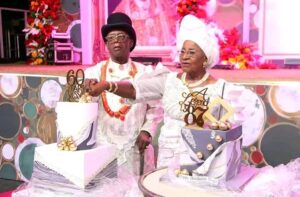
Rivers State Governor, Sir Siminalayi Fubara, has extolled former Deputy Governor of the state, Sir Gabriel Toby, and his wife, Dame Christy Toby, describing them as rare embodiments of faith, service and enduring marital devotion.

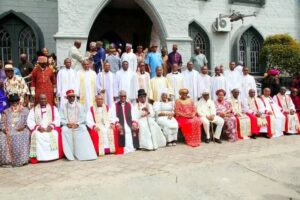
The Governor spoke at a grand thanksgiving service held in honour of the couple’s 60th wedding anniversary and the 87th birthday of Sir G.T.G. Toby at St. Cyprian’s Anglican Church, Port Harcourt—an event that drew the crème de la crème of Rivers State society, including traditional rulers, senior clergy, political leaders and other distinguished men and women from across the state and beyond.

Represented by his Deputy, Professor Ngozi Nma Odu, Fubara said the couple’s six decades of marital union stand as a compelling testament to love, sacrifice, patience and unwavering commitment to God.
He noted that Sir Toby’s towering legacy in public service, particularly his years of mentorship, has continued to shape the Rivers State civil service, with many senior officials today tracing their professional foundations to his guidance and leadership.

According to the Governor, celebrating a statesman of Sir Toby’s calibre is a moment of collective pride for the state, stressing that both he and his wife have lived lives anchored on godly values, humility and selfless service to humanity.

Fubara praised the couple for building a lasting legacy that transcends public office, describing them as exemplary mentors whose peaceful disposition and disciplined lifestyle continue to inspire younger generations.

While congratulating Sir and Dame Toby on 60 years of marital bliss and celebrating Sir Toby’s attainment of 87 years, the Governor prayed God to grant them continued good health, peace and long life.
Delivering a sermon titled “The Flow of God’s Mercy and Goodness,” the Dean of the Church of Nigeria, Archbishop of the Niger Delta Province and Bishop of Ikwerre Diocese, Most Rev. Blessing Enyindah, said the hand of God has been visibly evident in the life and family of Sir G.T.G. Toby.

He described Sir Toby’s longevity as a manifestation of divine mercy rather than mere medical intervention, noting that his life reflects steadfast faith and obedience to God.

Most Rev. Enyindah described Sir and Dame Toby as peaceful, kind and humble, adding that their greatness is firmly rooted in their love for God and their unwavering commitment to serving humanity.

Rivers Govt Counters Wike, Says Yakubu Gowon Stadium Undergoing Reconstruction

0

The Rivers State Government has firmly rejected claims by the Minister of the Federal Capital Territory (FCT), Nyesom Wike, that it denied his supporters access to the Yakubu Gowon Stadium, Port Harcourt, insisting that the facility is currently under reconstruction and unavailable to any group whatsoever.

The government’s clarification followed comments by Wike on Friday, in which he accused the state administration of frustrating the activities of the Rivers State chapter of the Renewed Hope Ambassadors by refusing them permission to use the stadium for their inauguration.

Wike had warned that future refusals would be resisted, declaring that his supporters would “take it by force” if access was again denied.

However, reacting to the allegation, the state government described the claim as false, misleading and politically charged.

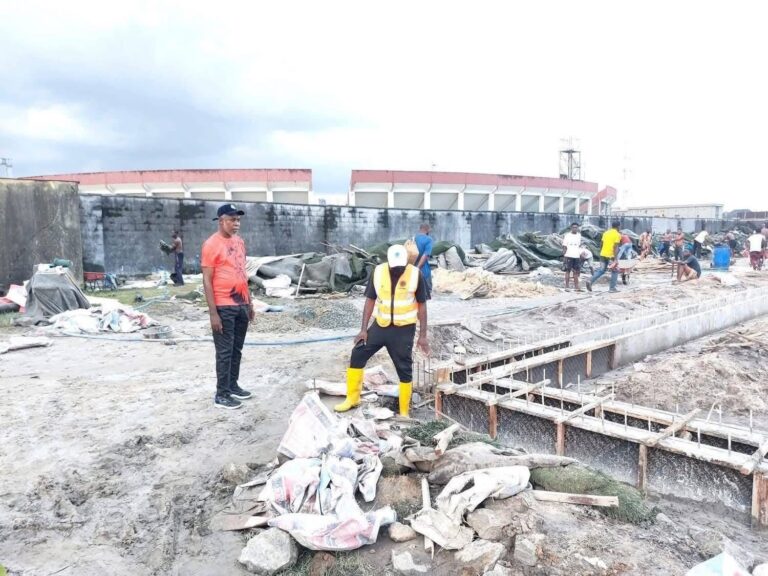
Speaking to journalists after an on-the-spot inspection of the stadium, the Permanent Secretary in the Ministry of Information and Communications, Dr Honour Sirawoo, said the Yakubu Gowon Stadium is presently unsafe for public use due to extensive reconstruction work.

“The Yakubu Gowon Stadium is under reconstruction and cannot be used by any group at this time,” Sirawoo said.

“This has nothing to do with politics. The safety of lives and public assets is paramount.”

Sirawoo urged political actors to put the interest of Rivers State above partisan considerations, adding that Governor Siminalayi Fubara remains committed to peace and to supporting President Bola Tinubu’s administration.

Also speaking, the Commissioner for Sports, who doubles as the Commissioner for Justice and Attorney-General of the state, Mr Christopher Green, said his ministry never received any formal application for the use of the stadium, contrary to claims by Wike and the state coordinator of the Renewed Hope Ambassadors, Desmond Akawor.

“At no time did the Ministry of Sports receive a formal request for the use of the Yakubu Gowon Stadium,” Green said. “The allegation that access was denied is therefore baseless.”

Green further noted that the inauguration eventually held at the Captain Elechi Amadi Polytechnic, Rumuola, also took place in a facility owned by the Rivers State Government, underscoring the administration’s openness and lack of bias.

Providing technical insight, the site engineer handling the stadium reconstruction, Mr Michael Ebitenye, warned that the facility is in a delicate condition, with underground installations exposed.

“Any heavy human traffic could cause serious damage and pose safety risks,” Ebitenye said, adding that the contractor, Monimichelle, would not permit the use of the stadium for any event while work is ongoing.

The Rivers State Government maintained that the closure of the Yakubu Gowon Stadium applies uniformly and is purely a safety decision, stressing that no individual or group is being singled out.

NDDC Pushes Genotype Testing, Sickle Cell Prevention in Niger Delta

0

The Niger Delta Development Commission (NDDC) has stressed that sustainable development in the Niger Delta is impossible without a healthy population, describing the wellbeing of the people as central to the region’s growth and prosperity.

The Managing Director of the Commission, Dr Samuel Ogbuku, stated this at the Sickle Cell Health Promotion and Sensitisation Programme held at the Rivers State University Teaching Hospital, Port Harcourt. He noted that Sickle Cell Disease (SCD) remains a major public health challenge in Nigeria, with a particularly heavy burden in the Niger Delta.

Represented by the Director of Education, Health and Social Services, Dr Patience Ezugu, Ogbuku said the sensitisation programme was designed to deepen public awareness, promote prevention, and strengthen care for people living with sickle cell disease across the region.

“As a Commission mandated to enhance the wellbeing of our people, the NDDC recognises that sustainable development is impossible without a healthy population,” he said. “This programme reinforces our commitment to preventive healthcare, early diagnosis and community education.”

He urged young people to know their genotype early, patients to remain hopeful, and health professionals to sustain collaboration in research, counselling and community outreach.

According to him, the Commission’s goal is to ensure that every young person understands genotype compatibility, every family has access to screening, and every patient receives care without stigma.

“Prevention is achievable, and informed choices save lives,” Ogbuku added, reaffirming the NDDC’s commitment to strengthening healthcare systems, empowering communities and building a healthier Niger Delta.

Earlier, the Founder of the Sickle Cell Awareness Initiative Ireland–Nigeria (SCAIIN), Mrs Esther Pepple Onolememen, commended the NDDC for prioritising public health and recognising sickle cell disease as both a medical and socio-developmental challenge.

She explained that SCAIIN, a non-governmental organisation, is dedicated to breaking the cycle of pain, stigma and silence associated with sickle cell disorder through research, education and community mobilisation.

According to her, the sensitisation programme would improve health outcomes and strengthen public trust. “Together, we are rewriting the story of sickle cell in Nigeria—from silence to knowledge, from stigma to support, and from neglect to action,” she said.

Also speaking, Mr Derefaka Yemiesibo, a parent of a child living with sickle cell disease, expressed gratitude to the NDDC for supporting awareness initiatives, noting that such efforts help families build resilience and hope.

Fake Police In Black Uniforms Terrorise Rivers Residents As Command Launches Crackdown

0

The Rivers State Police Command has raised the alarm over a disturbing surge in criminal activities involving individuals impersonating police officers and extorting unsuspecting members of the public across the state.

According to the Command, the suspects reportedly dress in black attire, mount illegal and hostile checkpoints, and unlawfully harass citizens—often forcing them to submit their mobile phones or laptops for inspection and, in some cases, coercing victims to withdraw or transfer money through POS operators and other financial channels.

Describing the trend as deeply concerning, the Commissioner of Police, CP Olugbenga Adewole Adepoju, PSC, mnips, has ordered the immediate activation of a robust security mechanism aimed at monitoring, identifying, apprehending, and prosecuting all those involved to the full extent of the law.

The Police Command emphasized that no officer or individual, irrespective of any claimed affiliation, has the legal authority to search personal electronic devices on the road or at checkpoints, nor compel citizens to withdraw or transfer money under any circumstances.

Residents have been urged to remain vigilant and promptly report any suspicious activities or hostile checkpoints to the Police through the following hotlines: the Complaint Response Unit (CRU) on 07057605256, 08120822987, and 09035774814; the Police Public Relations Officer on 09014273818; or the Control Room on 08032003514.

Reassuring the public, the Rivers State Police Command reaffirmed its commitment to maintaining law and order and called on residents to continue supporting legitimate police operations to ensure the safety and security of lives and property across the state.

The alert was issued by the Police Public Relations Officer, CSP Grace Iringe-Koko, ANIPR, on January 30, 2026.

2027: APC, Tinubu Plot Major NWC, Presidency Overhaul

0

Fresh moves are underway within the All Progressives Congress (APC) and the Presidency to rejig the party’s power structure and tighten control of governance machinery, findings by The Atlantic Bell have revealed.

Party sources said President Bola Tinubu and the APC leadership have agreed, in principle, to a major restructuring of the party’s National Working Committee (NWC), with all positions—except those of National Chairman and Vice Chairman—set to be rotated among the six geopolitical zones.

The plan, insiders said, is aimed at broadening representation, accommodating interests of recently defected governors and strengthening party unity ahead of the forthcoming congresses and national convention.

Beyond the party structure, checks also indicate that the Presidency is reviewing aspects of the current presidential ticket arrangement and information management framework at the Villa, despite recent public assurances by the Minister of Culture, Tourism and Creative Economy, Hannatu Musawa.
Although details of the proposed changes remain closely guarded, party officials said the exercise is part of a broader strategy to reposition the Tinubu administration and align APC’s political machinery with evolving realities.

In a related development, the Progressive Governors’ Forum (PGF), chaired by Imo State Governor, Hope Uzodimma, has declared its readiness to work closely with the APC national leadership to enforce discipline and improve leadership communication.

In a communiqué issued after its extraordinary meeting, the governors reaffirmed their “commitment to deepening internal democracy, strengthening party structures and advancing reforms that promote transparency, accountability and inclusiveness.”

The forum also endorsed the timetable and operational framework for the forthcoming ward, local government, state and zonal congresses, as well as the party’s national convention, earlier approved by the National Executive Committee.

The governors stressed the need for transparent and coordinated financial management in the conduct of the congresses, warning that credibility and fairness must be guaranteed across all states, including those not controlled by the APC.

They further disclosed plans to embark on strategic state visits, beginning with Taraba State, to reinforce grassroots mobilisation and party cohesion.

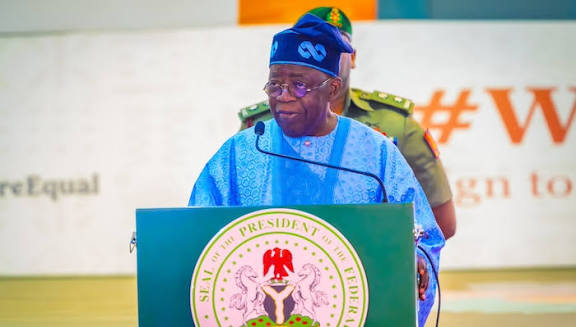
However, investigations by The Atlantic Bell revealed that final decisions on the proposed zoning and swapping of NWC positions have been deferred pending President Tinubu’s return from his official visit to Türkiye.

A member of the APC National Working Committee, who spoke on condition of anonymity, said the zoning reshuffle was left for the President’s final input.

According to the source, the party is weighing the possibility of moving the presidential running mate slot to the North-West, while the position of Secretary to the Government of the Federation may shift to the North-East.

“These possible changes made it necessary for Mr President, who insisted that Prof. Nentawe Yilwatda should remain as National Chairman, to personally guide the redistribution of other positions alongside the governors,” the source said.

“It is after his return that we will know which positions will move between the North and South and their respective zones. The goal is to harmonise interests, especially with governors who have recently joined the party,” the source added.

Crude At $70 Sets Stage for Fresh Petrol Hike As Dangote Pledges Supply Buffer

0

Barely days after petrol pump prices were adjusted upward across the country, Nigerians may be bracing for another round of increases as global crude oil prices continue their upward march, underscoring the tension between international market forces and the promise of domestic refining capacity led by the Dangote Petroleum Refinery.

Nigeria’s Bonny Light crude climbed to about $70.30 per barrel from $64 a week earlier, its highest level this year and a rise of roughly 10 per cent. Brent crude, the global benchmark, rose to about $70.15 per barrel, while Murban crude advanced to $68.01 per barrel. The rally has been driven largely by geopolitical tensions and tightening supply, rather than a surge in global demand.

The crude price spike has already filtered into the downstream market.

Earlier this week, petrol stations raised pump prices to an average of about N850 per litre from N750, an increase of 14.3 per cent. Marketers attributed the hike to higher crude costs, arguing that crude oil remains the dominant determinant of refining and import costs.

At the Dangote Refinery, the gantry price of petrol rose by a similar margin, from N699 per litre to about N799 per litre. Retail outlets in Lagos, Abuja and other major cities followed suit. NNPC Retail outlets adjusted prices to about N835 per litre from N815, while some independent marketers implemented steeper increases, with pump prices hitting as high as N900 per litre in some locations.

However, the speed and scale of the local price adjustments have raised questions. While global crude prices rose by just over six per cent during the period, petrol prices at the retail end jumped by more than double that rate, reinforcing concerns that domestic pricing dynamics are amplifying international shocks.

The Independent Marketers Association of Nigeria (IPMAN) defended the increases, insisting that refiners and marketers were merely responding to higher input costs. Its National Public Relations Officer, Chinedu Ukadike, said once buying prices rise, pump prices must follow, even if marketers are still selling existing stock purchased at lower prices.

Meanwhile, diesel prices also edged higher at major depots, reflecting the broader impact of rising crude prices on refined products, though petrol prices were relatively stable at some outlets yesterday.

The global crude rally has been fuelled by a sharp drawdown in United States crude inventories, which fell by 2.3 million barrels in the week ended January 24, according to the U.S. Energy Information Administration. Stockpiles are now about three per cent below the five-year average.

Prices have also been buoyed by fears of supply disruption following renewed tensions between Washington and Tehran, after U.S. President Donald Trump issued fresh military threats against Iran, OPEC’s fourth-largest producer.

For Nigeria, the implications are mixed.
Petroleum economists warn that higher crude prices will almost inevitably translate into higher domestic fuel costs in a deregulated market, intensifying pressure on households through higher transport fares, rising food prices and increased production costs for businesses.

Prof. Wumi Iledare, a petroleum economist, said the current price surge is driven by geopolitical risk rather than demand fundamentals, making its impact particularly painful for import-dependent economies like Nigeria.

“The immediate effect is higher prices for petrol and diesel, with knock-on effects on inflation and household welfare,” he said.

At the same time, higher crude prices offer potential fiscal relief. Dr. Muda Yusuf, Chief Executive Officer of the Centre for the Promotion of Private Enterprise, described the situation as a double-edged sword. While prices above the $64 benchmark could boost government revenue, foreign reserves and exchange rate stability, they also raise energy costs in a fully deregulated downstream sector.

Against this backdrop of rising global prices, the Dangote Petroleum Refinery has sought to reassure the market of supply stability.

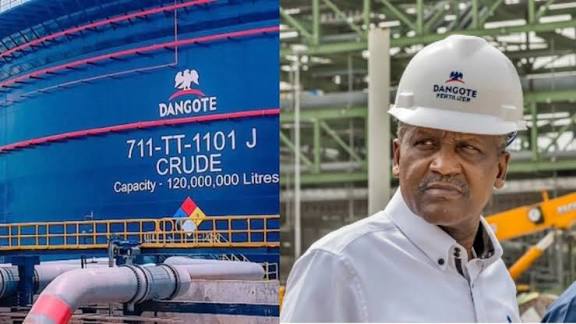
The refinery says it can supply up to 75 million litres of Premium Motor Spirit daily, well above Nigeria’s estimated daily consumption of about 50 million litres. It also pledged capacity to deliver 25 million litres of diesel and 20 million litres of aviation fuel daily, far exceeding domestic demand.

According to the company, this surplus capacity provides a critical buffer against supply disruptions, reduces reliance on imports and strengthens downstream resilience, even during periods of heightened global volatility.

The refinery reaffirmed its commitment to regulatory compliance and close engagement with the Nigerian Midstream and Downstream Petroleum Regulatory Authority, stressing that expanded domestic refining should, over time, moderate the country’s exposure to foreign exchange shocks.
Industry analysts note the irony: while Nigeria now has a refinery capable of meeting and exceeding local demand, domestic fuel prices remain tightly tethered to international crude movements, foreign exchange volatility and market competition.

Until these structural pressures ease, they warn, the promise of local refining may coexist uneasily with rising pump prices — leaving consumers caught between global oil politics and local market realities.

Rivers Targets Economic Growth, Jobs Through Investor-friendly Policies

0

The Rivers State Government has reaffirmed its resolve to stimulate economic growth and reduce unemployment by creating a business-friendly environment that attracts both local and foreign investment.

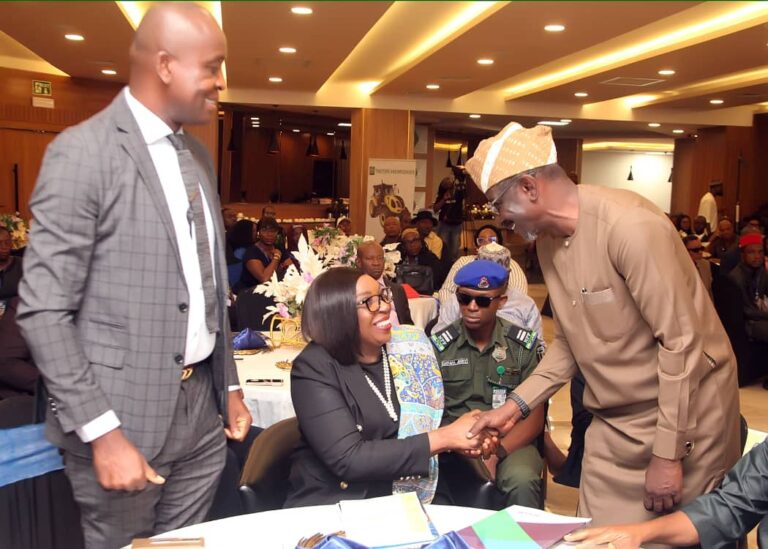
Governor Siminalayi Fubara gave the assurance at a one-day seminar on Ease of Doing Business, organised by the Rivers State Entrepreneurs and Investors Forum (REIF) in Port Harcourt. The governor was represented at the event by his deputy, Prof. Ngozi Nma Odu.

According to Fubara, sustainable economic transformation can only be achieved through deliberate collaboration among government, the private sector, investors and civil society.

He said the role of government remains that of a facilitator—providing peace, security, transparent regulations, infrastructure and policies that encourage innovation and enterprise.

The governor described the theme of the seminar, “Ease of Doing Business: The Role of Government,” as timely, noting that economic growth and sustainable development thrive where policies are stable, institutions are responsive and governments consciously support private enterprise.
He stressed that a vibrant private sector is the engine of job creation, wealth generation and social stability, adding that forums such as REIF are critical in shaping practical solutions and strengthening dialogue between government and investors.

“The outcomes of today’s deliberations will contribute meaningfully to our collective objective of repositioning Rivers State as a preferred destination for business and investment,” Fubara said.

Delivering the keynote address, Managing Director of the Nigeria Export-Import Bank (NEXIM), Abubakar Bello, identified overdependence on oil, infrastructure gaps and inadequate power supply as major constraints to ease of doing business in Nigeria. He commended the Rivers State Government and REIF for convening the seminar.

In his remarks, President of the Rivers Entrepreneurs and Investors Forum, Ibifiri Bobmanuel, said the strength of any economy lies in its private sector. He explained that the seminar was designed to reset mindsets and highlight the vast economic opportunities in Rivers State.

Bobmanuel urged political leaders and stakeholders to embrace unity and collaboration, warning that divisiveness could undermine the state’s economic prospects.