

Home Blog Page 67

Akpabio: Senate Won’t Be Intimidated Into Passing Faulty Electoral Law

0

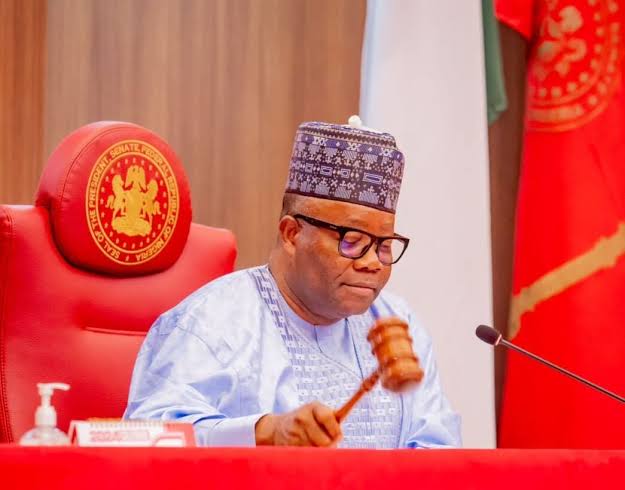
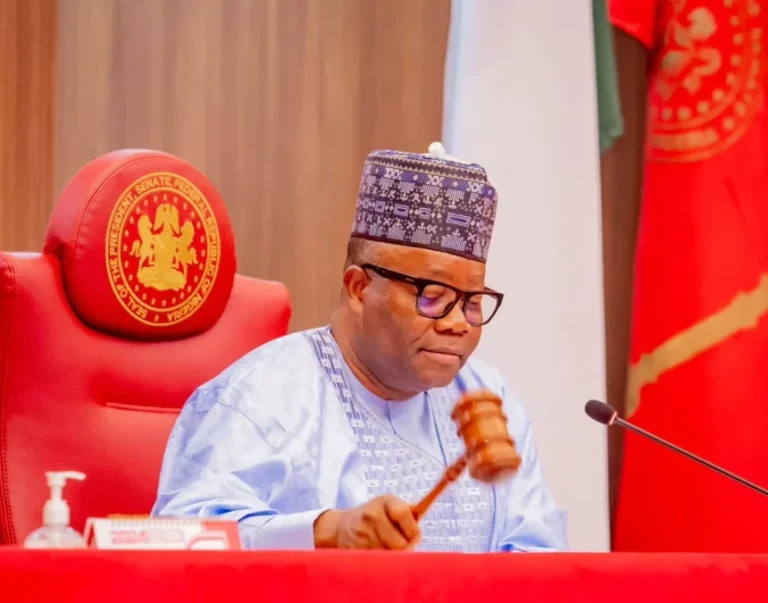
President of the Senate, Godswill Akpabio, has defended the removal of the provision for “real-time” electronic transmission of election results from the Electoral Bill 2026, insisting that the National Assembly would not be bullied into enacting a law that could endanger Nigeria’s democracy.

Akpabio said the Senate deliberately deleted the phrase to give the Independent National Electoral Commission (INEC) the discretion to determine the most appropriate mode of transmitting election results, warning that making real-time transmission mandatory could plunge the country into crisis in the event of network or power failures.
He spoke on Saturday in Abuja at the unveiling of a book, The Burden of Legislators in Nigeria, authored by Senator Effiong Bob.

According to the Senate President, “technology must save and not endanger democracy,” adding that rigid provisions could invalidate elections in areas affected by poor connectivity or grid collapse.

“All we said was to remove the word ‘real-time’ to allow INEC decide the mode of transmission. If you make it mandatory and there is a system failure, there will be a serious problem,” Akpabio said.

He argued that official election documents, including Form EC8A, should remain the most reliable basis for declaring results, stressing that elections must not be jeopardised by technological limitations.

“Real-time means that if there are nine states where there is no network, does it mean elections will not take place there? Or in any part of the country where there is a grid breakdown, does it mean there will be no election?” he asked.

Reacting to widespread criticism of the Senate’s action, Akpabio said lawmakers had been subjected to unwarranted attacks and abuse, particularly on television panels and social media, but maintained that the legislature would not succumb to pressure from opposition parties, civil society organisations or non-governmental organisations.

“We will not be intimidated but will do what is right for Nigeria, not what one NGO says. A retreat is not law-making,” he said.

He criticised the notion that positions agreed upon at stakeholder retreats must automatically be adopted by the Senate, arguing that such views may not reflect the interests of all parts of the country.

“Why do you think that the paper you agreed to in Lagos must be what we must approve?” he queried.

Akpabio, however, noted that the legislative process on the bill had not been concluded, assuring that there was still room for amendments. He explained that as long as the Votes and Proceedings of the Senate had not been approved, any senator could move to amend the bill.

“We can amend anything before we approve the votes and proceedings. Why abuse the Senate when what we have is incomplete?” he said.

He further observed that provisions rejected by the Senate could still be reinstated by the Conference Committee of the Senate and the House of Representatives, urging critics to exercise patience.

In a swift response, former Senate President and National Chairman of the African Democratic Congress (ADC), Senator David Mark, who chaired the occasion, cautioned Akpabio against speaking on behalf of INEC.

“The position of the ADC is clear: pass the bill and let INEC decide whether it can implement real-time electronic transmission or not. Don’t speak for INEC,” Mark said.

Other speakers at the event, including Akwa Ibom State Governor, Pastor Umo Eno, and the book reviewer, Professor Maxwell Gidado, commended Senator Bob for documenting the challenges faced by Nigerian legislators, describing the book as a courageous and timely intervention.

In his remarks, Bob highlighted issues confronting lawmakers, including electoral disputes, conflicts with governors and political godfathers, judicial annulment of electoral victories, and the pressure of addressing constituents’ private concerns.

“The courage to defend democracy is in the legislature and the legislators,” he said.
Fresh Breath For Sports As Tinubu Orders Funding Reset to Revive Sector

0

For decades, Nigeria’s sporting brilliance has survived in spite of the system, not because of it.

From underprepared teams arriving late for competitions to athletes funding their own training, the story of Nigerian sports has too often been one of raw talent colliding with poor planning, delayed funding and crumbling infrastructure.

Medals were won, yes—but usually through individual sacrifice rather than institutional support.

That long-standing reality is what President Bola Tinubu says must now change.

Nigeria has never lacked sporting potential. From packed grassroots pitches to global stars in athletics, football and basketball, the country’s human capital has always been evident. What has been missing, according to President Tinubu, is a funding system that matches that potential.

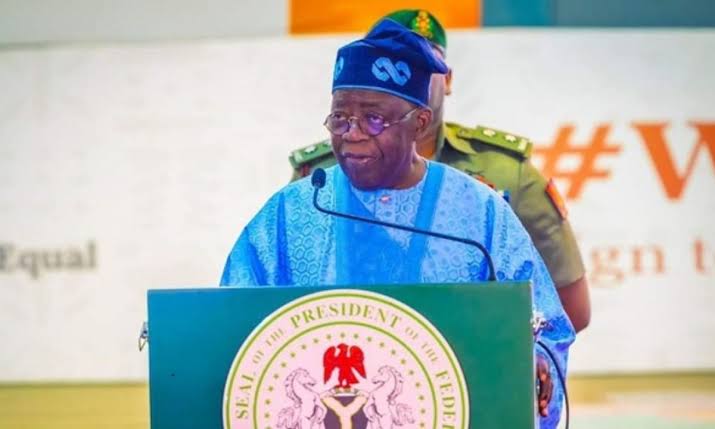
In a statement released on Friday via his verified X handle, @officialABAT, the President acknowledged that Nigeria’s sports development has been persistently undermined by bureaucratic delays, fragmented funding channels and inadequate investment in facilities that meet international standards.

“For too long, sports funding was slowed by bureaucracy, fragmented across institutions, and when funds are released, they come too late to support proper preparation and even participation,” Tinubu said.

The consequences of this dysfunction have been visible for years: training camps rushed or cancelled, international tournaments approached with little preparation, and federations trapped in a cycle of debt and emergency funding.

Infrastructure suffered as well, leaving many athletes to train on substandard tracks, courts and pitches while competing against rivals backed by modern facilities and consistent investment.

Determined to break that pattern, the President has ordered a comprehensive overhaul of Nigeria’s sports funding framework, set to take effect from the 2026 fiscal year.
Tinubu directed the Ministries of Finance, Budget and Economic Planning, alongside the Budget Office of the Federation, to reset how sports are funded—ensuring adequate and predictable budgetary provisions every year for infrastructure, programmes, athlete development and participation in international competitions.

Crucially, he ordered that funds allocated to sports must be released immediately after the national budget is passed and assented to, ending the uncertainty that has long plagued athletes and administrators alike.
“Nigerian athletes deserve certainty and timely support,” he stressed.

Ending fragmentation, strengthening focus
Another major flaw of the old system was the scattering of sports-related allocations across multiple ministries, departments and agencies. According to the President, this fragmentation weakened oversight and diluted impact.

Under the new reforms, these allocations will be reviewed and streamlined, with savings redirected into a unified funding framework under the National Sports Commission (NSC). The goal is to strengthen domestic programmes, improve international participation and ensure funds are used more strategically.

The reforms are anchored on the Renewed Hope Initiative for Nigeria’s Sports Economy (RHINSE)—a policy framework designed to reposition sports as more than recreation, but as a driver of job creation, tourism, investment and global influence.

From survival to strategy
Tinubu said his administration plans to build a stronger sports ecosystem through scientific elite athlete development, deeper grassroots participation, revitalised sports federations and the hosting of major international events.

“Sports is our national asset and must be administered, managed, and funded in alignment with its special nature, devoid of bureaucratic bottlenecks,” he said.

The President pointed to recent successes as evidence of what is possible when talent is supported with structure.

Nigerian athletes, he disclosed, won a record 373 medals across all sports in 2025, excelling in athletics, football, basketball and other disciplines.

He praised the National Sports Commission for progress recorded despite existing challenges and commended its leadership under Chairman Shehu Dikko for driving reforms aligned with the Renewed Hope Agenda.

For athletes who have trained through neglect and administrators who have managed scarcity for years, the proposed funding overhaul represents more than policy—it offers a chance to finally replace improvisation with planning.

If implemented as promised, Nigeria’s sports sector may finally move from a culture of last-minute survival to one of long-term strategy—where medals are no longer miracles, but the expected outcome of proper investment.

Why NDDC Backs Security Agencies In Niger Delta -Ogbuku

0

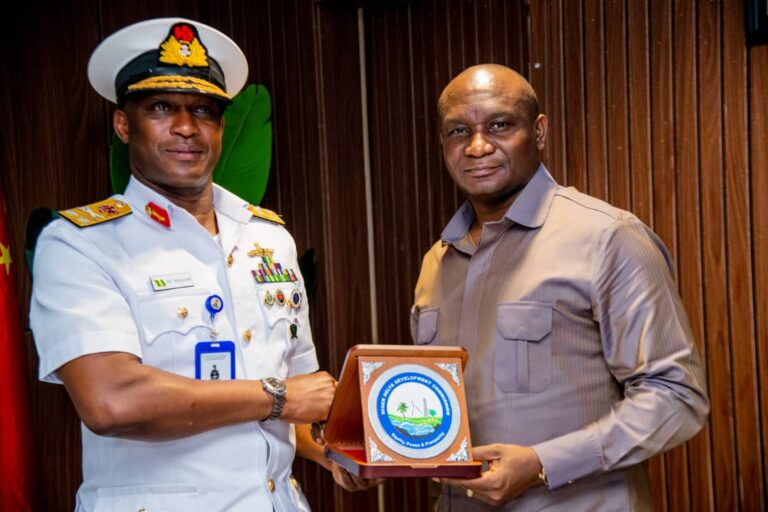
The Niger Delta Development Commission (NDDC) has restated its commitment to supporting security agencies in the Niger Delta, describing peace and stability as the foundation for sustainable development in the region.

The Managing Director of the Commission, Dr Samuel Ogbuku, said the NDDC’s collaboration with security agencies is driven by the understanding that development cannot flourish in an atmosphere of insecurity, just as underdevelopment often fuels conflict and unrest.

Speaking during a courtesy visit by the Flag Officer Commanding, Central Naval Command, Rear Admiral Suleiman Ibrahim, at the Commission’s headquarters in Port Harcourt, Ogbuku noted that the NDDC had deliberately built strong partnerships with security institutions to protect critical national assets and create an enabling environment for economic growth.

According to him, the Commission’s support for security agencies aligns with the directive of President Bola Ahmed Tinubu to ensure peace and security across the country, stressing that the relative calm currently enjoyed in the Niger Delta is the result of sustained security interventions.
Ogbuku explained that security is a collective responsibility involving host communities, government and development institutions, adding that the NDDC would continue to provide strategic support to the Nigerian Navy and other agencies to enhance their operational effectiveness.

He assured the Naval Command of the Commission’s readiness to deepen engagement, maintain open channels of communication and undertake field visits to better understand the operational challenges faced by security agencies.

Earlier, Rear Admiral Ibrahim commended the NDDC for its visible development projects across the Niger Delta, noting that the Commission’s interventions had positively impacted communities and security formations in the region.

He said the Navy’s efforts to safeguard oil exploration, production and transportation, including the recently launched Operation Sentinel, would require sustained collaboration, particularly as Nigeria targets increased crude oil production in the coming years.

The Naval Commander urged the NDDC to sustain and expand its support, noting that improved security would translate into higher oil output, increased revenue and accelerated development for the Niger Delta and the country at large.

Opposition Parties Slam Senate Over Rejection Of Mandatory Electronic Transmission Of Results

0

Major opposition political parties have strongly condemned the Senate’s decision to reject mandatory real-time electronic transmission of election results from polling units, warning that the move poses a grave threat to Nigeria’s democratic progress.

In a joint statement issued on Wednesday, the Peoples Democratic Party (PDP), African Democratic Congress (ADC) and New Nigeria Peoples Party (NNPP) described the Senate’s action as retrogressive, anti-people and capable of setting the country’s democracy back by decades.

The parties reacted to the passage of an amendment to the Electoral Act 2022 by the Senate, which, among other provisions, declined to make electronic transmission of results compulsory at polling units.

According to the opposition parties, the decision has rightly attracted widespread condemnation from Nigerians across political, ethnic and religious divides, as it undermines transparency and credibility in the electoral process.

They expressed surprise that the ruling All Progressives Congress (APC), which controls the Senate, would oppose the use of technology in elections while simultaneously deploying digital tools to conduct nationwide electronic registration of its members.

“We are at a loss as to why a party that freely deploys technology to organise its internal affairs would be averse to using the same technology to transmit election results,” the statement said.

The parties alleged that the rejection of electronic transmission was a calculated attempt by the APC to preserve loopholes for manipulating elections, noting that the ruling party is aware of growing public discontent and the electoral rejection it faces in future polls.

“They know Nigerians are fed up with them. A free and fair election has therefore become a threat, hence the desperation to protect any gaps that could be exploited to their advantage,” the statement added.

The opposition leaders also accused senators of failing to rise above partisan interests in defence of democracy, describing the legislature as the most important symbol of democratic governance.

“Regardless of party affiliation, we expected senators to act as patriots and statesmen. Once again, they have failed the people they were elected to represent,” they said.
The statement recalled that during post-election litigations arising from the last general election, courts — including the Supreme Court — repeatedly held that electronic transmission of results was not mandatory under the Electoral Act 2022, exposing a critical legislative gap that required urgent correction.

Beyond addressing judicial concerns, the parties argued that mandatory electronic transmission would significantly enhance transparency, restore public trust and deepen democratic consolidation.

“With this rejection, the Senate has effectively returned Nigeria to square one,” the statement noted.
The opposition parties urged members of the conference committee harmonising the Electoral Act amendment to adopt the position of the House of Representatives, which supports mandatory real-time electronic transmission of results.
They appealed to lawmakers to act in the national interest, warning against prioritising short-term political calculations over the future of democracy.

“The ball is now in the court of the conference committee. We urge its members to act as statesmen, not politicians fixated on the next election, and to forestall the dangers of imposing anti-democratic laws on Nigerians,” the statement said.

The statement was jointly signed by Comrade Ini Ememobong, National Publicity Secretary of the PDP; Mallam Bolaji Abdullahi, National Publicity Secretary of the ADC; and Bamofin Ladipo Johnson, National Publicity Secretary of the NNPP, and dated February 5, 2026.

INEC Registers Two New Parties, Laments Leadership Crises, Voter Apathy Ahead Of 2027

0

Ahead of the 2027 general election, the Independent National Electoral Commission (INEC) has expanded Nigeria’s political space with the registration of two new political parties — the Democratic Leadership Alliance (DLA) and the Nigeria Democratic Congress (NDC) — bringing the total number of registered parties to 21.

INEC Chairman, Prof. Joash Amupitan, SAN, announced this on Thursday in Abuja at the Commission’s first regular consultative meeting with political parties, but used the occasion to voice strong concerns over persistent leadership crises within parties, warning that such disputes pose a threat to constitutional democracy.

While the DLA scaled through what INEC described as a rigorous verification process, the NDC was registered in compliance with an order of the Federal High Court.

Despite welcoming the new parties, Amupitan expressed frustration over what he called the “growing spate of internal disputes” rocking several political parties, noting that these conflicts often degenerate into prolonged litigations that distract the Commission from its core mandate.

“Our collective commitment to the integrity of the electoral process is being challenged by the unfortunate and increasingly frequent leadership crises within political parties,” he said.

“These disputes often spill into needless litigations that tax the judicial system and divert the Commission from its primary responsibility.”

He lamented that INEC is frequently joined as a party in internal squabbles, describing the trend as a major distraction.

“Each litigation consumes time and resources and diverts attention from critical tasks such as voter mobilisation,” Amupitan said. “At times, one wonders whether it is even necessary to continue registering or retaining some political parties, given the recurring leadership struggles and conflicting court orders declaring different individuals as party leaders.”

The INEC chairman also drew attention to the alarming decline in voter turnout over the years, describing it as a “sobering trend” that threatens democratic participation.

According to him, turnout in presidential elections has dropped steadily from 53.7 per cent in 2011 to 43.6 per cent in 2015, further down to 34.7 per cent in 2019, and hitting a record low of 26.7 per cent in the 2023 general election.

“Technology alone cannot solve voter apathy,” he said. “Citizens’ trust is often eroded by a perceived lack of democratic dividends or the fear that their votes do not count. This narrative must change, and it requires collective effort.”

Amupitan reaffirmed INEC’s readiness for the Federal Capital Territory (FCT) Area Council elections scheduled for February 21, 2026, disclosing that 1,680,315 registered voters are expected to vote across 2,822 polling units.

He also said the Commission is preparing for the Ekiti State governorship election on June 20, 2026, and the Osun State governorship election on August 8, 2026.

As part of preparations for these elections and the 2027 general election, INEC will soon embark on a nationwide voter revalidation exercise to sanitise the voters’ register of 93.4 million entries by removing duplicates and deceased persons.

In his remarks, the National Chairman of the Inter-Party Advisory Council (IPAC), Dr Yusuf Mamman Dantalle, urged INEC to remain neutral and strictly guided by party constitutions to avoid perceptions of bias.
Dantalle also renewed calls for sweeping electoral reforms, including the abolition of State Independent Electoral Commissions (SIECs).

“IPAC reiterates its position that SIECs should be scrapped and INEC empowered to conduct all elections nationwide, given its institutional expertise and capacity,” he said.

He further advocated mandatory real-time transmission of election results to the INEC Result Viewing (IReV) portal and proposed that all elections be conducted on the same day to reduce costs, curb bandwagon effects and address voter fatigue.

RSU VC Swears In 11 Newly Elected Deans, Harps On Unity, Transparent Leadership

0

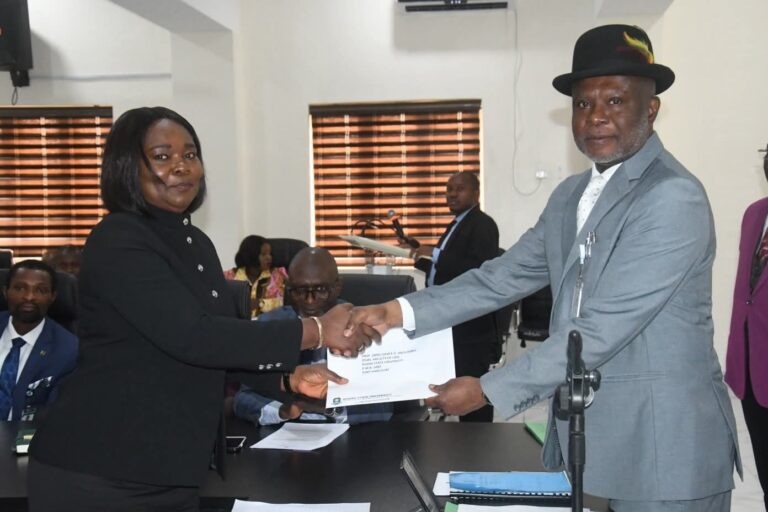
The Vice-Chancellor of Rivers State University (RSU), Prof. Isaac Zeb-Obipi, has inaugurated and sworn in eleven newly elected Deans of Faculties, charging them to provide inclusive, transparent and people-oriented leadership across the University.

The ceremony, held on Monday, February 2, 2026, at the Vice-Chancellor’s Conference Room, marked the formal assumption of office by the new Deans following a university-wide election process.

Those inaugurated are Prof. John Ohaka (Faculty of Administration and Management), Prof. David Kiin-Kabari (Faculty of Agriculture), Prof. Barigbon G. Nsereka (Faculty of Communication and Media Studies), Prof. Isaac N. Dokubo (Faculty of Education), Prof. Enwuso Aleruchi Igwe (Faculty of Engineering), Prof. Paulinus W. Ihua (Faculty of Environmental Sciences), Prof. Jones M. Jaja (Faculty of Humanities), Prof. Grace Akolokwu (Faculty of Law), Prof. Ebirien-Agana S. Bartimaues (Faculty of Medical Laboratory Science), Prof. Ndokiari Boisa (Faculty of Science), and Prof. Emmanuel B. Okemini (Faculty of Social Sciences).

In his address, Prof. Zeb-Obipi expressed deep appreciation to the Committee of Provosts and Deans, led by the Provost, College of Medical Sciences, Prof. Kenneth S. Ordu, for their sustained support and cooperation since he assumed office.

He also commended the Electoral Committee, chaired by the Deputy Vice-Chancellor (Administration), Prof. Blessing R. Jaja, for conducting what he described as a free, fair and credible election.

According to him, the professionalism displayed by the committee has prompted Management’s decision to develop a formal Electoral Guidelines and Code of Conduct Handbook to guide future elections within the University.

Congratulating the newly elected Deans, the Vice-Chancellor noted that their emergence reflected the confidence reposed in them by their colleagues.

He urged them to foster unity, uphold mutual respect irrespective of rank, and ensure openness and accountability in the administration of their faculties.

The event climaxed with the administration of the oath of office by the Director of Legal Services, Barr. Tamuno Williams, followed by the signing of the Deans’ Register and the presentation of appointment letters by the Vice-Chancellor.

Bandits Massacre 162 Nigerians in Kwara Attack …FG Deploys Troops

0

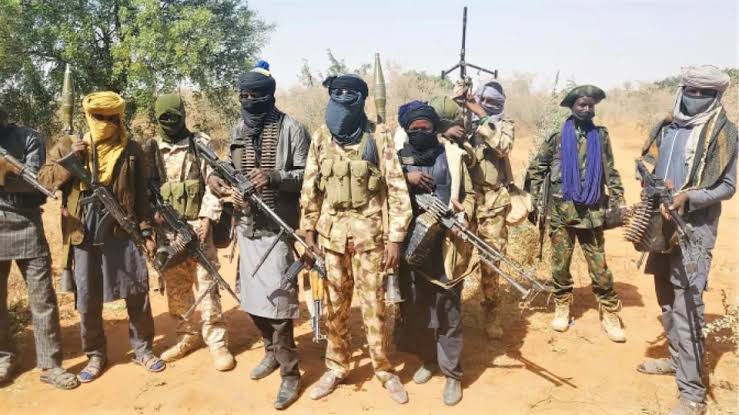
Terrorists have killed at least 162 people in Kwara State, marking Nigeria’s deadliest armed attack so far in 2026, according to a Red Cross official and local authorities.

The assault occurred on Tuesday in Woro village in Kwara state. Babaomo Ayodeji, the state secretary of the Red Cross, said the confirmed death toll stood at 162 by Wednesday afternoon, according to AFP. A local politician told Reuters the figure is higher, estimating that up to 170 people may have been killed.

Governor Abdulrahman Abdulrazaq on Wednesday night visited the affected communities, accompanied by senior security chiefs and members of the state executive council.

According to the governor, the victims were mostly local Muslims who were killed for refusing to submit to extremists advancing what he described as a strange and violent ideology. Though the governor put the figure of those killed at 75 persons, locals say the number is higher.

“Seventy-five local Muslims were massacred simply for refusing to surrender to extremists who preached a strange doctrine,” Abdulrazaq said.

He described the incident as a departure from the pattern of kidnappings for ransom that has plagued parts of the country, stressing that the attack was a deliberate and targeted mass killing.

“This is different from what we usually see where people are abducted for ransom. This was a pure massacre,” the governor said.

In addition to the loss of lives, several houses were razed as the attackers unleashed destruction on the two rural communities, forcing residents to flee and leaving many displaced.

Abdulrazaq said President Bola Ahmed Tinubu had approved the immediate deployment of an army battalion to the area to launch counter-offensive operations aimed at flushing out the attackers and restoring security.

He disclosed that the military operation, codenamed Operation Savannah Shield, would involve sustained ground presence and coordinated action to prevent further attacks in Kwara North and neighbouring areas.

The governor commiserated with families of the victims and assured residents that the government would not abandon the communities, pledging support for affected households and enhanced security measures.

The attack adds to growing concerns over the spread of armed violence into parts of north-central Nigeria previously considered relatively stable, raising fresh questions about rural security and the protection of vulnerable communities.

Residents of the affected areas told officials that fear had gripped surrounding villages, as many communities remain exposed due to their remote location and limited security presence.

The Kwara State Government said it was working closely with federal authorities and security agencies to stabilise the area and prevent further loss of life.

Amid Political Tension, Fubara Reappears In Public, Vows To Stay Focused On Governance

0

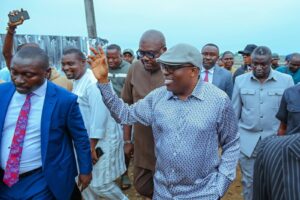
Rivers State Governor, Siminalayi Fubara, on Wednesday made his first public appearance in days amid heightened political tension in the state, pledging that his administration would remain focused on governance despite the ongoing turbulence.

Fubara spoke shortly after inspecting the ongoing construction of the Borokiri and Creek markets in the Town Area of Port Harcourt, a visit that drew cheers from residents and market users, many of whom expressed relief at the governor’s presence.

Addressing the crowd, the governor said he had a duty to continue delivering on the mandate freely given to him by the people of Rivers State, stressing that political distractions would not derail his administration’s commitment to development.

“I promised our people that no matter the situation we are in, we will not lose focus on governance,” Fubara said. “Our people have given us their trust, and the little we owe them is to give them confidence in leadership and ensure that governance continues strongly.”

The governor said the market project was part of broader efforts by his administration to restore order and the aesthetic appeal of Port Harcourt’s Town area, particularly by addressing the problem of roadside trading along Creek Road and other major streets.

Recalling a previous visit to the area last year, Fubara said the decision to reconstruct the markets was informed by the need to provide proper trading spaces for residents while freeing major roads for rehabilitation.

“You are aware that sometime last year I visited this place and promised that to bring back the beauty of the town to its old ambience, we needed to address the issue of people trading along Creek Road and other major streets,” he said.

He explained that the ongoing inspection followed visits to several road projects across the township, adding that market reconstruction was necessary to ensure the success of planned road rehabilitation.

“From what you can see, the contractor has already mobilised to site, and I believe that within the next one week, work will fully commence,” the governor said.

According to him, the absence of properly organised markets has contributed to traffic congestion and poor road conditions along Creek Road, a situation his administration intends to correct.

“What are we trying to do? You can see the difficulty driving through Creek Road because we don’t have a proper settlement for markets,” Fubara said. “If we fix this market, those trading along the streets will move inside. Once that happens, the roads can be properly rehabilitated and the beauty of the town will start reflecting.”

The governor added that the road rehabilitation programme would cover Borokiri and extend across key parts of Port Harcourt township, as part of a coordinated effort to improve urban infrastructure and ease movement within the city.

Fubara’s appearance comes after days of public anxiety and speculation surrounding the political situation in Rivers State, with his outing widely interpreted as a signal of resolve to continue governance amid uncertainty.

Senate Rejects Mandatory Electronic Transmission Of Election Results

0

The Senate has rejected a proposal to make the electronic transmission of election results compulsory, a decision seen as a setback to efforts to entrench real-time upload of polling unit results into Nigeria’s electoral law.

Lawmakers, during clause-by-clause consideration of the Electoral Amendment Bill on Wednesday, voted down an amendment to Clause 60(3) which sought to compel presiding officers of the Independent National Electoral Commission (INEC) to electronically transmit polling unit results to the INEC Result Viewing (IREV) portal immediately after Form EC8A is signed and stamped.

Instead, the upper chamber retained the existing provision in the Electoral Act, which grants INEC discretion over the mode of result transmission. The clause states that “the presiding officer shall transfer the results, including the total number of accredited voters and the results of the ballot, in a manner as prescribed by the Commission.”

By this decision, electronic transmission of results remains optional rather than mandatory, with the procedure to be determined by INEC’s operational guidelines rather than fixed by statute.

In the same session, the Senate also moderated penalties relating to the trading of Permanent Voter Cards (PVCs), rejecting a proposed 10-year jail term for offenders. Lawmakers retained a two-year imprisonment term but increased the fine from ₦2 million to ₦5 million under Clause 22 of the bill.

Senators also approved amendments shortening key electoral timelines. Clause 28 was revised to reduce the notice of election period from 360 days to 180 days before polling day. Under the original provision, INEC was required to publish election notices in all states of the federation and the Federal Capital Territory at least 360 days ahead of an election.

Similarly, Clause 29 was amended to cut the deadline for political parties to submit their lists of candidates from 180 days to 90 days before a general election. The new provision requires parties to submit names of candidates who emerged from valid primaries not later than 90 days to the poll.

On ballot paper format, the Senate retained the existing provision in Clause 44, which mandates INEC to invite political parties, not later than 20 days before an election, to inspect samples of electoral materials bearing their names, logos or symbols. Political parties are required to respond within two days, indicating approval or raising objections.

Regarding voter accreditation, lawmakers replaced the use of smart card readers with the Bimodal Voter Accreditation System (BVAS) under Clause 47. However, the Senate rejected electronically generated voter identification and retained the Permanent Voter Card as the recognised means of identification at polling units.

The Senate also struck out Clause 142, which dealt with the effect of non-compliance with the Act. The deleted provision would have allowed political parties to rely solely on documentary evidence, without oral testimony, to prove alleged violations. Senators argued that the clause could encourage procedural shortcuts and potentially waste judicial time.

The decisions form part of the Senate’s ongoing consideration of the Electoral Amendment Bill, which is expected to reshape Nigeria’s electoral framework ahead of future general elections.

Collaborate With NDDC, Minister Charges South East Development Commission

0

The Minister of Regional Development, Engr. Abubakar Momoh, has charged the South East Development Commission to collaborate with the Niger Delta Development Commission, NDDC, in the execution of regional projects that will benefit the South East and the South South states.

In a statement issued and signed by Seledi Thompson-Wakama,
Director, Corporate Affairs of the NDDC, the Minister stated this yesterday during the South East Vision 2050 Stakeholders’ Forum at the International Conference Centre, Enugu.

The NDDC Board Chairman, Mr Chiedu Ebie, the Managing Director, Dr Samuel Ogbuku and the Bayelsa State Representative on the Board, Senator Dimaro Denyanbofa joined other stakeholders at the event.

The Minister said the creation of the South East Development Commission by the administration of President Tinubu reflected an institutional commitment to the coordinated, targeted transformation of the region through the revitalisation of critical infrastructure, including the rail sector and the agricultural value chain.

Momoh said the event was a crowning moment in the development of the South East region, especially in fostering a united and prosperous future.

Declaring the Vision 2050 Stakeholders’ Forum open, the Vice President, Kashim Shettima, said that the 25-year development blueprint for the South-East region was a central pillar of Nigeria’s economic future.

He announced that President Bola Ahmed Tinubu had approved the establishment of the South East Investment Company Limited, designed to mobilise resources from the diaspora, capital markets, and development finance institutions for the region’s development.

The Vice President said the gathering was a decisive break from short-term governance cycles toward a structured, multi-decade development framework.

“This forum reflects foresight, responsibility, and a shared understanding that the future is not something we wait for, but something we must deliberately design.

“In recognition of the distinctive character of the South-East, its entrepreneurial spirit, its global diaspora, and its long-standing relationship with international capital, President Bola Ahmed Tinubu approved the establishment of the South East Investment Company Limited.”

Speaking earlier, Governor Peter Mbah of Enugu State joined his colleagues in the region in endorsing the vision 2050, explaining that the vision is an opportunity for the South East region to tap into the national agenda tagged vision 2060.

He applauded the unity of purpose among leaders and stakeholders in the region and proposed the birthing of a South East common market, describing the moment as the awakening of an economic giant.

He urged a paradigm shift in the planning and execution of projects across the region while calling on the people of the area to complement the renewed drive by the Federal Government to improve the security of lives and livelihoods as well as integrate all parts of the region’s plan for inclusive development.

In his welcome speech, the Chairman of the South East Development Commission, Sir Emeka Wogu, thanked President Tinubu for his commitment to the progress and development of the South East region and its people.

Speaking in the same vein, the Managing Director of the SEDC, Mr Mark Okoye, thanked President Tinubu for creating the commission as a special-purpose vehicle to champion the region’s economic transformation.

He said the SEDC will seek the partnership of state governments, the diaspora community, and the organised private sector in implementing the 2050 vision, aimed at charting a shared path to sustainable prosperity for South East Nigeria, focusing on infrastructure, power, peacebuilding, and connectivity, among others.

In a goodwill message, the President of Ohanaeze Ndigbo Worldwide, Sen. Azuta Mbata, commended the Federal Government for prioritising regional integration and development through the summit.

He said the integration of the South East in the broader national development agenda is key, and pledged the support of the people of the region for the aspirations of the Vision 2050 and the Renewed Hope Agenda of the administration of President Bola Ahmed Tinubu.