Home Blog Page 63

NDDC Inaugurates Procurement, Contract Review Panels to Tackle Abandoned Projects

0

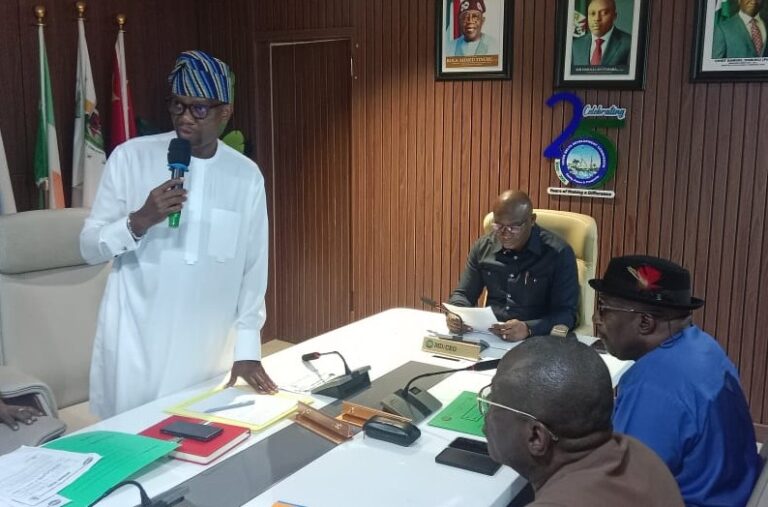
The Managing Director of the Niger Delta Development Commission, Dr. Samuel Ogbuku, has inaugurated a seven-member Procurement Committee in line with the Public Procurement Act, 2007, alongside a Contract Review Committee to address abandoned projects across the Niger Delta.

The inauguration, held at the Commission’s headquarters in Port Harcourt, signals what Ogbuku described as a renewed commitment to transparency, accountability and strict compliance with regulatory standards.

He stressed the need for adherence to the directives of the Bureau of Public Procurement (BPP), noting that the constitution of the Procurement Committee is an annual statutory requirement aimed at strengthening checks and balances in the Commission’s procurement processes.

“It is very important that we comply with the directives of the Bureau of Public Procurement. This committee has been given a specified timeframe to ensure that our 2026 procurement plan is executed without delay.

Every directorate is expected to cooperate fully with the committee to make their work easier and more effective,” Ogbuku said.

He charged members to strictly comply with the provisions of the Procurement Act and ensure that all procurement lists for 2026 are compiled and ready for implementation within the stipulated period.

In his remarks, the Director of Procurement, Dr. Chuks Osuji, commended the Managing Director for setting up the committee and urged members to prioritise the timely upload of the 2026 procurement plan on the National Contractors’ Portal.

“The essence of uploading our procurement plan is to ensure smooth regulatory approval. Let us all work together to capture every detail of the 2026 procurement plan,” Osuji stated, noting that compliance is critical to securing BPP approvals.

Eight-week deadline on abandoned projects
In a related move, Ogbuku also inaugurated the Commission’s Contract Review Committee, tasking it with identifying and reviewing abandoned projects across the nine Niger Delta states.

He directed the committee to embark on field visits to assess the status of previously awarded contracts, determine challenges facing contractors and recommend appropriate actions, including completion, review, termination or re-award where necessary.

According to him, the exercise aligns with the development agenda of President Bola Tinubu’s administration and is aimed at ensuring that all parts of the region feel the Commission’s presence.

“Many communities are complaining about abandoned projects. These projects must be reviewed. We need to determine their status, understand the challenges contractors are facing and take decisive measures to ensure the work is done,” he said.

Ogbuku gave the committee eight weeks to complete its assignment and submit its report.
Responding on behalf of the committee, the NDDC Director of Project Monitoring and Supervision, Engr. Gbenga Omowale, thanked the Managing Director for the confidence reposed in them and pledged that the committee would carry out its mandate diligently within the stipulated timeframe.

The twin inaugurations underscore the Commission’s effort to tighten procurement procedures and accelerate the completion of long-stalled projects in the oil-rich region.

U.S. Sanctions Eight Nigerians Over Alleged Terror Financing, Cybercrime Links

0

The United States has imposed sweeping sanctions on eight Nigerians accused of having ties to terrorist organisations, including Boko Haram and the Islamic State of Iraq and the Levant (ISIL), as well as involvement in cybercrime-related activities.

The measures were announced on February 10 by the United States Department of the Treasury through its Office of Foreign Assets Control (OFAC), as part of a 3,000-page update to the Specially Designated Nationals and Blocked Persons (SDN) List.

OFAC said the publication provides formal notice that the property and interests in property of designated individuals within US jurisdiction are blocked under American law pursuant to counter-terrorism and related sanctions programmes.

“This publication of Treasury’s Office of Foreign Assets Control is designed as a reference tool providing actual notice of actions by OFAC with respect to Specially Designated Nationals and other persons… whose property is blocked, to assist the public in complying with the various sanctions programmes administered by OFAC,” the agency stated.

Those listed
Among the U.S. Sanctions Eight Nigerians Over Alleged Terror Financing, Cybercrime Links
The United States has imposed sweeping sanctions on eight Nigerians accused of having ties to terrorist organisations, including Boko Haram and the Islamic State of Iraq and the Levant (ISIL), as well as involvement in cybercrime-related activities.

The measures were announced on February 10 by the United States Department of the Treasury through its Office of Foreign Assets Control (OFAC), as part of a 3,000-page update to the Specially Designated Nationals and Blocked Persons (SDN) List.

OFAC said the publication provides formal notice that the property and interests in property of designated individuals within US jurisdiction are blocked under American law pursuant to counter-terrorism and related sanctions programmes.

“This publication of Treasury’s Office of Foreign Assets Control is designed as a reference tool providing actual notice of actions by OFAC with respect to Specially Designated Nationals and other persons… whose property is blocked, to assist the public in complying with the various sanctions programmes administered by OFAC,” the agency stated.

Those listed
Among the designated individuals is Salih Yusuf Adamu, also known as Salihu Yusuf, identified as having links to Boko Haram. He was among six Nigerians convicted in the United Arab Emirates in 2022 for establishing a Boko Haram cell to channel funds to insurgents in Nigeria. The group was found guilty of attempting to transfer $782,000 from Dubai to Nigeria.

Babestan Oluwole Ademulero was listed under terrorism-related sanctions and identified under multiple aliases.
Also named was Abu Abdullah ibn Umar Al-Barnawi, reportedly born in Maiduguri, Borno State, and flagged under terrorism-related sanctions.

Abu Musab Al-Barnawi, identified as a Boko Haram leader, was included in the designation.

Khaled (or Khalid) Al-Barnawi, born in Maiduguri, appeared twice in the publication under several aliases.
Ibrahim Ali Alhassan, identified as holding a Nigerian passport and reportedly residing in Abu Dhabi, was also linked to Boko Haram.

Abu Bakr ibn Muhammad ibn Ali Al-Mainuki was designated for alleged ties to ISIL.

Nnamdi Orson Benson was listed under CYBER2 sanctions, targeting individuals accused of significant malicious cyber-enabled activities.
Sanctions implications
Under the sanctions, all property and interests in property of the listed individuals within US jurisdiction are frozen. US persons are generally prohibited from engaging in transactions with them.
The measures were issued pursuant to Executive Order 13224, which authorises action against individuals and entities involved in terrorism and terrorism financing.

The US designated Boko Haram a Foreign Terrorist Organisation in 2013. According to the US State Department, the group has carried out deadly attacks in northern and northeastern Nigeria and across parts of Cameroon, Chad and Niger within the Lake Chad Basin, resulting in thousands of deaths since 2009.

Broader diplomatic context
The latest action follows recommendations by some members of the US Congress calling for visa bans and asset freezes on certain Nigerian individuals and groups over alleged violations of religious freedom.

Among those reportedly recommended were former Kano State governor, Rabiu Kwankwaso, as well as the Miyetti Allah Cattle Breeders Association of Nigeria and Miyetti Allah Kautal Hore. However, their names did not appear on the February 10 OFAC sanctions list.

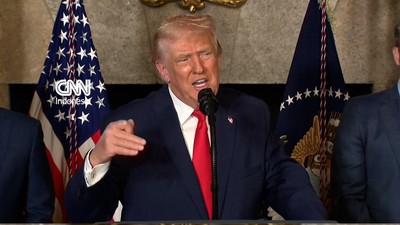
In October 2025, US President Donald Trump announced that Nigeria would be added to the US State Department’s religious freedom watchlist, alleging persecution of Christians.
Nigeria had earlier been designated a “Country of Particular Concern” in 2020 under Trump, a classification later removed by his successor, Joe Biden, shortly after taking office.

The sanctions underscore Washington’s sustained efforts to disrupt terrorism financing networks and curb cyber-enabled threats linked to extremist groups, even as diplomatic tensions over religious freedom and security concerns persist. as Salihu Yusuf, identified as having links to Boko Haram. He was among six Nigerians convicted in the United Arab Emirates in 2022 for establishing a Boko Haram cell to channel funds to insurgents in Nigeria. The group was found guilty of attempting to transfer $782,000 from Dubai to Nigeria.

Babestan Oluwole Ademulero was listed under terrorism-related sanctions and identified under multiple aliases.

Also named was Abu Abdullah ibn Umar Al-Barnawi, reportedly born in Maiduguri, Borno State, and flagged under terrorism-related sanctions.

Abu Musab Al-Barnawi, identified as a Boko Haram leader, was included in the designation.

Khaled (or Khalid) Al-Barnawi, born in Maiduguri, appeared twice in the publication under several aliases.

Ibrahim Ali Alhassan, identified as holding a Nigerian passport and reportedly residing in Abu Dhabi, was also linked to Boko Haram.
Abu Bakr ibn Muhammad ibn Ali Al-Mainuki was designated for alleged ties to ISIL.

Nnamdi Orson Benson was listed under CYBER2 sanctions, targeting individuals accused of significant malicious cyber-enabled activities.

Sanctions implications
Under the sanctions, all property and interests in property of the listed individuals within US jurisdiction are frozen. US persons are generally prohibited from engaging in transactions with them.

The measures were issued pursuant to Executive Order 13224, which authorises action against individuals and entities involved in terrorism and terrorism financing.
The US designated Boko Haram a Foreign Terrorist Organisation in 2013.

According to the US State Department, the group has carried out deadly attacks in northern and northeastern Nigeria and across parts of Cameroon, Chad and Niger within the Lake Chad Basin, resulting in thousands of deaths since 2009.

Broader diplomatic context
The latest action follows recommendations by some members of the US Congress calling for visa bans and asset freezes on certain Nigerian individuals and groups over alleged violations of religious freedom.

Among those reportedly recommended were former Kano State governor, Rabiu Kwankwaso, as well as the Miyetti Allah Cattle Breeders Association of Nigeria and Miyetti Allah Kautal Hore. However, their names did not appear on the February 10 OFAC sanctions list.

In October 2025, US President Donald Trump announced that Nigeria would be added to the US State Department’s religious freedom watchlist, alleging persecution of Christians.
Nigeria had earlier been designated a “Country of Particular Concern” in 2020 under Trump, a classification later removed by his successor, Joe Biden, shortly after taking office.

The sanctions underscore Washington’s sustained efforts to disrupt terrorism financing networks and curb cyber-enabled threats linked to extremist groups, even as diplomatic tensions over religious freedom and security concerns persist.


FG Arraigns El-Rufai Over Alleged Phone Interception As Protests Rock EFCC Headquarters

0

The Federal Government has filed criminal charges against former Kaduna State governor, Nasir El-Rufai, over alleged unlawful interception of the communications of the National Security Adviser, Nuhu Ribadu.

The charges, marked FHC/ABJ/CR/99/2026, were instituted before the Federal High Court, Abuja Judicial Division, with the Federal Republic of Nigeria listed as complainant and El-Rufai as defendant.

According to court documents, the prosecution alleged that on February 13, 2026, while featuring on Arise TV’s Prime Time programme in Abuja, El-Rufai admitted that he and others unlawfully intercepted the telephone communications of Ribadu.

In count one, the Federal Government contends that the alleged admission constitutes an offence contrary to and punishable under Section 12(1) of the Cybercrimes (Prohibition, Prevention, etc.) Amendment Act, 2024.

Count two alleges that during the same interview, El-Rufai acknowledged knowing and associating with individuals involved in the unlawful interception but failed to report them to the appropriate authorities, contrary to Section 27(b) of the Cybercrimes Amendment Act, 2024.

The third count accuses the former governor and others said to be at large of using technical equipment or systems in Abuja in 2026 to unlawfully intercept the National Security Adviser’s communications, an act the prosecution claims compromised public safety and national security. The charge is said to contravene Section 131(2) of the Nigerian Communications Act, 2003.

As of press time, no date had been fixed for his arraignment.

Protests trail EFCC invitation

Meanwhile, tension mounted at the headquarters of the Economic and Financial Crimes Commission in Abuja on Monday as supporters and critics of El-Rufai staged protests over his appearance before the anti-graft agency.

The demonstrators, who gathered at the commission’s Jabi office, were sharply divided. While one group chanted solidarity slogans in support of the former governor, another demanded that the commission subject him to a thorough investigation.
Witnesses described the atmosphere as tense but largely peaceful, with security personnel maintaining a heavy presence around the premises.

There was mild drama when security operatives reportedly barred some members of El-Rufai’s entourage from gaining access to the facility.

El-Rufai was said to have honoured an invitation by the commission days after his legal team confirmed that he would make himself available to investigators, following what aides described as a failed attempt to arrest him at the Nnamdi Azikiwe International Airport last Thursday.

The former governor subsequently entered the EFCC premises as protesters continued their demonstrations outside the gate, underscoring the political and legal storm surrounding the unfolding case.

Court Halts NNPCL-Linked Pipeline Demolitions In Bonny, Adjourns To Feb 24

0

A Rivers State High Court sitting in Port Harcourt has restrained four energy firms from continuing demolition of properties in Ntamoku Ayambo Pipeline Estate, Bonny Local Government Area of Rivers State.

In an ex parte order delivered on Friday, February 13, 2026, Justice Rita Oguguo, presiding over Suit No. BYHC/17/CS/2026, barred Renaissance Africa Energy Company Limited, NNPC Exploration and Production Limited, WAGL Energy Limited and Kristal Polis Limited from taking further steps to demolish structures in the disputed estate pending the hearing and determination of a Motion on Notice.

The 45 claimants in the suit, residents of Ntamoku Ayambo Pipeline Estate, are suing on behalf of themselves, their families and other affected occupants of the community.

After hearing submissions by counsel to the claimants, Chief Eugene Odey, the court granted an interim injunction restraining the defendants and their agents from further demolition of the claimants’ landed properties situated at Shell Pipeline Community in Bonny.

“It is hereby ordered that an interim injunction be issued restraining the Defendants/Respondents or their agents from taking further steps in the demolition of the Claimants’ landed property… pending the hearing and determination of the Motion on Notice,” the court held.

Justice Oguguo subsequently adjourned the matter to Tuesday, February 24, 2026, for hearing of the Motion on Notice.

The court also granted leave for the claimants to serve the writ of summons and other processes outside its jurisdiction, including through substituted means.

Specifically, the order permits service on NEPL in Benin City, Edo State, and on WAGL Energy Limited in Maitama, Abuja, as well as service on relevant respondents through courier delivery to their headquarters.

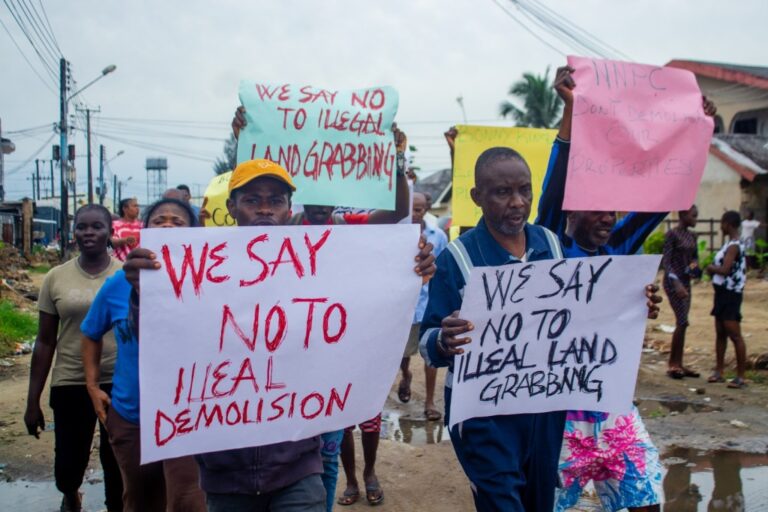
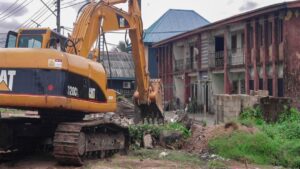
The ruling follows protests that erupted on February 10, 2026, when residents said they woke up to heavy-duty equipment demolishing structures in the estate. Officials of Kristal Polis Limited allegedly directed occupants to vacate their homes on or before February 13.

A survey plan sighted by reporters, registered as Plan No. ESP/3585 with the former Bonny/Degema Province, indicates that the pipeline in contention runs from the rear of Orupiri Community, crosses Admiralty Creek into Ogbokoro Ayambo, extends to Ayambo Main Community and terminates at Ntamoku Ayambo, where the demolitions were underway before the court’s intervention.

Community sources claim that the exercise had already displaced thousands of residents, including an estimated 5,000 children, 3,000 women, 1,000 elderly persons and other vulnerable groups such as persons living with disabilities and the unemployed.

With the interim order now in place, further demolition activities are suspended pending the court’s determination of the substantive issues raised in the suit.

Coalition: Global Security Threats Demand Nigeria–U.S. Strategic Defence Alliance -Group

0

A pro-security advocacy coalition, the Citizens for Strategic Defence Cooperation (CSDC), has thrown its weight behind the Federal Government’s decision to deepen military collaboration with the United States Armed Forces, insisting that Nigeria’s sovereignty remains fully intact.

In a statement issued on Sunday in Abuja, the group described the arrangement as a “measured and strategic partnership” designed to strengthen Nigeria’s fight against terrorism, insurgency and transnational crime.

According to the coalition, public debate surrounding the presence of U.S. military personnel in Nigeria should be guided by facts rather than emotion.

“Our sovereignty is not for sale, and it has not been compromised,” the statement signed by CSDC Secretary, Abdulmajid Danladi read.

“The Armed Forces of Nigeria remain in full operational control of all security activities within our territory. Any cooperation with foreign partners is structured, limited and governed by Nigerian law.”

The group stressed that Nigeria has long maintained defence partnerships with friendly nations, particularly in areas of training, intelligence sharing and capacity building. It argued that the evolving security landscape—marked by terrorism, banditry, piracy and cyber threats—requires collaborative responses.

CSDC said enhanced cooperation with the United States Department of Defense would provide access to advanced training, intelligence technology and operational best practices.

“Modern warfare is technology-driven. Intelligence gathering, surveillance and counter-terror strategies are globalised. Refusing to cooperate with international allies would isolate Nigeria at a time when collaboration is essential,” the group noted.

The coalition commended the leadership of the Nigerian Armed Forces led by the Chief of Defence Staff General Olufemi Oluyede for what it described as a “forward-looking decision,” adding that the partnership aligns with Nigeria’s long-standing diplomatic and security relations with the United States.

It further emphasised that the presence of foreign military personnel—where applicable—does not equate to foreign control.

“There is a clear difference between cooperation and occupation,” the statement added. “Nigeria is not hosting foreign bases that override its authority. What exists is structured engagement designed to improve the capabilities of our own troops.”

CSDC urged Nigerians to view the development through the lens of national interest rather than partisan politics.

“Our troops deserve every legitimate advantage in confronting violent threats. If collaboration with experienced global partners enhances their safety and effectiveness, then it is a responsible step,” the group said.

The coalition also called on the government to maintain transparency and ensure that all defence partnerships remain consistent with constitutional provisions and Nigeria’s foreign policy principles.

NNPCL Right-of-Way: Ayambo Community Demands Fresh Assessment, Fair Compensation

0

The Chairman of Ayambo Community in Bonny Local Government Area of Rivers State, Warisenibo Godswill Jumbo, has called for an immediate re-evaluation of structures affected by the ongoing right-of-way demolition linked to the Nigerian National Petroleum Company Limited, insisting that justice and equity must prevail.

Speaking with reporters on Thursday, February 12, 2026, at his residence in Ayambo, Jumbo expressed concern over what he described as discrepancies between the information initially provided by company officials and the realities on ground.

According to him, representatives of the company had earlier briefed him on specific demolition dimensions along the pipeline corridor, but subsequent findings by a community surveillance team revealed a significantly expanded scope.

“What they told me when they visited is different from what my surveillance team reports they are now doing. You cannot agree on five metres, 10 metres or even three metres, and later return to say it is 25 metres or any other figure,” he said.

Jumbo maintained that he would not condone injustice against members of his community, particularly where livelihoods and homes are concerned.

“Everyone who knows me understands that I do not pander to injustice, especially when it affects my people. I am calling on them to go back, conduct a new assessment and pay the people what they are legitimately entitled to,” he added.

While acknowledging the existence of pipelines and their legally designated right-of-way in the area, the community leader urged affected residents to vacate the corridor in the interest of safety — but only after a transparent reassessment and proper compensation.

“We are aware of the dangers of living along the right of way and I advise those affected to vacate for their own safety. But the right thing must be done,” he said.

He further blamed what he termed “greedy and selfish land speculators” for selling parcels of land within the restricted corridor to unsuspecting buyers, despite longstanding community warnings.

“That place is called pipeline for a reason. It has pipelines, and nobody is supposed to build or live on top of them. We have consistently warned our people to avoid that area,” Jumbo stated, while appealing to those who have erected structures there to relocate.

Tension escalated in the community on Tuesday, February 10, 2026, as residents protested the sudden demolition of properties by Kristal Polis Limited, a contractor to WAGL Energy Limited, which in turn is engaged by NNPC Exploration and Production Limited — a subsidiary of the Nigerian National Petroleum Company Limited.

Several residents alleged that they were misled into signing documents in Port Harcourt under the pretext that payments made to them were to facilitate minor fence adjustments away from the pipeline corridor. They claimed the same payments are now being presented as full compensation for their properties.

The unfolding dispute has heightened concerns over transparency, community engagement and adherence to due process in the execution of pipeline right-of-way enforcement projects in the oil-rich region.

SERAP Sues CBN Over Alleged N3trn ‘Missing’ Funds

0

The Socio-Economic Rights and Accountability Project (SERAP) has dragged the Central Bank of Nigeria (CBN) before the Federal High Court in Abuja over its alleged failure to account for N3 trillion in public funds, including over N629 billion reportedly paid to “unknown beneficiaries” under the Anchor Borrowers’ Programme.

In a statement issued on Sunday by its Deputy Director, Kolawole Oluwadare, SERAP disclosed that the suit, marked FHC/ABJ/CS/250/2026, was filed last week.

The organisation said the legal action was prompted by what it described as “grave allegations” contained in the latest annual report of the Auditor-General of the Federation, published on September 9, 2025. The report allegedly raised concerns about the management and disbursement of trillions of naira in public funds under the apex bank’s supervision.

SERAP is seeking an order of mandamus compelling the CBN to account for and explain the whereabouts of the alleged missing or diverted N3 trillion, as well as provide detailed reports on how the funds were spent.

Specifically, the group is demanding clarity on the disbursement of over N629 billion under the Anchor Borrowers’ Programme, which it claims was paid to unidentified beneficiaries.
In a post on its official X handle, SERAP stated:

“We’ve sued @cenbank over failure to account for and explain the whereabouts of the missing or diverted N3 trillion of public funds, including the over N629 billion paid to ‘unknown beneficiaries’ as part of the Anchor Borrowers’ Programme.”

The organisation argued that the allegations, if established, amount to a breach of public trust and contravene provisions of the 1999 Constitution (as amended), the CBN Act and established anti-corruption standards.

According to SERAP, the alleged infractions reflect a broader failure of accountability at the apex bank and underscore what it described as persistent non-compliance with statutory obligations relating to transparency and prudent financial management.

“Nigerians have the right to know the whereabouts of the missing or diverted public funds,” the group said, adding that granting the reliefs sought would advance citizens’ rights to restitution, compensation and guarantees of non-repetition.
The CBN has yet to publicly respond to the suit.

FG Raises Red Flag Over Illegal Recruitment Of Nigerians Into Russia-Ukraine War

0

The Federal Government has sounded a stern warning over the growing cases of Nigerians being illegally recruited into foreign armed conflicts, particularly amid the ongoing war between Russia and Ukraine.

Minister of Foreign Affairs, Amb. Yusuf Tuggar, raised the alarm in a statement issued on Sunday by the ministry’s spokesperson, Kimiebi Ebienfa, expressing grave concern over what he described as an “alarming trend” of deceptive recruitment practices targeting Nigerian citizens.

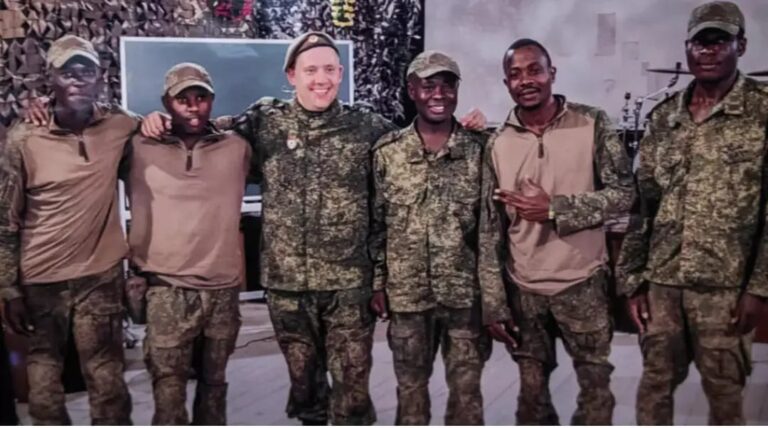
According to Tuggar, recent media investigations and security reports reveal that several Nigerians were lured abroad under false pretences, including promises of lucrative jobs, security-related employment, educational opportunities and migration incentives. Many of the victims, he said, were subsequently deployed to combat zones after being misled and coerced into signing military service contracts.

He disclosed that some recruitment schemes involved enticing offers such as high monthly salaries, sign-on bonuses and fast-tracked citizenship in foreign countries. In several reported cases, victims allegedly signed contracts written in foreign languages without proper legal guidance, while their travel documents were confiscated upon arrival.

The minister further noted that intermediaries and agents were believed to be facilitating the travel of recruits under tourist or other non-military visa categories, thereby masking the true nature of their engagement.

“The Federal Government unequivocally warns all citizens against engaging in or accepting any offer that involves participation in foreign armed conflicts,” Tuggar said, stressing that such actions not only endanger lives but could also contravene Nigerian and international laws regulating mercenary activities and foreign enlistment.

He emphasised that Nigerians who choose to participate in foreign conflicts outside approved governmental frameworks do so at their own risk.

To curb the trend, Tuggar disclosed that the government is collaborating with relevant domestic and international partners to investigate the development and intensify public awareness on the dangers of illegal recruitment. Nigerian missions abroad, he added, have been directed to heighten consular vigilance and provide timely advisory services to citizens.

He urged parents, guardians, community leaders and educational institutions to sensitise young Nigerians about the grave risks associated with fraudulent overseas recruitment schemes.

Citizens, he advised, should verify all foreign employment and study opportunities through official government channels and promptly report suspicious activities to the appropriate authorities.

Reaffirming Nigeria’s commitment to protecting its citizens, Tuggar declared that Nigerians “must not be exploited or trafficked into foreign conflicts under any circumstances.”

NDDC Vows Swift Delivery Of 21-Kilometre Imo–Abia–Rivers Link Road

The Managing Director of the Niger Delta Development Commission (NDDC), Dr Samuel Ogbuku, has assured that the 21-kilometre Ehime-Nguru–Aba Branch–Mpam–Umuokirika–Ekwereazu Road linking Imo, Abia and Rivers states will be completed in record time.

A press statement signed and issued by
Seledi Thompson-Wakama,
Director, Corporate Affairs, NDDC stated there
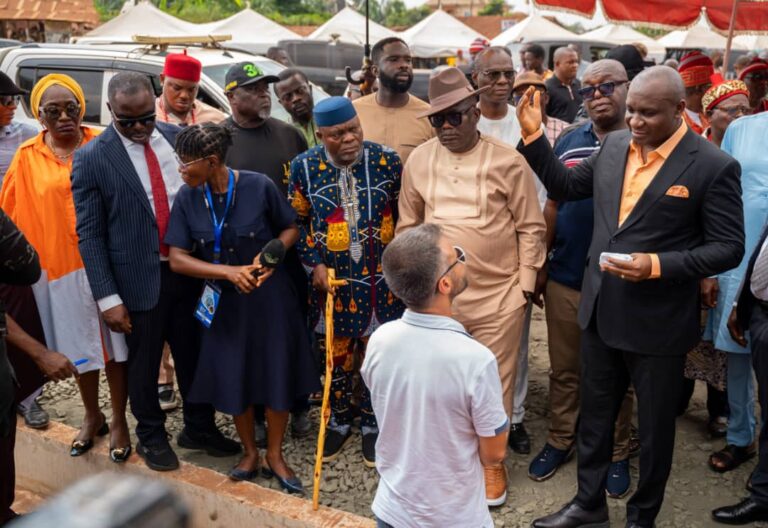
Ogbuku gave the assurance during an inspection of a section of the project in Ahiazu Mbaise Local Government Area of Imo State, where he expressed satisfaction with the pace of work and disclosed that the second phase would soon be awarded.

Describing the road as strategic, the NDDC boss said the project would strengthen connectivity among three mandate states — Imo, Abia and Rivers — while traversing four local government areas in Imo State: Ahiazu Mbaise, Aboh Mbaise, Ezinihitte Mbaise and Ngor Okpala.

He added that the Ahiara–Ngor Okpala axis of the road would also be awarded, noting that its completion would stimulate economic activities and ease movement across the benefiting communities.

Ogbuku, who was accompanied on the inspection by the Commission’s Executive Director, Projects, Dr Victor Antai, thanked residents of Ahiazu Mbaise for their warm reception and reiterated the Commission’s commitment to delivering critical infrastructure in line with the Federal Government’s Renewed Hope Agenda.

Speaking on behalf of the Igwe-in-Council and the people of Ahiazu Mbaise and Ehime Mbano, the traditional ruler of Ihitteaforukwu Kingdom, Eze Dr O. Nwandu, commended the NDDC for what he described as renewed momentum in regional development under the current board and management.

He noted that the road had remained impassable for over 15 years, symbolising neglect and hardship for communities dependent on it for agriculture, trade and access to essential services.

“This corridor is a vital economic and social lifeline, facilitating agricultural activities, trade, inter-community movement and access to essential services. This intervention will deliver high-impact benefits across multiple communities, local government areas and states,” he said.

“For many years, this road symbolised neglect and hardship. Today, through visionary leadership and timely intervention, hope has been restored.”

‘Weakness Is Strength At Right Time,’ Fubara Declares …Dedicates Award To God, Rivers People, Wike

1

Rivers State Governor, Siminalayi Fubara, on Friday declared that what critics brand as “weakness” in his leadership style is, in fact, a deliberate strategy of restraint adopted to safeguard peace and stability in the oil-rich state.

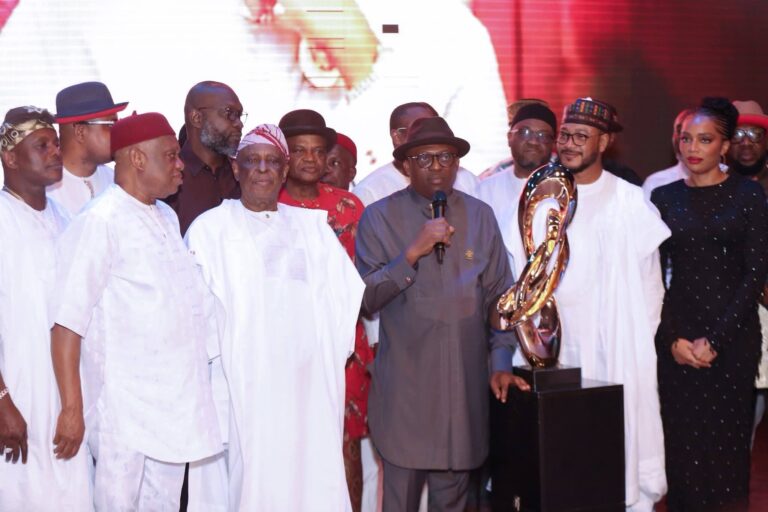
Speaking in Lagos while receiving the New Telegraph Man of the Year Award, Fubara said his decision to appear weak amid prolonged political tensions was a conscious sacrifice made in the larger interest of Rivers State and the nation.

Describing “weakness” as a virtue that yields dividends in due season, the governor maintained that preserving calm and preventing further escalation of conflict guided his approach.

“Some call it weakness; others call it strength,” he said. “But for many reasons, I chose to be weak — weak because I want peace, weak because we need to survive, and weak because I want to protect what is dear not just to me, but to our state and nation. Weakness is a virtue; it pays at the right time.”

In a move likely to stir political interpretations, Fubara dedicated the award to God, the people of Rivers State and the Minister of the Federal Capital Territory (FCT), Nyesom Wike, whom he acknowledged as his political benefactor.

“I must dedicate this award to my Oga, the Honourable Minister of the FCT, Chief Nyesom Wike, who discovered me, not minding the situation. It was that discovery that gave me this loudness,” he said.

Fubara also paid tribute to the people of Rivers State for their patience and composure in the face of political uncertainty, noting that their maturity had helped sustain stability.

He expressed gratitude to the organisers for the recognition, observing that in a nation of over 200 million people, the decision to single him out was both humbling and motivating.

Chairman and Publisher of New Telegraph, Orji Uzor Kalu, said the awards were based strictly on merit and designed to honour individuals whose contributions have impacted national development.

Former Ogun State governor, Olusegun Osoba, who also spoke at the event, commended Fubara and other recipients for their service and urged them to remain steadfast in advancing the country’s progress.

Fubara was accompanied to the ceremony by a delegation of Rivers elders, political leaders and stakeholders, in what observers described as a symbolic show of solidarity amid ongoing tensions in the state’s political landscape.