Home Blog Page 55

Tinubu Appoints Yuguda CBN Deputy Governor, Taps Deep Financial, Regulatory Experience

0

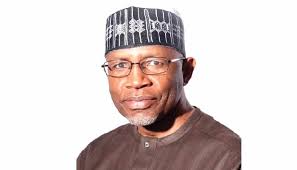
President Bola Ahmed Tinubu has approved the appointment of Lamido Abubakar Yuguda as Deputy Governor of the Central Bank of Nigeria (CBN), bringing decades of experience in monetary policy, financial regulation and global economic institutions to the apex bank.

The appointment, announced on Wednesday by the President’s Special Adviser on Information and Strategy, Bayo Onanuga, is subject to confirmation by the Nigerian Senate.

According to Onanuga, the nomination is in line with Section 8(1) of the Central Bank of Nigeria Act, 2007.
Yuguda’s appointment follows the recent redeployment of the former Deputy Governor, Bala Bello, who was named Special Adviser to the President on Political Economy.

President Tinubu charged the new appointee to bring renewed dedication, professionalism and commitment to the role, particularly at a time when Nigeria’s monetary authorities are working to strengthen economic stability and restore investor confidence.

Yuguda is widely regarded as a seasoned financial technocrat with extensive experience spanning central banking, international finance and capital market regulation.

His most recent public office was as Director-General of the Securities and Exchange Commission (Nigeria), where he served from 2020 to 2024, overseeing regulatory reforms and strengthening oversight of Nigeria’s capital market.

An alumnus of Ahmadu Bello University, Zaria, Yuguda graduated in 1983 with a Bachelor of Science degree in Accountancy. He later obtained a Master’s degree in Money, Banking and Finance from the University of Birmingham in the United Kingdom in 1991.

He is a Fellow of the Institute of Chartered Accountants of Nigeria (ICAN) and also holds the globally recognised Chartered Financial Analyst (CFA) designation.

Yuguda began his professional career in 1984 at the Central Bank of Nigeria as a Senior Supervisor in the Foreign Operations Department, marking the start of a long career within the country’s monetary authority.

He later gained international exposure as an economist in the Africa Department of the International Monetary Fund (IMF), where he worked from 1997 to 2001 before returning to the CBN.

During his time at the apex bank, he held several strategic roles and eventually served as Director of the Reserve Management Department, a position he occupied for six years before retiring from the CBN in 2016.

With experience spanning reserve management, international finance, monetary operations and capital market regulation, analysts say Yuguda’s return to the apex bank could strengthen policy coordination between Nigeria’s financial markets and its monetary authorities.

Senator Faults FCT’s N2.2trn 2026 Budget Over Missing Revenue Sources

0

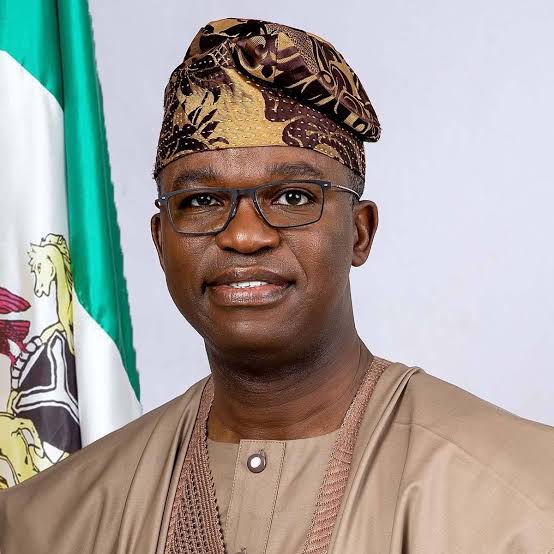
The senator representing Lagos East, Tokunbo Abiru, has raised concerns over the proposed N2.2 trillion 2026 budget of the Federal Capital Territory (FCT), saying the document lacks a clear breakdown of revenue sources to fund the spending plan.

The appropriation bill was transmitted to the Nigerian Senate on Tuesday as an executive proposal for consideration and passage.

The budget estimate allocates N165.7 billion for personnel costs, N378.2 billion for overheads and N1.6 trillion for capital expenditure.

However, Abiru argued that the proposal failed to indicate how the funds would be generated, warning that the omission could create distortions during implementation.
According to him, the budget ought to clearly identify the revenue streams that will finance the spending plan.

Despite the observation, the Senate leadership merely noted his concerns as lawmakers moved swiftly to advance the bill.

The proposal, which was read at plenary on Tuesday, passed both first and second readings in the same sitting and was subsequently referred to the Senate Committee on the FCT for further legislative work.

The committee is expected to submit its report next week for consideration and possible passage.

Among those pushing for the speedy passage of the budget are the President of the Senate, Godswill Akpabio; Deputy Senate President, Barau Jibrin; Senate Leader, Opeyemi Bamidele; and Senate Whip, Mohammed Monguno.

Iran To Boycott 2026 World Cup Over Tensions With U.S., Israel

0

Iran may boycott the 2026 FIFA World Cup following escalating tensions with the United States and Israel, according to the country’s Sports Minister, Ahmad Donyamali.

Donyamali disclosed in an interview with state television that the country was considering withdrawing from the global football tournament scheduled to be jointly hosted by the United States, Mexico and Canada in 2026.

The development follows heightened geopolitical tensions after the reported assassination of Iran’s Supreme Leader, Ali Khamenei, in what Iranian authorities described as a joint military operation by the United States and Israel.

Iran later retaliated with strikes on U.S. military bases in the Middle East, further deepening the crisis between the countries.

Speaking on the possibility of Iran’s participation in the tournament, Donyamali said the country had no plans to take part under the prevailing circumstances.
“Since this corrupt government assassinated our leader, we have no conditions under which we can participate in the World Cup,” he said.

“In view of the malicious measures taken against Iran, two wars were forced upon us within eight or nine months and several thousand of our people were killed. Therefore, we definitely have no possibility of participating in this way.”

Iran had secured qualification for the 2026 tournament in March last year after finishing among the top two teams in Group A of the Asian qualifiers.

Despite earlier assurances from FIFA that preparations for the tournament were on course, Iran was absent at a planning summit for participating nations held recently in Atlanta.

If the country follows through with the threat, it would join a small group of nations that have previously boycotted the World Cup despite qualifying, including Uruguay, Turkey, India and France.

Fubara swears In Five Commissioners, Demands Top Performance

0

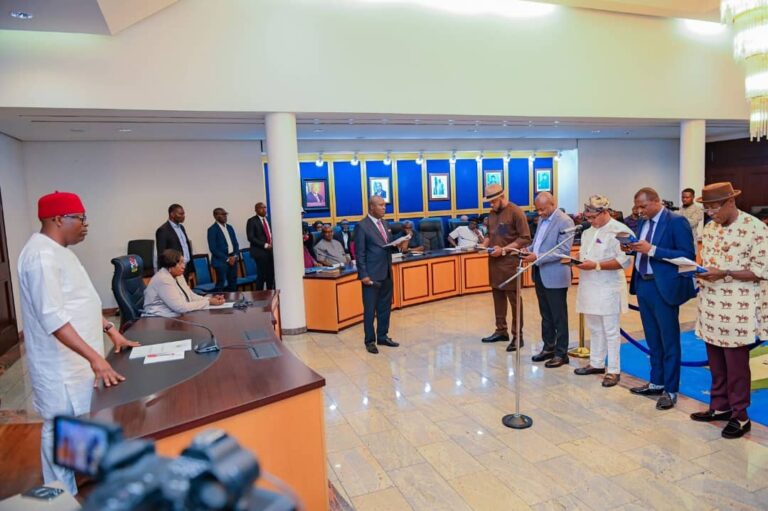
Governor of Rivers State, Siminalayi Fubara, on Wednesday swore in five newly appointed commissioners and urged them to give their best in service to the state.

Speaking during the ceremony at the Rivers State Government House, Fubara said the rigorous screening conducted by the Rivers State House of Assembly had already prepared the commissioners for the task ahead.

The governor said the lawmakers had thoroughly outlined the duties and responsibilities of the appointees during the screening process, stressing that he expected nothing short of excellent performance from them.

“I believe that going through one of the most rigorous screening exercises is enough to say that those of you who succeeded are fit and ready to deliver for our dear state,” Fubara said.
“So there is no further charge. The screening was the charge. I wish you the best, as I expect nothing less than the best from you.”

The five commissioners sworn in are Tonye Bellgam, Prof. Temple Nwofor, Dr Peters Nwagor, Lekue Kenneth and Amairigha Edward Hart.

They had earlier been screened and confirmed by the Rivers State House of Assembly on Monday.

The oath of allegiance and oath of office were administered by the Chief Registrar of the High Court of Rivers State, David D. Ihua‑Maduenyi.

The ceremony was held at the Executive Council Chamber of Government House in Port Harcourt.

Dangote Refinery Slashes Petrol, Diesel Prices After Recent Hikes

0

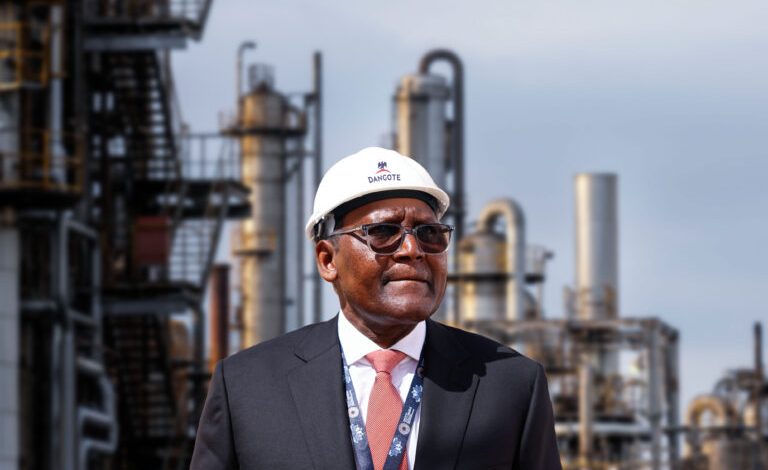
The Dangote Petroleum Refinery has reduced the ex-depot prices of petrol and diesel, offering marginal relief to marketers and bulk buyers after a series of sharp increases in recent days.
In a new pricing template issued on March 10, the refinery cut the gantry price of Premium Motor Spirit (PMS), also known as petrol, by ₦100 to ₦1,075 per litre, down from ₦1,175 per litre.

The refinery also announced that PMS supplied through coastal distribution channels will now sell at ₦1,050 per litre, reflecting a slight adjustment linked to maritime distribution costs.

Similarly, the price of Automotive Gas Oil (AGO), commonly known as diesel, was reduced to ₦1,430 per litre at the gantry, representing a ₦190 drop from the previous ₦1,620 per litre.

The refinery noted that the quoted gantry prices exclude statutory charges imposed by the Nigerian Midstream and Downstream Petroleum Regulatory Authority (NMDPRA).

The latest price cut comes barely a day after the refinery raised the ex-depot price of petrol to ₦1,175 per litre amid volatility in global crude oil prices and rising production costs.

Within the past week, the refinery had adjusted prices several times, pushing PMS from about ₦995 per litre to ₦1,175 per litre, while diesel rose to ₦1,620 per litre, reflecting shifts in international crude markets and replacement costs.

Industry analysts say the latest downward adjustment could ease cost pressures on petroleum marketers and depot operators who have struggled with fluctuating loading prices.

Market watchers, however, note that the extent to which the reduction will translate into lower retail pump prices across the country will depend on depot margins, transportation costs and distribution dynamics within Nigeria’s downstream petroleum sector.

The refinery, owned by the Dangote Group and operated by billionaire industrialist Aliko Dangote, began operations in 2024 with a capacity of about 650,000 barrels per day and is expected to significantly reduce Nigeria’s reliance on imported refined petroleum products.

Tinubu Seeks Senate’s Confirmation Of Oyedele As Minister, Abe For NUPRC Chairmanship

0

President Bola Tinubu has asked the Senate to screen and confirm tax expert Taiwo Oyedele as Minister of State for Finance, replacing Doris Uzoka-Anite.

The President also requested the confirmation of former Rivers South-East senator, Magnus Abe, as chairman of the Nigerian Upstream Petroleum Regulatory Commission (NUPRC).

The requests were contained in separate letters read on the floor of the Senate during plenary by Senate President Godswill Akpabio.

Tinubu, in his letter, urged lawmakers to consider and approve Oyedele’s nomination as part of ongoing adjustments within the Federal Executive Council.

Oyedele, a native of Ikaram in Akoko area of Ondo State, previously served as chairman of the Presidential Committee on Fiscal Policy and Tax Reforms, where he led efforts aimed at restructuring Nigeria’s tax system.

The 50-year-old is an economist, accountant and public policy expert with extensive experience in fiscal policy design and tax administration.

In a separate communication to the Senate, the President also sought the screening and confirmation of Abe as chairman of the NUPRC, following the resignation of Gbenga Komolafe.

Tinubu further nominated Paul Yaro Jezhi, a former chairman of the Trade Union Congress in Kaduna State, and Sunday Adebayo Babalola, a former deputy director at the defunct Department of Petroleum Resources, as non-executive commissioners of the commission.

The Senate is expected to commence the screening of the nominees in the coming days.

Banigo Dumps PDP for APC, Cites Party Crisis, Support For Tinubu, Fubara

0

The senator representing Rivers West Senatorial District, Ipalibo Banigo, has defected from the Peoples Democratic Party (PDP) to the ruling All Progressives Congress (APC), citing deepening internal divisions within her former party and the need to align politically with federal and state leadership.

Banigo’s defection letter was read on the floor of the Senate on Tuesday by Senate President Godswill Akpabio.

In the letter, Banigo said her decision followed extensive consultations with constituents, political associates, and key stakeholders across Rivers West, noting that prolonged leadership disputes, internal divisions, and ongoing litigations within the PDP had undermined cohesion in the party.

She said the move would enable her to align with the political direction of Rivers State Governor, Siminalayi Fubara, and the Minister of the Federal Capital Territory, Nyesom Wike, whom she described as her political mentor.

According to Banigo, the decision was also aimed at supporting the administration of President Bola Tinubu and efforts towards his potential re-election.

“This decision is predicated on my resolve to join my political mentor, the Minister of the Federal Capital Territory, Nyesom Wike, and the Governor of Rivers State, Siminalayi Fubara, in supporting President Bola Tinubu to actualise his re-election bids and enable him continue his economic reforms,” she said.

Banigo added that the President’s policies had improved the nation’s economic outlook through currency stabilisation and infrastructural development.

She also pledged continued support for the First Lady, Oluremi Tinubu, in advancing initiatives aimed at improving the welfare of Nigerians.

Responding after the letter was read, Akpabio welcomed Banigo to the APC, saying “a seat is already prepared” for her and others expected to join the ruling party.

The development is the latest in a series of political realignments ahead of the 2027 general elections as politicians seek to strengthen alliances with the federal government.

Meanwhile, the governor of Zamfara State, Dauda Lawal, and his deputy, Mani Mummuni, also recently defected to the APC, citing the lingering crisis and legal disputes within the PDP.

Rising Oil Prices, Rising Hardship: Will Nigeria Ever Truly Benefit?

0

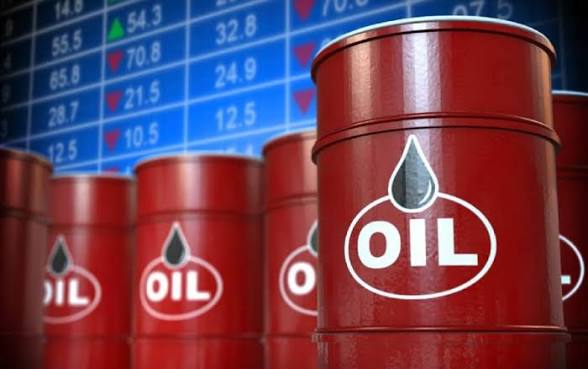
As global crude oil prices surge amid escalating tensions in the Middle East, many oil-producing countries are bracing for what could become a new wave of windfall revenues.

For Nigeria, however, the question is no longer whether prices will rise, but
whether the country — and its citizens — will actually benefit.

The ongoing crisis involving the United States, Iran and Israel has unsettled global energy markets, pushing crude oil prices above $100 per barrel. Analysts say the disruption has been worsened by the closure of the Strait of Hormuz, a strategic waterway through which roughly one-fifth of the world’s oil and natural gas supplies pass.

Ordinarily, such a development would be good news for a major oil exporter like Nigeria.

Higher oil prices mean more revenue for government and stronger foreign exchange inflows.

But for millions of Nigerians struggling with rising living costs, the reality appears far more complicated.

In many resource-rich nations, a spike in crude prices translates into economic relief. In Nigeria, however, history suggests that the opposite can happen. As oil prices climb, the cost of petrol, transportation and food often rises, intensifying the hardship already faced by households.

Despite being Africa’s largest oil producer, Nigeria still imports a significant portion of its refined fuel. This structural weakness means that higher global oil prices can quickly translate into higher domestic fuel prices.

In recent months, petrol prices have surged beyond N1,000 per litre in parts of the country, squeezing household budgets and raising operational costs for businesses. Transportation fares have climbed sharply, and food inflation continues to worsen.

Energy experts say the paradox lies in Nigeria’s long-standing dependence on crude exports and refined fuel imports.

This is not the first time Nigeria has stood on the brink of an oil windfall.
During the Gulf War, triggered by the invasion of Kuwait by Saddam Hussein, global oil prices surged dramatically. At the time, Nigeria was producing about 1.8 million barrels of crude per day and earned billions of dollars in unexpected revenue.

However, the Pius Okigbo Panel, which later investigated the windfall during the military administration of Ibrahim Babangida, reported that roughly $12–13 billion accrued during the crisis.

Much of the money, the panel found, was kept outside normal government accounting systems, and a significant portion could not be properly accounted for.

The episode remains one of the most cited examples of how sudden resource wealth can disappear without transparent management.
Structural problems persist
Today, decades later, many of the same challenges still exist.

Nigeria’s crude production has been repeatedly constrained by oil theft, pipeline vandalism and underinvestment in the sector. Even when global prices surge, these constraints limit the country’s ability to increase output and maximise earnings.

Another complication is the structure of Nigeria’s oil financing arrangements. Large volumes of crude production are tied to forward-sale agreements and pre-export financing deals, which means that a portion of future oil revenue has already been committed.

Meanwhile, the country continues to grapple with a widening budget deficit and mounting public debt.

Although the massive Dangote Refinery in Lagos was expected to transform Nigeria’s refining capacity, industry observers say the facility still faces supply challenges and has had to import crude oil to sustain operations.

For ordinary Nigerians, the consequences of rising oil prices are already visible.

Higher fuel costs increase transportation fares, push up food prices and raise electricity generation costs for businesses relying on diesel generators. Small enterprises, which form the backbone of Nigeria’s informal economy, are particularly vulnerable.

What should theoretically be a national advantage — being a major oil producer — increasingly feels like a burden to citizens.
Economists warn that unless Nigeria’s economic structure changes, oil price spikes may continue to deepen inequality rather than reduce hardship.

A familiar dilemma
Experts say the real issue is not the possibility of another oil windfall, but how Nigeria manages it.

If global prices remain above the benchmark used in the federal budget, the country could generate billions of dollars in excess revenue within a short period. Yet without strong fiscal discipline, transparency and strategic investment, such gains may once again fail to translate into lasting development.

Analysts recommend that any additional revenue be channelled into savings mechanisms such as the Nigeria Sovereign Investment Authority and the Excess Crude Account, which were created to stabilise the economy during oil price volatility.

They also argue that Nigeria must invest aggressively in domestic refining, gas development, infrastructure and industrialisation to reduce dependence on crude exports.

Beyond the oil illusion
Ultimately, Nigeria’s relationship with oil remains a story of enormous potential repeatedly undermined by structural weaknesses and governance challenges.

The latest Middle East crisis may push global crude prices even higher. Government revenues could increase and foreign exchange inflows may improve.

But unless deeper reforms are implemented, the benefits may remain largely invisible to the citizens whose lives are most affected by rising costs.

For many Nigerians facing escalating hardship, the question therefore remains painfully simple: if oil prices are rising again, why does life keep getting harder?


90 Years After Birth, Family To Unveil Leadership Centre In Honour Of Late Ogoni Leader Albert Badey

0

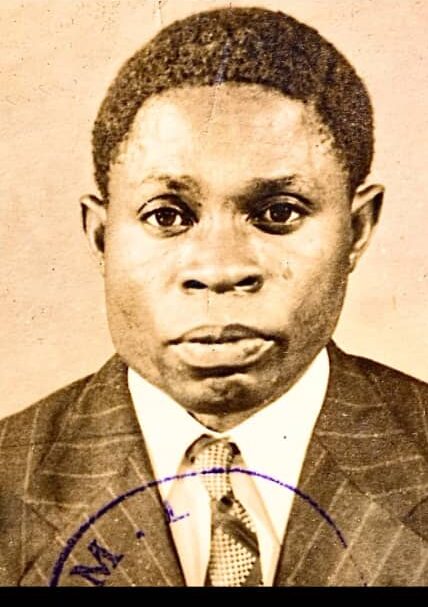
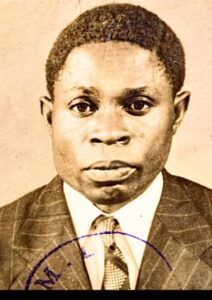
Thirty-two years after the Giokoo incident that claimed the lives of several Ogoni leaders, the family of the late Albert Badey has announced plans to establish a leadership development centre in his honour.

A statement signed by Blessing Wikina,
Chairman, Media Sub-Committee of the Organising Committee and made available to The Atlantic Bell stated that the facility, to be known as the Albert Badey Centre for Development (ABCD), will be formally unveiled as part of activities marking the posthumous 90th birthday of the late Ogoni statesman.

Speaking in Port Harcourt at the weekend while briefing the Central Planning Committee for the celebration, his son, Suage Badey, said the family decided to immortalise their father by promoting leadership and development.

According to him, “If my father were alive today, he would have been 90 years old this month. We will not grieve forever; we will not mourn forever. Therefore, we want to build something in society in his memory and honour.”

Suage described the late A.T. Badey, as he was popularly called, as a committed pro-development leader who served Ogoniland and Rivers State with dedication and selflessness.

Badey was among the Ogoni leaders killed during the Giokoo Incident at the height of the Ogoni crisis in 1994.

During his career in the state civil service, he held several key positions, including Permanent Secretary, Head of Service, Secretary to the State Government and Commissioner under different administrations. He also served in various ministries, departments and agencies.

He was widely credited with facilitating development projects in Ogoniland, including influencing the establishment of the first Rivers State Polytechnic at the former Regina Caeli Teachers Training College campus, now known as Ken Saro-Wiwa Polytechnic.

The Central Planning Committee for the anniversary events is chaired by retired Permanent Secretary John Nally, and comprises prominent public officials from across the state who served alongside the late Badey. The committee has already held its inaugural meeting in Port Harcourt.

The unveiling of the leadership centre is expected to form a key highlight of the commemorative activities planned by the family.

UNITAR Celebrates RSU Vice-Chancellor Zeb-Obipi On First Anniversary, Applauds Leadership, Commitment To Sustainable Dev

0

The United Nations Institute for Training and Research (UNITAR) has congratulated the Vice-Chancellor of Rivers State University (RSU) and Chairman of CIFAL Nigeria, Professor Isaac Zeb-Obipi, on the occasion of his first anniversary in office.

In a message issued on behalf of the UN Assistant Secretary-General and Executive Director of UNITAR, Michelle Gyles-McDonnough, the Director and Head of the CIFAL Global Network, Alex Mejía, as well as the chairmen and directors of the 34 CIFAL Centres worldwide, the organisation commended Zeb-Obipi’s visionary leadership and dedication to advancing sustainable development.

UNITAR noted that his tenure has been marked by innovation, strategic direction and strong institutional support for the CIFAL Global Network’s Agenda 2030 mandate.

The institute expressed appreciation for the Vice-Chancellor’s continued commitment to strengthening collaboration between United Nations Institute for Training and Research and CIFAL Nigeria, describing his leadership as both inspiring and impactful.

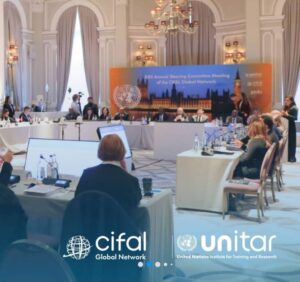
The CIFAL Global Network’s XX11 Annual Steering General Committe Meeting, December, 2025 in London,United kingdom bringing together more than 70 delegates from over 30 countries including Directors and Chairpersons representing 32 CIFAL Centres worldwide.

UNITAR further stated that it looks forward to many more years of productive partnership with Professor Zeb-Obipi in his dual capacity as Vice-Chancellor of Rivers State University and Chairman of CIFAL Nigeria.

The congratulatory message was conveyed by the Director of CIFAL Nigeria and Coordinator of the Nigeria Project Office, Mrs. Ihuoma Njemanze, who extended the institute’s warm wishes for continued success and transformative leadership in the years ahead.

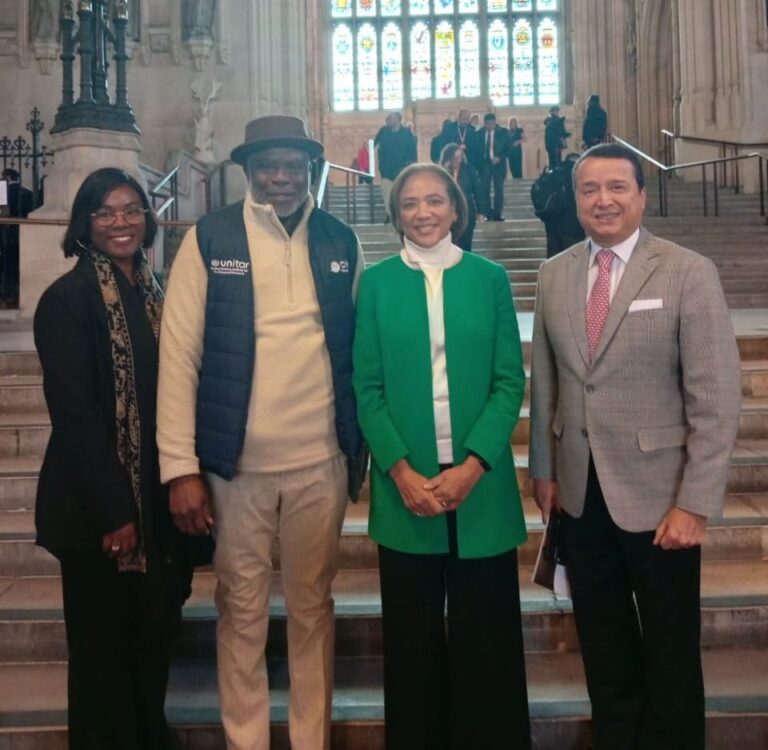
At the CIFAL Global Network XXII Annual Steering Committee Meeting in December,2025 in London, United Kingdom,Prof. Isaac Zep-Obipi was inugurated as the Chairman, CIFAL Nigeria.

The meeting brought together more than 70 delegates from over 30 coutries including Directors and Chairpersons representing 32 CIFAL Centres worldwide.

CIFALs are training centres whose mission is to provide professional capacity- building programmes for government officials and civil society representatives with the aim of strengthing leadership and institutional capacities at the local, national and regional levels.