


Home Blog Page 54

UNICEF Opens Fully Funded Global Internship Programme For Students, Graduates

1

In a move aimed at nurturing the next generation of development professionals, the (UNICEF) has opened applications for its fully funded global internship programme, offering students and recent graduates the opportunity to gain hands-on experience while contributing to humanitarian work that impacts children worldwide.

The internship programme, run by UNICEF, provides structured professional development opportunities across multiple countries and offices. Successful applicants will work alongside experienced professionals on projects that support UNICEF’s mission of promoting and protecting the rights and well-being of children.

According to UNICEF, the programme is designed to help emerging professionals develop practical skills in areas such as research, programme support, data analysis, communications, and advocacy. Interns are placed in different offices depending on available vacancies and their academic or professional backgrounds.

Who Can Apply

The opportunity is open to candidates aged 18 and above who are currently enrolled in an undergraduate, graduate, or PhD programme, or who have graduated within the past two years. Applicants must demonstrate strong academic performance and proficiency in at least one of UNICEF’s working languages—English, French, or Spanish.

Candidates are also expected to have familiarity with the working language of the country office where they are applying. Individuals with immediate relatives employed by UNICEF, particularly within the same reporting line, are not eligible for the programme.

Duration and Work Structure

The internship duration ranges from six to 26 weeks. Depending on the role and office, the internship may be full-time or part-time, and may take place either remotely, in person, or through a hybrid arrangement.

UNICEF notes that interns are integrated into active projects and teams, allowing them to contribute meaningfully to ongoing programmes and initiatives.

Financial Support
Unlike many internship opportunities, the UNICEF internship programme includes financial support designed to help participants manage costs associated with the experience.

Selected interns receive a monthly stipend to cover living expenses. In cases where relocation is required, UNICEF may also provide a lump-sum payment to assist with travel and visa costs. Additional grant funding may be available for certain internship-related projects.

Interns also benefit from mentorship by experienced UNICEF staff and the opportunity to collaborate with multicultural teams across the organization’s global network.

Application Process
Interested candidates are required to apply through the UNICEF careers portal, where available internship positions are posted regularly. Applicants must create an online profile, submit a curriculum vitae, and provide a tailored cover letter aligned with the specific role.

UNICEF advises applicants to monitor the vacancies page frequently, as deadlines vary depending on the position.

Building a Career in Global Development

While the internship does not guarantee permanent employment, participation in the programme is widely regarded as a valuable stepping stone for careers within the United Nations system and the broader humanitarian sector.

Past interns say the experience offers both professional growth and meaningful engagement with global challenges.
“UNICEF offered me the opportunity to grow both professionally and personally, and work on global issues that matter,” said Rudolf Larnyoh, a former human resources intern in New York.

Another intern, Eve Woogen, who worked remotely with UNICEF Pacific in Fiji, said she felt “fully integrated and supported” by her team despite the virtual setting.

For many young professionals seeking to enter international development, the UNICEF internship programme represents a rare opportunity to combine learning with real-world impact.
Tinubu Mourns Ex-Super Eagles Star Henry Nwosu, Hails 1980 AFCON Hero

0

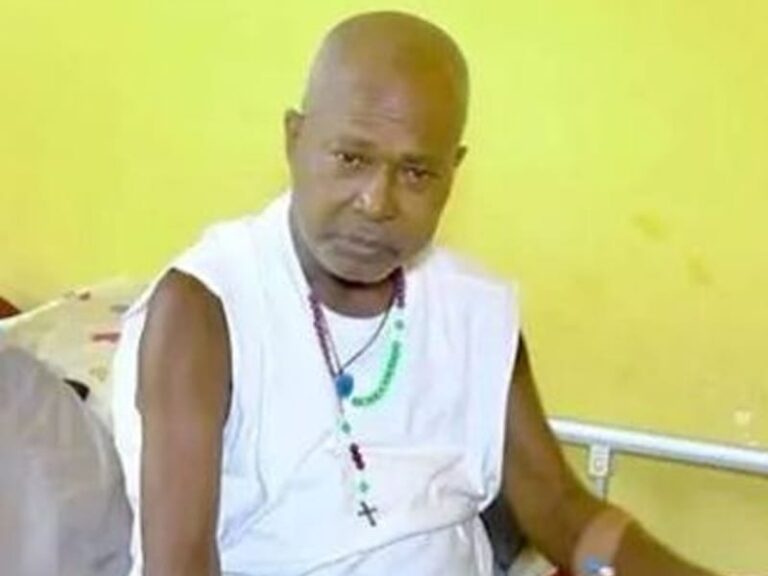
President Bola Ahmed Tinubu has expressed condolences to the family of former Nigerian international Henry Onyemanze Nwosu, who died on Saturday at the age of 62.

In a statement issued by his Adviser on Information and Strategy, Bayo Onanuga, the President joined Nigeria’s football community in mourning the passing of the former Super Eagles midfielder.
Tinubu described Nwosu as an exceptionally gifted footballer whose creativity and artistry on the pitch left a lasting imprint on Nigerian football.

He recalled the late midfielder’s remarkable performance as a 17-year-old member of the then Green Eagles squad that won the 1980 Africa Cup of Nations — Nigeria’s first continental triumph.

The President also noted Nwosu’s decade-long service to the national team, during which he featured prominently in subsequent editions of the continental tournament, including the 1982 Africa Cup of Nations, 1984 Africa Cup of Nations and 1988 Africa Cup of Nations.

According to Tinubu, the late playmaker brought pride and joy to Nigerians through his performances and inspired many young people across the country to pursue excellence in sports.

He further acknowledged Nwosu’s contributions to the development of football in Nigeria after his playing career, noting that his dedication to the game helped nurture the next generation of talents.
The President said Nwosu would be remembered not only for his brilliance on the field but also for the enduring impact he made on Nigerian football.

Tinubu prayed for the repose of the departed football legend and asked God to grant comfort to his family, friends and the wider sporting community during this period of mourning.

Don’t Film Nigerians Without Consent, NDPC Warns Content Creators

0

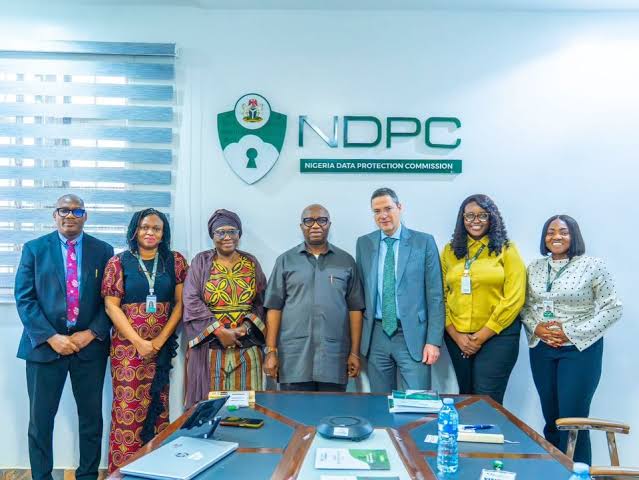
The Nigeria Data Protection Commission (NDPC) has cautioned content creators against filming or photographing unsuspecting members of the public and posting such materials on social media without their consent, warning that the practice could violate citizens’ privacy rights under Nigerian law.

In a statement issued on March 13, the commission expressed concern over a growing trend in which individuals record members of the public for online content, particularly in Lagos State, and share the footage across social media platforms.

The regulator said the practice raises significant privacy concerns and may amount to unlawful processing of personal data.

According to the commission, the actions contravene the right to informational self-determination guaranteed under Section 37 of the 1999 Constitution of the Federal Republic of Nigeria and provisions of the Nigeria Data Protection Act 2023.

“The attention of the Nigeria Data Protection Commission has been drawn to the activities of individuals who take pictures and video footage of unsuspecting members of the general public and share same on social media platforms. These acts violate the rights of citizens to informational self-determination,” the statement said.

The commission referenced a specific case involving a content creator who allegedly records people along roadsides in Lagos to produce what is described as “reality show” style content.

NDPC noted that such activities could constitute an abuse of citizens’ privacy rights under the guise of entertainment, stressing that the processing of individuals’ images in such circumstances requires their consent unless there is another lawful basis for doing so.

“Preliminary investigation by the Commission reveals that this wilful invasion of citizens’ privacy serves neither a public nor a legitimate interest,” the statement added, noting that individuals captured in such videos do not reasonably expect their images to be broadcast to a global audience by unknown persons.

The National Commissioner and Chief Executive Officer of the commission, Vincent Olatunji, also urged major social media platforms to strengthen enforcement of their community guidelines to curb the misuse of personal data online.

He specifically directed digital platform operators including TikTok, X and Meta Platforms to step up monitoring and enforcement measures to prevent harm caused by unlawful data processing.

The commission warned that failure by platform owners to act promptly in addressing harmful content could attract regulatory sanctions under the data protection law.

“For the avoidance of doubt, where a platform owner fails or neglects to act timeously in addressing harms, the Commission will not hesitate to impose appropriate sanctions under the Nigeria Data Protection Act,” the statement said.

It further stressed that individual content creators remain responsible for their actions and could face criminal prosecution for violating the privacy rights of Nigerians.

The NDPC was established following the enactment of the Nigeria Data Protection Act in 2023 to regulate compliance with data protection laws and safeguard the privacy rights of individuals within Nigeria’s expanding digital economy.

Court Upholds Police Tinted Glass Policy, Dismisses NBA Suit … SAN Vows To Continue Legal Battle

0

The Federal High Court in Abuja has dismissed a suit filed by the Nigerian Bar Association (NBA) challenging the enforcement of the tinted glass permit policy by the Nigeria Police Force.
Delivering judgment on Thursday, Justice Suleman Liman of Court 11, Federal High Court, Maitama, Abuja, dismissed in its entirety Suit No. FHC/ABJ/CS/182/2025 instituted by the Incorporated Trustees of the NBA on behalf of legal practitioners and the motoring public against the Inspector-General of Police and the Nigeria Police Force.

The court resolved all issues in favour of the defendants, holding that the NBA failed to establish the alleged illegality of the tinted glass permit policy.
Justice Liman ruled that the use of tinted glass on vehicles is not a constitutionally guaranteed right and that the police have the authority to regulate it in the interest of public safety.

According to the court, the association failed to discharge the burden of proof required to substantiate its claims and did not demonstrate that the policy violated the provisions of Chapter IV of the 1999 Constitution or the Fundamental Rights Enforcement Procedure Rules.

The judge further held that the claims presented by the NBA did not disclose any reasonable cause of action recognisable in law.

Justice Liman observed that the concerns raised by the association appeared to be based largely on institutional convenience rather than any legally enforceable right.

“The claims of the plaintiff amount to mere assertions lacking sufficient legal foundation,” the court held, adding that the police cannot be restrained from implementing measures aimed at protecting citizens and maintaining public safety.

The suit arose following the reintroduction of the tinted glass permit policy by the Inspector-General of Police under the Motor Vehicles (Prohibition of Tinted Glass) Act, which requires vehicle owners to obtain permits before using tinted glass.

The NBA had argued that the policy was unconstitutional and susceptible to abuse, warning that it could encourage harassment and extortion by police officers.

Reacting to the judgment, Senior Advocate of Nigeria, Kunle Edun, who prosecuted the case on behalf of the NBA, described the decision as unsurprising.

Edun said he would reserve comments on what he described as unpleasant developments that occurred in court during the proceedings.

He disclosed that Justice Liman had earlier declined to hear the NBA’s ex parte motion seeking an interim injunction when he presided as the vacation judge, citing limited time left in his tenure as vacation court judge.
Despite the setback, Edun said the legal battle against the tinted glass permit policy was far from over.

According to him, he and another lawyer, John Aikpokpo-Martins, are prosecuting similar suits in other courts and would continue to challenge the policy until it is halted.

“We will fight it till the end to stop the police that were already set to earn billions of naira every month from the tinted glass permit enforcement,” Edun said.

He alleged that the police resorted to enforcing the tinted glass permit policy as a major revenue source after President Bola Tinubu stopped the practice of hiring out police officers as escorts and guards for private individuals.

Edun clarified that the dismissal of the NBA’s suit was not responsible for the current suspension of the policy’s enforcement.
He explained that the suspension followed subsisting court orders issued by other courts.

According to him, the Federal High Court, Warri Division, in the case of John Aikpokpo-Martins v. IGP and another, directed parties to maintain the status quo pending determination of the matter.

Similarly, the High Court of Justice of Delta State sitting at the Orerokpe Judicial Division, in Suit No. HOR/FHR/M/31/2025 between Israel Joe and the Inspector-General of Police, granted an interim injunction restraining the police from implementing or enforcing the tinted glass permit policy pending the hearing and determination of the substantive suit.

The Delta State High Court, presided over by Justice Joe Egwu, also restrained the police from stopping, harassing, arresting, detaining or extorting citizens under the guise of enforcing the policy.

The court further barred the respondents from conducting government business through the Parkway Projects Account, described as a private contractor’s account, pending the determination of the suit.

Edun noted that pursuant to the orders of the Warri Federal High Court and the Delta State High Court, the Inspector-General of Police, through the then Force Public Relations Officer, ACP Benjamin Hundeyin, issued press statements announcing the suspension of enforcement of the tinted glass permit policy.

He commended Aikpokpo-Martins for what he described as his commitment to pursuing cases aimed at promoting justice and a fair society.

Edun also acknowledged Olajide Abiodun, Vice Chairman of the NBA Ikorodu Branch, for instituting a similar action in Lagos State.

While the Federal High Court in Abuja has dismissed the NBA’s challenge, the tinted glass permit policy remains suspended due to subsisting court orders from other jurisdictions, with several related suits still pending before the courts.

FAAC Shares N1.894tr Revenue To FG, states, LGs For February

The Federation Account Allocation Committee (FAAC) has distributed a total of N1.894 trillion as Federation Account revenue for February 2026 to the Federal Government, state governments and local government councils.

The revenue was shared at the March 2026 FAAC meeting held in Abuja, according to a statement issued by the Director of Press and Public Relations in the Office of the Accountant-General of the Federation (OAGF), Bawa Mokwa.

The statement said the N1.894 trillion distributable revenue comprised N1.274 trillion from statutory revenue and N619.119 billion from Value Added Tax (VAT).

A communiqué issued at the meeting indicated that total gross revenue of N2.230 trillion was available in February. From this amount, N77.302 billion was deducted as cost of collection, while N259.078 billion was allocated for transfers, refunds and savings.

According to the communiqué, gross statutory revenue stood at N1.561 trillion in February, representing a decline of N395.138 billion compared with the N1.957 trillion recorded in January.

Similarly, gross VAT revenue for February was N668.450 billion, which was N414.710 billion lower than the N1.083 trillion generated in January.

From the N1.894 trillion distributable revenue, the Federal Government received N675.088 billion, while state governments got N651.525 billion.

Local government councils received N456.467 billion, while N110.949 billion, representing 13 per cent derivation from mineral revenue, was allocated to oil-producing states.

The communiqué further showed that from the N1.274 trillion distributable statutory revenue, the Federal Government received N613.174 billion, states received N311.010 billion, while local government councils got N239.776 billion.

The N110.949 billion derivation revenue was also drawn from the statutory revenue component and shared among benefiting states.

From the N619.119 billion distributable VAT revenue, the Federal Government received N61.912 billion, states received N340.515 billion, while local government councils got N216.692 billion.

The communiqué also noted that Oil and Gas Royalty as well as Excise Duty recorded significant increases during the month, while Petroleum Profit Tax (PPT), Hydrocarbon Tax (HT), Companies Income Tax (CIT), Capital Gains Tax (CGT), Stamp Duties (SDT) and Value Added Tax (VAT) declined substantially.

It added that Import Duty and the Common External Tariff (CET) recorded marginal increases during the period.

Fubara Delays Bridge Inauguration Pending Completion of 14Km Ndele–Omofor Road

0

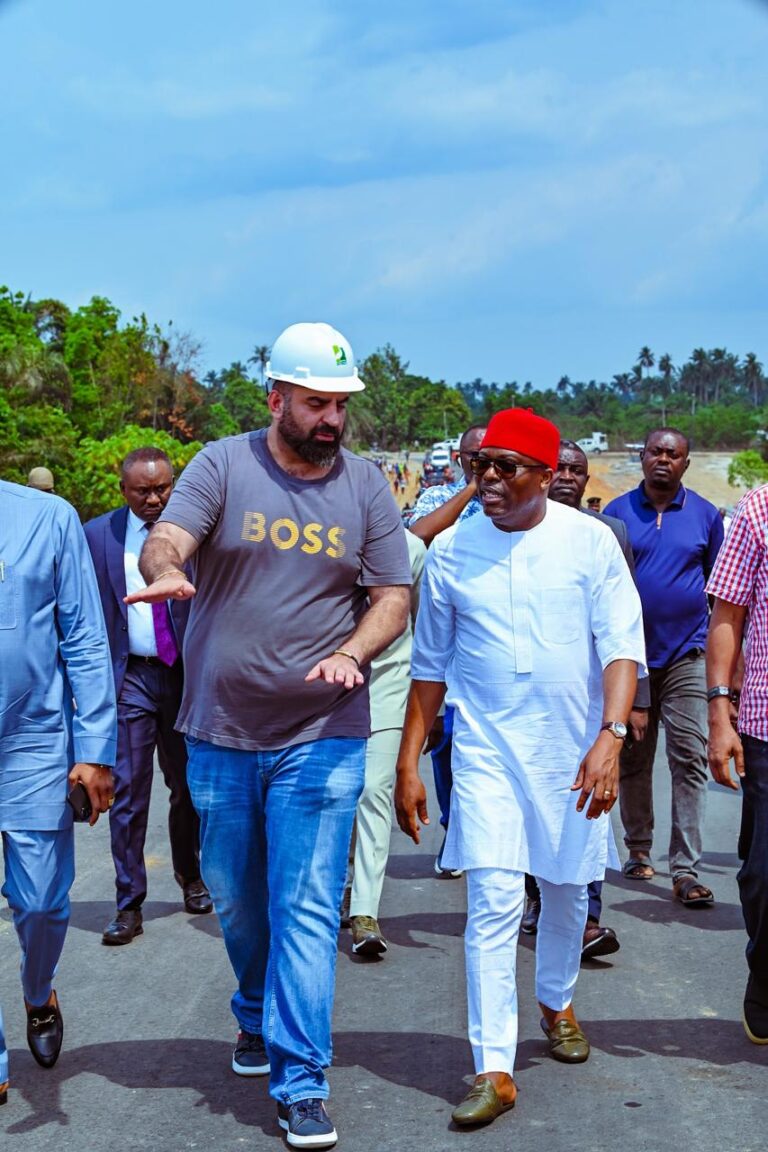
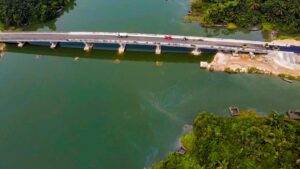
Rivers State Governor, Siminalayi Fubara, on Friday inspected the completed Agba–Ndele Bridge linking communities in Abua and Emohua Local Government Areas, expressing satisfaction with the progress made on the project.

Speaking during the inspection, the governor recalled monitoring the construction of the bridge last year and noted that its completion marks a significant milestone for residents of the affected communities.

“I am really happy that today you can see for yourself that the bridge is fully completed,” Fubara said.

He, however, stressed that the full impact of the project would only be realised after the completion of the remaining 14 kilometres of the Ndele–Omofor–Agba–Ndele road.

“The beauty of this job will be appreciated more when the other 14 kilometres are done. But so far, I want to commend the contractor, Setraco, for a good job,” he added.

Fubara, who was accompanied on the inspection by the Commissioner for Works, Prof. Temple Nwofor, praised the contractor, Setraco Nigeria Limited, for its commitment and professionalism in delivering quality work within schedule.

The contractor assured the state government that the remaining section of the road would be completed before the end of May.
Consequently, the governor said the official inauguration of the bridge would be delayed until the road project is fully completed to ensure maximum benefit to the communities.

“So far, I feel happy that we are doing our best to improve on what we met in government,” Fubara said, reiterating his administration’s commitment to sustained infrastructure development across the state.

Delta, NDDC, Chevron Move To Kick-Start 70km Omadino–Escravos Coastal Road Project

0

The Delta State Government has reaffirmed its commitment to partnering with the Niger Delta Development Commission (NDDC) and Chevron Nigeria Limited to commence work on the proposed 70.75-kilometre Omadino–Okerenkoko–Escravos Road and bridges in the riverine axis of the state.

Governor Sheriff Oborevwori gave the assurance when the Managing Director of the NDDC, Samuel Ogbuku, led the commission’s executive management on a courtesy visit to Government House in Asaba ahead of a tripartite meeting involving the state government, NDDC and Chevron.

The governor expressed satisfaction with ongoing discussions among the partners on the strategic infrastructure project expected to link Warri with key oil-producing coastal communities, saying the road would enhance economic activities, improve security and boost infrastructure development across the region.

Oborevwori described the proposed road and bridges as a major transformational project for the state’s riverine communities and reiterated the state government’s readiness to collaborate with both organisations to ensure its delivery.

“I want to say that Delta State is ready to partner with the NDDC and Chevron to deliver this project,” the governor said, adding that his administration would continue to pursue partnerships that translate into tangible development for residents.

He explained that the tripartite arrangement would accelerate the project’s implementation while strengthening collaboration for sustainable development in the Niger Delta.
Oborevwori also emphasised the need for accountability, transparency and cost-effective service delivery in executing major infrastructure projects. He therefore urged both the NDDC and Chevron to determine the overall financial value of the project and outline their respective contributions.

According to him, the Omadino–Okerenkoko–Escravos Road and bridges represent a strategic corridor that would enhance economic connectivity and promote peace among communities in the riverine areas.

The governor further stressed the importance of engaging a reputable construction firm for the project and disclosed that a technical team would be constituted to work with the NDDC and Chevron on the project’s design, cost evaluation and stakeholder commitments.

Earlier, Ogbuku said the proposed road and bridges would span about 70.76 kilometres, beginning from Omadino near the Opumami Canal and terminating at Escravos.
He explained that the project would consist of a 66.54-kilometre main alignment, a 4.22-kilometre spur to Kokodiagbene and 29 bridges linking several oil-producing and coastal communities across Warri South and Warri South-West local government areas.

Ogbuku reaffirmed the commission’s commitment to partnerships aimed at improving the quality of life of people in the Niger Delta, noting that similar collaborations had delivered key projects in the region.

He cited the partnership between the NDDC and Shell Petroleum Development Company of Nigeria Limited on the 25.7-kilometre Ogbia–Nembe Road as a model that could be replicated for other major infrastructure initiatives.

The NDDC chief described Escravos as an area of strategic economic importance and said the commission was mobilising stakeholders to support the timely execution of the road project to improve accessibility to the area.
Also speaking, the Director of Operations and Chief Operating Officer of Chevron Nigeria Limited, Segun Kuteyi, reaffirmed the company’s commitment to the project.

Kuteyi said the road would connect Warri directly to Escravos, the hub of oil and gas activities in Delta State, adding that its completion would boost oil production and economic activities in the area.

He noted that the project would also provide direct access to major oil and gas facilities, including Chevron’s Escravos Export Terminal, while enhancing security response, socio-economic activities and relations among communities in the Niger Delta.

Iran Sets Conditions For Ending War With US, Israel As Conflict Enters 13th Day

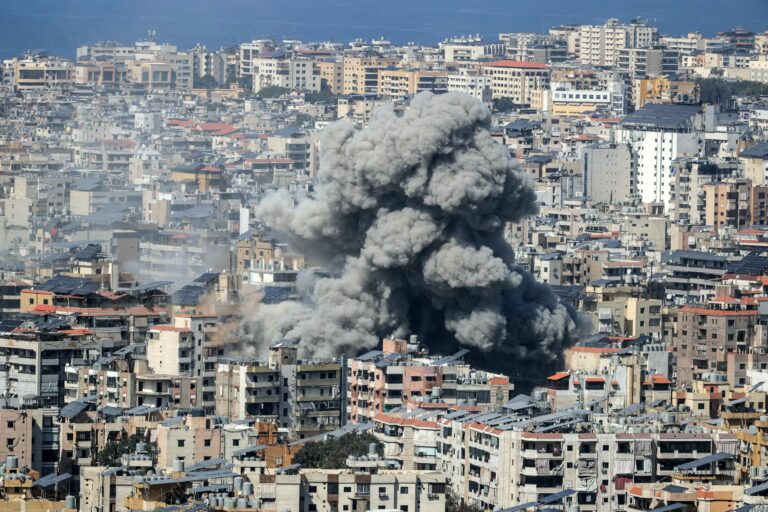
Iran has outlined three conditions for ending its war with the United States and Israel, as the conflict entered its 13th day on Thursday.

Posting on X, Iran’s president, Masoud Pezeshkian, said Tehran remained committed to peace but insisted that the war – which he said had been “ignited by the Zionist regime and the US” – could only end if Iran’s rights were recognised, reparations were paid and international guarantees were provided to prevent future aggression.

“Talking to leaders of Russia and Pakistan, I reaffirmed Iran’s commitment to peace in the region,” Pezeshkian wrote. “The only way to end this war – ignited by the Zionist regime and US – is recognising Iran’s legitimate rights, payment of reparations, and firm international guarantees against future aggression.”

The war began on February 28, when the United States and Israel launched coordinated airstrikes on Iranian military and strategic targets across several cities, including the capital Tehran.

According to Iranian authorities, the attacks resulted in heavy casualties, including the death of Iran’s former Supreme Leader Ali Khamenei, along with senior military commanders and civilians.

In response, Iran launched missile and drone attacks on Israeli territory and on locations across the Middle East believed to host U.S. military assets. These retaliatory strikes have significantly widened the conflict and raised fears of a broader regional war.

Rising Tensions and Threats
Iran’s military leadership has warned that any further attacks—especially on Iranian ports or infrastructure—could trigger large-scale retaliation. Iranian officials stated that no port, economic center, or strategic location in the Persian Gulf would be beyond their reach if the conflict escalates further.

Meanwhile, diplomatic contacts are ongoing. Pezeshkian said he has discussed the situation with leaders from Russia and Pakistan, reiterating Iran’s claim that it is open to peace if its conditions are met.

The war is already affecting the wider region and global markets. Oil supply disruptions and attacks on shipping routes have caused concern over energy security and rising fuel prices worldwide. The conflict has also drawn in regional actors and increased fears of a prolonged Middle East war.

County Grammar School Ikwerre/Etche Old Boys Elect New Executive Council

0

Members of the Old Boys Association of County Grammar School Ikwerre/Etche, Rivers State, have elected a new national executive committee to steer the affairs of the body for the next three years, pledging to sustain and expand the development initiatives recorded in recent years.

Newly elected President, Chief Hon Vincent Erinwo making his remarks.

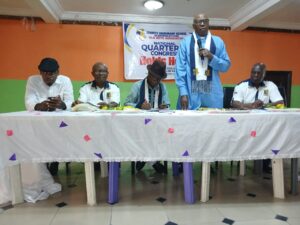
The new leadership emerged during the association’s first Quarterly National Congress in 2026, held last Sunday at the premises of El Domino School along Rumuolumeni Road in Port Harcourt, Rivers State.

At the congress, members elected a 11-member executive committee and tasked them with consolidating on the achievements of the outgoing leadership while advancing the welfare of members and the growth of their alma mater.

Elected officers include Chief Hon. Vincent Erinwo as National President; Dr. Edwin Ojirika as Vice President; Dr. Godwin Iheanacho as National Secretary; and Mr. Ezebunwo Amadi as Assistant Secretary.

Others are Mr. Nwachukwu Chukwuka, Treasurer; Mr. Echeazu Jonathan, Financial Secretary; Senibo Celestine Ogolo, Public Relations Officer; Mr. Nlem Philip Chinedu, Assistant Public Relations Officer; and Mr. Joseph E. Nwoha, Provost.

Immediate past President, Venerable Bekwelem Wabara addressing the congress

The immediate past National President, Venerable Bekwelem Wabara (Rtd.), and Prince Hon. Charles Bekee, a former commissioner in Rivers State, were named ex-officio members.

Speaking after taking the oath of office, Chief Erinwo, who was returned unopposed, commended the outgoing executive for what he described as a “superlative performance.”

He assured members that the new leadership would build on the solid foundation laid by previous administrations while introducing fresh initiatives aimed at strengthening the association and improving the welfare of members.

Erinwo also pledged that his administration would prioritise programmes that would contribute to the advancement of the school and promote stronger engagement among members across different sets.

Earlier, the former national president, Wabara, thanked members for their cooperation and support throughout his tenure.

He highlighted some of the achievements of his administration to include the hosting of the first national convention of the association, the production of a constitution, and the expansion of membership across different sets.

Wabara urged members to increase their participation in the activities of the association in order to support academic excellence and the continued development of their alma mater.

He also renewed his call on the Rivers State Government to urgently give the renowned institution a face-lift through massive renovation befitting a school of such magnitude.

The quarterly national congress, hosted by the 1979 set, attracted hundreds of old boys from various graduating sets, including members of the 1958 set, regarded within the association as the “Ancients.”

Edun Warns Of Inflation Risk From Middle East War, Unveils Measures To Protect Nigerians

0

The Federal Government has said it is putting measures in place to shield Nigerians from the potential economic shocks arising from the ongoing Middle East conflict, particularly rising inflation and transportation costs.

Minister of Finance and Coordinating Minister of the Economy, Wale Edun, disclosed this during an appearance on Politics Today on Channels Television, warning that disruptions in global oil markets could affect petroleum prices, fertilisers and other key commodities in Nigeria.

Edun explained that while the crisis could trigger inflationary pressure and higher transport costs, the Federal Government was already implementing policies aimed at reducing energy expenses and protecting citizens from the worst effects.

“There will be a direct impact on the price of petroleum products, on the price of fertilisers and a few other things that will be impacted. Inflation will be impacted, transport costs will be impacted,” he said.

According to him, rising transport costs often have a ripple effect on the economy, increasing the cost of goods and services, which makes it necessary for the government to take proactive steps to mitigate the impact.

He revealed that President Bola Ahmed Tinubu had approved an expansion of the compressed natural gas conversion programme to reduce Nigerians’ dependence on petrol.

The minister said the government would provide 100,000 additional compressed natural gas conversion kits to enable more vehicles switch from petrol to the cheaper alternative.

“One of the ways in which the President immediately announced was 100,000 extra CNG conversion kits to enable vehicles convert to CNG fuel, which is maybe 25 to 30 per cent the cost of PMS,” Edun said.

“That is the way you decisively move to bring down an important cost, because transport costs permeate so many other areas.”

Edun, however, noted that the government would avoid direct interference in the pricing of petroleum products except under extreme circumstances.

“We will be looking for measures that we can immediately implement other than interfering with an orderly market price. Given the policies and the philosophy of this government, intervention in pricing will always have to be a last resort,” he said.

He added that Nigeria’s growing domestic refining capacity places the country in a relatively strong position to manage potential disruptions in global supply chains.

“Our demand is about 50 million litres per day and the refiners have said they can meet that demand. So we are in a relatively strong position if we can make that a reality on a consistent basis. We must say thank God for our refining capacity,” he said.

The minister also expressed concern over uncertainties surrounding global energy supply routes, particularly the Strait of Hormuz, a key international shipping channel for crude oil.
“We are not sure what will happen in places like the Strait of Hormuz or how much disruption there will be or how long supply chains will be affected,” Edun said.

He noted that although higher global oil prices could increase Nigeria’s revenue, the gains might be partly offset by higher freight and transportation costs.

“One we benefit from selling at a higher price, but then the costs are also higher. Freight costs and transportation costs also rise, so you have to see whether the gains are more than the losses,” he said.

Edun further warned that global inflationary pressures triggered by the conflict could force countries to raise interest rates.

“If inflation raises its head, the world will rise to fight it because it hurts the common man and the most vulnerable in society more than anybody else,” he added.

The minister, however, assured Nigerians that the government would continue to prioritise policies that protect recent gains in food prices and inflation while supporting domestic food production.

“Our intention is to keep food affordable, working with the farmers and ensuring a steady and adequate supply of food. We have achieved some progress to date and we will continue to take proactive steps to sustain it,” he said.