

Home Blog Page 53

Act Now or Lose It: Newly Inuagurated NIEE Boss, Ojirika Sounds Environmental Warning

0

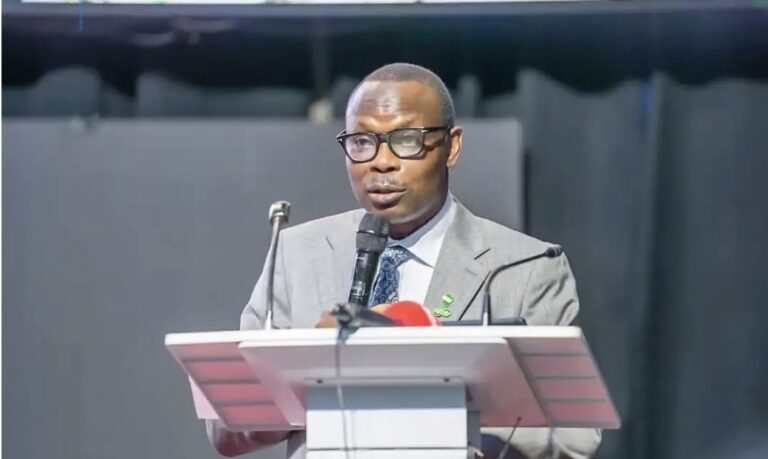
In a stirring call to action, the newly inaugurated 4th Chapter Chairman of the Nigerian Institution of Environmental Engineers, Engr. Dr. Edwin Ojirika, has urged collective responsibility in tackling Nigeria’s worsening environmental crisis, warning that the time for complacency has long passed.

Speaking in Port Harcourt on Tuesday, Ojirika painted a sobering picture of a nation grappling with escalating environmental degradation driven largely by human activities.

According to him, environmental professionals can no longer afford to remain passive observers as the ecosystem deteriorates to alarming levels.

“We are in trying times,” he declared. “Environmental challenges are gaining momentum globally and in Nigeria due to increasing anthropogenic activities.
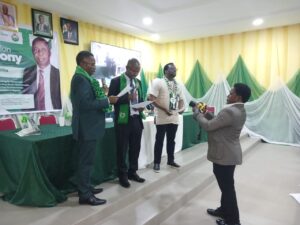
Dr. Ojirika taking his oath of office.

As professionals, we must speak up, offer expert guidance, and align with global efforts to rescue our environment.”

While acknowledging the significant role of multinational oil companies in pollution, particularly in the Niger Delta, Ojirika challenged a widely held perception that they are solely to blame.

He emphasized that individuals, communities, and businesses contribute daily to environmental decline through poor waste management practices, unsustainable lifestyles, and disregard for environmental standards.

“Environmental pollution is not the responsibility of oil companies alone,” he stressed. “All of us, through our daily actions, are contributors to the degradation we now witness.”

Despite the grim outlook, Ojirika maintained that the situation is far from hopeless. He outlined a comprehensive roadmap for environmental restoration, anchored on attitudinal change, institutional collaboration, and stronger enforcement of regulations.

Central to his message was the need for a cultural shift toward responsible environmental behavior. He called for citizens to adopt sustainable lifestyles and recognize the environment as humanity’s only home.

Ojirika also underscored the importance of multi-stakeholder collaboration, urging government agencies, non-governmental organizations, academia, and environmental professionals to work in synergy to combat pollution and its associated public health risks.

He further called on regulatory bodies such as the National Oil Spill Detection and Response Agency and the National Environmental Standards and Regulations Enforcement Agency to intensify enforcement of environmental laws.

According to him, violations must attract strict penalties to serve as deterrents.
“The government must demonstrate political will by holding offenders accountable, especially in cases of oil spills, gas flaring, and improper waste disposal,” he said.

The chairman also advocated legislative reforms to strengthen outdated environmental laws, noting that weak regulations often embolden violators.

Beyond enforcement, Ojirika emphasized the role of education and public awareness. He called for sustained environmental enlightenment campaigns across media platforms and public spaces, as well as the integration of environmental studies into Nigeria’s basic and secondary education systems.

“This foundation is critical in shaping a generation that understands and prioritizes sustainability,” he noted.

Highlighting the urgency of climate change, Ojirika pushed for increased investment in renewable energy, warning that continued reliance on fossil fuels exacerbates greenhouse gas emissions and global warming.

He also stressed the importance of sustainable urban planning, proper infrastructure design, and adherence to Environmental Impact Assessment (EIA) processes. According to him, poorly executed projects often worsen flooding, erosion, and environmental stress.

“Development must not come at the expense of the environment,” he cautioned. “Every project must follow due process, and EIA reports must be handled by qualified professionals, not quacks.”

In addition, he advocated for greener urban spaces, including the integration of trees and shrubs in road and residential designs to serve as carbon sinks and enhance environmental aesthetics.

Ojirika concluded by highlighting the critical role of environmental professionals in driving change, calling for mentorship and knowledge transfer to younger practitioners to ensure long-term sustainability.

His message was clear: reversing environmental degradation in Nigeria requires a united front, bold leadership, and unwavering commitment from all sectors of society.
“The environment can still be restored,” he said. “But only if we act now—and act together.”
Badey Development Centre Unveils BOT Ahead Of Launch

0

The Albert Badey Centre for Development (ABCD) has constituted an 11-member Board of Trustees (BOT) as part of activities leading to its formal inauguration.

A statement issued on Tuesday in Port Harcourt by the Centre’s Executive Director, Ibelema Green, named former Minister, Senator Benneth Birabi, as Chairman of the Board.

Other members include Senator Andrew Uchendu; Emeritus Prof. Alexis Monsi; a retired Permanent Secretary, John Nalley; and Sir Michael Aloega.

Also on the board are Tombari Badey, Gogobari Badey, Dr. Sirah Badey-Igbedion, Mrs. Tonta Badey-Linden, Engineer Gabriel Deage, and the founder of the Centre, Suage Badey.

Green disclosed that the formal launch of the Centre, alongside the 90th posthumous birthday celebration of the late Ogoni leader, Albert Badey, has been scheduled for April 25 at the EUI Event Centre, GRA, Port Harcourt.

According to the statement, a former Commissioner in the old Rivers State, Dr. Emmanuel Denenu, will deliver the inaugural lecture, while a former Deputy Governor of the state, Sir Gabriel Toby, will chair the occasion.

The statement recalled that the late Badey served Rivers State in several capacities, including Secretary to the State Government, Head of Service, Permanent Secretary and Commissioner.

Senate Fast-tracks Approval Of $6bn External Loans Sought By Tinubu

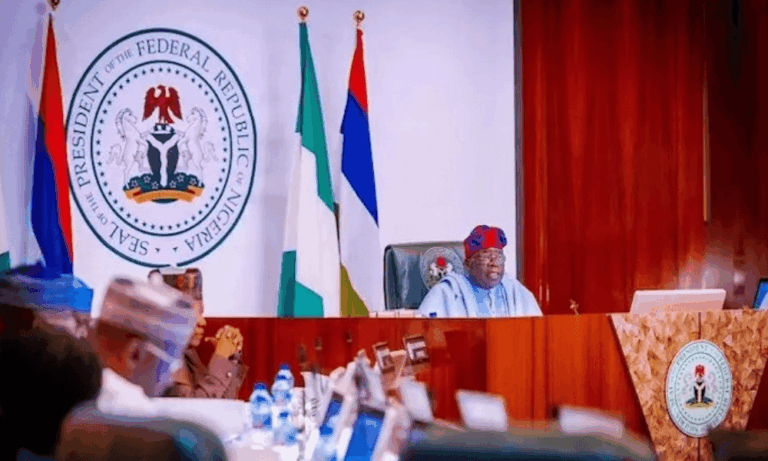
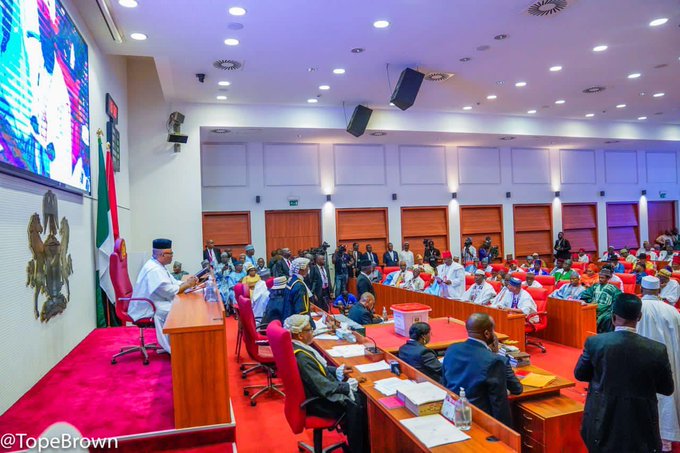
The Nigerian Senate on Tuesday approved a $6 billion external borrowing request by President Bola Tinubu, just hours after the proposal was formally presented on the floor of the chamber.

The request, conveyed in two separate letters to Senate President Godswill Akpabio and read during plenary, received swift legislative backing following the consideration of a report by the Committee on Local and Foreign Debts, chaired by Senator Aliyu Wamakko.
In the first communication, Tinubu sought approval to establish a structured Total Return Swap (TRS) external financing programme valued at up to $5 billion with First Abu Dhabi Bank. The facility is expected to support the government’s fiscal and infrastructure financing needs.

In a second request, the President asked lawmakers to approve a $1 billion loan facility backed by UK Export Finance and arranged by Citibank. According to the President, the funds will be deployed towards the reconstruction and rehabilitation of key maritime infrastructure, including the Lagos Port Complex and Tin Can Island Port.

The rapid approval underscores the legislature’s support for the administration’s borrowing plan amid ongoing efforts to address infrastructure deficits and stabilise the economy.

Tinubu Seeks Senate Nod For $6bn External Loans To Bridge Deficit, Upgrade Ports

0

President Bola Tinubu has formally requested the approval of the Senate to secure external loans totaling $6 billion, in a move aimed at addressing Nigeria’s fiscal pressures and revitalising critical infrastructure.

The requests were conveyed in two separate letters addressed to Senate President Godswill Akpabio and read during plenary on Tuesday.

In the first correspondence, Tinubu sought legislative approval to obtain a $5 billion facility from Abu Dhabi Bank. The loan, according to the President, is intended to bridge the nation’s budget deficit and support ongoing debt financing obligations.
In a separate letter, the President requested approval for an additional $1 billion loan from London-based Citibank.

The funds are earmarked for the rehabilitation of key port infrastructure, including the Lagos Port Complex and Tin Can Island Port.

Tinubu explained that the proposed upgrades are designed to address longstanding infrastructure deficits, improve operational efficiency, and enhance safety standards across the country’s port system. He added that the intervention would also promote non-oil exports and strengthen Nigeria’s position as a regional trade hub.

Following the presentation, Akpabio referred both requests to the Senate Committee on Local and Foreign Debts, chaired by Senator Aliyu Wamakko, for further legislative scrutiny and expedited consideration.

Nigeria Strengthening Preparedness For Next Pandemic, Says Minister

0

Minister of State for Health and Social Welfare, Iziaq Salako, on Monday said pandemics are inevitable, stressing that countries must strengthen their capacity to respond swiftly and effectively to future health emergencies.
Salako spoke in Abuja at a public health symposium titled Lessons on Pandemic Preparedness and Response: Insights from China and Nigeria.
“The next pandemic is not a matter of if but when,” he said.

He underscored the need for coordinated, equitable and innovative preparedness, noting that the COVID-19 pandemic, which claimed over seven million lives globally, exposed weaknesses in health systems while also highlighting the value of collaboration and resilience.

According to the minister, Nigeria has made measurable progress in strengthening its health security architecture. He listed key interventions to include the digitalisation of infectious disease surveillance through the Surveillance Outbreak Response Management and Analysis System (SORMAS), capacity building for health workers, and the expansion of diagnostic capabilities with more than 100 public health laboratories nationwide.

He added that the country has also established infectious disease centres and public health emergency operations centres across all states and the Federal Capital Territory (FCT).
Salako said the interventions contributed to an improvement in Nigeria’s technical evaluation score from 39 per cent in 2017 to 54 per cent in 2023.

He also pointed to China’s rapid and disciplined response to COVID-19, emphasising the importance of technology integration and community mobilisation in managing health crises.

“Mutual learning between Nigeria and China is critical to building resilient systems capable of safeguarding citizens and optimising global actions against future health emergencies,” he said.

The minister further noted that under President Bola Tinubu, health security has been prioritised as the fourth pillar of the health sector renewal investment initiative.

He said efforts to deepen preparedness at the sub-national level are being driven through initiatives such as the 7-1-7 target and the SITAware Transition Project, alongside the One Health approach, which promotes coordinated attention to human, animal and environmental health.

Salako added that Nigeria is actively participating in negotiations on the World Health Organisation (WHO) pandemic agreement, reflecting its commitment to multilateral cooperation.

He stressed that pandemic preparedness requires a whole-of-society approach involving government, the private sector, communities, researchers and international partners.
Salako urged stakeholders to focus on actionable policies, partnerships and innovations to ensure global readiness and equity.

“Let us work together across borders and sectors to ensure full readiness for the next pandemic, leaving no one behind,” he said.

INEC Recognises Wike-backed PDP NWC, Updates Leadership List

0

The Independent National Electoral Commission (INEC) has formally recognised a faction of the National Working Committee (NWC) of the Peoples Democratic Party (PDP) aligned with the Minister of the Federal Capital Territory, Nyesom Wike.

The commission reflected the development on its official website on Monday, where it published an updated leadership structure for the opposition party.

In the revised list, Abdulrahman Mohammed is named as National Chairman, while Senator Samuel Anyanwu is designated as National Secretary.

Other members of the National Working Committee include Ahmed Yayari Mohammed as National Treasurer, Daniel Woyengikuro as National Financial Secretary, and Kamaldeen Adeyemi Ajibade (SAN) as National Legal Adviser.

NDDC Bags Global Honours For Governance, Leadership In Niger Delta Development

0

The Niger Delta Development Commission (NDDC) has received multiple international awards in recognition of its efforts in leadership, governance, accountability and regional transformation in the Niger Delta.

A statement signed and issued by Seledi Thompson-Wakama, Director, Corporate Affairs of the NDDC stated that the honours were conferred by the Institute of Public Sector Management at a ceremony held at Parliament House, where top officials of the Commission were celebrated for their contributions to public service excellence.

Leading the delegation was the Managing Director of the NDDC, Samuel Ogbuku, alongside the Executive Director, Finance and Administration, Boma Iyaye, and the Director, Finance and Accounts, Kunemofa Asu.

Ogbuku, represented by his Chief of Staff, Rev. Obegha Oworibo, was honoured for what the institute described as “strategic and transformational leadership,” while Iyaye, represented by the Director of Administration and Human Resources, Sir Kelechi Nwelue, received recognition for “distinguished contributions to integrity and administrative excellence in public service.”

Asu was similarly recognised for her role in promoting “regional development, integrity and accountability” within the Commission’s financial management framework.

Reacting to the awards, Ogbuku said the international recognition affirms that reforms and interventions undertaken by the Commission are gaining visibility and credibility both within and outside Nigeria.

He expressed appreciation to the institute for acknowledging the agency’s contributions, noting that the honours would serve as motivation for the Board and Management to intensify efforts toward delivering impactful projects and strengthening human capital development across the Niger Delta.

Ogbuku also reiterated the Commission’s commitment to completing legacy projects capable of driving sustainable growth and improving livelihoods in the region.

Speaking at the ceremony, President of the institute, Martina Macpherson, commended the NDDC leadership for its commitment to tackling complex development challenges while expanding opportunities for communities in the Niger Delta.

She emphasised that effective regional development goes beyond infrastructure delivery, stressing the importance of institutional strengthening and restoring public trust.

“Their efforts reflect an important principle that development is not only about projects or programmes, but also about restoring hope, strengthening institutions and building pathways for sustainable prosperity,” she said.

Macpherson added that the institute remains committed to advancing global public sector leadership through research, professional development and international collaboration.

RSG Details ₦302bn Spending Under Ibas As SERAP Suit Probes Six-Month Emergency Rule

0

The Rivers State Government has disclosed that over ₦302 billion was expended within six months during the administration of former sole administrator, Vice Admiral Ibok-Ete Ibas (retd), amid an ongoing legal challenge seeking transparency over the period of emergency rule.

The revelation was made in a counter-affidavit filed before the High Court of Rivers State in Port Harcourt in response to a Freedom of Information (FoI) suit instituted by the Socio-Economic Rights and Accountability Project (SERAP).

In the suit, marked PHC/4153/CS/2025 and presided over by Justice S.H. Aprioku, SERAP is demanding full disclosure of how public funds were utilised between March and August 2025.

According to the Rivers State Accountant-General and the Ministry of Budget and Economic Planning, the state received ₦253.48 billion from the Federation Account Allocation Committee (FAAC) within the period, alongside additional receipts of ₦44.87 billion, bringing total inflows to about ₦298.35 billion.

However, documents tendered as Exhibits DTI (bank statements) and DT2 (Government House capital estimates) indicate that total expenditures exceeded ₦302.35 billion.

The government stated that while ₦28 billion had been approved for the installation of Closed Circuit Television (CCTV) systems at the State House, no funds were ultimately disbursed for the project.

The affidavit maintained that authorities do not dispute SERAP’s right to access information and have now complied substantially by providing the requested records, noting that any delay did not result in proven harm to the applicant.

Preliminary analysis by SERAP reveals extensive financial activity during the six-month period, including multiple transfers to Government House ranging from ₦1.8 million to as high as ₦4.27 billion. Several payments—₦61.9 million, ₦122 million, ₦170 million, ₦389 million, ₦750 million, ₦850 million, and recurring ₦900 million—were highlighted, alongside a single ₦4.27 billion transfer recorded in August.

Spending patterns also showed significant concentration within a short timeframe. Of the ₦163.44 billion allocated to ministries, departments and agencies (MDAs), over ₦106 billion was disbursed in August alone.

Further breakdown indicates that ₦112.41 billion was spent on salaries, pensions and overheads, while ₦26.5 billion went toward loan servicing and bank charges.

Capital expenditures included over ₦2.5 billion earmarked for Government House quarters, though only ₦1.1 billion appears to have been utilised. Office building repairs were revised upward to ₦2.67 billion, with about ₦404 million reportedly spent.

Other allocations include ₦350 million for canteen and kitchen equipment, and over ₦463 million for rehabilitation projects, with one project’s cost rising from ₦800 million to ₦1.56 billion.

The closing balance in the state’s account as of August 2025 stood at approximately ₦19.93 billion.

SERAP Deputy Director, Kolawole Oluwadare, said the organisation is scrutinising the documents to determine whether full compliance has been achieved or if further legal steps are necessary.

The group is asking the court to affirm its right under constitutional and statutory provisions to access the financial records in question.
The matter has been adjourned to May 19, 2026, for further hearing.

Otti Moves To Pull Abia Off National Grid In Radical Power Autonomy Drive

0

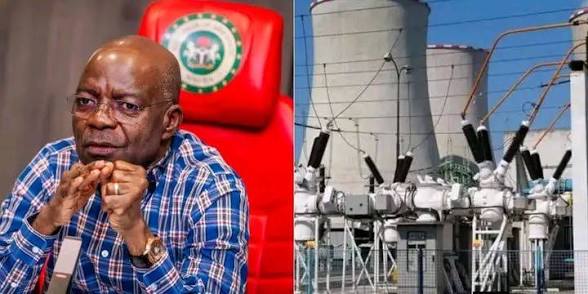
Governor Alex Otti has unveiled an ambitious plan to disconnect Abia State from Nigeria’s national electricity grid, signalling a decisive shift toward energy independence in response to the country’s persistent power supply challenges.

Speaking on the initiative, Otti disclosed that his administration is already in advanced negotiations with foreign partners to actualise the project, describing it as a private sector-led effort backed by government support.

According to the governor, the state’s Commissioner for Power is currently in the Netherlands engaging potential investors and technical partners, as groundwork intensifies for what could become one of the most far-reaching subnational energy reforms in Nigeria.

“Our vision is clear: to detach the entire state from the national grid,” Otti said, underscoring the scale and urgency of the plan.

He explained that the move is driven by the need to guarantee stable and reliable electricity for households, industries and businesses, long hampered by erratic supply from the national grid.
Framing the project as a people-centred intervention, the governor added, “It is all for us,” emphasising its anticipated impact on economic growth and quality of life.

The proposal marks a significant moment in Nigeria’s evolving power sector, as states increasingly explore decentralised energy solutions to overcome structural inefficiencies in the national system. If strongly concluded, Abia’s full disengagement from the grid could redefine subnational participation in electricity generation and distribution, potentially setting a precedent for other states seeking to chart independent energy pathways.

Misinformation On CDS Comments Could Undermine Military Gains, CPDD Cautions

0

The Centre for Peace, Democracy and Development (CPDD) has raised concerns over a recent social media and some online news medium which misrepresented comments made by Nigeria’s Chief of Defence Staff, Gen Olufemi Oluyede, regarding the killing of terrorists, warning that such inaccuracies could undermine ongoing military operations.

In a statement on Friday, CPDD Convener Akin Daniels said the reports some on Facebook, which has gained traction online, distorted the context of the CDS’s remarks and created a misleading narrative that does not reflect the realities of ongoing military engagements across insurgency-affected areas.

CPDD noted that at a time when troops are recording measurable successes against insurgent groups, the spread of misinformation could weaken public confidence and inadvertently embolden criminal elements seeking to exploit gaps in public perception.

The group stressed that the Armed Forces of Nigeria remain bound by established rules of engagement and international best practices, adding that comments attributed to the CDS in the viral post were taken out of context and risk misinforming the public.

It therefore called on journalists, bloggers and social media influencers to exercise restraint and professionalism by verifying facts before dissemination, especially on sensitive national security matters that could influence troop morale and public cooperation.

The organisation further warned that sensational reporting could serve the propaganda objectives of terrorist groups such as Boko Haram and Islamic State West Africa Province, which are known to exploit misinformation as part of their psychological warfare strategies.

CPDD emphasised that while the media has a constitutional role in holding authorities accountable, it must also act in ways that do not jeopardise national security efforts, urging all stakeholders to prioritise accuracy, responsibility and national interest as Nigeria continues its fight against insurgency.

The Centre for Peace, Democracy and Development (CPDD) has raised concerns over a recent social media and some online news medium which misrepresented comments made by Nigeria’s Chief of Defence Staff, Gen Olufemi Oluyede, regarding the killing of terrorists, warning that such inaccuracies could undermine ongoing military operations.

In a statement on Friday, CPDD Convener Akin Daniels said the reports some on Facebook, which has gained traction online, distorted the context of the CDS’s remarks and created a misleading narrative that does not reflect the realities of ongoing military engagements across insurgency-affected areas.

CPDD noted that at a time when troops are recording measurable successes against insurgent groups, the spread of misinformation could weaken public confidence and inadvertently embolden criminal elements seeking to exploit gaps in public perception.

The group stressed that the Armed Forces of Nigeria remain bound by established rules of engagement and international best practices, adding that comments attributed to the CDS in the viral post were taken out of context and risk misinforming the public.

It therefore called on journalists, bloggers and social media influencers to exercise restraint and professionalism by verifying facts before dissemination, especially on sensitive national security matters that could influence troop morale and public cooperation.

The organisation further warned that sensational reporting could serve the propaganda objectives of terrorist groups such as Boko Haram and Islamic State West Africa Province, which are known to exploit misinformation as part of their psychological warfare strategies.

CPDD emphasised that while the media has a constitutional role in holding authorities accountable, it must also act in ways that do not jeopardise national security efforts, urging all stakeholders to prioritise accuracy, responsibility and national interest as Nigeria continues its fight against insurgency.

The Centre for Peace, Democracy and Development (CPDD) has raised concerns over a recent social media and some online news medium which misrepresented comments made by Nigeria’s Chief of Defence Staff, Gen Olufemi Oluyede, regarding the killing of terrorists, warning that such inaccuracies could undermine ongoing military operations.

In a statement on Friday, CPDD Convener Akin Daniels said the reports some on Facebook, which has gained traction online, distorted the context of the CDS’s remarks and created a misleading narrative that does not reflect the realities of ongoing military engagements across insurgency-affected areas.

CPDD noted that at a time when troops are recording measurable successes against insurgent groups, the spread of misinformation could weaken public confidence and inadvertently embolden criminal elements seeking to exploit gaps in public perception.

The group stressed that the Armed Forces of Nigeria remain bound by established rules of engagement and international best practices, adding that comments attributed to the CDS in the viral post were taken out of context and risk misinforming the public.

It therefore called on journalists, bloggers and social media influencers to exercise restraint and professionalism by verifying facts before dissemination, especially on sensitive national security matters that could influence troop morale and public cooperation.

The organisation further warned that sensational reporting could serve the propaganda objectives of terrorist groups such as Boko Haram and Islamic State West Africa Province, which are known to exploit misinformation as part of their psychological warfare strategies.

CPDD emphasised that while the media has a constitutional role in holding authorities accountable, it must also act in ways that do not jeopardise national security efforts, urging all stakeholders to prioritise accuracy, responsibility and national interest as Nigeria continues its fight against insurgency.