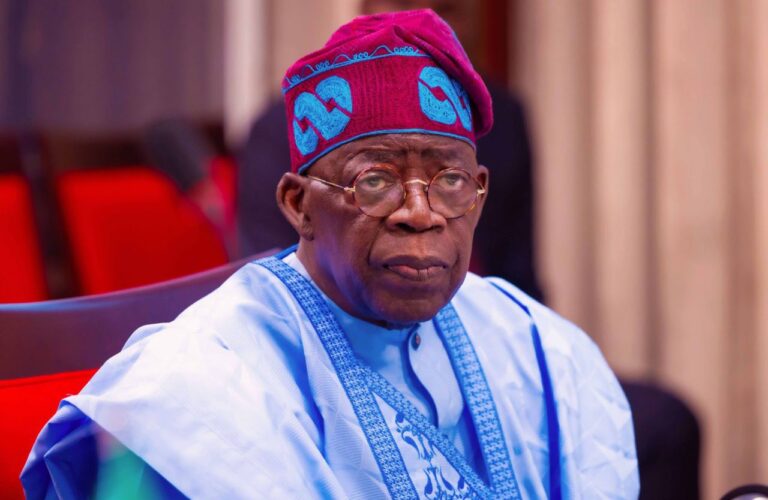
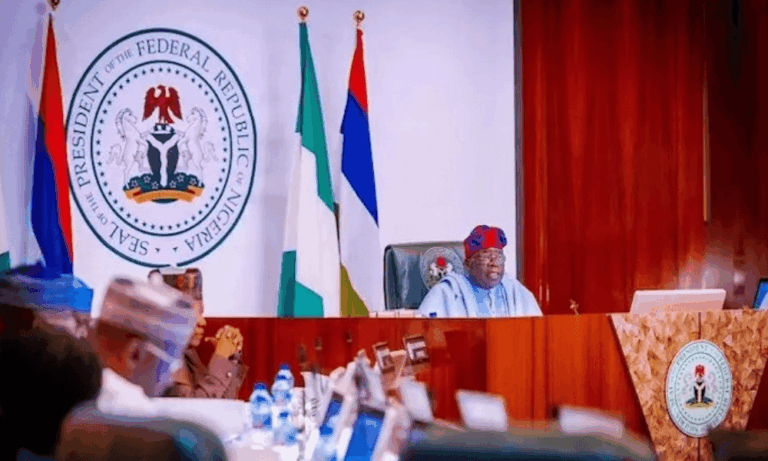
President Bola Ahmed Tinubu has postponed his planned visit to Iperu, Ogun State, opting instead to travel to Jos, Plateau State, to commiserate with victims of recent attacks that claimed several lives.
According to a State House statement issued on Wednesday by his Special Adviser on Information and Strategy, Bayo Onanuga, the President’s decision underscores his concern over the security situation and his solidarity with affected communities.
Tinubu is expected to visit Plateau State to sympathise with the government and people over the killings before proceeding to Lagos to observe the Good Friday holiday.
The President will, however, resume his official engagements on Saturday, April 4, with a visit to Ogun State, where he will commission the Gateway International Cargo Airport in Iperu. He is also scheduled to inaugurate two commercial aircraft aimed at boosting import and export activities, as well as the new Federal Operations Unit of the Nigeria Customs Service and its operational vehicles.
He will subsequently return to Lagos to continue the Easter holiday and commission a number of infrastructure projects executed by the state government under Governor Babajide Sanwo-Olu. The projects include the Ojota/Opebi Link Bridge, the Lagos State Geographic Information System building, a multi-agency complex named after the President, and a school complex.
Before returning to Abuja, Tinubu is billed to visit Bayelsa State on April 10 for an official state visit, where he will inaugurate key projects undertaken by Governor Douye Diri’s administration.
The visit to Bayelsa is expected to feature the commissioning of major infrastructure projects, including the Opokuma-Sabagreia-Polaku road and bridge, the 630-metre Angiama-Oporoma bridge, a 60MW gas turbine at Elebele, Glory Drive Phase 3, and the New Yenagoa City–LNG road, among others.
The trip is seen as part of the President’s broader effort to deepen federal engagement with states and promote infrastructure development across the country.
The Independent National Electoral Commission (INEC) has struck out the names of David Mark and Rauf Aregbesola from its official records as National Chairman and National Secretary of the African Democratic Congress (ADC), escalating the party’s protracted leadership crisis.
In a decisive move announced on Wednesday, the electoral body also declined to recognise Nafiu Bala Gombe, who is seeking to assume the chairmanship through judicial pronouncement.
INEC said it would suspend recognition of all factions within the party and halt monitoring of any conventions or congresses organised by groups aligned with the contending leaders, pending the final determination of a substantive suit before the Federal High Court.
The commission noted that the decision was informed by conflicting legal claims arising from the party’s internal dispute, as well as the implications of a recent Court of Appeal judgment in Suit No. CA/ABJ/145/2026, which has further complicated the leadership tussle.
In a statement, National Commissioner and Chairman of the Information and Voter Education Committee, Mallam Mohammed Kudu Haruna, reaffirmed the commission’s commitment to neutrality, urging political actors to refrain from actions capable of undermining preparations for the 2027 general elections.
INEC disclosed that it had received a letter dated March 16, 2026, from Suleiman Usman (SAN) & Co., cautioning against the recognition of Gombe as acting national chairman while legal proceedings remain ongoing.
It also confirmed receipt of a separate “Demand for Enforcement” from Summit Law Chambers, counsel to Gombe, calling for the removal of Mark and Aregbesola from its records and urging the commission to cease all engagement with them or any activities conducted under their authority.
The electoral body said the conflicting legal demands from the rival factions had necessitated its decision to suspend official dealings with all parties involved until the courts provide definitive clarity on the leadership of the ADC.
Six Nigerian and international media freedom organisations have jointly written to President Bola Ahmed Tinubu, calling for urgent action to address persistent attacks on journalists and to ensure accountability for perpetrators.
In a letter dated April 1, 2026, the groups urged the President to investigate abuses against the media both before and during his administration, while also pressing for reforms to laws that criminalise journalism.
The signatories include Angela Quintal of the Committee to Protect Journalists (CPJ), Busola Ajibola of the Centre for Journalism Innovation and Development (CJID), Churchill Otieno of the Africa Editors Forum (TAEF), Edetaen Ojo of Media Rights Agenda (MRA), Lanre Arogundade of the International Press Centre (IPC), and Musikilu Mojeed of the Nigerian chapter of the International Press Institute (IPI).
The letter was prompted by recent remarks credited to Vice President Kashim Shettima, who reportedly suggested that journalists had not faced harassment since the current administration assumed office.
Describing the claim as inaccurate, the organisations expressed concern that such statements downplay “numerous and well-documented attacks on the press,” including arrests, harassment and violence allegedly involving security agencies.
They cited multiple reports indicating a troubling pattern. According to the groups, CPJ has documented cases of journalists being detained without warning and subjected to mistreatment, while others have faced prosecution over defamation and cybercrime allegations linked to their work.
They further noted that during the August 2024 #EndBadGovernance protests, at least 56 journalists were reportedly assaulted or harassed, with security operatives allegedly firing bullets and tear gas in the direction of media personnel.
Additional data from the International Press Centre recorded 65 incidents of attacks on journalists in 2024, ranging from physical assault and intimidation to unlawful detention and threats to life. Media Rights Agenda, in its 2025 report, documented 86 cases of press freedom violations, while CJID said it had verified at least 231 attacks since President Tinubu took office in 2023.
The organisations also raised concerns over long-standing cases of impunity, recalling that since 1992, CPJ has documented the killing of at least 23 journalists in Nigeria, with several others missing and presumed dead.
They highlighted the case of journalist Onifade Emmanuel Pelumi, who died in 2020 after being seen in police custody, noting that his body has yet to be returned to his family despite repeated appeals.
The groups criticised what they described as a lack of meaningful government action to address these issues, warning that upcoming general elections in 2027 could heighten risks for journalists if urgent steps are not taken.
They urged the President to match official claims of support for the media with concrete measures, including holding perpetrators accountable, ending impunity, and ensuring the safety of journalists before, during and after the elections.
The organisations also called for the return of Pelumi’s remains to his family and for comprehensive reforms to safeguard press freedom in Nigeria.
They stressed that protecting journalists is essential to strengthening democratic governance, particularly as the country prepares for another electoral cycle.
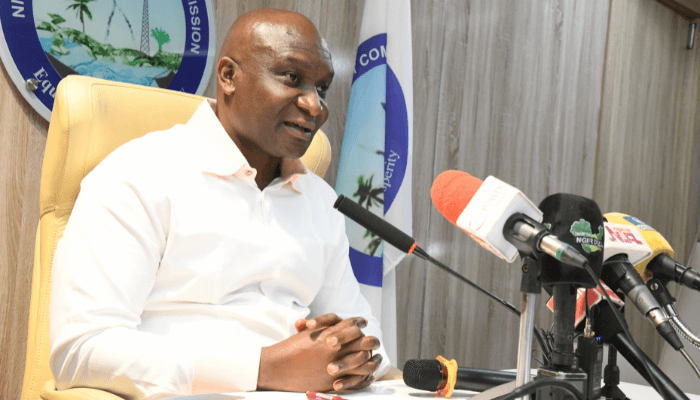
The Niger Delta Development Commission (NDDC) has issued a strong warning to the public over a fraudulent scheme circulating on social media, in which scammers are falsely offering a monthly stipend of N50,000 to Nigerian youths under the guise of the Commission’s Youth Internship Programme.
In a statement released on April 1, 2026, signed by Seledi Thompson-Wakama, Director of Corporate Affairs, the Commission said its attention had been drawn to messages urging “all Nigerian youths” to submit their bank account details to qualify for the purported stipend. It described the claim as entirely false and the handiwork of criminal elements seeking to exploit unsuspecting individuals.
The NDDC clarified that beneficiaries of its Youth Internship Scheme were carefully selected from its official database, noting that the programme had already engaged duly registered youths across the Niger Delta region.
According to the Commission, the fraudulent messages are part of a broader attempt by scammers to capitalise on its youth empowerment initiatives, thereby deceiving young people who are genuinely seeking legitimate opportunities.
“It is disturbing that some individuals are attempting to take advantage of our youths under the pretext of non-existent schemes,” the statement said, urging vigilance among the public.
The Commission advised Nigerians to disregard such messages and refrain from sharing personal or financial information with unverified sources. It emphasised that all authentic information regarding its programmes is disseminated strictly through official communication channels.
Prospective applicants and beneficiaries were encouraged to verify any claims via the Commission’s website and its recognised social media platforms.
“All inquiries about our Youth Internship Scheme and other empowerment programmes should be directed through our official information platforms,” the statement added.
The NDDC reiterated its commitment to transparency and warned that it would not be responsible for any losses incurred through engagement with fraudulent schemes.
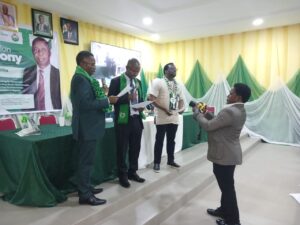
In a stirring call to action, the newly inaugurated 4th Chapter Chairman of the Nigerian Institution of Environmental Engineers, Engr. Dr. Edwin Ojirika, has urged collective responsibility in tackling Nigeria’s worsening environmental crisis, warning that the time for complacency has long passed.
Speaking in Port Harcourt on Tuesday, Ojirika painted a sobering picture of a nation grappling with escalating environmental degradation driven largely by human activities.
According to him, environmental professionals can no longer afford to remain passive observers as the ecosystem deteriorates to alarming levels.
“We are in trying times,” he declared. “Environmental challenges are gaining momentum globally and in Nigeria due to increasing anthropogenic activities.
Dr. Ojirika taking his oath of office.
As professionals, we must speak up, offer expert guidance, and align with global efforts to rescue our environment.”
While acknowledging the significant role of multinational oil companies in pollution, particularly in the Niger Delta, Ojirika challenged a widely held perception that they are solely to blame.
He emphasized that individuals, communities, and businesses contribute daily to environmental decline through poor waste management practices, unsustainable lifestyles, and disregard for environmental standards.
“Environmental pollution is not the responsibility of oil companies alone,” he stressed. “All of us, through our daily actions, are contributors to the degradation we now witness.”
Despite the grim outlook, Ojirika maintained that the situation is far from hopeless. He outlined a comprehensive roadmap for environmental restoration, anchored on attitudinal change, institutional collaboration, and stronger enforcement of regulations.
Central to his message was the need for a cultural shift toward responsible environmental behavior. He called for citizens to adopt sustainable lifestyles and recognize the environment as humanity’s only home.
Ojirika also underscored the importance of multi-stakeholder collaboration, urging government agencies, non-governmental organizations, academia, and environmental professionals to work in synergy to combat pollution and its associated public health risks.
He further called on regulatory bodies such as the National Oil Spill Detection and Response Agency and the National Environmental Standards and Regulations Enforcement Agency to intensify enforcement of environmental laws.
According to him, violations must attract strict penalties to serve as deterrents.
“The government must demonstrate political will by holding offenders accountable, especially in cases of oil spills, gas flaring, and improper waste disposal,” he said.
The chairman also advocated legislative reforms to strengthen outdated environmental laws, noting that weak regulations often embolden violators.
Beyond enforcement, Ojirika emphasized the role of education and public awareness. He called for sustained environmental enlightenment campaigns across media platforms and public spaces, as well as the integration of environmental studies into Nigeria’s basic and secondary education systems.
“This foundation is critical in shaping a generation that understands and prioritizes sustainability,” he noted.
Highlighting the urgency of climate change, Ojirika pushed for increased investment in renewable energy, warning that continued reliance on fossil fuels exacerbates greenhouse gas emissions and global warming.
He also stressed the importance of sustainable urban planning, proper infrastructure design, and adherence to Environmental Impact Assessment (EIA) processes. According to him, poorly executed projects often worsen flooding, erosion, and environmental stress.
“Development must not come at the expense of the environment,” he cautioned. “Every project must follow due process, and EIA reports must be handled by qualified professionals, not quacks.”
In addition, he advocated for greener urban spaces, including the integration of trees and shrubs in road and residential designs to serve as carbon sinks and enhance environmental aesthetics.
Ojirika concluded by highlighting the critical role of environmental professionals in driving change, calling for mentorship and knowledge transfer to younger practitioners to ensure long-term sustainability.
His message was clear: reversing environmental degradation in Nigeria requires a united front, bold leadership, and unwavering commitment from all sectors of society.
“The environment can still be restored,” he said. “But only if we act now—and act together.”
The Albert Badey Centre for Development (ABCD) has constituted an 11-member Board of Trustees (BOT) as part of activities leading to its formal inauguration.
A statement issued on Tuesday in Port Harcourt by the Centre’s Executive Director, Ibelema Green, named former Minister, Senator Benneth Birabi, as Chairman of the Board.
Other members include Senator Andrew Uchendu; Emeritus Prof. Alexis Monsi; a retired Permanent Secretary, John Nalley; and Sir Michael Aloega.
Also on the board are Tombari Badey, Gogobari Badey, Dr. Sirah Badey-Igbedion, Mrs. Tonta Badey-Linden, Engineer Gabriel Deage, and the founder of the Centre, Suage Badey.
Green disclosed that the formal launch of the Centre, alongside the 90th posthumous birthday celebration of the late Ogoni leader, Albert Badey, has been scheduled for April 25 at the EUI Event Centre, GRA, Port Harcourt.
According to the statement, a former Commissioner in the old Rivers State, Dr. Emmanuel Denenu, will deliver the inaugural lecture, while a former Deputy Governor of the state, Sir Gabriel Toby, will chair the occasion.
The statement recalled that the late Badey served Rivers State in several capacities, including Secretary to the State Government, Head of Service, Permanent Secretary and Commissioner.
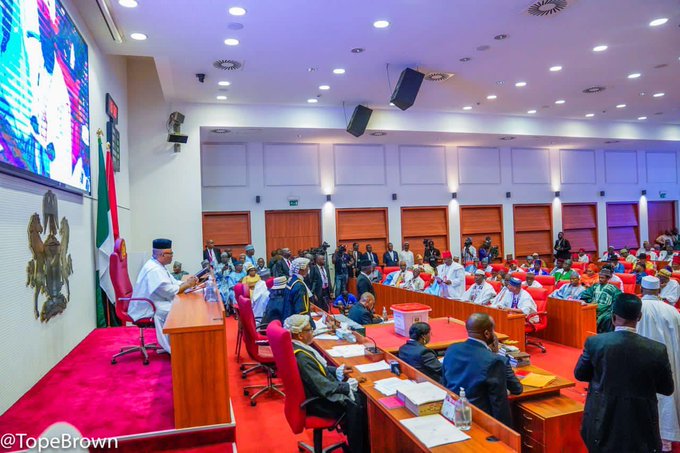
The Nigerian Senate on Tuesday approved a $6 billion external borrowing request by President Bola Tinubu, just hours after the proposal was formally presented on the floor of the chamber.
The request, conveyed in two separate letters to Senate President Godswill Akpabio and read during plenary, received swift legislative backing following the consideration of a report by the Committee on Local and Foreign Debts, chaired by Senator Aliyu Wamakko.
In the first communication, Tinubu sought approval to establish a structured Total Return Swap (TRS) external financing programme valued at up to $5 billion with First Abu Dhabi Bank. The facility is expected to support the government’s fiscal and infrastructure financing needs.
In a second request, the President asked lawmakers to approve a $1 billion loan facility backed by UK Export Finance and arranged by Citibank. According to the President, the funds will be deployed towards the reconstruction and rehabilitation of key maritime infrastructure, including the Lagos Port Complex and Tin Can Island Port.
The rapid approval underscores the legislature’s support for the administration’s borrowing plan amid ongoing efforts to address infrastructure deficits and stabilise the economy.
President Bola Tinubu has formally requested the approval of the Senate to secure external loans totaling $6 billion, in a move aimed at addressing Nigeria’s fiscal pressures and revitalising critical infrastructure.
The requests were conveyed in two separate letters addressed to Senate President Godswill Akpabio and read during plenary on Tuesday.
In the first correspondence, Tinubu sought legislative approval to obtain a $5 billion facility from Abu Dhabi Bank. The loan, according to the President, is intended to bridge the nation’s budget deficit and support ongoing debt financing obligations.
In a separate letter, the President requested approval for an additional $1 billion loan from London-based Citibank.
The funds are earmarked for the rehabilitation of key port infrastructure, including the Lagos Port Complex and Tin Can Island Port.
Tinubu explained that the proposed upgrades are designed to address longstanding infrastructure deficits, improve operational efficiency, and enhance safety standards across the country’s port system. He added that the intervention would also promote non-oil exports and strengthen Nigeria’s position as a regional trade hub.
Following the presentation, Akpabio referred both requests to the Senate Committee on Local and Foreign Debts, chaired by Senator Aliyu Wamakko, for further legislative scrutiny and expedited consideration.
Minister of State for Health and Social Welfare, Iziaq Salako, on Monday said pandemics are inevitable, stressing that countries must strengthen their capacity to respond swiftly and effectively to future health emergencies.
Salako spoke in Abuja at a public health symposium titled Lessons on Pandemic Preparedness and Response: Insights from China and Nigeria.
“The next pandemic is not a matter of if but when,” he said.
He underscored the need for coordinated, equitable and innovative preparedness, noting that the COVID-19 pandemic, which claimed over seven million lives globally, exposed weaknesses in health systems while also highlighting the value of collaboration and resilience.
According to the minister, Nigeria has made measurable progress in strengthening its health security architecture. He listed key interventions to include the digitalisation of infectious disease surveillance through the Surveillance Outbreak Response Management and Analysis System (SORMAS), capacity building for health workers, and the expansion of diagnostic capabilities with more than 100 public health laboratories nationwide.
He added that the country has also established infectious disease centres and public health emergency operations centres across all states and the Federal Capital Territory (FCT).
Salako said the interventions contributed to an improvement in Nigeria’s technical evaluation score from 39 per cent in 2017 to 54 per cent in 2023.
He also pointed to China’s rapid and disciplined response to COVID-19, emphasising the importance of technology integration and community mobilisation in managing health crises.
“Mutual learning between Nigeria and China is critical to building resilient systems capable of safeguarding citizens and optimising global actions against future health emergencies,” he said.
The minister further noted that under President Bola Tinubu, health security has been prioritised as the fourth pillar of the health sector renewal investment initiative.
He said efforts to deepen preparedness at the sub-national level are being driven through initiatives such as the 7-1-7 target and the SITAware Transition Project, alongside the One Health approach, which promotes coordinated attention to human, animal and environmental health.
Salako added that Nigeria is actively participating in negotiations on the World Health Organisation (WHO) pandemic agreement, reflecting its commitment to multilateral cooperation.
He stressed that pandemic preparedness requires a whole-of-society approach involving government, the private sector, communities, researchers and international partners.
Salako urged stakeholders to focus on actionable policies, partnerships and innovations to ensure global readiness and equity.
“Let us work together across borders and sectors to ensure full readiness for the next pandemic, leaving no one behind,” he said.
The Independent National Electoral Commission (INEC) has formally recognised a faction of the National Working Committee (NWC) of the Peoples Democratic Party (PDP) aligned with the Minister of the Federal Capital Territory, Nyesom Wike.
The commission reflected the development on its official website on Monday, where it published an updated leadership structure for the opposition party.
In the revised list, Abdulrahman Mohammed is named as National Chairman, while Senator Samuel Anyanwu is designated as National Secretary.
Other members of the National Working Committee include Ahmed Yayari Mohammed as National Treasurer, Daniel Woyengikuro as National Financial Secretary, and Kamaldeen Adeyemi Ajibade (SAN) as National Legal Adviser.