


Home Blog Page 45

Nigeria’s Debt Hits N159trn As Borrowing Surges By N14trn In One Year

0

Nigeria’s public debt profile rose sharply to N159.27 trillion at the end of 2025, reflecting mounting fiscal pressures and increased borrowing by both federal and subnational governments.

The latest figures released by the Debt Management Office (DMO) show an increase of N14.6 trillion compared to N144.67 trillion recorded in the corresponding period of 2024, and a N5.98 trillion rise from the N153.29 trillion posted at the end of the third quarter of 2025.

According to the DMO, the debt stock comprises both domestic and external obligations of the federal government, the 36 states and the Federal Capital Territory.

A breakdown indicates that domestic debt stood at N84.84 trillion, while external debt was put at N74.42 trillion, underscoring the continued reliance on both local and foreign borrowing to finance budgetary gaps.

The agency noted that domestic debt rose significantly from N74.38 trillion in December 2024, marking a 14.1 per cent increase, while external debt climbed by N4.14 trillion within the same period.

The Federal Government accounted for the bulk of the liabilities, with domestic debt estimated at N80.48 trillion, while states and the FCT recorded a marginal increase to N4.36 trillion.

On the external side, the Federal Government’s debt stood at N66.26 trillion, with subnational governments accounting for N8.15 trillion.

The DMO said the figures were computed using the Central Bank of Nigeria’s official exchange rate of N1,435.25 to the dollar as of December 31, 2025.

The rising debt comes amid fresh borrowing plans by the administration of President Bola Tinubu, who recently sought National Assembly approval for external loans totalling $6 billion.

In a request conveyed to Senate President Godswill Akpabio, the president outlined plans for a structured total return swap financing arrangement of up to $5 billion from First Abu Dhabi Bank in the United Arab Emirates.

Analysts warn that while borrowing remains critical for infrastructure and development financing, the rising debt burden raises concerns over sustainability, debt servicing costs, and fiscal stability in the medium term.
FG Raises Fresh Flood Alarm, Recalls Past Devastation As 33 States Face 2026 Risk

0

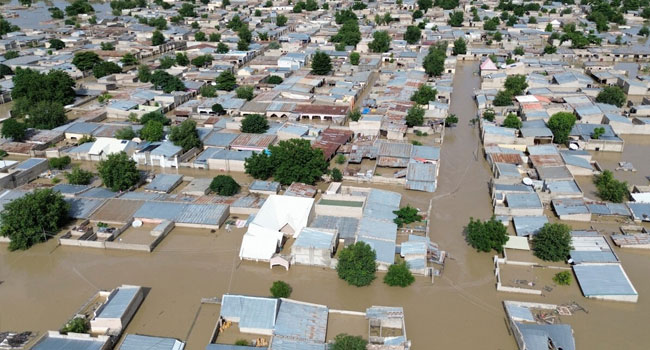
The Federal Government has issued a fresh flood warning across Nigeria, recalling the devastating impacts of previous incidents, as it unveiled the 2026 Annual Flood Outlook (AFO) projecting widespread inundation in 33 states and the Federal Capital Territory.

At the public presentation in Abuja, the Minister of Water Resources and Sanitation, Joseph Utsev, said memories of past flood disasters—marked by loss of lives, displacement of communities, and destruction of farmlands and infrastructure—underscore the urgency of early preparedness.

The outlook, released by the Nigeria Hydrological Services Agency, listed high-risk states to include Bayelsa State, Delta State, Adamawa State and Kebbi State, alongside 29 others, with over 14,000 communities in 266 local government areas projected to experience severe flooding.

Utsev warned that the forecast must not be treated as routine, noting that previous flood seasons left a trail of humanitarian crises and economic setbacks across the country. “Early information saves lives, protects livelihoods and reduces losses,” he said, stressing that forecasts must translate into concrete action at community level.

The minister disclosed ongoing efforts to modernise Nigeria’s hydrological monitoring systems and deepen collaboration with the Nigerian Meteorological Agency to improve the accuracy and timeliness of flood predictions.

Representing President Bola Tinubu, the Minister of Environment, Balarabe Lawal, said the flood outlook aligns with the administration’s broader push for climate resilience and sustainable development.

According to the report, moderate flood risk is expected in 35 states, while flash and urban flooding will hit major cities including Port Harcourt, Lagos, Ibadan and Abuja, largely due to poor drainage systems and increasing rainfall intensity.
Coastal and riverine flooding is also anticipated in states such as Rivers State, Cross River State and Ogun State, driven by rising sea levels and tidal surges, with potential consequences for fishing, transportation and coastal livelihoods.

Director-General of NiHSA, Umar Ibrahim Mohammed, said the 2026 forecast marks a shift toward advanced flood risk intelligence, incorporating hybrid AI-driven modelling to improve accuracy and response time. He added that the agency has upgraded its flood dashboard into a real-time decision-support system, alongside a mobile application to disseminate alerts more effectively.

Also speaking, Director-General of NiMet, Charles Anosike, noted that flooding remains one of the most persistent climate-related threats in Nigeria and across Africa, despite technological progress in forecasting.
The government called on state and local authorities to integrate flood risk into urban planning, strengthen drainage infrastructure, and enforce proper land-use practices, particularly in flood-prone areas.

“Preparedness remains the most effective strategy,” Utsev said. “If we fail to act on these warnings, we risk repeating the painful losses of the past.”

Otu Hails NDDC’s Impact As Lawmakers Inspect Key Niger Delta Road Project

Governor of Cross River State, Bassey Otu, has commended the Niger Delta Development Commission for what he described as significant development strides across the Niger Delta, aligning with the Federal Government’s Renewed Hope Agenda.

Otu gave the commendation while receiving members of the National Assembly Committees on NDDC, who were in the state on oversight inspection of the Calabar–Odukpani–Akamkpa–Ogoja road rehabilitation project.

The delegation, led by Asuquo Ekpenyong, Chairman of the Senate Committee on NDDC, and Erhiatake Ibori-Suenu, Chair of the House Committee on NDDC, also included the Commission’s Managing Director, Samuel Ogbuku.

Addressing the team at Government House, Calabar, the governor said the synergy between the state and the Commission had “changed the face of the Niger Delta,” adding that visible improvements were evident to ordinary citizens across the region.

He attributed the progress to the policy direction of President Bola Tinubu, noting that the administration’s support had strengthened the Commission’s capacity to tackle longstanding infrastructural challenges.

Earlier, Ekpenyong said the joint committees were in the state to carry out their constitutional oversight functions, noting that the road project—long advocated by the state government—had now become a reality. He described the corridor as critical to the movement of petroleum products, agricultural goods and solid minerals within and beyond the state.

In her remarks, Ibori-Suenu commended the governor’s developmental efforts and attention to detail, describing his contributions as impactful at both state and national levels.

At the project site, Ogbuku characterised the Calabar–Odukpani–Akamkpa–Ogoja road as a strategic trans-regional link connecting the South-South, South-East and North-Central zones. He said the intervention followed a directive by President Tinubu to fast-track its rehabilitation.

According to him, phases one and two of the project, covering 27.5 kilometres, have been completed, with other sections progressing steadily. He added that the Commission’s evolving public-private partnership model was delivering results, citing ongoing infrastructure projects across the region.

Ogbuku also emphasised improved collaboration between the Commission and state governments, describing the agency’s shift as one “from transaction to transformation.”

Officials said the project would significantly ease vehicular movement and enhance economic activities across multiple regions, reinforcing the NDDC’s mandate to drive sustainable development in the Niger Delta.

ADC Leadership Crisis: Supreme Court Fixes April 22 For Hearing, Orders Accelerated Process

The Supreme Court of Nigeria has fixed April 22 for hearing in an appeal arising from the protracted leadership dispute within the African Democratic Congress (ADC).

The appeal was filed by a factional National Chairman of the party, Senator David Mark, challenging earlier court decisions that went against his claims to the leadership of the ADC.

A five-member panel of the apex court, led by Justice Mohammed Garba, scheduled the hearing on Tuesday after granting an application for accelerated hearing in the appeal marked SC/CV/180/2026.

The court also issued directives to fast-track the filing of briefs. Counsel to the appellant, Jibril Okutepa (SAN), was ordered to file and serve the appellant’s brief on Wednesday.

Respondents in the case are to file and serve their briefs within three days of receiving the appellant’s submission, while the appellant is permitted to file a reply, where necessary, within one day of being served.

The appeal challenges the March 12 judgment of the Court of Appeal, which dismissed Mark’s earlier appeal against the September 4, 2025 ruling of the Federal High Court, Abuja.

In that ruling, Justice Emeka Nwite declined to grant injunctive reliefs sought in an ex parte application filed by a party chieftain, Nafiu Bala Gombe.

The dispute is part of a lingering leadership crisis that has continued to generate factions within the ADC, with contending groups laying claim to the party’s national leadership structure.

At the centre of the legal tussle are efforts by rival camps to secure judicial backing for control of the party’s affairs, including its structures ahead of future electoral activities.

The conflicting judgments from lower courts have further deepened divisions within the party, prompting recourse to the Supreme Court for a final determination.

The outcome of the April 22 hearing is expected to provide clarity on the leadership question and potentially shape the party’s internal cohesion ahead of upcoming political engagements.

NYSC Seeks Stronger Police Partnership To Boost Security For Corps Members

0

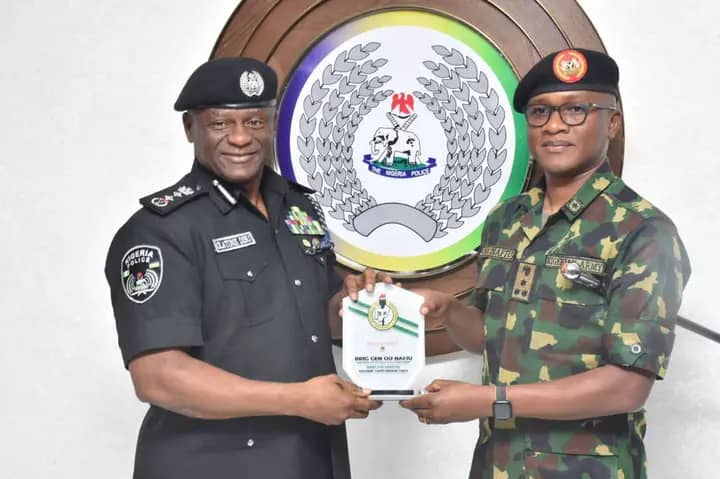
The National Youth Service Corps (NYSC) has called for enhanced collaboration with the Nigeria Police Force to strengthen security for corps members and protect NYSC facilities nationwide.
Director-General of the scheme, Brigadier General Olakunle Nafiu, made the appeal during a courtesy visit to the Inspector-General of Police, Olatunji Disu, at the Force Headquarters in Abuja.

According to a statement by the NYSC Director of Information and Public Relations, Caroline Embu, the police have remained a critical partner in the successful implementation of NYSC programmes since inception, stressing that sustained collaboration is vital to safeguarding corps members deployed across the country.

Nafiu, while congratulating the IGP on his appointment and the inauguration of his special team, urged the police to ensure “maximum security of corps members and NYSC officials within and outside orientation camps.”

He also called for improved protection of corps members, their property and corps lodges nationwide, particularly as the country approaches the 2027 general elections, a period he noted requires heightened security vigilance.

The NYSC boss further raised administrative concerns over exemption certificates, referencing provisions of the NYSC Act that exempt members of the armed forces and paramilitary agencies from national service. He sought collaboration with the Nigeria Police Academy to facilitate the issuance of exemption certificates to its graduates in line with statutory requirements.

In his response, Disu assured the NYSC of the police’s continued support, affirming the Force’s commitment to the security of the scheme and its personnel.

He disclosed that addresses of all corps lodges are already with the police to enable swift response when necessary, and welcomed the proposal regarding exemption certificates for graduates of the Police Academy.

The IGP reaffirmed the commitment of the police to deepen cooperation with the NYSC in the interest of national security and the protection of youths participating in the scheme.

Alleged Coup Plot: FG Arraigns Sylva’s Brother, Three Others In Abuja

0

The Federal Government is set to arraign Paganengigha Anagha, younger brother of former Minister of State for Petroleum Resources, Timipre Sylva, alongside three others over their alleged links to a 2025 coup plot against President Bola Tinubu.
The arraignment is scheduled to hold today at the Federal High Court, Abuja.

Those to be docked with Anagha include Sylva’s driver, Musa Mohammed; a plainclothes police officer, Ayuba Reuben; and an escort driver, Friday Lusa Paul.

Although details of the charges remain undisclosed, sources within the office of the Attorney General of the Federation and Minister of Justice confirmed that proceedings would take place at Court 12 on April 14.

The case stems from allegations linking Sylva, a former governor of Bayelsa State, to a failed coup attempt said to have been aimed at toppling the Tinubu administration in late 2025.

He was alleged to have acted as a major financier of the plot, with reports claiming that between N785 million and N46 billion traced to his accounts were channelled into the operation.

The controversy intensified in October 2025 when operatives, including personnel of the Defence Intelligence Agency, reportedly raided Sylva’s residences in Abuja and Bayelsa State, leading to the arrest of Anagha and others.

At the time, Sylva was said to be outside the country and allegedly moved across several countries, including Senegal and Argentina.

Investigations into the alleged plot also led to the detention of about 16 military officers accused of holding secret meetings to undermine the civilian government.

However, Sylva has consistently denied any involvement. His media aide, Julius Bokoru, described the allegations as politically motivated and aimed at tarnishing his principal’s image ahead of the 2027 general elections.

He maintained that Sylva is a committed democrat and a supporter of President Tinubu, insisting that he had no role in any coup-related activities.

“Chief Timipre Sylva has no involvement whatsoever, either in planning or logistics with any such plot. He is a thoroughbred democrat,” Bokoru said.

Meanwhile, the Economic and Financial Crimes Commission had, in November 2025, declared Sylva wanted in connection with a separate $14.8 million fraud investigation.

NUJ Condemns Brutal Attack On Rivers Journalist, Demands Justice

0

The Nigerian Union of Journalists (NUJ), Rivers State Council, has condemned the attack on a journalist with Naija/Beat/Classic FM, Port Harcourt, Ambassador Allwell Ene, by suspected hoodlums in the state.

In a statement signed by its Chairman, Comrade Paul Bazia-Nsaneh, and Secretary, Dr Ijeoma Tubosia, the union said the incident occurred on Monday, April 13, 2026, at Garrison Junction in Port Harcourt, while the journalist was carrying out legitimate news-gathering duties.

The NUJ described the attack as unwarranted and called on the Rivers State Police Command to immediately apprehend those responsible and take necessary steps to address the trauma suffered by the victim.

According to the statement, Ene was brutally assaulted, sustaining multiple lacerations and swollen eyes, while his phone was seized and destroyed by the attackers. The assailants were also said to have torn his clothes and forcefully taken him to an undisclosed location before he was eventually rescued.

“The NUJ is disheartened by this ugly incident. Rather than treat journalists as partners in nation-building, members of the public, in many cases, continue to see them as enemies to be attacked,” the statement said.

“It is unacceptable that in a civilised society, a journalist would be assaulted in the line of duty. This is a clear violation of his fundamental rights,” it added.

The union, therefore, urged the government and the police to ensure that the perpetrators are brought to justice, while also calling for adequate compensation for the victim and measures to prevent a recurrence.

Oborevwori, NDDC, Chevron Pledge Quality Delivery Of Warri Coastal Road Project

Delta State Governor, Sheriff Oborevwori has reaffirmed the commitment of the Niger Delta Development Commission (NDDC), the Delta State Government, and Chevron Nigeria Limited to ensure strict quality standards in the execution of the 70.75-kilometre Omadino–Okerenkoko–Escravos Road and associated bridges in Warri North Local Government Area.

Oborevwori gave the assurance in Asaba while receiving members of the National Assembly Committees on NDDC, led by Asuquo Ekpenyong, Chairman of the Senate Committee on NDDC, during a courtesy visit to Government House.

The delegation, which included the NDDC Managing Director, Samuel Ogbuku, and Delta State Office Director, Engr. Joseph Onoriode, was in the state to commence a two-day inspection of NDDC projects in Delta and Cross River states.

The governor expressed satisfaction with ongoing tripartite engagements involving the state government, NDDC, and Chevron on the strategic road project. He noted that the infrastructure would link Warri to key oil-producing coastal communities, boosting economic activity, strengthening security, and accelerating development across the region.

He added that his administration was collaborating closely with the commission to fast-track delivery, reiterating its commitment to transparency, accountability, and cost-effective execution of infrastructure projects.

Earlier, Ekpenyong commended the governor’s infrastructure drive and underscored the Senate’s backing for NDDC’s “Renewed Hope” projects aimed at delivering tangible benefits to host communities.

According to him, the joint Senate and House of Representatives committees are undertaking verification tours of NDDC projects to ensure accountability and value for money.

Ekpenyong further stated that the 10th Senate, under the leadership of Godswill Akpabio, remains committed to supporting the commission in delivering projects to the highest standards.

“Our visit is not only to inspect but to ensure timely completion of projects for the benefit of our people,” he said, pledging continued collaboration with state governments and the NDDC to address development challenges in the Niger Delta.

APC Fixes May 18 For Governorship Primaries, Sets Steep Fees For Aspirants

0

The All Progressives Congress (APC) has scheduled May 18, 2026, for its governorship primaries across the country, as part of early preparations for the 2027 general elections.

Under the timetable, aspirants — including Siminalayi Fubara of Rivers State — are expected to know their fate following the exercise.

Details of the schedule were contained in a two-page document signed by the party’s National Organising Secretary, Sulaimon Arugungu, and obtained on Monday.

The party fixed May 24, 2026, for hearings of petitions arising from House of Assembly primaries, while appeals related to governorship, House of Representatives, and Senate primaries will be entertained on May 25.
APC also announced that governorship aspirants will pay ₦10 million for the expression of interest form and ₦40 million for the nomination form. For presidential hopefuls, the fees are pegged at ₦30 million and ₦70 million, respectively.

Sales of nomination forms will commence on April 25 at the party’s national secretariat and close on May 2, with completed forms to be submitted by May 4, 2026.

The development follows the defection of Fubara from the Peoples Democratic Party (PDP) to the APC in December 2025, a move widely seen as a significant shift in the political dynamics of Rivers State.

As the timetable unfolds, the party has reiterated its call for support for President Bola Tinubu and its candidates nationwide ahead of the 2027 polls.

Security Siege Halts INC Polls In Yenagoa, Deepening Crisis In Ijaw Apex Body

Tension gripped Yenagoa on Monday as heavily armed security operatives sealed off Ijaw House along Sani Abacha Road, halting the planned National Executive Council (NEC) election of the Ijaw National Congress.

A combined team of stern-looking personnel from the Nigeria Police Force and the Department of State Services took control of the premises as early as 7 a.m., denying access to delegates and stakeholders.

At least eight police vans were strategically positioned around the complex, while DSS operatives maintained a strong presence within the facility, effectively shutting down all activities.

An aide to one of the candidates, who arrived with escorts from the Nigerian Army and the Nigeria Security and Civil Defence Corps, was informed by a senior police officer that the barricade was enforced on the orders of the Commissioner of Police.

The development followed a directive by the Conference of Ijaw Traditional Rulers and Elders, which had earlier called for the suspension of the election amid rising disputes and petitions against the NEC and its Electoral Committee.

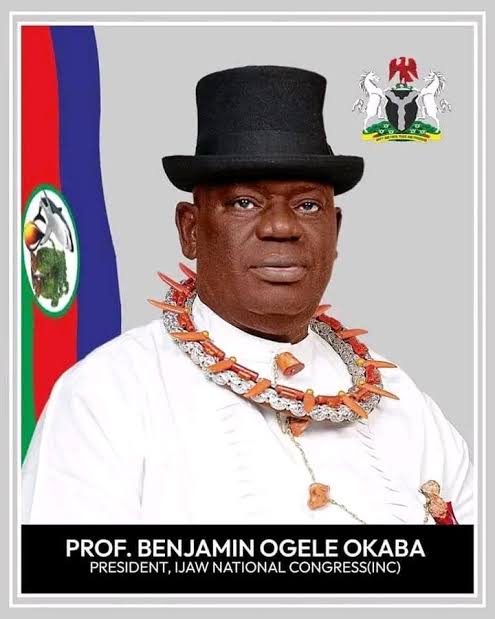
At a press briefing on Sunday, the Chairman of CITRE and Bayelsa State Traditional Rulers Council, King Bubaraye Dakolo, cited multiple constitutional breaches under the Prof. Benjamin Okaba-led NEC, warning that the prevailing tension among delegates made a credible election impossible.

He emphasised that, as the final arbiter under the INC constitution, CITRE had formally written to the Bayelsa State Police Command to prevent any gathering at Ijaw House pending the resolution of the disputes.

The disruption underscores a deepening leadership crisis within the INC, a body regarded as the foremost socio-cultural organisation representing the interests of the Ijaw people across Nigeria and the diaspora. For millions of Ijaw people worldwide, the INC serves not only as a unifying platform but also as a critical voice in advocacy, resource control, environmental justice and regional development in the Niger Delta.

Observers warn that the inability to conduct a peaceful and credible NEC election could weaken the Congress’ moral authority at a time when coordinated leadership is vital to addressing longstanding socio-economic and political challenges confronting Ijaw communities globally.

As security remains tight around the venue, uncertainty persists over when the electoral process will resume, raising fresh concerns about stability within one of the Niger Delta’s most influential ethnic institutions.