

Home Blog Page 36

Presidency, Obi Clash Over One-Term Pledge Ahead Of 2027

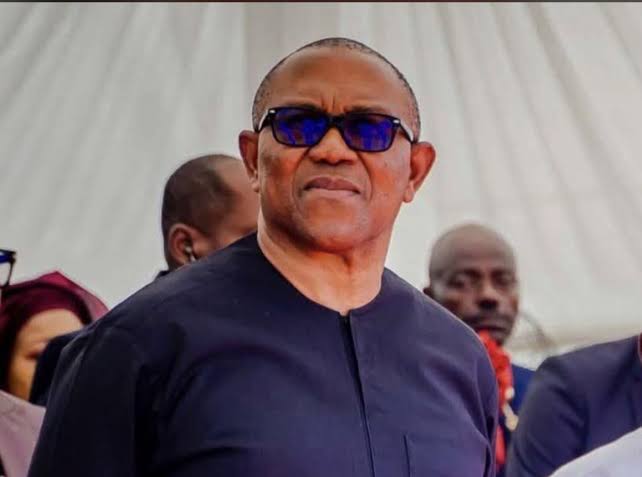
The Presidency and former Anambra State governor, Peter Obi, on Thursday traded words over his pledge to serve only a single four-year term if elected president in 2027, with the government dismissing the promise as unreliable.

Special Adviser to the President on Information and Strategy, Bayo Onanuga, urged Nigerians to disregard Obi’s commitment, arguing that the former governor’s political history undermines his credibility.

In a post on X, Onanuga contended that Obi’s assurances should not be taken seriously, citing what he described as a pattern of shifting political allegiances.

“If you believe Peter Obi’s promise to serve only one term as president, you’ll believe anything,” he said, recalling Obi’s past vow of loyalty to the All Progressives Grand Alliance (APGA), which he later left for the Peoples Democratic Party (PDP) and other platforms.

According to the presidential aide, Obi’s political trajectory reflects a tendency to abandon commitments, raising doubts about his latest pledge.

But Obi, the Labour Party’s presidential candidate in the 2023 election, has repeatedly insisted that he would not exceed a single term in office if elected.

Speaking in an interview with News Central Television, the former governor maintained that his decision was rooted in the need for political stability and respect for Nigeria’s informal zoning arrangement.

“I will not stay a day longer than four years, even with a gun to my head,” Obi said.

He argued that rotational leadership between the North and South remains critical to national cohesion, adding that any southern president elected in 2027 should relinquish power by May 2031.

Obi also used the opportunity to criticise the economic policies of President Bola Ahmed Tinubu, pointing to rising public debt and worsening living conditions as evidence of policy failure.

Nigeria, he said, is currently grappling with one of its most challenging economic periods.

The renewed exchange comes amid shifting political alignments ahead of the next general election. Obi, who finished third in the 2023 presidential poll behind Atiku Abubakar and Tinubu, has continued to position himself within emerging opposition coalitions.

Having reportedly aligned with the Nigeria Democratic Congress (NDC), which has zoned its 2027 presidential ticket to the South, Obi has framed his one-term proposal as both a political compromise and a governance strategy focused on impact rather than longevity.

Drawing parallels with global figures, he has argued that leadership effectiveness is measured by legacy, not duration in office — a position that now sits at the centre of a growing war of words between him and the Presidency.
Reclaim Public Health, Fix Nigeria’s Failing System, RSU Don Declares At Inaugural

0

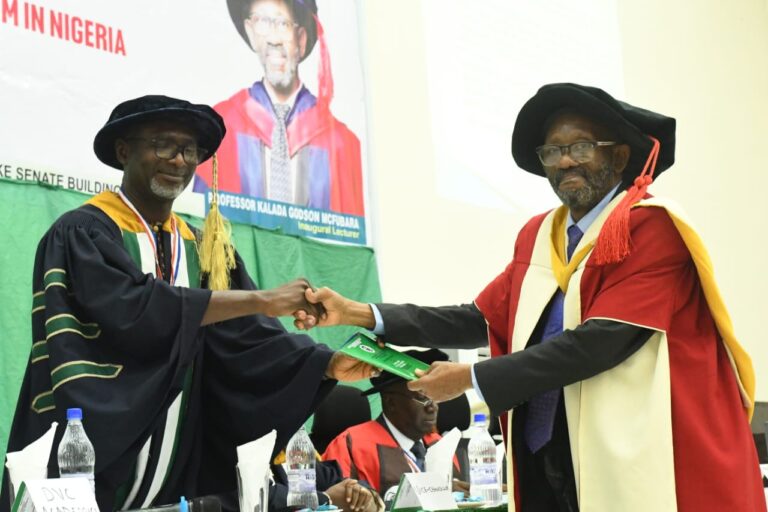
Nigeria’s health system will remain fragile and unsustainable unless it returns to its original tripartite structure that accords public health its rightful place alongside primary and hospital care, a Professor of Health Policy and Medical Ethics, Kalada Godson McFubara, has said.

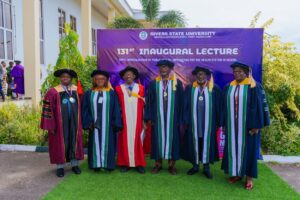
Delivering the 131st inaugural lecture of Rivers State University on Wednesday, McFubara warned that the continued treatment of a three-component system as either bipartite or, at best, incomplete, has weakened healthcare delivery and undermined outcomes across the country.

From L-R: Professor Richard Amadi(DVC-Academics), Professor Blessing Jaja (DVC-Administration), Professor Kalada Godson McFubara and Professor G. B. Okon, shortly after the Inaugural lecture.

Speaking on the topic, “Medicalization of Public Health: Imperatives for the Health System Reform in Nigeria,” the don described public health as the backbone of the entire system, lamenting its persistent neglect and “invisible medicalization,” which he said has imposed a curative, rather than preventive, philosophy on the sector.

According to him, the dominance of curative medicine has shifted responsibility for healthcare away from citizens and communities to medical professionals and institutions, turning Nigerians into “habitual consumers” of medical services rather than active participants in preventive health practices.

He argued that the sidelining of public health has placed an avoidable burden on an already weak system, stressing that leadership and governance, core pillars of public health, have not received the attention required to drive efficiency and equity.

McFubara called for a fundamental restructuring of the health sector through the formal adoption of a tripartite model comprising public health, primary healthcare and hospital services, with public health positioned as the first point of contact.

He said such a shift would strengthen disease prevention, promote hygiene and sanitation, and improve referral systems, in line with provisions of the National Health Act 2014.

The professor urged strict enforcement of the “first contact” principle, recommending that citizens be properly educated on sanitation and registered with primary health centres to ensure access to basic care.

To deepen institutional capacity, he proposed the establishment of a National Public Health Development Agency and State Public Health Management Boards, alongside sustained investment in infrastructure and manpower.

He also advocated clearer delineation of roles within the system, insisting that Hospitals Management Boards, not Ministries of Health, should oversee referral services as stipulated by law.

Professor McFubara further stressed the need to institutionalise research and development to support data-driven policy decisions tailored to Nigeria’s peculiar health challenges, while calling for wider dissemination of the Patient’s Bill of Rights to empower citizens and promote accountability.

He recommended statutory recognition for public health professionals and proposed the creation of a Health Ombudsman to enforce compliance with health laws in collaboration with the judiciary and legislature.

On professional conduct, the don called for a unified ethics curriculum across health professions to foster collaboration and strengthen leadership.

He concluded by advocating a preventive approach anchored on deterrence, targeting diseases, infections and environmental hazards before they escalate, while maintaining adequate capacity for curative care.

Professor McFubara also raised concerns over political and ethical challenges in the sector, noting that effective leadership and governance remain critical to repositioning the system.

Drawing lessons from countries in Europe and Africa, he said sustained investment in public health has proven pivotal in building resilient and efficient health systems.

In his remarks, the Vice-Chancellor of the university, Professor Isaac Zeb-Obipi, commended the lecturer for addressing a critical gap in Nigeria’s healthcare architecture.

Represented by the Deputy Vice-Chancellor (Administration), Professor Blessing Jaja, the Vice-Chancellor described the lecture as enriching and timely, noting that its recommendations, if implemented, could significantly strengthen the nation’s health system.

Fubara Denies Defection, Reaffirms Loyalty To APC

Governor of Rivers State, Siminalayi Fubara, has dismissed speculations of his defection from the All Progressives Congress (APC), insisting that he remains firmly within the party.

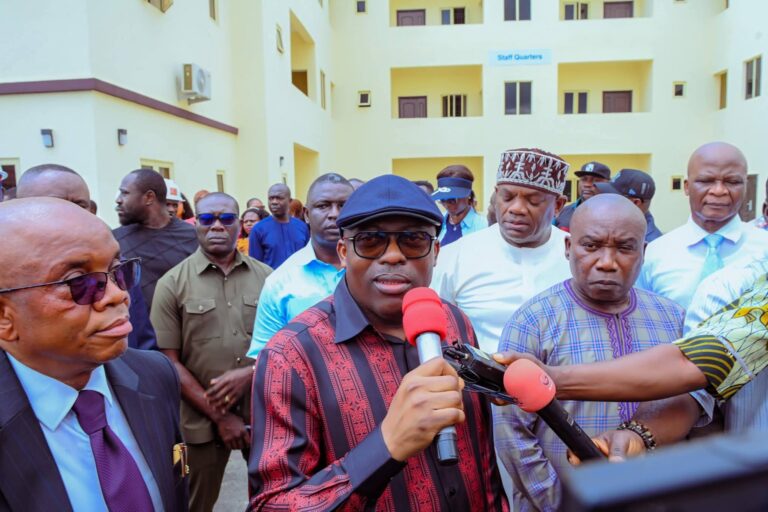
The governor made the clarification on Wednesday during an inspection tour of the Neuropsychiatric Hospital and the newly constructed General Hospital in Rumuigbo, Port Harcourt.

Reacting to widespread reports, Fubara described the claims as unfounded, attributing them to misinterpretation of events and unverified narratives circulating on social media. He urged the public to disregard such reports.

“There has been a lot of drama in the media with different narratives. I am a member of APC and nothing has changed.

People should desist from relying on social media speculations or personal interpretations to misrepresent my position,” he said.

He reiterated his continued commitment to the party, stressing that his focus remains on advancing its collective interests.

“I have not gone anywhere. I am still a member of APC and will continue to be. What is paramount is the overall interest of the party,” he added.

Fubara also reaffirmed his administration’s commitment to improving healthcare delivery across the state, noting that safeguarding the lives and wellbeing of residents remains a central priority.

He explained that the General Hospital project in Rumuigbo was conceived to tackle challenges associated with limited access to quality healthcare services, particularly in mental health. According to him, residents of the area previously relied heavily on distant facilities, including the University of Port Harcourt Teaching Hospital.

The governor noted that the decision to establish a General Hospital within the existing facility was aimed at expanding access to medical services for communities such as Rumuigbo, Rumuola, Rumuolumeni and adjoining areas.

Expressing satisfaction with the pace of work, Fubara disclosed that the project had reached about 95 per cent completion, describing it as a fulfilment of his administration’s promise to the people.

He emphasised that governance must prioritise initiatives that have direct and meaningful impact on citizens’ lives.

Oil Firm Restores Sight To Delta Communities Through Free Cataract Surgeries

“I had almost lost hope of seeing clearly again. Today, I have regained my sight through free cataract surgery.” These were the words of Emeke Odigili, one of the beneficiaries of a community eyecare intervention sponsored by Sterling Oil Exploration and Energy Production Company (SEEPCO) in Delta State.

The initiative, which covered selected communities across nine local government areas, including Ndokwa East and Ndokwa West, saw no fewer than 113 residents regain their vision through successful surgical procedures.

The programme, executed as part of SEEPCO’s corporate social responsibility (CSR), has drawn commendation from community leaders and beneficiaries alike. High Chief Godwin Ifeanyi Edema of Utagba-Ogbe Kingdom in Kwale described the intervention as timely and impactful, noting that it has brought renewed hope to many affected residents.

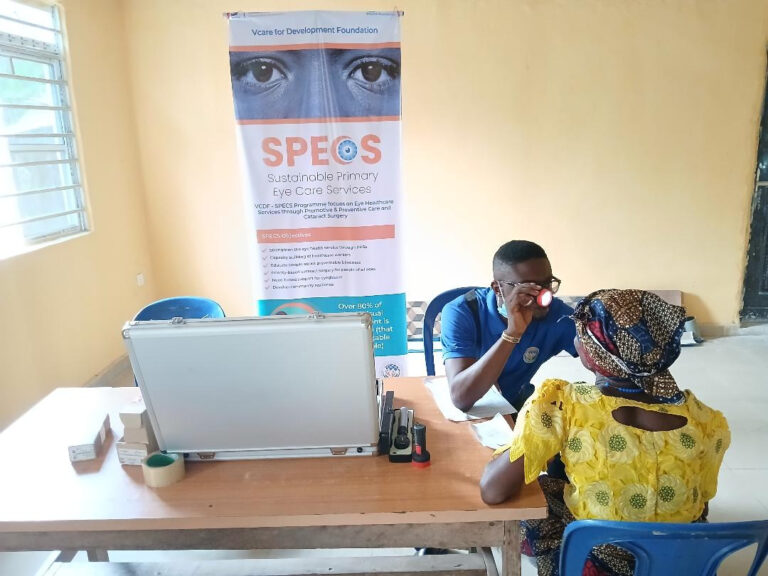
Implemented in partnership with the Vcare for Development Foundation (VCDF), the outreach also focused on strengthening local healthcare delivery. An ophthalmologist with VCDF’s SPECS-CSU, Dr. Ernest Ogbedo, identified cataract as a leading cause of avoidable blindness, stressing that early detection and timely surgery remain critical to restoring vision.

Providing further insight, VCDF’s Programmes Manager, Philip Ukemezia, disclosed that the organisation, leveraging SEEPCO’s support, has screened 11,858 individuals and carried out over 1,070 successful cataract and pterygium surgeries across Delta and Akwa Ibom states.

Beyond surgical interventions, the programme also included capacity-building sessions for healthcare providers, with 87 health workers trained to enhance primary eye care services and improve public health outcomes in the benefiting communities.

According to the 2024 Nigeria National Eye Health Survey, cataracts account for 44 per cent of blindness cases nationwide, with over 1.1 million Nigerians living with vision impairment. In Delta State alone, more than 25,000 residents are affected by untreated cataracts, underscoring the importance of sustained interventions such as SEEPCO’s outreach.

Court Slams 75-Year Jail Term On Ex-Power Minister Mamman Over ₦33.8bn Fraud

A Federal High Court sitting in Abuja on Wednesday sentenced former Minister of Power, Saleh Mamman, to a cumulative 75 years’ imprisonment for corruption linked to the Mambilla and Zungeru hydroelectric power projects.

Trial judge, Justice James Omotosho, who delivered the judgment, found Mamman guilty on a 12-count charge bordering on diversion and misappropriation of public funds. The court ruled that the sentences would run consecutively, resulting in a total jail term of 75 years.

Justice Omotosho further ordered that the sentence would take effect from the date of the convict’s arrest, directing all security agencies to apprehend Mamman wherever he may be found.

In addition, the court ordered the forfeiture of all monies and properties recovered from the former minister to the Federal Government. Mamman was also directed to refund the outstanding balance from the alleged ₦33.8 billion tied to the controversial power projects.

Mamman, who served as Minister of Power under the administration of former President Muhammadu Buhari, was prosecuted over alleged financial infractions involving funds earmarked for critical power infrastructure, particularly the Mambilla and Zungeru hydroelectric projects.

The Mambilla Hydropower Project, located in Taraba State, is one of Nigeria’s largest planned power generation initiatives, designed to significantly boost electricity supply.

Similarly, the Zungeru Hydropower Project in Niger State was conceived to add substantial capacity to the national grid.

The prosecution alleged that funds released for these strategic projects were diverted through fraudulent means during Mamman’s tenure, undermining efforts to improve the country’s power sector.

The judgment marks one of the most significant convictions involving a former cabinet member in recent years, reinforcing the judiciary’s stance on accountability in the management of public resources.

2027 Polls: Fubara Tasks Corps Members On Integrity, Credibility

0

Governor of Rivers State, Sir Siminalayi Fubara, has charged members of the National Youth Service Corps (NYSC) to uphold integrity and credibility as they prepare to play critical roles in the 2027 general elections.

Fubara gave the charge at the closing ceremony of the 2026 Batch A Stream II orientation course held at the NYSC Permanent Orientation Camp, Nonwa-Gbam in Tai Local Government Area of the state.

Represented by the Director of Administration in the Office of the Secretary to the State Government, Mrs. Rachel Ayasuk-Dandy, the governor urged the corps members to discharge their expected ad-hoc duties for the Independent National Electoral Commission (INEC) with “good conscience and fearless moral uprightness.”

He stressed that their conduct must reflect the trust reposed in them by Nigerians and the leadership of the scheme, noting that credibility in the electoral process remains fundamental to democratic consolidation.

The governor also encouraged the corps members to integrate effectively into their host communities, urging them to align with local values, aspirations and development goals in order to make meaningful impact during their service year.

Fubara assured them of the state government’s commitment to their welfare and security, while urging them to remain worthy ambassadors of the NYSC and symbols of hope in their various places of primary assignment.

In his remarks, the State Coordinator of the NYSC in Rivers, Moses Oleghe, commended the corps members for their discipline, resilience and active participation in camp activities, which he said ensured the successful execution of the orientation programme.

He urged them to see the service year as an opportunity for self-discovery, personal transformation and skills acquisition, rather than relying solely on scarce white-collar job opportunities.

Oleghe also expressed appreciation to the state government for its support to the scheme, particularly the procurement of 1,500 8-inch mattresses to address accommodation challenges, as well as plans to construct additional hostel facilities for corps members.

A total of 3,596 corps members, comprising 1,297 males and 2,299 females, successfully completed the three-week orientation exercise.

₦100m Defamation Verdict: SERAP Appeals, Seeks Stay Against DSS Officials’ Win

0

The Socio-Economic Rights and Accountability Project (SERAP) has filed a notice of appeal challenging the ₦100 million defamation judgment delivered by the High Court of the Federal Capital Territory (FCT), Abuja, in favour of officials of the Department of State Services (DSS), describing the ruling as a “travesty” and “miscarriage of justice.”

The appeal, lodged on May 8, 2026, by counsel, Tayo Oyetibo (SAN), is accompanied by an application seeking a stay of execution of the judgment pending the determination of the appeal at the Court of Appeal.

Justice Yusuf Halilu had, in a May 5 judgment, ordered SERAP to pay ₦100 million in damages to the DSS officials over alleged defamation, issue public apologies, pay ₦1 million as litigation costs, and a 10 per cent annual post-judgment interest on the sum until liquidation.
But SERAP, in its notice of appeal, argued that the decision was riddled with “fundamental legal and evidential errors” affecting jurisdiction and fairness, insisting that the ruling is “perverse and a nullity.”

The organisation disclosed that its grounds of appeal would be further amended upon receipt of the Certified True Copy of the judgment, adding that the processes already filed provide sufficient legal protection in the interim.

SERAP faulted the trial court’s reliance on what it described as defective evidence, particularly a witness statement not sworn before a Commissioner for Oaths, which it argued ought to have been discountenanced.
It maintained that the defect went to the root of the case and substantially influenced the outcome, rendering the judgment unsustainable.

The appellant also challenged the competence of the originating process, contending that the suit was initially filed against a non-juristic entity and later amended to substitute the Incorporated Trustees of SERAP.

According to the group, such an amendment cannot cure a fundamentally defective process, nor confer jurisdiction on the court.

On the substance of the defamation claim, SERAP argued that the lower court failed to apply the objective test for identification, relying instead on subjective perceptions within the DSS.

It noted that the publications complained of neither mentioned the claimants by name nor contained any unique identifiers linking them personally to the alleged defamatory statements.
SERAP further contended that the claimants, who sued in their personal capacities, failed to establish locus standi, as the alleged defamatory statements were directed at the DSS as an institution rather than at specific individuals.

The organisation accused the trial court of disregarding its defences of justification, qualified privilege and fair comment, despite evidence that the publication was substantially true and made in the public interest.
It also argued that the court wrongly inferred malice in the absence of any credible evidence, stressing that exaggeration in public interest commentary does not, in itself, invalidate fair comment.

Damages ‘Unwarranted’
SERAP maintained that the award of ₦100 million in damages was unjustified, as the claimants failed to prove any actual harm, reputational injury or financial loss arising from the publication.

It added that no independent witnesses were called to establish that members of the public understood the publication to refer to the claimants personally.

Bid to Halt Enforcement
In its application for stay of execution, SERAP warned that enforcing the judgment would severely cripple its operations and undermine its ability to pursue the appeal.
The group said it risks being unable to meet financial obligations to staff and partners, while ongoing human rights interventions and advocacy programmes could be halted.

It further argued that execution of the judgment would effectively deprive it of its constitutional right of appeal, urging the appellate court to preserve the res pending the determination of the case.
The suit (No: CV/4547/2024) was instituted by DSS officials, Sarah John and Gabriel Ogundele, who alleged that SERAP’s publication defamed them.

Rivers South-East Senatorial By-Election Tops INEC June 20 Polls

The Independent National Electoral Commission (INEC) has scheduled June 20, 2026, for a series of by-elections into vacant National Assembly seats, with particular focus on the Rivers South-East Senatorial District, where the death of Senator Barinada Mpigi has created a significant political vacuum.

The Rivers contest is expected to draw heightened attention in the oil-rich state, as political actors position for influence in a district long regarded as strategic to the balance of power in Rivers State.

INEC disclosed that the by-elections will hold concurrently with the Ekiti State governorship election, underscoring what promises to be a politically charged day across several parts of the country.

Beyond Rivers, the electoral body listed other affected constituencies to include Nasarawa North Senatorial District, Dawakin Kudu/Warawa Federal Constituency in Kano State, Ondo South Senatorial District, and Enugu North Senatorial District.

The vacancies, according to INEC, arose from a combination of deaths, resignation, and other constitutional developments. In Nasarawa, the demise of Senator Godiya Akwashika has left a gap in a district considered a stronghold of the All Progressives Congress. In Enugu, the passing of Senator Okey Ezea has set the stage for a competitive race in the South-East.

Similarly, the Ondo South seat became vacant following the resignation of Senator Jimoh Ibrahim, who now serves as Nigeria’s Permanent Representative to the United Nations, while the Dawakin Kudu/Warawa seat in Kano opened up after the death of Hon. Muhammad Danjuma Hassan.

Analysts say the Rivers South-East by-election, in particular, could reshape political alignments in the state, as parties jostle to fill the void left by Mpigi and consolidate their foothold ahead of future electoral contests.

APC Screening Report Sparks Confusion In Rivers As Rival Claims Emerge Over Cleared Aspirants

0

Confusion has engulfed the All Progressives Congress (APC) in Rivers State following conflicting claims over the authenticity of the screening report for House of Assembly aspirants ahead of the party’s primaries.

The controversy erupted after reports indicated that 65 out of the 98 aspirants who purchased nomination forms were disqualified by the screening committee. The exercise, conducted last weekend, was said to have largely affected loyalists of Governor Siminalayi Fubara, while allies of the Minister of the Federal Capital Territory, Nyesom Wike, were reportedly cleared.

The purported report, allegedly signed by the screening committee chairman, Muraina Ajibola, and three other members, was circulated by the state Publicity Secretary of the party, Chubike Ikenga, fueling widespread reactions within political circles.

However, in a dramatic twist, the Secretary of the Screening Committee, Tanko Yamowa, disowned the document, describing it as “false and unauthorized.” Yamowa insisted that the screening exercise had only just been concluded and that no official list of cleared or disqualified aspirants had been released.

“The said publication is false, unauthorized, and does not emanate from the appropriate party authorities,” he declared. Yamowa added that no official results had been released by party officials.

According to him, the APC follows established procedures for releasing screening outcomes. Any formal announcements about aspirants’ status would come through proper party channels, he noted.

He cautioned party faithful and the public against relying on the circulating document, stressing that the APC would communicate its official position through established channels at the appropriate time. According to him, the premature publication was the handiwork of mischief-makers seeking to sow discord and heighten tension within the party.

But Ikenga dismissed Yamowa’s position, maintaining that the report in circulation was authentic. He urged aggrieved aspirants to take advantage of the party’s appeal process, noting that those dissatisfied with their status could formally challenge their disqualification through the designated appeal committee.

The conflicting positions have deepened uncertainty among aspirants and party stakeholders, with many left unsure about their standing in the race. The development underscores growing internal divisions within the APC in Rivers State, as competing interests jostle for control ahead of the 2027 general elections.

The dispute is widely seen as an extension of the lingering political rift between Fubara and his predecessor, Wike, whose influence continues to shape the state’s political landscape. Both camps have been locked in a supremacy battle since Fubara assumed office, with the contest now spilling into party structures and electoral processes.

Observers note that the controversy over the screening list could further strain cohesion within the APC, potentially weakening its prospects in the state.

Meanwhile, opposition parties are closely monitoring the situation, with indications that they may exploit the internal crisis to strengthen their foothold in the region ahead of the next electoral cycle.

NDDC Boosts Emergency Preparedness With Fire Truck Deployment In Port Harcourt

0

The Niger Delta Development Commission (NDDC) has taken a significant step to strengthen workplace safety and emergency response capacity with the deployment of a fire truck to its Department of Health, Safety and Environment (HSE).

At a brief handover ceremony held at the Commission’s headquarters in Port Harcourt, the Managing Director, Dr Samuel Ogbuku—represented by the Director of Administration and Human Resources, Sir Kelechi Nwelue—said the initiative underscores the Commission’s commitment to safeguarding lives and property within its facilities and host communities.

and emergency response initiatives.

“This fire truck was bought to ensure the safety of the Commission and its environs, to help to fight fire in the case of any outbreak in and within the neighbourhood. We will assist in fighting fire as much as possible, just like Shell and Julius Berger,” he said.

Ogbuku described safety as a collective responsibility, stressing that the provision of modern firefighting equipment is critical to accident prevention and effective emergency response. He noted that the fire truck would not only serve the Commission but also support neighbouring communities in the event of fire outbreaks, aligning with the intervention roles often played by corporate organisations.

He further disclosed plans to extend similar support to NDDC state offices across the Niger Delta to bolster hazard mitigation and improve response capacity throughout the region.

In her remarks, the Director of Health, Safety and Environment, Mrs Chinyere Umeh, commended the Commission’s leadership for prioritising staff welfare and operational safety. She said the addition of the fire truck would significantly enhance the department’s readiness to respond to emergencies and strengthen adherence to safety standards.

Umeh reaffirmed the department’s commitment to promoting a culture of safety and environmental responsibility across the Commission, noting that the intervention was both timely and impactful.