

Home Blog Page 34

Boy Child Day 2026: Rivers 1983 Old Students’ Association Calls For Intentional Mentoring

As the world marks the 2026 International Day of the Boy Child on Saturday May 16th, the Rivers Secondary Schools Old Boys and Girls 1983 Set Association has called for deliberate investment in raising boys who will become responsible heads of homes.

In a press release and signed and issued by the Secretary-General of the Association, Dr.(Mrs) Ibinabo Ogolo to commemorate the day, the Association said the future stability of Nigerian families depends on how intentionally boys are raised and guided.

Speaking on behalf of the Set, President of the Association, Barrister Tubokomba Mcdonald Harry said the theme of this year’s global celebration, “Boys to Men: Adopting Good Habits and Attitudes,” must move beyond slogans to daily practice in homes, schools, and communities.

Barrister Tubokomba Mcdonald Harry, President, Rivers Secondary Schools Old Boys and Girls 1983 Set Association.

“For years, advocacy has rightly centered on the girl child. That work must continue. But we cannot ignore the other side,” Barrister Harry stated.

“A boy who grows up without guidance, emotional literacy, and responsibility often becomes a man who struggles to lead, provide, and protect. If we want stable homes in 2040, we must invest in boys now,” he said.

He emphasized that being ‘head of the home’ is about stewardship, not power. “The man who leads a home well is emotionally responsible, financially disciplined, morally upright, and a true partner to his spouse. These qualities are learned from childhood, through what boys see, hear, and practice.”

The Association noted that many boys currently learn manhood by default from peers, social media, and entertainment that equate masculinity with aggression and silence about pain.

To change this, the 1983 Set urged fathers and mentors to be present and active, schools to integrate life skills such as conflict resolution and financial literacy, and communities and faith groups to establish mentorship programs where older men guide younger ones.

The press release also linked the issue to Africa’s wider goals, noting that the 2026 Day of the African Child focuses on water, sanitation, and hygiene. “A boy trained to solve real problems becomes a man who ensures dignity for his family and community,” Harry said.

The Association concluded with a call to mothers, fathers, and boys themselves to take ownership of the task of raising responsible future leaders.

International Day of the Boy Child is observed globally on May 16. It is a day that focuses on the well-being, mental health and positive development of boys.


Carrick Handed Manchester United Job As Revival Earns Permanent Seal 

Manchester United have confirmed Michael Carrick as their permanent head coach, bringing an end to months of uncertainty over the leadership at Old Trafford.

Carrick, 44, who had been in interim charge since January, has signed a multi-year deal understood to run for two years with the option of a further 12 months. The appointment follows a sustained upturn in results after the departure of Ruben Amorim earlier this year.

The former United midfielder has overseen a marked improvement in form, winning 10 of his 15 matches in charge across all competitions. That run has lifted United to third in the Premier League and secured qualification for next season’s UEFA Champions League.

Senior figures at the club, including chief executive Omar Berrada and director of football Jason Wilcox, are reported to have backed Carrick strongly, with co-owner Jim Ratcliffe giving final approval after talks this week.

Carrick’s deep ties to United weighed heavily in his favour. During a playing career spanning more than a decade at Old Trafford, he made 463 appearances and won multiple major honours, including the Champions League and several league titles under Alex Ferguson.

After retiring, Carrick moved into coaching, later taking charge of Middlesbrough before returning to United’s backroom staff. His familiarity with the club’s structure and dressing room dynamics has been viewed internally as a stabilising factor during a period of repeated managerial change since Ferguson’s retirement in 2013.

Support from within the squad has also proved significant. Club captain Bruno Fernandes is among senior players understood to have endorsed the appointment, while Carrick’s coaching team — including Jonathan Woodgate — is expected to remain intact.

In his first remarks after being confirmed, Carrick said he was “honoured and excited” to take the role on a permanent basis.

“This club means everything to me,” he said. “We have momentum now, and I can’t wait to build on it with the players and staff.”

United face Nottingham Forest on Sunday as Carrick begins preparations for a full season in charge, with expectations heightened by a late surge that has reshaped the club’s campaign.

52 CSOs Raise Alarm Over DSS–SERAP Judgment, Demand Transparency, Protection Of Civic Space

0

A coalition of Nigerian civil society organisations has expressed deep concern over the controversy surrounding a defamation judgment reportedly secured by officials of the Department of State Services (DSS) against the Socio-Economic Rights and Accountability Project (SERAP), warning that the situation poses serious risks to judicial transparency, civic freedoms and democratic accountability.

In a joint press statement dated May 11, 2026, the groups faulted the growing public debate over the judgment despite the absence of the Certified True Copy (CTC) and full text of the ruling at the time reactions began to circulate.

According to the organisations, such a development raises fundamental questions about due process, procedural fairness and institutional responsibility within Nigeria’s justice system.

They stressed that under Section 36(1) of the 1999 Constitution (as amended), the right to fair hearing extends beyond courtroom proceedings to include transparency, access to judicial decisions and the opportunity to exercise appellate rights.

The coalition also cited Sections 39(1) and 22 of the Constitution, noting that freedom of expression and the duty of the media and civic actors to hold government accountable are essential pillars of a democratic society.

Referencing international frameworks, the groups pointed to Article 19 of the Universal Declaration of Human Rights and Article 9 of the African Charter on Human and Peoples’ Rights, both of which guarantee the right to receive and disseminate information.

They noted that the African Commission has consistently held that any restriction on civic expression must meet the tests of legality, necessity and proportionality.

The statement further decried the delay in releasing the Certified True Copy of the judgment, describing timely access to court decisions as central to the administration of justice.

“Without access to the judgment, litigants are unable to properly assess their legal position, pursue appeals or engage responsibly in public discourse,” the statement read.

The organisations warned that such delays could undermine public confidence in the judiciary, weaken transparency in judicial administration and erode trust in democratic institutions.

They also cautioned against what they described as the growing use of defamation suits and coercive legal measures against civil society actors involved in anti-corruption and public accountability advocacy.

According to them, the right to appeal is a fundamental component of the justice system and should not be misconstrued as disobedience to judicial authority.

The coalition called for the immediate release of the Certified True Copy of the judgment, respect for constitutional and international human rights obligations, and greater restraint in public commentary on judicial matters lacking full disclosure.

They further urged authorities to safeguard civic space and protect public-interest advocacy from intimidation or misuse of legal processes.

The statement concluded that Nigeria’s democracy depends not only on electoral processes but also on adherence to the rule of law, judicial integrity and the protection of civic freedoms.

RHI Reaches 6,800 Families In Rivers, As Fubara Hails Impact On Vulnerable Groups

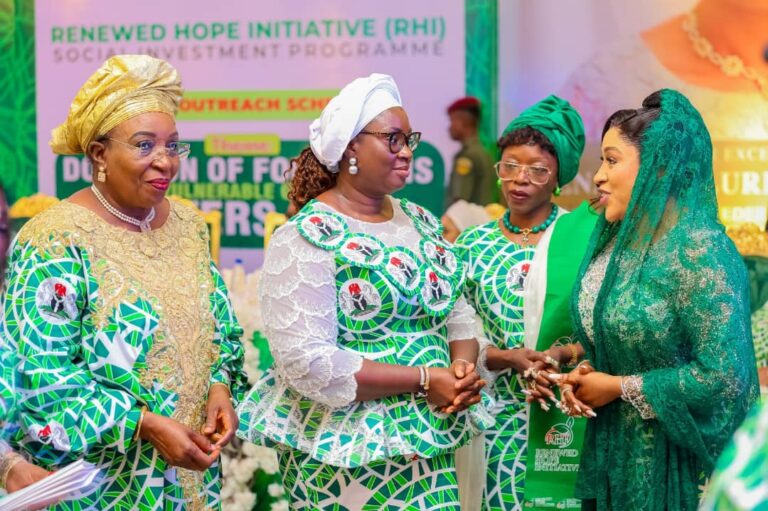
Wife of the Rivers State Governor, Lady Valerie Siminalayi Fubara, has disclosed that no fewer than 6,800 families have benefitted from the Renewed Hope Initiative (RHI) programme in the state, underscoring the growing reach of the social intervention scheme.

Fubara made the disclosure on Thursday during the distribution of food items to vulnerable groups at Government House, Port Harcourt, as part of the Social Investments Programme of the RHI, the pet project of Nigeria’s First Lady, Oluremi Tinubu.

Wife of Rivers State Governor, Lady Valerie Siminalayi Fubara, at the podium delivering her address at the occasion on Thursday.

She explained that beyond food distribution, the initiative has expanded its support to include local and international scholarships, agricultural funding and other social investment programmes aimed at improving livelihoods.

According to her, the RHI has continued to provide critical support through women empowerment schemes, assistance to petty traders, interventions for persons living with disabilities and care programmes for the elderly.

She noted that Thursday’s outreach alone directly impacted over 1,800 families.

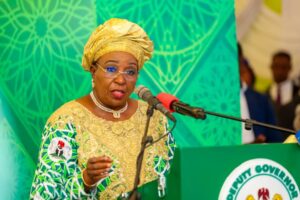
Deputy Governor of Rivers State, Prof (Mrs) Ngozi Odu, delivering her address at the occasion on Thursday.

“Today’s outreach programme is another practical demonstration of compassionate leadership and people-centred governance. At a time when many families are facing economic challenges, initiatives such as this remind our people that they are not forgotten,” she said.

Fubara added that the programme represents “hope, care, dignity and support” for vulnerable households, stressing that government remains committed to policies that improve citizens’ welfare.

“True development is not only measured by infrastructure, but also by the extent to which lives are positively impacted,” she said.

She expressed appreciation to Oluremi Tinubu for initiating the programme and acknowledged the support of the RHI office in Rivers State, as well as the wives of governors from about 20 states who attended the event.

L-R: Deputy Governor of Rivers State, Prof (Mrs) Ngozi Odu; Wife of Rivers State Governor, Lady Valerie Siminalayi Fubara; Wife of the Chief of Staff to the President, Mrs Salamatu Gbajabiamila and Dr Betta Edu, former Minister of Humanitarian Affairs and representative of Sen. Oluremi TINUBU, Nigeria’s First Lady, at the event on Thursday.

In her remarks, the First Lady, represented by former Minister of Humanitarian Affairs, Betta Edu, commended Fubara for her commitment to the successful implementation of RHI programmes in the state.

Tinubu explained that the Food Outreach Scheme, launched in March 2024, targets persons with disabilities and other vulnerable groups, providing essential food support to households in need.

She disclosed that the initiative is sustained through the support of two major donors who supply two truckloads of food items monthly.

“Our goal at the RHI is to complement the Renewed Hope Agenda of the administration of His Excellency, President Bola Ahmed Tinubu, which aims to support all Nigerians to thrive and fulfil their goals irrespective of their condition or status,” she said.

Tinubu further revealed that the scheme has now reached 25 states and the Federal Capital Territory, with Rivers State becoming the 26th beneficiary.

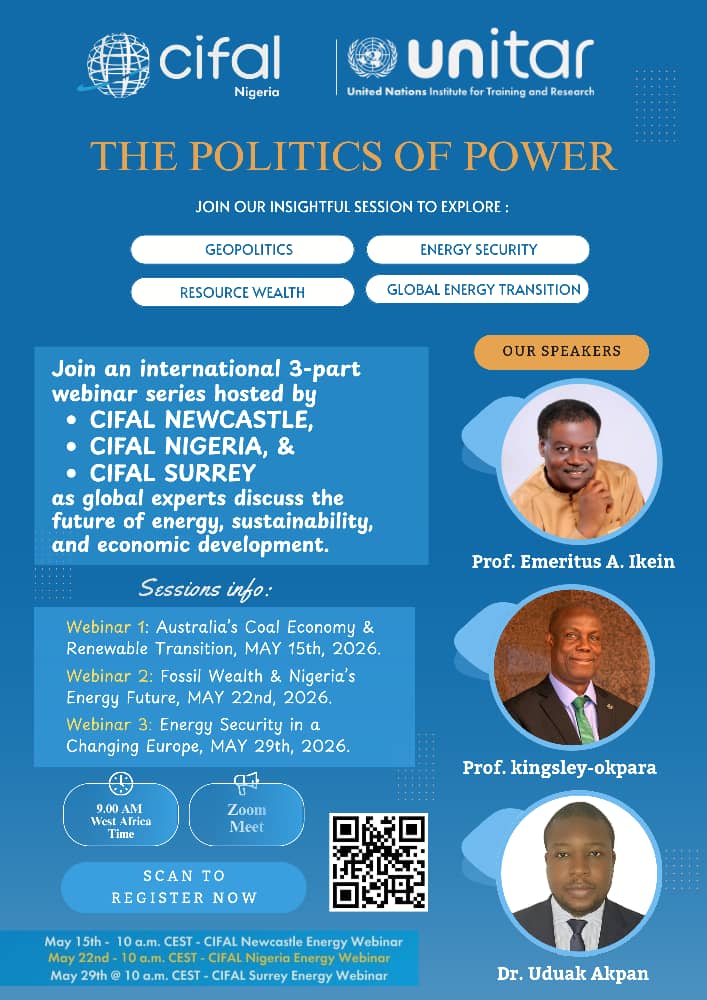
Global Experts Converge For Energy Security, Transition Challenges In CIFAL Global Network and UNITAR Webinar Series …RSU Hosts May 22 Edition

0

A coalition of international scholars and policy experts will, from May 15 to 29, convene for a three-part webinar series to interrogate the complex intersection of energy security, resource wealth and the global transition to renewable energy.

The series, titled “The Politics of Power: Energy Security, Resource Wealth and the Global Energy Transition,” is organised under the CIFAL Global Network and UNITAR, with sessions hosted by leading academic institutions across Australia, Nigeria and the United Kingdom.

Scheduled to hold over three consecutive Fridays at 9:00 a.m. (Nigeria time), the webinars will explore how countries can balance economic prosperity with the urgent need for a just and sustainable energy transition.

The opening session on May 15 will be hosted by CIFAL Newcastle in collaboration with the University of Newcastle. Discussions will focus on Australia’s strategic position as a major coal exporter and the challenges of transitioning towards cleaner energy sources.

Speakers for the session include Lara Eadie, a specialist in sustainability and regional development, and Paul Ebert, an authority in energy systems and infrastructure.

The second webinar, slated for May 22, will shift attention to Nigeria’s energy landscape. Hosted by CIFAL Nigeria at Rivers State University, the session will examine how Africa’s largest oil producer can navigate the dual challenge of sustaining economic growth while expanding domestic energy access amid declining global reliance on fossil fuels.

Panelists include Prof. Augustine A. Ikein, a Fulbright postdoctoral fellow and Professor Emeritus at the Federal University Otuoke; Prof. Kingsley Okpara,an expert in Environmental Pollution of the Institute of Geosciences and Environmental Management(IGEM), Rivers State University; and Dr. Uduak Akpan,a postdoctoral researcher at SOAS University of London,whose work spans Africa’s economic transformation and energy sector, including experience at the African Development Bank.

The final session on May 29 will be hosted by CIFAL Surrey in partnership with the University of Surrey. It will broaden the conversation to global governance, resilience and the geopolitical dimensions of energy transition.

Speakers include Dr. Amelia Hadfield, Director of CIFAL Surrey; Mustafa Demir, an expert in international governance; and Prof. Mahmoud Shafee, noted for his research on risk and sustainability in global energy systems.

Organisers said the series is designed to bring together diverse global perspectives to unpack one of the most pressing challenges of the 21st century — achieving energy security while ensuring economic stability and advancing a fair transition to renewable energy.

Participants who attend all three sessions will receive a certificate of participation from the CIFAL Global Network/ UNITAR while recordings will be made available to registered attendees.

The organisers urged stakeholders, policymakers, academics and industry players to take advantage of the forum to engage with emerging ideas and contribute to shaping the future of global energy systems.

Register now and be part of the conversation.https://uonewcastle.zoom.us/webinar/register/WN_Y2W4u2qMSc6UHP_7Gbd9EA#/registration

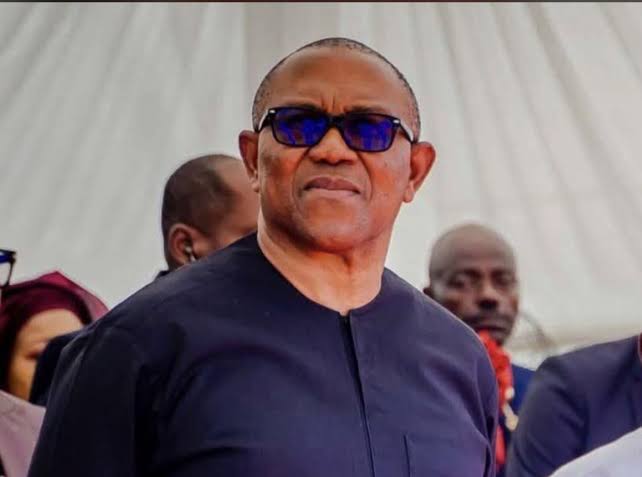
Presidency, Obi Clash Over One-Term Pledge Ahead Of 2027

The Presidency and former Anambra State governor, Peter Obi, on Thursday traded words over his pledge to serve only a single four-year term if elected president in 2027, with the government dismissing the promise as unreliable.

Special Adviser to the President on Information and Strategy, Bayo Onanuga, urged Nigerians to disregard Obi’s commitment, arguing that the former governor’s political history undermines his credibility.

In a post on X, Onanuga contended that Obi’s assurances should not be taken seriously, citing what he described as a pattern of shifting political allegiances.

“If you believe Peter Obi’s promise to serve only one term as president, you’ll believe anything,” he said, recalling Obi’s past vow of loyalty to the All Progressives Grand Alliance (APGA), which he later left for the Peoples Democratic Party (PDP) and other platforms.

According to the presidential aide, Obi’s political trajectory reflects a tendency to abandon commitments, raising doubts about his latest pledge.

But Obi, the Labour Party’s presidential candidate in the 2023 election, has repeatedly insisted that he would not exceed a single term in office if elected.

Speaking in an interview with News Central Television, the former governor maintained that his decision was rooted in the need for political stability and respect for Nigeria’s informal zoning arrangement.

“I will not stay a day longer than four years, even with a gun to my head,” Obi said.

He argued that rotational leadership between the North and South remains critical to national cohesion, adding that any southern president elected in 2027 should relinquish power by May 2031.

Obi also used the opportunity to criticise the economic policies of President Bola Ahmed Tinubu, pointing to rising public debt and worsening living conditions as evidence of policy failure.

Nigeria, he said, is currently grappling with one of its most challenging economic periods.

The renewed exchange comes amid shifting political alignments ahead of the next general election. Obi, who finished third in the 2023 presidential poll behind Atiku Abubakar and Tinubu, has continued to position himself within emerging opposition coalitions.

Having reportedly aligned with the Nigeria Democratic Congress (NDC), which has zoned its 2027 presidential ticket to the South, Obi has framed his one-term proposal as both a political compromise and a governance strategy focused on impact rather than longevity.

Drawing parallels with global figures, he has argued that leadership effectiveness is measured by legacy, not duration in office — a position that now sits at the centre of a growing war of words between him and the Presidency.

Reclaim Public Health, Fix Nigeria’s Failing System, RSU Don Declares At Inaugural

0

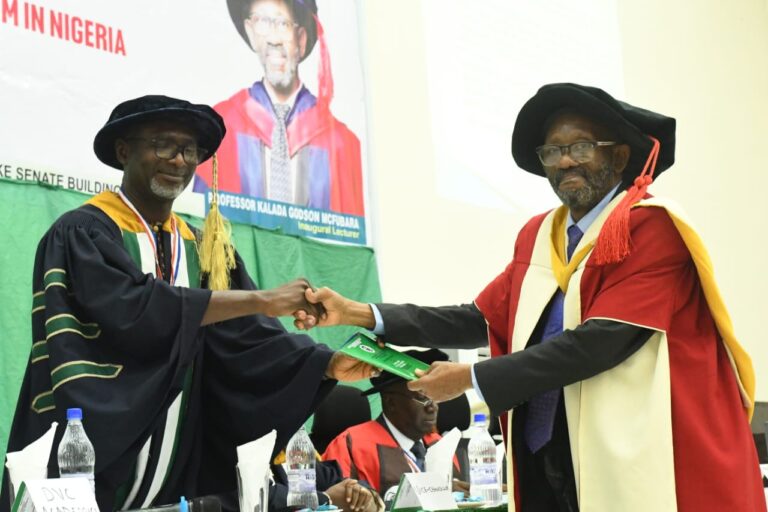
Nigeria’s health system will remain fragile and unsustainable unless it returns to its original tripartite structure that accords public health its rightful place alongside primary and hospital care, a Professor of Health Policy and Medical Ethics, Kalada Godson McFubara, has said.

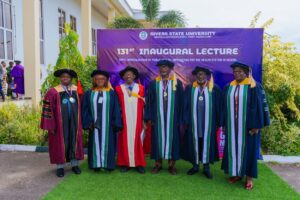
Delivering the 131st inaugural lecture of Rivers State University on Wednesday, McFubara warned that the continued treatment of a three-component system as either bipartite or, at best, incomplete, has weakened healthcare delivery and undermined outcomes across the country.

From L-R: Professor Richard Amadi(DVC-Academics), Professor Blessing Jaja (DVC-Administration), Professor Kalada Godson McFubara and Professor G. B. Okon, shortly after the Inaugural lecture.

Speaking on the topic, “Medicalization of Public Health: Imperatives for the Health System Reform in Nigeria,” the don described public health as the backbone of the entire system, lamenting its persistent neglect and “invisible medicalization,” which he said has imposed a curative, rather than preventive, philosophy on the sector.

According to him, the dominance of curative medicine has shifted responsibility for healthcare away from citizens and communities to medical professionals and institutions, turning Nigerians into “habitual consumers” of medical services rather than active participants in preventive health practices.

He argued that the sidelining of public health has placed an avoidable burden on an already weak system, stressing that leadership and governance, core pillars of public health, have not received the attention required to drive efficiency and equity.

McFubara called for a fundamental restructuring of the health sector through the formal adoption of a tripartite model comprising public health, primary healthcare and hospital services, with public health positioned as the first point of contact.

He said such a shift would strengthen disease prevention, promote hygiene and sanitation, and improve referral systems, in line with provisions of the National Health Act 2014.

The professor urged strict enforcement of the “first contact” principle, recommending that citizens be properly educated on sanitation and registered with primary health centres to ensure access to basic care.

To deepen institutional capacity, he proposed the establishment of a National Public Health Development Agency and State Public Health Management Boards, alongside sustained investment in infrastructure and manpower.

He also advocated clearer delineation of roles within the system, insisting that Hospitals Management Boards, not Ministries of Health, should oversee referral services as stipulated by law.

Professor McFubara further stressed the need to institutionalise research and development to support data-driven policy decisions tailored to Nigeria’s peculiar health challenges, while calling for wider dissemination of the Patient’s Bill of Rights to empower citizens and promote accountability.

He recommended statutory recognition for public health professionals and proposed the creation of a Health Ombudsman to enforce compliance with health laws in collaboration with the judiciary and legislature.

On professional conduct, the don called for a unified ethics curriculum across health professions to foster collaboration and strengthen leadership.

He concluded by advocating a preventive approach anchored on deterrence, targeting diseases, infections and environmental hazards before they escalate, while maintaining adequate capacity for curative care.

Professor McFubara also raised concerns over political and ethical challenges in the sector, noting that effective leadership and governance remain critical to repositioning the system.

Drawing lessons from countries in Europe and Africa, he said sustained investment in public health has proven pivotal in building resilient and efficient health systems.

In his remarks, the Vice-Chancellor of the university, Professor Isaac Zeb-Obipi, commended the lecturer for addressing a critical gap in Nigeria’s healthcare architecture.

Represented by the Deputy Vice-Chancellor (Administration), Professor Blessing Jaja, the Vice-Chancellor described the lecture as enriching and timely, noting that its recommendations, if implemented, could significantly strengthen the nation’s health system.

Fubara Denies Defection, Reaffirms Loyalty To APC

Governor of Rivers State, Siminalayi Fubara, has dismissed speculations of his defection from the All Progressives Congress (APC), insisting that he remains firmly within the party.

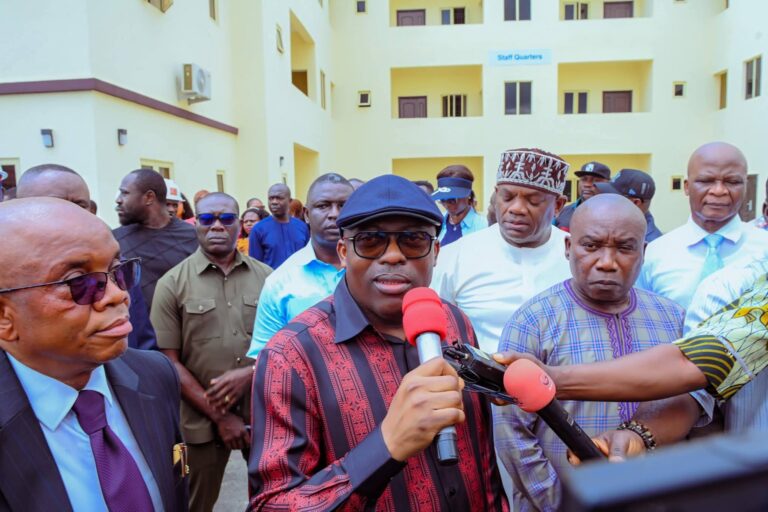
The governor made the clarification on Wednesday during an inspection tour of the Neuropsychiatric Hospital and the newly constructed General Hospital in Rumuigbo, Port Harcourt.

Reacting to widespread reports, Fubara described the claims as unfounded, attributing them to misinterpretation of events and unverified narratives circulating on social media. He urged the public to disregard such reports.

“There has been a lot of drama in the media with different narratives. I am a member of APC and nothing has changed.

People should desist from relying on social media speculations or personal interpretations to misrepresent my position,” he said.

He reiterated his continued commitment to the party, stressing that his focus remains on advancing its collective interests.

“I have not gone anywhere. I am still a member of APC and will continue to be. What is paramount is the overall interest of the party,” he added.

Fubara also reaffirmed his administration’s commitment to improving healthcare delivery across the state, noting that safeguarding the lives and wellbeing of residents remains a central priority.

He explained that the General Hospital project in Rumuigbo was conceived to tackle challenges associated with limited access to quality healthcare services, particularly in mental health. According to him, residents of the area previously relied heavily on distant facilities, including the University of Port Harcourt Teaching Hospital.

The governor noted that the decision to establish a General Hospital within the existing facility was aimed at expanding access to medical services for communities such as Rumuigbo, Rumuola, Rumuolumeni and adjoining areas.

Expressing satisfaction with the pace of work, Fubara disclosed that the project had reached about 95 per cent completion, describing it as a fulfilment of his administration’s promise to the people.

He emphasised that governance must prioritise initiatives that have direct and meaningful impact on citizens’ lives.

Oil Firm Restores Sight To Delta Communities Through Free Cataract Surgeries

“I had almost lost hope of seeing clearly again. Today, I have regained my sight through free cataract surgery.” These were the words of Emeke Odigili, one of the beneficiaries of a community eyecare intervention sponsored by Sterling Oil Exploration and Energy Production Company (SEEPCO) in Delta State.

The initiative, which covered selected communities across nine local government areas, including Ndokwa East and Ndokwa West, saw no fewer than 113 residents regain their vision through successful surgical procedures.

The programme, executed as part of SEEPCO’s corporate social responsibility (CSR), has drawn commendation from community leaders and beneficiaries alike. High Chief Godwin Ifeanyi Edema of Utagba-Ogbe Kingdom in Kwale described the intervention as timely and impactful, noting that it has brought renewed hope to many affected residents.

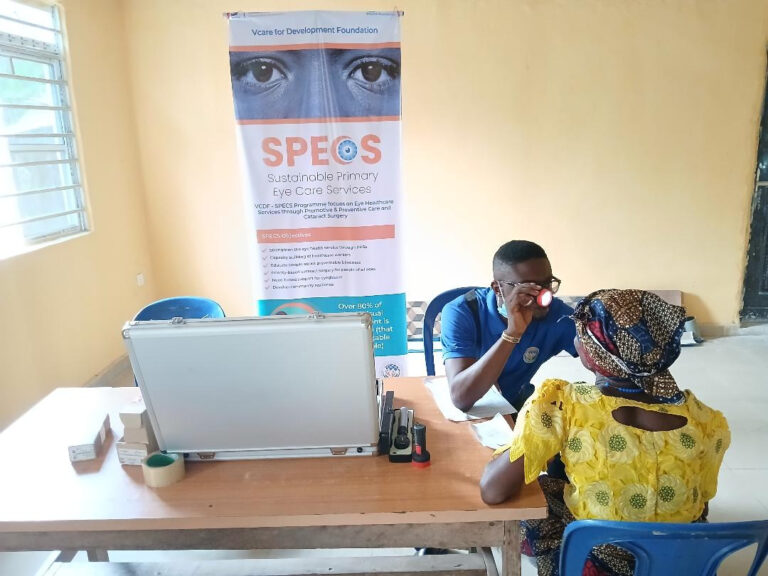
Implemented in partnership with the Vcare for Development Foundation (VCDF), the outreach also focused on strengthening local healthcare delivery. An ophthalmologist with VCDF’s SPECS-CSU, Dr. Ernest Ogbedo, identified cataract as a leading cause of avoidable blindness, stressing that early detection and timely surgery remain critical to restoring vision.

Providing further insight, VCDF’s Programmes Manager, Philip Ukemezia, disclosed that the organisation, leveraging SEEPCO’s support, has screened 11,858 individuals and carried out over 1,070 successful cataract and pterygium surgeries across Delta and Akwa Ibom states.

Beyond surgical interventions, the programme also included capacity-building sessions for healthcare providers, with 87 health workers trained to enhance primary eye care services and improve public health outcomes in the benefiting communities.

According to the 2024 Nigeria National Eye Health Survey, cataracts account for 44 per cent of blindness cases nationwide, with over 1.1 million Nigerians living with vision impairment. In Delta State alone, more than 25,000 residents are affected by untreated cataracts, underscoring the importance of sustained interventions such as SEEPCO’s outreach.

Court Slams 75-Year Jail Term On Ex-Power Minister Mamman Over ₦33.8bn Fraud

A Federal High Court sitting in Abuja on Wednesday sentenced former Minister of Power, Saleh Mamman, to a cumulative 75 years’ imprisonment for corruption linked to the Mambilla and Zungeru hydroelectric power projects.

Trial judge, Justice James Omotosho, who delivered the judgment, found Mamman guilty on a 12-count charge bordering on diversion and misappropriation of public funds. The court ruled that the sentences would run consecutively, resulting in a total jail term of 75 years.

Justice Omotosho further ordered that the sentence would take effect from the date of the convict’s arrest, directing all security agencies to apprehend Mamman wherever he may be found.

In addition, the court ordered the forfeiture of all monies and properties recovered from the former minister to the Federal Government. Mamman was also directed to refund the outstanding balance from the alleged ₦33.8 billion tied to the controversial power projects.

Mamman, who served as Minister of Power under the administration of former President Muhammadu Buhari, was prosecuted over alleged financial infractions involving funds earmarked for critical power infrastructure, particularly the Mambilla and Zungeru hydroelectric projects.

The Mambilla Hydropower Project, located in Taraba State, is one of Nigeria’s largest planned power generation initiatives, designed to significantly boost electricity supply.

Similarly, the Zungeru Hydropower Project in Niger State was conceived to add substantial capacity to the national grid.

The prosecution alleged that funds released for these strategic projects were diverted through fraudulent means during Mamman’s tenure, undermining efforts to improve the country’s power sector.

The judgment marks one of the most significant convictions involving a former cabinet member in recent years, reinforcing the judiciary’s stance on accountability in the management of public resources.